
Warm alcohol heat reaches the back of your throat before the flavor even registers - that signature barrel-driven warmth is what separates whiskey from every other spirit on the shelf. The first smell gives you toasted oak and vanilla; the first sip layers in caramel, spice, or smoke depending on where the whiskey was made and how long it sat in wood.

If you've been reaching for brandy swaps or lighter spirits in your cooking, whiskey brings a depth that's harder to replicate.
Whiskey is a distilled grain spirit aged in charred oak barrels. Its flavor ranges from sweet caramel and vanilla in bourbon to peaty smoke in Islay Scotch. It works in pan sauces, desserts, marinades, and cocktails.
What Is Whiskey?
Whiskey is a distilled spirit made from a fermented cereal grain mash - most often corn, barley, rye, wheat, or a blend - and aged in charred oak barrels. That aging step is what gives it color and most of its flavor.
Remember it later
Planning to try this recipe soon? Save it for a quick find later!
Without barrel contact, the spirit runs clear and relatively neutral.
The spelling varies by origin. Scotland, Canada, and Japan use "whisky"; the United States and Ireland use "whiskey." Beyond spelling, the styles diverge significantly.
- Scotch single malt - made from malted barley at a single distillery; often smoky or fruity depending on region
- Bourbon - American style requiring at least 51% corn in the mash bill and new charred oak barrels; notably sweet
- Rye whiskey - U.S. or Canadian style with rye-forward spice and drier finish
- Irish whiskey - typically triple-distilled, lighter-bodied, and approachable
- Blended whiskey - a mix of malt and grain whiskeys; consistent and often more affordable
The age statement on a bottle marks the youngest whiskey in the blend. No age statement doesn't mean young - it means the producer chose not to specify.
What Does Whiskey Taste Like?
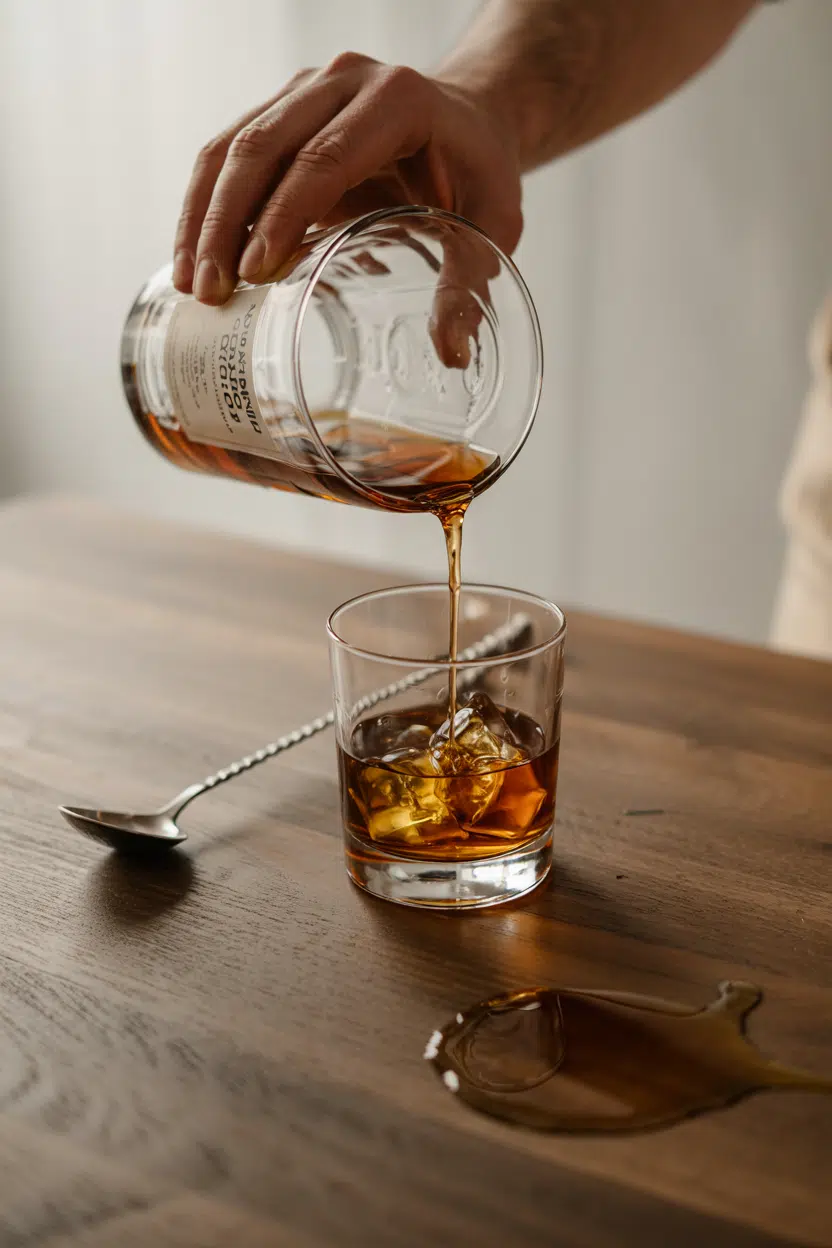
Whiskey's core flavor comes from barrel maturation. Charred oak releases vanillin, lactones, and tannins into the spirit over time, producing the vanilla, caramel, and toffee notes most drinkers recognize first.
The grain bill adds a second layer: corn brings sweetness, rye adds pepper and spice, and malted barley contributes biscuit and dried fruit.
Islay Scotch introduces phenolic peat smoke - a distinctly medicinal, campfire-like quality that has no equivalent in bourbon. Cask finishes shift things further: a sherry cask adds dried fruit and dark sugar, while a port cask finish nudges the profile toward berry and plum.
Whiskey tastes broadly similar to aged dark rum in its oak-and-caramel register, or closer to brandy when dried fruit and richness dominate.
How to Use Whiskey
In the kitchen, whiskey functions as a flavor amplifier for anything already rich, smoky, or sweet. It deglazes a hot pan after searing steak or pork chops, lifting the fond and building a quick sauce as the alcohol cooks off.
A few tablespoons stirred into a bourbon replacements-style barbecue sauce adds caramelized depth without overpowering the meat.
Dessert applications are where whiskey earns its most consistent use. A splash in chocolate ganache sharpens the cocoa.
Soaking dried cherries or currants in whiskey before folding them into bread pudding or fruitcake distributes flavor throughout the bake. Flambéing bananas foster with whiskey produces brûléed sugar and warm oak aroma at the table.
| Method | Best For | Tip |
|---|---|---|
| 🥩 Deglaze | Pan sauces for steak, pork, duck | Use 2-3 tbsp; scrape fond before reducing |
| 🔥 Flambé | Bananas foster, flamed fruit desserts | Warm the whiskey first so it ignites easily |
| 🥣 Marinade | Beef, game, pork shoulder | Combine with brown sugar and acid; 2-4 hours max |
| 🍰 Soak/Steep | Dried fruit, ganache, caramel sauces | Soak fruit overnight for maximum infusion |
| 🍹 Cocktail finish | Whiskey sour, hot toddy, old fashioned | Match style to drink - use Islay Scotch sparingly |
Whiskey pairs especially well with dark chocolate, pecans, maple syrup, orange zest, and smoked meats. It works across American barbecue, British pub sauces, and French-style reductions in restaurant cooking.
Skip it on delicate white fish or fresh green salads - oak and peat have no business there.
How to Buy and Store Whiskey
Start with the label. Style and origin tell you more than price: "Scotch single malt" versus "Kentucky straight bourbon" versus "blended Irish whiskey" signals entirely different flavor profiles before you open the bottle. For peated character, look specifically for Islay Scotch.
For sweetness, check for ex-bourbon cask or sherry cask finish on the label.
Proof matters for cooking. Higher-proof bottles carry more aromatic oils, which means more flavor survives heat.
For sipping, proof is a personal preference.
- Unopened bottles - store upright, away from sunlight and temperature swings; quality holds indefinitely
- Opened bottles - reseal tightly after each use; flavor slowly shifts via oxidation over months to years
- Avoid storing on their side long-term; unlike wine, whiskey doesn't need cork moisture and the spirit can degrade the cork seal
Where to Start With Whiskey
New to cooking with whiskey? Reach for a mid-shelf bourbon first. Its sweetness and caramel notes are the most forgiving in food applications and work without overwhelming other ingredients.
Once comfortable, swap in a rye for spicier pan sauces or a smoky Islay Scotch for grilled meat glazes where peat smoke is an asset.
If you're avoiding alcohol entirely, non-alcoholic gin substitutes are one option for cocktails, though nothing fully replicates the aged barrel character whiskey provides.
Frequently Asked Questions
All bourbon is whiskey, but not all whiskey is bourbon. Bourbon must be made in the U.S., contain at least 51% corn, and aged in new charred oak barrels. Those rules produce the sweeter, fuller-bodied profile bourbon is known for.
Smoke comes from peat used to dry malted barley during production. Peat is decomposed organic matter; burning it releases phenolic compounds that absorb into the grain. Islay Scotch distilleries use heavy peat, which creates an intensely smoky, medicinal profile.
Single malt means the whisky was made entirely from malted barley at one distillery. It says nothing about age or being from a single barrel. The term most commonly refers to Scotch but also applies to Japanese and Irish single malts.
Most distilled whiskey is considered gluten-free because distillation removes gluten proteins. However, those with severe celiac disease should check with individual producers, as some add flavorings or use shared equipment that may introduce cross-contact.
Cask strength whiskey is bottled directly from the barrel without water dilution, typically ranging from 55% to 65% ABV. The higher alcohol preserves more aromatic oils and flavor intensity. A small amount goes a long way in cooking.



