Cheese curds do something no other fresh dairy product quite manages: they hold their shape under heat long enough to create pockets of melted richness, yet eaten cold and raw, they push back with a springy resistance that's immediately satisfying.
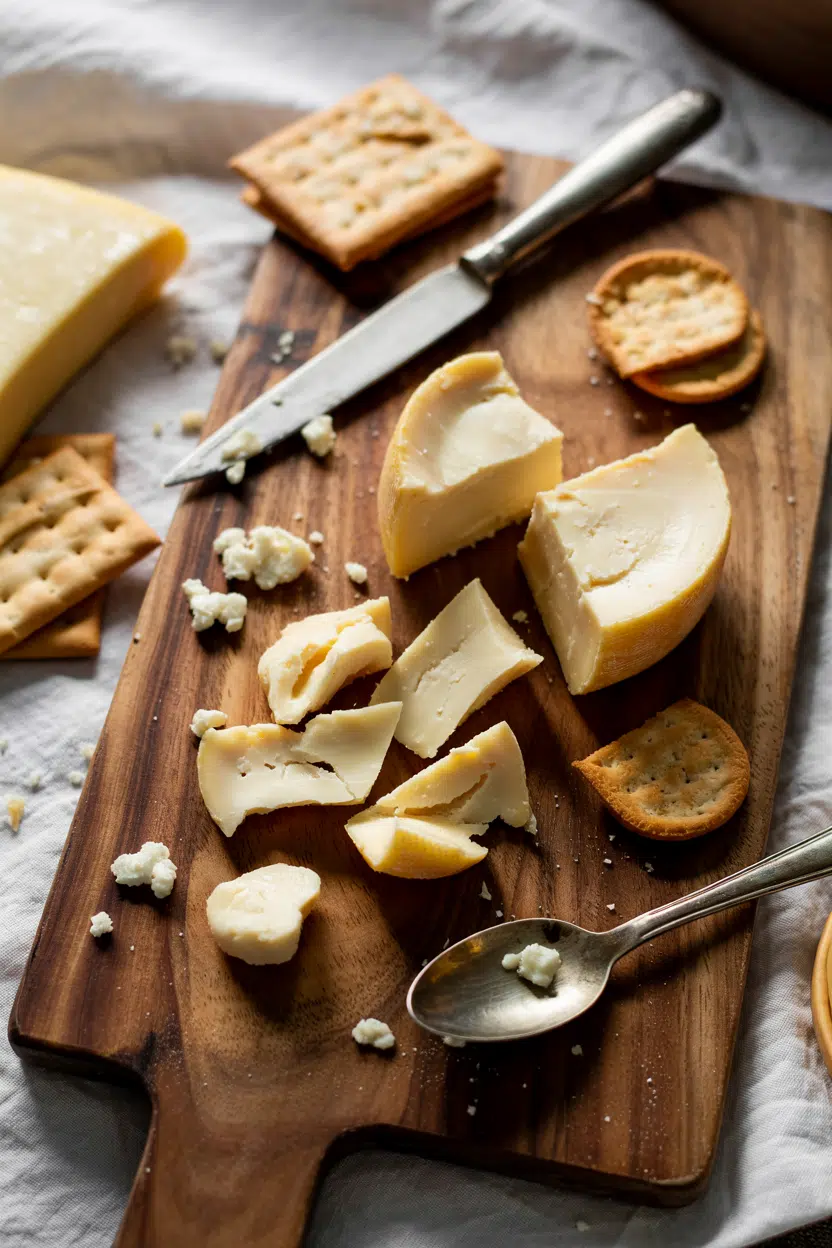
That combination - structural integrity and meltability in one ingredient - is why poutine wouldn't exist and why Midwestern snack bars still deep-fry them by the basket.
Cheese curds are fresh, unaged dairy solids separated from whey during early cheese-making. Mild, milky, and faintly tangy, they squeak when bitten and melt into gooey pockets when heated. Best within a few days of production, they shine in poutine, fried appetizers, and mac and cheese.
What Are Cheese Curds?
Cheese curds are the solid pieces that form when milk is curdled during the early stage of cheese production. Rennet or an acid causes milk proteins to coagulate; the resulting solids are cut, drained of whey, and sold fresh before aging begins.
Remember it later
Planning to try this recipe soon? Save it for a quick find later!
They originate from dairy farming regions of Quebec and Ontario, where the fresh-curd tradition became deeply embedded in local food culture. In the U.S., Wisconsin and Minnesota cheesemakers adopted the format, turning it into a Midwestern staple.
Fresh curds are uneven, irregular lumps - not formed wheels or blocks. They go by several names:
- 🧀 Squeaky curds - named for the sound and feel against teeth
- Fresh curds - emphasizing the unaged, day-of-production character
- Curds and whey - older colloquial usage, referencing the production byproducts
Compared to aged varieties, curds share DNA with young cheddar - most commercial batches start from the same base milk - however the absence of aging keeps flavor clean and mild rather than sharp.
What Does Cheese Curd Taste Like?
Mild and milky is the baseline - closer to young farmer's cheese than anything sharp or funky. A bright lactic tang follows, noticeably cleaner than mozzarella's more neutral profile.
The buttery undertone is subtle but present, especially in high-fat batches made from whole milk. That richness doesn't linger; the finish is short and clean.
Heat changes everything. A briefly pan-fried curd develops a golden crust while the interior goes creamy, softening that tangy edge into something richer and rounder.
The squeak disappears entirely above about 90°F - which is also why curds left at room temperature for a few hours lose their signature resistance before any visible change occurs.
How to Use Cheese Curds
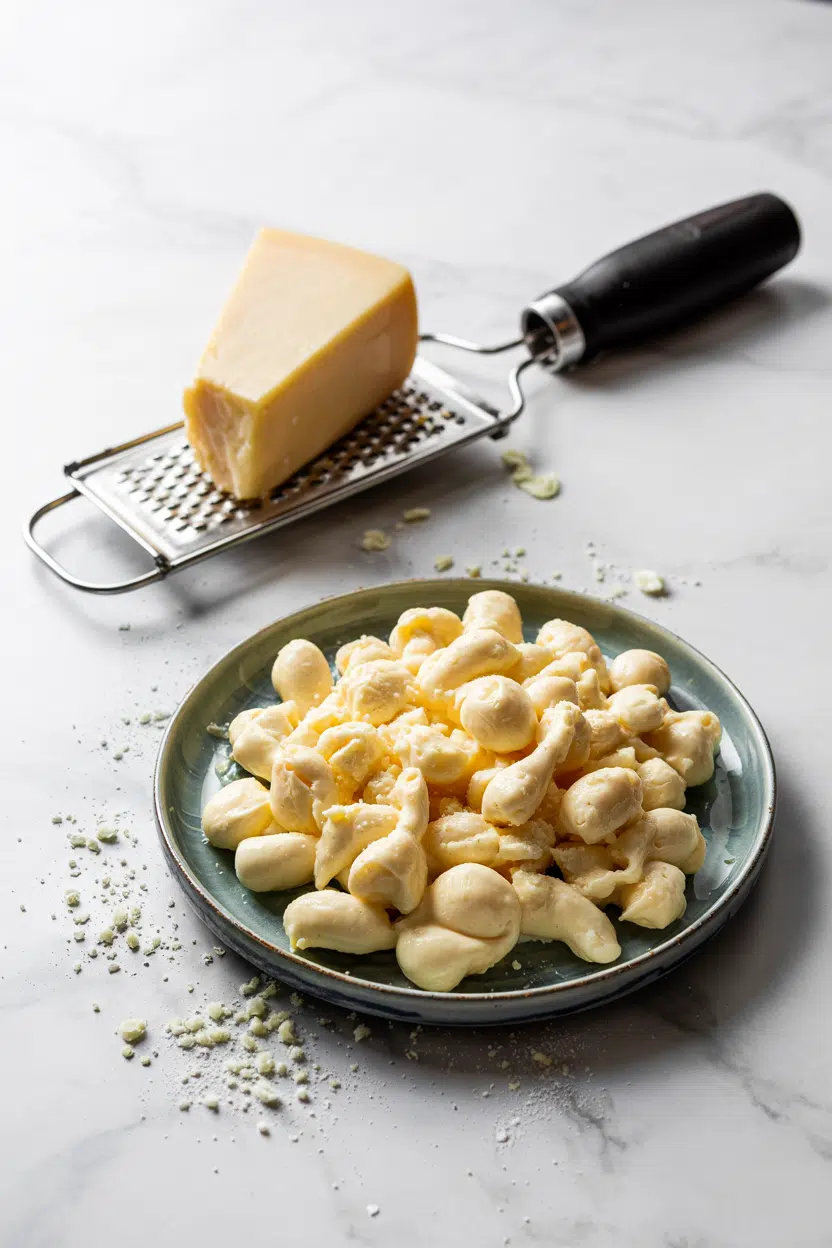
Poutine is the most famous application - fresh curds placed over hot fries so that brown gravy partially melts them without dissolving them entirely. The goal is semi-melted pockets rather than a smooth sauce, which is why curd size and freshness both matter here.
Beyond poutine, curds earn their place across several cooking methods.
| Method | Best For | Tip |
|---|---|---|
| 🥗 Raw | Snacking, salad contrast, cheese boards | Serve cold for maximum squeak |
| 🍳 Pan-Fried | Golden-crusted snack or appetizer | Medium-high heat, no oil needed if non-stick |
| 🫕 Baked/Broiled | Mac and cheese, gratins, topped dishes | Add near the end - they melt fast |
| 🍟 Deep-Fried | Breaded curd fritters, bar snacks | Batter thick enough to seal before curd melts |
Pairings follow the same logic as the cooking methods - fat against fat, acid against richness. Brown gravy and crispy fries are the canonical match.
Caramelized onions bring sweetness that balances the lactic tang well. Tart fruit - apple slices, a sharp cranberry relish - cuts through the butterfat cleanly.
Curds work in Quebecois and Midwestern U.S. cooking as a primary ingredient rather than a garnish. In casual dairy-focused menus, they appear alongside sharp cheddar in layered dishes where contrast between aged and fresh matters.
How to Buy and Store Cheese Curds
Buy the freshest batch available - ideally same-day from a local dairy or cheesemaker. At the supermarket, check the pack date and prioritize anything produced within the last two days.
Visual cues matter more than labeling here:
- ✅ Shiny, moist surface - indicates proper whey retention and freshness
- ✅ Audible squeak - bite one before buying if possible; no squeak means the proteins have already relaxed
- ❌ Yellowing or dry edges - sign of dehydration and age
- ❌ Sour smell beyond light lactic tang - indicates spoilage, not just aging
Store curds in an airtight container, ideally in their original whey or a lightly salted brine. Refrigerate immediately.
For a full breakdown of how long they keep, see our guide to cheese curds freshness guide.
If fresh mozzarella follows the same short window you're used to, curds are even more time-sensitive. They don't benefit from the slight buffer that mozzarella gets from its brine bath.
Where to Start With Cheese Curds
Start raw. Buy a fresh bag, bite one cold, and let the squeak orient you to what you're working with.
From there, the path splits clearly:
- For poutine - use curds straight from refrigeration; heat from the gravy does the melting work
- For frying - try a simple pan-fry first before committing to a full breaded batch
- For cooking applications - curds past their squeak-prime are still solid for mac and cheese or gratins
If you can't find fresh curds locally, cheese curds alternatives like young mozzarella or fresh paneer can fill some roles - however neither replicates the squeak. That part is irreplaceable.
Frequently Asked Questions
The squeak comes from long, elastic protein strands - specifically casein - rubbing against tooth enamel. Fresh curds retain this protein structure; as curds age, proteins break down and the squeak fades. It's a reliable freshness indicator, not a processing quirk.
No. Both are fresh dairy products, however cottage cheese is wet, soft, and mixed with cream dressing after draining. Cheese curds are firm, dry-ish solids sold without added cream - closer to a block cheese at its earliest stage.
Up to 7 days, however quality drops noticeably after day 3. Squeak is typically gone by day 2-3 at room temperature or after repeated handling. For cooking, day 4-7 curds still melt and brown well.
Yes, but freezing permanently destroys the squeak and changes texture slightly. Frozen-then-thawed curds work fine for poutine, frying, or melting - just don't expect raw snacking quality after the freeze.
Microwave them for 5-10 seconds. The brief heat reactivates the protein structure temporarily, restoring some squeak for a short window. It won't match truly fresh curds, however it works in a pinch before serving.