
Most people assume cottage cheese is bland health food - low-fat, watery, and best left to diet plates from the 1970s. That reputation undersells it considerably.
Cottage cheese is a fresh curd dairy with genuine range: mild tang, clean milkiness, and a soft curd texture that holds up in scrambled eggs as well as it does in cheesecake fillings.
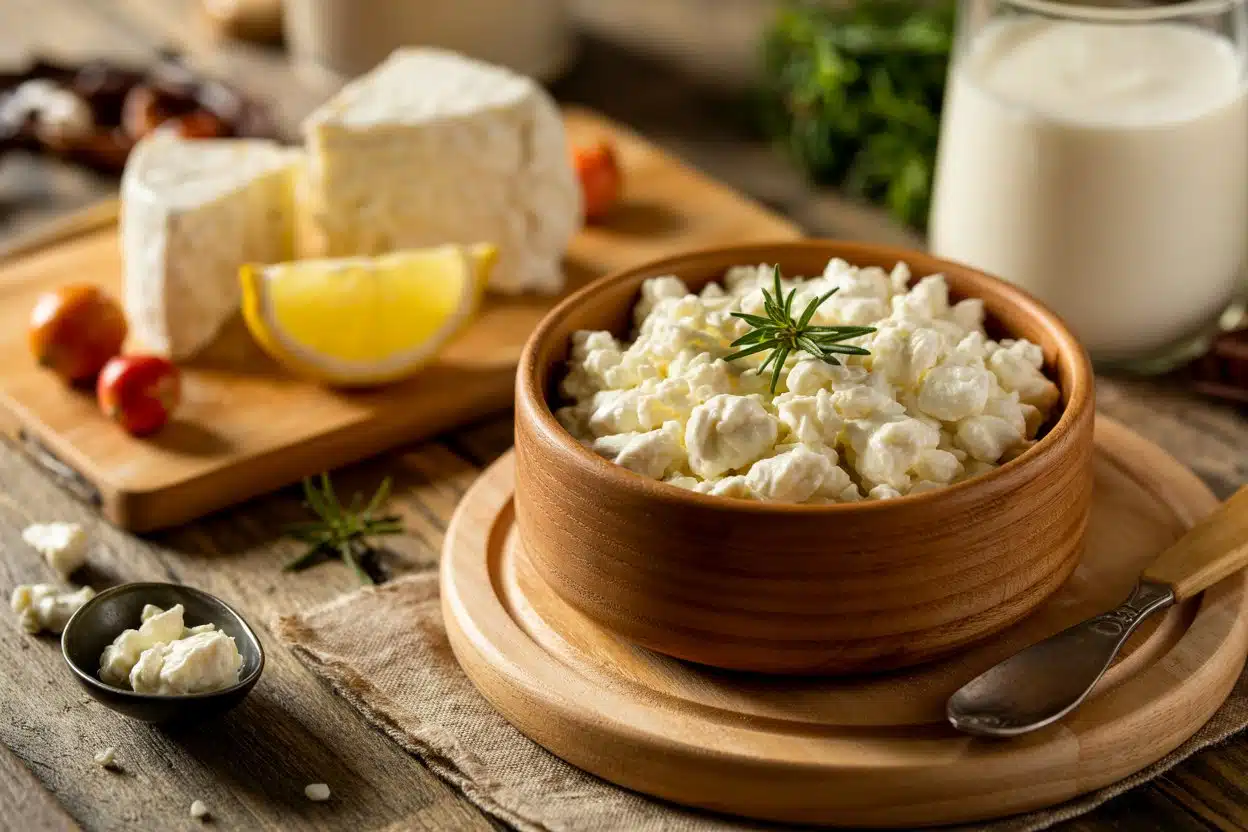
Understanding what it actually is - and how curd size and fat content shift its behavior - changes how useful it becomes.
Cottage cheese is a fresh, unaged curd cheese made from cow's milk, sold in a creamy milky dressing. It tastes mildly tangy and clean, with soft curds ranging from small to large. Best used raw, blended, or stirred into warm dishes at low heat.
What Is Cottage Cheese?
Cottage cheese is a fresh, unaged cheese produced by adding an acid or culture to cow's milk, causing it to curdle, then cutting and draining the curds while leaving them loose in a milky whey-based dressing.
Remember it later
Planning to try this recipe soon? Save it for a quick find later!
No aging, no pressing - just fresh curds held in a creamy coating.
It originated in Northern Europe and became widely popular in the United States, where it's sold in standard supermarket tubs across several styles. The two main variables are curd size and cream content.
- Large-curd - Bigger, more distinct curds with a chewier bite; good for dishes where texture matters.
- Small-curd - Finer, softer curds that blend more easily; preferred for dips and baked fillings.
- Creamed (full-fat) - Richer dressing, typically 4% milkfat; closest to sour cream in richness.
- Low-fat / nonfat - Thinner dressing, lighter flavor; works well in high-protein cooking applications.
- Whipped or blended - Curds fully pureed into a smooth, spreadable consistency.
Cottage cheese goes by "curd cheese" in some regions and is sometimes compared informally to fresh paneer, though the two are quite different in firmness.
It's nutritionally notable for high-quality protein, calcium, phosphorus, and B vitamins, making it one of the more protein-dense fresh dairy options available.
What Does Cottage Cheese Taste Like?
Cottage cheese tastes mild, clean, and lightly tangy - closer to plain yogurt in its lactic sharpness than to any aged cheese.
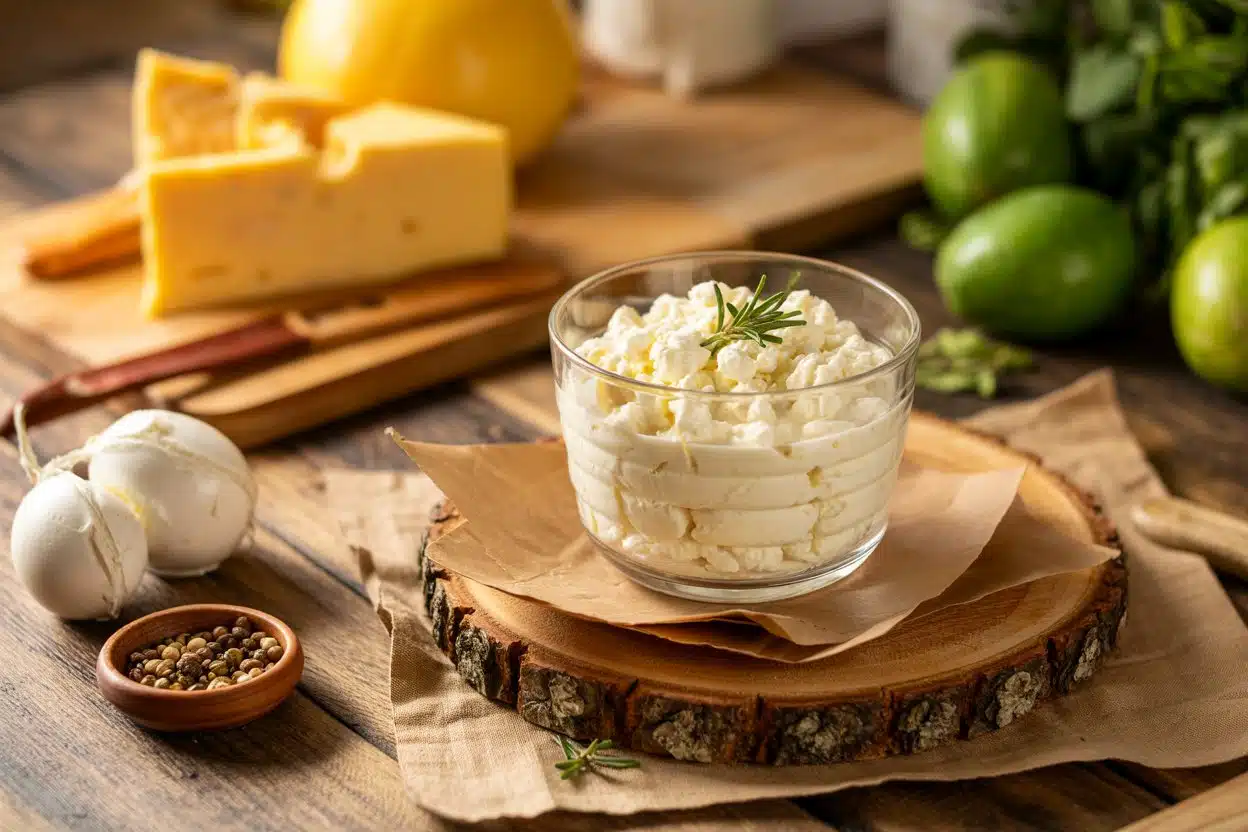
The difference from yogurt is structural: cottage cheese has distinct curds that interrupt the creaminess with a soft, slightly grainy chew.
Compared to ricotta, cottage cheese shares the same clean milkiness but feels curdier and less uniform. Ricotta is smoother and slightly sweeter; cottage cheese has more textural variation between the curds and the dressing around them.
Fat content shifts the flavor meaningfully. Full-fat creamed cottage cheese tastes noticeably richer and rounder, while nonfat versions can taste slightly flat or watery.
When stirred into warm dishes, the mild tang softens and the dairy flavor becomes more neutral - useful when you want creaminess without sourness.
How to Use Cottage Cheese
Cottage cheese earns its place across more situations than most people give it credit for. Its mild flavor means it adapts easily to both sweet and savory applications without competing with other ingredients.
Eaten raw is the most common approach - spooned into a bowl with fresh fruit like pineapple or berries, drizzled with honey, or topped with walnuts for crunch. It works on toast with sliced tomato and cracked black pepper, or alongside smoked salmon and chives in a quick assembly that requires no cooking.
In cooking, low heat is key. Folded into scrambled eggs or stirred into omelets, cottage cheese melts slightly into the eggs and adds creaminess without making them dense.
It works in baked casseroles and pasta fillings, where the curds soften but hold enough structure to add texture. Long, high-heat simmering breaks the curds down into grainy bits - avoid that.
| Method | Best For | Tip |
|---|---|---|
| 🥗 Raw | Breakfast bowls, toast, salads, dips | Drain excess whey first for cleaner presentation |
| 🍳 Stirred in (low heat) | Scrambled eggs, omelets, warm grain bowls | Add at the end of cooking; don't let it boil |
| 🫕 Baked | Lasagna, stuffed shells, casseroles | Blend first for smoother fillings |
| 🔀 Blended | Dips, cheesecake fillings, smoothie bowls | Full-fat gives a creamier pureed result |
In American kitchens, cottage cheese appears in tuna and chicken salads as a lower-fat stand-in for mayo. Eastern European cooking uses fresh-curd dairy in savory pancakes and dumplings, where cottage cheese can substitute with minimal adjustment.
It pairs cleanly with chives, dill, hot sauce, and cucumber - flavors that amplify its mild lactic character without overwhelming it.
Baked Cottage Cheese Egg SquaresShows how curds hold structure in a baked egg dish→Cottage Cheese Breakfast Bowl with FruitA raw application with fruit, honey, and crunch→
How to Buy and Store Cottage Cheese
At the store, look for tubs with visible, intact curds and a milky, slightly translucent whey surrounding them. Excess liquid pooling at the top is normal in small amounts, however a strong sour smell or discolored whey signals spoilage.
Check the sell-by date - cottage cheese has a shorter window than harder cheeses, closer in turnover to sour cream than to aged blocks.
Choose large-curd for dishes where texture is the point and small-curd when you plan to blend or fold it in. For storage at home, keep the container sealed in the coldest part of the fridge.
If you transfer it to another container, press plastic wrap directly onto the surface of the curds to limit drying. Opened cottage cheese lasts 5-7 days; for full detail on cottage cheese storage life and spoilage signs, that's covered separately.
Start Here
If you've only ever eaten cottage cheese plain and found it underwhelming, try the blended version first. Pureed until smooth, it loses the textural oddness that puts people off and becomes a clean, creamy base for dips and fillings.
- For raw use - Full-fat creamed, large-curd; drain briefly and season simply.
- For baking or pasta fillings - Blend small-curd or low-fat; texture after blending is nearly identical to ricotta.
- For egg dishes - Stir in small-curd at low heat; don't boil.
If cottage cheese isn't available, cottage cheese swaps like ricotta or strained yogurt work in most recipes with minor adjustments. And if you're swapping it into a recipe that calls for ricotta specifically, check ricotta cheese alternatives to see which direction to go.
Frequently Asked Questions
No. Both are fresh, unaged dairy products, however ricotta is smoother and slightly sweeter, made by reheating whey. Cottage cheese has distinct curds in a milky dressing, giving it a curdier, less uniform texture.
Once opened, it lasts 5-7 days refrigerated. The key signs of spoilage are a sharp sour smell and discolored whey - not just extra liquid pooling, which is normal.
Spoon the cottage cheese into a fine mesh strainer and let it drain for 10-15 minutes before use. This works especially well before adding it to baked fillings or dips where excess moisture causes problems.
It's high in protein and provides calcium, phosphorus, and B vitamins. Fat content varies by label - nonfat to full-fat - so the calorie count shifts significantly between versions. It contains lactose, though less than fluid milk.
Technically yes, however freezing breaks down the curds and turns the texture grainy and separated. Frozen-then-thawed cottage cheese is only usable blended into cooked dishes - not worth freezing for raw applications.



