You just got home from the farmers' market with an armful of zucchini and now you're wondering how long they'll actually hold up before turning soft and slimy.
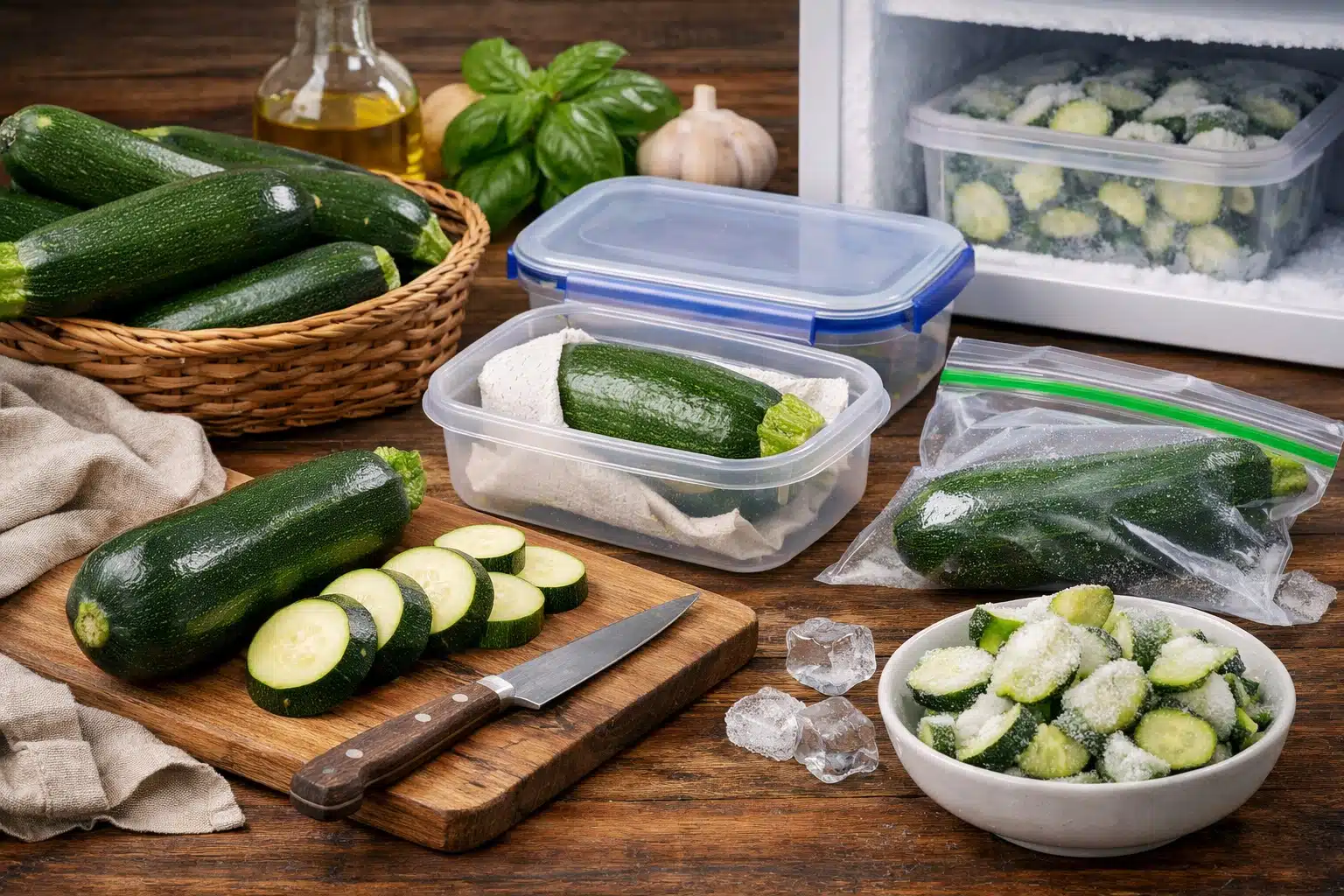
Whole, unwashed zucchini keeps well in the fridge for one to two weeks, but cut pieces drop to just three to four days - and the wrong storage move can cut that window in half.
Like other squash freshness guide situations, timing and method matter more than most people expect.
Whole zucchini lasts 1-2 weeks in the fridge unwashed and uncut. Cut pieces last 3-4 days in a sealed container. Blanched shredded zucchini freezes well for 10-12 months. Never freeze whole raw zucchini - the texture collapse is severe.
How Long Does Zucchini Last?
Shelf life depends heavily on whether the zucchini is whole or cut, and how it was handled before it reached your kitchen. Smaller, firmer zucchini consistently outlast larger ones because their skin is thicker and their flesh holds less water.
Remember it later
Planning to try this recipe soon? Save it for a quick find later!
| Method | State | Duration | Notes |
|---|---|---|---|
| 🏠 Pantry | Whole | 2-4 days | Only firm, freshly harvested zucchini; keep cool and dry |
| 🧊 Fridge | Whole | 1-2 weeks | Unwashed, in crisper at 38-40°F; smaller zucchini last longer |
| 🧊 Fridge | Sliced/cut | 3-4 days | Sealed container with paper towel to absorb moisture |
| ❄️ Freezer | Shredded (blanched) | 10-12 months | Best for baking or soups; texture too soft for raw use after thawing |
| ❄️ Freezer | Whole (raw) | Not recommended | Severe cellular damage causes mushy, watery texture on thaw |
The pantry window is narrow - only use it for very firm, freshly picked zucchini you'll cook within a few days. Once zucchini is cut or shows any soft spots, the fridge is the only viable short-term option.
How to Store Zucchini
The single rule that extends zucchini's life most: don't wash it before storage. Water on the skin speeds moisture buildup and pushes spoilage forward by several days.
Pantry: Set firm, freshly harvested zucchini in a cool, dry spot away from direct sun. Keep them away from apples and bananas - both release ethylene gas that accelerates softening and decay.
Fridge: Place whole zucchini unwrapped or loosely wrapped in a perforated produce bag in the crisper drawer. For cut pieces, pat the exposed flesh dry, layer between paper towels, and seal in an airtight container.
A few more storage habits worth building:
- Choose smaller zucchini - firmer flesh and thinner skins resist waterlogging and buy you closer to the two-week mark.
- Cover cut surfaces - exposed flesh dehydrates and browns quickly, so always seal cut zucchini in a container rather than wrapping loosely in plastic.
- Don't crowd the crisper - airflow around the zucchini slows surface moisture buildup.
Can You Freeze Zucchini?
Freezing works, but only with preparation. Raw whole zucchini should never go straight into the freezer - the high water content causes severe cellular damage, and what thaws out is a watery, collapsed mess. Blanching before freezing is what preserves structure.
- Shred or slice - For baking use, shred finely. For cooked dishes, cut into ½-inch slices or cubes.
- Blanch - Shredded zucchini needs 1 minute in boiling water; slices or cubes need 2 minutes.
- Shock and drain - Transfer immediately to ice water to stop cooking, then drain thoroughly. For shredded zucchini, squeeze out excess moisture by hand.
- Flash-freeze slices - Spread slices or cubes in a single layer on a baking tray and freeze until solid before bagging.
- Bag flat - Portion into flat freezer bags, press out air, and label with the date. Flat bags stack easily and thaw faster.
Thaw in the fridge overnight, or add frozen directly to soups, stews, or batters without thawing. For baking with shredded zucchini, always squeeze out thawed liquid before measuring - 1 cup shredded zucchini weighs roughly 115-125 g after draining, and excess water throws off batter consistency.
If you're planning future meals and want ideas for pairings for zucchini, frozen portions work well in most cooked preparations.
Signs Zucchini Has Gone Bad
Zucchini gives clear signals when it's past its prime. Check before you cook - questionable squash isn't worth a taste-test.
Sliminess and a sour smell together mean discard without question. A single soft spot on an otherwise firm zucchini can be cut away if the rest shows no discoloration, however any mold means the whole thing goes.
If your zucchini regularly spoils before you use it, consider zucchini alternatives that have longer shelf lives, or explore eggplant alternatives for dishes where a firmer vegetable would work.
Getting the Most from Your Zucchini
Good storage habits pay off most at the buying stage. Start with the right zucchini and the rest of the process is straightforward.
- Buy smaller zucchini - under 6 inches hold up longer and have less seed mass to turn watery.
- Freeze shredded portions by weight - grate, squeeze, drain, then freeze in 115-125 g flat packs sized for one recipe batch.
- Use the pulp - liquid and seeds squeezed out of shredded zucchini go well in stocks and soups; don't discard them.
- Cut zucchini has a hard deadline - use it within three to four days and keep cut surfaces sealed at all times.
Frequently Asked Questions
Not whole, and not recommended without blanching. Raw zucchini's high water content causes ice crystals to rupture cell walls, resulting in a mushy, waterlogged texture when thawed. Blanching first - even just one minute for shredded - prevents this.
Three to four days in a sealed airtight container. Layering the cut pieces between paper towels absorbs excess moisture and keeps the flesh from turning slippery at the cut surface.
No. Washing before storage adds surface moisture that accelerates mold and skin breakdown. Wash only immediately before cutting or cooking.
It changes the texture significantly - thawed zucchini is softer and releases water. That's fine for soups, stews, or baked goods like zucchini bread, however it won't hold up in raw salads or lightly cooked dishes.
Only briefly - two to four days at most, and only for very firm, freshly harvested zucchini kept in a cool, dry spot. Anything already soft or cut must go straight to the fridge.