• Skip to primary navigation
  • Skip to main content
  • Skip to primary sidebar
  • Recipe Index
    • Air Fryer
  • Side Dishes
  • Substitutes
  • About
  • Contact
  • Subscribe

ForkLiftKitchen

menu icon
go to homepage
  • Recipe Index
    • Air Fryer
  • Side Dishes
  • Substitutes
  • About
  • Contact
  • Subscribe
subscribe
search icon
Homepage link
  • Recipe Index
    • Air Fryer
  • Side Dishes
  • Substitutes
  • About
  • Contact
  • Subscribe
×

Blog

How Long Does Brown Sugar Last? [Storage Guide]

March 28, 2026

Rock-hard brown sugar sitting in the back of the pantry is one of the most common reasons people assume they've got spoiled food on their hands - and most of the time, they're wrong.

How Long Is Brown Sugar Good For

Brown sugar rarely truly goes bad; its molasses content keeps it pliable when stored correctly, and hardening is almost always a moisture problem, not a safety one.

That said, indefinite shelf life isn't the same as unlimited quality, and knowing how long yours actually lasts saves both wasted sugar and ruined recipes.

If you want context on swapping out molasses when brown sugar behaves unexpectedly, that's a separate problem worth solving too.

QUICK SUMMARY

Unopened brown sugar lasts 18-24 months in the pantry. Once opened, plan on 6-12 months in an airtight container. Freezing extends that to 2 years. Hard sugar is almost never spoiled - it just needs rehydration.

🏠Pantry (opened): 6-12 months sealed in an airtight container
❄️Freezer: 12-24 months when double-sealed and labeled
⚠️Key Rule: Discard only if you see mold, insects, or smell anything sour

How Long Does Brown Sugar Last?

Brown sugar is shelf-stable by nature - low moisture and high sugar concentration prevent bacterial growth under normal conditions. Duration varies mainly by whether the bag has been opened and how well it's sealed afterward.

Brown Sugar Shelf Life
MethodStateDurationNotes
🏠 PantryUnopened18-24 monthsOriginal sealed packaging; keep away from heat and sunlight
🏠 PantryOpened6-12 monthsAirtight container required; air exposure causes hardening
🧊 FridgeOpenedIndefinite*Quality degrades; absorbs moisture and odors - not recommended
❄️ FreezerOpened or unopened12-24 monthsBest long-term option; double-seal to block freezer odors

The contrast between light and dark brown sugar matters here: dark brown sugar carries more molasses and tends to clump faster once exposed to air, so it benefits most from an airtight seal and prompt transfer out of its original bag.

For comparison, how long sugar keeps across all sugar types shows just how differently each variety behaves under the same pantry conditions.

Golden Rule
Hard brown sugar is not spoiled sugar. Rock-solid blocks are almost always salvageable with the right rehydration method - don't throw it out before you try.

How to Store Brown Sugar

The pantry is the right home for brown sugar, not the refrigerator. Cold storage introduces two problems: condensation and odor absorption, both of which damage quality faster than a warm cupboard would.

Pantry: Transfer opened bags into an airtight container immediately, press out excess air, and label with the opened date. Keep the container in a cool, dark cupboard - away from the stove, oven, or any spot that sees direct sunlight or temperature swings.

Fridge: Avoid this unless space is genuinely the issue. If you must refrigerate, use a double-sealed glass or plastic container with a tight lid to block moisture and kitchen odors from getting in.

Freezer: Use an airtight container or heavy-duty freezer bag. To prevent freezer odor transfer, tuck a sheet of plastic wrap directly over the sugar before sealing the container, then double-bag.

Understanding brown sugar in cooking helps explain why consistent moisture matters - recipes that call for packed brown sugar rely on a specific texture, and storage method directly affects that.

  • 📦 Portion after opening - divide into smaller sealed containers to avoid repeated air exposure of the whole supply
  • 🫙 Terracotta sugar saver - soak in water, dry the outside, and place inside the container to maintain moisture long-term
  • 🍎 Apple slice method - add a slice of apple to a sealed container for 6-12 hours to rehydrate already-hardened sugar
  • ⚖️ Weigh, don't scoop - clumped sugar packs unevenly and throws off volume measurements in baking

Can You Freeze Brown Sugar?

Yes, and it's the single best option for anyone buying in bulk or living in a humid climate.

Freezing halts hardening almost entirely by stabilizing the moisture in the molasses - which is the opposite of what air exposure does at room temperature.

  1. Portion first - divide into meal-sized or recipe-sized amounts before freezing so you only thaw what you need
  2. Seal tightly - pack into heavy-duty freezer bags or airtight containers and press out all air before closing
  3. Double-protect against odors - lay a sheet of plastic wrap directly over the sugar inside the container before sealing
  4. Label and freeze flat - note the date and lay bags flat to save freezer space and speed up even thawing
  5. Thaw sealed - move the portion to the pantry and leave it at room temperature for 1-2 hours; open only after condensation disappears from the outside of the bag

Opening the bag while still cold pulls in warm air, which then condenses on the cold sugar crystals and causes clumping. Thawing fully before opening is the most common step people skip.

Shortcut
If you forgot to thaw overnight, leave the sealed bag on the counter for 1-2 hours. It comes to room temp fast - there's no need to microwave or rush the process.

Signs Brown Sugar Has Gone Bad

Hardness alone is never a reason to discard brown sugar. The real red flags are specific, and most bags never reach them under reasonable storage conditions.

Signs It's Gone Bad
👀
VisualMold specks or green/black growth · Rock-hard mass that won't rehydrate · Insect presence or webbing inside package
👃
SmellSour or fermented odor · Any sharp chemical smell (should smell faintly sweet and molasses-like)
✋
TextureWet sticky patches between grains · Gritty off-moisture clumps that feel damp rather than dry-firm

Sugar pests - pantry moths, weevils, and ants - are the most common contamination route for long-stored bags. If you spot webbing or movement, seal and discard the entire container. Mold is rare in properly stored brown sugar but possible if water has entered the package.

Watch Out
A sour or fermented smell is the clearest sign of genuine spoilage. No amount of rehydration fixes it - discard immediately and clean the container before reuse.

Practical Tips for Keeping Brown Sugar Fresh

Staying ahead of hardening takes less effort than rescuing a brick of sugar after the fact. These habits make the difference between a bag that lasts 12 months and one that sets solid in six weeks.

  • 🔒 Seal immediately after every use - even a few minutes of air exposure adds up across dozens of baking sessions
  • 🏠 Pantry over fridge, always - consistent dry temperature beats the cold-moisture cycle refrigeration creates
  • 🍶 Rehydrate before tossing - try the apple slice or damp paper towel method before assuming hardened sugar is wasted
  • 📅 Label opened containers - without a date, you won't know whether you're at 3 months or 13

If you ever run short mid-recipe, a guide to brown sugar stand-ins covers which swaps hold up in baking and which ones fall short.

For context on how how long white sugar keeps compares, the difference is significant - granulated white sugar, without molasses, doesn't harden and lasts practically indefinitely.

Frequently Asked Questions

Can you use brown sugar that's rock hard?

Yes, hardened brown sugar is almost always safe and usable. Place a damp paper towel or apple slice in the sealed container for 6-12 hours to rehydrate the crystals. Discard only if you see mold or smell something sour.

Does brown sugar go bad or just harden?

Mostly it just hardens. True spoilage requires mold, insect contamination, or moisture intrusion that creates a sour smell. Hardening is a texture issue caused by moisture loss from the molasses - not a safety problem.

Can you freeze brown sugar to keep it soft?

Yes, freezing is the most reliable way to preserve texture long-term. The cold stabilizes moisture in the molasses and prevents the hardening that happens at room temperature. Thaw sealed at room temperature before opening.

How long does dark brown sugar last compared to light?

Both last the same duration on paper - 6-12 months opened, 18-24 months unopened. Dark brown sugar has more molasses, so it clumps faster once exposed to air and benefits more from an immediate airtight transfer.

How do you soften brown sugar quickly?

Microwave it: place the hardened sugar in a microwave-safe bowl, cover with a damp paper towel, and heat in 20-second bursts until soft. Use it immediately - the sugar re-hardens as it cools.
How Long Does Beef Tenderloin Last? [Storage Guide]

March 28, 2026

Leaving a whole beef tenderloin on the counter while you prep sides is one of the most common storage mistakes home cooks make - the two-hour room-temperature rule applies here just as strictly as with any raw protein, and food safety raw meat preparation tips can help reinforce exactly why that window matters.

Can You Freeze Beef Tenderloin

Understanding the role beef tenderloin plays as the most tender muscle on the steer also explains why poor storage hits it harder than tougher cuts - there's less connective tissue to buffer quality loss.

QUICK SUMMARY

Raw whole beef tenderloin keeps 3-5 days in the fridge and up to 12 months in the freezer. Cooked tenderloin lasts 3-4 days refrigerated. The single biggest risk is surface exposure - sliced or butterflied cuts lose fridge time fast.

🧊Fridge (raw whole): 3-5 days at ≤40°F in original wrap or tightly resealed
❄️Freezer (raw whole): Up to 12 months; best quality within 6 months
⚠️Key rule: Never leave raw or cooked tenderloin at room temperature longer than 2 hours

How Long Does Beef Tenderloin Last?

Raw whole tenderloin holds longer than most expect - largely because the muscle sees minimal surface exposure when left uncut. Sliced medallions or a butterflied chateaubriand tell a different story, with more exposed meat accelerating bacterial growth.

Beef Tenderloin Shelf Life
MethodStateDurationNotes
🧊 FridgeRaw whole3-5 daysOriginal packaging or tightly wrapped; keep at ≤40°F
🧊 FridgeRaw sliced1-2 daysMore surface area shortens safe fridge life significantly
🧊 FridgeCooked3-4 daysCool quickly; store in airtight container
❄️ FreezerRaw whole6-12 monthsVacuum-seal or heavy-duty wrap; best quality within 6 months
❄️ FreezerRaw sliced4-6 monthsFlash-freeze flat first; individual medallions lose quality faster
❄️ FreezerCooked2-3 monthsTexture softens after longer storage
🏠 CounterRaw or cooked≤2 hours1 hour max if ambient temp exceeds 90°F

Vacuum-sealed butcher packaging extends fridge life toward the higher end of each range. Once opened, that window shrinks - treat it like any exposed raw beef.

How to Store Beef Tenderloin

Where and how you wrap matters as much as speed. Whole raw tenderloin should stay in its original butcher paper or vacuum pack, placed on the lowest shelf at the back of the fridge where temperature stays most stable.

Fridge (raw whole): Keep unopened in original packaging. Once opened, pat dry, wrap tightly in plastic wrap followed by aluminum foil, or transfer to an airtight vacuum-seal bag. Fridge (raw sliced): Arrange medallions in a single layer, wrap tightly, and plan to cook within a day. Fridge (cooked): Cool the roast to room temperature within two hours, then transfer to an airtight container before refrigerating.

Golden Rule
Always store raw tenderloin on the lowest shelf - it prevents any drip from contaminating other food and keeps the meat at the coldest part of the fridge.

A few habits that protect quality between shopping and cooking:

  • 🌡️ Temperature discipline - Verify fridge stays at ≤40°F; even a few degrees warmer cuts into safe storage time.
  • Minimize air contact - Oxygen drives both oxidation and bacterial growth on exposed lean meat.
  • Label everything - Mark the pack date so you're not guessing on day four.
  • Separate raw from cooked - Never store them in the same container or on the same shelf.

Can You Freeze Beef Tenderloin?

Yes, and it handles freezing better than most lean cuts - provided the wrapping is right. Freezer burn is the primary threat, especially on trimmed filet mignon medallions where the lean surface has no fat layer for protection.

Best Pick
Buy whole untrimmed tenderloin if you plan to freeze it. The fat cap and silver skin protect the lean center, reducing freezer dryness and preserving quality longer.

Follow these steps for the best results:

  1. Trim and dry Pat the meat dry and remove excess silver skin. Leave some fat if freezing whole - it protects the lean center.
  2. Wrap for whole cuts Vacuum-seal the whole tenderloin, or double-wrap in plastic wrap followed by heavy-duty aluminum foil. Eliminate every air pocket you can reach.
  3. Flash-freeze slices Lay individual medallions flat on a tray lined with parchment and freeze uncovered for one to two hours. The technique mirrors [doing flash freeze meatballs properly](https://forkliftkitchen.com/flash-freeze-meatballs/) - pieces freeze individually before being bagged, so they don't stick together.
  4. Bag and label Transfer flash-frozen medallions to an airtight freezer bag, press out all air, and mark the packed date plus a use-by month.
  5. Thaw safely Move the whole tenderloin to the fridge for 24-48 hours. Smaller pieces need 12-24 hours. For faster results, submerge a sealed bag in cold water and change the water every 30 minutes - cook immediately after cold-water thaw.

Freezing preserves safety but slightly softens the velvet-like grain of tenderloin. Previously frozen cuts may sear with a less pronounced crust; patting very dry and using a screaming-hot pan compensates.

Signs Beef Tenderloin Has Gone Bad

Fresh tenderloin shows a deep red to purplish hue at the cut surface. Any meaningful departure from that color - combined with off-smell or odd texture - is a reliable signal to discard.

Signs It's Gone Bad
👀
VisualDull gray-brown discoloration across cut surface · Sticky or slimy surface film · Greenish tinge at edges or dark mold patches
👃
SmellSour or tangy off-odor beyond faint iron/metallic beef smell · Sharp ammonia-like or rotten smell in advanced decay
✋
TextureSlimy or tacky surface when touched · Mushy or overly soft muscle fibers rather than firm, buttery feel

One note on color alone: brief surface browning can occur in vacuum-sealed beef when oxygen is absent. That specific case usually resolves with a few minutes of air exposure and no off-smell.

Gray-brown combined with sliminess or odor does not resolve - discard without hesitation.

Watch Out
Do not taste-test questionable beef tenderloin to decide. If color, smell, or texture is off on any single check, discard it. Harmful bacteria don't always produce obvious signs.

Getting the Most from Your Tenderloin

Good storage habits start at the store, not the fridge. Planning your use window before you buy determines whether you refrigerate or freeze from day one.

  • Portion before freezing - Slice into medallions and flash-freeze individually so you can pull one serving without thawing an entire roast.
  • Tie whole roasts - After partial thaw, tie the tenderloin and rest it in the fridge for one to two hours before searing so the center temperature evens out.
  • Dry the surface - Previously frozen tenderloin releases more moisture; patting very dry before searing rebuilds the crust you'd expect from fresh.
  • Plan your sides early - Picking [sides for beef tenderloin](https://forkliftkitchen.com/what-to-serve-with-beef-tenderloin/) in advance means less counter time for the meat while you prep everything else, and if a cut is unavailable, knowing [beef tenderloin swaps that work](https://forkliftkitchen.com/beef-tenderloin-substitutes/) keeps the meal on track.

Frequently Asked Questions

Can you refreeze thawed beef tenderloin?

Yes, if it thawed in the refrigerator and was never left at room temperature. Quality declines with each freeze-thaw cycle, so portion before the first freeze to avoid refreezing altogether.

Does freezing change beef tenderloin texture?

Slightly. Ice crystals disrupt the fine muscle grain, softening the characteristic velvet-like tenderness. The difference is minor with proper vacuum-sealing but more noticeable in long-stored or loosely wrapped cuts.

How long can you keep cooked beef tenderloin in the fridge?

Three to four days in an airtight container. Cooked tenderloin dries out faster than raw, so wrapping it tightly or storing with any pan juices extends moisture and flavor.

What temperature should beef tenderloin be stored at?

At or below 40°F (4°C) in the refrigerator. The back of the lowest shelf is typically the coldest and most stable spot, keeping the meat furthest from the door's temperature fluctuations.

Is vacuum-sealed beef tenderloin safe past its sell-by date?

Possibly, within the 3-5 day fridge window from purchase - sell-by dates guide retailers, not consumers. Check smell, color, and texture before cooking; a compromised seal voids any extended timeline.

What Is Carrot? [Taste, Uses & More]

March 28, 2026

Most people treat carrots as a background ingredient - a token third of mirepoix, something tossed into a pot for body and forgotten.

What Is Carrot

That's a mistake worth correcting.

Raw, roasted, or pureed, the carrot has a distinct flavor identity that shifts dramatically depending on how you apply heat - and knowing that shift is what separates a flat vegetable side from something genuinely worth eating.

QUICK SUMMARY

The carrot is a sweet-earthy root vegetable with crisp raw texture and silky cooked flesh. It shines roasted, pureed, or glazed, and its natural sugars deepen significantly with heat. Whole carrots keep 3-4 weeks refrigerated.

🥕Flavor: Sweet, earthy, mildly nutty - intensifies when roasted or braised
🔥Best Methods: Roasting, glazing, pureeing, sweating for stocks and bases
🧡Key Nutrient: Beta-carotene, the vitamin A precursor responsible for its orange color
🌍Key Uses: Mirepoix, carrot cake, soups, pickles, glazed sides, carrot halwa
📦Shelf Life: Whole: 3-4 weeks refrigerated; cut or baby: 1-2 weeks; cooked: 3-5 days

What Is Carrot?

Carrot (Daucus carota) is a root vegetable native to Central Asia, specifically the region around modern Afghanistan.

Early cultivated varieties were purple or yellow; the orange carrot we know today was developed in the Netherlands during the 17th century from selective breeding.

Several distinct cultivars exist, each suited to different uses:

  • 🥕 Nantes - cylindrical, blunt-tipped, tender and sweet; ideal for eating raw or lightly cooked
  • 🥕 Imperator - the long, tapered type sold most widely in U.S. supermarkets
  • 🥕 Chantenay - short, broad-shouldered, dense flesh; holds up well in stews and long braises
  • 🥕 Baby carrot - often a trimmed and machine-shaped Imperator, not a separate variety

Purple, yellow, and white heirloom varieties do exist at farmers' markets, but their flavor is broadly similar to orange types - earthier in some cases, slightly less sweet.

Across French cuisine, the carrot appears as carotte; in Spanish-speaking kitchens, zanahoria.

For root vegetables in a similar weight class, the alternatives to sweet potato and alternatives to radish pages show how different the flavor profiles can diverge even within the same category.

What Does Carrot Taste Like?

carrot - What Is Carrot

Raw carrot delivers a bright, vegetal sweetness with a clean earthy undertone and a faint nuttiness in the finish. That sweetness is present from the start, however it becomes noticeably more concentrated once heat is applied.

Sensory SnapshotModerate Intensity
👅 Flavor
sweetearthymildly nuttyvegetal
✋ Texture
crisp rawtender cookedsilky pureed
👃 Aroma
freshgreen-sweetlightly rooty

Roasting pushes the natural sugars to caramelize, shifting the flavor from bright and fresh toward something deeper and almost jammy.

Compared to parsnip - its closest flavor relative - carrot is generally sweeter and less peppery; compared to young beet, it has similar earthiness but without beet's mineral intensity.

You can explore parsnip cooking methods to see where the two overlap and where they split.

If you're swapping out carrot in a recipe, understanding the base flavor helps you choose what fills the gap.

Golden Rule
Roast at 200°C/400°F or higher to trigger caramelization - lower temperatures just steam the carrot in its own moisture and dull the sweetness.

How to Use Carrot

Carrot moves comfortably across nearly every cooking method, and the technique you choose defines the outcome more than any seasoning. Roasting concentrates sugar and builds caramel edges;

braising or steaming keeps the flesh moist and yields a tender bite; pureeing produces a silky, naturally sweet base that takes cream or butter well.

How Carrot Is Used
MethodBest ForTip
🥗 RawSalads, slaws, crudités, grating into baked goodsGrate on the large holes for carrot cake; fine-shred for slaws to avoid coarse strands
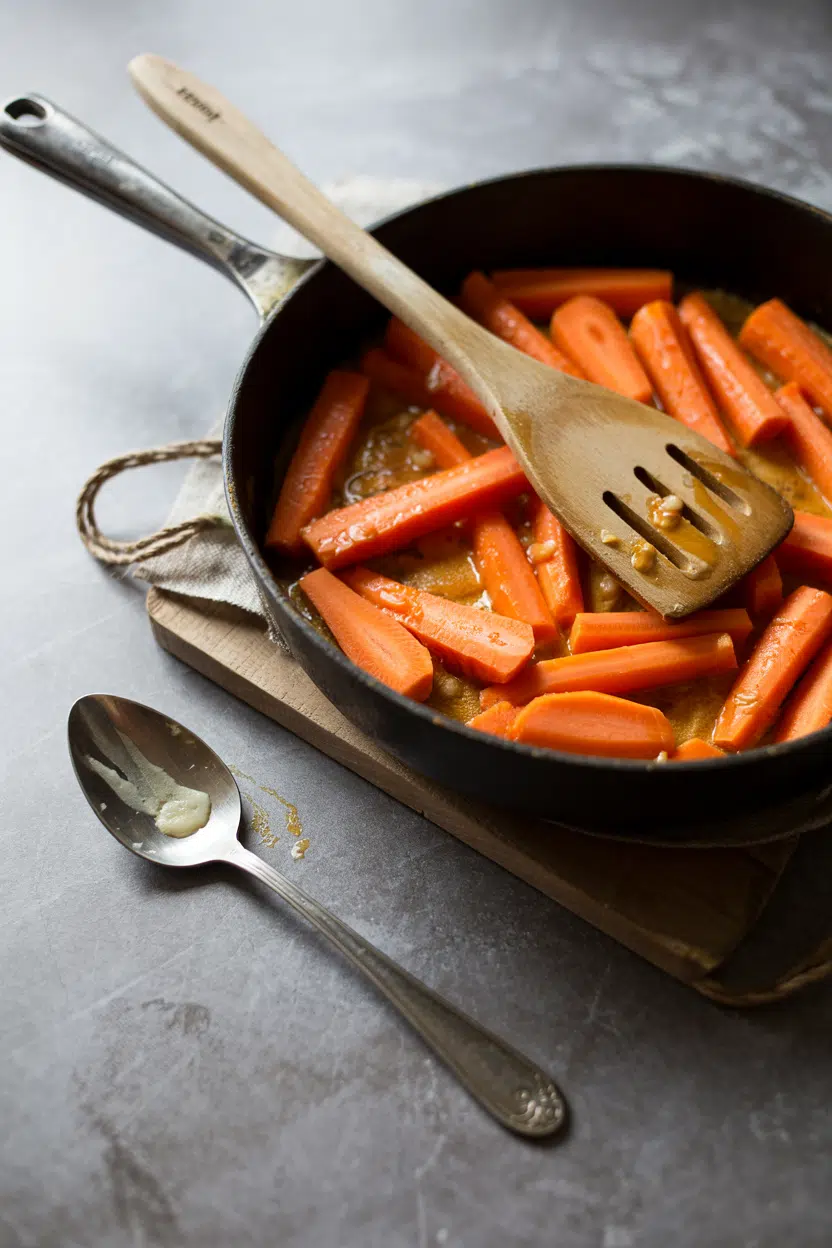
🔥 RoastedSide dishes, sheet pan meals, glazed carrotsCut evenly so edges caramelize before centers overcook; add honey or maple in the last 5 minutes
🫕 Braised/SteamedStews, pot-au-feu, mirepoix bases, baby foodSweat with onion and celery first for a stock base; keep pieces uniform for even braising
🥣 PureedSoups, sauces, smooth sidesAdd a knob of butter or splash of cream after blending for a silky finish
🥒 PickledVietnamese-style do chua, tacos, grain bowlsUse rice vinegar for a milder pickle; add daikon for the classic pairing

Cumin, coriander, and ginger are reliable spice pairings across Middle Eastern and Indian preparations - carrot halwa uses ghee, sugar, and cardamom to take the root's sweetness in a completely different direction.

In French kitchens, carrot is a core component of mirepoix alongside onion and celery, sweated in butter as the base for stocks and sauces. Citrus - lemon or orange - cuts through richness and keeps roasted or glazed preparations from reading as too sweet.

Try It In
🍯Honey Roasted Carrots with ThymeClassic high-heat roast with herbal finish→🧄Honey Garlic Roasted Baby CarrotsSweet-savory glaze on tender baby carrots→🎂Carrot Cake Snack BarsGrated raw carrot adds moisture and body→

How to Buy and Store Carrot

Firm, smooth, and evenly colored - those are the three markers of a good carrot. Avoid roots with deep cracks, soft spots, or greenish shoulders; green shoulders indicate sun exposure, which turns that section bitter.

Watch Out
Limp tops on bunched carrots aren't just cosmetic - wilted greens signal that the roots have already begun losing moisture and crispness. Buy bunched carrots with bright, upright tops when freshness matters.

Storage is straightforward. Trim the green tops first - they draw moisture from the root.

Keep roots unwashed and dry, stored in a perforated plastic bag or wrapped in a damp paper towel in the crisper drawer. Check the carrot spoilage signs guide for a full breakdown of what to look for before using older stock.

  • Whole carrots - up to 3-4 weeks refrigerated in the crisper
  • Baby or pre-cut carrots - 1-2 weeks; check for sliminess before use
  • Cooked carrots - 3-5 days in a sealed container in the fridge

Where to Start with Carrot

New to cooking carrots beyond the soup pot? Roast them whole first. A 400°F oven, olive oil, salt, and 25-30 minutes gives you the clearest picture of what this root does when heat works in its favor.

From there, try glazing - a honey and butter finish in the last few minutes takes roasted carrot from simple to deliberate without extra effort.

Shortcut
Buy Nantes or Chantenay varieties when you can find them - their denser, sweeter flesh needs less seasoning than the standard Imperator to taste good roasted.

Mirepoix cooks who have never featured carrot as the main event will find the comparing mirepoix vs trinity options breakdown useful context for understanding how the root functions in each base.

Once you've roasted and glazed, try a carrot soup: just carrot, onion, stock, and a blender - nothing else required.


Frequently Asked Questions

What does carrot taste like raw?

Raw carrot is crisp with a bright, vegetal sweetness and a faint earthy undertone. The flavor is noticeably milder and greener than cooked carrot - heat concentration is what brings out the deeper sweetness most people associate with the vegetable.

Are carrots sweet or savory?

Both, depending on preparation. Raw carrot reads as mildly sweet-savory; roasted or glazed carrot tilts clearly sweet. That's why it works in both mirepoix and carrot cake without tasting out of place in either.

How do you make carrots sweeter when cooking?

Roast at high heat - 200°C/400°F or above - to caramelize the natural sugars. Adding honey, maple syrup, or butter in the final minutes amplifies that sweetness rather than masking it with raw sweetener flavor.

How long do carrots last in the fridge?

Whole, unwashed carrots with tops removed last 3-4 weeks in the crisper drawer. Pre-cut or baby carrots last 1-2 weeks; cooked carrots keep 3-5 days sealed.

Do purple or yellow carrots taste different from orange ones?

Broadly similar, but with subtle differences. Purple carrots are often earthier and slightly less sweet; yellow varieties can taste milder with less of the rooty edge. Neither difference is dramatic enough to change a recipe.

How Long Does Apple Butter Last? [Storage Guide]

March 28, 2026

Picking up a jar of apple butter at the farmers market feels like a win - until it sits in the back of the fridge for six weeks and you start wondering whether it's still safe to spread on your morning toast.

Can You Freeze Apple Butter

Unlike shelf-stable spreads such as honey, apple butter contains enough residual moisture to support mold and fermentation once opened, so knowing its limits matters.

This guide covers exactly how long it lasts, how to store it at every stage, and what spoilage actually looks like - the same way you'd think through cinnamon rolls's shelf life or how long garlic cloves keeps.

QUICK SUMMARY

Unopened commercial or properly sealed home-canned apple butter lasts 12-18 months in a cool pantry. Once opened, refrigerate immediately and use within 1-2 months. Frozen apple butter keeps 6-12 months; expect slight texture separation that a quick stir fixes.

🥫Pantry (unopened): 12-18 months in a cool, dark spot away from heat
🧊Fridge (opened): 1-2 months; best quality in the first 4 weeks
❄️Freezer: 6-12 months; portion before freezing for easiest use

How Long Does Apple Butter Last?

Apple butter's shelf life shifts significantly depending on whether the jar has been opened and how it was processed. Commercial jars benefit from industrial vacuum sealing and preservatives that extend pantry life well beyond what most homemade batches achieve.

Apple Butter Shelf Life
MethodStateDurationNotes
🏠 PantryUnopened (commercial)12-18 monthsCool, dark location; check manufacturer's best-by date
🏠 PantryHome-canned (sealed)12-18 monthsRequires proper water-bath processing; verify lid seal before use
🧊 FridgeOpened1-2 monthsBest flavor in first 4 weeks; use airtight container
❄️ FreezerOpened or cooked6-12 monthsFlavor peaks within 6 months; label with pack date

The high sugar content in apple butter acts as a natural preservative, which is why an unopened jar holds up so long.

Once oxygen enters the jar, however, that buffer shrinks fast - microbial activity can take hold within weeks if the spread isn't refrigerated.

How to Store Apple Butter

Where and how you store apple butter depends entirely on whether the seal has been broken.

Getting this right is the single biggest factor in how long your jar stays safe and flavorful - you can learn more about apple butter's flavor and uses to understand what you're trying to preserve.

Pantry: Keep unopened commercial jars and sealed home-canned jars in a cool, dark cabinet away from the stove, oven, or hot water heater. Heat accelerates sugar breakdown and can compromise the vacuum seal on home-canned lids.

Fridge: After opening, transfer leftover apple butter to a clean glass jar with a tight screw lid or a food-grade plastic container with minimal headspace. Press plastic wrap directly onto the surface before sealing if you're using a wide-mouth jar - this reduces air contact.

Counter: Never leave opened apple butter at room temperature for more than two hours.

Golden Rule
Once you break the factory seal or open a home-canned jar, treat it as a perishable - refrigerate immediately and never let it sit out.
  • ✅ Label everything - mark opened jars with the date so you're not guessing six weeks later.
  • ✅ Minimize headspace - less air in the container means slower oxidation and better color retention.
  • ✅ Use a clean utensil - never double-dip a knife that touched bread; it introduces crumbs and bacteria into the jar.

Can You Freeze Apple Butter?

Yes - apple butter freezes well, and it's one of the most practical ways to extend a large homemade batch or a bulk purchase. The pectin and sugar structure softens slightly during freezing, but the spread stays usable.

Shortcut
Freeze in ½-cup portions for toast use and 1-2 cup portions for baking - this way you thaw exactly what you need without repeated freeze-thaw cycles.
  1. Cool completely - bring apple butter to room temperature before packing to prevent condensation inside the container.
  2. Portion into containers - spoon into freezer-safe rigid containers or heavy-duty freezer bags; leave ½-1 inch headspace in rigid containers for expansion.
  3. Remove air - flatten freezer bags before sealing to eliminate air pockets and allow stackable storage.
  4. Label with date and batch type - note whether it's commercial, home-canned, or homemade so you can track the right safety window.
  5. Thaw in the fridge - move the container to the refrigerator 24-48 hours before use; stir to reincorporate any separated liquid.

Texture after freezing thins slightly due to water migration during ice crystal formation. A brief warm-up in a saucepan over low heat with a whisk restores a spreadable consistency - avoid high heat, which scorches the sugars. This is worth considering if you plan to use apple butter in apple butter in dairy recipes where texture affects the final result.

Signs Apple Butter Has Gone Bad

Apple butter spoils in recognizable ways, and most signs are visible or detectable by smell before you'd ever need to taste it.

The same disciplined check you'd apply to vacuum sealed salmon spoilage signs applies here - look and smell first, discard if in doubt.

Signs It's Gone Bad
👀
VisualFuzzy white, green, or black mold on surface · Unusual bubbling or foam · Color shifted to gray beyond normal caramelization
👃
SmellStrong sour or alcoholic odor · Sharp off-smell replacing warm baked-apple aroma
✋
TextureExcessive watery separation with persistent fizz · Slimy film on surface

Active fermentation - bubbling or fizzing when stirred - is a hard discard signal, not a sign the batch just needs stirring. Mold in a high-sugar spread like apple butter can send roots below the visible surface, so scooping it off and eating the rest isn't safe.

Watch Out
Don't taste-test to decide. If you see mold, smell alcohol, or notice active fizzing, discard the entire jar - contamination runs deeper than the surface.

Getting the Most From Every Jar

The best approach is storing with intention from the start - label jars the day you open or make them.

If you end up with a jar that's past its prime or simply not what you needed, checking out alternatives to apple butter can keep your recipe on track.

  • 🧴 Hot-fill and water-bath process - home-canned apple butter needs proper processing to achieve a reliable vacuum seal, not just a hot fill.
  • 📦 Leave headspace when freezing - skip this step in rigid glass and the jar can crack as the spread expands.
  • 🏷️ Track production method - commercial, home-canned, and homemade batches have different safety windows; label accordingly.
  • 🔥 Reheat gently after freezing - a low-heat whisk in a saucepan recovers texture without scorching the sugar content.

Frequently Asked Questions

Do you need to refrigerate unopened apple butter?

No - a factory-sealed commercial jar or properly water-bath processed home-canned jar is shelf-stable in a cool, dark pantry. Once you break the seal, refrigerate immediately and treat it as perishable.

How long does homemade apple butter last?

Properly water-bath canned homemade apple butter lasts 12-18 months sealed. Without canning, refrigerate immediately and use within 1-2 months - it carries no commercial preservatives to extend shelf life.

Does freezing change apple butter texture?

Yes, slightly. Ice crystals disrupt the pectin structure, causing minor thinning and liquid separation after thawing. Stirring or warming gently over low heat restores a spreadable consistency.

Can you water-bath can apple butter safely?

Yes - apple butter's high sugar and acid content make it suitable for water-bath canning. Use a tested recipe from the USDA or Ball, and always verify the vacuum seal before storing or eating.

Can you freeze apple butter in Mason jars?

Yes, but only in wide-mouth Mason jars with at least ½-1 inch of headspace left at the top. Straight-sided jars crack less than tapered ones when the contents expand during freezing.

March 28, 2026

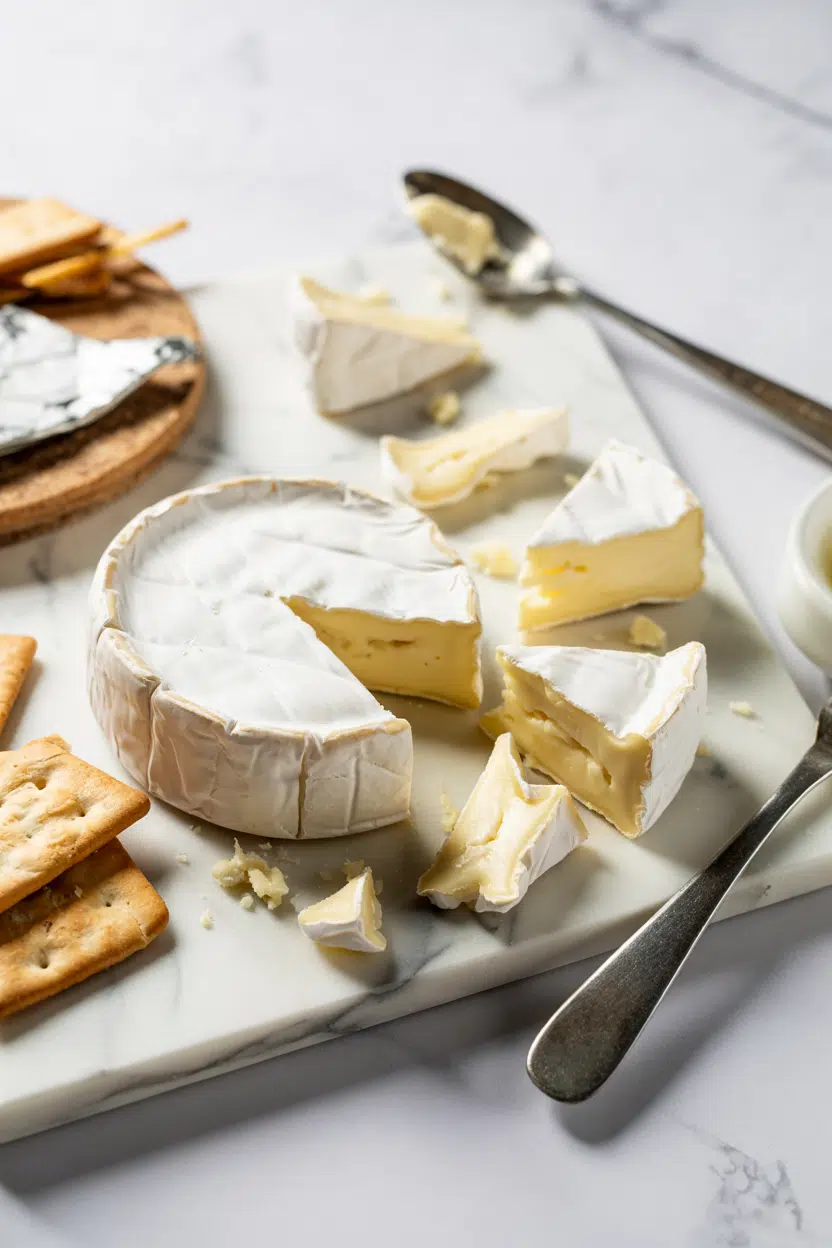
Bite through the rind of a ripe brie and you hit something unexpected - a center that's almost liquid, faintly warm from the room, smelling of damp earth and fresh mushrooms. That first encounter is what divides people.

What Does Brie Cheese Taste Like

Some back away; others are immediately converted. Brie cheese rewards patience and attention in a way that few other cheeses do, and once you understand what you're tasting and why, it becomes one of the most compelling ingredients in your kitchen.

QUICK SUMMARY

Brie is a soft-ripened French cow's milk cheese with a white bloomy rind, a creamy interior, and a flavor that ranges from mild and buttery when young to earthy and pungent when fully aged. It's used on cheese boards, melted into dishes, and baked whole.

🧀Flavor: Buttery, earthy, mushroomy - grows stronger as it ripens
🍽️Best Uses: Cheese boards, baked brie, melted over bread or vegetables
📅Shelf Life: 1-2 weeks refrigerated after opening; buy close to serving day

What Is Brie Cheese?

Brie originates from the Seine-et-Marne region of northern France, where it has been produced for over a thousand years.

Two varieties carry protected designation of origin status under French law: Brie de Meaux and Brie de Coulommiers (more commonly called Brie de Melun), both made from raw cow's milk.

Most brie sold outside France is a pasteurized commercial version, produced in wheels ranging from small individual rounds to large 60 cm wheels sold by the wedge.

The cheese is a soft-ripened variety, meaning it matures from the outside in - white Penicillium camemberti mold develops on the surface and breaks down the paste beneath it over two to six weeks.

The interior, called the paste, starts firm and chalky at the center of a young wheel and softens toward a near-molten consistency as the cheese ripens fully.

Some producers also make double and triple crème brie, with added cream that pushes the fat content higher and the flavor even richer.

What Does Brie Cheese Taste Like?

brie cheese - What Does Brie Cheese Taste Like

Young brie tastes mild and milky, with a clean buttery note and very little sharpness. The flavor is approachable - closer to fresh cream cheese than to anything funky or aggressive.

As the cheese matures, the character shifts noticeably. Earthiness moves in, along with a distinct mushroom quality, hints of roasted nuts, and a faint ammonia edge near the rind that signals full ripeness.

The rind itself is edible and contributes a slightly bitter, grassy flavor that contrasts the richness of the paste.

Heat changes everything. Baked brie loses its structural resistance entirely, turning the paste into a warm, molten pool with intensified buttery flavor and a softer aroma.

Cold brie straight from the fridge mutes most of its complexity - always bring it to room temperature before serving.

Sensory SnapshotModerate Intensity
👅 Flavor
butteryearthymushroomymildly tangy
✋ Texture
creamysoft pasteyielding rind
👃 Aroma
damp earthmushroomfresh cream

How to Use Brie Cheese

Brie works across a wider range of applications than most people realize. At room temperature on a cheese board, it's the centerpiece - pair it with honeycomb, sliced pears, toasted walnuts, or fig jam.

Crusty baguette and mild crackers let the cheese speak without competition.

Golden Rule
Always serve brie at room temperature. Pull it from the fridge at least 45 minutes before serving - cold paste kills the aroma and mutes the flavor entirely.

Baked whole in its rind, brie becomes a different dish entirely. Score the top, add a drizzle of honey or a spoonful of jam, wrap it in puff pastry if you like, and bake at 375°F until the center collapses when pressed.

It's one of the most reliable crowd dishes in the cheese world.

How Brie Cheese Is Used
MethodBest ForTip
🧀 Room TempCheese boards, charcuterie spreadsPair with fruit, nuts, or honey - avoid strong-flavored crackers
🔥 BakedAppetizers, warm dips, pastry-wrapped brieScore the rind before baking so steam escapes evenly
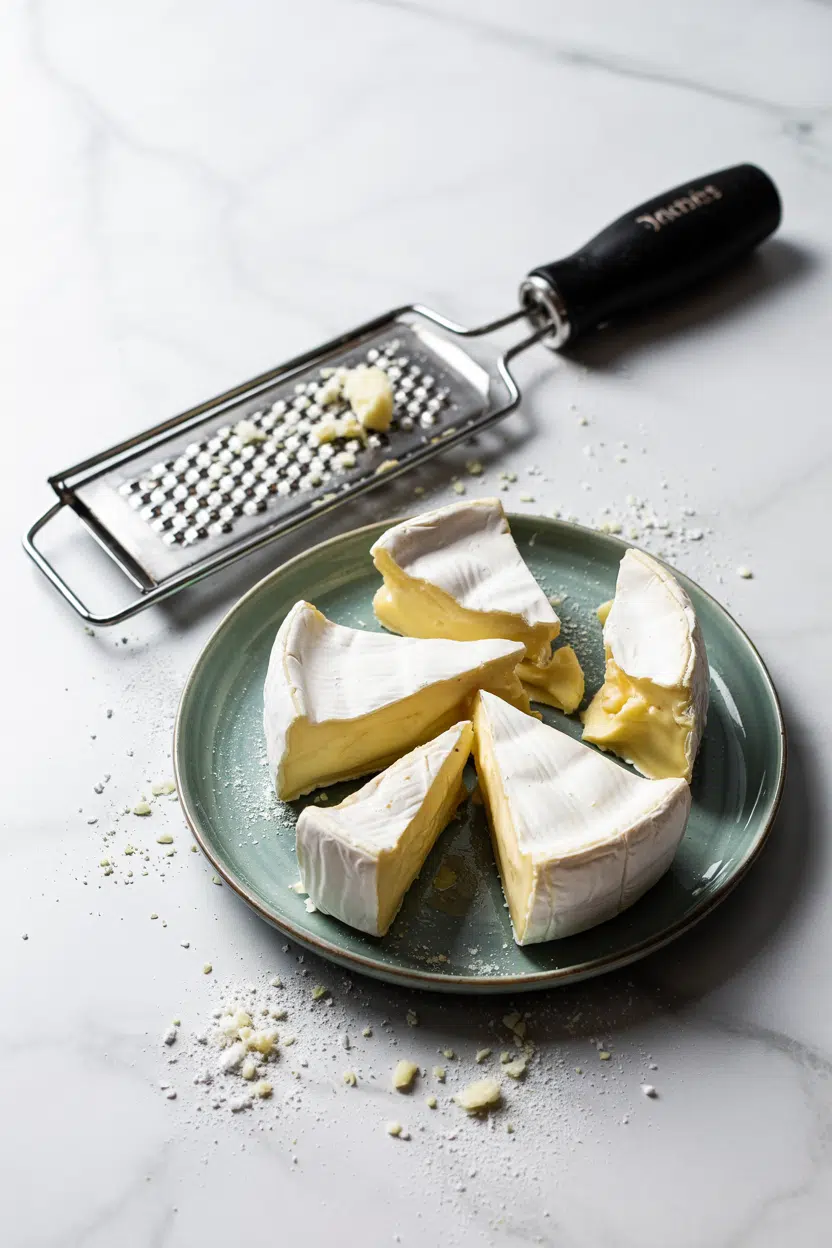
🍳 MeltedGrilled sandwiches, pasta, stuffed chickenRemove the rind first if you want a smoother melt
🥗 Sliced coldSalads, open-faced sandwichesUse young brie for cleaner slices - ripe paste crumbles

French cuisine uses brie in croque-style sandwiches and as a filling for savory crêpes. It also appears in American-style appetizers and upscale burger toppings.

If you need a different cheese for one of these applications, brie cheese replacements cover the closest alternatives by texture and flavor profile.

Try It In
🧀Cheddar Cheese StrawsSwap in brie for a softer, earthier variation on a classic→🥚Egg and Cheese Breakfast SandwichBrie melts beautifully here — richer than American, creamier than Swiss→

How to Buy and Store Brie Cheese

At the counter, look for brie with a uniformly white rind - no pink patches, no gray discoloration, and no strong ammonia smell before you've even cut into it.

A little give when pressed gently means the paste has softened through, which is ideal for immediate eating.

Watch Out
A sharp, eye-watering ammonia smell means the brie is past its window. The flavor turns harsh and unpleasant - it's not a sign of character, it's a sign to skip it.

Store brie loosely wrapped in wax paper or parchment, then placed inside a container in the coldest part of your fridge. Plastic wrap traps moisture and accelerates rind breakdown.

Opened wedges typically last one to two weeks - for a full breakdown of timing and signs of spoilage, see our guide to brie cheese storage life.

Start Here With Brie

New to brie? Buy a small wheel, let it sit out for an hour, and eat it with just bread and fruit.

No cooking required - this tells you exactly what you're working with before you build from there.

If you want to cook with it, baked brie is the lowest-risk entry point: the heat forgives uneven ripeness and the result is nearly always crowd-pleasing. From there, try it melted into a grilled sandwich or layered into a crêpe.

The rind is always your choice - eat it or leave it, depending on how much earthiness you want.

Frequently Asked Questions

Is the white rind on brie safe to eat?

Yes, the rind is completely edible. It's formed by Penicillium camemberti, the same mold used to ripen the cheese. It adds a slightly bitter, earthy note - skip it if you find the flavor too strong.

Can you freeze brie cheese?

You can, however the texture suffers. Freezing breaks down the creamy paste and turns it grainy after thawing. It's better suited for cooking after freezing than for serving on a board.

What is the difference between brie and camembert?

Both are soft-ripened cow's milk cheeses, however camembert is smaller, ripens faster, and typically develops a stronger, more pungent flavor. Brie tends to be milder and more buttery at the same stage of ripeness.

Should brie be runny inside?

A fully ripe brie will be very soft and nearly flowing at room temperature - this is normal and desirable. Young brie has a firmer, chalky center that hasn't yet broken down from the rind inward.

Does brie get stronger as it ages?

Yes. Flavor intensifies significantly as brie ripens - earthy, mushroomy notes deepen and an ammonia edge develops near the rind. Most commercial brie is sold before it reaches its strongest stage.

https://forkliftkitchen.com/brie-cheese/

What Is Banana Pepper? [Taste, Uses & More]

March 28, 2026

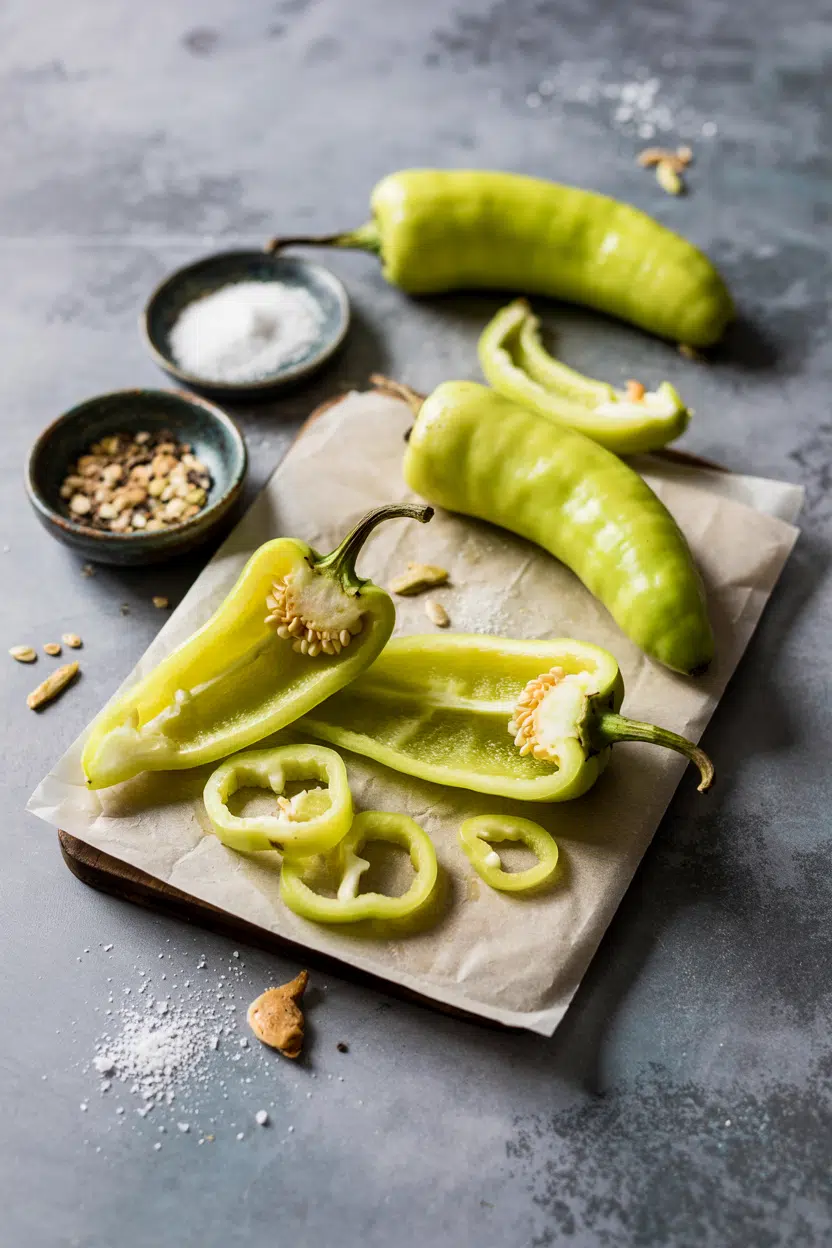
You spot them at the grocery store - tapered, pale yellow, and slightly waxy - and wonder if they're the same as those pickled rings on your deli sub. Banana peppers are a fixture in American sandwich shops and Italian-American antipasti spreads, appreciated for their mild tang rather than heat.

What Is Banana Pepper

If you've ever assembled stuffed appetizers, knowing about seasoning with stuffed peppers helps you plan prep and storage around fresh pepper timelines.

These are not fire-eaters' peppers - they're mild enough for anyone who finds jalapeños too aggressive, yet interesting enough to carry a dish on their own.

QUICK SUMMARY

A mild, tangy chili pepper from the Capsicum annuum group, banana peppers are eaten raw, pickled, or briefly cooked. They offer a crisp, slightly sweet bite with low heat and a citrusy edge - a go-to topping for subs, salads, and antipasti.

🫑Flavor: Mildly tangy, slightly sweet, citrusy, very low heat
🥗Best Uses: Subs, antipasti, pizza topping, stuffed appetizers, pasta salads
🛒Buy: Look for smooth, glossy yellow skin with no soft spots or wrinkled tips
❄️Fresh Shelf Life: 1-2 weeks refrigerated; pickled lasts months in sealed brine
⚠️Watch: Quick to soften when cooked - use high heat briefly to keep texture

What Is Banana Pepper?

Banana pepper is a sweet-mild chili pepper in the Capsicum annuum group, native to South America and now widely grown across North America and the Mediterranean.

Its name comes from its shape - a tapered, curved pod roughly 2-3 inches long that resembles a small banana.

You'll also see it labeled as yellow wax pepper, banana chile, banana chilli, or banana pepperoncini, depending on the region.

Fresh peppers start out pale yellow or light green and mature through orange to red. Most are harvested at the yellow stage for their characteristic mild tang.

A softer cousin to the bell pepper in heat terms, banana peppers sit near zero on the Scoville scale - typically 0-500 SHU - which is far below even a mild poblano.

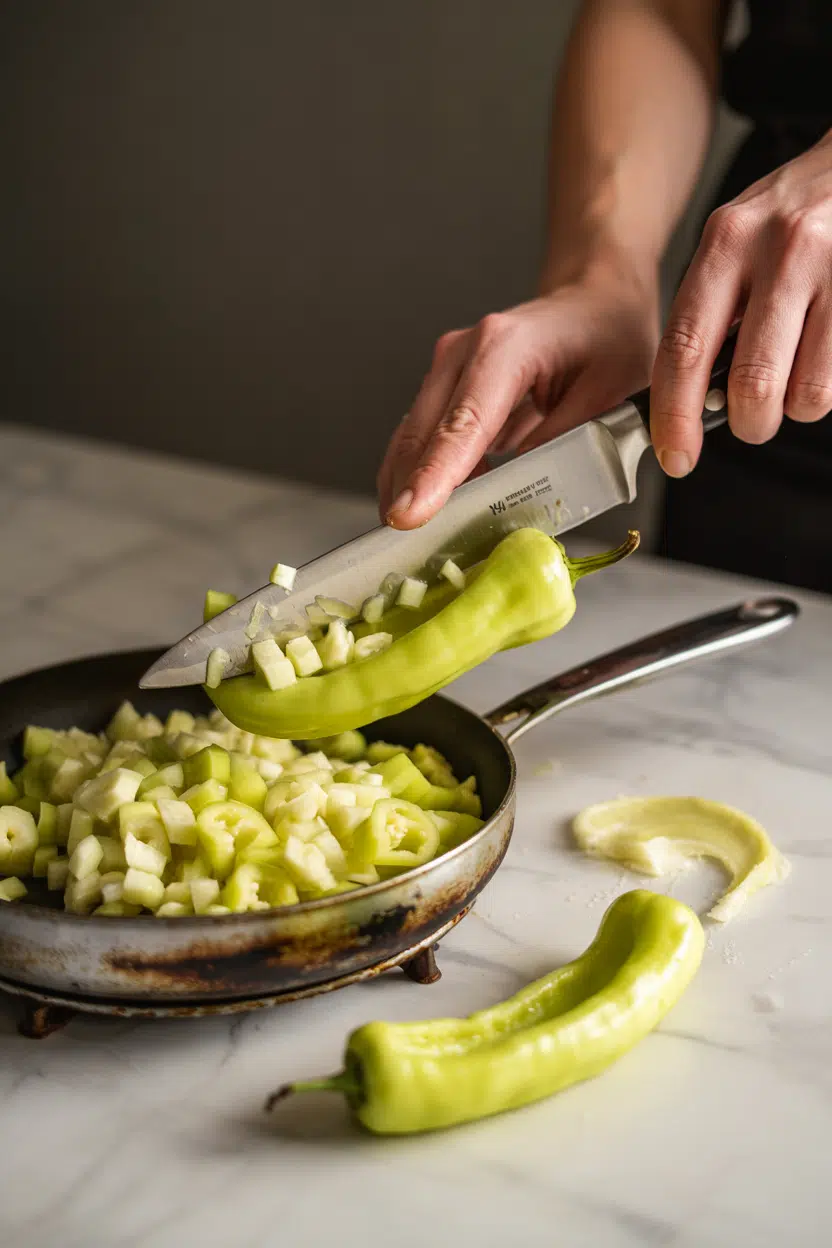
Two main forms appear in markets: fresh and pickled. Fresh peppers have thin, crisp walls.

Pickled versions are packed in vinegar brine, which deepens their tang and is how most people first encounter them.

If banana peppers aren't available, there are solid replacements for banana pepper that cover both the fresh and pickled applications.

Pepperoncini is the most common swap, though replacements for provolone cheese become relevant when you're building a full antipasti board and need to swap multiple components.

What Does Banana Pepper Taste Like?

banana pepper - What Is Banana Pepper

Fresh banana peppers taste mildly tangy and slightly sweet, with a crisp bite and a faint citrusy edge at the back of the palate. Heat is barely there - most tasters notice warmth only if they eat several at once.

Sensory SnapshotMild Intensity
👅 Flavor
mildly tangyslightly sweetcitrusylow heat
✋ Texture
crisp rawsoftens fast when cooked
👃 Aroma
fresh and greenmildly vinous when pickled

Compared to pepperoncini, banana peppers are noticeably sweeter and less vinegary in their fresh state. Pickled banana peppers develop a sharper, more pronounced tang from the brine - but still land gentler than most jarred pepperoncini.

Red-ripe banana peppers taste slightly fruitier and less acidic than yellow ones, with a thinner heat that lingers just a moment longer.

Golden Rule
Buy yellow-stage banana peppers for the brightest tang. Red-stage ones are sweeter but lose some of the citrusy snap that makes this pepper useful in savory applications.

How to Use Banana Pepper

Banana peppers do their best work in American deli and Italian-American cooking, though they show up across Mediterranean antipasti and northern Mexican preparations too. Raw slices are the classic deli sub topping, layered over provolone, onion, and Italian sausage.

Pasta salads benefit from a handful of sliced rings - the pepper's natural acidity pulls the dish together without added dressing.

How Banana Pepper Is Used
MethodBest ForTip
🥗 RawSubs, pasta salads, burgers, pizza toppingSlice thin for better coverage and even distribution
🫙 PickledAntipasti boards, salad bars, relish, tacosDrain well before adding to avoid diluting dressings
🔥 SautéedFajitas, egg scrambles, onion-pepper sidesKeep heat high and time short - 2-3 minutes max
🍽️ Stuffed & BakedAppetizers with cream cheese or ground meatUse slightly underripe peppers so they hold shape
🌮 GrilledTacos, salsas, roasted vegetable sidesUnderstanding [comparing broiling vs grilling options](https://forkliftkitchen.com/broiling-vs-grilling/) helps decide which method preserves more texture

Stuffed banana peppers are a standout application. Cream cheese, herbed ricotta, or seasoned ground sausage fill the cavity cleanly, and the pepper's thin walls bake through in under 20 minutes. Knowing cream cheese spoilage signs matters here if you're prepping stuffed peppers a day ahead. For pickling your own, white vinegar or cider vinegar both work - guidance on replacements for apple cider vinegar is useful if you want to adjust brine sharpness.

Try It In
🍗Air Fryer Lemon Pepper Chicken TendersBright citrus notes echo banana pepper's tangy edge→🥦Air Fryer Lemon Pepper CauliflowerA veggie-forward dish where mild pepper heat fits well→🍖Air Fryer Lemon Pepper MeatballsPickled banana pepper rings pair well alongside→

How to Buy and Store Banana Pepper

At the market, reach for peppers with smooth, glossy skin - uniformly pale yellow or light green, firm throughout, no wrinkled tips or soft spots. Dry or brown stems signal age.

For pickling projects, buy slightly underripe, firmer peppers so the walls hold shape once submerged in brine.

Shortcut
Skip washing until just before use. Moisture in the bag speeds deterioration - store peppers dry in a breathable produce bag in your crisper drawer.
  • 🌡️ Fresh storage - Refrigerate unwashed in a breathable bag; crisper drawer extends life to 1-2 weeks.
  • 🫙 Pickled storage - Keep sealed jars at room temperature until opened, then refrigerate in brine.
  • 📅 Pickled shelf life - Unopened jars last months; once opened, use within several weeks for best flavor.
  • 🚫 Avoid - Plastic-sealed airtight bags trap moisture and cause premature softening at the tips.

Good tracking of seasoning with banana pepper timelines keeps both fresh and jarred stock in rotation without waste.

Where to Start with Banana Pepper

Fresh banana peppers are low-commitment. Grab a few, slice them raw onto a sandwich, and you'll immediately understand what the fuss is about.

  • 🥪 First use - Raw rings on a sub with provolone and onion; no cooking required.
  • 🫙 Next step - Quick-pickle slices in white vinegar brine; ready in 24 hours.
  • 🍽️ Intermediate - Stuff with cream cheese and bake for 18-20 minutes at 375°F.

Anyone who finds hot peppers too sharp will appreciate how banana peppers add acidity and pepper character without the burn. They're one of the few chilies that work equally well straight from the fridge or out of a jar.

Frequently Asked Questions

Are banana peppers hot?

No. Banana peppers rate 0-500 SHU on the Scoville scale, placing them well below jalapeños and even most mild chilies. Most people detect no heat at all, especially from yellow-stage fresh peppers.

How do banana peppers differ from pepperoncini?

Banana peppers are sweeter and milder, with thinner walls and a more tapered shape. Pepperoncini have a slightly more wrinkled skin, a sharper vinegary bite when pickled, and a touch more heat.

Can you eat banana peppers raw?

Yes - raw is one of the best ways to use them. The crisp texture and fresh tang are at their peak before any heat is applied, making raw slices ideal for sandwiches and salads.

Are banana peppers the same as yellow wax peppers?

They're closely related but not identical. Yellow wax pepper is a broader category that includes hotter varieties; banana peppers are specifically the mild, sweet-flavored type within that group.

What can you stuff banana peppers with?

Cream cheese, herbed ricotta, and seasoned ground sausage are the most common fillings. The pepper's thin walls bake through quickly, so dense or wet fillings work better than chunky ones that need longer cook times.

What Is Cambozola Cheese? [Taste, Uses & More]

March 28, 2026

Cambozola occupies a rare spot on any cheese board - it delivers the creamy richness of a triple-cream without the sharp punch that turns off blue-cheese skeptics.

What Is Cambozola Cheese

Bavaria's answer to a French-Italian fusion, it melts like brie cheese in dairy recipes yet carries the gentle tang of a soft blue.

If you've been reaching past the blue cheeses at the counter, this one might change that habit.

Understanding how it behaves - on a board, in a pan, stirred into risotto - is what this profile covers.

QUICK SUMMARY

Cambozola is a Bavarian triple-cream blue cheese with a bloomy white rind, ultra-creamy interior, and mild blue veining. Milder than most blue cheeses, it spreads easily, melts gently, and works on cheese boards, in salads, and stirred into hot dishes at the last minute.

🧀Origin: Bavaria, Germany - a triple-cream soft-ripened blue hybrid
👅Flavor: Buttery cream, mild tangy blue, light mushroomy rind, soft salt
🍽️Best Uses: Cheese boards, risotto finish, crumbled salads, melted on steak
❄️Shelf Life: Unopened 3-4 weeks; opened wedge 1-2 weeks wrapped in cheese paper
⚠️Watch Out: High heat breaks down its creamy texture - always add late in cooking

What Is Cambozola Cheese?

Cambozola is a soft-ripened, triple-cream blue cheese made in Bavaria, Germany, by the Käserei Champignon creamery since the 1970s.

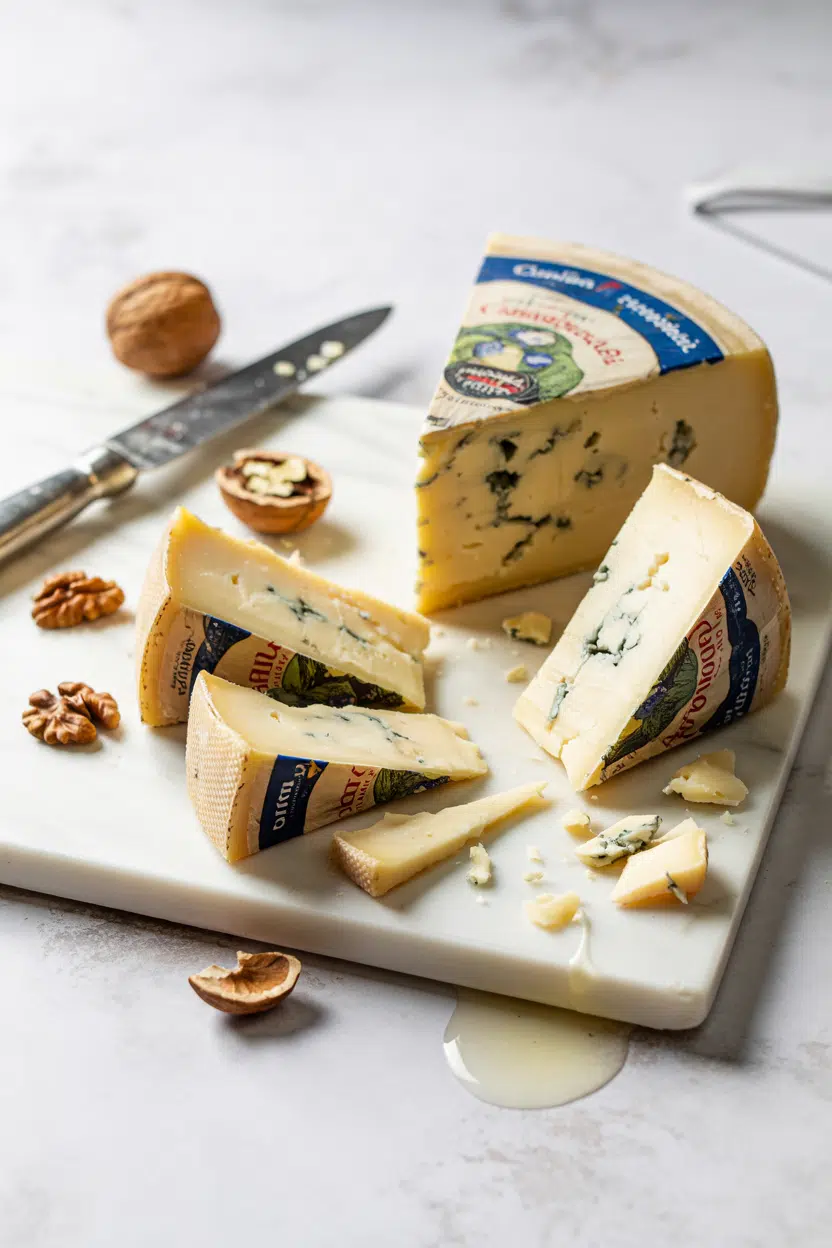
The name blends "Camembert" and "Gorgonzola," which accurately describes its construction: a bloomy white rind modeled on Camembert wraps an ultra-rich, spreadable interior laced with the mild blue veining associated with Gorgonzola.

What sets it apart from traditional blue cheeses is the triple-cream base - cream is added during production to push the fat content above 70 percent, yielding a texture closer to a soft brie than a firm gorgonzola wheel.

The result is a cheese that looks like a small white-rinded round from the outside and reveals soft blue marbling when cut.

You may see it labeled Cambozola Blue or simply cambozola cheese in lowercase on retail packaging.

No major sub-varieties exist by name, though an aged "Black Label" version from the same producer offers a firmer texture and more pronounced blue flavor.

Bavaria is known for rich, dairy-forward products - the same regional tradition behind using prinzregententorte bavarian cake for creaminess in layered desserts applies to its cheese-making culture. Cambozola is one of that region's most recognizable modern exports.

What Does Cambozola Cheese Taste Like?

cambozola cheese - What Is Cambozola Cheese

Cambozola tastes like a mild gorgonzola dolce crossed with a creamy brie - buttery and rich up front, with a gentle blue tang that surfaces in the finish rather than leading the bite.

The white rind adds a faint mushroomy note, similar to what you'd find on a standard Camembert.

Sensory SnapshotModerate Intensity
👅 Flavor
buttery creammild tangy bluelight salt
✋ Texture
ultra-creamyspreadableslightly crumbly veins
👃 Aroma
mildly mushroomysoft blue tang

The intensity is genuinely moderate - not timid, not aggressive.

Cold from the fridge, the blue notes are subtle and the texture feels almost dense.

At room temperature, the fat loosens, the creaminess opens up, and the tang becomes slightly more pronounced.

Heat pushes the blue flavor forward, which is why it works well crumbled over a warm pear and arugula salad just before serving.

Golden Rule
Always bring cambozola to room temperature for 20-30 minutes before serving on a board. Cold mutes its flavor and firms the texture.

How to Use Cambozola Cheese

Cambozola works across a wider range of applications than most blue cheeses because its mild intensity doesn't dominate other ingredients. Pairing it with sweet or acidic elements - pear, fig jam, crisp apple, honey - brings out its buttery side.

Walnuts, hazelnuts, rye bread, and sourdough are natural companions on a board.

For wine, lean toward light-bodied options. A dry Riesling or a glass of Champagne balances the cheese's fat without clashing with its blue notes.

Heavier reds tend to overwhelm it.

How Cambozola Cheese Is Used
MethodBest ForTip
🥗 Cold BoardCheese plates, crackers, fruitServe at room temp; pair with honey and walnuts
🍳 Gentle MeltSteak topping, burgers, mashed potatoesAdd in the last minute of cooking; avoid sustained heat
🔥 Baked WholeAppetizer with fruit preserves and crackersWrap in parchment, bake at 350°F until just softened
🥄 Stirred InRisotto finish, creamy dips, pasta saucesAdd off heat or at the very end to preserve texture

Stirring cambozola into risotto just before serving is one of its best applications - the cheese dissolves into the grains and adds a mild blue creaminess without sharpness.

Keep in mind that how long risotto keeps applies here too; cambozola-finished risotto should be eaten the same day. For cold applications, it crumbles cleanly over salads once slightly chilled.

Avoid strongly smoky flavors that overwhelm its subtle notes, and skip long braises where the creamy texture would break down completely. If you need a stand-in for any recipe, a look at cambozola cheese stand-ins will point you toward workable alternatives.

Recipes calling for gorgonzola cheese in dairy recipes often accept cambozola as a milder swap with better spreadability.

Try It In
🧀Southern Pimento Cheese SpreadSwap in cambozola for a tangy, creamy blue-cheese variation→🥗Blue Cheese Dressing with ButtermilkCambozola's mild tang works well in a creamy buttermilk dressing→🥐Ham and Cheese Croissant Breakfast BakeA small amount of cambozola adds creamy blue depth to the egg bake→

How to Buy and Store Cambozola Cheese

At the counter, look for a wheel or wedge with a thin, white, slightly velvety rind - no heavy brown discoloration and no sharp ammonia smell when you lean in close.

The interior should show blue veins distributed through the paste without dominating the whole cut face. Press the center gently; it should yield slightly, not feel hard or hollow.

Watch Out
A strong ammonia smell on the rind signals over-ripeness. Some soft-ripened cheeses carry faint ammonia, but if it's sharp and persistent, pass on that wedge.

Wrap cut surfaces in wax paper or dedicated cheese paper, then place loosely inside a container in the fridge.

Plastic wrap traps gases against the rind and accelerates ammonia buildup - skip it.

For more detail on how long cambozola cheese keeps under different conditions, the full breakdown is at how long cambozola cheese keeps.

As a general guide, an unopened wheel holds 3-4 weeks refrigerated; an opened wedge is best within 1-2 weeks.

Start With the Cheese Board

If cambozola is new to you, a simple board is the right entry point.

Lay out a few thin slices alongside fig jam, sliced pear, and a handful of walnuts - the sweetness and crunch frame the cheese's mild blue notes without competing.

From there, try it melted over steak or stirred into a risotto finish for a low-effort way to explore what camembert in dairy recipes and blue-style cheeses can each do in a hot application.

Cambozola rewards straightforward treatment. Skip the complicated preparations; this cheese does its best work when the recipe keeps things simple.

Frequently Asked Questions

Is cambozola a blue cheese?

Yes, technically - it contains blue-green mold veins produced by Penicillium cultures. However, it's a triple-cream hybrid, so the blue character is far milder than Gorgonzola or Roquefort.

Is cambozola the same as gorgonzola?

No. Gorgonzola is an Italian DOP cheese with a firmer texture and stronger blue flavor. Cambozola is German, triple-cream, and noticeably milder - the two share only a general blue-cheese category.

Can you melt cambozola?

Yes, and it melts smoothly due to its high fat content. Add it off heat or in the final minute of cooking - sustained high heat breaks down the creamy texture and sharpens the blue flavor.

How strong does cambozola taste?

Moderate - noticeably more complex than plain brie, but far less assertive than Roquefort or aged gorgonzola. The Black Label version from the same producer is firmer and somewhat stronger.

What wines pair with cambozola?

Dry Riesling and Champagne are the most reliable choices. Both have enough acidity to cut through the fat without overpowering the mild blue notes. Avoid full-bodied tannic reds.

What Is Amaro Nonino? [Taste, Uses & More]

March 28, 2026

Amaro Nonino does something most bitters can't: it brings a whole grape distillate into the bottle alongside its herbs.

What Is Amaro Nonino

Understanding the role suet plays in pastry helps explain why tallow works - but here, it's the taste of grappa that explains why Nonino sits in a category of its own.

Where most amaros rest on neutral spirit, Nonino Quintessentia is built on grappa, which means every bitter, citrus, and caramel note arrives wrapped in grape warmth.

That's not decoration - it's the whole architecture of the drink, and it shapes every use you'll find for it.

QUICK SUMMARY

Amaro Nonino is a grappa-based Italian amaro from Friuli-Venezia Giulia, known for its gentian bitterness, candied orange, and dried-fruit sweetness. Sip it neat after dinner, use it as the bitter anchor in a Paper Plane, or reduce it into a glaze for duck and pork.

🍊Flavor: Bitter gentian, candied orange, dried fruit, caramel, and grape warmth
🥃Best Use: Neat digestif, Paper Plane cocktail, glazes for roasted meats
🍾ABV: 35-40%; store upright, cool, and dark - best within 1-3 years opened

What Is Amaro Nonino?

Amaro Nonino is an herbal bitters liqueur produced by the Nonino family distillery in Friuli-Venezia Giulia, in northeastern Italy. Unlike most amaros, which use neutral grain spirit as their base, Nonino starts with grappa - a grape pomace distillate - making it structurally closer to an herbal grappa than to something like Fernet-Branca or Campari.

The full name, Amaro Nonino Quintessentia, reflects the family's emphasis on botanical precision. They macerate a blend of bitter and aromatic botanicals - including gentian root, orange peel, licorice, and other proprietary herbs - directly in the grappa base before blending and aging.

The result is bottled at 35-40% ABV.

Nonino sits within the broader category of Italian amaro, which spans a wide spectrum from lightly bitter aperitivo-style liqueurs to intensely medicinal digestifs. Within that category, Nonino is considered mid-bitter and fruit-forward.

You may also see it referred to simply as Nonino Amaro or amaro nonino grappa-based amaro in cocktail literature.

What Does Amaro Nonino Taste Like?

amaro nonino - What Is Amaro Nonino
Sensory SnapshotStrong Intensity
👅 Flavor
bitter gentiancandied orangedried figcaramel
✋ Texture
velvetysyrupy finish
👃 Aroma
herbal bitterscandied orangetoasted grape

The bitterness in Amaro Nonino is gentian-driven - clean and direct, not medicinal or harsh. It arrives early, then gives way to bright candied orange peel and a dried-fruit sweetness that reads as raisin and fig rather than fresh fruit.

What separates Nonino from other bittersweet amaros is the grape warmth underneath everything. The grappa base adds a soft, peat-adjacent warmth and a velvety mouthfeel that neutral-spirit amaros don't carry.

The finish lingers - bitter, lightly syrupy, with a faint caramel note. Served over ice, the citrus opens up further; served neat and slightly warmed, the herbal depth dominates.

Golden Rule
Nonino's bitterness is assertive but not aggressive. It reads bittersweet, not medicinal - which is why it works in cocktails where Fernet would overwhelm.

How to Use Amaro Nonino

Nonino's most traditional role is as a neat after-dinner digestif, served slightly chilled or over a single large ice cube.

The alcohol is high enough to carry the botanical complexity without dilution; a small ice cube slows the warming and opens the citrus notes.

Its biggest cocktail moment is the Paper Plane - a modern equal-parts classic calling for Amaro Nonino, bourbon, Aperol, and fresh lemon juice. The role aperol plays in that drink is brightness and color, but Nonino carries the bitter weight.

If you're building the drink and short on one ingredient, solid bourbon swaps that work include rye whiskey or aged rum without breaking the cocktail's balance.

Beyond the glass, Nonino reduces cleanly into glazes. Mix it with honey and whole-grain mustard, then brush it over roasted duck or pork during the last ten minutes in the oven.

The bitterness mellows under heat while the fruit notes concentrate.

How Amaro Nonino Is Used
MethodBest ForTip
🥃 Neat/ChilledPost-dinner digestif, tastingServe at fridge temp or over one large cube - not crushed ice
🍹 Cocktail BitterPaper Plane, Negroni riffsEqual-parts builds; don't exceed one part or it dominates
🍖 Glaze/ReductionDuck, pork, roasted pearsReduce with honey over medium heat; stop before it scorches
☕ Hot BeverageEspresso, hot chocolate, mulled wineAdd a small splash after pulling from heat - high ABV evaporates fast

Nonino also works stirred into hot chocolate or mulled wine, where its bitter-citrus edge cuts through sweetness.

A small splash into an affogato - espresso over vanilla gelato - adds a bitter lift that sharpens the coffee.

For savory applications, use it in a marinade for game or lamb alongside rosemary and juniper; the gentian bitterness adds herbaceous depth that complements strong meat flavors.

  • 🚫 Skip it with delicate seafood - the bitterness overwhelms fragile briny flavors like raw oysters or sole.
  • 🥗 Avoid light green salads - the herbal intensity clashes with fresh herb dressings rather than complementing them.
Try It In
🍯Honey Mustard Dressing (Homemade)Stir a splash of Nonino into the base for a bitter-citrus edge→🍅Roasted Garlic Marinara SauceA small reduction adds herbal depth to tomato-forward sauces→🧄Roasted Garlic Béarnaise SauceA bitter note alongside rich butter sauce works with grilled duck→

How to Buy and Store Amaro Nonino

Look for bottles labeled "Nonino" or "Quintessentia" - those are the markers of the authentic product. The liquid should be clear to deep amber with no cloudiness.

A firm cork or screwcap with no signs of seepage matters too; evaporated alcohol is a real risk with poorly sealed bottles.

Watch Out
Avoid unlabeled or heavily discounted bottles without clear provenance. Oxidized Amaro Nonino loses its citrus brightness first - flat aroma is the tell.

Once open, storage is simple:

  • Store upright - keeps the cork from absorbing liquid and degrading.
  • Cool and dark - a pantry shelf works; avoid spots near the stove or a sunny window.
  • Reseal tightly after each pour - volatile citrus and herbal notes are the first to fade.

For full guidance on how long amaro nonino keeps, the short answer is: unopened bottles last many years; opened bottles are best within one to three years.

The high ABV preserves it safely beyond that window, however the aroma degrades noticeably after year three.

Start Here If You're New to Amaro Nonino

If you've never opened a bottle, start neat - no ice, small pour, after a meal.

That's the clearest read on what the grappa base and gentian bitterness actually do together.

Once you have that baseline, the Paper Plane cocktail is the logical next step: equal parts Nonino, bourbon, Aperol, and lemon.

For anyone cooking with it, the honey-mustard duck glaze is the lowest-risk entry point - heat tames the sharpest edges.

If Nonino isn't available, amaro nonino swaps that work exist, though none fully replicate the grappa backbone. And if you need to rebuild from the spirit side, swapping out grappa itself changes the flavor architecture significantly.

Start with the real thing when you can.

Frequently Asked Questions

Is Amaro Nonino bitter?

Yes, but it's bittersweet rather than harsh. Gentian root provides the bitter backbone, balanced by candied orange and dried-fruit sweetness. It's noticeably less medicinal and intense than Fernet-Branca.

Can you drink Amaro Nonino neat?

Yes - neat is its most traditional form. Serve it slightly chilled after dinner in a small glass. The grappa base gives it enough body to hold up without ice or mixers.

What cocktails use Amaro Nonino?

The Paper Plane is its signature cocktail - equal parts Nonino, bourbon, Aperol, and fresh lemon. It also appears in Negroni riffs and whiskey-forward stirred drinks where a bittersweet herbal note is needed.

Is Amaro Nonino gluten free?

The base distillate is grape-derived grappa, which is naturally gluten-free. However, some botanical additives may vary by batch - check the label or contact the distillery if you have celiac disease.

How strong is Amaro Nonino?

Amaro Nonino is bottled at 35-40% ABV, which is higher than most amaros. That strength is part of why it holds up in equal-parts cocktails without being overwhelmed by other spirits.

How Long Does Bourbon Last? [Storage Guide]

March 28, 2026

Finding an old, opened bottle of bourbon at the back of your cabinet - half-full, label faded, cork looking a little tired - raises a fair question about whether it's still worth pouring. Bourbon doesn't spoil the way food does, but its flavor absolutely changes over time once air gets in.

How Long Does Bourbon Last

Understanding how oxidation, headspace, and storage conditions interact tells you exactly what you're working with and whether that bottle deserves a glass or the drain.

QUICK SUMMARY

An unopened bottle of bourbon keeps indefinitely in a cool, dark pantry. Once opened, expect peak flavor for 1-2 years before oxidation dulls the aromatics. Freezing is safe but mutes the nose - pantry storage is the right call for most bottles.

🥃Unopened: Indefinite shelf life when stored upright in a cool, dark pantry
📅Opened: Peak flavor 1-2 years; still drinkable longer with minimal headspace
❄️Freezer: Safe indefinitely but cold mutes aromatics; let it warm before nosing

How Long Does Bourbon Last?

Bourbon is a high-ABV spirit - typically 40% alcohol (80 proof) or above - which means microbial spoilage is essentially off the table.

The real enemy is oxidation, which begins the moment air enters the bottle and slowly strips away the vanilla, caramel, and charred oak notes that define good bourbon.

Bourbon Shelf Life
MethodStateDurationNotes
🗄️ PantryUnopenedIndefiniteSealed bottle stores for decades; cork and label condition matter for collectibles
🗄️ PantryOpened1-2 years peakStill safe beyond that; top aromas fade as headspace grows and oxidation accelerates
🧊 FridgeOpened1-3 yearsCold slows aromatic loss marginally; mutes the nose and is unnecessary for high-proof bottles
🥶 FreezerOpenedIndefiniteWon't freeze at standard ABV; aroma returns as bottle warms to room temperature

One thing bourbon doesn't do is age in the bottle - unlike wine, there's no ongoing development once it leaves the cask.

All the complexity from charred oak barrels is locked in at bottling; from there, it only holds or gradually declines.

Watch Out
Once a bottle is less than a quarter full, oxidation speeds up significantly. Decant into a smaller bottle to cut headspace and protect what's left.

How to Store Bourbon

The pantry is the right home for almost every bourbon bottle. Upright storage is non-negotiable - keeping the bottle vertical protects the cork from prolonged alcohol contact, which degrades natural cork faster than most people expect.

Pantry: Store upright in a cool, dark spot, away from direct sunlight and heat sources like stovetops or radiators. Temperature swings are harder on flavor than steady warmth, so a consistent cool environment beats a fluctuating one. Understanding the taste of bourbon helps explain which aromatic compounds - vanilla, baking spice, dried fruit - are most vulnerable to light and heat degradation.

Fridge: Refrigeration is optional and rarely necessary for bottles above 40% ABV. If you prefer cold pours, keep a dedicated bottle there, but return the main collection to the pantry for long-term storage - cold consistently mutes the nose.

Decanter: A glass decanter works well if it has an airtight stopper. Avoid decanters with loose-fitting lids; they introduce more air exchange than a tightly capped bottle.

  • 📌 Label the open date - lighter, younger bourbons lose floral and vanilla notes faster than aged expressions
  • 📌 Prefer screw caps or synthetic stoppers for long-term storage; natural corks can dry, crack, and let air creep in
  • 📌 Avoid vibration - frequent movement accelerates flavor loss in aged and collectible bottles

Can You Freeze Bourbon?

Freezing bourbon is safe - the alcohol content prevents freezing at any standard home freezer temperature. What it doesn't do is preserve the spirit in some meaningful way that pantry storage can't match.

Golden Rule
Freeze a dedicated cocktail bottle if you want cold pours. Keep your main collection at pantry temperature to preserve the aromatics you paid for.

Cold dramatically increases viscosity, giving chilled bourbon a syrupy mouthfeel, and temporarily suppresses volatile aromatic compounds - the nose goes flat until the liquid warms.

For cocktails that call for chilled spirits, this trade-off is fine.

For sipping, it works against the spirit.

If you're running low on a bottle you're not finishing soon, knowing bourbon swaps that work can help you decide whether to freeze what's left or use it up in a recipe first.

  1. Cap tightly Place the sealed bottle upright in the freezer; ensure the cap or cork is fully seated before freezing.
  2. Minimize headspace For decanters, leave minimal headspace to reduce pressure changes as temperature drops.
  3. Thaw gradually Remove the bottle and let it return to room temperature upright - avoid rapid temperature swings that could stress glass.
  4. Nose before pouring Give the bourbon 15-20 minutes at room temperature; aromatics return as it warms and the pour will open properly.

Signs Bourbon Has Gone Bad

Bourbon at high proof doesn't harbor bacteria or mold in the liquid itself, but it can develop off-characteristics that make it unpleasant or, in rare cases, worth discarding. The cork and headspace are the two most common failure points.

Signs It's Gone Bad
👀
VisualCloudiness or precipitation after cold storage (chill haze) · Excessive darkening beyond normal oxidation · Mold or damage visible at the cork or neck
👃
SmellSharp acetone or varnish-like chemical note · Musty or moldy cork aroma
✋
TextureSyrupy or sticky mouthfeel in flavored bourbons suggesting breakdown · Oily coating that lingers oddly rather than sitting cleanly

Chill haze - the cloudiness that appears after refrigeration or freezing - is usually cosmetic and clears as the bottle warms. It's more common in flavored bourbons with added sugars or in bottles that weren't chill-filtered. A chemical or acetone smell, on the other hand, is a real signal: discard the bottle. Moldy cork aroma indicates the stopper degraded and contaminated the spirit, and no amount of decanting fixes that.

Protect What's in the Bottle

Bourbon rewards simple habits. The biggest wins come from reducing air contact and keeping storage conditions steady - neither of which requires special equipment.

  • Decant into smaller bottles - a 375ml glass bottle with a tight cap cuts headspace when the original is running low
  • Store upright, always - sideways storage that works for wine actively harms natural cork in spirits bottles
  • One freezer bottle, one pantry bottle - keep your everyday cocktail pour cold without sacrificing the aromatics in your main collection
  • Mark the open date - a simple piece of masking tape helps you track which bottles to prioritize before aromatic fade sets in

Much like thinking through the taste of whiskey more broadly, paying attention to how your bourbon changes after opening makes you a sharper taster - and a less wasteful one.

Frequently Asked Questions

Does bourbon go bad after opening?

Not in a food-safety sense - high alcohol prevents microbial growth. However, oxidation gradually dulls the aromatics, and a bottle with large headspace can taste noticeably flat within a year.

How long does an opened bottle of bourbon last?

Peak flavor holds for 1-2 years after opening with good storage. Beyond that, the spirit is still drinkable but lighter, younger bourbons lose their delicate vanilla and floral notes first.

Can you put bourbon in the freezer?

Yes, safely. Standard bourbon won't freeze at home freezer temperatures due to its alcohol content. Cold mutes the nose significantly, so let it warm 15-20 minutes before a serious pour.

Does proof affect how long bourbon lasts?

Higher-proof bourbons oxidize marginally more slowly because less water dilutes the alcohol. Cask-strength expressions (typically 110-130 proof) hold their aromatics a little longer than standard 80-proof bottles once opened.

Can you drink bourbon that smells odd?

Depends on the smell. Flat or woody aromas from oxidation are harmless. A sharp acetone, varnish, or musty cork smell is a signal to discard - those indicate cork contamination or chemical breakdown.

What Is Chervil? Taste, Uses & Culinary Tips

March 28, 2026

Most people walk past chervil at the market and assume it's just a fussier version of parsley's flavor and uses - something decorative, easily skipped. That's the wrong read, and it costs cooks a genuinely distinctive herb.

What Is Chervil
QUICK SUMMARY

Chervil is a delicate leafy herb with a mild anise‑sweet flavor, prized in French cooking. Use it raw or off heat - fold it into eggs, stir into cream sauces, or scatter over fish. Buy fresh, use fast; it fades within days.

🌿Category: Leafy herb, parsley family, fines herbes staple
👅Flavor: Mild anise, lightly sweet, subtle peppery green finish
🍳Best Uses: Eggs, cream sauces, fish, cold soups, herb butter
🛒Buying Tip: Choose uniformly green, lacy leaves with a faint anise scent
📅Shelf Life: Very short - best within 3-5 days refrigerated

What Is Chervil?

Chervil (Anthriscus cerefolium) is a fine-leafed annual herb native to Western Europe, cultivated extensively in France for centuries. Its lacy, fern-like leaves sit on slender stems and look almost too delicate to survive a kitchen.

It belongs to the same family as parsley and carrot, which explains some of its herbaceous greenness. Unlike parsley, however, chervil carries a distinctly anise-like note that sets it apart immediately.

You'll also see it labeled French chervil or "gourmet parsley" - though neither name fully captures what it does. In classic French cooking, it's one of four herbs in fines herbes, the canonical blend alongside chives, parsley, and tarragon.

  • 🌍 Origin - Western Europe; most associated with French bistro and classical cuisine
  • 📛 Also known as - French chervil, gourmet parsley, *Anthriscus cerefolium*
  • 🌿 Plant family - Apiaceae (same as parsley, dill, and fennel)
  • ❄️ Season - Spring and early autumn; bolts quickly in summer heat

What Does Chervil Taste Like?

chervil - What Is Chervil

Chervil lands somewhere between parsley and tarragon - greener and lighter than tarragon, but with more personality than flat-leaf parsley. The anise note is mild, never sharp, with a gentle sweetness underneath.

Sensory SnapshotMild Intensity
👅 Flavor
Mild aniseLightly sweetPeppery green
✋ Texture
Very tenderDelicate
👃 Aroma
Fresh aniseMild green

Heat destroys chervil's aroma fast. Even a few minutes in a hot pan flattens both the anise note and the sweetness, leaving only a faint, vaguely herby ghost.

Golden Rule
Add chervil at the very end of cooking - or not at all. Once the pan is off the heat, fold it in and serve immediately.

That fragility is the point. The flavor is precise and fleeting, which is exactly why French cooks treat it as a finishing herb rather than a background one.

How to Use Chervil

Chervil earns its place in French and Belgian kitchens because its mild anise lift doesn't compete - it completes. Eggs, cream, and butter are its natural partners, and it appears most in spring-season dishes where lightness matters.

How Chervil Is Used
MethodBest ForTip
🥗 Raw garnishFish crudo, cold poached salmon, chilled vichyssoiseScatter whole sprigs or torn leaves just before serving
🍳 Folded in off heatOmelettes, scrambled eggs, beurre blanc, cream saucesStir in after the pan leaves the burner; do not return to heat
🧈 Herb butterSteamed asparagus, peas, shellfish, white fishBlend with softened butter and a squeeze of lemon; chill before use
🥣 Cold blendedHerb vinaigrettes, cold herb sauces, salad dressingsAdd to dressing base and use same day for brightest flavor

In fines herbes form, chervil combines with chives, parsley, and tarragon for classic poultry and egg dishes.

The blend works because each herb contributes a different register - chervil brings the sweetness, tarragon the stronger anise note, and alternatives to tarragon show just how difficult that anise layer is to replace cleanly.

Pair chervil with young spring vegetables like asparagus and peas, white fish such as sole or cod, and soft dairy - crème fraîche, fromage blanc. Lemon and mild vinegars lift its flavor without overwhelming it.

Avoid heavy red sauces and long braises; neither will preserve anything worth preserving.

Try It In
🐟Air Fryer Lemon Pepper Salmon BitesFinish with fresh chervil for a clean anise lift over the lemon→🥗Balsamic Vinaigrette Dressing (Homemade)Stir finely chopped chervil into the finished dressing before serving→

How to Buy and Store Chervil

Choose bunches with uniformly green, lacy leaves and no yellowing or dark spots. Pinch a leaf and smell it - fresh chervil gives a faint anise-sweet scent.

If it smells purely grassy with no sweetness, it's already fading.

Watch Out
Dried chervil loses nearly all its aroma. If a recipe calls for fresh chervil and you only have dried, consider using fresh tarragon or chives instead - see alternatives to chervil for specific swaps.

Storage is straightforward but unforgiving. Wrap the stems in a damp paper towel, stand the bunch upright in a small jar with a little water, and refrigerate.

Use within 3-5 days - this herb does not wait. For a detailed breakdown on extending that window, keeping chervil fresh covers the method step by step.

Chervil's short life also affects prep timing.

Chop it only right before use, and keep it separate from hot components until the last second - much like chives's shelf life, the clock on chervil's aroma runs fast once the leaves are cut.

Start Here If You're New to Chervil

If you've never cooked with chervil, fold a small handful into your next omelette right before you plate it.

That single move shows you exactly what the herb does - the way it softens into warm eggs without disappearing, and how the anise lifts without announcing itself.

From there, try it over cold poached salmon or stirred into a simple beurre blanc.

Once you understand how omelette's shelf life intersects with fresh herb timing, you'll start thinking about chervil the way French cooks do - as something added at the last possible moment.

Don't overthink the pairings. Eggs, butter, fish, cream.

That's the whole map.

Frequently Asked Questions

Is chervil the same as parsley?

No. Both are in the same plant family, but chervil has a distinct anise-sweet note that parsley lacks entirely. The leaves are also finer and more delicate, and chervil wilts far faster than flat-leaf parsley.

Can you cook chervil?

Technically yes, but sustained heat kills its flavor. Add it off heat or in the final seconds of cooking - anything more and the anise aroma disappears completely.

What herbs are in fines herbes?

The classic four are chervil, chives, parsley, and tarragon. They're used fresh and in roughly equal proportions, typically finishing egg dishes or light poultry.

Is chervil available dried?

It is sold dried, but the drying process strips most of its volatile oils - the anise aroma almost completely disappears. Fresh chervil and dried chervil are not practical substitutes for each other.

Can you freeze chervil?

Freezing works better than drying - blanch briefly, squeeze dry, and freeze in small portions. Texture suffers, so use frozen chervil only in cooked applications like sauces, not as a raw garnish.

How Long Does Baguette Last? [Storage Guide]

March 28, 2026

Buying a fresh baguette is one of the few genuinely time-sensitive grocery decisions - that crackling crust and open crumb are already on a countdown from the moment you leave the bakery.

Can You Freeze Baguette

Unlike most breads, a baguette's high surface-area-to-volume ratio means it stales faster at room temperature and grows mold faster in the fridge, making storage choices unusually consequential.

If you've ever wondered whether a half-eaten loaf is still worth eating tomorrow, or if mold in yogurt guide logic applies here, this guide covers every window - counter, fridge, and freezer.

For reheating, comparing countertop oven vs toaster oven options can help you decide which appliance gets crust back fastest.

QUICK SUMMARY

A baguette lasts 1-2 days on the counter, 3-5 days in the fridge (though staling accelerates), and up to 3 months in the freezer. The counter is best for same-day eating; freezing slices flat is the smartest move for anything leftover.

🏠Counter: 1-2 days whole; slices go stale within 12-24 hours
🧊Fridge: 3-5 days but crust turns leathery fast
❄️Freezer: 1-3 months; oven-reheat restores most of the crust crispness

How Long Does a Baguette Last?

A baguette's shelf life depends heavily on how it's stored and whether it's been sliced. Starch retrogradation - the process that makes bread go stiff and dry - happens fastest at refrigerator temperatures, which is counterintuitive for most people.

Room temperature is actually better for short-term texture, even though it shortens the mold-free window.

Baguette Shelf Life
MethodStateDurationNotes
🏠 PantryWhole1-2 daysPaper bag or cotton wrap; crust stays crisp only on day one
🏠 PantrySliced12-24 hoursExposed cut surfaces dry and harden quickly
🧊 FridgeWhole3-5 daysMold-free but staling accelerates in cold air
🧊 FridgeSliced3-5 daysLeathery texture even when mold-free
❄️ FreezerWhole1-3 monthsTight wrap essential; reheat in oven to restore crust
❄️ FreezerSliced1-3 monthsFreeze flat; toast directly from frozen

Sliced baguette loses moisture from two exposed faces at once, which is why it stales so much faster than a whole loaf. If you know you won't finish it same-day, freezing is a better move than leaving slices out overnight.

How to Store a Baguette

Storage method determines whether you're preserving crust crispness, delaying mold, or both - and these goals require different approaches. Understanding keeping bread fresh helps frame why baguette, with its thin crust and open crumb, demands more attention than most loaves.

Watch Out
Never wrap a room-temperature baguette in plastic on the counter. Trapped moisture softens the crust within hours and speeds up mold growth significantly.

Counter (recommended for same-day): Keep the baguette in a paper bag or loosely wrapped in a clean tea towel. Paper allows the crust to breathe while absorbing excess surface moisture.

Fridge (short-term preservation): Wrap tightly in plastic wrap or seal in an airtight bag to limit moisture loss and block fridge odors. Accept that the crust will lose its crispness - refrigeration is a mold-prevention tool here, not a freshness tool.

Freezer (best for leftovers): Freeze within the first day for best results; details in the section below.

  • 🥖 Paper bag at the counter - best for same-day storage up to 24 hours
  • 🌡️ Airtight wrap in the fridge - extends mold-free life but accelerates staling
  • 🧊 Parchment plus foil in the freezer - maximum storage with crust recovery on reheating

Can You Freeze a Baguette?

Yes - and for anything beyond day one, freezing is the right call. The crust does soften in the freezer, however a proper oven reheat recovers most of the crispness that counter storage would have lost anyway by that point.

Golden Rule
Freeze baguette within the first day. The older and staler it is going in, the less texture you'll recover coming out.
  1. Cool completely before wrapping - any residual warmth creates ice crystals that damage the crust.
  2. Wrap whole loaves in a layer of parchment followed by heavy-duty foil or a sealed freezer bag; for slices, place them in a single layer between parchment sheets inside a bag.
  3. Label with the date and use within 1-3 months for best quality.
  4. Reheat whole loaves unwrapped in a 350°F (175°C) oven for 10-12 minutes; for slices, toast or warm directly from frozen for 1-3 minutes.
  5. Skip the microwave - it produces a gummy, chewy crumb and won't restore any crust crispness.

Slices are particularly practical since you can pull one or two at a time.

Just as salmon freezer burn explained shows the damage excess air causes in frozen proteins, trapped air in a poorly sealed baguette bag leads to ice crystals and freezer burn on the crust.

Signs a Baguette Has Gone Bad

Staleness and spoilage are different problems. A stale baguette is dry and hard - still safe, often revivable with a splash of water and oven heat.

Actual spoilage means it needs to go in the bin.

Signs It's Gone Bad
👀
VisualGreen or blue mold along seams · White fuzzy patches on crust or cut surfaces · Wet spots or darkened areas from moisture build-up
👃
SmellSour or fermented odor · Off smell distinct from the mild wheaty aroma of fresh bread
✋
TextureSlimy or sticky surface · Crumb that disintegrates on contact

Baguettes are especially vulnerable to mold along the crumb's interior holes, where moisture can collect and stay hidden. Don't try to cut around visible spots - mold on porous bread penetrates further than it appears.

Throw it out.

Getting the Most From Every Baguette

A fresh baguette is best on the day you buy it, and its flavor at peak - that thin, shattery crust and light crumb - is worth reading about in our piece on the taste of baguette if you're new to the bread.

Four habits make a real difference in how much of that quality you preserve.

  • 🥖 Eat same-day if possible - buy to match your needs, not your ambitions
  • 🔪 Freeze leftovers as slices - flat-frozen slices toast from frozen in under 3 minutes
  • 💧 Revive stale bread with water and heat - lightly dampen and bake at 350°F for 5-10 minutes
  • 🛒 Choose alternatives for longer keeping - if you need a bread that holds 3-4 days, [alternatives to baguette](https://forkliftkitchen.com/baguette-substitutes/) include denser loaves with far better counter life
Shortcut
Buy half a baguette if your bakery offers it. Less waste, same quality - and no storage problem to solve.

Frequently Asked Questions

Can you freeze a baguette and still get a crispy crust?

Yes, with the right reheat. The crust softens in the freezer, however unwrapping the loaf and baking it at 350°F for 10-12 minutes restores most of the crispness. Avoid the microwave - it makes the crust rubbery.

How long does a baguette last at room temperature?

A whole baguette lasts 1-2 days on the counter in a paper bag. By day two, the crust has softened and the crumb is noticeably drier - still safe to eat, however best quality is really day one.

Is it OK to refrigerate a baguette?

It keeps mold away for 3-5 days, but the cold accelerates starch retrogradation, which makes bread stale faster. Refrigerate only if mold prevention is the priority, not texture.

Can you slice and freeze baguette for later?

Yes - this is the most practical approach for leftovers. Lay slices flat in a single layer between parchment sheets, seal in a freezer bag, and toast directly from frozen in 1-3 minutes.

How do you revive a stale baguette?

Sprinkle the surface lightly with water and bake at 350°F (175°C) for 5-10 minutes. The steam reactivates the crust and softens the crumb - works best on baguettes that are stale but not yet moldy.

What Is Button Mushroom? [Taste, Uses & More]

March 28, 2026

Slice a button mushroom raw over a green salad and it quietly does its job - a mild, slightly earthy bite that doesn't compete with the dressing.

What Is Button Mushroom

Cook those same slices in a hot pan with butter and garlic, and a completely different mushroom shows up: browned edges, deeper savory notes, and a meatier chew that anchors the whole dish.

If you've only ever used portobello mushroom's flavor and uses as your reference point, the button version will feel understated - but that restraint is exactly why it appears in so many recipes across so many cuisines.

QUICK SUMMARY

The button mushroom is a mild, firm-fleshed cultivated mushroom sold at its youngest stage. Raw, it's clean and lightly earthy. Cooked, it develops savory umami depth and a meaty texture. Works across salads, sautés, stuffed preparations, and sauces with minimal prep.

👅Flavor: Mild umami, slightly nutty, clean earthy - stronger when cooked
🍳Best Uses: Sauté, stuff and bake, raw in salads, risotto, omelets
🛒Buying Tip: Closed, smooth white caps; dry stem; no ammonia smell
📦Shelf Life: 5-10 days refrigerated in a paper bag, unwashed
🥗Dietary: Vegan, gluten-free, low-calorie; provides B vitamins and potassium

What Is Button Mushroom?

Button mushroom is the youngest harvested stage of Agaricus bisporus, the same species that matures into cremini and, further still, into portobello. At the button stage, the cap is smooth, domed, and pure white to slightly off-white, with edges that stay closed over the gills - a sign it was picked early.

Commercial cultivation of Agaricus bisporus began in France in the 17th century, making it one of the earliest farmed mushrooms in Europe. Today it accounts for the majority of mushroom production worldwide and is available year-round in most grocery stores.

The white button differs from cremini mainly in maturity and moisture content. Cremini caps are broader and brown-skinned; button caps are smaller and paler, with a firmer, denser bite.

If you were swapping between them in a dish, most button mushroom swaps that work lean on cremini as the first alternative.

  • 🍄 Scientific name - Agaricus bisporus, same species as cremini and portobello
  • 🌍 Origin - First cultivated in Europe; now grown commercially on every continent
  • 📏 Size at harvest - Caps typically 1-3 inches across, stem short and thick
  • 🏷️ Also called - White button mushroom, common mushroom, table mushroom

What Does Button Mushroom Taste Like?

button mushroom - What Is Button Mushroom

Raw button mushroom is mild - clean, faintly earthy, with a whisper of nuttiness. There's no bitterness and no sharp edge.

The flavor is subtle enough that it reads more as texture than taste when eaten cold in a salad.

Heat changes everything. Sautéed button mushrooms lose water quickly, concentrate their natural glutamates, and develop a savory, almost meaty note that sits closer to cooked chestnuts in mouthfeel than to any vegetable. The earthiness deepens without turning pungent.

Sensory SnapshotMild Intensity
👅 Flavor
mild umamislightly nuttyclean earthy
✋ Texture
firm rawmeaty when cooked
👃 Aroma
mild mushroomyfresh soil-nuanced

Compared to cremini, the button is noticeably gentler - if you want a deeper read on how the flavors stack up, the taste of cremini mushroom explains the gap well.

Button mushroom's restraint makes it useful precisely because it doesn't dominate a dish.

How to Use Button Mushroom

Button mushrooms handle nearly every cooking method well, and the right choice depends on what texture you're after.

Raw and sliced works in green salads and grain bowls where you want texture without heat. Thin slices hold up well alongside assertive dressings.

For sautéing, a hot, dry pan is critical - start without oil, let moisture evaporate, then add butter once the mushrooms start to brown. Crowding the pan traps steam and prevents browning.

For a reliable reference, making garlic butter sautéed mushrooms at home covers the technique step by step.

Golden Rule
Never salt button mushrooms at the start of a sauté. Salt draws out moisture immediately and steams them before they can brown. Season at the end.

Whole or halved caps roast well at high heat, developing crisp edges. Skewered on a grill, they hold shape and take on smoke without falling apart.

Braised in wine or tomato sauce, they absorb surrounding flavors and add body. For dishes like frittatas or risotto, add them late so they don't overcook into mush.

Stuffed caps are one of the most reliable preparations - hollow out the stem, fill with cheese, breadcrumbs, or sausage, and bake until golden. Button mushrooms also fold into burger or meatloaf mixtures well, adding moisture and a quiet umami undertone. The flavor profile works across American, French bistro, Italian, and Chinese stir-fry applications.

Strong pairings include garlic, thyme, cream, shallot, parsley, butter, soy sauce, and cheddar. Avoid using them alongside very sweet fruit-forward desserts or delicate floral teas - the earthy notes clash.

How Button Mushroom Is Used
MethodBest ForTip
🥗 RawSalads, grain bowls, crudité plattersSlice thin; use within a day of washing
🍳 SautéSides, risotto, omelets, pasta saucesHot dry pan first; butter after moisture leaves
🔥 Roast/BakeStuffed caps, sheet-pan sides, pizza toppingHalve for faster browning; high heat (425°F+)
🍢 GrillSkewers, BBQ sidesSkewer whole; brush with oil to prevent sticking
🥘 BraiseStews, ragù, braised saucesAdd midway through cooking; they shrink significantly
Try It In
🍚One-Pot Creamy Mushroom OrzoButton mushrooms sautéed down for deep umami in a single pot→🧀Air Fryer Stuffed MushroomsWhole caps crisped quickly — no oven needed→🌿Cheesy Spinach Stuffed MushroomsClassic baked filling that holds its shape in the cap→

How to Buy and Store Button Mushroom

At the store, look for caps that are smooth, pure white or off-white, with closed edges and no visible gills. The stem should feel firm and dry.

Any slimy sheen, darkening spots, or strong ammonia odor signals age - skip those boxes.

Watch Out
A noticeable ammonia smell means the mushrooms are past their window. That smell doesn't cook off - it concentrates.

At home, keep them unwashed in a paper bag or breathable container in the fridge crisper drawer. Plastic traps moisture and accelerates softening.

Wash only just before use. For a full breakdown of timelines and conditions, storing button mushroom correctly covers every scenario.

Fresh button mushrooms typically last 5-10 days refrigerated when kept dry. UV-treated button mushrooms - labeled on the package - offer added vitamin D, though shelf life and storage rules are the same.

Where Button Mushroom Fits in Your Kitchen

Button mushroom is the low-commitment entry point to cooking with fresh mushrooms.

Start here if you want mild umami without strong mushroom flavor.

Try them sautéed in butter with garlic first - that preparation shows the full range of what heat does to their flavor.

From there, stuffed caps or a risotto addition are the logical next steps.

If a recipe calls for cremini or portobello and you're out, cremini mushroom stand-ins and portobello mushroom stand-ins both outline when button mushrooms cover the gap.

Best Pick
For most weeknight cooking, fresh whole button mushrooms in the 1.5-2 inch range give the best balance of browning surface and structural hold across methods.

Frequently Asked Questions

Are button mushrooms the same as white mushrooms?

Yes - "white mushroom" and "button mushroom" refer to the same thing: young, white-capped Agaricus bisporus harvested before maturity. Retailers use both terms interchangeably on packaging.

Can you eat button mushrooms raw?

Yes. Raw button mushrooms are safe to eat and hold a firm texture in salads. Their flavor is mild and clean raw - cooking concentrates the umami significantly.

How do you cook button mushrooms so they brown?

Use a hot, dry pan and don't crowd the mushrooms. Let moisture evaporate first, then add butter. Salting too early draws out liquid and prevents browning.

How long do button mushrooms last in the fridge?

Typically 5-10 days when stored dry in a paper bag in the crisper drawer. Pre-washed or bagged mushrooms with trapped moisture deteriorate faster - check daily after day five.

Do button mushrooms shrink a lot when cooked?

Significantly - button mushrooms are roughly 90% water, so they lose most of their volume during sautéing or roasting. Plan on about three times the raw quantity you think you need.

What Is All-Purpose Flour? [Taste, Uses & More]

March 28, 2026

You spot it on the supermarket shelf between the bread flour and the self-rising bags, usually in a no-frills sack with minimal fanfare. All-purpose flour is easy to overlook precisely because it's everywhere - the baseline against which every specialty flour gets compared.

What Is All Purpose Flour

Knowing flour's shelf life matters more than most bakers realize, and understanding swapping out self rising flour for AP in a pinch shows just how central this one flour really is.

QUICK SUMMARY

All-purpose flour is a medium-protein refined wheat flour milled for general cooking and baking. It tastes nearly neutral - mild, faintly bready - and works across batters, doughs, roux, and coatings. Unbleached AP flour suits most home kitchens and stores well for up to a year.

🌾Category: Refined wheat flour, medium-protein, general-purpose
👅Flavor: Mild, neutral, faintly bready - nutty when toasted
🍞Best Uses: Batters, roux, doughs, coatings, thickening sauces
⚠️Dietary: Contains gluten - not suitable for celiac or wheat allergy
📦Shelf Life: 6-12 months pantry; up to 2 years frozen in a sealed bag

What Is All Purpose Flour?

All-purpose flour is a refined wheat flour milled from the endosperm of hard and soft wheat blends, then sifted to remove the bran and germ.

It originated as a commercial milling product, popularized in North America but now a staple worldwide under different names - plain flour in the UK and Ireland, AP flour in shorthand across North America.

Its defining characteristic is a protein content of roughly 9-12%, which places it squarely between low-protein cake flour and high-protein bread flour. That range gives baked goods enough gluten structure to hold shape without becoming tough or chewy.

Two common versions exist at retail: bleached and unbleached. Bleached AP flour is treated with chemical agents to whiten and age it faster; unbleached is left to mature naturally, resulting in a slightly creamier color and marginally more complex flavor.

  • 🌾 Bleached - whiter, finer texture, slightly softer crumb in cakes
  • 🌾 Unbleached - off-white, less processing, preferred by most home bakers
  • 🌾 Enriched - most US AP flour adds iron and folic acid back after milling

Understanding the role bread flour plays in high-gluten baking clarifies why AP flour sits in the middle - capable but not specialized. Similarly, anyone weighing alternatives to whole wheat flour will find AP flour the most common stand-in.

What Does All Purpose Flour Taste Like?

all purpose flour - What Is All Purpose Flour

Raw AP flour tastes almost like nothing - a faint, starchy grain note with a slight chalkiness. Eat a pinch and you'll detect something between plain white bread and mild oat flour, though less sweet than either.

Heat changes everything. When you toast AP flour dry in a skillet or cook it into a roux with butter, a nutty, biscuity aroma develops - that's the Maillard reaction browning the proteins. The longer you cook a roux, the deeper and more pronounced the flavor becomes, shifting from pale and starchy to rich and almost caramel-edged.

Hydrated flour in a batter or dough is equally neutral, which is the point. It carries other flavors - vanilla, butter, herbs - without competing.

Sensory SnapshotMild Intensity
👅 Flavor
neutralfaintly breadynutty when toasted
✋ Texture
fine and powdery drysmooth paste when hydrated
👃 Aroma
faint wheatynutty when browned

How to Use All Purpose Flour

AP flour earns its name by covering an enormous range of tasks without swapping bags. Roux and slurries are the simplest: whisk flour into melted butter for a béchamel or gravies, or stir it into cold water before adding to a stew.

The protein content - firm enough to create gluten, mild enough not to toughen - makes it reliable across baking categories.

For yeasted breads and rolls, AP flour produces a slightly softer crumb than bread flour, which some bakers prefer for dinner rolls.

Anyone curious about alternatives to bread flour will find AP flour a workable substitute in most sandwich loaf recipes.

For cakes and cookies, all purpose flour swaps that work include cake flour (lower protein, softer crumb) and self-rising flour (includes leavening).

Golden Rule
Don't overwork AP flour once liquid is added. Excess mixing develops too much gluten and produces dense, tough baked goods.
How All Purpose Flour Is Used
MethodBest ForTip
🥗 Dusting/DredgingCoating chicken, fish, vegetables before fryingSeason the flour before dredging for better flavor throughout
🍳 Roux / SlurryGravies, béchamel, stew thickeningCook roux at least 1-2 minutes to eliminate raw flour taste
🍞 Kneaded DoughBread, rolls, pizza dough, pastaRest dough 10-15 minutes before kneading to let gluten relax
🥞 BattersPancakes, waffles, muffins, cake layersMix until just combined - lumps are fine in most batters
Try It In
🥞Besan Flour PancakesSee how AP flour compares when a chickpea flour base takes the lead→

How to Buy and Store All Purpose Flour

At the store, check the packaging date when visible and choose bags that feel dry without any clumping inside. Unbleached AP flour is the better pick for most uses - less chemical processing, similar performance.

Avoid any bag with a musty smell or visible moisture damage; that signals the flour has already started degrading.

Watch Out
Flour that smells sour, musty, or faintly of chemicals has gone rancid or picked up pantry odors. Don't bake with it - the off-flavor carries straight into finished goods.

Once opened, transfer flour to an airtight container and keep it in a cool, dark spot away from heat sources.

For detailed guidance on how long all purpose flour keeps under different conditions, the breakdown by storage method is worth checking before your next big bake.

For longer storage - six months or more - a sealed bag in the freezer protects both flavor and prevents pantry pests, lasting up to two years.

Where to Start With AP Flour

AP flour rewards those who use it regularly. If you're new to baking, start with a simple pancake or muffin batter - low stakes, quick results, and an easy read on how the flour behaves.

If you're expanding beyond basics, knowing cooking self rising flour perfectly shows how AP flour and leavening interact - useful before you try anything more ambitious.

Stock a 2-5 lb bag, keep it sealed, and replace it every six months if you bake infrequently.

Frequently Asked Questions

Is all-purpose flour the same as plain flour?

Yes, in practice. Plain flour (used in the UK and Ireland) and AP flour (North America) are both medium-protein refined wheat flours. Protein levels can vary slightly by brand, but the two are interchangeable in most recipes.

Does all-purpose flour contain gluten?

Yes. AP flour is milled from wheat and contains gluten proteins - gliadin and glutenin. It is not suitable for people with celiac disease or a wheat allergy.

Can you use all-purpose flour for bread?

Yes, with decent results. AP flour produces a slightly softer, less chewy loaf than bread flour because of its lower protein content. It works well for soft sandwich loaves and dinner rolls but won't match the chew of an artisan sourdough.

How do you substitute AP flour for cake flour?

Use 1 cup AP flour minus 2 tablespoons, then add 2 tablespoons of cornstarch. This reduces the effective protein level, mimicking the lower-protein profile of cake flour for a softer crumb.

What is the protein content of all-purpose flour?

Most AP flour brands fall between 9% and 12% protein. Southern US brands like White Lily sit at the lower end (~9%), while brands like King Arthur land near 11.7%, making them closer to a light bread flour.

What Is Black Treacle? [Taste, Uses & More]

March 28, 2026

Black treacle does something no other sweetener quite manages: it adds darkness in every sense - color, bitterness, and depth - without disappearing into the background.

What Is Black Treacle

It's the ingredient that turns a plain gingerbread into something brooding and complex, and gives a ham glaze its lacquered finish.

If you've been reaching for replacements for brown sugar or lighter syrups when a recipe calls for treacle, you've likely noticed something missing.

Understanding what makes molasses distinct as a category helps explain why black treacle occupies its own lane entirely.

QUICK SUMMARY

Black treacle is a thick, dark syrup produced during sugar refining. It delivers a bitter-sweet, smoky depth that defines British baking - from gingerbread to treacle tart - and works equally well in savory glazes. Strong flavor, long shelf life.

🍯What It Is: Dark sugar refining syrup, thicker and more bitter than molasses
👅Flavor: Bitter-sweet, smoky caramel, faint saline edge, mild burnt sugar
🍰Best For: Gingerbread, treacle tart, Christmas pudding, ham glazes
🛒Buying Tip: Look for opaque, deeply colored syrup labeled "black treacle" or "treacle (dark)"
📦Shelf Life: Unopened 18-24 months; opened 12-18 months if kept sealed
🌿Dietary: Vegan and gluten-free; high in sugar, but notable iron content vs. lighter syrups

What Is black treacle?

Black treacle is a dark sugar syrup left over after raw cane sugar has been refined - each pass through the refining process removes more sucrose, leaving a progressively darker, more mineral-rich liquid.

What remains is thick, nearly black, and concentrated with the flavor compounds that refined white sugar loses entirely.

In British and Irish cooking, it's simply called treacle or dark treacle.

Outside the UK, it's often confused with blackstrap molasses, though the two aren't identical - blackstrap is the final, most-stripped extraction and is notably more bitter, while black treacle is slightly less intense and carries more residual sweetness.

  • 🏷️ Also called - black syrup, treacle (dark), dark treacle
  • ⚠️ Not the same as golden syrup - golden syrup is a refined, light invert sugar with no bitterness
  • 🔄 Closest relative - dark molasses, though black treacle has a distinctly British production profile and flavor baseline
  • 🌍 Primary origin - United Kingdom; Tate & Lyle is the most recognized commercial producer

What Does black treacle Taste Like?

black treacle - What Is Black Treacle

The flavor hits in layers. Bitter-sweet molasses leads, followed by a smoky, almost caramelized middle note that sits between burnt sugar and roasted grain.

There's also a faint saline minerality - a subtle saltiness that's not from added salt but from the mineral content retained during refining.

That quality is part of what makes black treacle irreplaceable in treacle tart or a proper dark gingerbread.

Sensory SnapshotStrong Intensity
👅 Flavor
bitter-sweetsmoky caramelsaline mineralburnt sugar
✋ Texture
thickstickyglossy
👃 Aroma
smoky molassestreacly

Compared with dark molasses, black treacle reads darker and more bitter while holding onto slightly more sweetness than blackstrap. Heat concentrates the bitterness, so baked applications tend to taste more intense than raw tastings suggest.

Golden Rule
Taste your batter or glaze before adding the full quantity. Black treacle's bitterness compounds during baking - start with 80% of the stated amount if you're new to it.

How to Use black treacle

Black treacle earns its keep most visibly in British baking, where it colors and flavors simultaneously. Gingerbread, parkin, and dark fruit cakes all rely on it for that characteristic near-black crumb and bitter-sweet backbone.

Treacle tart - a classic British dessert - uses it as the primary filling base, typically set with breadcrumbs.

Beyond desserts, treacle works hard in savory cooking. Brushed onto a roasting joint of ham, it caramelizes into a lacquered glaze; stirred into baked beans, it provides the sweet-bitter counterweight to tomato and mustard.

For pairing ideas for baked beans where treacle plays a role, the key pairings tend to be earthy and robust rather than fresh and bright.

The syrup also suits liquid applications. It blends well with stout or porter in marinades - understanding the differences between brown ale vs stout matters here, since stout's roasted character amplifies treacle's smokiness while brown ale softens it.

How Black Treacle Is Used
MethodBest ForTip
🧁 BakedGingerbread, parkin, fruitcakes, treacle tartWarm the jar briefly to make measuring easier
🍳 SimmeredBaked beans, stews, dark saucesAdd early so the bitterness mellows with long cooking
🍖 GlazedHam, roasted root vegetables, ribsCombine with mustard or soy to balance sweetness
🥣 Stirred InPorridge, hot cereal, marinadesUse sparingly - raw applications amplify the bitterness

Black treacle pairs naturally with ginger and mixed spice, dried fruit like sultanas and dates, butter and cream in desserts, and root vegetables such as parsnip and carrot in roasting.

Avoid using it with delicate white fish or light floral desserts - the intensity overwhelms rather than complements.

German baking borrows similar dark syrup logic: making lebkuchen german gingerbread at home follows comparable principles of spice and dark sweetener balance.

Try It In
🥜Cinnamon Sugar Roasted NutsSwap part of the sugar for treacle to add smoky depth→🍞Warm Bread Pudding with Vanilla SauceA drizzle of treacle deepens the caramel notes significantly→

How to Buy and Store black treacle

Look for jars labeled "black treacle" or "treacle (dark)" - Tate & Lyle's distinctive black tin is the benchmark in UK shops.

The syrup should appear opaque and very dark; any watery separation or fermentation smell when opened is a sign to discard it.

Watch Out
Bloated lids or visible bubbling inside the jar signal fermentation. Don't use it - the flavor will be off and the sugar balance disrupted.

Storage is straightforward: keep an opened jar tightly capped in a cool, dark pantry.

Refrigeration is only necessary if your kitchen runs warm year-round.

Always wipe the rim clean after pouring to prevent crystallized buildup that makes the lid difficult to open.

For a fuller breakdown of what to watch for over time, check the guide to black treacle spoilage signs before using an older jar.

  • 📅 Unopened - 18 to 24 months at room temperature
  • 🔓 Opened - 12 to 18 months if sealed and stored away from heat
  • 🌡️ Temperature - cool pantry preferred; fridge is acceptable but thickens the syrup considerably

Start With One Recipe

Black treacle rewards a specific entry point: use it in a single baked good first before committing it to savory applications.

A classic dark gingerbread or a parkin shows off the full flavor range without the risk of overpowering a main course.

If a recipe isn't available or the bitter edge is too sharp for a particular use, black treacle stand-ins cover the closest swaps - and if you're working from the molasses side of things, the roundup of alternatives to molasses maps out where the two ingredients overlap.

Once you know how it performs in baking, the move to glazes and braises comes naturally.

Frequently Asked Questions

What is black treacle made from?

It's a byproduct of cane sugar refining. Raw cane juice is boiled and centrifuged to extract sucrose crystals; the dark liquid that remains after multiple extractions becomes black treacle, concentrated with minerals, color compounds, and residual sugars.

Is black treacle the same as molasses?

Not exactly. Both come from sugar refining, but blackstrap molasses is the final, most-extracted syrup and tends to be more bitter. Black treacle retains slightly more sweetness and has a distinct flavor profile shaped by UK production standards.

Can you substitute molasses for black treacle?

Dark molasses works as a substitute in most baked recipes with minimal difference. Avoid blackstrap molasses as a direct swap - it's significantly more bitter and can unbalance a recipe designed for treacle's moderate sweetness.

Does black treacle need to be refrigerated after opening?

No - a tightly sealed jar stored in a cool pantry stays stable for 12 to 18 months. Refrigeration is an option in warm climates, but it thickens the syrup substantially and makes it harder to pour or measure accurately.

Does black treacle have any nutritional advantage over other syrups?

Yes, modestly. It contains more iron than golden syrup or refined white sugar, a consequence of the minerals retained during the refining process. The amounts are small relative to daily needs, but notable compared with other sweeteners.

What Is Celery Salt? [Taste, Uses & Pantry Guide]

March 28, 2026

Most cooks assume celery salt is just a niche cocktail garnish - something you use once for a Bloody Mary rim and forget about.

What Is Celery Salt

That's a mistake, and it's one that leaves a genuinely useful seasoning sitting idle at the back of the spice rack, the same way you might overlook alternatives to garlic powder when a recipe calls for something more aromatic.

Celery salt earns its shelf space, and understanding what it actually does makes it easier to reach for at the right moment.

QUICK SUMMARY

Celery salt is a seasoning blend of ground celery seed and salt. It delivers a concentrated, slightly bitter, grassy celery flavor with a salty backbone - used in cocktails, hot dogs, brines, salads, and dry rubs across American and European cooking.

🌿Flavor: Green, grassy, mildly bitter celery with earthy, nutty undertones
🧂Best Uses: Bloody Mary rims, Chicago-style hot dogs, coleslaw, pickle brines, dry rubs
🛒Buying Tip: Choose fine-grind for cocktails, coarse-grind for rubs; avoid clumped product
📦Shelf Life: Unopened 2-3 years; opened 6-12 months before celery aroma fades
⚠️Watch Out: High sodium - not suitable for low-salt diets without careful adjustment

What Is Celery Salt?

Celery salt is a seasoning blend made from two ingredients: ground celery seed and common salt.

It falls into the category of herbed salts - a family that includes garlic salt and onion salt - where a dried aromatic is pre-combined with salt to create a single, consistent seasoning.

The blend has roots in both North American and European cooking traditions. In the U.S., it became closely associated with deli culture and ballpark food; in Britain and Central Europe, it appeared in pickle brines and cold salads.

You may also see it labeled as celery seasoning or sel de céleri in French-style markets.

  • 🌱 Main component - ground celery seed, not dried celery stalk or celery flakes
  • 🧂 Salt ratio - typically around two parts salt to one part celery seed, though this varies by brand
  • 🔄 Not the same as celery seed - the salt content changes how and when you use it
  • 🏷️ Label check - some products add anti-caking agents; pure versions list only two ingredients

What Does Celery Salt Taste Like?

celery salt - What Is Celery Salt

Celery salt tastes closer to concentrated celery seed than to the mild, watery flavor of a raw celery stalk.

The celery seed component brings a green, grassy character with a distinct bitter edge and a faint peppery warmth - qualities that raw celery largely hides.

Sensory SnapshotModerate Intensity
👅 Flavor
grassymildly bitterpepperyearthy
✋ Texture
fine granulardissolves fast
👃 Aroma
warm celery spicemildly vegetalslightly nutty

Heat mutes the bitter edge slightly, making celery salt feel more savory and rounded in cooked dishes.

Used cold - in a dressing or on a Bloody Mary rim - that bitter, peppery sharpness stays front and center, which is exactly the point.

Golden Rule
Celery salt seasons and flavors at once. Account for it in your total salt, or the dish overshoots on sodium before the celery character even registers.

How to Use Celery Salt

Celery salt works across more categories than most cooks use it for. It's the canonical seasoning for a Chicago-style hot dog - applied directly to the dog before toppings, never negotiable in that preparation.

The rim of a Bloody Mary glass gets the same treatment: a coarse-grind version adheres well and delivers that bitter celery hit with each sip.

In cold preparations, celery salt shines quietly. Stir it into mayonnaise-based coleslaw or potato salad, and it gives a savory, green lift without adding visible celery pieces.

For anyone making creamy coleslaw dressing at home, it's worth swapping plain salt for celery salt entirely.

Dry rubs benefit significantly from celery salt. It pairs well with pork and chicken, and the aromatic seed oils in the ground celery complement smoke and char - try it in the spice mix when making memphis dry rub ribs at home. In bean soups and brothy stews, it substitutes for fresh celery aromatics when stalks aren't on hand.

How Celery Salt Is Used
MethodBest ForTip
🥗 Dry SprinkleHot dogs, fries, roasted vegetablesAdd after cooking to preserve sharp celery aroma
🥣 Dissolved in LiquidPickle brines, Bloody Mary mix, saucesFine-grind dissolves cleanly without visible specks
🍖 Dry RubPork ribs, chicken thighs, brisketCombine with smoked paprika and mustard powder for balance
🥄 Emulsion Mix-inMayo, tartar sauce, coleslaw dressingStart at half the salt the recipe calls for and adjust
Try It In
🍖Memphis Dry Rub RibsCelery salt in the rub adds aromatic depth to the smoke crust→🍗Chicken Saltimbocca with ProsciuttoUse celery salt sparingly — prosciutto is already salty→

How to Buy and Store Celery Salt

Check the ingredient list before buying. A clean product lists ground celery seed and salt - nothing else.

Fine-grind works best for cocktails and emulsions; coarse-grind holds up on rims and in rubs where texture matters.

Watch Out
Visible clumping inside the jar means moisture has already reached the blend. The salt will still season, but the celery seed aroma degrades fast once damp - skip it and find a fresh jar.

Proper storage is straightforward, though worth doing right - detail on storing celery salt correctly covers exactly what conditions preserve the celery aroma longest.

The short version: airtight, dry, away from heat.

Keep shaker lids dry after each use.

An opened jar is best within 6-12 months, not because the salt goes bad, but because the celery seed oils that carry the flavor slowly volatilize.

  • 📅 Opened shelf life - 6-12 months before noticeable aroma loss
  • 🫙 Best container - glass jar with a tight lid, not a porous cardboard spice tube
  • 🌡️ Avoid - storing near the stove or above a dishwasher vent where heat and steam concentrate

When to Reach for It

If your recipe calls for celery seed plus salt separately, celery salt replaces both cleanly - just reduce any additional salt you'd add. Running low and need a swap?

Our guide to alternatives to celery salt lists practical options, and if the celery seed itself is the issue, celery seed stand-ins covers that angle specifically.

Start with celery salt when you want savory, green aromatic character without fresh celery's texture or water content. It's the right call for brines, rims, rubs, and cold salads - anywhere that concentrated flavor and salt need to arrive together.

Shortcut
No celery salt on hand for a Bloody Mary? Use equal parts celery seed and fine sea salt, mixed dry - it lands in exactly the same flavor zone for the rim or the mix.

Frequently Asked Questions

Is celery salt the same as celery seed?

No. Celery seed is the whole spice; celery salt is celery seed pre-mixed with salt at roughly a 1:2 ratio. Substituting one for the other without adjusting the recipe's salt content throws off the seasoning balance.

Can you use celery seed instead of celery salt?

Yes, with adjustment. Use roughly one part celery seed for every three parts celery salt the recipe calls for, then add salt separately to taste. This keeps the celery flavor without inadvertently reducing the dish's seasoning.

How do you make celery salt at home?

Combine one part ground celery seed with two parts fine sea salt and mix well. For a fresher version, dry-toast whole celery seeds briefly before grinding - the heat releases more of the seed oils before blending.

Is celery salt gluten free?

Celery salt is naturally gluten-free, as neither celery seed nor salt contains gluten. However, shared manufacturing lines or anti-caking additives in some brands can introduce cross-contact - check the label if you have celiac disease.

Does celery salt work in a Bloody Mary mix or only on the rim?

Both. A small pinch stirred into the mix itself adds background celery depth throughout the drink - though for anyone focused on [keeping bloody mary fresh](https://forkliftkitchen.com/bloody-mary-shelf-life/) as a batch, the mix-in amount should stay light to avoid over-salting when the drink sits.

How Long Does Alfredo Sauce Last? [Storage Guide]

March 28, 2026

Opening a jar of alfredo sauce that smells slightly off - or pulling out a fridge container you can't quite date - is one of the more unsettling kitchen moments. Alfredo sauce is a cream-and-Parmesan emulsion, which means it's far more perishable than a tomato-based sauce, and the window between fresh and unsafe is shorter than most people expect.

Can You Freeze Alfredo Sauce

Knowing the signs of spoilage and the right storage method for each form - unopened jar, opened store-bought, or homemade - keeps the sauce safe and the texture intact.

If you're curious about the taste of alfredo sauce before committing to a batch, that's a good first stop.

QUICK SUMMARY

An unopened jar lasts up to 18 months in the pantry. Once opened or homemade, refrigerate in an airtight container and use within 3-5 days. Freeze for up to 2-3 months - expect some texture change after thawing.

🧊Fridge (opened): 3-5 days in a sealed airtight container at ≤40°F
❄️Freezer: 2-3 months; texture may become grainy after thawing
⚠️Key Rule: Cool homemade sauce to 40°F within 2 hours before refrigerating

How Long Does Alfredo Sauce Last?

Shelf life depends heavily on form. A sealed commercial jar is shelf-stable for 9-18 months thanks to its vacuum seal and preservatives - once that seal breaks, the clock starts immediately.

Homemade alfredo, built on heavy cream, butter, and Parmesan, carries no preservatives and degrades faster.

Alfredo Sauce Shelf Life
MethodStateDurationNotes
🏠 PantryUnopened (store-bought)9-18 monthsShelf-stable until best-by date; check vacuum seal before opening
🧊 FridgeOpened (store-bought)3-5 daysTransfer to airtight container; quality drops after day five
🧊 FridgeHomemade3-4 daysCool within 2 hours; store in shallow container at ≤40°F
❄️ FreezerCooked or opened jar2-3 monthsSafe beyond this if frozen continuously; texture becomes grainy

The difference between store-bought and homemade matters because jarred alfredo uses stabilizers that slow separation, while a scratch sauce made with cream and fresh garlic starts breaking down as soon as it cools.
This is similar to storing cream correctly - the fresher and more natural the dairy, the faster you need to act.

Golden Rule
Never leave opened alfredo sauce - store-bought or homemade - at room temperature for more than 2 hours. Dairy-based sauces enter the bacterial danger zone fast.

How to Store Alfredo Sauce

Getting the container right makes the biggest difference. Fridge: Transfer opened or leftover sauce out of the original jar and into a shallow, airtight glass or BPA-free plastic container with a tight lid - this limits oxidation and headspace.

For large batches of homemade sauce, divide into smaller portions before refrigerating so the sauce cools quickly and evenly. Pantry: Unopened commercial jars belong in a cool, dry spot away from direct heat and light; inspect the vacuum seal each time before opening. Counter: Not a safe option for any form once opened or cooked.

One mistake that accelerates spoilage is leaving sauce in the original jar with food residue on the rim - bacteria colonize those traces quickly.

Transferring leftovers into a clean container also gives you a clear view of how much remains, which helps you judge whether to freeze before the fridge window closes.

  • 🫙 Container choice - shallow glass or BPA-free plastic airtight containers hold texture better than loosely sealed bowls
  • 🌡️ Cool first - never transfer scalding sauce straight to a sealed container; let steam escape briefly, then seal
  • 📅 Label everything - mark the date on the container so you're not guessing on day four
  • 🔢 Portion large batches - smaller containers reach safe temperature faster in the fridge

Can You Freeze Alfredo Sauce?

Yes, with honest expectations. Alfredo sauce freezes safely, but the cream-and-Parmesan emulsion breaks during freezing, so thawed sauce will look separated or slightly grainy - that's normal, not spoilage. A quick whisk with warm cream fixes most of it.

The same principle applies when keeping herbs in ice cube trays fresh - portioning before freezing saves time and reduces waste.

Shortcut
Freeze alfredo in an ice-cube tray first, then transfer the frozen cubes to a freezer bag. You get pre-portioned single-use amounts without opening a whole container.
  1. Cool completely - bring sauce to room temperature before freezing; hot sauce causes ice crystals and faster texture breakdown
  2. Portion - divide into 1-cup airtight freezer-safe containers or heavy-duty freezer bags, leaving ½ inch headspace for expansion
  3. Label and freeze flat - write the date; lay bags flat to stack efficiently and freeze within 2-3 months for best quality
  4. Thaw overnight in the fridge - never thaw on the counter; move the portion to the fridge the night before you need it
  5. Reheat gently - warm over low heat while whisking constantly, adding 1-2 tablespoons of milk or cream per cup to re-emulsify

Don't refreeze thawed alfredo. Repeated freeze-thaw cycles break the emulsion completely and create a food safety risk.

Signs Alfredo Sauce Has Gone Bad

Cream-based sauces give clear signals when they've turned. Trust them.

If anything below is present, discard the sauce - don't taste it to confirm.

Signs It's Gone Bad
👀
VisualFuzzy mold spots (green or black colonies) · Pale curdled solids that won't re-emulsify when stirred · Cloudy or darkened discoloration in previously creamy sauce
👃
SmellSour or sharp fermented odor · Ammonia-like or rotten dairy smell
✋
TextureSlimy film on the surface · Excessively grainy, sand-like curds throughout

Note that normal separation - cream rising slightly or sauce thickening when cold - is not spoilage.

It re-emulsifies with gentle heat and a whisk.

Mold, sour odor, or a slimy surface are different: those don't resolve with heat, and no amount of reheating makes spoiled dairy safe.

For comparison, storing marinara sauce correctly follows different rules since tomato-based sauces tolerate slightly longer fridge windows.

Watch Out
Alfredo that's been in the fridge for 7 days is past safe limits regardless of smell. The 3-5 day window is the hard cutoff - not a guideline.

Getting the Most from Every Batch

Smart habits at the storage stage mean less waste and better texture at the table. These four steps cover the highest-impact decisions.

  • 🔥 Reheat low and slow - high heat causes rapid separation; low heat with constant whisking keeps the emulsion intact
  • 🥛 Add liquid when reheating - 1-2 tablespoons of milk or cream per cup restores creaminess; understanding [how long milk keeps](https://forkliftkitchen.com/milk-shelf-life/) ensures you're not adding already-aged dairy
  • 🧊 Freeze in portions - single-use containers mean you only thaw what you need and avoid the refreezing trap
  • 🔄 Re-emulsify separated sauce - a brief pass with an immersion blender or a vigorous whisk with warm cream brings split sauce back together

If the texture after thawing is beyond saving, it may be easier to start fresh - alternatives to alfredo sauce cover lighter cream-free options that are often more forgiving in storage.

Frequently Asked Questions

Can you freeze store-bought alfredo sauce?

Yes. Transfer it from the original jar to a freezer-safe airtight container, leave ½ inch headspace, and freeze for up to 2-3 months. Jarred alfredo uses stabilizers, so it holds texture slightly better than homemade after thawing.

How long does homemade alfredo last in the fridge?

Three to four days at ≤40°F in an airtight container. Homemade sauce has no preservatives, so it degrades faster than store-bought - day four is the outer limit, not a target.

Does alfredo sauce separate when frozen?

It does. The cream-and-Parmesan emulsion breaks during freezing, leaving a grainy or curdled texture on thawing. Reheating gently over low heat while adding a splash of cream and whisking steadily fixes most of the separation.

Is it safe to eat alfredo sauce after 7 days in the fridge?

No. The safe window for opened or homemade alfredo is 3-5 days maximum. Seven days in the fridge puts it well past that limit, even if it looks or smells acceptable.

Can you reheat alfredo sauce more than once?

Once is the standard advice. Each reheat cycle stresses the emulsion and increases bacterial exposure time. Portion sauce into single-use servings before storing so you only heat what you need.

What Is Black Pepper? [Taste, Uses & More]

March 28, 2026

That first crack of a pepper mill releases something immediate - a warm, resinous hit that's part heat, part pine, part something almost floral you can't quite name. Black pepper is so embedded in everyday cooking that it's easy to overlook how much it actually does.

What Is Black Pepper

Understanding what drives its flavor, and how to use it well, makes a real difference in the finished dish.

QUICK SUMMARY

Black pepper is the dried unripe fruit of Piper nigrum, delivering pungent heat from piperine alongside woody, floral, and faintly citrusy notes. Grind it fresh for maximum aroma. Whole peppercorns keep 2-4 years; ground pepper fades within months.

🌿Origin: Malabar coast, Southwest India
🔥Flavor: Pungent, woody, faintly floral with mild citrus edge
🍳Best Uses: Finishing, pepper crusts, stocks, spice blends
🫙Shelf Life: Whole: 2-4 years; ground: best within 3-6 months
💡Key Tip: Buy whole peppercorns and grind fresh - pre-ground loses aroma fast

What Is Black Pepper?

Black pepper is the dried, unripe fruit of Piper nigrum, a flowering vine native to the Malabar coast of Southwest India. Each peppercorn is harvested green, then sun-dried until it shrinks and darkens to that familiar brown-black color.

It's one of the oldest traded spices in the world - historically valuable enough to be used as currency. Today it remains the most widely used spice globally, sold whole, cracked, or ground.

You'll see it labeled under several names depending on origin and grade. Tellicherry and Malabar are the most recognized regional designations, with Tellicherry peppercorns harvested later for a larger size and fuller aroma.

  • 🌱 Piper nigrum - the botanical species name; also called black peppercorn or Malabar pepper
  • 🏷️ Tellicherry - a premium grade from Kerala, India, left on the vine longer for more developed flavor
  • ⚪ White pepper - the same fruit, fully ripened and with the outer skin removed, producing a milder, earthier spice
  • 🟢 Green peppercorn - harvested unripe like black pepper but processed differently, often brined or freeze-dried

For decisions about format and grade, comparing whole peppercorn vs ground pepper options gives a clear breakdown of the trade-offs.

What Does Black Pepper Taste Like?

black pepper - What Is Black Pepper

The heat in black pepper doesn't work like chili. Piperine, the active compound, stimulates different receptors - it creates a sharp, building tingle that hits the back of the throat rather than spreading across the palate.

Sensory SnapshotPungent Intensity
👅 Flavor
pungent heatwoodyfaintly citrusyfloral
✋ Texture
hard wholegritty ground
👃 Aroma
warmpineyresinous

Freshly ground pepper is noticeably brighter than pre-ground - the top notes of citrus and pine fade within days of grinding. Long cooking dulls piperine, which is why a braise seasoned only at the start tastes flat by the time it hits the table.

Compared to ground green pepper, black pepper has similar heat but is drier and more aromatic. It's sharper than white pepper, which loses its outer skin - and with it, most of those floral, citrusy highs.

If you've run out, black pepper swaps that work covers the closest alternatives by use case.

How to Use Black Pepper

Black pepper works across more cooking stages than most spices. Knowing which method preserves which part of its character lets you use it more deliberately.

How Black Pepper Is Used
MethodBest ForTip
🌿 Fresh GroundFinishing eggs, salads, pastaGrind directly over the dish just before serving
🍳 CrackedPepper crusts on steak, seared fishCrack coarsely - fine grind burns before the crust sets
🔥 Toasted WholeSpice blends, garam masala, dry rubsToast in a dry pan 60-90 seconds, then grind immediately
🫙 Infused WholeStocks, braises, pickles, marinadesAdd at the start; remove before serving if texture is unwanted

Pairings that hold up consistently: salt, garlic, lemon or lime, butter, beef, tomato, coriander, and cream. A classic peppercorn sauce for steak leans on the combination of cracked pepper, cream, and a splash of cognac - the fat softens the heat without killing it.

Indian and Southeast Asian cooking use black pepper as a primary spice, not just a background note. In French cuisine, it anchors steak au poivre and appears in Court-bouillon.

Middle Eastern spice blends like za'atar sometimes include it alongside dried herbs.

Golden Rule
Add freshly ground black pepper at the end of cooking for brightness. Add whole peppercorns at the start for depth. Doing both gives you layered heat rather than a single flat note.

It also crosses into sweet territory more than people expect - paired with citrus zest in compound butters or used in some shortbread recipes, the heat reads as complexity rather than spice.

Avoid pairing it with delicate floral teas or very lightly sweetened pastries, where its pungency overwhelms rather than contrasts.

Try It In
🦀Singaporean Black Pepper CrabShows black pepper as a dominant flavor, not just a seasoning→

How to Buy and Store Black Pepper

Whole peppercorns are worth the small extra effort. Pre-ground pepper in a tin is convenient, however its aroma is largely gone by the time you open it.

Best Pick
Tellicherry peppercorns - harvested later for larger size and fuller aroma. Check for a pack date on the bag; freshness matters more than brand.

When buying whole peppercorns, look for uniform dark brown-black color and a slightly glossy, wrinkled surface. Dull, grey, or unevenly colored peppercorns suggest age or poor storage.

  • 🫙 Whole peppercorns - store in an airtight, opaque container in a cool, dark pantry; good for 2-4 years
  • 🌿 Ground pepper - buy in small amounts; use within 3-6 months before aroma fades significantly
  • 🚫 Avoid storing near the stove - heat and steam accelerate flavor loss faster than most people realize

For a fuller look at how age affects potency and when to replace your stock, black pepper's shelf life covers the specifics.

If you're also working with white pepper's flavor and uses, storage rules are similar but shelf life tends to be slightly shorter once ground.

Where to Start with Black Pepper

If you've only ever used pre-ground, buy a bag of whole Tellicherry peppercorns and a decent pepper mill first. That single change will show you the difference immediately.

From there, try using it in two stages in a braise - whole at the start, freshly ground at the finish. The layered result is noticeably better than either approach alone.

Shortcut
No pepper mill? Seal whole peppercorns in a zip-lock bag and crack them with the bottom of a heavy pan. Coarse and uneven - but far fresher than pre-ground.

Frequently Asked Questions

Is black pepper spicy like chili?

Not exactly. Black pepper's heat comes from piperine, which triggers different receptors than capsaicin - the sensation is a sharp throat tingle rather than a spreading mouth burn. It's noticeably milder than most fresh chilis.

Why does black pepper make your nose tingle?

Volatile aromatic compounds released when you grind pepper stimulate nasal receptors directly. Coarse grinding or cracking releases more of these volatiles at once, which is why freshly cracked pepper provokes a stronger nose response than fine pre-ground.

How long does ground black pepper last?

Peak aroma lasts about 3-6 months after grinding. It won't spoil, however the piperine and volatile oils that give it character will have mostly dissipated after that window.

Does black pepper lose potency when cooked?

Yes - prolonged heat breaks down piperine and drives off the aromatic volatiles. A dish simmered for an hour loses much of its pepper brightness, which is why finishing with freshly ground pepper is standard practice.

What is the difference between black and white pepper?

Both come from Piper nigrum, however white pepper is fully ripened and has its outer skin removed before drying. That process strips most of the floral, citrusy top notes, leaving a milder, more earthy heat - and a much less complex aroma. If you need a swap, [green peppercorn stand-ins](https://forkliftkitchen.com/green-peppercorn-substitutes/) offers useful alternatives across the peppercorn family.

What Is Celeriac? [Taste, Uses & More]

March 28, 2026

Most people pick up celeriac once, stare at its gnarled, dirt-caked surface, and put it back down.

What Is Celeriac

That's a mistake worth correcting - because beneath that rough exterior is a firm, creamy-when-cooked root with a mild celery character that outperforms its more famous cousin in almost every cooked application.

Unlike alternatives to rutabaga or kohlrabi swaps that work, celeriac brings a specific herbaceous earthiness that no other root vegetable quite replicates.

QUICK SUMMARY

Celeriac - also called celery root - is a knobby root vegetable with mild celery-like flavor, a nutty earthiness, and firm flesh that turns silky when cooked. It's low in carbohydrates, naturally gluten-free, and works raw or cooked across a wide range of dishes.

👅Flavor: Mild celery, nutty, slightly peppery with an earthy undertone
🥣Best Uses: Remoulade, purees, roasting, soups, gratins
🛒Buying Tip: Choose firm, heavy knobs with tight unbroken skin
❄️Shelf Life: Whole: 2-4 weeks refrigerated; cut: 2-3 days in acidulated water
🥗Diet Notes: Gluten-free, vegan, paleo-friendly, lower carb than potatoes

What Is celeriac?

Celeriac is not a root in the botanical sense - it's the swollen stem base of a celery variety (Apium graveolens var. rapaceum) cultivated specifically for that bulb rather than its stalks.

It originated in the Mediterranean and spread through Central and Northern Europe, where it became a staple winter vegetable long before it caught on in American kitchens.

You'll find it sold under several names: celery root, knob celery, and apio nabo in Spanish-speaking markets.

The bulb is typically the size of a large grapefruit, beige to pale brown on the outside, with a tangle of root tendrils clustered at the base.

Unlike regular celery, which is grown for its crunchy stalks, celeriac is all about the dense, ivory-white flesh inside.

There's only one main cultivated type, though size varies - smaller bulbs under 10 cm tend to be sweeter and less fibrous than oversized, older specimens.

Best Pick
Knobs smaller than a large fist are almost always sweeter and easier to peel - skip the giant ones unless you're feeding a crowd.

What Does celeriac Taste Like?

celeriac - What Is Celeriac

Raw celeriac tastes like a calmer, earthier version of a celery stalk - the celery character is immediately recognizable, but there's no sharp stringy bite.

A nuttiness comes through when you chew, along with a faint peppery warmth that fades quickly.

Sensory SnapshotModerate Intensity
👅 Flavor
celery-likenuttyearthylightly peppery
✋ Texture
firm and dense rawcreamy when cooked
👃 Aroma
herbaceoussubtle celery scent

Heat softens and sweetens the flavor considerably. Roasted or braised, celeriac loses most of its sharpness and becomes mellow, almost buttery - closer to a parsnip in sweetness than to raw celery.

Compared with raw fennel, the bite is noticeably milder, making it easier to use without overpowering a dish.

How to Use celeriac

Celeriac handles raw and cooked applications with equal competence, which puts it ahead of many root vegetables in kitchen utility. The French got there first - celeriac remoulade, shredded raw and dressed with Dijon mustard, lemon, and mayonnaise, is still the most iconic preparation.

Shredding it fine on a box grater or mandoline keeps the texture pleasant rather than woody.

Cooked, the options expand significantly.

Boiled and mashed - often combined with potato for a lighter, more aromatic result than a sweet potato mash recipe would give - it produces a silky puree that pairs well with pork, butter, and cream.

Roasted in wedges, it takes on caramelized edges and a denser, nuttier character.

If you don't have a rack handy, notes on swapping out roasting rack equipment apply here too when you want airflow under the wedges.

Celeriac also works finely diced as an aromatic base - it adds celery aroma to mirepoix-style foundations without the stringy texture that stalks can leave behind.

For context on how that fits into broader base-building, comparing mirepoix vs trinity options shows where the flavors diverge.

French and Central European kitchens lean on celeriac heavily in winter soups and gratins; British cooking uses it layered with cream and cheese or alongside other roasted roots.

How Celeriac Is Used
MethodBest ForTip
🥗 Raw (shredded)Remoulade, slaws, saladsToss immediately in lemon juice to prevent browning
🥣 Boiled and mashedPurees, blended potato mashDrain thoroughly before mashing to avoid wateriness
🔥 RoastedWedges, caramelized sidesCut to even thickness; oil generously for browning
🍲 BraisedHearty mains, winter soupsUse stock with aromatics to deepen the celery flavor
🍟 Pan-fried (sliced thin)Crisp chips, textural garnishSlice on a mandoline and pat dry before frying

Strong anise flavors tend to compete with celeriac's celery character rather than complement it - keep pairing partners in the mustard, parsley, lemon, and cream range for best results.

Try It In
🌶️Air Fryer Buffalo Potato WedgesSame wedge technique works well with celeriac slices→🧄Air Fryer Garlic Parmesan Potato WedgesSwap half the potato for celeriac to add celery depth→🍖Air Fryer BBQ Potato WedgesBBQ spice rub suits celeriac's earthy, nutty notes→

How to Buy and Store celeriac

At the market, weight is the most reliable indicator of quality. A good celeriac feels dense and heavy for its size, with firm, dry skin and no soft patches or deep fissures.

Avoid any bulb with a damp, discolored surface - that's mold working inward. Smaller bulbs, roughly fist-sized, tend to have fewer woody fibers and a cleaner flavor.

Watch Out
Cut celeriac oxidizes fast - submerge peeled or sliced pieces in acidulated water (cold water with a squeeze of lemon) immediately to prevent browning.

Store whole, unwashed celeriac in the fridge crisper, loosely wrapped in a perforated bag or damp towel.

It holds well for 2-4 weeks under those conditions.

Once peeled or cut, keep pieces submerged in acidulated water and use within 2-3 days.

For a full checklist of what to watch for as it ages, the guide on celeriac spoilage signs covers the specifics.

If celeriac isn't available and you need a similar aromatic root, the alternatives to celeriac page lays out workable options, as do parsnip swaps that work for similar earthy root profiles.

Where to Start With Celeriac

New to it?

Buy a small, firm bulb and shred it raw into a remoulade - that one dish shows you both its flavor and its raw texture without any cooking skill required.

If you're already comfortable with root vegetables and want something more substantial, roast it in wedges alongside pork or blend it into a half-potato mash for a lighter result.

Skip celeriac if the recipe demands a neutral, starchy base with no flavor contribution - potato is a better call there.

Choose it when you want celery aroma built into a dish from the ground up, without adding liquid or strings.

Frequently Asked Questions

Is celeriac the same as celery?

No. Both come from the same plant species, but celeriac is a distinct variety grown for its swollen stem base, not its stalks. The flavor is related but earthier and milder, and the two aren't interchangeable in recipes.

Can you eat celeriac raw?

Yes - raw celeriac is the foundation of classic French remoulade. Shred or julienne it finely, then dress immediately with an acidic component like lemon juice to prevent browning and soften the texture slightly.

How do you peel celeriac?

A vegetable peeler won't cut it here - use a sharp chef's knife to slice off the skin in flat panels, following the curve of the bulb. Trim the knobbly root cluster at the base separately with the tip of the knife.

How long does celeriac last in the fridge?

Whole, unwashed celeriac keeps 2-4 weeks in the crisper drawer. Once peeled or cut, it degrades faster - store in acidulated water and use within 2-3 days.

Does celeriac taste like anise or fennel?

No - there's no anise note in celeriac at all. It's firmly in the celery family, with a grassy, herbaceous flavor and mild earthiness. Fennel's licorice character comes from anethole, a compound celeriac doesn't contain.

What Is Arborio Rice? [Taste, Uses & More]

March 28, 2026

Arborio rice does one thing better than almost any other rice on the market: it releases starch.

What Is Arborio Rice

That steady starch release - driven by the grain's high amylopectin content - is what turns a pot of broth and wine into the silky, cohesive texture of a proper risotto.

Understanding rice's flavor and uses makes it clear why this specific grain gets its own category, and anyone who has watched a risotto come together knows that no long-grain substitute gets close.

For cooks focused on cooking risotto perfectly, arborio is the starting point, not a suggestion.

QUICK SUMMARY

Arborio is a short-grain Italian rice prized for its high amylopectin starch content. It cooks into a creamy, slightly chewy texture and carries a mild, neutral flavor that absorbs broths, wine, and aromatics well. Best used for risotto, arancini, and rice pudding.

🌾Type: Short-grain, high-starch Italian rice from the Po Valley
👅Flavor: Mildly nutty, slightly sweet, neutral enough to carry bold flavors
🍳Best Uses: Risotto, arancini, rice pudding, baked risotto casseroles
📦Shelf Life: Unopened: 1-2 years; opened airtight container: 6-12 months
⚠️Avoid: Pilaf or any dish requiring separate, non-sticky, fluffy grains

What Is Arborio Rice?

Arborio rice is a short-grain, starchy rice cultivated in the Po Valley of northern Italy, particularly in the Piedmont and Lombardy regions.

The name comes from the town of Arborio in Piedmont, where the variety was developed and first commercially grown.

It belongs to the Oryza sativa japonica subspecies and is classified alongside carnaroli and vialone nano as a "superfino" grade - the highest classification for Italian risotto rice.

Carnaroli holds slightly more structure during cooking, while vialone nano is rounder and absorbs more liquid, but arborio is by far the most available internationally.

You'll see it labeled as riso arborio, arborio short-grain rice, or arborio risotto rice depending on the brand and country of sale. All refer to the same grain.

  • 🌍 Origin - Po Valley, northern Italy; named after the town of Arborio in Piedmont
  • 📐 Grain shape - Short, wide, and plump with a visible white chalky center called the "pearl"
  • 🔬 Key property - Exceptionally high in amylopectin starch, which dissolves into cooking liquid and creates creaminess
  • 🏅 Classification - Superfino grade, the top tier of Italian rice quality standards

What Does Arborio Rice Taste Like?

arborio rice - What Is Arborio Rice

Raw arborio has almost no detectable aroma - just a faint, starchy, grainy scent that disappears entirely once heat is applied.

The flavor itself is mild: slightly nutty with a gentle sweetness and a neutral backbone that absorbs whatever it's cooked with.

That neutrality is the point. A finished risotto tastes like parmigiano-reggiano, dry white wine, and mushrooms - not like rice.

Arborio steps back and lets the cooking liquid, fat, and aromatics take the lead.

Sensory SnapshotMild Intensity
👅 Flavor
mildly nuttyslightly sweetneutral
✋ Texture
creamy outerfirm center
👃 Aroma
faint starchbarely perceptible

Texture is where arborio earns its reputation. Cooked al dente with constant stirring, it develops a creamy exterior from dissolved starch while keeping a firm, slightly chewy center.

Compared to sushi rice, arborio is less sweet and more neutral; compared to carnaroli, it's slightly softer and breaks down a little faster.

Golden Rule
The creaminess in risotto doesn't come from cream. It comes from the amylopectin starch released by arborio as you stir - add dairy only if the recipe calls for it.

How to Use Arborio Rice

Arborio performs best in dishes that reward starch release.

The classic application is stovetop risotto: hot stock is ladled in gradually while the cook stirs continuously, coaxing starch from each grain into the surrounding liquid.

Italian cuisine - particularly from Lombardy and Veneto - built its risotto traditions around this exact method, pairing the rice with dry white wine, butter, and parmigiano-reggiano.

Beyond the stovetop, arborio works well in a pressure cooker. Timing is tighter and you lose some control over final texture, however the result is still recognizably creamy.

How Arborio Rice Is Used
MethodBest ForTip
🍲 StovetopClassic risotto, mushroom and wine preparationsAdd hot stock in small increments and stir constantly for best starch release
🔥 BakedBaked risotto casseroles, set-and-slice arancini basesUse a covered dish and reduce liquid slightly - oven heat is less controllable than stovetop
🟠 FriedArancini rice balls made from cooled risottoChill risotto completely before shaping - warm rice won't hold its form
⚡ Pressure CookerWeeknight risotto with shortened cooking timeFollow liquid ratios carefully - overcooking turns it mushy fast

Seafood risotto with shrimp or scallops is a natural fit, as is the saffron-forward risotto alla Milanese. Cooled risotto repurposed into cooking air fryer arancini rice balls perfectly is one of the best uses for leftover batches.

Rice pudding also benefits from arborio - the starch release creates a thick, creamy base without needing cornstarch or heavy cream.

Avoid using arborio in dishes that need separate, fluffy grains. Long-grain pilaf and most stir-fried rice dishes rely on low-starch varieties; arborio turns sticky and clumped in those contexts.

Try It In
🥛Cinnamon Rice HorchataArborio's starch thickens the base naturally→🌽Coconut Rice with CornCreamy coconut milk pairs with arborio's texture→🍚Dirty Rice with CornSwap for arborio to add body to the dish→

How to Buy and Store Arborio Rice

Good arborio has a consistent look.

We look for short, plump, uniformly white grains with the visible chalky pearl at the center intact - that pearl is where most of the amylopectin starch is concentrated.

Avoid bags with broken grain halves, fine dust at the bottom, or any sign of moisture or insects.

A recent pack date is worth checking if the store rotates stock infrequently.

Storage is simple for a dry pantry staple. For general guidance on rice in grain dishes and how storage affects quality, the principles apply directly here.

Watch Out
Humidity is the main enemy. Even sealed bags degrade faster in a damp kitchen cabinet near the stove. Move arborio to an airtight container and store it away from heat sources.
  • Unopened bag - Stays at best quality for 1-2 years stored in a cool, dry pantry
  • Opened, airtight container - Use within 6-12 months for best cooking performance
  • Freezer - Dry uncooked arborio freezes well for long-term storage; details on [freezing arborio rice](https://forkliftkitchen.com/arborio-rice-shelf-life/) cover the method fully

Start With Risotto

If you're new to arborio, one classic stovetop risotto is all you need to understand what makes it different from every other rice.

The starch release is visible - the liquid thickens as you stir, the grains swell, and the dish becomes cohesive without any added thickener.

From there, arancini and rice pudding are natural next steps.

For cooks who want to branch out, a look at alternatives to arborio rice covers carnaroli, vialone nano, and when each makes sense.

Arborio isn't the only option, however it remains the most accessible and reliable starting point for starchy Italian rice cookery.

The distinction between authentic parmigiano-reggiano and standard parmesan matters here too - understanding cooking parmesan vs parmigiano reggiano perfectly sharpens how you finish a risotto.

Frequently Asked Questions

What does arborio rice taste like?

Mildly nutty and slightly sweet with a very neutral backbone. On its own it has little presence, however it absorbs cooking liquids, fats, and aromatics readily, so the finished dish tastes primarily of those ingredients rather than the rice itself.

Is arborio rice the same as risotto rice?

Not exactly. Arborio is the most common risotto rice, however carnaroli and vialone nano are also used and are considered superior by many Italian cooks. All three are high-starch, short-grain Italian varieties suited to slow, stirred cooking.

Can you use arborio for paella?

You can, with caveats. Traditional paella uses bomba or calasparra rice, which absorbs liquid without releasing starch. Arborio produces a creamier, stickier result - acceptable in paella-style dishes, however not authentic socarrat-forming paella.

How do you cook arborio rice without stirring?

Baked risotto works without constant stirring - combine arborio with hot stock in a covered oven dish and bake at around 375°F (190°C) for 25-30 minutes. The result is slightly less creamy than stovetop but still cohesive and fully cooked.

Is arborio rice gluten-free?

Yes, arborio rice is naturally gluten-free. Cross-contamination is possible if it's processed in a facility that also handles wheat, so those with celiac disease should check for a certified gluten-free label on the package.

Slow Cooker Osso Buco

March 28, 2026

Osso Buco often takes hours of stovetop babysitting, but a slow cooker turns it into something you can walk away from. The trick is browning the veal shanks first to build depth, then letting low heat break down the collagen into silky tenderness.

Slow Cooker Osso Buco served on a plate

The marrow melts into the sauce while you're doing literally anything else. You get restaurant-level results without standing over the stove.

Make this when you want comfort food that feels fancy but doesn't require you to hover in the kitchen all evening.

QUICK SUMMARY

Slow Cooker Osso Buco delivers fork-tender veal shanks braised in white wine and aromatics. Brown the meat first for depth, then let the slow cooker handle the rest while you go about your day. The result is fall-off-the-bone meat with rich, gelatinous sauce and marrow that melts into every bite.

⏱️Time Reality: 20 minutes active prep, then 6-8 hours unattended slow cooking
🔥Critical First Step: Sear shanks in hot skillet 3-4 minutes per side before adding to slow cooker
⚠️Watch Out: Too much liquid makes watery sauce-stick to 1½ cups total broth and wine

Why This Recipe Works

Low, steady heat transforms tough connective tissue into tender, fall-apart meat without any stirring or flipping. For a version that comes together quickly, simple homemade alfredo pairs well with the same slow-cooked approach but uses pasta instead of meat.

Quick Reference
⏱️
Prep Time
20 min
🔥
Cook Time
6-8 hours low or 4 hours high
⏰
Total Time
6.5-8.5 hours
🍽️
Servings
4-6 servings
📊
Difficulty
Medium
🏷️
Category
Main Dish
💡
Quick Tip
Brown shanks first for deeper flavor.
🎯
Best For
Weeknight | Meal prep | Entertaining

What makes this work:

  • Browning creates flavor foundation - Searing veal shanks in a hot skillet before slow cooking builds caramelized depth that the broth alone can't provide
  • Low heat breaks down collagen - Cooking at 200-210°F for 6-8 hours turns tough connective tissue into silky gelatin that coats the meat
  • Wine adds necessary acid - White wine cuts through the richness of marrow and deglazes the pan fond for concentrated flavor
  • Marrow melts into sauce - The bone marrow slowly renders during cooking, enriching the braising liquid without any extra work
  • Gremolata brightens the finish - Fresh lemon zest, parsley, and garlic stirred in at the end balances the deep, savory flavors with brightness
Golden Rule
Always sear the shanks first-skipping this step results in flat, one-dimensional flavor no amount of slow cooking can fix.

What You'll Need

Ingredients for Slow Cooker Osso Buco

Shopping for this is straightforward if you know where to look-veal shanks come from the butcher counter, not the packaged meat section. We keep a batch ready for nights like this - classic fries dish rounds out the plate without adding much active time.

🍖
Main Protein
  • 4 veal shanks (1½-2 inches thick)
🥬
Aromatics
  • 1 yellow onion (diced)
  • 2 carrots (diced)
  • 2 celery stalks (diced)
  • 4 garlic cloves (minced)
🥢
Braising Liquid
  • ½ cup white wine
  • 1 cup beef or chicken broth
  • 2 tablespoons tomato paste
  • 2 bay leaves
🫙
Gremolata
  • Zest of 1 lemon
  • ¼ cup fresh parsley (chopped)
  • 1 garlic clove (minced)

Ingredient Details

  • Veal Shanks
    Ask the butcher for center-cut shanks 1½-2 inches thick-thinner pieces dry out, thicker ones need longer cooking
  • White Wine
    Use dry white wine (Pinot Grigio, Sauvignon Blanc)-sweet wines make the sauce cloying and unbalanced
  • Tomato Paste
    Tomato paste adds concentrated umami and helps thicken the sauce-crushed tomatoes work but thin the liquid
  • Carrots and Celery
    Dice to ½-inch pieces so they soften without turning mushy during the long cook time
  • Bay Leaves
    Two bay leaves are enough-more than that overpowers the delicate veal flavor
  • Lemon Zest
    Zest the lemon before juicing and store zest in the fridge until you're ready to make gremolata
  • Fresh Parsley
    Flat-leaf parsley has better flavor than curly for gremolata-chop it just before serving to keep it bright

Ingredient Swaps

Veal shanks can be pricey or hard to find, so beef shanks work as a budget-friendly stand-in that delivers similar texture. A good alfredo can make or break the plate - bright salad recipe adds the contrast this rich main needs without competing for attention.

Four swaps that work:

  • Beef shanks instead of veal - Use the same weight but add 1-2 hours to cooking time since beef connective tissue is tougher
  • Dry vermouth instead of white wine - Use the same amount for similar acidity and depth without opening a bottle of wine
  • Vegetable broth instead of beef/chicken broth - Lighter flavor but keeps the recipe gluten-free and works for pescatarian diets
  • Orange zest instead of lemon zest in gremolata - Changes the brightness slightly but still balances the richness of the meat

Beef Shanks

Works for: Budget-conscious cooks who want similar texture and don't mind slightly darker flavor

Skip if: You want the traditional delicate veal taste or don't have an extra 1-2 hours for cooking

Crushed Tomatoes

Works for: When you don't have tomato paste and want a slightly thinner, more tomato-forward sauce

Skip if: You prefer a thick, concentrated sauce-crushed tomatoes add too much liquid without reduction

Instructions

Browning takes 15 minutes, then the slow cooker runs unattended for 6-8 hours while you handle everything else on your to-do list. Rich mains need something to cut through, and this dip does exactly that - a creamy dip side balances the plate without adding extra cook time.

  1. Sear the veal shanks. Heat 2 tablespoons oil in a heavy skillet over high heat until shimmering. Pat shanks dry with paper towels, season both sides with salt and pepper, then sear 3-4 minutes per side until deep golden brown. Transfer shanks to slow cooker.

  2. Build the braising base. In the same hot skillet, add diced onion, carrots, and celery. Cook 3-4 minutes, stirring occasionally, until softened. Add minced garlic and tomato paste, cook 1 minute until fragrant. Pour in white wine, scraping up any browned bits from the pan bottom, then transfer everything to slow cooker over the shanks.

  3. Add liquid and aromatics. Pour beef or chicken broth over the vegetables and shanks in the slow cooker. Tuck in bay leaves. Liquid should come halfway up the shanks-add more broth if needed, but don't submerge the meat completely.

  4. Cook low and slow. Cover and cook on low 6-8 hours or high 4 hours. Shanks are done when meat easily pulls away from the bone with a fork and internal connective tissue has melted into the sauce. Skim any fat from the surface halfway through if possible.

  5. Finish with gremolata. Just before serving, mix lemon zest, chopped parsley, and minced garlic in a small bowl. Spoon sauce over shanks on serving plates, then top each with a generous pinch of gremolata for brightness and contrast.

Shortcut
Make gremolata up to 2 hours ahead and store covered at room temperature-don't make it earlier or the lemon zest loses its punch.

What to Serve With It

The richness of Osso Buco needs something starchy to soak up the sauce and something fresh to cut through the marrow fat. For a version that comes together quickly, complete watermelon gazpacho meal ideas offer light, cooling contrasts that work well with slow-cooked Italian mains.

Side Dish Prep Why It Works How to Serve
Creamy Polenta Easy Soft, mild base soaks up braising sauce without competing for attention Spoon onto plate first, nestle shank on top, drizzle sauce over both
Risotto alla Milanese Medium Traditional Italian pairing-saffron's earthy sweetness complements veal's delicate flavor Serve risotto alongside shanks, garnish both with gremolata for visual contrast
Garlic Mashed Potatoes Easy Buttery potatoes balance rich marrow fat and absorb every drop of sauce Mound potatoes on plate, lean shank against them, spoon sauce over everything
Steamed Green Beans Easy Crisp, fresh texture cuts through heaviness and adds bright green color to the plate Toss with lemon juice and salt, pile alongside shanks for visual and textural contrast
Crusty Bread Easy Chewy bread soaks up sauce and marrow without adding extra cook time Tear bread into chunks, serve in a basket for passing-let diners sop up sauce themselves

Three ways to serve it:

  • Weeknight plate: Creamy polenta + steamed green beans + crusty bread for soaking up every bit of sauce
  • Entertaining dinner: Saffron risotto + braised greens + roasted root vegetables for a traditional Italian feast
  • Meal prep bowls: Mashed potatoes + sautéed spinach + shredded leftover meat for quick reheat lunches
Best Pick
Polenta is the easiest path to a complete plate-cook it while the Osso Buco finishes, no timing gymnastics required.

Store and Reheat

Osso Buco gets better after a day in the fridge as the gelatin from the marrow thickens the sauce into a rich, coating consistency. Rich mains need something to cut through, and potato wedges does exactly that - fluffy mashed potato dish reheats well alongside the braised meat for easy meal prep.

Method Time Best For
🍳 Stovetop 10-15 min over medium-low Best texture and sauce control-add a splash of broth if sauce is too thick
🔥 Oven 20-25 min at 325°F (160°C) Even reheating for multiple servings-cover with foil to prevent drying
📦 Microwave 2-3 min medium power Quick single-serving reheat-stir halfway and watch closely to avoid drying edges

For best results when storing:

  • Cool completely before refrigerating - Let shanks sit at room temperature 30 minutes, then transfer to shallow containers with sauce
  • Store shanks and sauce together - Keeping meat submerged in braising liquid prevents it from drying out in the fridge
  • Freeze in individual portions - Wrap each shank separately with ¼ cup sauce in freezer-safe bags, label with date
  • Skim fat when cold - Refrigerated sauce develops a solid fat cap on top that lifts off easily before reheating
  • Make gremolata fresh - Don't store gremolata with the meat-the lemon zest and parsley lose their brightness after a few hours

Frequently Asked Questions

How long to cook slow cooker Osso Buco for best tenderness?

Cook on low for 6-8 hours or high for 4 hours. Meat is done when it easily pulls away from the bone with a fork and internal connective tissue has turned gelatinous.

Can I make Osso Buco in the slow cooker the day before serving?

Yes-cook fully, cool completely, then refrigerate overnight in the sauce. The flavors deepen and the sauce thickens as the marrow gelatin sets. Reheat gently on the stovetop before serving.

What are traditional side dishes to serve with Osso Buco?

Risotto alla Milanese (saffron risotto) is the classic pairing. Creamy polenta and garlic mashed potatoes also work well to soak up the rich braising sauce.

How do I know when Osso Buco is fully done and tender?

The meat should pull away easily from the bone with a fork and feel tender when you press it. The marrow in the center will be soft and spreadable, and the sauce will have thickened from the released collagen.

Can I use beef shanks instead of veal shanks in this recipe?

Yes-use the same weight of beef shanks but add 1-2 hours to the cooking time on low. Beef has tougher connective tissue that needs longer to break down, and the flavor will be slightly darker and more robust than traditional veal.

Slow Cooker Osso Buco served on a plate

Slow Cooker Osso Buco

No ratings yet
Slow Cooker Osso Buco features fork-tender veal shanks braised in a rich sauce of white wine and aromatics. Browning the veal shanks first adds deep caramelized flavor before slow cooking for 6-8 hours to achieve silky tenderness. A zesty gremolata finishes this comforting yet refined dish.
Print Recipe Pin Recipe
Prep Time 20 minutes mins
Cook Time 7 hours hrs
Total Time 7 hours hrs 20 minutes mins
Servings: 5 servings
Course: Main Dish
Cuisine: Italian
Ingredients Equipment Method Notes

Ingredients
  

  • 4 veal shanks 1½-2 inches thick, center-cut
  • 2 tablespoons oil
  • 1 cup yellow onion diced
  • 2 carrots diced
  • 2 stalks celery diced
  • 4 cloves garlic minced, for braising liquid
  • ½ cup white wine dry, e.g. Pinot Grigio
  • 1 cup beef or chicken broth
  • 2 tablespoons tomato paste
  • 2 bay leaves
  • 1 lemon zested
  • 0.25 cup fresh parsley chopped
  • 1 clove garlic minced, for gremolata

Equipment

  • Heavy skillet For searing veal shanks and sautéing vegetables
  • Slow cooker For slow braising the veal shanks

Method
 

  1. Heat 2 tablespoons oil in a heavy skillet over high heat until shimmering. Pat veal shanks dry and season with salt and pepper. Sear shanks for 3-4 minutes per side until deep golden brown. Transfer seared shanks to slow cooker.
    4 veal shanks, 2 tablespoons oil
  2. In the same hot skillet, add diced onion, carrots, and celery. Cook for 3-4 minutes, stirring occasionally, until softened. Add minced garlic and tomato paste; cook 1 minute until fragrant. Pour in white wine and scrape up browned bits from pan bottom.
    1 cup yellow onion, 2 carrots, 2 stalks celery, 4 cloves garlic, ½ cup white wine, 2 tablespoons tomato paste
  3. Pour the cooked vegetable mixture over the veal shanks in the slow cooker. Add beef or chicken broth and tuck in bay leaves. Ensure liquid comes halfway up the shanks but does not fully submerge the meat.
    1 cup beef or chicken broth, 2 bay leaves
  4. Cover and cook on low for 6-8 hours or on high for 4 hours. Meat is done when it easily pulls away from the bone and the connective tissue has melted into the sauce. Skim any fat from the surface halfway through cooking if possible.
    4 veal shanks
  5. Just before serving, mix lemon zest, chopped parsley, and minced garlic in a small bowl to make gremolata. Spoon sauce over veal shanks on plates and top with a generous pinch of gremolata for brightness and contrast.
    1 lemon, 0.25 cup fresh parsley, 1 clove garlic

Notes

  • Always sear the veal shanks before slow cooking to develop deep, caramelized flavor.
  • Do not add too much liquid; about 1½ cups total broth and wine is ideal to avoid watery sauce.
  • Make gremolata up to 2 hours ahead but store covered at room temperature to preserve its freshness.

Tried this recipe?

Let us know how it was!
« Previous Page
Next Page »

Primary Sidebar

ForkliftKitchen recipe developer

Welcome!

Recipe Developer · 12+ Yr Kitchen Veteran

I'm the recipe developer behind this site, focused on practical, well-tested dishes and smart ingredient swaps. Every recipe is written to be clear, reliable, and easy to make at home.

650+ Recipes
12+ Yrs Exp.
3x Tested
Our Story →

As Featured In

Allrecipes

TASTE OF HOME

Food52

HUFFPOST

Yahoo! Life

Our Editorial Standards

  • ✓ Every recipe tested at least 3 times before publishing
  • ✓ Substitutes verified by real kitchen trials, not guesswork
  • ✓ Reviewed for accuracy by our editorial team
  • ✓ Updated regularly with seasonal info and reader feedback

Most Popular

  • Creamy Lemon Shrimp Linguine
    Creamy Lemon Shrimp Linguine
  • Creamy Garlic Mushroom Chicken
    Creamy Garlic Mushroom Chicken
  • Sesame Ginger Chicken Noodle Bowls
    Sesame Ginger Chicken Noodle Bowls
  • Baked Lemon Herb Fish Fillets
    Baked Lemon Herb Fish Fillets
  • Veggie Loaded Fried Rice
    Veggie Loaded Fried Rice
  • Spicy Garlic Shrimp Stir Fry
    Spicy Garlic Shrimp Stir Fry

Join 8,000+ Home Cooks

Weekly Kitchen Tips

Easy recipes, smart substitutes, and real cooking shortcuts — every Thursday.

Subscribe Free →


Side Dishes

  • What to Serve With Asian Salmon? 15 Best Side Dishes
    What to Serve With Asian Salmon? 15 Best Side Dishes
  • Side Dishes for Strawberry Spinach Salad
    15 Best Side Dishes for Strawberry Spinach Salad
  • Sides for Grilled Cauliflower Steaks to Complete the Meal
    15 Sides for Grilled Cauliflower Steaks to Complete the Meal
  • 15 Sides To Serve With Calabacitas
    15 Best Sides for Calabacitas – Mexican-Inspired Favorites


Substitutes

  • 7 Best Substitutes for Hot Sauce in Marinades & Stir-Fries
    7 Best Substitutes for Hot Sauce in Marinades & Stir-Fries
  • 9 Best Substitutes for Butter in Baking and Cooking
  • 7 Best Substitutes for Tagliatelle for Italian Pasta Dishes
    7 Best Substitutes for Tagliatelle for Italian Pasta Dishes
  • 7 Best Substitutes for Udon Noodles in Asian Stir-Fries
    7 Best Substitutes for Udon Noodles in Asian Stir-Fries


Browse by Topic

  • Side Dishes320
  • Substitutes785
  • Dinner163
  • Air Fryer77
  • Taste Profiles484
  • Food Storage123


Reader Reviews

★★★★★

"Finally a food blog that tells you exactly why a substitute works instead of just listing options."

— Sarah M., via email

★★★★★

"The side dish recommendations are so specific — saved my dinner party twice this month."

— James R., Pinterest comment

★★★★★

"I trust this site more than most because they actually test everything. You can tell."

— Priya K., blog comment

Footer

↑ Back to Top

Forklift Kitchen

We do the heavy lifting so you can enjoy the cooking. Tested recipes, smart substitutes, and perfect pairings—built for real home cooks.

Content

  • Recipes
  • Substitutes
  • What to Serve With
  • Blog

Company

  • About Us
  • Contact
  • Subscribe

Legal

  • Privacy Policy
  • Terms of Service

As an Amazon Associate I earn from qualifying purchases.

© 2026 Forklift Kitchen.

Rate This Recipe

Your vote:


A rating is required
A name is required
An email is required