
Most people treat carrots as a background ingredient - a token third of mirepoix, something tossed into a pot for body and forgotten.

That's a mistake worth correcting.
Raw, roasted, or pureed, the carrot has a distinct flavor identity that shifts dramatically depending on how you apply heat - and knowing that shift is what separates a flat vegetable side from something genuinely worth eating.
The carrot is a sweet-earthy root vegetable with crisp raw texture and silky cooked flesh. It shines roasted, pureed, or glazed, and its natural sugars deepen significantly with heat. Whole carrots keep 3-4 weeks refrigerated.
What Is Carrot?
Carrot (Daucus carota) is a root vegetable native to Central Asia, specifically the region around modern Afghanistan.
Remember it later
Planning to try this recipe soon? Save it for a quick find later!
Early cultivated varieties were purple or yellow; the orange carrot we know today was developed in the Netherlands during the 17th century from selective breeding.
Several distinct cultivars exist, each suited to different uses:
- 🥕 Nantes - cylindrical, blunt-tipped, tender and sweet; ideal for eating raw or lightly cooked
- 🥕 Imperator - the long, tapered type sold most widely in U.S. supermarkets
- 🥕 Chantenay - short, broad-shouldered, dense flesh; holds up well in stews and long braises
- 🥕 Baby carrot - often a trimmed and machine-shaped Imperator, not a separate variety
Purple, yellow, and white heirloom varieties do exist at farmers' markets, but their flavor is broadly similar to orange types - earthier in some cases, slightly less sweet.
Across French cuisine, the carrot appears as carotte; in Spanish-speaking kitchens, zanahoria.
For root vegetables in a similar weight class, the alternatives to sweet potato and alternatives to radish pages show how different the flavor profiles can diverge even within the same category.
What Does Carrot Taste Like?
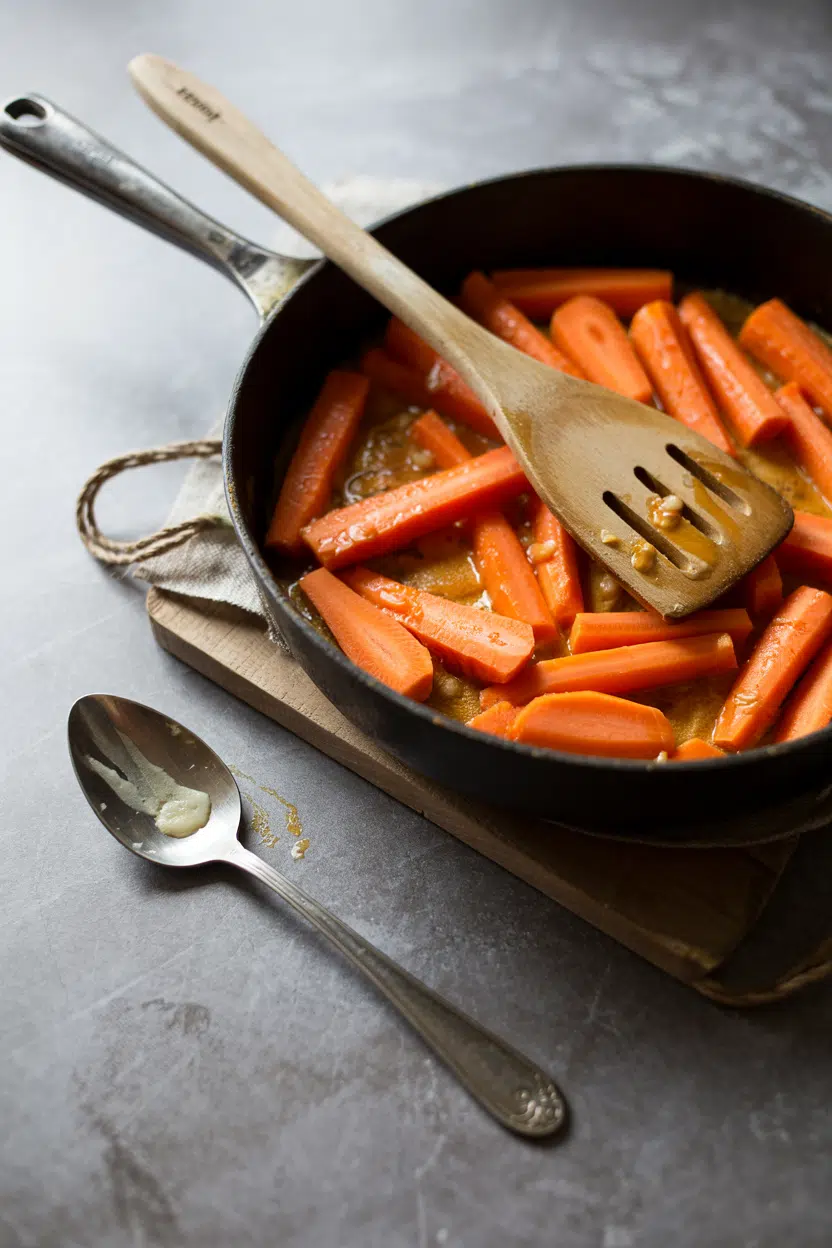
Raw carrot delivers a bright, vegetal sweetness with a clean earthy undertone and a faint nuttiness in the finish. That sweetness is present from the start, however it becomes noticeably more concentrated once heat is applied.
Roasting pushes the natural sugars to caramelize, shifting the flavor from bright and fresh toward something deeper and almost jammy.
Compared to parsnip - its closest flavor relative - carrot is generally sweeter and less peppery; compared to young beet, it has similar earthiness but without beet's mineral intensity.
You can explore parsnip cooking methods to see where the two overlap and where they split.
If you're swapping out carrot in a recipe, understanding the base flavor helps you choose what fills the gap.
How to Use Carrot
Carrot moves comfortably across nearly every cooking method, and the technique you choose defines the outcome more than any seasoning. Roasting concentrates sugar and builds caramel edges;
braising or steaming keeps the flesh moist and yields a tender bite; pureeing produces a silky, naturally sweet base that takes cream or butter well.
| Method | Best For | Tip |
|---|---|---|
| 🥗 Raw | Salads, slaws, crudités, grating into baked goods | Grate on the large holes for carrot cake; fine-shred for slaws to avoid coarse strands |
| 🔥 Roasted | Side dishes, sheet pan meals, glazed carrots | Cut evenly so edges caramelize before centers overcook; add honey or maple in the last 5 minutes |
| 🫕 Braised/Steamed | Stews, pot-au-feu, mirepoix bases, baby food | Sweat with onion and celery first for a stock base; keep pieces uniform for even braising |
| 🥣 Pureed | Soups, sauces, smooth sides | Add a knob of butter or splash of cream after blending for a silky finish |
| 🥒 Pickled | Vietnamese-style do chua, tacos, grain bowls | Use rice vinegar for a milder pickle; add daikon for the classic pairing |
Cumin, coriander, and ginger are reliable spice pairings across Middle Eastern and Indian preparations - carrot halwa uses ghee, sugar, and cardamom to take the root's sweetness in a completely different direction.
In French kitchens, carrot is a core component of mirepoix alongside onion and celery, sweated in butter as the base for stocks and sauces. Citrus - lemon or orange - cuts through richness and keeps roasted or glazed preparations from reading as too sweet.
How to Buy and Store Carrot
Firm, smooth, and evenly colored - those are the three markers of a good carrot. Avoid roots with deep cracks, soft spots, or greenish shoulders; green shoulders indicate sun exposure, which turns that section bitter.
Storage is straightforward. Trim the green tops first - they draw moisture from the root.
Keep roots unwashed and dry, stored in a perforated plastic bag or wrapped in a damp paper towel in the crisper drawer. Check the carrot spoilage signs guide for a full breakdown of what to look for before using older stock.
- Whole carrots - up to 3-4 weeks refrigerated in the crisper
- Baby or pre-cut carrots - 1-2 weeks; check for sliminess before use
- Cooked carrots - 3-5 days in a sealed container in the fridge
Where to Start with Carrot
New to cooking carrots beyond the soup pot? Roast them whole first. A 400°F oven, olive oil, salt, and 25-30 minutes gives you the clearest picture of what this root does when heat works in its favor.
From there, try glazing - a honey and butter finish in the last few minutes takes roasted carrot from simple to deliberate without extra effort.
Mirepoix cooks who have never featured carrot as the main event will find the comparing mirepoix vs trinity options breakdown useful context for understanding how the root functions in each base.
Once you've roasted and glazed, try a carrot soup: just carrot, onion, stock, and a blender - nothing else required.
Frequently Asked Questions
Raw carrot is crisp with a bright, vegetal sweetness and a faint earthy undertone. The flavor is noticeably milder and greener than cooked carrot - heat concentration is what brings out the deeper sweetness most people associate with the vegetable.
Both, depending on preparation. Raw carrot reads as mildly sweet-savory; roasted or glazed carrot tilts clearly sweet. That's why it works in both mirepoix and carrot cake without tasting out of place in either.
Roast at high heat - 200°C/400°F or above - to caramelize the natural sugars. Adding honey, maple syrup, or butter in the final minutes amplifies that sweetness rather than masking it with raw sweetener flavor.
Whole, unwashed carrots with tops removed last 3-4 weeks in the crisper drawer. Pre-cut or baby carrots last 1-2 weeks; cooked carrots keep 3-5 days sealed.
Broadly similar, but with subtle differences. Purple carrots are often earthier and slightly less sweet; yellow varieties can taste milder with less of the rooty edge. Neither difference is dramatic enough to change a recipe.



