
Bite through the rind of a ripe brie and you hit something unexpected - a center that's almost liquid, faintly warm from the room, smelling of damp earth and fresh mushrooms. That first encounter is what divides people.
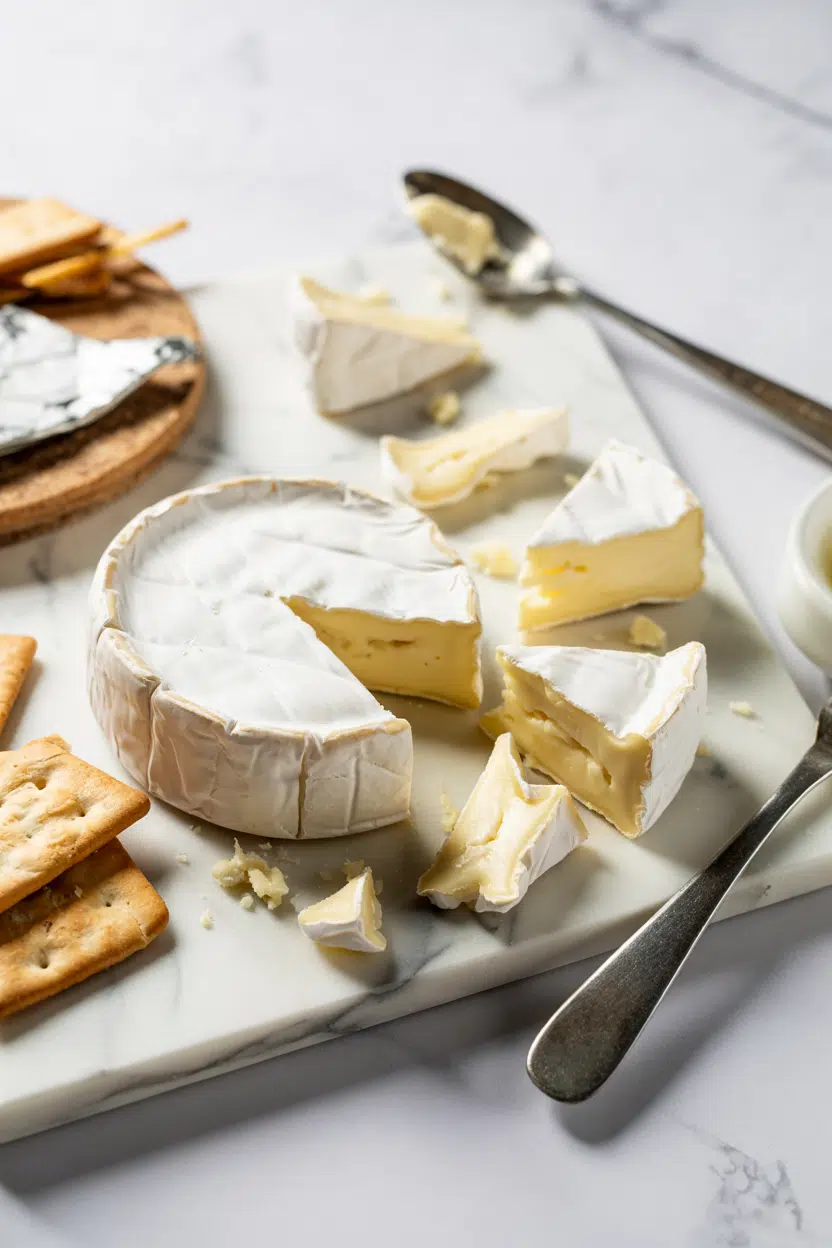
Some back away; others are immediately converted. Brie cheese rewards patience and attention in a way that few other cheeses do, and once you understand what you're tasting and why, it becomes one of the most compelling ingredients in your kitchen.
Brie is a soft-ripened French cow's milk cheese with a white bloomy rind, a creamy interior, and a flavor that ranges from mild and buttery when young to earthy and pungent when fully aged. It's used on cheese boards, melted into dishes, and baked whole.
What Is Brie Cheese?
Brie originates from the Seine-et-Marne region of northern France, where it has been produced for over a thousand years.
Remember it later
Planning to try this recipe soon? Save it for a quick find later!
Two varieties carry protected designation of origin status under French law: Brie de Meaux and Brie de Coulommiers (more commonly called Brie de Melun), both made from raw cow's milk.
Most brie sold outside France is a pasteurized commercial version, produced in wheels ranging from small individual rounds to large 60 cm wheels sold by the wedge.
The cheese is a soft-ripened variety, meaning it matures from the outside in - white Penicillium camemberti mold develops on the surface and breaks down the paste beneath it over two to six weeks.
The interior, called the paste, starts firm and chalky at the center of a young wheel and softens toward a near-molten consistency as the cheese ripens fully.
Some producers also make double and triple crème brie, with added cream that pushes the fat content higher and the flavor even richer.
What Does Brie Cheese Taste Like?
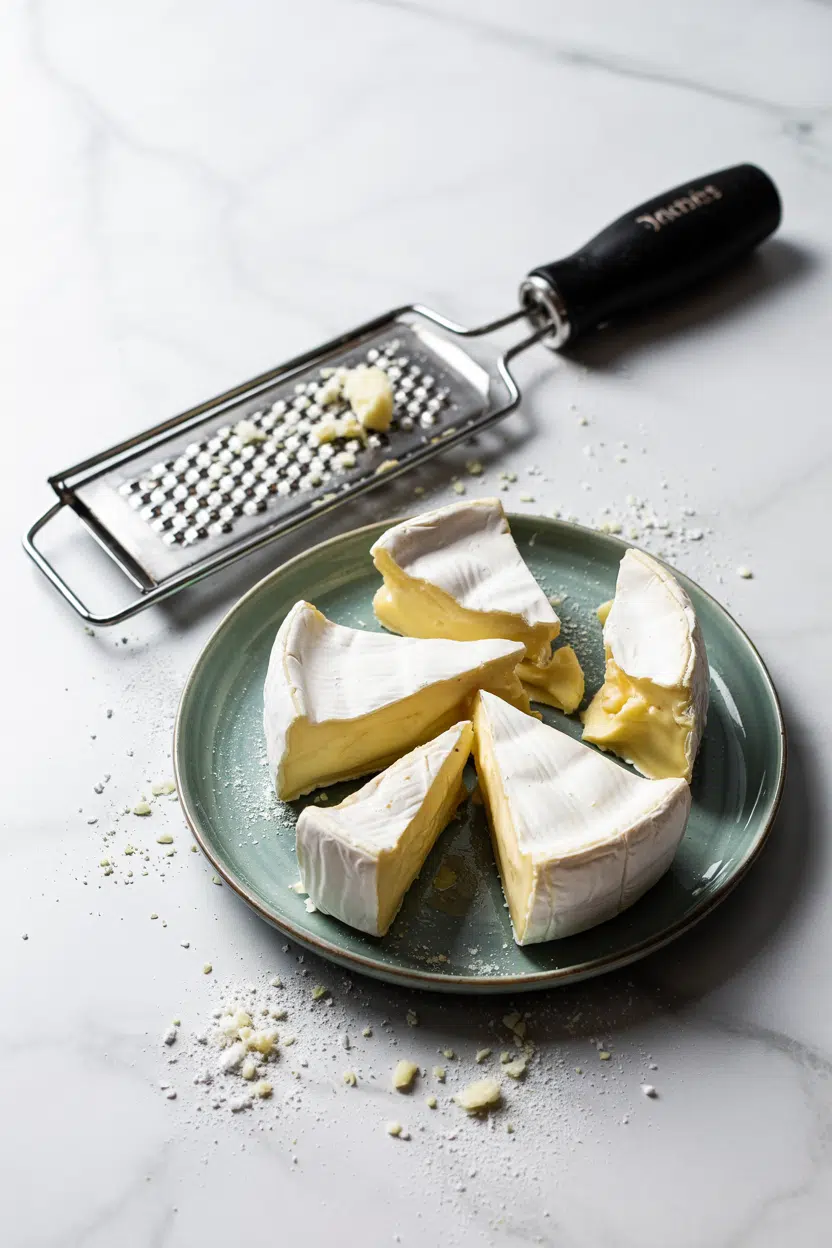
Young brie tastes mild and milky, with a clean buttery note and very little sharpness. The flavor is approachable - closer to fresh cream cheese than to anything funky or aggressive.
As the cheese matures, the character shifts noticeably. Earthiness moves in, along with a distinct mushroom quality, hints of roasted nuts, and a faint ammonia edge near the rind that signals full ripeness.
The rind itself is edible and contributes a slightly bitter, grassy flavor that contrasts the richness of the paste.
Heat changes everything. Baked brie loses its structural resistance entirely, turning the paste into a warm, molten pool with intensified buttery flavor and a softer aroma.
Cold brie straight from the fridge mutes most of its complexity - always bring it to room temperature before serving.
How to Use Brie Cheese
Brie works across a wider range of applications than most people realize. At room temperature on a cheese board, it's the centerpiece - pair it with honeycomb, sliced pears, toasted walnuts, or fig jam.
Crusty baguette and mild crackers let the cheese speak without competition.
Baked whole in its rind, brie becomes a different dish entirely. Score the top, add a drizzle of honey or a spoonful of jam, wrap it in puff pastry if you like, and bake at 375°F until the center collapses when pressed.
It's one of the most reliable crowd dishes in the cheese world.
| Method | Best For | Tip |
|---|---|---|
| 🧀 Room Temp | Cheese boards, charcuterie spreads | Pair with fruit, nuts, or honey - avoid strong-flavored crackers |
| 🔥 Baked | Appetizers, warm dips, pastry-wrapped brie | Score the rind before baking so steam escapes evenly |
| 🍳 Melted | Grilled sandwiches, pasta, stuffed chicken | Remove the rind first if you want a smoother melt |
| 🥗 Sliced cold | Salads, open-faced sandwiches | Use young brie for cleaner slices - ripe paste crumbles |
French cuisine uses brie in croque-style sandwiches and as a filling for savory crêpes. It also appears in American-style appetizers and upscale burger toppings.
If you need a different cheese for one of these applications, brie cheese replacements cover the closest alternatives by texture and flavor profile.
How to Buy and Store Brie Cheese
At the counter, look for brie with a uniformly white rind - no pink patches, no gray discoloration, and no strong ammonia smell before you've even cut into it.
A little give when pressed gently means the paste has softened through, which is ideal for immediate eating.
Store brie loosely wrapped in wax paper or parchment, then placed inside a container in the coldest part of your fridge. Plastic wrap traps moisture and accelerates rind breakdown.
Opened wedges typically last one to two weeks - for a full breakdown of timing and signs of spoilage, see our guide to brie cheese storage life.
Start Here With Brie
New to brie? Buy a small wheel, let it sit out for an hour, and eat it with just bread and fruit.
No cooking required - this tells you exactly what you're working with before you build from there.
If you want to cook with it, baked brie is the lowest-risk entry point: the heat forgives uneven ripeness and the result is nearly always crowd-pleasing. From there, try it melted into a grilled sandwich or layered into a crêpe.
The rind is always your choice - eat it or leave it, depending on how much earthiness you want.
Frequently Asked Questions
Yes, the rind is completely edible. It's formed by Penicillium camemberti, the same mold used to ripen the cheese. It adds a slightly bitter, earthy note - skip it if you find the flavor too strong.
You can, however the texture suffers. Freezing breaks down the creamy paste and turns it grainy after thawing. It's better suited for cooking after freezing than for serving on a board.
Both are soft-ripened cow's milk cheeses, however camembert is smaller, ripens faster, and typically develops a stronger, more pungent flavor. Brie tends to be milder and more buttery at the same stage of ripeness.
A fully ripe brie will be very soft and nearly flowing at room temperature - this is normal and desirable. Young brie has a firmer, chalky center that hasn't yet broken down from the rind inward.
Yes. Flavor intensifies significantly as brie ripens - earthy, mushroomy notes deepen and an ammonia edge develops near the rind. Most commercial brie is sold before it reaches its strongest stage.



