You peeled half a head last night and now the fridge is holding a small jar of exposed cloves - the question is whether they'll still be worth using by the weekend.
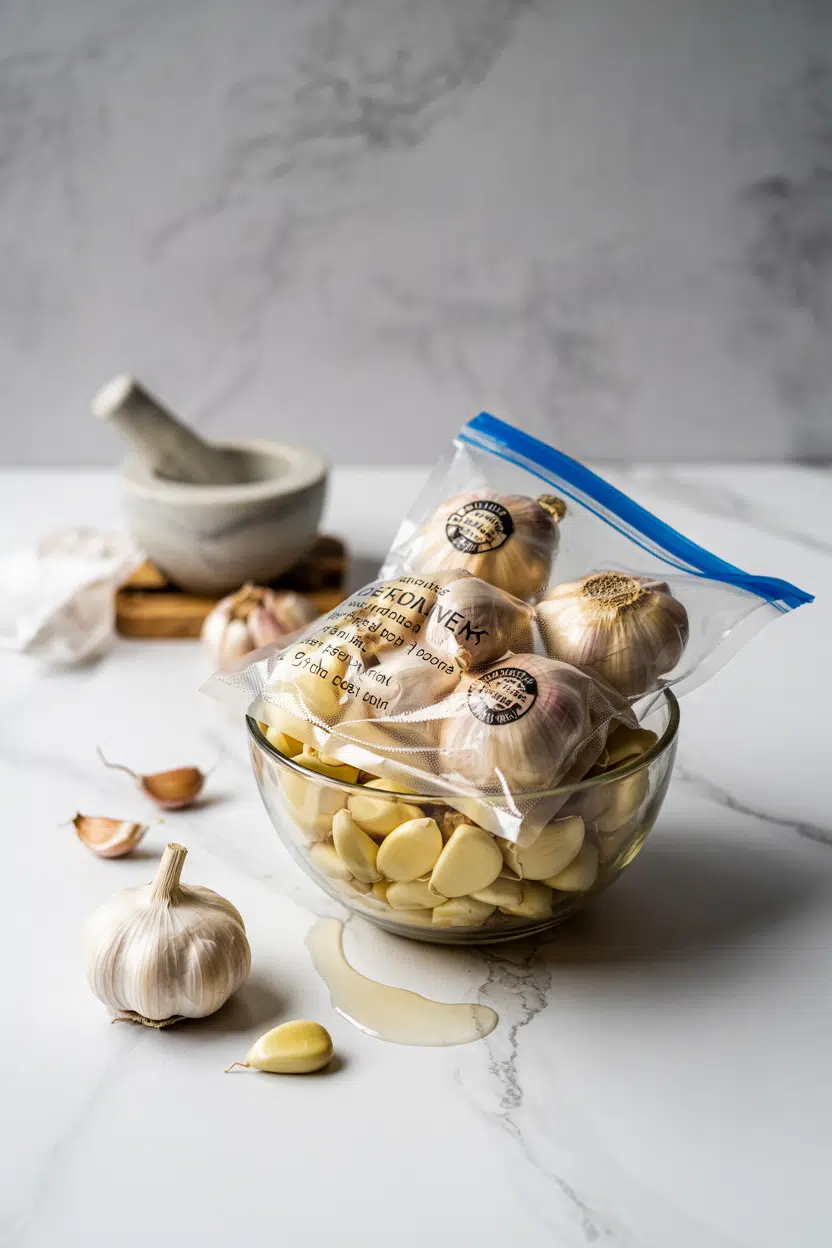
Garlic cloves are one of those kitchen staples where storage method makes a significant difference: whole heads can sit out for weeks, while peeled cloves have a much shorter window before quality drops.
Getting the details right means less waste and no guessing at the cutting board.
Whole garlic heads keep 3-5 weeks at room temperature. Peeled cloves last 1-2 weeks refrigerated. Frozen garlic - whole or minced - holds for 3-6 months but softens after thawing. Never store peeled cloves in oil at room temperature.
How Long Does Garlic Last?
Storage method and the state of the cloves - whole, peeled, or minced - are the main variables driving shelf life.
Remember it later
Planning to try this recipe soon? Save it for a quick find later!
A garlic head with its papery skin intact is essentially in its own protective packaging, while a peeled clove is exposed and aging from the moment it loses that skin.
Understanding the taste of garlic cloves also helps here: sprouted or deteriorating cloves turn bitter and harsh, so shelf life isn't just a food-safety question.
| Method | State | Duration | Notes |
|---|---|---|---|
| 🏠 Counter | Whole head (unbroken) | 3-5 weeks | Breathable container, away from sunlight; not for peeled cloves |
| 🏠 Pantry | Whole head (papery skin on) | 3-5 weeks | Cool, dark, ventilated - mesh bag or wire basket works best |
| 🧊 Fridge | Peeled raw cloves | 1-2 weeks | Airtight container; oil-packed garlic must stay under 40°F (4°C) |
| ❄️ Freezer | Whole or minced | 3-6 months | Texture softens; use only in cooked applications after thawing |
Once you break a head apart and separate individual cloves, the countdown accelerates even before peeling begins. Separated but unpeeled cloves won't hold as long as an intact head.
How to Store Garlic Cloves
The right method depends entirely on whether the head is intact or already broken down. Whole heads and peeled cloves need completely different environments.
Pantry/Counter: Keep whole heads with their papery outer skins undisturbed. Store in a mesh bag, wire basket, or any container that allows airflow - sealed plastic bags trap moisture and trigger mold fast. A cool, dry spot away from the stove works well.
Fridge: Only refrigerate peeled cloves or prepared garlic. Place them in a small airtight glass jar and use within a week or two.
Good fridge habits for garlic mirror advice you'd apply to keeping fresh herbs fresh - sealed containers, consistent cold, and no lingering moisture.
Can You Freeze Garlic Cloves?
Yes, and it's one of the most practical ways to extend a large batch. The trade-off is texture: frozen garlic becomes noticeably softer after thawing and loses its raw bite entirely.
That's fine for soups, sauces, stir-fries, and braises - not ideal for dishes where raw crunch matters.
- Peel the cloves - remove all papery skin before freezing; it doesn't protect during freezing and makes the cloves harder to use later.
- Flash-freeze (whole cloves) - spread cloves in a single layer on a parchment-lined tray and freeze for 1-2 hours until solid.
- OR portion (minced) - mince the garlic, press it into an ice-cube tray with a small splash of water or oil, and freeze until solid.
- Transfer and label - move frozen cloves or cubes into a freezer bag, press out as much air as possible, and label with the date and form (whole vs. minced).
- Use within 6 months - thaw in the fridge for 24 hours or drop frozen cloves directly into a hot pan for cooked applications.
Signs Garlic Cloves Have Gone Bad
Most spoilage in garlic is visible before you need to smell or touch anything. Catching it early means you don't waste a whole jar or bag of cloves.
Green sprouts are worth a separate note - a sprouted clove isn't dangerous, however the green center tastes bitter and sharp. Remove the sprout before using, or compost the clove entirely if it's mostly hollow. Similar logic applies when checking ginger spoilage signs: visible growth and off-smells are reliable discard signals across most alliums and aromatics.
Discard any clove showing mold, a slimy surface, or a strong off-odor. Don't taste-test - it's not worth it.
Practical Tips for Less Waste
Most garlic waste comes from one or two avoidable habits. A small adjustment to how you buy and portion makes the biggest difference.
- 🧄 Leave the skin on - whole cloves with papery skin intact last significantly longer; peel only what you'll use that week.
- 📦 Freeze the overflow - if you've peeled more than you'll use in a week, freeze small portions using the tray method rather than letting them sit in the fridge.
- 🏷️ Label freezer bags clearly - note whole vs. minced and the date; garlic looks identical at 1 month and 6 months, so labels prevent over-keeping.
- 🚫 Skip sealed plastic on the counter - it traps moisture against whole heads and accelerates mold well before the natural 3-5 week window closes.
Using frozen minced garlic works well in garlic cloves in spice blends and cooked sauces where raw texture isn't the point.
Frequently Asked Questions
Yes. Peel them first, flash-freeze in a single layer on a tray, then transfer to a freezer bag. Frozen whole cloves keep up to 6 months but become soft after thawing, so use them in cooked dishes only.
Peeled cloves in an airtight container last 1-2 weeks at or below 40°F (4°C). Whole unbroken heads don't benefit from refrigeration and do better stored at room temperature in a ventilated spot.
Freezing garlic in oil is safe - the freezing process halts bacterial growth that makes room-temperature oil-packed garlic risky. Keep the frozen cubes sealed and use within 3 months for best flavor.
Flavor holds well, however texture changes noticeably - thawed cloves are softer and won't have raw crunch. For cooked applications like sauces, stews, and braises, frozen garlic performs nearly identically to fresh.
Keep whole heads cool, dry, and well-ventilated - warmth and humidity accelerate sprouting. Don't break the head apart until you need individual cloves, since intact heads sprout more slowly than separated ones.