
Most people assume Aperol is just a mixer - something you pour into a spritz and forget about. That misses what makes it worth understanding: the careful balance of gentian-root bitterness, rhubarb, and bitter orange that keeps it from tasting like sugary orange drink.

Whether you're building a Negroni variant or figuring out pairings for prosecco, knowing what Aperol actually brings to the glass changes how you use it.
Aperol is a low-alcohol Italian bitter-sweet liqueur from Padua, Italy. It tastes of bitter orange, gentian, and rhubarb with a light syrupy body. Best known as the base of an Aperol Spritz, it also works in low-ABV cocktails, light glazes, and as a marinade accent.
What Is Aperol?
Aperol is an Italian aperitif liqueur first produced in 1919 by the Barbieri brothers in Padua, in the Veneto region of northeastern Italy.
Remember it later
Planning to try this recipe soon? Save it for a quick find later!
It sits in the broader family of Italian bitter liqueurs called amaro, though its alcohol content - around 11% ABV - sits notably lower than most.
The flavor comes from a proprietary blend of botanicals, with gentian root, rhubarb, and bitter orange as the named primary ingredients. Quinine and other herbs contribute mild bitterness and dry herbal undertones throughout.
Aperol falls into a specific subcategory: the aperitivo, a style of drink meant to stimulate appetite before a meal. Campari, which shares the bitter-orange profile, is a common reference point - though Aperol runs sweeter and lighter.
If you want to explore similar liqueurs, check out these benedictine liqueur swaps for a sense of how botanical bitters compare across categories.
Aperol is sometimes misspelled "Apero," but the brand name is one word, no accent.
What Does Aperol Taste Like?
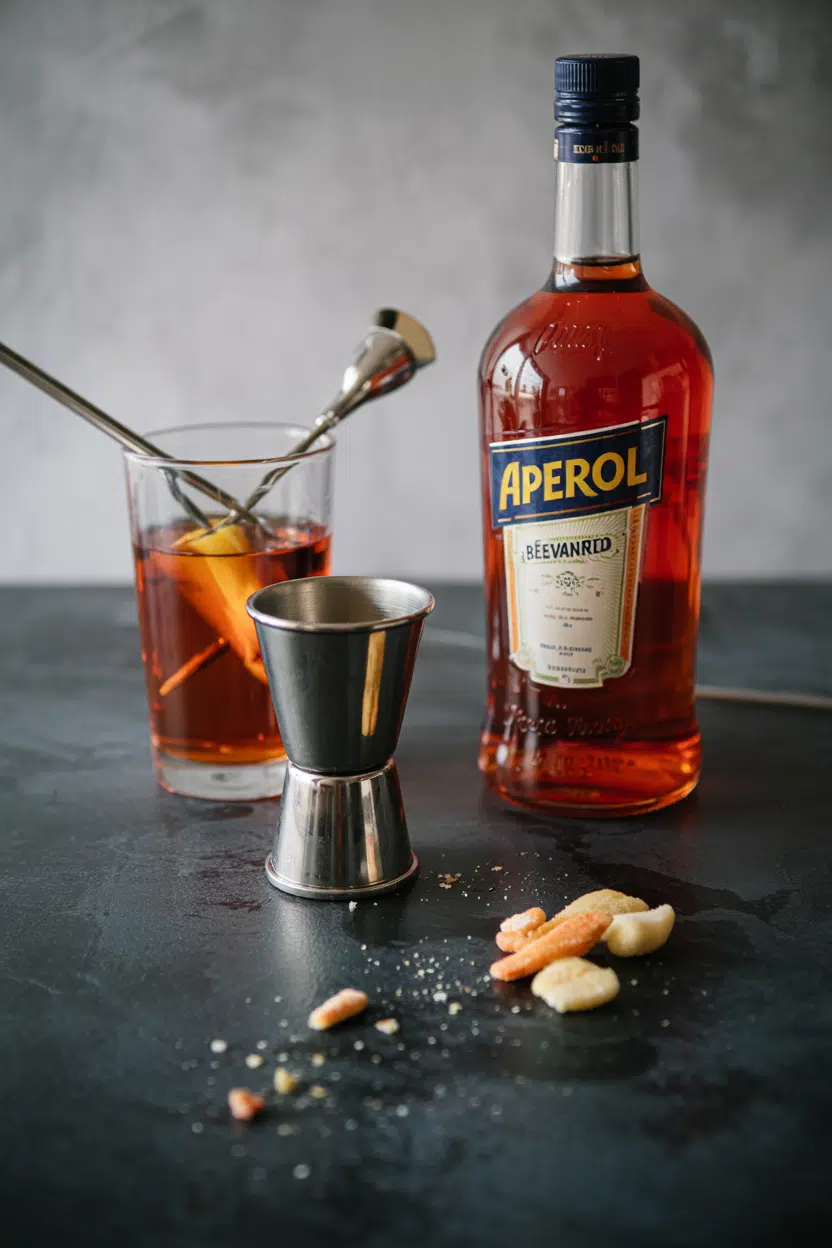
Aperol leads with bitter orange and citrus peel, bright and slightly tangy rather than sharp. Gentian-root bitterness follows immediately - present but not harsh, closer to a mild tonic finish than to full-strength amaro.
Think of it as a lighter, sweeter version of Campari - same general color and citrus-bitter family, but with more sweetness and less edge. The rhubarb adds a faint tart undertone that keeps the sugar from reading as cloying.
Over ice, the flavor opens up; dilution softens the bitterness slightly while the orange notes stay forward.
How to Use Aperol
The Aperol Spritz is the canonical application: three parts Prosecco, two parts Aperol, one part soda water, served over ice with an orange slice.
It works because Aperol's sweetness and bitterness both play well against the dry sparkle of Prosecco and the neutral fizz of soda.
Beyond the spritz, Aperol earns a place in several other formats.
- 🍹 Aperol Negroni - Swap Campari for Aperol with gin and sweet vermouth for a gentler, lower-ABV Negroni with more citrus character.
- 🍊 Citrus glaze - Reduce Aperol with sugar over low heat until syrupy; brush onto grilled shrimp, scallops, or pound cake.
- 🧊 Crushed-ice aperitivo - Pour over crushed ice with a soda splash, olives alongside. No cocktail shaker needed.
- 🍹 Summer pitcher drinks - Add to spritz-style punches with gin or vodka, citrus juice, and soda for a crowd format.
- 🦐 Marinade accent - A small pour into a seafood marinade adds bitter-citrus brightness without overpowering shellfish.
Aperol pairs well with salty, fatty snacks - prosciutto, olives, brined cheeses - because the bitterness cuts through fat without needing high alcohol to do it. Avoid using it alongside heavy cream sauces or strongly smoked meats, where its citrus notes vanish entirely.
For aperol replacements in cocktail recipes, Campari works with adjustments, though expect more bitterness and less sweetness in the final drink.
| Method | Best For | Tip |
|---|---|---|
| 🍹 Stirred/Built | Aperol Spritz, Aperol Negroni, pitcher drinks | Always build over ice; don't shake - carbonation drops |
| 🔥 Reduced | Glazes, dessert syrups, brushed onto seafood | Use low heat; reduce slowly to preserve citrus aroma |
| 🧊 Served cold | Aperitivo pours, crushed-ice drinks | Dilute with soda, not water - flat water dulls the finish |
| 💧 Marinade splash | Grilled shrimp, scallops, light citrus-glazed fish | Use sparingly - a tablespoon or two, not a full pour |
How to Buy and Store Aperol
Good bottles are easy to spot. Look for vivid, uniform orange color throughout - any brownish or murky tint suggests oxidation.
Check the label for ~11% ABV and an intact foil cap; both confirm you're getting an uncompromised bottle.
Store unopened bottles upright in a cool, dark cupboard - no refrigeration needed. Once opened, move it to the refrigerator to slow oxidation and flavor loss.
- Unopened: Keeps for several years without quality loss
- Opened: Best flavor within 12-36 months; still safe after that, but citrus notes fade
- Signs of decline: Dull color, flat bitterness, muted orange aroma on the pour
Where to Start with Aperol
If Aperol is new to you, start with the spritz. It's the format the liqueur was built around, and it shows you the balance of bitter, sweet, and sparkling before you start substituting it elsewhere.
Once that ratio feels familiar, try it in an Aperol Negroni - same three-ingredient structure as a classic Negroni, but gentler and more citrus-forward. That's the clearest way to see what Aperol does differently from heavier bitters like Campari.
From there, the glaze and marinade uses follow naturally.
Frequently Asked Questions
Aperol's named botanicals are gentian root, rhubarb, and bitter orange. The exact formula is proprietary, but quinine and other unnamed herbs contribute to the dry bitter finish and herbal undertone.
Yes - Aperol is approximately 11% ABV. That's lower than most liqueurs but still alcoholic. It's not suitable for children or people avoiding alcohol.
Both, but sweetness leads slightly. Gentian bitterness is present throughout, however the added cane sugar and bright orange notes keep it from reading as harsh - unlike Campari, which skews more bitter.
Campari is the closest swap but adds more bitterness and less sweetness. For a milder substitute, try Lillet Rosé or a low-ABV orange bitter. Adjust the ratio to compensate for the flavor shift.
Yes, though it's rarely done. Poured over ice with a soda splash is more typical - the dilution balances the sweetness. Straight, its syrupy body and concentrated bitterness can feel unbalanced without bubbles to cut through.



