
Most cooks assume celery salt is just a niche cocktail garnish - something you use once for a Bloody Mary rim and forget about.

That's a mistake, and it's one that leaves a genuinely useful seasoning sitting idle at the back of the spice rack, the same way you might overlook alternatives to garlic powder when a recipe calls for something more aromatic.
Celery salt earns its shelf space, and understanding what it actually does makes it easier to reach for at the right moment.
Celery salt is a seasoning blend of ground celery seed and salt. It delivers a concentrated, slightly bitter, grassy celery flavor with a salty backbone - used in cocktails, hot dogs, brines, salads, and dry rubs across American and European cooking.
What Is Celery Salt?
Celery salt is a seasoning blend made from two ingredients: ground celery seed and common salt.
Remember it later
Planning to try this recipe soon? Save it for a quick find later!
It falls into the category of herbed salts - a family that includes garlic salt and onion salt - where a dried aromatic is pre-combined with salt to create a single, consistent seasoning.
The blend has roots in both North American and European cooking traditions. In the U.S., it became closely associated with deli culture and ballpark food; in Britain and Central Europe, it appeared in pickle brines and cold salads.
You may also see it labeled as celery seasoning or sel de céleri in French-style markets.
- 🌱 Main component - ground celery seed, not dried celery stalk or celery flakes
- 🧂 Salt ratio - typically around two parts salt to one part celery seed, though this varies by brand
- 🔄 Not the same as celery seed - the salt content changes how and when you use it
- 🏷️ Label check - some products add anti-caking agents; pure versions list only two ingredients
What Does Celery Salt Taste Like?
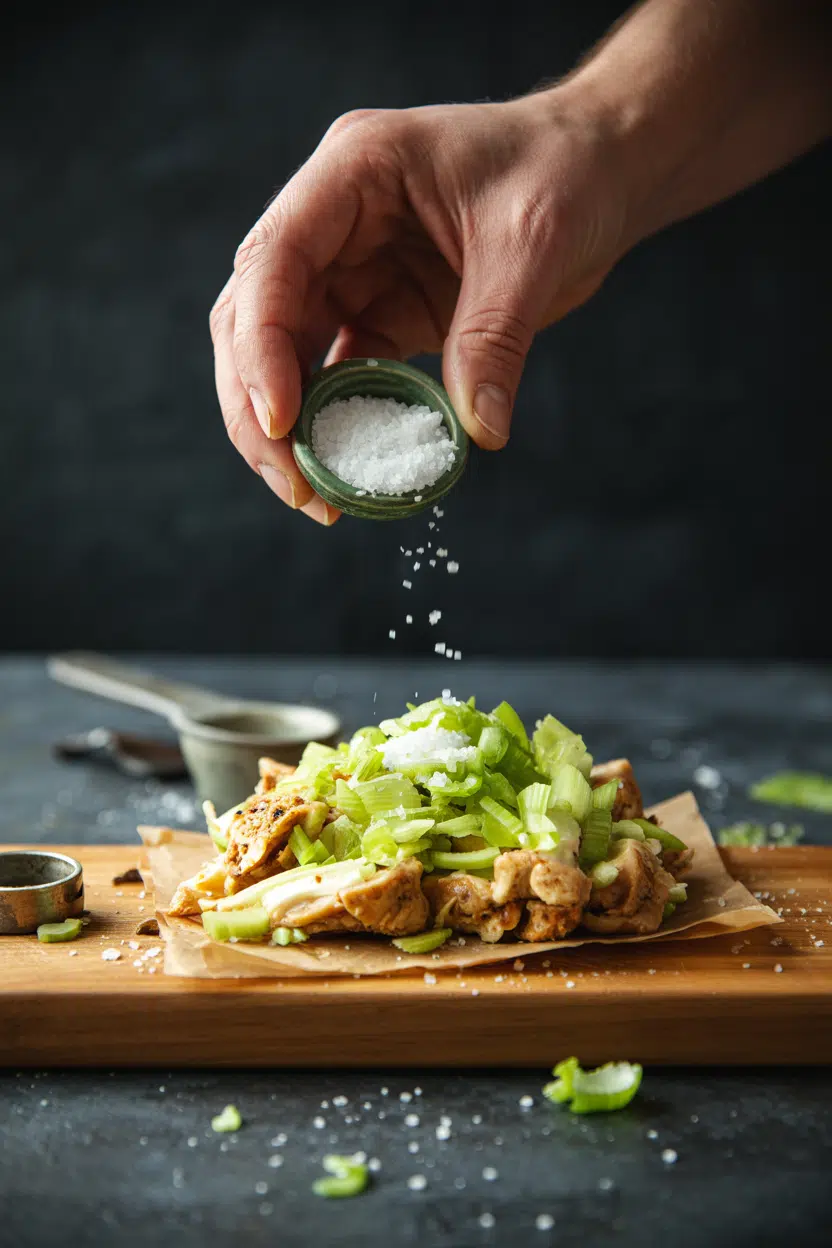
Celery salt tastes closer to concentrated celery seed than to the mild, watery flavor of a raw celery stalk.
The celery seed component brings a green, grassy character with a distinct bitter edge and a faint peppery warmth - qualities that raw celery largely hides.
Heat mutes the bitter edge slightly, making celery salt feel more savory and rounded in cooked dishes.
Used cold - in a dressing or on a Bloody Mary rim - that bitter, peppery sharpness stays front and center, which is exactly the point.
How to Use Celery Salt
Celery salt works across more categories than most cooks use it for. It's the canonical seasoning for a Chicago-style hot dog - applied directly to the dog before toppings, never negotiable in that preparation.
The rim of a Bloody Mary glass gets the same treatment: a coarse-grind version adheres well and delivers that bitter celery hit with each sip.
In cold preparations, celery salt shines quietly. Stir it into mayonnaise-based coleslaw or potato salad, and it gives a savory, green lift without adding visible celery pieces.
For anyone making creamy coleslaw dressing at home, it's worth swapping plain salt for celery salt entirely.
Dry rubs benefit significantly from celery salt. It pairs well with pork and chicken, and the aromatic seed oils in the ground celery complement smoke and char - try it in the spice mix when making memphis dry rub ribs at home. In bean soups and brothy stews, it substitutes for fresh celery aromatics when stalks aren't on hand.
| Method | Best For | Tip |
|---|---|---|
| 🥗 Dry Sprinkle | Hot dogs, fries, roasted vegetables | Add after cooking to preserve sharp celery aroma |
| 🥣 Dissolved in Liquid | Pickle brines, Bloody Mary mix, sauces | Fine-grind dissolves cleanly without visible specks |
| 🍖 Dry Rub | Pork ribs, chicken thighs, brisket | Combine with smoked paprika and mustard powder for balance |
| 🥄 Emulsion Mix-in | Mayo, tartar sauce, coleslaw dressing | Start at half the salt the recipe calls for and adjust |
How to Buy and Store Celery Salt
Check the ingredient list before buying. A clean product lists ground celery seed and salt - nothing else.
Fine-grind works best for cocktails and emulsions; coarse-grind holds up on rims and in rubs where texture matters.
Proper storage is straightforward, though worth doing right - detail on storing celery salt correctly covers exactly what conditions preserve the celery aroma longest.
The short version: airtight, dry, away from heat.
Keep shaker lids dry after each use.
An opened jar is best within 6-12 months, not because the salt goes bad, but because the celery seed oils that carry the flavor slowly volatilize.
- 📅 Opened shelf life - 6-12 months before noticeable aroma loss
- 🫙 Best container - glass jar with a tight lid, not a porous cardboard spice tube
- 🌡️ Avoid - storing near the stove or above a dishwasher vent where heat and steam concentrate
When to Reach for It
If your recipe calls for celery seed plus salt separately, celery salt replaces both cleanly - just reduce any additional salt you'd add. Running low and need a swap?
Our guide to alternatives to celery salt lists practical options, and if the celery seed itself is the issue, celery seed stand-ins covers that angle specifically.
Start with celery salt when you want savory, green aromatic character without fresh celery's texture or water content. It's the right call for brines, rims, rubs, and cold salads - anywhere that concentrated flavor and salt need to arrive together.
Frequently Asked Questions
No. Celery seed is the whole spice; celery salt is celery seed pre-mixed with salt at roughly a 1:2 ratio. Substituting one for the other without adjusting the recipe's salt content throws off the seasoning balance.
Yes, with adjustment. Use roughly one part celery seed for every three parts celery salt the recipe calls for, then add salt separately to taste. This keeps the celery flavor without inadvertently reducing the dish's seasoning.
Combine one part ground celery seed with two parts fine sea salt and mix well. For a fresher version, dry-toast whole celery seeds briefly before grinding - the heat releases more of the seed oils before blending.
Celery salt is naturally gluten-free, as neither celery seed nor salt contains gluten. However, shared manufacturing lines or anti-caking additives in some brands can introduce cross-contact - check the label if you have celiac disease.
Both. A small pinch stirred into the mix itself adds background celery depth throughout the drink - though for anyone focused on [keeping bloody mary fresh](https://forkliftkitchen.com/bloody-mary-shelf-life/) as a batch, the mix-in amount should stay light to avoid over-salting when the drink sits.



