• Skip to primary navigation
  • Skip to main content
  • Skip to primary sidebar
  • Recipe Index
    • Air Fryer
  • Side Dishes
  • Substitutes
  • About
  • Contact
  • Subscribe

ForkLiftKitchen

menu icon
go to homepage
  • Recipe Index
    • Air Fryer
  • Side Dishes
  • Substitutes
  • About
  • Contact
  • Subscribe
subscribe
search icon
Homepage link
  • Recipe Index
    • Air Fryer
  • Side Dishes
  • Substitutes
  • About
  • Contact
  • Subscribe
×

Blog

Best Frozen Mexican Food for Burrito Nights and Easy Dinners

May 10, 2026

Product note: ForkliftKitchen may earn a commission from qualifying purchases made through product links on this page. Learn more.

Frozen Mexican food should save dinner, not punish you with leathery tortillas or watery sauce.

The safest buys are the ones that still taste like food after freezing, reheating, and sitting on the plate for a few minutes. I kept this list to product-specific buy links, then judged each pick by tortilla or masa texture, filling quality, sauce balance, and cooking method.
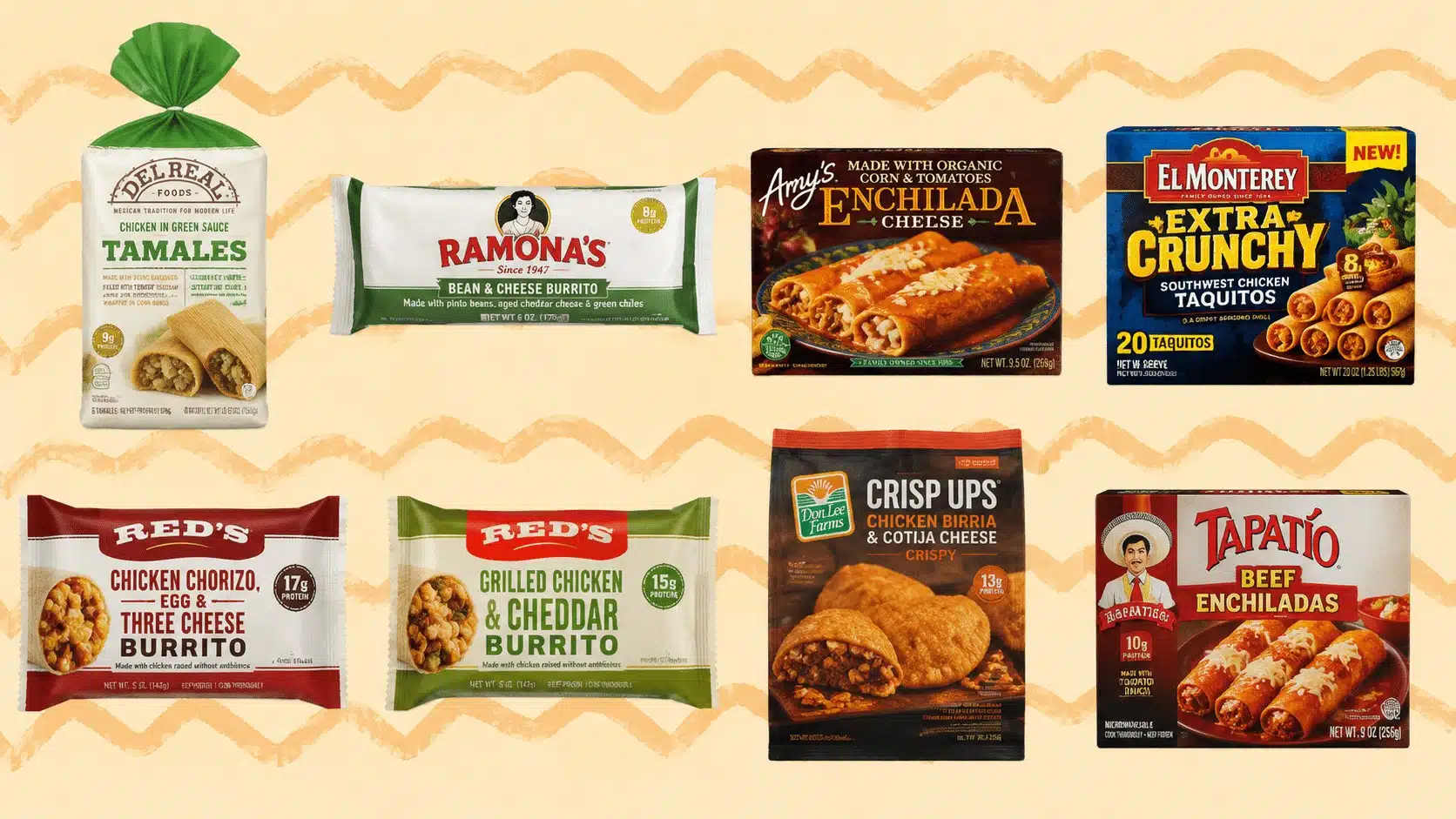
Best frozen Mexican food ranked on ForkliftKitchen
Quick Picks
🏆 Best dinner anchor: Del Real Foods Chicken Tamales for masa that handles steaming better than most freezer meals.
⭐ Best fast lunch: El Monterey Bean & Cheese Burritos for a simple burrito that works when speed matters most.
🎯 Best meatless plate: Amy's Cheese Enchilada for sauce-forward comfort without meat.
✅ Best crunchy snack: El Monterey Southwest Chicken Taquitos for air-fryer texture.

Best Frozen Mexican Food, Ranked

Del Real Foods Chicken Tamales are the best first buy because masa reheats more reliably than flour tortillas. Burritos, enchiladas, and taquitos still belong in the freezer, but each one needs the right cooking method.

How We Judged These Frozen Mexican Foods
  • ✅ Tortilla and masa texture: the wrapper should stay tender, crisp, or steamy instead of turning rubbery.
  • ✅ Filling quality: beans should taste creamy, chicken should taste seasoned, and cheese should melt into the food.
  • ✅ Sauce control: enchiladas and tamales need enough sauce to feel complete without flooding the plate.
  • ✅ Cooking fit: the best picks work with normal microwave, steam, oven, or air-fryer habits.
RankProductBest forBest cooking move
1Del Real Foods Chicken TamalesDinner anchorSteam or microwave with moisture
2El Monterey Bean & Cheese BurritosFast lunchMicrowave, then rest before eating
3Amy's Cheese EnchiladaMeatless comfortOven or careful microwave
4El Monterey Southwest Chicken TaquitosCrunchy snackAir fryer
5Red's Grilled Chicken & Cheddar BurritoChicken burritoMicrowave with a short rest
Del Real Foods Chicken Tamales product photo

1. Del Real Foods Chicken Tamales

🏆 Best Overall⭐ Best Dinner Anchor

Best for: weeknight dinners, steamy masa texture, freezer meals that feel more like a plate than a snack

Del Real is strongest here because tamales survive the freezer better than most burritos and enchiladas. The masa gives you a soft, steamy base that can take sauce without falling apart.

The chicken filling works best when you want a real dinner center, not just a handheld lunch. It tastes better with a spoonful of salsa, a squeeze of lime, or a quick side like boxed rice side.

The main tradeoff is convenience. Tamales need moisture and a little patience, so they are slower than a burrito.

Pros
  • ✅ Soft masa texture holds up well
  • ✅ Feels like dinner instead of a snack
  • ✅ Easy to pair with rice, beans, salsa, or salad
Cons
  • ✅ Needs a moist reheating method
  • ✅ Less portable than a burrito

🍽 Best with: salsa verde, lime, rice, black beans, and a crisp salad.

Check price on Amazon

El Monterey Bean & Cheese Burritos product photo

2. El Monterey Bean & Cheese Burritos

⭐ Best Fast Lunch⭐ Best Simple Burrito

Best for: quick lunches, freezer backup meals, kids, late-night food, and simple bean-and-cheese cravings

El Monterey Bean & Cheese Burritos are the easiest pick when you need food fast. The filling is simple, salty, and creamy enough to beat most plain freezer burritos.

The tortilla will not taste like a fresh tortilla, so the rest step matters. Let it sit for a minute after microwaving so the filling settles and the edges soften.

Buy this for convenience, not restaurant texture. If you want a snack spread, it fits better beside after-school snacks than beside a full dinner plate.

Pros
  • ✅ Fastest meal on the list
  • ✅ Bean and cheese filling stays familiar
  • ✅ Good freezer backup for lunches
Cons
  • ✅ Tortilla can dry at the edges
  • ✅ Needs salsa or hot sauce for brightness

🍽 Best with: hot sauce, sour cream, shredded lettuce, and pickled jalape?os.

Check price on Amazon

Amy's Cheese Enchilada product photo

3. Amy's Cheese Enchilada

⭐ Best Enchilada⭐ Best Meatless Pick

Best for: meatless freezer dinners, cheese enchilada cravings, sauce-first plates, and quick comfort meals

Amy's Cheese Enchilada is the strongest meatless pick because the sauce does real work. It gives the plate moisture and warmth, which matters when frozen tortillas can turn flat.

The cheese filling is mild, so the sauce carries most of the flavor. That makes it a better comfort meal than a bold chile pick.

Choose it when you want a softer, saucier dinner. If you want something crunchy beside it, a bowl of salt and vinegar chips gives the plate the bite this box does not have.

Pros
  • ✅ Sauce keeps the plate from tasting dry
  • ✅ Good meatless freezer option
  • ✅ Works for a quick comfort dinner
Cons
  • ✅ Not a spicy enchilada
  • ✅ Soft texture will not please crunch seekers

🍽 Best with: shredded lettuce, avocado, lime, and a spoonful of pico de gallo.

Check price on Amazon

El Monterey Southwest Chicken Taquitos product photo

4. El Monterey Southwest Chicken Taquitos

⭐ Best Crunchy Snack⭐ Best Air-Fryer Pick

Best for: crunchy snacks, party plates, dipping, air-fryer cooking, and freezer appetizers

El Monterey Southwest Chicken Taquitos are the pick when texture matters most. They turn crisp in a way burritos and enchiladas cannot.

The filling is secondary to the shell, so cook them for crunch and serve a dip on the side. The air fryer is the right tool because it dries the outside without making the center tough.

Use these for snack plates, not a quiet dinner. If you already use an air fryer, this is the easiest product here to improve at home.

Pros
  • ✅ Best crunch in the ranking
  • ✅ Easy to serve with dips
  • ✅ Works for parties and snack dinners
Cons
  • ✅ Microwave makes them soft
  • ✅ Needs salsa, queso, or guacamole

🍽 Best with: salsa, queso, guacamole, shredded lettuce, and a cold drink.

Check price on Amazon

Red's Grilled Chicken & Cheddar Burrito product photo

5. Red's Grilled Chicken & Cheddar Burrito

⭐ Best Chicken Burrito⭐ Best Cheddar Filling

Best for: chicken burrito lunches, cheddar flavor, quick protein, and a less plain freezer burrito

Red's Grilled Chicken & Cheddar Burrito is the best chicken burrito here because the filling has more direction than plain bean and cheese. The cheddar gives it a richer lunch feel.

The chicken needs sauce or salsa to avoid tasting too mild. Add something bright after heating so the burrito does not feel heavy.

This is the freezer-lunch pick for people who want more protein. If breakfast is the real goal, a savory freezer option like turkey sausage makes more sense than forcing this into the morning slot.

Pros
  • ✅ Better filling direction than a plain burrito
  • ✅ Cheddar gives it a richer bite
  • ✅ Good lunch option with salsa
Cons
  • ✅ Not as crisp as taquitos
  • ✅ Needs a bright topping after heating

🍽 Best with: salsa roja, pickled onions, lettuce, and a spoonful of sour cream.

Check price on Amazon

How the Frozen Mexican Food Shelf Splits

Choose by wrapper first, then filling. A good filling cannot fix a wrapper that reheats badly.

CravingBuy this formatWhy it works
Full dinnerTamales or enchiladasThey feel more like a plated meal.
Fast lunchBurritosThey cook quickly and travel well.
Crunchy snackTaquitosThey crisp better than filled tortillas.
Meatless comfortCheese enchiladasSauce and cheese can carry the plate.

For a bigger comfort-food night, serve frozen enchiladas next to boxed mac and cheese only if you want a very rich plate. For a lighter pantry dinner, a meatless box can sit near chickpea pasta in the same backup-meal lane.

Best Way to Cook Frozen Mexican Food

Match the cooking method to the wrapper. The package directions heat the food, but they do not always give you the best texture.

  • Tamales: add moisture and steam when you can.
  • Burritos: microwave first, then rest before eating.
  • Enchiladas: use the oven when you want better sauce texture.
  • Taquitos: use an air fryer or oven for crunch.

For a quick lunch shelf, these picks sit in the same convenience lane as Cup Noodles flavors. The difference is that frozen Mexican food needs texture management more than hot water timing.

Frequently Asked Questions

Frozen Mexican Food FAQs
What is the best frozen Mexican food to buy first?
Start with Del Real Foods Chicken Tamales if you want dinner. Pick El Monterey taquitos if you want a crunchy snack.
Are frozen burritos better in the microwave or oven?
The microwave is faster for burritos. Let the burrito rest for a minute so the filling settles and the tortilla softens.
How do you keep frozen taquitos crispy?
Use an air fryer or oven. The microwave heats the filling but makes the shell soft.
What should I serve with frozen Mexican food?
Add something fresh after heating. Lime, salsa, shredded lettuce, pickled onions, avocado, and sour cream all help.
Is frozen Mexican food good for meal backup?
Yes, if you buy by format. Keep tamales for dinner, burritos for lunch, and taquitos for snack plates.

Final Verdict

Del Real Foods Chicken Tamales are the best overall frozen Mexican food here because they reheat into the most complete dinner. Keep El Monterey Bean & Cheese Burritos for speed, Amy's Cheese Enchilada for meatless comfort, and El Monterey taquitos for crunch.

Start there.

What Is Sour Cream Substitute Yogurt? [Taste, Uses & More]

May 10, 2026

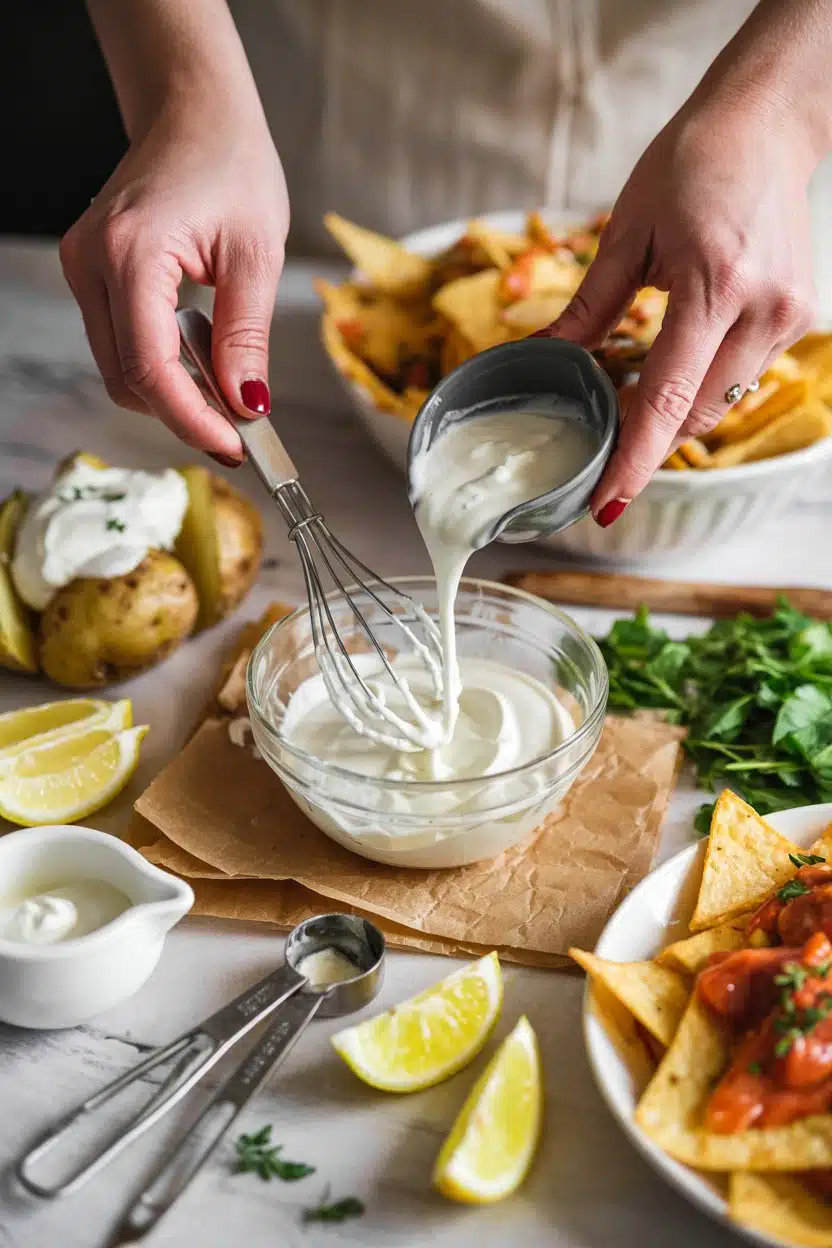
You spot it in the fridge aisle - two containers side by side - and wonder whether plain yogurt can actually do what sour cream does.

The short answer is yes, with some conditions.

Plain, unsweetened yogurt, especially Greek or strained varieties, shares sour cream's tangy acidity and creamy body closely enough to step in for it across most recipes.

Knowing when the swap works and when it doesn't will save you a wasted dish.

Sour cream has how long sour cream keeps that yogurt can match or beat, so it's also a practical fridge choice.

QUICK SUMMARY

Plain, unsweetened yogurt - particularly full-fat Greek or strained - substitutes for sour cream by delivering the same lactic tang and creamy texture at lower fat. It works cold in dips, baked into batters, and gently warmed into soups, but curdles under high heat and adds noticeable tang to neutral desserts.

🥛Category: Fermented dairy, used as a direct sour cream swap
👅Flavor: Tangy, mildly acidic, with a clean dairy sweetness
🍽️Best Uses: Dips, baked goods, potato toppings, tempered soups
❄️Shelf Life: Opened 7-10 days; strained yogurt best within 3-5 days
⚠️Watch Out: High-heat cooking causes curdling - always temper before adding to hot liquid
💪Nutrition Edge: Higher protein than sour cream; fermentation reduces lactose content

What Is Sour Cream Substitute Yogurt?

Plain yogurt as a sour cream substitute is exactly what it sounds like: unsweetened, unflavored yogurt standing in where a recipe calls for sour cream.

It belongs to the fermented dairy category, produced when bacterial cultures convert milk lactose into lactic acid - the same basic process that makes sour cream sour.

The distinction between yogurt types matters here.

Standard plain yogurt is thinner and more pourable. Greek yogurt, strained to remove whey, sits closer to sour cream in body and fat content.

Strain it further - a technique associated with labneh, the Middle Eastern pressed yogurt - and you get something almost spreadable, thick enough to hold a dollop without slumping.

If you're curious about replacements for labneh cheese, strained yogurt occupies a similar space in that conversation.

👅
Flavor
tangy
mildly acidic
slightly dairy-sweet
✋
Texture
creamy
slick
spoonable
👃
Aroma
fresh dairy
clean
cultured
Flavor Intensity
Moderate
 

What Does Sour Cream Substitute Yogurt Taste Like?

Plain yogurt lands at a similar address as sour cream on the flavor map - lactic acid tang up front, a soft dairy sweetness underneath - but the two aren't identical.

Sour cream carries a richer, fattier mouthfeel driven by its higher fat content, around 18-20%.

Full-fat Greek yogurt gets close, however regular or low-fat versions feel lighter and slightly sharper.

The tang in yogurt is more forward.

It doesn't hide behind fat the way sour cream's does.

In baked goods, heat mellows it considerably, and most people can't detect the difference in a finished muffin or cake.

Cold applications - dips, toppings, dressings - let the brighter acidity show more clearly, which can actually sharpen a dish that benefits from it.

How to Use Sour Cream Substitute Yogurt

Most recipes that call for sour cream accept a 1:1 yogurt swap without any adjustment. A few require one extra step: straining or tempering, depending on whether heat is involved.

How Yogurt Is Used as a Sour Cream Substitute
Method Best For Tip
🥗 Cold / Raw Dips, dressings, potato toppings, crema Strain first for thicker body; thin with lemon juice for a pourable crema
🍳 Tempered Hot soups, pan sauces, stews Stir a spoonful of hot liquid into yogurt before adding it to the pot
🧁 Baked Cakes, muffins, quick breads, marinades Use full-fat for best moisture; lactic acid activates baking soda
🧄 Sauce / Marinade Herb sauces over grilled vegetables, meat marinades Lactic acid tenderizes proteins; add aromatics right before serving

Yogurt turns up across traditions in this role. Eastern European cooks have long used strained dairy on pierogi and potato dishes.

American comfort-food recipes swap it into baked potatoes without anyone noticing.

🇪🇺 Eastern European
🇺🇸 American
🌍 Middle Eastern
🫒 Mediterranean
Pairs well with
🌿 chives and green onions
🥔 roasted potatoes
🐟 smoked salmon
🍋 lemon or lime juice
🌶️ hot chilis and taco fillings
🥒 cucumber and garlic
🌱 dill, parsley, mint

How to Buy and Store Sour Cream Substitute Yogurt

Read the label before anything else. You want plain, unsweetened yogurt with live active cultures listed - not a stabilizer-heavy product.

Fewer additives means cleaner tang and more predictable behavior when you strain it. Full-fat or 2% Greek yogurt gives the closest mouthfeel to sour cream; fat-free versions tend to be watery once strained.

Best Pick
Full-fat Greek yogurt with live active cultures and no added starch or gelatin. Strain it through cheesecloth for 30-60 minutes and it closely matches the body of full-fat sour cream.

Store yogurt in the coldest part of your fridge - the back of a shelf, not the door. Yogurt's shelf life runs 7-10 days once opened.

Strained yogurt held separately in a glass jar is best within 3-5 days, as the removed whey was part of its preservation environment.

When to Reach for It

Yogurt works as your default sour cream swap in most cold applications and baked goods without any extra effort.

Use strained or full-fat Greek yogurt when body matters.

If you need something neutral in flavor - for a sweet, creamy filling or a dessert sauce - yogurt's tang will read clearly, so look for alternatives to Greek yogurt with a milder profile instead.

Frequently Asked Questions

Can you substitute yogurt for sour cream in baking?

Yes, at a 1:1 ratio in most baked goods - cakes, muffins, and quick breads included. The lactic acid in yogurt reacts with baking soda the same way sour cream's acidity does, giving you lift and a tender crumb. Use full-fat yogurt if the recipe relies on sour cream for moisture and richness, not just tang.

Is Greek yogurt the same as sour cream?

No - they're similar but not identical. Both are fermented dairy products with lactic tang, however sour cream is cultured cream and runs higher in fat (typically 18-20%), which gives it a richer, denser mouthfeel. Full-fat Greek yogurt is the closest approximation, but its tang is more pronounced and its fat content lower.

Will yogurt curdle in hot soup?

It can, if added cold directly to boiling liquid. Tempering prevents this: stir a ladle of hot soup into the yogurt first, then pour the warmed mixture back into the pot over low heat. Full-fat yogurt is more stable under gentle heat than low-fat or non-fat versions.

How do you make yogurt thick enough to replace sour cream?

Strain it. Line a fine-mesh sieve or colander with cheesecloth, spoon in plain yogurt, and let it drain in the fridge for 30 minutes to 2 hours depending on your target thickness. The longer it strains, the denser the result - past 8-12 hours it approaches labneh territory, which is spreadable rather than spoonable.

Can dairy-free yogurt work as a sour cream substitute?

Sometimes. Coconut-based yogurt is thick and fatty enough to approximate the mouthfeel, but it carries a distinct coconut flavor that shows up in savory dishes. Soy-based plain yogurt is more neutral and strains well, though its tang is milder. Both behave differently in heat than dairy yogurt, so tempering is especially important.

What Is Squid Ink? [Taste, Uses & More]

May 10, 2026

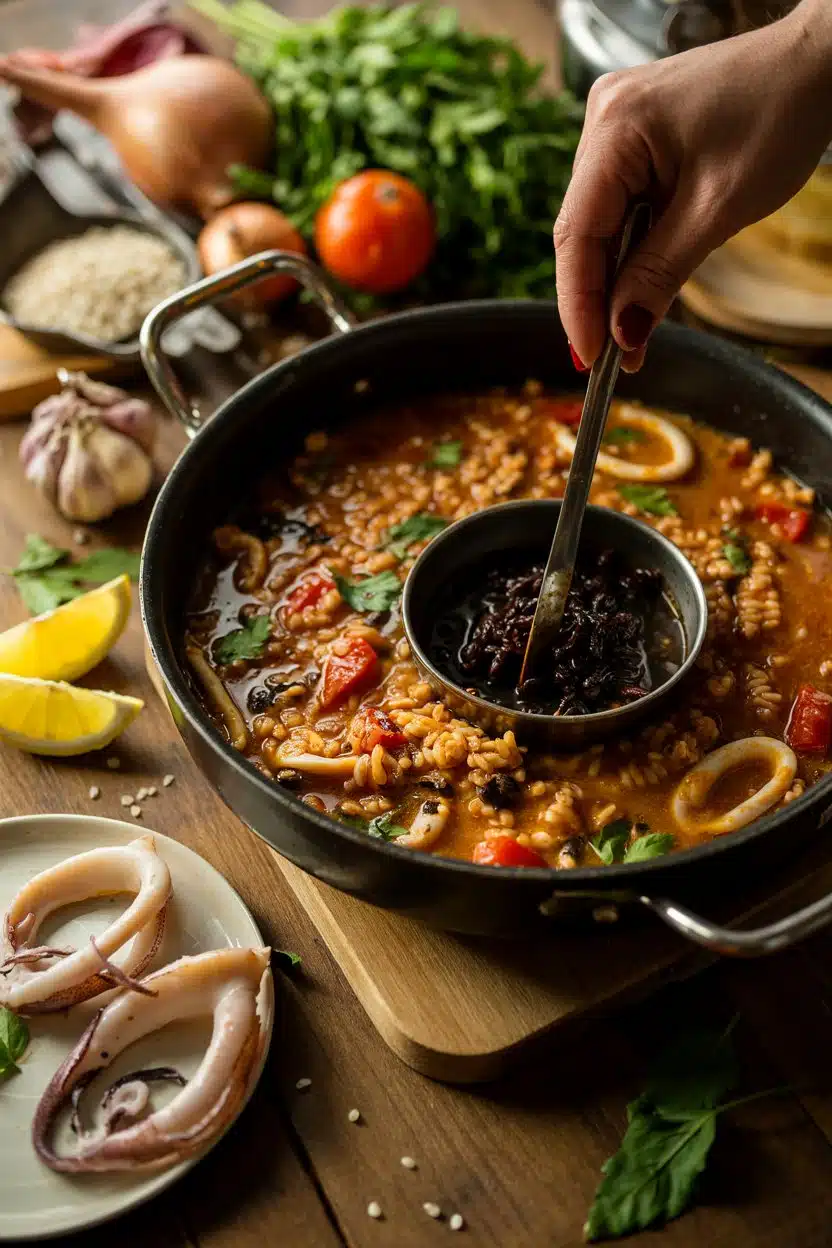
Squid ink does something no other marine ingredient can replicate: it dyes food a deep, matte black while simultaneously depositing a layered savory depth that registers more as oceanic mineral than seafood.

It's the reason *risotto alla nero di seppia* looks dramatic on the plate and still tastes unmistakably of the sea.

Unlike many natural colorants that add hue with no flavor payoff, squid ink pulls double duty - and that's precisely what makes it worth understanding.

QUICK SUMMARY

Squid ink is a marine secretion used as both a natural black dye and a savory, umami-boosting ingredient in pastas, risottos, and sauces. Its flavor is briny and mineral-forward, not strongly fishy, making it approachable in small amounts.

🎨Best Use: Kneaded into pasta dough or stirred into risotto for color and depth
🌊Flavor: Briny, umami-rich, mildly mineral - not aggressively fishy
🛒Buy It: Food-grade tubes or jars; check for glossy black color, no additives
❄️Shelf Life: Sealed: months refrigerated; opened: 5-10 days; frozen: 6 months
⚠️Note: Contains marine proteins - not suitable for vegan diets or those with seafood allergies

What Is Squid Ink?

Squid ink - also called calamari ink, cuttlefish ink, or *nero di seppia* in Italian - is a dark secretion stored in the ink sac of squid and cuttlefish.

In the wild, the animal ejects it as a defense mechanism.

In the kitchen, it's harvested either directly from fresh squid or sold commercially in sealed tubes and small jars.

Cuttlefish ink is often grouped with squid ink, though cuttlefish's flavor and uses carry a marginally richer mineral note that some cooks prefer for sauces.

The ingredient sits at the intersection of condiment and natural dye. It's concentrated enough that a small amount - a teaspoon or two - blackens an entire batch of pasta dough or a pot of risotto.

👅
Flavor

briny
umami-rich
mineral
slightly metallic

✋
Texture

silky when emulsified
gel-like undiluted

👃
Aroma

sea-scented
oceanic copper note

Flavor Intensity
Moderate

What Does Squid Ink Taste Like?

The closest reference point is a concentrated clam or oyster broth - that same mineral-forward brininess - but with an added savory depth that sits closer to umami than to salt. It doesn't taste strongly of squid.

The flavor is measured, almost quiet, which is why it amplifies a dish without announcing itself loudly.

Straight from the sac or tube, undiluted ink has a slight metallic edge. That note softens considerably once the ink is emulsified with fat - olive oil, butter, or cream - or simmered briefly in stock.

Heat and fat round out the sharpness while letting the oceanic base come forward.

Compared to other marine condiments, squid ink sits well below the intensity of fish sauce or anchovy paste.

It's more atmospheric than assertive - it shifts the register of a dish toward the sea without delivering a single dominant fish note.

How to Use Squid Ink

Squid ink integrates best when added to hot liquids or fat at the end of cooking, or kneaded into dough before any heat is applied. Extended high heat dulls its mineral edge, so brief contact with warmth is enough.

How Squid Ink Is Used
Method Best For Tip
🍞 Kneaded Pasta dough, bread, focaccia Add cold; heat can weaken the dye effect
🍳 Stirred In Risotto, broth, fumet Add at the end - 2-3 minutes of warmth is plenty
🥗 Emulsified Aioli, butter sauce, cream sauce Whisk with fat gradually for a glossy, even black finish
✨ Finishing Grilled squid, prawns, fish Mix with butter or olive oil; brush on just before serving
🇮🇹 Italian (Sicilian, Venetian)
🇪🇸 Spanish (Catalan, Basque)
🇯🇵 Japanese
🇵🇭 Filipino

Fresh parsley and lemon zest cut through the ink's mineral weight without muting it.

Garlic and olive oil are the foundational partners in almost every Mediterranean application - understanding squid in cooking gives useful context for how the whole animal's flavor profile aligns with the ink's character.

Pairs well with

🧄 garlic
🫒 olive oil
🐟 anchovy
🍋 lemon zest
🌿 fresh parsley
🧈 butter
🍅 tomato (light acidity)
🍚 short-grain rice

How to Buy and Store Squid Ink

Commercial squid ink is sold in resealable tubes or small vacuum-sealed jars - tubes are easier to portion precisely, which matters when a teaspoon is the difference between deep black and grey.

Check the ingredient list; the only entry should be squid or cuttlefish ink, sometimes with a small amount of salt. Avoid anything watery, cloudy, or brown-tinged.

Watch Out
Opened ink left in a wide container oxidizes quickly. Transfer it to the smallest airtight jar that fits and keep it refrigerated - don't leave it in a cut-open sachet.

Unopened tubes keep for several months refrigerated. Once opened, use within 5-10 days.

For longer storage, freeze ink in a silicone ice cube tray; individual cubes go directly into hot sauces or stock without thawing. Leftover ink-tinted risotto follows separate rules - storing risotto correctly affects texture as much as safety.

Start Here If You're New to Squid Ink

Buy one small tube.

Don't start with fresh squid sacs - harvesting the ink sac intact takes practice and ruins the rest of the squid if you puncture it.

Your first use should be simple: whisk a teaspoon into warm butter with garlic, spoon it over grilled fish or prawns, and taste what the ink actually contributes before committing it to a full pasta dough.

From there, *nero di seppia* pasta or a squid-ink risotto are the natural next steps - both are forgiving, and both show the ingredient at its most direct.

Frequently Asked Questions

Is squid ink the same as cuttlefish ink?

They're closely related but not identical. Cuttlefish ink tends to have a slightly thicker consistency and a marginally more pronounced mineral note compared to squid ink. In practice, both are interchangeable in most recipes - the difference is subtle enough that most cooks and diners won't distinguish them once the ink is cooked into a sauce or dough.

Does squid ink taste fishy?

Not in the way most people expect. The dominant notes are briny and mineral, similar to a mild oyster brine, rather than the pronounced fish flavor associated with sardines or fish sauce. It reads more as "ocean depth" than as a direct seafood taste, which is why it can be added to butter, aioli, or bread without making the finished dish overtly fishy.

Can vegetarians eat squid ink?

No. Squid ink is an animal-derived marine product, so it's excluded from both vegetarian and vegan diets. There's no plant-based ingredient that replicates both its color and its umami character simultaneously - activated charcoal can achieve a black color in dough or batter, but it contributes no flavor.

How much squid ink should I use per serving?

For pasta dough, one teaspoon per 100g of flour produces a deep black color. For risotto, one to two teaspoons per serving is standard. The ink is concentrated, so err on the side of less - you can always whisk in more at the end, but you can't remove it once it's stirred through.

Will squid ink stain my teeth?

Temporarily, yes. The pigment coats tooth enamel and will turn teeth and lips noticeably dark during and shortly after eating. It rinses off completely with water and doesn't cause lasting staining - unlike, say, red wine or turmeric, which can penetrate enamel over time.

What Is Trout? Taste, Texture, Uses & More Explained

May 10, 2026

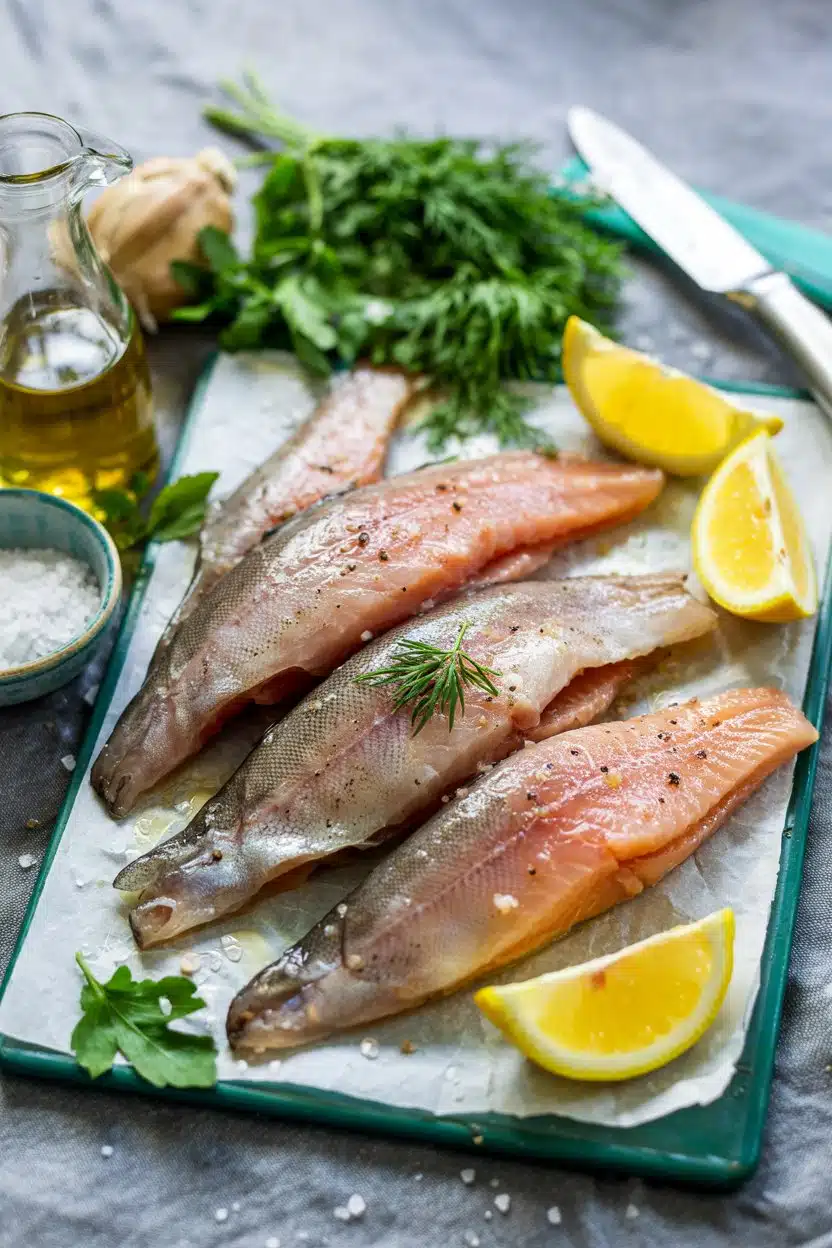
Trout fills a role in the kitchen that few other fish can match: it's mild enough to let simple technique shine, but structured enough to hold up to searing heat, open flame, or a slow cure.

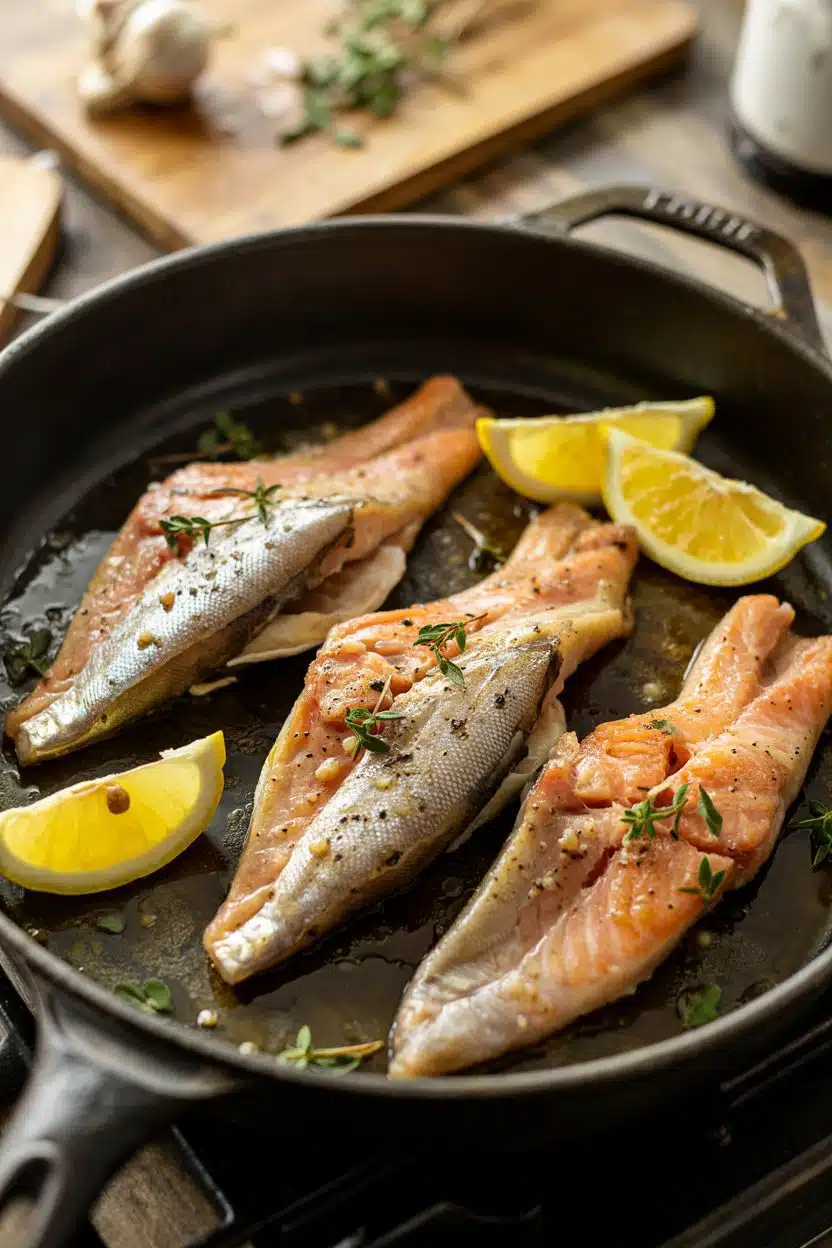
Pan-seared trout develops a nutty, crisp skin with almost no effort, while a whole roasted fish stuffed with lemon and herbs stays moist and clean-tasting all the way through.

That flexibility makes it a staple in home kitchens and restaurant menus alike.

QUICK SUMMARY

Trout is a mild, slightly sweet cold-water fish with a fine flake and tender texture. It suits pan-searing, roasting, grilling, and curing. Fresh fillets last just 1-2 days refrigerated, so plan meals quickly after purchase.

👅Flavor: Mildly sweet, clean, nutty when seared, faintly earthy in wild fish
🍳Best Methods: Pan-searing skin-on, whole roasting, grilling, cold-smoking, curing
🛒Buying Tip: Look for moist, translucent flesh and clear eyes on whole fish
❄️Shelf Life: Fresh: 1-2 days refrigerated; frozen: up to 3 months
🌍Cuisines: American Northwest, French, Scandinavian, Japanese

What Is Trout?

Trout belongs to the salmonid family, sharing lineage with salmon and steelhead but occupying its own category as a cold-water freshwater fish - though sea-run varieties do spend time in saltwater.

Native to temperate waters across North America, Europe, and Asia, trout has been farmed commercially for over a century, making it one of the most reliably available fresh fish at the counter.

Rainbow trout is the most common market variety, with pale pink to cream-colored flesh and mild flavor. Brown trout carries a slightly earthier profile and is more common in wild-caught form.

Brook trout - technically a char - is the smallest of the group, prized by anglers for its delicate flesh.

Sea trout (also called *trucha* in Spanish-speaking markets) develops a richer, brighter pink flesh from its time in saltwater, sitting closer to salmon in character.

👅
Flavor
mildly sweet
clean
faintly nutty
✋
Texture
fine flake
tender
moist
👃
Aroma
fresh
slightly mineral
smoky when cured
Flavor Intensity
Mild
 

What Does Trout Taste Like?

The closest reference point for trout is mild salmon - less oily, with a finer flake and a cleaner finish on the palate.

Farmed rainbow trout lands on the neutral end of the spectrum: gently sweet, with no strong mineral edge.

Wild-caught fish, especially brown trout from cold rivers, picks up a faint earthiness that reads almost like a whisper of game.

Cooking method shifts the flavor noticeably. Pan-searing skin-on draws out a nuttiness from the rendered fat, while poaching keeps things clean and delicate. Cold-smoking introduces a mineral depth that makes trout work beautifully on toast or in pâté.

Sea trout is the outlier - briny and more assertive, it behaves more like a mild salmon fillet than its freshwater relatives.

For anyone curious about fish and its flavor more broadly, trout is a useful starting point precisely because it doesn't dominate.

How to Use & Cook Trout

Trout rewards simplicity. A skin-on fillet needs little more than a hot pan, a knob of butter, and two minutes per side.

The skin crisps fast and the flesh stays moist - overcooking is the main risk, so pull it from heat the moment it flakes at the thickest point.

How Trout Is Used
Method Best For Tip
🍳 Pan-Seared Skin-on fillets, trout almondine Start skin-side down in a dry pan; add butter at the end
🔥 Roasted Whole Herb-stuffed whole fish Score the skin to allow even heat; roast at 200°C / 400°F
🍖 Grilled Trout steaks, skin-on fillets Brush with olive oil; use medium heat to prevent sticking
🧂 Cured Gravlax-style sliced trout, pâté Use the same method as [making gravlax cured salmon at home](https://forkliftkitchen.com/gravlax-cured-salmon/) - it transfers directly
💨 Cold-Smoked Toast toppings, appetizers Slice thin across the grain; pair with crème fraîche or capers
🫕 Poached Fish cakes, salads Poach in court-bouillon; flake gently once cooled
🇺🇸 American Northwest
🇫🇷 French
🇸🇪 Scandinavian
🇯🇵 Japanese

Avoid pairing trout with heavy cream-only sauces or strongly aged cheeses - both overwhelm its subtlety. Brown butter, lemon, and capers are the classic companions for good reason: they add brightness and richness without competing.

Pairs well with
🍋 lemon
🌿 fresh dill
🧈 brown butter
🥜 almonds
🫒 capers
🥔 new potatoes
🌱 parsley

How to Buy and Store Trout

Fresh trout is highly perishable. At the counter, look for moist, translucent flesh with no dry edges or brown patches.

Whole fish should have clear (not cloudy) eyes, bright red gills, and zero sour odor - a faint clean smell is normal, anything stronger is a warning sign. Flesh should spring back when pressed lightly.

Watch Out
Pin bones run along the center of most trout fillets. Run a finger down the fillet and pull them with tweezers or needle-nose pliers before serving - especially important when cooking for children.

Store fresh trout in the coldest part of the fridge, wrapped in wax paper inside a shallow sealed container, and use it within 1-2 days.

Cooked trout keeps for 3-4 days refrigerated.

For longer storage, freeze fillets individually wrapped in plastic and foil - quality holds for up to 3 months.

The same principles that apply to storing salmon correctly apply here, since both fish are similarly delicate.

Start Here for Trout

Trout is the right fish for cooks who want clean, unfussy results without sacrificing quality.

If you're new to cooking fish, start with a skin-on rainbow trout fillet in a hot pan - the technique is forgiving and the payoff is quick.

For those comparing options, understanding the differences between steelhead vs atlantic salmon helps clarify where trout sits on the flavor spectrum relative to its richer salmonid cousins.

Frequently Asked Questions

Is trout the same as salmon?

No - trout and salmon are related salmonids but distinct species with different flavor profiles. Trout is generally less oily, with a finer flake and milder taste. Sea trout and steelhead come closest to salmon in character because both spend time in saltwater, but even they tend to be lighter and less rich than Atlantic salmon.

Does trout taste fishy?

Fresh trout should not taste fishy. A strong or sour smell before cooking signals the fish is past its prime. Farmed rainbow trout is among the mildest fish available - if anything, first-time eaters often expect more flavor than they get.

How do you cook trout so it stays moist?

The key is pulling it from heat early. Trout's fine flake means it overcooks quickly - remove it as soon as the flesh at the thickest point just begins to separate when nudged with a fork. For whole fish, stuffing the cavity with herbs and lemon creates a steam effect that protects the flesh during roasting.

What is the difference between rainbow trout and brook trout?

Rainbow trout is a true trout (Oncorhynchus mykiss) and the species most often sold in supermarkets, available farmed year-round. Brook trout is technically a char (Salvelinus fontinalis), smaller in size, with a more delicate and slightly sweeter flesh - it's common in wild-caught form from anglers but rarely appears in commercial fish counters.

Can you eat trout skin?

Yes, and it's worth eating when cooked properly. Skin-on pan-searing renders the fat and makes the skin crisp and flavorful - similar to a well-cooked chicken skin. Avoid eating the skin if the fish was wild-caught from potentially polluted water sources, as some contaminants concentrate in the fat layer just beneath the skin.

What Is Rice Vinegar? [Taste, Uses & More]

May 10, 2026

Sushi rice is the easiest place to spot rice vinegar at work.

The glossy, slightly tacky grains carry a quiet tang and a faint sweetness that plain cooked rice simply doesn't have - and that comes from a careful stir of rice vinegar, sugar, and salt while the rice is still hot.

Beyond the sushi counter, this fermented grain vinegar shows up in cold noodle dressings, quick-pickled daikon, and stir-fry sauces, often doing its job without much fanfare.

QUICK SUMMARY

Rice vinegar is a mild, fermented vinegar made from rice or rice wine. Its acidity is gentler than white wine vinegar, with a soft sweetness and a faint cereal background. Use it in dressings, pickles, marinades, and rice seasoning across East Asian cooking.

👅Flavor: Mild tang, subtle sweetness, light rice-like background note
🍶Best Uses: Sushi rice, quick pickles, vinaigrettes, stir-fry sauces
🏷️Also Called: Rice wine vinegar, komezu, seasoned rice vinegar
📦Shelf Life: Unopened 2-3 years; opened best within 12-18 months
⚠️Watch: Seasoned rice vinegar contains added sugar and sometimes soy - check labels if you need gluten-free

What Is Rice Vinegar?

Rice vinegar is produced by fermenting rice or rice wine, a process that converts the grain's natural sugars into acetic acid.

It originated across East Asia - China, Japan, and Korea each developed their own traditions - and remains one of the most foundational pantry acids in those cuisines.

The Japanese variety (komezu) is very pale, almost colorless, and the mildest of the family.

Chinese black rice vinegar is a different creature entirely: dark, malty, and far more complex.

Understanding rice and its flavor helps explain why the vinegar made from it carries that distinctive cereal softness no other vinegar quite replicates.

👅
Flavor
mildly tangy
subtly sweet
cereal-like
✋
Texture
watery
thin body
clean finish
👃
Aroma
gentle fermented rice
mild yeasty note
Flavor Intensity
Mild
 

What Does Rice Vinegar Taste Like?

Think of white wine vinegar with its sharpness dialed down by a third - and then add a faint sweetness that reads almost like a whisper of honey. That's the closest shortcut.

It's also comparable to a very light apple cider vinegar, though without the fruity overtone.

What sets rice vinegar apart is how it behaves with heat.

Added early to a braise or reduction, the delicate rice aroma fades and you're left with clean background acidity.

Added late - stirred in at the end of a pan sauce or drizzled over cold tofu - the softer, sweeter character stays intact. Seasoned rice vinegar amplifies the sweetness further because sugar and salt are added during production, making it noticeably rounder than the plain variety.

How to Use Rice Vinegar

Rice vinegar earns its keep across a range of applications.

It's gentle enough to dress raw ingredients without overpowering them and acidic enough to do real work in a pickle brine or marinade.

For quick-pickled cucumbers or tsukemono-style daikon, it produces a brightness that white vinegar can't match without also delivering harshness.

It's also the acid you reach for when deglazing a wok - combined with soy sauce and sesame oil, it rounds out the pan without competing.

How Rice Vinegar Is Used
Method Best For Tip
🥗 Raw Vinaigrettes, cold noodle dressings, dipping sauces Use plain rice vinegar and balance with a small amount of sesame oil
🍳 Cooked Deglazing stir-fry pans, finishing braises, balancing sauces Add at the end of cooking to preserve the delicate rice aroma
🫙 Pickling Quick daikon pickles, cucumber tsukemono, pickled ginger Use a hot brine, then cool completely before sealing
🍚 Rice Seasoning Sushi rice, seasoned grain bowls Mix with sugar and salt, then fold into hot rice off the heat
🇯🇵 Japanese
🇨🇳 Chinese
🇰🇷 Korean
🌏 Southeast Asian
Pairs well with
🫙 soy sauce
🍶 mirin
🌿 sesame oil
🧄 garlic
🫚 ginger
🌶️ chili flakes
🧅 scallions
🍯 honey

If you're working without it, alternatives to rice vinegar that mimic its mild acidity include diluted white wine vinegar or a small amount of apple cider vinegar - though neither carries the rice sweetness.

It's also worth knowing how it differs from its close relative: comparing aji mirin vs rice vinegar clears up a common source of confusion in East Asian recipes.

How to Buy and Store Rice Vinegar

Look for bottles labeled simply "rice vinegar" or "rice wine vinegar" with a short ingredient list - rice, water, and sometimes salt.

If a recipe calls for seasoned rice vinegar, you can buy it pre-made or make your own by dissolving sugar and salt into plain rice vinegar.

Japanese rice vinegar should be very pale or nearly clear.

Avoid bottles with cloudiness or sediment unless the label explicitly describes it as unfiltered.

Quick Tip
Seasoned rice vinegar already contains sugar and salt. If you use it where plain rice vinegar is called for, taste before adding any additional sweetener or salt to the dish.

Store opened bottles tightly sealed in a cool, dark pantry. Refrigeration isn't required, but it helps preserve the delicate rice aroma past the 12-month mark.

For full details on what to look for as it ages, see our guide on rice vinegar spoilage signs.

Where to Start with Rice Vinegar

New to this ingredient? Season a bowl of hot short-grain rice with rice vinegar, a pinch of sugar, and a pinch of salt.

That single exercise demonstrates exactly what it does - brightening without sharpening, adding depth without dominating.

If you cook East Asian dishes regularly, keep both plain and seasoned versions on hand. The plain bottle handles marinades, dressings, and braises.

The seasoned bottle is ready-to-use for sushi rice, and doubles as a quick shortcut in slaws and grain bowls.

Frequently Asked Questions

Is rice vinegar the same as rice wine?

No - they are two distinct products made from rice. Rice wine (such as sake or Shaoxing wine) is an alcoholic beverage produced by fermenting rice and stopping the process before the alcohol converts to acid. Rice vinegar takes that fermentation further, producing acetic acid and losing most of its alcohol content.

Can I use rice vinegar instead of white vinegar?

You can, though the result will be noticeably milder and slightly sweeter. In Asian-style dressings and pickles, the swap works well. In recipes where white vinegar provides sharp structural acidity - such as certain baking applications or water-bath canning - rice vinegar's lower acidity may not perform the same way.

What is seasoned rice vinegar used for?

Seasoned rice vinegar is most commonly used to flavor sushi rice - it already contains the sugar and salt needed for the seasoning step, so no extra measuring is required. It also works as a quick shortcut in coleslaws and grain bowl dressings, though the added sugar means you should taste before adding more sweetener to a dish.

Does rice vinegar have sugar in it?

Plain rice vinegar contains negligible natural sugars from fermentation and is not meaningfully sweet on a nutrition label. Seasoned rice vinegar, however, has sugar and salt added during production and will list them on the ingredient panel - it's a noticeably different product and contributes added sugar to recipes.

Is rice vinegar gluten-free?

Plain rice vinegar made solely from rice is gluten-free. The concern arises with seasoned rice vinegar, which sometimes contains soy sauce or other additives that may include wheat. Always check the label if gluten is a dietary concern, and look for bottles explicitly certified gluten-free when in doubt.

What Is Fennel Seed? [Taste, Uses & More]

May 10, 2026

Fennel seed is the spice that quietly holds Italian sausage together, keeps Indian masalas grounded, and turns a brine into something worth tasting.

It's one of the oldest cultivated spices in the Mediterranean world, and yet most home cooks use it by instinct rather than understanding.

Foeniculum vulgare seeds bring a sweet-anise warmth that reads as both herbaceous and slightly peppery - a combination that, unlike anise swaps that work or star anise, stays mild enough to use generously without overpowering a dish.

QUICK SUMMARY

Fennel seed is a dried spice from the Foeniculum vulgare plant, used whole or ground. It delivers a mild licorice-anise flavor with warm, slightly citrusy undertones. Found across Italian, Indian, and Mediterranean cooking, it suits savory rubs, brines, breads, and teas. Whole seeds stay fresh up to three years; ground loses potency within a year.

👅Flavor: Sweet-anise with warm, peppery, and subtle citrus undertones
🍳Best Uses: Sausage blends, curry powders, pickling brines, rustic breads
🛒Buying Tip: Choose whole green-brown seeds that smell aromatic - not dusty
📦Shelf Life: Whole seeds: 1-3 years; ground fennel: 6-12 months
🌍Cuisines: Italian, Indian, Mediterranean, Middle Eastern, North African

What Is Fennel Seed?

Fennel seed is the dried fruit of *Foeniculum vulgare*, a flowering herb native to the Mediterranean that spread early into South Asia and became essential there too.

The seeds are small, oval, and ridged, typically green-brown when fresh and turning more grey as they age.

In India, the spice is called saunf and chewed after meals as a digestive aid.

In Italy, it's the backbone of fennel pollen and many regional sausage spice blends.

Botanically, what we call a "seed" is technically the whole dried fruit - each ridge marks a section of the plant's original structure.

The active aromatic compound driving its character is anethole, an essential oil shared with anise seed and star anise, though in fennel it appears at lower concentrations.

That's why fennel sits at moderate intensity rather than the sharper register of its botanical cousins.

If you work regularly with cumin or coriander in spice blends, knowing cumin swaps that work or coriander seed swaps that work can also help when building balanced masalas.

👅
Flavor
sweet-anise
licorice warmth
lightly peppery
subtle citrus
✋
Texture
crunchy (whole)
oily when chewed
powdery (ground)
👃
Aroma
sweet licorice
warm herbal
resinous top note
Flavor Intensity
Moderate
 

What Does Fennel Seed Taste Like?

The first thing most people notice is the licorice - sweet, round, and faintly resinous.

It's the same anethole family as star anise, but where star anise hits sharp and medicinal, fennel seed stays warm and softer.

Think of the role anise seed plays in baking, then dial back the intensity by a third and add a faint peppery edge.

That's roughly fennel's register.

What makes fennel seed interesting is how it shifts with heat. Raw or whole, there's a clean crunch with a mild anise release.

Dry-toasted in a pan, the oils bloom and the flavor deepens - earthier, more aromatic, slightly nutty. Ground into a rub or dough, it disperses evenly and delivers warmth without distinct pockets of flavor.

There's also a subtle citrus quality underneath, most noticeable when the seed is freshly cracked.

It keeps the sweetness from feeling heavy, which is part of why fennel works in both savory sausage blends and sweet baked goods without tasting out of place in either.

How to Use Fennel Seed

Toasting whole seeds before adding them to anything is the single most effective step. Thirty seconds in a dry skillet over medium heat releases the anethole oils and shifts the flavor from bright-anise to deep and rounded.

From there, use them whole or crush them with a mortar and pestle depending on the application.

How Fennel Seed Is Used
Method Best For Tip
🥗 Raw/Whole Pickling brines, digestive teas, chewing after meals Add to cold brine and let steep at least 24 hours
🔥 Toasted Sausage blends, roasted vegetables, spice rubs Toast dry before grinding - prevents bitterness
🍞 Ground Bread doughs, cookie batters, curry powders, masalas Grind fresh from whole seeds for strongest aroma
🫙 Infused Syrups, custards, infused sugars for baking Steep in warm liquid 15-20 minutes, then strain
🇮🇹 Italian
🇮🇳 Indian
🫙 Mediterranean
🌙 Middle Eastern
🌍 North African

One pairing worth knowing: fennel seed alongside citrus - particularly orange - sharpens both ingredients.

It's a natural fit for roasted fish dishes, slow-cooked pork, or a rye bread where you want complexity without sharpness.

For dishes where you need that anise note but don't have fennel on hand, see alternatives to fennel seed and replacements for anise seed depending on the recipe.

Pairs well with
🥩 pork
🐟 white fish
🥕 carrots
🍊 orange & lemon
🫙 cumin & coriander
🍯 honey
🧂 black pepper
🍶 vinegar

How to Buy and Store Fennel Seed

Good whole fennel seeds are uniformly green-brown, intact, and immediately aromatic when you open the bag. Dusty, dark, or already-crumbling seeds have lost most of their essential oils.

For ground fennel, the powder should look lightly golden and smell sharp - a jar that barely registers when sniffed is already past its useful life.

Best Pick
Buy whole seeds and grind them as needed. You get 1-3 years of peak flavor versus 6-12 months for pre-ground, and you control the coarseness for each application.

Store whole seeds in an airtight, opaque container in a cool, dark pantry - light and heat degrade anethole faster than age does. Ground fennel should go in a smaller jar to minimize air exposure.

For a full breakdown of timelines and signs of decline, see fennel seed's shelf life.

Where Fennel Seed Fits in Your Kitchen

Start with sausage or a dry rub if you're new to this spice.

That context - fat, heat, salt - is where fennel seed's sweet-anise character is most legible.

Move to Indian spice blends next, where it sits alongside cumin and coriander and takes on a warmer, rounder role.

Once you know how it behaves toasted versus ground, you'll find the right moment to use it in bread, brine, or an infused syrup without second-guessing the amount.

Frequently Asked Questions

Are fennel seed and anise seed the same thing?

No - they come from different plants entirely. Both contain anethole, which creates a similar licorice-like flavor, but anise seed (from Pimpinella anisum) is slightly stronger and more one-dimensional, while fennel seed carries a warmer, more complex note with mild pepper and citrus. You can often substitute one for the other in a pinch, though the result won't be identical. To understand [the differences between anise vs star anise](https://forkliftkitchen.com/anise-vs-star-anise/) and how all three relate, that comparison lays it out clearly.

Can you eat fennel seeds raw?

Yes, and many people do - chewing a small pinch of raw fennel seeds after meals is common practice in South Asian households as a digestive aid. Raw seeds have a bright, sharp anise flavor that's slightly more aggressive than toasted. They're safe to eat directly from the jar, though the raw flavor won't suit every context the way toasted or ground seeds do.

How long do fennel seeds last?

Whole fennel seeds hold peak flavor for 1-3 years when stored in an airtight container away from heat and light. Ground fennel loses potency faster - typically within 6-12 months - because the increased surface area accelerates oil evaporation. Seeds don't spoil in a food-safety sense but become progressively weaker, so the test is always aroma: if sniffing them barely registers, replace them.

Does fennel seed taste like black licorice?

It shares the same anethole compound that gives black licorice its character, but the resemblance is partial. Fennel seed is warmer, less sharp, and carries sweetness alongside a faint peppery note - not the intense, sometimes polarizing punch of licorice candy. Most people who dislike strong licorice flavors can tolerate fennel seed in cooked dishes, especially when it's ground into a blend rather than used whole.

Is fennel seed the same as the seeds from a fennel bulb?

Yes - both come from Foeniculum vulgare, the same plant. The fennel bulb is the swollen base you cook as a vegetable; the seeds come from the plant's flowers once they dry. However, commercial fennel seed is typically harvested from varieties grown specifically for seed production, so the flavor profile can be more concentrated than seeds you might collect from a garden fennel plant at home.

How to Revive a Sourdough Starter [Step-by-Step Guide]

May 10, 2026

Most sourdough starters don't die - they just go dormant, acidic, and confused.

A jar sitting in the back of your fridge for three months, topped with a murky gray liquid and smelling faintly of old gym shoes, is not lost.

Wild yeast and lactic acid bacteria are stubborn survivors, and with the right sequence of feedings, warmth, and patience, you can bring even a badly neglected starter back to full, reliable activity.

This guide walks you through exactly that process, from first assessment to your first successful float test.

QUICK SUMMARY

Reviving a neglected sourdough starter takes 2-7 days of twice-daily feedings at the right ratio and temperature. Rescue a small 10-20 g seed of the best-looking interior, discard the rest, and feed at 1:5:5 (starter:water:flour) until the starter reliably doubles within 4-8 hours.

⏱️Time: 2-7 days total; 15-30 minutes of active work per feeding session
📊Difficulty: Medium - requires consistency and observation rather than skill
⚖️Key Tool: Digital scale in grams - volume measuring won't give you accurate ratios
🌡️Target Temp: 75-82°F (24-28°C) - warmer than most kitchens in winter
✅Ready When: Starter doubles in 4-8 hours after feeding and passes the float test

What You'll Need

Before your first feeding session, get everything in one place. Working with a digital scale is non-negotiable here - flour and water behave differently by volume depending on how you scoop, and your ratios need to be accurate.

  • 🫙 Glass or clear plastic jar, 1-2 quart capacity
  • ⚖️ Digital kitchen scale (grams mode)
  • 🥄 Spoon or silicone spatula
  • 🧺 Clean dish towel or loose-fitting lid
  • 🌡️ Instant-read thermometer (optional but helpful)
  • Unbleached all-purpose or bread flour
  • Room-temperature water (around 75°F / 24°C)
  • Rye or whole-wheat flour (for one rescue feeding if needed)
  • Rubber band (to mark rise level on the jar)

How to Revive a Sourdough Starter Step by Step

Step 1: Assess the Starter

Scrape your starter into a clear jar and examine it under good light. Note the color, texture, smell, and any liquid pooled on top or bottom.

Hooch - that gray or dark watery layer - is just alcohol produced by a hungry starter and is completely salvageable. Pour it off before proceeding.

Watch Out
Pink, orange, or red streaks and fuzzy growth are mold - not hooch. If you see colored mold anywhere in the jar, discard the entire batch. Don't attempt a rescue. The behavior of mold in fermented foods like this mirrors what happens with mold in yogurt - surface contamination can run deeper than it looks.

Step 2: Take a Small Seed

Discard most of the old starter and transfer just 10-20 g of the best-looking interior to a clean jar. That small portion is your seed starter - the concentrated source of wild yeast and bacteria you're rebuilding from.

Using the entire old batch preserves accumulated acids that actively inhibit yeast growth.

Step 3: Begin Feedings at 1:5:5

Add 50 g of room-temperature water to the seed and stir until it loosens, then add 50 g of unbleached all-purpose or bread flour and mix to a thick, uniform batter.

This 1:5:5 ratio (10 g seed : 50 g water : 50 g flour) dilutes the acid load while giving yeast plenty of fresh food to work with.

Snap a rubber band around the jar at the batter line so you can track any rise.

Step 4: Keep It Warm and Covered

Set the jar in a consistently warm spot - 75-82°F (24-28°C) - covered with a towel or loosely placed lid so gases can escape. An oven with just the light on often holds around 78°F and works well.

Avoid the refrigerator entirely during this revival phase, even overnight.

Quick Tip
A proofing box set to 78°F is the most reliable option if your kitchen runs cold. Consistent warmth matters more than hitting a precise number - swings in temperature slow things down more than a fixed cool temp does.

Step 5: Feed Twice Daily and Watch Closely

Every 12 hours, discard down to 10-20 g and repeat the 1:5:5 feeding. Watch for bubbles forming along the sides of the jar, a dome forming on top, and the batter visibly rising above the rubber band.

A tangy, almost yogurt-like smell is a good sign. Expect to see meaningful activity somewhere between days 2 and 4.

Step 6: Adjust If the Starter Is Sluggish

No rise after 48 hours means the acid load is still too high or the environment is too cold.

Move the jar to a warmer spot - closer to 80°F - and switch to a 1:10:10 feed (10 g seed, 100 g water, 100 g flour) to dilute further.

For one of these feedings, replace 20-30% of the flour with rye or whole-wheat to introduce extra nutrients and natural yeasts.

If rye isn't available, check these rye flour stand-ins that carry similar microbial benefits, or browse all purpose flour swaps that work if bread flour is also out.

Step 7: Test for Baking Readiness

When the starter reliably doubles within 4-8 hours of a feeding, drop a teaspoon (10-20 g) into a glass of room-temperature water.

If it floats, your wild yeast population is strong enough for bread.

Feed one final time 4-12 hours before you plan to mix dough, and use the starter when it has doubled and is just beginning to dome or slightly recede - not at the very peak.

Common Mistakes

Using too much old starter as the seed is the most frequent reason revivals stall. A large seed volume means a high concentration of acetic and lactic acids that suppress yeast activity - more old starter is not more power, it's more inhibition.

A sharp acetone or nail-polish smell signals starvation: the bacteria have shifted into alcohol and acetone production because there's nothing left to ferment. Discard down to 10-20 g, feed at 1:10:10 at warm temperature, and increase to twice-daily feedings immediately.

The smell should shift toward tangy within 1-2 days.

  • 🟠 Pink or orange streaks: Discard the entire jar - this is contamination, not recoverable hooch. Do not taste-test to confirm.
  • ❄️ Storing in the fridge during revival: Cold temps crash yeast growth. Keep the starter at room temp until it passes the float test consistently.
  • 📉 Judging readiness by smell alone: Volume rise and sustained bubble activity are the real indicators. A pleasant smell can appear before the yeast population is actually strong enough to leaven bread.

You've Got an Active Starter Again

A fully revived starter is stable, predictable, and ready to leaven bread without commercial yeast.

Going forward, feed it weekly in the fridge or daily on the counter, always keeping a small seed and discarding the rest before each feed.

If you ever plan a long break, freezing sourdough starter is a safer option than leaving it to over-acidify again.

The float test doesn't lie - once your starter passes it twice in a row, it's genuinely ready.

Frequently Asked Questions

Can you revive a sourdough starter that hasn't been fed in months?

Yes, in most cases. Wild yeast and lactic acid bacteria can survive months of neglect in a refrigerated state as long as there's no colored mold or fuzzy growth. Hooch, off smells, and even a grayish color are all recoverable with consistent feedings at the right ratio and temperature.

What does hooch mean, and should I pour it off?

Hooch is the gray or dark liquid that separates on top of a hungry starter - it's alcohol produced when yeast runs out of food. Always pour it off before feeding; leaving it in raises the acidity and can further suppress yeast activity during revival.

What feeding ratio is best to revive a neglected starter?

Start with 1:5:5 (seed:water:flour by weight) - typically 10 g seed, 50 g water, 50 g flour. If activity is still absent after 48 hours, step up to 1:10:10 to dilute the acid load more aggressively. Never go lower than a 1:5:5 ratio during revival, or you risk keeping acidity high enough to stall yeast.

How often should I feed a starter once it's revived?

Once fully active, a counter starter needs feeding every 12-24 hours at room temperature. A fridge starter only needs feeding once a week - discard down to a small seed before each feed regardless of storage method. The twice-daily schedule used during revival is a temporary intervention, not a permanent routine.

Can I use whole-wheat flour instead of rye for a revival boost?

Yes. Whole-wheat flour carries similar wild yeasts and nutrients found in rye bran and germ, making it a practical swap for the one-off rescue feeding described in Step 6. Use it at 20-30% of total flour weight for that single feeding, then return to all-purpose or bread flour for subsequent feeds.

What Is Egg Noodle? Taste, Texture, Uses & More

May 10, 2026

That first warm bowl hits differently than plain pasta. There's a softness to egg noodles - a give, a slight chew, and a quiet richness that builds as you eat.

It doesn't shout. It settles in, carrying broth or sauce without disappearing into it.

QUICK SUMMARY

Egg noodles are wheat-based noodles enriched with eggs or egg yolks, sold fresh, dried, or refrigerated. They cook faster than plain pasta and deliver a mildly eggy, wheaty flavor with a tender bite - suited for soups, stir-fries, and baked dishes.

👅Flavor: Mildly savory, slightly eggy, and wheaty with a soft buttery finish
🍜Best Uses: Soups, stir-fries, stroganoff, kugel, and pan-fried sides
📦Shelf Life: Dried: up to a year; fresh: 2-5 days; frozen: 3 months

What Is Egg Noodle?

Egg noodles are a category of enriched wheat noodle made by combining wheat flour - typically all-purpose - with whole eggs or egg yolks.

The egg content is what sets them apart from plain semolina pasta: it raises the fat and protein levels, deepens the color to a warm yellow, and shortens cooking time.

They originated in Central and East Asia and were adapted separately in Eastern Europe, which is why you find them in both Chinese stir-fries and German *Eiernudeln*.

They come in a wide range of shapes - thin strands, medium ribbons, and wide flat cuts. Fresh egg noodles are sold refrigerated or loose at Asian markets; dried versions appear in standard grocery aisles.

In some contexts, you'll also hear them called egg pasta or, in certain Chinese applications, *chūka soba*.

👅
Flavor
mildly savory
slightly eggy
wheaty
buttery
✋
Texture
tender
slightly chewy
firm when dried
👃
Aroma
warm baked wheat
subtle egg
Flavor Intensity
Moderate
 

What Does Egg Noodle Taste Like?

The flavor lands somewhere between fresh pasta and tagliatelle - familiar and mild, but with more egg richness than plain semolina noodles deliver.

You notice the egg most in the finish: a faint, almost buttery depth that lingers after the wheat notes fade.

Fresh egg noodles carry that eggy warmth more openly. Dried versions pull it back, leaning harder on the wheat, with a slightly grainy bite before they fully hydrate.

Both versions absorb surrounding flavors - soy, sesame, cream, or broth - without losing their own character.

Heat sharpens the aroma noticeably. Drop them into hot chicken broth and the baked-wheat scent opens up immediately.

Pan-fry them after parboiling and the edges brown, adding a toasty layer that's absent when you simply boil and drain.

How to Use Egg Noodle

Egg noodles move easily across cooking methods and cuisines.

Boiling is the baseline: cook until just tender, drain, then finish in whatever sauce or broth you're working with.

For stir-fries, parboil first - about one to two minutes less than package time - then toss directly into a hot wok with soy and sesame oil for a lo mein-style dish.

There are solid pairing ideas for egg noodles worth exploring if you want to build a full plate around them.

Baking is where dried egg noodles earn their place. Stroganoff and noodle kugel rely on their ability to absorb liquid and hold shape through oven heat.

For crispy edges, pan-fry cooked noodles in a little neutral oil - they brown well and add textural contrast to otherwise soft dishes.

How Egg Noodle Is Used
Method Best For Tip
🍲 Boiled Soups, buttered sides, cold noodle salads Salt the water well; drain before adding to broth
🥢 Stir-fried Lo mein, scallion noodles, quick weeknight dishes Parboil first; finish in a dry, very hot wok
🫕 Baked Stroganoff, kugel, creamy casseroles Use dried noodles; they hold shape better under prolonged heat
🍳 Pan-fried Crispy noodle cakes, textured sides Press into an oiled pan; don't move until the bottom sets
🇨🇳 Chinese
🇩🇪 German
🇵🇱 Eastern European
🇺🇸 American
Pairs well with
🍗 chicken broth
🥩 beef broth
🫚 sesame oil
🧈 butter
🍄 mushrooms
🧄 ginger and garlic
🌿 scallions

One thing to avoid: strongly acidic raw sauces or delicate fish proteins. The eggy richness can overwhelm mild fish, and raw acidic dressings tend to clash rather than complement.

How to Buy and Store Egg Noodle

For fresh egg noodles, look for bright yellow strands that are pliable and dry to the touch - avoid anything slimy or dull.

With dried versions, check the ingredient list for real eggs rather than egg powder, and skip packages with visible clumping or any off smell. Refrigerated packs should spring back when gently pressed.

Quick Tip
Dried egg noodles made with whole eggs rather than egg powder cook up noticeably richer. It's a small label-check that pays off in flavor.

Store dried noodles in a cool, dark pantry in their sealed original packaging.

Fresh or refrigerated noodles belong in the coldest part of the fridge inside an airtight container - use them within a few days.

For full guidance on keeping egg noodle fresh, including freezing tips, check our dedicated storage guide.

Frozen egg noodles last up to three months; freeze in a single layer before bagging to prevent clumping.

Start Here Based on What You're Cooking

Choose fresh egg noodles for chicken noodle soup, quick stir-fries, or any dish where you want clean, immediate flavor.

Fresh delivers more of that egg richness and cooks in under three minutes.

Reach for dried egg noodles when you're building a casserole, planning ahead, or need pantry reliability.

Either way, the base character - mild, wheaty, quietly rich - stays consistent, which makes egg noodles easier to cook with than most noodle types.

Frequently Asked Questions

Are egg noodles the same as pasta?

Not exactly. Both use wheat flour, however egg noodles always contain eggs as a core ingredient, while many dried pastas - especially Italian semolina types - use only flour and water. The egg content in egg noodles raises the fat and protein, shortens cook time, and produces a distinctly richer, softer result.

What is the difference between fresh and dried egg noodles?

Fresh egg noodles have a higher moisture content, cook in one to three minutes, and carry a more pronounced eggy flavor. Dried egg noodles take longer to hydrate, have a firmer initial bite, and hold up better in baked dishes like stroganoff or kugel where prolonged heat would turn fresh noodles mushy.

Do egg noodles need to be rinsed after cooking?

Rinsing is only useful if you're making a cold noodle salad - it stops cooking and removes surface starch, keeping them from clumping as they cool. For soups, stir-fries, or sauced dishes, skip rinsing entirely. The starch on the surface helps sauces and broth cling to the noodle.

Can you freeze fresh egg noodles?

Yes. Spread them in a single layer on a baking sheet and freeze until solid before transferring to a freezer bag - this prevents the strands from fusing into a block. Cook directly from frozen; don't thaw first or they'll become sticky and difficult to separate.

How many eggs per cup of flour do you need for homemade egg noodles?

A standard ratio is one large egg per cup of all-purpose flour, with a pinch of salt and sometimes a small splash of water to bring the dough together. Using only yolks instead of whole eggs - roughly two yolks per cup - produces a richer color and more tender texture, similar to Italian fresh pasta.

What Is Ancho Chili Powder? [Taste, Uses & More]

May 10, 2026

Ancho chili powder does something few other spices manage: it adds depth without heat.

Ground from dried poblano peppers, it brings a bittersweet, raisin-like backbone to sauces and rubs that sits behind everything else, making the whole dish taste more complete without announcing itself.

Cooks reach for it when they need color, body, and that quiet complexity that chile flakes or even paprika in spice blends can't quite replicate.

QUICK SUMMARY

Ancho chili powder is a ground dried poblano pepper with low heat, a sweet raisin-like fruitiness, and a mild cocoa undertone. It's the go-to base spice for mole, enchilada sauces, and dry rubs. Best within 6-12 months of grinding.

🌶️Flavor: Mild heat, dried fruit sweetness, faint bittersweet chocolate
🍽️Best Uses: Enchilada sauce, mole, dry rubs, braising liquids
🌍Cuisine: Mexican, Tex-Mex, Southwestern American
📦Shelf Life: Peak aroma within 6-12 months; usable up to 24 months
✅Dietary: Gluten-free, vegan, very low capsaicin - mild enough for most palates

What Is ancho chili powder?

Ancho powder is made from dried poblano peppers - specifically the ancho, which is the dried form of the fresh poblano. The name comes from the Spanish word for "wide," reflecting the pepper's broad, flat shape before drying.

It originates from central and southern Mexico, particularly the Puebla region, and has been a foundational ingredient in Mexican cooking for centuries.

The powder is also sold as ancho powder, ground ancho, or dried poblano powder. It belongs to the dried sweet pepper category, sitting closer to mild paprika than to hot chili powders.

Don't confuse it with standard "chili powder," which is a pre-mixed blend with cumin, garlic, and other spices - ancho is a single-origin ingredient.

👅
Flavor
mild heat
raisin-sweet
bittersweet cocoa
✋
Texture
fine powder
slightly sandy
👃
Aroma
earthy
dried fruit
warm cacao
Flavor Intensity
Moderate
 

What Does ancho chili powder Taste Like?

The closest quick comparison is mild paprika crossed with dark raisins and a whisper of unsweetened chocolate. It's less bright than crushed chile flakes, less citrusy than guajillo, and noticeably rounder than pasilla.

The fruitiness comes from the natural sugars concentrated during the drying of the poblano - it reads sweet, not candy-sweet, but more like dried stone fruit.

Heat registers at roughly 1-3 out of 10.

Most people don't feel a burn at all in standard recipe quantities. Toasting the powder briefly in a dry pan before adding liquid deepens the cocoa note significantly and opens up the earthy aroma.

In wet applications like braising liquids or enchilada sauces, the sweetness integrates and the powder adds color and body without sharpness.

In dry rubs, its slightly sandy texture works with coarser spices like cumin but can clump if there's surface moisture.

How to Use ancho chili powder

Ancho chili powder is primarily a sauce and rub ingredient - it's rarely used as a finishing spice.

The standard approach in Mexican cooking is to bloom it in hot oil for 30-60 seconds before adding liquid, which intensifies color and rounds the flavor.

For dry rubs, combine it with cumin, oregano, and garlic before searing pork shoulder or carne asada.

How Ancho Chili Powder Is Used
Method Best For Tip
🫕 Sauced Enchilada sauce, mole, braising liquid Bloom in oil first for deeper color and aroma
🧂 Dry Rub Pork shoulder, carne asada, chicken Mix with cumin and oregano; apply before searing
🥘 Simmer Chili con carne, braised short ribs Add early so sweetness has time to integrate
🍫 Baked Mole-style desserts, spiced chocolate cake Use sparingly - earthy notes can overpower baked goods
🥗 Marinade Chicken, pork in olive oil or vinegar base Whisk with oil before adding protein for even coating
🇲🇽 Mexican
🤠 Tex-Mex
🌵 Southwestern American
🇺🇸 New Mexican
🍫 Modern Mole Fusion

It pairs well with tomato and cocoa because those flavors echo and reinforce the ancho's own sweet-bitter profile.

If you need ancho chili powder swaps that work, keep in mind that most substitutes won't carry the same raisin-cocoa note - you'll need to compensate.

For dishes built around enchilada sauce, ancho powder is usually the non-negotiable element that holds the sauce's color and body together.

Pairs well with
🍅 tomato
🍫 unsweetened chocolate
🌿 cumin
🌿 Mexican oregano
🍋 lime (finishing)
🧄 garlic
🥩 pork

How to Buy and Store ancho chili powder

Look for a deep reddish-brown powder with no pale, gray, or orange streaks. Streaks usually signal old stock, poor-quality peppers, or blending with filler.

Avoid packages that feel even slightly damp or show clumping - moisture is the main quality killer.

Best Pick
Whole dried ancho pods, then grind yourself at home. The aroma is noticeably fresher, and you control the grind size. A spice grinder handles them in under a minute after a quick dry toast.

Pre-ground works fine for everyday cooking.

Check the grind date, not just the expiration date - most commercial spices stay "safe" well past peak flavor.

Store in an opaque, airtight container in a cool pantry, away from the stove.

A jar parked next to the burner degrades fast.

Full details on ancho chili powder's shelf life explain the difference between usable and flavorful - they're not the same past the 12-month mark.

Start Here for ancho chili powder

New to ancho powder? Start with a simple dry rub on pork.

It shows the flavor clearly without a lot of competing ingredients. From there, move into enchilada sauce, where it becomes the structural backbone of the whole dish.

If you're building a spice cabinet for Mexican cooking, ancho comes before nearly everything else on that list.

Frequently Asked Questions

Is ancho chili powder spicy?

No - it registers around 1,000-1,500 Scoville units, which is below most mild paprikas and far below jalapeño. In typical recipe quantities (1-2 teaspoons), most people feel no heat at all. Those with capsaicin sensitivity should test a small amount first, but it's generally considered safe for heat-sensitive palates.

What is the difference between ancho and guajillo chili powder?

Ancho is sweeter and earthier with raisin and cocoa notes; guajillo is brighter, slightly more acidic, and carries a mild berry-like tang. They come from different peppers - ancho from dried poblano, guajillo from dried mirasol. If you need to swap one for the other, check our guide on swapping out guajillo pepper to understand where the flavor gaps show up.

How much ancho powder equals one dried ancho pod?

One whole dried ancho pod yields approximately 1 to 1½ tablespoons of ground powder, depending on pod size and moisture content. If a recipe calls for two dried anchos, start with 2 tablespoons of powder and adjust from there. The powder integrates faster than rehydrated pods, so the flavor hits earlier in the cooking process.
Can I grind ancho pods at home?

Yes, and the result is noticeably more aromatic than most commercial powders. Remove the stem and seeds, toast the pod briefly in a dry skillet over medium heat until fragrant (about 30 seconds per side), then let it cool completely before grinding in a spice or coffee grinder. Grind in small batches and store in an airtight jar away from light.

Can ancho chili powder replace chipotle powder in a recipe?

It can, but the swap changes the flavor profile meaningfully. Chipotle powder is smokier and slightly hotter because it comes from smoked, dried jalapeños - ancho brings sweetness where chipotle brings smoke. If your dish relies on that smoky backbone, you'll want to add a pinch of smoked paprika alongside the ancho. For more context on [chipotle powder in spice blends](https://forkliftkitchen.com/chipotle-powder-substitutes/), the differences in Scoville and smoke level are covered in detail.

What Is Maca Powder? [Taste, Uses & More]

May 10, 2026

You spot it at the store - a small bag of pale powder labeled "maca root" - and wonder what it actually does in a recipe.

It's not a spice, not a protein powder, not quite a flour. Maca powder is ground dried root from the Peruvian Andes, and it earns its place in a recipe through a quiet, malty depth that few other pantry ingredients can replicate.

QUICK SUMMARY

Maca powder is a fine, beige root vegetable powder with an earthy, malty flavor and faint caramel notes. It's used in smoothies, lattes, baked goods, and energy snacks as both a functional ingredient and a secondary flavoring. Shelf life runs 6-24 months depending on whether the bag has been opened.

👅Flavor: Earthy and malty with low caramel notes and mild bitterness
🍽️Best Uses: Smoothies, lattes, oatmeal, energy balls, muffins
🛒Buy: Look for sealed, opaque bags listing Peruvian origin
📦Shelf Life: Up to 24 months unopened; 6-12 months once opened
⚠️Note: Those with thyroid conditions should check with a clinician before regular use

What Is maca powder?

Maca powder comes from *Lepidium meyenii*, a root vegetable native to the high-altitude grasslands of the central Andes in Peru, where it has been cultivated for over 2,000 years.

The roots are dried and ground into a fine powder sold under names like maca root powder, Peruvian maca, or simply maca root.

Color varies by variety - yellow maca is the most common, while red maca and black maca are less abundant and each carry subtly different compound profiles.

Processing method matters here. Raw maca retains more active enzymes but has a sharper, more bitter edge. Gelatinized maca is cooked under pressure before milling, which reduces starches and makes it easier to digest while mellowing the raw bitterness.

Most commercial bags are gelatinized unless labeled otherwise.

👅
Flavor
earthy
malty
lightly sweet
faint caramel
✋
Texture
fine powder
slightly chalky
👃
Aroma
earthy
toasted malt
Flavor Intensity
Moderate
 

What Does maca powder Taste Like?

The closest comparison is malted barley - that same toasted, grain-forward sweetness you get in a malted milkshake, but earthier and less sugary. Some people also catch a faint butterscotch or light caramel note underneath, especially in gelatinized powder.

Raw maca pushes the bitterness forward and the sweetness back.

Heat has a real effect on the flavor.

Blended cold into a smoothie with banana and cacao, the malty notes integrate smoothly and the bitterness almost disappears.

Baked at high heat for a long time, that bitterness can intensify and become the dominant note - which is why it works better as a background player in muffins and cookies than as a standalone flavoring.

The texture on the tongue is fine but slightly chalky when dry-stirred into something without enough liquid. Whisk it into warm milk properly and it dissolves without grit.

How to Use maca powder

Start with one teaspoon per serving and adjust from there. The malty character plays well in recipes that already have sweetness or richness to balance it - banana smoothies, chocolate-based drinks, oatmeal.
If a recipe isn't working, check out maca powder swaps that work for options that come close to the same depth.

How Maca Powder Is Used
Method Best For Tip
🥗 Cold Blend Smoothies, smoothie bowls, protein shakes Add with banana or cacao to round out bitterness
☕ Warm Liquid Maca latte, oatmeal, porridge Whisk into hot milk off direct heat to avoid scorching
🧁 Baked Muffins, cookies, pancake batter Use moderate temperatures; keep as secondary flavoring
⚡ No Heat Energy balls, granola, protein bars Mix with oats, honey, and cacao for a malt-bar effect
✨ Finishing Dusted over ice cream or chocolate desserts Use sparingly - a half-teaspoon is enough for contrast
🇵🇪 Peruvian
🌿 Wellness / Health-Food
Pairs well with
🍫 cacao powder
🍌 banana
🌾 oats
🍯 honey or maple syrup
🌿 vanilla
🥛 creamy plant milks
🍂 cinnamon

How to Buy and Store maca powder

Look for finely milled powder with an even color - pale yellow for standard yellow maca, deeper tones for red or black varieties. Avoid bags with large dark clumps or any musty smell when opened.

Packaging should be sealed and opaque, and the label should note the origin (Peru) and whether the powder is raw or gelatinized.

Quick Tip
Transfer maca powder to an airtight, opaque container after opening. Moisture is its main enemy - even high kitchen humidity will shorten the shelf life and dull the flavor faster than age alone.

Store in a cool, dark place away from heat sources. Unopened bags last 12-24 months; once opened, plan to use the powder within 6-12 months.

For a full breakdown of what to look for when the powder is past its prime, see maca powder spoilage signs.

Start Here if You're New to Maca

Try it in a smoothie first.

Blend one teaspoon with banana, cacao powder, oat milk, and a drizzle of honey - that combination shows the malty note without any bitterness getting in the way.

Once you know what you're working with, it's straightforward to add it to baked goods or a morning latte.

One teaspoon per day is a reasonable starting point before scaling up.

Frequently Asked Questions

Is maca powder safe to take every day?

For most healthy adults, daily use at typical food amounts (1-3 teaspoons) is considered safe. However, maca is a brassica-family plant and contains glucosinolates, so people with thyroid conditions should get clearance from a clinician before making it a daily habit. Long-term high-dose use hasn't been studied thoroughly in clinical trials.

How much maca powder should I use per serving?

One teaspoon (about 3-5 grams) per serving is the standard starting amount for smoothies and lattes. Baked goods can handle up to one tablespoon per batch without the flavor becoming dominant. Start low - the earthy bitterness compounds if you overshoot.

Does maca powder have caffeine?

No. Maca powder is naturally caffeine-free, which is why it's often used as a base for morning drinks by people avoiding coffee or tea. Any energy-related effects attributed to maca come from its macamide and glucosinolate content, not from stimulants.

What's the difference between raw and gelatinized maca powder?

Raw maca is dried and milled without heat, preserving more active enzymes but delivering a sharper, more bitter flavor that some people find harder to digest. Gelatinized maca is pressure-cooked before milling, which breaks down starches, reduces bitterness, and makes it gentler on the stomach. For most recipes, gelatinized powder produces a cleaner, more predictable result.

Does maca powder dissolve fully in liquids?

It doesn't dissolve the way sugar does - it disperses. In a blender or with thorough whisking in warm liquid, the fine particles distribute evenly and the texture becomes undetectable. Stirred into cold water alone without agitation, it will settle and leave a slightly chalky residue at the bottom.

What Is Liquid Aminos? [Taste, Uses & More]

May 10, 2026

Most people assume liquid aminos is just a trendy name for soy sauce in a different bottle.

That assumption costs them - because the two seasonings behave differently at the table, and swapping them without knowing those differences leads to over-salted marinades and muddled sauces.

QUICK SUMMARY

Liquid aminos is a dark, concentrated seasoning made from hydrolyzed soy protein (or coconut sap). It delivers strong umami with a cleaner, slightly sweeter finish than soy sauce. Use it as a finishing drizzle, in marinades, or whisked into dressings.

👅Flavor: Salty, umami-rich, with a clean soy sweetness
🍳Best Use: Finishing drizzles, marinades, dipping sauces, dressings
🧊Shelf Life: Up to 24 months unopened; 6-12 months refrigerated once open
🌱Dietary: Typically vegan and gluten-free; check label for soy or coconut base
🛒Buy It: Look for deep amber color and a clear ingredient list - soy protein or coconut sap only

What Is Liquid Aminos?

Liquid aminos is a ready-to-use seasoning produced through hydrolysis - a process that breaks soy protein down into its component amino acids using water and sometimes acid.

The result is a thin, dark amber liquid with no fermentation involved, which separates it from traditionally brewed soy sauce.

Bragg Liquid Aminos is the most recognized brand in the U.S. market, though the category now includes coconut aminos, which uses fermented coconut sap instead of soy and carries a slightly milder, sweeter profile.

Both versions are sold as condiments and cooking seasonings. Coconut aminos suits anyone avoiding soy, and you can find coconut aminos swaps that work if that version is unavailable.

👅
Flavor
umami-rich
salty
slightly sweet
clean roasted soy
✋
Texture
thin
watery
slick
👃
Aroma
toasty soy
mildly savory
Flavor Intensity
Strong
 

What Does Liquid Aminos Taste Like?

Think of it as soy sauce with the fermented edge dialed back. The saltiness hits first, followed by a round, protein-forward umami note - but there's no sharp tang, no vinegar-like bite, and noticeably less bitterness than most traditionally brewed soy sauces.

That cleaner soy protein sweetness is what makes it distinct.

Heat concentrates the flavor quickly. Add it too early in a stir-fry and the sweetness can turn slightly sharp; added in the last minute, it keeps its brightness.

Coconut aminos reads noticeably sweeter and milder on the palate - closer to a light teriyaki glaze than a straight salt substitute. The standard soy-based version sits between tamari and light soy sauce in intensity, which is why it functions well as a 1:1 swap in most savory applications. If you've been swapping out tamari in recipes, liquid aminos is a comparable transition.

How to Use Liquid Aminos

Liquid aminos works best as a finishing seasoning or a marinade base - not as a long-cooking ingredient. Its flavor is brightest when added late.

Because it lacks the caramel depth that comes from fermentation, it won't color a braise the way dark soy sauce does, but it seasons cleanly without muddying a broth.

How Liquid Aminos Is Used
Method Best For Tip
🥗 Finishing Drizzle Steamed rice, grains, roasted vegetables Add after heat; 1 teaspoon is enough for a full bowl
🍳 Stir-Fry Tofu, mushrooms, leafy greens Add in the last 60 seconds to preserve brightness
🥩 Marinade Chicken, fish, tempeh, tofu Use 1-2 tablespoon per serving; pairs well with ginger and sesame oil
🫙 Dressings & Sauces Vinaigrettes, dipping sauces for dumplings Whisk in off-heat; it blends without heating
🍲 Soup & Broth Miso soup, ramen, vegetable stock Add 1 teaspoon near the end - won't cloud the liquid

It fits naturally into Asian-influenced cooking and plant-forward Western dishes. For a marinade-forward application, it anchors well in recipes like baked salmon marinades or Thai peanut dipping sauce where layered savory notes are the goal.

🇯🇵 Japanese-Influenced
🌏 Pan-Asian
🌿 Plant-Forward Western
🔀 Modern Fusion
Pairs well with
🧆 tofu
🍄 shiitake mushrooms
🫚 sesame oil
🧄 garlic
🫚 ginger
🍚 rice
🌿 green onions
🍶 mirin

How to Buy and Store Liquid Aminos

A good bottle has a short ingredient list - soy protein and water, or coconut sap for the coconut version.

Avoid anything with a cloudy appearance, sediment floating at the bottom, or a bloated cap; those are signs of contamination.

The color should read deep amber to dark brown, consistent throughout.

Understanding liquid aminos spoilage signs before you buy can help you evaluate older bottles at the back of a shelf.

Watch Out
Liquid aminos is high in sodium. Even a tablespoon adds significant salt load, so season other components of the dish lightly before adding it.

Store unopened bottles in a cool, dark pantry for up to 24 months. Once opened, move it to the refrigerator - room temperature storage after opening accelerates color darkening and flavor loss.

Refrigerated, an open bottle holds well for 6-12 months.

When to Reach for Liquid Aminos

Use it when you want clean umami without fermented depth - finishing a bowl of rice, building a quick marinade, or whisking into a dressing in under a minute.

It's the right call for gluten-free cooking where soy sauce is off the table, and it works anywhere alternatives to soy sauce are needed without sacrificing the savory baseline.

Skip it on anything cream-based or delicately sweet - the salt load disrupts those dishes fast.

If you want to understand exactly what makes soy sauce distinct by comparison, that contrast sharpens your sense of when liquid aminos is the better tool.

Frequently Asked Questions

Is liquid aminos the same as soy sauce?

No - the production method is fundamentally different. Soy sauce is brewed through fermentation over weeks or months, which creates complex acidic and bitter notes. Liquid aminos skips fermentation entirely, using hydrolysis to break down soy protein, which produces a cleaner, slightly sweeter flavor with less tang.

Can you substitute liquid aminos for soy sauce 1:1?

Yes, in most recipes a 1:1 swap works without adjustment. The main difference is that liquid aminos is slightly less salty and lacks the fermented depth of soy sauce, so dishes may taste marginally milder. In strongly seasoned recipes - marinades, stir-fries, dipping sauces - the difference is minimal.

Do liquid aminos contain gluten?

Standard soy-based liquid aminos are typically gluten-free because no wheat is used in hydrolysis - unlike most traditionally brewed soy sauces which include wheat. However, manufacturing cross-contamination is possible, so check the label for a certified gluten-free designation if you have celiac disease or a serious intolerance.

Are liquid aminos healthy?

They provide free amino acids and trace minerals but aren't a meaningful protein source at typical serving sizes. The more relevant consideration is sodium - a teaspoon of Bragg Liquid Aminos contains around 160 mg of sodium, so heavy use adds up quickly. For lower-sodium needs, coconut aminos contains roughly 40% less sodium per serving.

Can liquid aminos be used as a finishing salt at the table?

Yes, and this is one of its strongest applications. A small splash over cooked grains, roasted vegetables, or eggs adds both salt and umami simultaneously, which a standard salt shaker can't replicate. Keep the bottle at the table the same way you would soy sauce - a few drops go further than you'd expect.

What Is Maggi Seasoning? [Taste, Uses & More]

May 10, 2026

You spot a slim, dark bottle on the supermarket shelf - possibly near the soy sauce, possibly tucked in the international aisle - and wonder what exactly Maggi seasoning is supposed to do.

The label gives you almost nothing.

What's inside is a concentrated savory liquid that cooks across four continents reach for when they want depth without adding bulk.

Understanding what it tastes like, and where it belongs in your kitchen, makes it far less mysterious.

QUICK SUMMARY

Maggi seasoning is a dark, concentrated liquid condiment built on hydrolyzed vegetable protein. It delivers deep umami and salt in small doses, making it useful in soups, marinades, stir-fries, and pan sauces. Intensity is high - a teaspoon goes a long way.

👅Flavor: Deep umami, salty, savory-brothy with a slight bitter caramel edge
🍳Best Uses: Soups, fried rice, pan sauces, marinades, scrambled eggs
🌍Popular In: Southeast Asian, Latin American, and European home cooking
⏳Shelf Life: Unopened up to 3 years; opened, best within 6-12 months
⚠️Watch: Very high sodium; regional formulas differ - check labels for gluten

What Is Maggi Seasoning?

Maggi seasoning originated in Switzerland in the late 1880s, developed by Julius Maggi as an affordable protein-rich seasoning for working-class households.

Today Nestlé produces it globally, with regional formulas that differ noticeably in flavor balance - European Maggi (Swiss, German) leans herbaceous, while the Filipino version is saltier and more straightforwardly savory.

The base ingredient is hydrolyzed vegetable protein, a processed form of plant protein broken down into free amino acids, including glutamate - the compound behind umami. That's what gives Maggi its savory, almost meaty character without containing any actual meat.

It's sometimes compared to the taste of Worcestershire sauce, though Maggi is thinner, darker, and more aggressively salty.

👅
Flavor
deep umami
salty
savory-brothy
bitter caramel
✋
Texture
watery-thin
slick when concentrated
👃
Aroma
meaty
roasted soy-like
faint fermented tang
Flavor Intensity
Strong
 

What Does Maggi Seasoning Taste Like?

Straight from the bottle, Maggi seasoning hits hard - salt first, then a wave of deep savory richness that coats the back of the palate. There's a faint bitter edge underneath, similar to a very dark caramel or well-browned fond.

It's not sweet.

The closest comparison most cooks reach for is soy sauce and its flavor profile, but Maggi is more concentrated and lacks soy's slight sweetness. Worcestershire gets closer in complexity, though Maggi skips the tamarind and anchovy notes entirely.

What it shares with both: that glutamate-driven savory backbone that makes food taste like it's been cooking longer than it has.

Heat mellows the bitterness and pushes the brothy quality forward. Add it early in a braise and it blends into the background.

Add it at the finish and you get a sharper, saltier edge.

How to Use Maggi Seasoning

A few drops or a teaspoon is usually enough. Because the concentration is high, it's easy to overshoot - start small and taste as you go.

How Maggi Seasoning Is Used
Method Best For Tip
🥘 Simmer Soups, broths, beef stew Add early; 1-2 teaspoon deepens stock without extra salt
🍳 Stir-fry Fried rice, noodles Splash near the end for color and savory punch
🥩 Marinade Chicken, pork, beef Mix with oil and garlic; promotes browning
🍳 Pan sauce Gravies, deglazing Stir in after deglazing; replaces or supplements soy
🥚 Finishing Scrambled eggs, steamed veg A few drops only - it can overpower delicate dishes fast
🇵🇭 Filipino
🇲🇾 Malaysian
🇨🇴 Colombian
🇻🇪 Venezuelan
🇩🇪 German
🇨🇭 Swiss

If a recipe calls for it and you're out, there are Maggi seasoning swaps that work reasonably well, though none replicate the exact profile. Skip it entirely with sweet glazes or dairy-based desserts - the bitterness clashes badly.

Pairs well with
🥩 beef and beef stock
🥚 eggs
🍚 rice
🧄 garlic and onion
🍅 tomato-based sauces
🍄 mushrooms
🐟 fish sauce

How to Buy and Store Maggi Seasoning

Look for a sealed glass or PET bottle labeled "Maggi Seasoning" or "Maggi Sauce." Check that the cap is intact and the expiry date is at least six months out. Regional formulas matter - Swiss and German versions carry a more herbal note, while Filipino Maggi is notably saltier and more one-dimensional in its savory profile.

Buy the variant that matches your cooking.

Quick Tip
Store an opened bottle tightly capped in a cool pantry or the refrigerator door. Heat and light degrade the aroma faster than most cooks expect. For more on [keeping Maggi seasoning fresh](https://forkliftkitchen.com/maggi-seasoning-shelf-life/), the shelf life details vary by formula and storage conditions.

Unopened, most bottles last one to three years. Once opened, use within six to twelve months for the best aroma.

The sodium content is very high per serving, and some regional formulas contain wheat - check the label if gluten is a concern.

When to Reach for It

Maggi seasoning earns its place on the shelf if you cook a lot of soups, braises, or fried rice.

Start with beef stew or scrambled eggs - those are the clearest demonstrations of what it does.

If you already cook regularly with soy sauce or want alternatives to Worcestershire sauce in savory applications, Maggi fits that same lane.

It's concentrated, so a bottle lasts.

Frequently Asked Questions

Is Maggi seasoning the same as soy sauce?

No. Both are liquid umami seasonings, however Maggi is made from hydrolyzed vegetable protein rather than fermented soybeans. Soy sauce carries mild sweetness and a fermented complexity that Maggi doesn't have - Maggi is more salt-forward and lacks soy's characteristic depth from the brewing process.

How salty is Maggi seasoning compared to soy sauce?

Maggi seasoning is generally saltier per teaspoon than regular soy sauce, particularly the Filipino formula. If substituting one for the other in equal amounts, expect Maggi to read as more aggressively salty. Reduce the amount by about 20-30% and adjust from there.

Can I use Maggi seasoning in place of soy sauce?

Yes, with adjustments. Use about three-quarters of the amount the recipe calls for in soy sauce, then taste before adding more. Maggi won't bring the same mild sweetness or fermented character, so dishes with those qualities - like teriyaki - won't translate as cleanly. For a broader look at [alternatives to soy sauce](https://forkliftkitchen.com/soy-sauce-substitutes/), other options may work better depending on the recipe.

Does Maggi seasoning contain gluten?

Some regional formulas do contain wheat. The European versions in particular have historically included wheat-based ingredients, while certain Asian market variants may differ. Always check the ingredient label on the specific bottle you're buying - there's no single global formula.

How much Maggi seasoning should I add to soup?

For a four-to-six serving pot of soup or broth, start with one teaspoon and taste before adding more. It's easier to add than to correct - too much tips the soup into overly salty territory quickly. Add it near the end of cooking so you can taste the final salt level accurately.

What Is Daikon Radish? [Taste, Uses & More]

May 10, 2026

You spot it at the market - a long, white root that could pass for an oversized parsnip - and wonder what you're supposed to do with it.

Daikon radish sits in a quiet category of its own.

It's not as sharp as a small red radish, not as starchy as a turnip, and far juicier than either when you bite into it raw.

QUICK SUMMARY

Daikon is a large East Asian white radish with crisp, juicy flesh and mild peppery flavor. Eaten raw, pickled, braised, or grated, it softens dramatically with heat and absorbs surrounding flavors. Whole roots keep 1-2 weeks refrigerated.

👅Flavor: Mild peppery heat, clean vegetal, slightly sweet
✋Texture: Crisp and juicy raw; creamy and soft when braised
🍽️Best Uses: Pickling, grating, simmering in broth, raw slaws
🌍Cuisines: Japanese, Korean, Chinese, Vietnamese
🗓️Shelf Life: Whole: 1-2 weeks fridge; cut: 3-5 days; pickled: several weeks

What Is daikon radish?

Daikon - also called mooli, white radish, or Japanese radish - is a winter root vegetable native to East Asia, grown and used across China, Japan, and Korea for centuries.

The root typically runs 6-14 inches long with smooth, pale ivory skin and dense, water-rich flesh inside.

Unlike the small round radishes common in Western salads, daikon belongs to a larger subspecies of *Raphanus sativus* bred for size, mild flavor, and long keeping quality.

Several regional varieties exist. Japanese daikon tends to be the longest and mildest.

Korean radish (*mu*) is shorter, rounder, and slightly more peppery. Both are interchangeable in most preparations, though texture differences become more noticeable after cooking.

👅
Flavor
mild peppery
slightly sweet
clean vegetal
✋
Texture
crisp raw
juicy
creamy when braised
👃
Aroma
mildly sharp when cut
earthy-cool when cooked
Flavor Intensity
Moderate
 

What Does daikon radish Taste Like?

Raw daikon delivers a clean, lightly peppery bite - noticeable but never aggressive. It reads somewhere between a mild red radish and a fresh turnip, with a faint sweetness underneath that balances the sharpness.

The flesh is exceptionally juicy, which gives it a cooling quality that most root vegetables lack.

Heat changes everything. Simmer daikon in broth and that pepper edge softens almost completely, leaving a neutral, slightly sweet base that soaks up surrounding flavors like a sponge.

The texture shifts from snappy-crisp to something closer to cooked jicama - yielding but not mushy, with a subtle creaminess.

The top section of the root tends to be sweeter; the tip end runs slightly more bitter and sharp.

Worth knowing when you're grating it for daikon oroshi - a Japanese condiment - where the ratio of sweet to peppery matters more.

How to Use daikon radish

Daikon is one of those roots that earns its place across every cooking method.

Raw, it's julienned as a garnish for sushi and sashimi or thinly sliced into slaws.

Grated, it becomes daikon oroshi, served alongside grilled fish and tempura to cut richness with mild acidity.

If you're ever swapping out daikon radish, it's worth understanding just how different the cooked and raw forms behave before choosing an alternative.

How Daikon Radish Is Used
Method Best For Tip
🥗 Raw Slaws, salads, sashimi garnish Slice thin; salt briefly to soften and draw out water if needed
🥗 Grated Daikon oroshi condiment Use the upper third of the root for a sweeter, milder result
🫙 Pickled Takuan, quick Korean banchan, Vietnamese bánh mì filling A brine with rice vinegar and a pinch of turmeric gives classic color
🍲 Simmered Oden, Korean guk, miso broth Cut into thick rounds; add early so it absorbs the stock fully
🔥 Roasted/Braised Glazed side dishes with soy and mirin Score the cut face so glaze penetrates; finish with sesame oil
🇯🇵 Japanese
🇰🇷 Korean
🇨🇳 Chinese
🇻🇳 Vietnamese
🌏 Southeast Asian Fusion

Daikon pairs best with umami-forward ingredients. Swapping out soy sauce or swapping out miso paste in daikon braises will noticeably change the final flavor, since daikon acts as a neutral canvas that amplifies whatever surrounds it.

Pairs well with
🫙 soy sauce
🍶 mirin
🟤 miso
🫚 sesame oil
🧄 ginger
🌿 scallions
🐟 grilled fish
🍶 rice vinegar

How to Buy and Store daikon radish

Reach for roots that feel dense and heavy for their size - a light root signals hollow, dry flesh.

Skin should be smooth and white without soft spots, cracks, or green shoulders.

Smaller and medium roots (6-10 inches) are reliably sweeter and crisper; very large specimens often turn woody toward the center.

If the greens are still attached, bright, unwilted leaves confirm a recent harvest.

Quick Tip
Trim the greens within 24 hours of bringing daikon home. Left attached, they draw moisture from the root and cause it to shrivel faster.

Store the root unwashed, loosely wrapped in a perforated plastic bag in the crisper drawer. Cut or peeled daikon should be used within 3-5 days.

For a full breakdown on storing daikon radish correctly, including what to watch for once it starts to turn, see our dedicated shelf life guide.

Start Here

New to daikon? Grate it raw and serve it alongside grilled salmon or pan-fried tofu.

That one use - daikon oroshi - shows you its raw character clearly and requires no recipe. From there, try a quick rice vinegar pickle.

Once you've seen how heat transforms it in a simple miso broth, the rest follows naturally.

Frequently Asked Questions

Is daikon radish spicy?

Daikon has mild heat - noticeably peppery raw, but much gentler than small red radishes or horseradish. The tip of the root runs slightly hotter than the upper end, and cooking reduces the sharpness almost entirely. People who find red radishes too aggressive usually handle daikon without issue.

How do you eat daikon raw?

Slice it thin for slaws and salads, julienne it for sushi garnishes, or grate it finely as a condiment (daikon oroshi) for grilled or fried foods. If the raw bite feels too sharp, lightly salting sliced daikon for 10 minutes draws out moisture and softens both texture and flavor before you dress it.

Can you freeze daikon radish?

Freezing raw daikon is not recommended - the high water content causes the cells to rupture, leaving the thawed root limp and waterlogged. However, daikon that will be cooked in soups or stews can be blanched first, frozen in pieces, and added directly to hot liquid from frozen. Pickled daikon also does not freeze well; the brine changes texture and turns it rubbery.

What is the difference between daikon and regular radish?

Size and intensity are the main differences. Common red radishes are small, round, and significantly sharper, with a dry, dense bite. Daikon is far larger, much milder, and considerably juicier - it also holds up to long cooking in a way that small radishes don't, since they tend to become unpleasantly bitter when simmered.

How do you pickle daikon quickly?

Julienne or thinly slice the daikon, then combine rice vinegar, a small amount of sugar, and salt in a 2:1:0.5 ratio by volume and pour it over the pieces. After 30-60 minutes at room temperature the daikon will be tangy, lightly crunchy, and ready to use - refrigerate for up to two weeks. A pinch of turmeric gives it the bright yellow color typical of Vietnamese and Japanese versions.

9 Best Substitutes for Butter in Baking and Cooking

May 10, 2026

You pull out the recipe card and see "1 cup butter" at the top. The butter dish sits empty in the fridge.

Butter adds richness, helps baked goods rise, and creates structure through fat. The swap you pick depends on whether you're baking, sautéing, or spreading.

Quick Substitute Reference
# Substitute Best For Ratio Key Note
1 Margarine ✨ Both 1:1 Less creamy, slightly oily
2 Coconut Oil ✨ Both ¾ cup per 1 cup Subtle coconut flavor
3 Olive Oil 🍳 Cooking ¾ cup per 1 cup Fruity, peppery notes
4 Ghee 🍳 Cooking 1:1 Nutty, high smoke point
5 Applesauce 🥧 Baking ½ cup per 1 cup Adds sweetness, less richness
6 Greek Yogurt 🥧 Baking ½ cup per 1 cup Tangy, creamy texture
7 Avocado 🥧 Baking 1:1 Mild, slightly nutty
8 Shortening 🥧 Baking 1:1 Neutral, very flaky
9 Nut Butters ✨ Both ¾ cup per 1 cup Rich, nutty flavor

9 Smart Butter Swaps When You're Out

These options cover everything from quick weeknight cooking to holiday baking. Some match butter's richness closely, others shift the flavor or texture in ways that still work.

1 - Margarine

Margarine

Works for: Recipes needing solid fat at room temp

Skip if: You want deep, buttery flavor

Butter

Works for: Rich flavor and browning

Skip if: You're dairy-free

Margarine spreads like butter and holds its shape in dough. It melts at a similar temperature, so cookies and pie crusts turn out close to the original.

The flavor runs less creamy, with a slight oily aftertaste in some brands. Use it cup for cup in most recipes.

If you're also out of margarine, swaps when Margarine runs out covers plant-based options that melt cleanly. Pick versions without trans fats for healthier results.

Skip if: you need the caramelized, nutty notes butter brings to browned sauces or finishing touches.

2 - Coconut Oil

Coconut oil solidifies at room temperature, making it a close match for butter in baking. It adds a faint coconut sweetness that works in cakes, muffins, and granola.

Use three-quarters of a cup for every cup of butter. Melt it if the recipe calls for melted butter, or cream it with sugar if the recipe starts with softened butter.

If you're short on coconut oil too, Coconut Oil substitutes ranked lists neutral oils that won't add tropical flavor. The coconut taste fades during baking but stays noticeable in no-bake recipes.

3 - Olive Oil

Best Pick
Use olive oil for sautéing vegetables or drizzling over roasted dishes where its fruity, peppery notes enhance the flavor.

Olive oil stays liquid at room temperature, so it won't cream with sugar or create flaky layers. It works best in savory cooking-roasting vegetables, pan-frying proteins, or finishing pasta.

Use three-quarters of a cup for every cup of butter. The fruity, peppery flavor comes through, so stick to recipes where that profile fits.

Don't have olive oil either? When looking for swaps when Olive Oil runs out, pick based on heat tolerance and flavor neutrality. Avoid using it in delicate baked goods like shortbread or pie crusts.

Skip if: the recipe depends on solid fat for structure or if you want a neutral taste.

4 - Ghee (Clarified Butter)

Ghee is butter with the milk solids removed. It has a higher smoke point than regular butter, making it ideal for high-heat sautéing and frying.

The nutty, toasted flavor works in Indian dishes, roasted vegetables, and scrambled eggs. Use it cup for cup in place of butter.

Here's what to know:

  • Smoke point - Ghee handles heat up to 485°F without burning.
  • Flavor shift - The nuttiness intensifies during cooking.
  • Dairy content - Trace amounts of lactose remain, so it's not fully dairy-free.
  • Storage - Keeps at room temperature for months without spoiling.

If you're also out of ghee, what to use for Butter covers both dairy and plant-based picks that handle high heat. It stays solid when chilled but melts faster than regular butter.

Skip if: you need a completely dairy-free option.

5 - Applesauce (unsweetened)

Use Ratio Notes
Muffins and quick breads ½ cup per 1 cup butter Keeps batter moist, reduces fat
Brownies and cakes ½ cup per 1 cup butter Denser texture, slightly gummy
Cookies Not recommended Won't spread or crisp properly

Applesauce replaces fat with moisture, making muffins and quick breads tender without the richness of butter. The natural pectin in apples helps bind the batter.

Use half a cup of unsweetened applesauce for every cup of butter. Baked goods come out softer and slightly denser, with a hint of apple sweetness.

Skip if: you're making cookies or pastries that need fat for spread and crispness.

6 - Greek Yogurt

Greek yogurt adds tang and moisture to baked goods without the fat. It works best in recipes where a slight acidity enhances the flavor-think lemon muffins, coffee cake, or pancakes.

Use half a cup of Greek yogurt for every cup of butter. The batter will be thicker, and the final texture turns out moist but slightly denser.

Quick specs:

  • Texture trade-off - Less flakiness, more tenderness.
  • Flavor shift - Adds a mild tang that balances sweetness.

If you're also out of Greek yogurt, Greek Yogurt substitutes ranked covers other tangy dairy swaps that add moisture. Don't use it for frying or high-heat cooking-it splits and curdles.

Skip if: you need a neutral flavor or if the recipe requires solid fat.

7 - Avocado

Watch Out
Avocado works in brownies and chocolate cakes where the green tint disappears, but it turns vanilla or light-colored batter an off shade.

Avocado mashes into a creamy consistency that mimics butter's richness in baking. It adds moisture and a subtle nutty flavor that works in chocolate-based recipes.

Use an equal amount of mashed avocado in place of butter. The fat content is similar, so the texture stays close to the original.

The essentials:

  • Color - Expect a slight green tint in lighter batters.
  • Flavor - Mild and slightly grassy; cocoa masks it well.
  • Texture - Produces a dense, fudgy crumb.
  • Prep - Mash until smooth to avoid lumps.

Skip if: the recipe needs a neutral color or if you're making delicate pastries.

8 - Vegetable Shortening

Shortening creates flaky, tender pie crusts and biscuits because it coats flour proteins without adding moisture. It stays solid at room temperature, making it easy to cut into dough.

Use an equal amount in place of butter. The texture comes out lighter and more crumbly, but the flavor runs flat-shortening adds no richness or depth.

Key details:

  • Flakiness - Produces the flakiest pie crusts and biscuits.
  • Flavor - Completely neutral; needs salt or spices to compensate.

If you're short on shortening too, easy Shortening swaps that work lists fats that handle high heat and produce similar flakiness. It's fully hydrogenated, so it keeps longer than butter without refrigeration.

Skip if: you want rich, buttery flavor or if you're avoiding processed fats.

9 - Nut Butters (e.g. almond or cashew)

Golden Rule
Nut butters work best in recipes with bold flavors-chocolate, spices, or fruit-that can stand up to their strong taste.

Nut butters add richness and a thick, dense texture to baked goods. They work in brownies, energy bars, and quick breads where a nutty flavor fits the profile.

Use three-quarters of a cup for every cup of butter. The flavor comes through strong, so pick a nut butter that complements the other ingredients.

What to expect:

  • Thickness - Batter turns denser and heavier.
  • Flavor - Almond and cashew add sweetness; peanut brings a bold, roasted note.
  • Spread - Cookies won't spread as much; expect a cakey texture.

If you're also out of nut butters, quick Butter replacements to try covers both plant-based and dairy options that match fat content. Avoid using them in delicate pastries or recipes where a neutral flavor is critical.

Skip if: you have nut allergies or need a light, airy texture.

Making Butter Substitutes Work

The right swap depends on what you're making. For baking, stick to solid fats like margarine or shortening; for cooking, oils like olive or coconut work fine.

Start with margarine if you want the closest match to butter's texture. For lower-fat options, try applesauce or Greek yogurt in baked goods where moisture matters more than richness.

  • Closest match - Margarine for structure and texture
  • Easiest grab - Olive oil for cooking
  • Dairy-free option - Coconut oil for baking

Frequently Asked Questions

Can I use oil instead of butter in cookies?

Cookies won't spread or crisp the same way because oil stays liquid at room temperature. Use coconut oil or shortening for better results.

Does margarine taste like butter?

Margarine mimics butter's texture but lacks its rich, creamy flavor. It works in recipes where butter isn't the star ingredient.

Can I substitute butter with applesauce in all baking recipes?

No. Applesauce works in moist recipes like muffins and quick breads but fails in cookies or pastries that need fat for spread and flakiness.

Is ghee healthier than butter?

Ghee has trace amounts of lactose and casein removed, making it easier to digest for some people. It's not lower in calories or fat, but it handles high heat better.

Why does coconut oil work in baking but olive oil doesn't?

Coconut oil solidifies at room temperature, mimicking butter's structure in dough. Olive oil stays liquid, which disrupts texture in baked goods that need solid fat.

9 Best Substitutes for Butter

No ratings yet
Butter adds richness and structure in cooking and baking. Choose substitutes based on whether you are baking, sautéing, or spreading. This guide covers solid fats, oils, and moisture-rich swaps with ratios and usage notes.
Print Recipe Pin Recipe
Prep Time 9 minutes mins
Cook Time 6 minutes mins
Total Time 15 minutes mins
Servings: 6 servings
Course: Baking, Cooking, Substitutes
Cuisine: General
Ingredients Method Notes

Ingredients
  

  • 1 cup Margarine Use cup for cup as a solid fat with less creamy and slightly oily flavor.
  • 0.75 cup Coconut Oil Use three-quarters cup per cup butter, melts like softened butter, adds subtle coconut flavor.
  • 0.75 cup Olive Oil Use three-quarters cup per cup butter for savory cooking with fruity, peppery notes.
  • 1 cup Ghee Use cup for cup; nutty flavor with high smoke point; not fully dairy-free.
  • 0.5 cup Applesauce Use half cup per cup butter in baking muffins and quick breads; adds sweetness, less richness.
  • 0.5 cup Greek Yogurt Use half cup per cup butter in baking for tangy, creamy texture with slight acidity.
  • 1 cup Avocado Use equal amount mashed avocado in baking; mild nutty flavor but adds green tint.
  • 1 cup Shortening Use cup for cup in baking for flaky texture; neutral flavor requiring added seasoning.
  • 0.75 cup Nut Butters (e.g. almond or cashew) Use three-quarters cup per cup butter in bold-flavored baked goods with rich nutty flavor.

Method
 

  1. Choose your substitute based on use: solid fats for baking, oils for cooking, or moisture-rich for texture adjustments.
  2. Margarine works cup for cup for recipes needing solid fat at room temperature; expect less creamy flavor.
  3. Use ¾ cup coconut oil per cup butter; melt or cream with sugar to match butter texture.
  4. Use ¾ cup olive oil per cup butter for sautéing or roasting, accepting its fruity, peppery flavor.
  5. Swap ghee cup for cup; great for high-heat cooking with nutty flavor and high smoke point.
  6. In baking, replace butter with ½ cup applesauce per cup butter for moist muffins and breads.
  7. Use ½ cup Greek yogurt per cup butter to add moisture and mild tang in baked goods.
  8. Replace butter with equal parts mashed avocado in chocolate baked goods; mash smooth to avoid lumps.
  9. Use equal parts shortening in baking for flaky texture; add salt or spices to compensate neutral flavor.
  10. In bold-flavored baked goods, substitute ¾ cup nut butters per cup butter, noting thicker batter and strong flavor.
  11. Adjust the recipe as needed, tasting and testing texture; avoid substitutes in recipes needing solid fat structure when appropriate.

Notes

Mash avocado smoothly to avoid gritty texture and uneven moisture in baked goods.

Tried this recipe?

Let us know how it was!

Best Mexican Beers for Tacos, Cookouts, and Easy Sipping

May 10, 2026

Mexico's brewing tradition goes back over 150 years. German and Austrian immigrants brought lager-making techniques to Monterrey and Mexico City in the mid-1800s.

ForkliftKitchen may earn a commission from qualifying purchases made through product links on this page.

The result? Vienna-style dark lagers, crisp pilsners, and easy-drinking pale lagers built for hot weather and big meals. Most people only know three or four brands. The real selection runs much deeper.

We tasted 16 Mexican beers side by side. Here are the seven worth buying.

How We Picked
  • 🌾 Malt character. Beers where the grain shows up. Toasty, bready, caramel-sweet. Not sparkling water with a label.
  • 🫧 Carbonation balance. Too flat kills the snap. Too fizzy bloats you. Best ones land right in the middle.
  • ✨ Clean finish. No metallic aftertaste. No lingering sweetness. If the finish was off, the beer got cut.
  • 🌮 Food pairing range. A Mexican lager that handles carnitas, ceviche, and nachos scores higher than one that only works solo.

Best Mexican Beers, Ranked

The ranking table gives you the quick version. Scroll down for full reviews, pros and cons, and food pairing notes.

# Beer Category Style ABV
1 Negra Modelo Best Overall Vienna Lager 5.4%
2 Bohemia Clásica Best Pilsner Czech Pilsner 4.7%
3 Modelo Especial Best All-Around Pale Lager 4.4%
4 Victoria Most Underrated Vienna Lager 4.0%
5 Pacífico Clara Best for Tacos Pale Lager 4.4%
6 Dos Equis Ambar Best Amber Vienna Lager 4.7%
7 Estrella Jalisco Day Drinking Pale Lager 4.5%

1. Negra Modelo

Negra Modelo dark lager bottle
⭐ Best of the Best

Vienna Lager · 5.4% ABV · Grupo Modelo

Deep amber-brown color with aromas of caramel, toasted bread, and faint cocoa. Malt sweetness up front. Clean, dry finish. Carries more weight than most Mexican lagers at 5.4% ABV, but drinks lighter than it looks.

Roots in the 1920s, originally brewed by Austrian immigrants who brought the Vienna lager style to Mexico. Top-selling dark beer in the country. One of the few Mexican beers that tastes better poured into a glass than sipped from the bottle.

Pros
  • Rich, toasty malt flavor
  • Balanced sweetness
  • Clean, dry finish
  • Pairs with almost anything
Cons
  • Not as crisp as pale lagers
  • Lime overwhelms the flavor
  • Slightly richer body
🌮 Best with: birria, carne asada, mole, barbacoa

Buy at Total Wine

2. Bohemia Clásica

Bohemia Clásica pilsner bottle
🍺 Best Pilsner

Czech-Style Pilsner · 4.7% ABV · Cuauhtémoc Moctezuma

Brewed since 1905 with Saaz hops from the Czech Republic. Herbal, slightly floral nose. Crisp bitterness that actually lingers. Most Mexican lagers stay invisible. Bohemia wants you to taste it.

Won a World Beer Cup medal in the "robust" pilsner category. Doesn't get the marketing push of Corona or Modelo. Most people walk right past it. Their loss. The hop character makes this the best beer on the list for cutting through fried food.

Pros
  • Real hop character and aroma
  • Fuller body than expected
  • Cuts through fried food
  • Award-winning pilsner
Cons
  • More bitter than typical Mexican lagers
  • Harder to find in some stores
🍤 Best with: fish tacos, taquitos, fried plantains, chimichangas

Buy at Total Wine

3. Modelo Especial

Modelo Especial lager can
⭐ Best All-Around

Pale Lager · 4.4% ABV · Grupo Modelo

Modelo tastes like someone made it on purpose. Soft, bready sweetness. Gentle hop grip on the finish. Carbonation dialed in: enough to scrub your palate, not enough to fill you up. Works everywhere. Street tacos. Backyard cookout. Tuesday night with leftover enchiladas.
Recently overtook Bud Light as the best-selling beer in the United States. Available everywhere and consistently good. The utility player of Mexican beer.

Pros
  • Real grain character
  • Perfect carbonation
  • Available everywhere
  • Consistent quality
Cons
  • Not complex enough for craft fans
  • Can taste flat when warm
🌯 Best with: street tacos, cookouts, nachos, enchiladas

Buy at Total Wine

4. Victoria

Victoria Mexican lager bottle
💎 Most Underrated

Vienna Lager · 4.0% ABV · Grupo Modelo

One of Mexico's oldest beer brands, originally brewed in Toluca. Distinct amber tint. Malty sweetness at a sessionable 4.0% ABV. Flavor sits right between a pale lager and a dark lager. Bready. Slightly toasty. Clean finish.

No aggressive carbonation. No hop bite. That restraint is its strength. Rarely shows up on best-of lists, which is why most people have never tried it. Fix that.

Pros
  • Lowest ABV, very sessionable
  • Balanced malt without heaviness
  • Underpriced for the quality
Cons
  • Not widely distributed
  • Can feel too mild next to bold food
🍗 Best with: tacos al pastor, grilled chicken, quesadillas

Buy at Total Wine

5. Pacífico Clara

Pacífico Clara lager bottle
🌮 Best for Tacos

Pale Lager · 4.4% ABV · Grupo Modelo

Built for one job: resetting your palate between bites. Sharper, pricklier carbonation than almost any other Mexican lager. Scrubs away grease and spice. Leaves nothing behind. Minimal flavor on purpose. Light grain, a whisper of sweetness.

Some people find that boring. But next to carnitas tacos with salsa verde, boring is exactly right. Also makes an excellent michelada base because the fizz holds up to lime and hot sauce.

Pros
  • Ultra crisp and refreshing
  • Best palate cleanser on the list
  • Great michelada base
Cons
  • Very neutral flavor on its own
  • Boring without food
🌮 Best with: carnitas tacos, ceviche, chips and guac

Buy at Total Wine

6. Dos Equis Ambar Especial

Dos Equis Ambar Especial bottle
🥃 Best Amber

Vienna Lager · 4.7% ABV · Cuauhtémoc Moctezuma

Most people know Dos Equis for the green-label lager. The amber version is a completely different beer. Warm copper pour. Caramel and bready malt on the nose. Toasted grain, light toffee sweetness, dry finish.

Think of it as a lighter Negra Modelo. The caramel malt mirrors char on grilled meats. Dry finish handles fatty cuts. Seriously overlooked because the green-label lager gets all the attention.

Pros
  • Way more flavor than green label
  • Excellent with grilled meats
  • Easy to find
Cons
  • Overshadowed by its own brand
  • Slightly sweet for some palates
🥩 Best with: skirt steak, grilled chicken, carne asada tacos

Buy at Total Wine

7. Estrella Jalisco

Estrella Jalisco lager bottle
☀️ Best for Day Drinking

Pale Lager · 4.5% ABV · Grupo Modelo

Softest mouthfeel on this list. Gentle carbonation. Almost creamy when poured. Clean grain, faint citrus note, nearly zero bitterness. What it does well is disappear. Goes down without friction on a hot afternoon.

Not complex. Doesn't pretend to be. Fill a cooler with ice and Estrella for a long afternoon. The beer equivalent of a pool float.

Pros
  • Incredibly smooth
  • Low bitterness
  • Perfect for long sessions
Cons
  • Very little flavor complexity
  • Gets lost next to bold food
☀️ Best with: chips and salsa, poolside snacks, light seafood

Buy at Total Wine

Mexican Beer Styles, Explained

Mexico inherited three brewing traditions from 19th-century European immigrants. Understanding these styles explains why the beers on this list taste so different from each other.

🍺 Pale Lagers

Corona, Pacífico, Modelo Especial, Sol, Tecate. The lightest style. Crisp, clean, high carbonation. Built to drink cold in warm weather. These dominate export markets and most American grocery store shelves.

🍺 Vienna-Style Lagers

Negra Modelo, Victoria, Dos Equis Ambar. More malt character. Toasty, bready, sometimes caramel-sweet. Austrian settlers brought this style to Mexico in the mid-1800s. The wild part: this style is actually rarer in Vienna today than in Mexico.

🍺 Pilsners

Bohemia Clásica. Hop-forward. Crisper, more bitter, more aromatic. Bohemia uses the same Saaz hops found in Czech originals. Stands apart from every other major Mexican brand.

Here's a quick way to think about it:

  • Want refreshment? Pale lager. Cold, clean, neutral.
  • Want flavor? Vienna lager. Malty, warm, food-friendly.
  • Want hop character? Pilsner. Bitter, crisp, aromatic.

Most Mexican beer at the grocery store is pale lager. The Vienna lagers and pilsners are worth seeking out if you want something with more personality.

Pairing Mexican Beer with Food

These beers were designed for the table. Matching the right style to the right dish makes both taste better. Here's the cheat sheet.

Food Best Beer Style Top Pick
Ceviche, raw seafood Pale lager Pacífico
Fish tacos Pilsner Bohemia
Carnitas, al pastor Pale lager Modelo Especial
Carne asada, skirt steak Vienna lager Dos Equis Ambar
Mole, birria, barbacoa Vienna lager Negra Modelo
Fried food, taquitos Pilsner Bohemia
Nachos, chips & guac Pale lager Modelo Especial
Micheladas Pale lager (high fizz) Tecate or Pacífico

The general rule is simple:

  • Spicy or greasy food needs a crisp pale lager. High carbonation scrubs the palate. Neutral flavor stays out of the way.
  • Rich, charred, or braised food calls for a Vienna lager. The toasted malt echoes roasted flavors instead of competing.
  • Fried food pairs best with Bohemia. Hop bitterness cuts through oil in a way lighter lagers can't.
Michelada Rule
Stick with high-carbonation pale lagers: Tecate, Pacífico, Modelo Especial. Malty beers (Negra Modelo, Dos Equis Ambar) muddy the drink. Caramel and toffee clash with lime and hot sauce.

One more tip: skip the lime on dark and hoppy beers. Negra Modelo, Victoria, and Bohemia all have malt or hop character worth tasting. The citrus wipes it out. Save the lime for Corona and Sol.

Others We Tried

Corona Extra, Corona Familiar, Tecate, Sol, Carta Blanca, Indio, Montejo, Modelo Oro, Dos Equis Lager Especial. All drinkable with a lime on a hot day. None stood out enough to earn a spot. Corona and Sol lean too neutral. Tecate has a slightly metallic finish. Carta Blanca and Indio are regional favorites worth trying if you spot them.

Frequently Asked Questions

What is the most popular Mexican beer?

Corona Extra leads market share in Mexico and exports. Modelo Especial is catching up fast in the U.S. Both solid beers. Neither topped our tasting.

What is the difference between a Mexican lager and a Vienna lager?

Mexican lagers (Corona, Pacífico, Sol) are pale and light-bodied. Built for refreshment. Vienna lagers (Negra Modelo, Victoria, Dos Equis Ambar) use darker, toasted malts for amber color, more body, and caramel flavors. Austrian immigrants brought the Vienna style to Mexico in the 1800s.

Should you add lime to Mexican beer?

Light lagers: yes. A lime wedge improves Corona, Pacífico, and Sol. Dark or hoppy beers like Negra Modelo and Bohemia: skip it. The citrus kills the malt flavor.

What Mexican beer is best for cooking?

Negra Modelo. Caramel malt adds depth to beer-braised carnitas, chili, and beer cheese dip. For beer-battered fish, use Modelo Especial or Pacífico to keep the batter crisp.

Is Modelo Negra the same as Negra Modelo?

Same beer, different name order. "Negra Modelo" is the official name. "Modelo Negra" appears on some U.S. labels. Vienna-style dark lager, 5.4% ABV.

What Is Xanthan Gum? [Taste, Uses & More]

May 9, 2026

You spot a small jar of white powder tucked between the agar agar and gelatin at the health food store, labeled simply "xanthan gum." Most people reach past it without a second look.

That's a mistake - because this fine, off-white powder is one of the most efficient thickeners and stabilizers you can keep in a home kitchen, working in cold liquids where starch can't and at concentrations measured in fractions of a teaspoon.

QUICK SUMMARY

Xanthan gum is a microbial polysaccharide made by fermenting sugars with bacteria. It's effectively tasteless at culinary doses, used in tiny amounts to thicken sauces, stabilize dressings, and improve texture in gluten-free baking. Shelf life runs 1-2 years once opened.

🧫Origin: Fermented from Xanthomonas campestris bacteria, produced worldwide
👅Flavor: Neutral to tasteless; faintly chalky only at high concentrations
🍞Best Uses: Gluten-free baking, vinaigrettes, dairy-free sauces, ice cream
📦Buy It: Fine white powder, food-grade or E415 label, clump-free
⏳Shelf Life: 2-3 years unopened; 1-2 years after opening if kept dry and sealed

What Is Xanthan Gum?

Xanthan gum is a microbial polysaccharide - a long-chain sugar molecule produced by fermenting simple sugars with the bacterium Xanthomonas campestris. The result is a dry, fine powder sold under the food additive code E415, sometimes called xanthan polysaccharide or (incorrectly) "xantham gum."

It belongs to the hydrocolloid family, alongside guar gum and agar agar. Unlike those plant-derived options, xanthan gum is the product of a controlled fermentation process.

That distinction matters for sourcing: the substrate used in fermentation - corn, soy, or wheat - determines whether trace allergens could be present, so always check the label if severe food allergies are a concern.

You won't find meaningful variety in product types at the retail level. Food-grade xanthan gum is food-grade xanthan gum.

However, industrial grades exist for cosmetics and oil drilling - you want the food-grade version only.

  • 🏷️ Also known as - E415, xanthan polysaccharide, or "xantham gum" (common misspelling)
  • ⚗️ Fermentation substrate - typically corn, soy, or wheat sugars; relevant for allergy tracking
  • 🧪 Category - hydrocolloid thickener, in the same functional family as guar gum and psyllium husk

What Does Xanthan Gum Taste Like?

At normal cooking concentrations - usually 0.1% to 0.5% of a recipe's weight - xanthan gum contributes no detectable flavor. It's effectively a ghost in the dish: present in function, absent in taste.

Push concentrations too high, and a faintly chalky or slightly bitter note appears. This is a sign you've overdone it, not a normal characteristic.

Texture, not taste, is the real sensation: hydrated xanthan produces a slippery, mucilaginous feel at high doses, and a silky, viscous body at lower ones.

Sensory SnapshotMild Intensity
 
👅 Flavor
neutralfaintly chalky (excess)slightly bitter (excess)
✋ Texture
silky-thickmucilaginous at high dose
👃 Aroma
odorless

Heat doesn't change the flavor profile, but prolonged high-shear mechanical mixing can degrade its thickening power over time. Use it cold or at moderate heat for the best structural results.

How to Use Xanthan Gum

Xanthan gum earns its place mainly through what it does structurally, not what it contributes to flavor. Small doses - typically ¼ teaspoon per cup of liquid - are enough to shift a thin sauce into something that clings and coats.

Start lower than you think you need; it's much easier to add than to correct an over-thickened batch.

Golden Rule
Always whisk xanthan gum into a dry ingredient first, or sprinkle it slowly into moving liquid. Adding it all at once to a still liquid almost always causes sticky clumps.
How Xanthan Gum Is Used
Method Best For Tip
🥗 Cold Hydration Vinaigrettes, cold sauces, dairy-free creams, smoothies Sprinkle into liquid while whisking constantly - no heat needed
🍞 Baked In Gluten-free breads, cakes, and pastry doughs Mix into dry flour blend before adding liquids for even dispersion
🧊 Chilled/Frozen Ice cream, sorbets, chilled mousses Prevents ice crystal formation; add before churning or setting
⚗️ High-Shear Blend Beverages, suspended-pulp drinks, emulsified dressings Blender dispersion eliminates clumps more reliably than hand whisking

In gluten-free baking, xanthan gum is doing the structural job that gluten normally handles - trapping gas, providing stretch, holding crumb together. Blends of rice flour, sorghum, or potato starch all benefit from it.

For a direct comparison of options, tapioca starch vs xanthan gum is worth reading before you commit to a formula.

Vinaigrettes and pourable dressings are another natural fit. A pinch stabilizes the emulsion and keeps oil from pooling on top, which means no shaking required at the table.

It also suspends spices, pulp, or seeds evenly through a bottled dressing.

If you need to swap it out, xanthan gum alternatives covers the closest alternatives by application - including guar gum alternatives for when you're working without either.

Similarly, if you're thickening a hot sauce and want a comparison with pantry staples, the cornstarch alternatives guide maps out where xanthan holds an advantage.

Try It In

🍲Crockpot Chicken and Sausage GumboUse a pinch to add body to the sauce without roux→🦐Gumbo Louisiana StyleHelps stabilize a long-simmered sauce base→🥘Slow Cooker Cajun GumboLow-heat application where xanthan stays stable→

How to Buy and Store Xanthan Gum

Look for a fine, white to off-white powder with no visible clumps. Food-grade packaging should say "xanthan gum" or list the E415 code.

Check the allergen note - if the label specifies a wheat-based fermentation substrate, sensitive individuals should look for a corn-derived version instead.

Watch Out
Moisture is xanthan gum's main enemy. Even brief exposure to humid air causes clumping that's difficult to reverse. Store it sealed, not just loosely lidded.

Buy small quantities unless you're baking commercially. A 4-ounce jar typically lasts most home bakers a year or more, given how little each recipe requires.

For details on how long it stays effective, see our guide to xanthan gum storage guide.

  • Airtight container - transfer from flimsy bags into a sealed glass jar
  • Cool, dark location - a pantry shelf away from the stove works well
  • Shelf life - 2-3 years unopened; 1-2 years after opening when stored dry

Start Here With Xanthan Gum

If you're new to it, one application at a time is the right approach. Stabilizing a vinaigrette is the fastest way to understand what this ingredient actually does - whisk a pinch into your next batch and watch the oil stay suspended.

Shortcut
For gluten-free bread, start at ¼ teaspoon per cup of flour blend. For dressings and sauces, start at ⅛ teaspoon per cup of liquid. Scale up only after testing.

Once you've felt the difference it makes in a cold sauce, gluten-free baking becomes much less guesswork. For those working without it entirely, our coverage of guar gum outlines the closest functional alternative.

Xanthan gum rewards precision - measure it, don't guess.

Frequently Asked Questions

Is xanthan gum safe to eat?

Yes. Regulatory agencies including the FDA and EFSA classify it as safe for general consumption. At very high amounts, it can act as a laxative - but culinary doses are far too small to cause this.

How much xanthan gum should I use in gluten-free bread?

Start at ¼ teaspoon per cup of gluten-free flour blend. Cakes and cookies need slightly less - around ⅛ teaspoon per cup - since excessive amounts produce a gummy, dense crumb.

Does xanthan gum have a taste?

Not at normal cooking doses. It's effectively flavorless in recipes. A faint, chalky bitterness only appears when concentrations run significantly higher than any standard formula calls for.

Can I substitute xanthan gum for guar gum?

Generally yes, at roughly a 1:1 ratio in most recipes. Guar gum performs better in cold applications; xanthan gum handles heat more reliably. Adjust slightly and test before committing to a full batch.

How do I dissolve xanthan gum without clumps?

Mix it with a dry ingredient first - sugar, flour, or salt - then whisk the blend into your liquid. Alternatively, add it slowly into a blender while it's running, which disperses it evenly through shear.

What Is Pancetta? [Taste, Uses & More]

May 9, 2026

You spot it at the deli counter -

a tight roll of pale-pink meat, dusted with cracked pepper, and labeled simply "pancetta." It's not bacon, and it's not prosciutto, though both comparisons get made constantly.

Pancetta is salt-cured pork belly, air-dried and preserved without smoking, and it brings a concentrated, fatty, savory depth that very few other ingredients can replicate at the same price point.

QUICK SUMMARY

Pancetta is Italian salt-cured pork belly, sold rolled or sliced, with a salty-umami flavor and warm spice notes. Use it as a rendering fat for pasta sauces, a wrap for roasting, or sliced thin on a charcuterie board. Strong intensity, no smoke.

🌍Origin: Emilia-Romagna and northern Italy
🧂Flavor: Salty-umami, nutty cured pork, warm spice
🍳Best Uses: Carbonara, amatriciana, braises, wrapping
❄️Shelf Life: 5-7 days opened; weeks unopened in fridge
⚠️Heads Up: High sodium and saturated fat; not suitable for all diets

What Is Pancetta?

Pancetta comes from the pork belly - the same fatty, layered cut used for bacon - but the curing process takes a different route. No smokehouse involved.

The belly is rubbed with salt, black pepper, and spices like nutmeg or juniper, then air-dried for weeks until the moisture drops and the flavors concentrate.

It originates in northern Italy, particularly Emilia-Romagna, where cured pork products have been a pantry staple for centuries. Two main forms exist in most markets: pancetta tesa (flat, similar to a slab of bacon) and pancetta arrotolata (tightly rolled, then sliced into rounds).

The rolled version is most common outside Italy, and you'll usually find it pre-sliced at the deli counter or in vacuum-sealed packages.

It's often called "Italian bacon," which is technically a misnomer. Bacon is smoked; pancetta is not. Guanciale is the closer Italian relative - made from cured pork cheek - and actually more traditional in dishes like carbonara, though pancetta substitutes well.

What Does Pancetta Taste Like?

Pancetta's flavor is direct and unapologetic - deeply salty, fatty in the way only cured pork belly can be, with a nutty, slightly sweet undertone from the rendered fat.

Warm spice notes from black pepper and sometimes nutmeg run underneath, never overpowering.

Sensory SnapshotStrong Intensity
 
👅 Flavor
salty-umaminuttywarm spiceslightly sweet
✋ Texture
silky when renderedfirm when raw-sliced
👃 Aroma
cured porkpeppery

Compared to bacon, pancetta is less assertive - smokiness doesn't compete with your other ingredients. That absence of smoke is actually what makes it so useful in Italian cooking, where the cured pork adds body and fat without pulling the dish in a barbecue direction.

Render it in a pan and the fat turns silky and fragrant; eat it raw-sliced and the texture firms up into something almost charcuterie-board elegant.

Golden Rule
Pancetta is a background flavor builder, not a star ingredient - the more you render it down, the more savory depth it releases into the whole dish.

How to Use Pancetta

Diced and rendered in a skillet, pancetta becomes the fat foundation for some of the most important Italian pasta sauces. It's the standard starting point for carbonara and amatriciana - the rendered fat coats the pasta and the crisped bits add texture.
This same technique works equally well with beans and lentils; drop diced pancetta into the pot early and let it melt into the cooking liquid.

Thin slices have a completely different role. Wrap them around chicken thighs, fish fillets, or pork tenderloin before roasting, and the fat bastes the protein from the outside as it renders.
The result is a self-basting effect that keeps lean cuts moist.

How Pancetta Is Used
Method Best For Tip
🥗 Raw/Sliced Charcuterie boards, salads, wrapping uncooked proteins Slice thin so fat layers separate cleanly
🍳 Rendered Carbonara, amatriciana, bean braises, lentil soups Start in a cold pan; renders more evenly
🔥 Wrapped and Roasted Chicken, fish, pork tenderloin Secure with kitchen twine so it doesn't shrink off
🫕 Braised Slow-cooked greens, ragu, stews Add at the start; fat and salt distribute over long cook times

Pancetta also earns a place on the charcuterie board alongside hard cheeses like pecorino or Parmesan, and fruit pairings - figs, sliced apple - cut through the saltiness cleanly.

For recipes where pancetta plays a structural role in meatballs or sausage blends, it acts as both binder and seasoning.

Avoid pairing it with strongly smoky ingredients; the flavors stack without adding anything. Delicate white fish can also get overwhelmed - that's a case where a lighter hand, or a different ingredient, serves better.

If you're out of pancetta, pancetta swaps like guanciale, speck, or even unsmoked lardons will fill most of the same roles.

Try It In

🍗Air Fryer Garlic Parmesan Chicken TendersWrap in pancetta before air frying for a self-basting, crispy exterior→🍖Air Fryer Garlic Parmesan MeatballsFold diced pancetta into the mix for extra fat and savory depth→🔥Crispy Garlic Parmesan Chicken TendersPancetta wrapping adds salt and crunch alongside the parmesan crust→

How to Buy and Store Pancetta

At the deli, look for firm, pale-pink meat with even white fat throughout. Pre-sliced vacuum packs should show clean, unragged edges with no sticky or slimy film on the surface.

A whole rolled pancetta should have a dry outer casing and visible curing spices pressed into the exterior.

Watch Out
Slimy or sticky pancetta - even inside a sealed pack - means moisture has broken down the cure. Don't use it.

Storage is straightforward once you know the rules:

  • 🧊 Unopened vacuum pack - refrigerate and use by the pack date; can last weeks
  • 📦 Opened sliced pancetta - wrap tightly in plastic or store in an airtight container with a paper towel; use within 5-7 days
  • 🔪 Whole cured roll - wrap in butcher paper, refrigerate, and use within 2-3 weeks

For a full breakdown of timelines and freezing options, see our guide on pancetta storage life.

Where to Start With Pancetta

New to pancetta? Render diced pancetta in a cold skillet over medium heat until the fat is clear and the edges crisp. That fat is your cooking base - add onion, garlic, or pasta water from there.

It's the lowest-effort entry point, and it immediately shows you what this ingredient does better than almost anything else.

If you cook a lot of egg-based or tomato-based pasta, pancetta will become a regular.

Those who want to explore the broader world of guanciale swaps or bacon replacements will find pancetta sitting at the center of that conversation - close enough to both, identical to neither.

Frequently Asked Questions

Is pancetta the same as bacon?

No. Both come from pork belly, but bacon is smoked and pancetta is not. Pancetta is salt-cured and air-dried, giving it a purer cured pork flavor without smoky notes.

Can you eat pancetta raw?

Thinly sliced pancetta can be eaten without cooking - the salt-curing process preserves it. Thicker cuts or diced pancetta are better rendered in a pan to improve texture and release fat.

How do you substitute pancetta in carbonara?

Guanciale is the most traditional swap - richer and slightly fattier. Unsmoked lardons or speck work if neither is available; avoid standard smoked bacon, which pulls the flavor in the wrong direction.

Does pancetta need to be cooked before eating?

Not always. Cured pancetta is safe to eat as-is when sliced thin, similar to prosciutto on a charcuterie board. Cooking it is a texture and flavor choice, not a food safety requirement for properly cured product.

How long does pancetta last in the fridge?

Opened sliced pancetta keeps 5-7 days refrigerated when wrapped tightly. An unopened vacuum pack lasts weeks; a whole cured roll, up to 2-3 weeks once the outer casing is cut.

What Is Hoisin Sauce? [Taste, Uses & More]

May 9, 2026

Most home cooks treat hoisin sauce as a one-note condiment - something to squeeze onto a Peking duck pancake and forget about. That reading undersells it significantly.

Hoisin sauce is a fermented, deeply layered paste that operates as a glaze, a dip, a marinade base, and a stir-fry finisher - sometimes in the same meal.

Understanding what drives its flavor helps you use it with more precision and less guesswork. If you've ever reached for oyster sauce alternatives or hunted for black bean sauce replacements, hoisin likely crossed your list.

QUICK SUMMARY

Hoisin sauce is a thick, sweet-savory fermented soy paste from southern China. It delivers molasses-like sweetness, salty umami depth, and mild spice warmth. Use it as a glaze, dip, or stir-fry finisher. Refrigerate after opening and use within 3-6 months.

🍯Flavor: Sweet, salty, fermented depth with mild garlic and five-spice warmth
🍽️Best Uses: Glaze for roast duck and pork, dipping sauce, stir-fry finisher
🛒Buy: Look for dark brown, glossy body; fermented soybean listed first
❄️Storage: Pantry until opened; refrigerate tightly capped for up to 6 months
⚠️Watch: High in sodium and sugar; check label for wheat and allergens

What Is hoisin sauce?

Hoisin sauce originates from Cantonese cuisine in southern China, where it developed as a condiment for roasted and barbecued meats. The name loosely translates to "seafood sauce," though the modern product contains no seafood - a naming artifact that occasionally causes confusion on restaurant menus.

At its core, hoisin is a fermented soybean paste blended with sugar, rice or black vinegar, garlic, and a warm spice blend that typically includes five-spice powder. Commercial versions vary: some use fermented black beans as the primary base, while others rely on yellow soybean paste.

Both styles produce that characteristic dark brown, glossy body.

You'll see it labeled in a few ways across regions:

  • Chinese BBQ sauce - used loosely on Western menus to describe glazed pork and duck dishes
  • Hoisin paste - thicker formulations sold in tubes rather than jars
  • 海鲜酱 - the Chinese characters sometimes misread on menus as "seafood sauce"

Hoisin sits apart from teriyaki sauce alternatives in that it relies on fermentation rather than simple soy-sugar reduction, which gives it a more complex, earthy base. It's also distinct from sweet chili sauce alternatives - no heat, no chunky texture.

What Does hoisin sauce Taste Like?

Hoisin leads with sweetness that reads closer to molasses or brown sugar than refined white sugar - rounded and slightly bitter at the edges. Underneath that is a salty, fermented umami layer from the soybean base, which keeps the sweetness from tipping into candy territory.

Sensory SnapshotModerate Intensity
 
👅 Flavor
SweetSalty-umamiFaintly tangyFive-spice warmth
✋ Texture
Thick and glossySlightly sticky
👃 Aroma
Toasted soyMolassesWarm spice

A mild tang from rice or black vinegar cuts through mid-palate, and garlic with five-spice powder adds a quiet, warm finish. Think of it as a sweeter, thicker teriyaki with genuine fermented-bean depth - less polished, more complex.

Heat concentrates its sugar, so hoisin applied early in roasting can burn. Applied near the end, it caramelizes into a lacquered, savory crust.

How to Use hoisin sauce

Hoisin functions differently depending on how and when you add it. Used raw, it's a bold dipping sauce - the version served alongside Peking duck pancakes with scallions and cucumber, or paired with spring rolls.

No cooking required; its full sweetness and fermented funk come through unaltered.

Golden Rule
Always add hoisin at the end of stir-frying, off direct heat. High heat burns its sugars fast and kills the gloss that makes it worth using.

As a glaze for roasted meats, brush it during the final 10-15 minutes of cooking. It works well on Cantonese-style roast duck, char siu pork, and short ribs braised in stock.

Diluted with water or soy sauce, it thins into a pourable sauce for noodle bowls or a marinade base for overnight soaks.

How Hoisin Sauce Is Used
Method Best For Tip
🥗 Raw Dipping sauce, spread on bao or pancakes Serve at room temperature so it loosens slightly
🍳 Stir-fry finisher Beef and bok choy, noodle dishes Add off-heat to preserve gloss and prevent burning
🔥 Glaze Roast duck, char siu pork, short ribs Apply in last 10-15 minutes of roasting only
💧 Diluted sauce Noodle bowls, marinades, braising liquid Mix 1 part hoisin with 2 parts water or stock

Hoisin pairs well with soy sauce and sesame oil as a trio, and it combines cleanly with garlic and ginger in both marinades and stir-fry bases. Adding a spoonful to mayonnaise makes a quick, punchy spread for banh mi or sandwiches.

Skip it with delicate white fish - the molasses sweetness overwhelms mild flesh quickly. It also clashes with very acidic, fruit-forward sauces where the flavor profiles don't align.

Try It In

🌶️Japanese Steakhouse Yum Yum SauceSee how fermented-soy sweetness plays in creamy dipping sauces→🧄Roasted Garlic Marinara SauceCompare a Western glaze base against hoisin's fermented depth→

How to Buy and Store hoisin sauce

At the store, look for a jar with a deep, dark brown color and a thick, syrupy consistency. Watery or separated jars signal lower-quality formulations - pass on them.

Flip the jar and check the ingredient list: fermented soybean or fermented black bean should appear near the top. Higher sugar content shows up in sweeter commercial brands; compare labels if you want a less candy-forward result.

Watch Out
Most commercial hoisin contains wheat and is not gluten-free unless explicitly labeled. Some formulations also contain shellfish-derived flavors. Always read the label if allergens are a concern.
  • Unopened: Store in a cool, dark pantry for up to a year
  • After opening: Seal tightly and refrigerate; best flavor within 3-6 months
  • Before use: Stir or shake the jar - oil can separate at refrigerator temperature

For a fuller breakdown of how long opened jars hold up, see our guide on hoisin sauce freshness guide.

If you run out mid-recipe, hoisin sauce swaps covers the closest swaps using pantry staples, including options built on black bean paste or a mix of soy sauce swaps and molasses.

Where to Start with Hoisin

New to hoisin? Begin with roast pork or duck, brushed on in the final minutes of oven time.

That single application - caramelized, lacquered, savory-sweet - shows what the sauce does better than anything else in the pantry.

From there, try it thinned into a noodle bowl sauce, then raw as a dipping condiment. Each use exposes a different side of the same ingredient.

Hoisin rewards the cook who takes time to move through its modes rather than locking it into one role.

Frequently Asked Questions

Is hoisin sauce the same as oyster sauce?

No. Oyster sauce is made from oyster extracts and is savory-forward with almost no sweetness. Hoisin is a fermented soybean paste that leads with sweetness and has a thicker, stickier body. They're not interchangeable in most applications.

Can vegetarians eat hoisin sauce?

Most commercial hoisin is plant-based - fermented soybeans, sugar, vinegar, and spices contain no meat. However, some brands add shellfish-derived flavorings, so check the label before buying if you follow a strict vegetarian or vegan diet.

Does hoisin sauce contain gluten?

Often yes. Many commercial brands include wheat as a binder or filler ingredient alongside the soybean base. Certified gluten-free versions exist - look for that label explicitly, as "soy sauce-free" doesn't guarantee wheat-free.

What can I substitute for hoisin sauce?

A reliable quick swap is equal parts soy sauce and peanut butter with a small addition of molasses and rice vinegar. It won't replicate fermented depth exactly, but it covers the sweet-salty-thick profile well enough in cooked dishes.

Can you use hoisin sauce straight from the jar without cooking it?

Yes - and it's common. Hoisin served raw as a dipping sauce alongside Peking duck pancakes is arguably its most traditional use. Raw, the sweetness is more prominent and the fermented edge is sharper than in cooked applications.

What Is Garlic Cloves? [Taste, Uses & Cooking Tips]

May 9, 2026

You spot them at every store - loose cloves in a bin, full bulbs in a mesh bag, or pre-peeled in a plastic tub.

Garlic cloves are one of those ingredients that seem simple until you realize how much their flavor shifts depending on how you treat them. Raw, they're sharp enough to clear a room.

Slow-roasted, they turn sweet, nutty, and spreadable. Knowing which version to reach for makes a real difference in what lands on the plate.

Garlic sits in the same allium family as shallots and onions, and like those aromatics, it rewards a little attention.

QUICK SUMMARY

Garlic cloves are the individual segments of a garlic bulb, each delivering a pungent, sulfurous punch raw and a mellow sweetness when cooked. Use them minced, roasted, or slow-poached depending on the intensity you need. Whole bulbs store for months; peeled cloves last only a few days.

🧄Category: Allium aromatic bulb from Central Asia
👅Raw Flavor: Sharp, pungent, sulfurous - mellows significantly with heat
🔥Best Uses: Sautéed aromatics, roasted whole, minced into sauces
⏱️Shelf Life: Whole bulbs: months; peeled cloves: days refrigerated
⚠️Watch Out: Raw garlic added late to delicate dishes can easily overpower

What Is Garlic Cloves?

Garlic (Allium sativum) is an aromatic bulb that originated in Central Asia, most likely across the region stretching from Kazakhstan to western China, and has been cultivated for over 5,000 years.

Each bulb is composed of individual segments called cloves, each wrapped in a thin papery skin that ranges from white to purple-tinged depending on the variety.

The two main types are softneck garlic and hardneck garlic. Softneck varieties are what you'll find at most grocery stores - they're milder, store longer, and have flexible stems.

Hardneck varieties carry more complex flavor and a single ring of larger cloves around a stiff central stalk.

Elephant garlic is often shelved alongside regular garlic but is actually closer to a leek - its cloves are dramatically larger and considerably milder. In French-speaking contexts, garlic is called ail, and individual market stalls across the Mediterranean still sell cured bulbs the same way they have for centuries.

  • Softneck garlic - the standard supermarket variety; longer shelf life, milder bite
  • Hardneck garlic - richer flavor, fewer but larger cloves, preferred by most cooks who seek it out
  • Black garlic - fermented over weeks until cloves turn dark and develop a molasses-like sweetness
  • Elephant garlic - mild, leek-adjacent flavor; not a true garlic substitute in most applications

What Does Garlic Cloves Taste Like?

Raw garlic cloves hit hard. The flavor is sharp, sulfurous, and pungent - closer to a fiercer version of raw onion, but with a distinctive edge that's entirely its own.

That bite comes from allicin, a compound released when a clove is crushed or cut.

Heat changes everything. Sautéed in olive oil over medium heat, garlic softens into a warm, savory base note within a few minutes.

Roasted whole in its skin, it caramelizes into something almost nutty - think toasted shallot crossed with roasted hazelnuts.

Sensory SnapshotPungent Intensity
 
👅 Flavor
sharpsulfuroussweet when roastednutty
✋ Texture
firm rawspreadable roastedcreamy pureed
👃 Aroma
pungent rawwarm and toasty cooked

The difference between minced raw garlic in a vinaigrette and slow-roasted garlic squeezed onto bread is dramatic enough that they almost function as separate ingredients.

How to Use Garlic Cloves

Garlic cloves anchor savory cooking across nearly every global tradition - Italian soffritto, Chinese stir-fries, Indian tadka, Middle Eastern mezze, and Korean kimchi all depend on garlic at different stages of preparation.

How you break down the clove shapes the intensity before heat is even applied.

Golden Rule
The finer you cut garlic, the stronger it tastes. Whole cloves in a braise stay mild; minced garlic in a raw sauce bites hard. Match the cut to the intensity you want.

Whether you're deciding between a garlic press vs mince technique matters here - a press produces a finer, more pungent paste, while hand-mincing gives you slightly more texture and a touch less heat.

How Garlic Cloves Are Used
Method Best For Tip
🥗 Raw Minced Vinaigrettes, salsas, aioli, compound butter Let it sit 10 min after cutting to develop allicin fully
🍳 Sautéed Soups, stews, pasta sauces, stir-fries Watch heat closely - it burns fast and turns bitter
🔥 Roasted Spreads, mashed potatoes, roasted veg, dips Slice the top off a whole head, drizzle oil, wrap in foil
🫙 Confit Finishing sauces, toast, grain bowls Slow-poach peeled cloves in oil at low heat until golden
🧂 Paste Marinades, spice rubs, sauces Crush with coarse salt on a cutting board for smooth paste

Garlic confit deserves more attention than it gets. Peeled cloves slow-poached in oil until golden and tender keep for two weeks refrigerated, and the infused oil doubles as a finishing drizzle. For a faster weeknight shortcut, if you're out of fresh cloves, garlic powder works in dry rubs and braises - though not in raw applications where fresh is essential.

Try It In

🥔Air Fryer Garlic Parmesan Potato WedgesSautéed garlic provides the savory base for the parmesan coating→🍯Air Fryer Honey Garlic Potato WedgesShows how garlic mellows and sweetens when cooked into a glaze→🥒Air Fryer Garlic Parmesan Zucchini FriesA lighter application where garlic adds punch without heaviness→

How to Buy and Store Garlic Cloves

At the store, pick up the bulb and check its weight. A good bulb feels heavy and firm, with tight, dry, papery skin. Pass on anything with green shoots poking through - those cloves have started converting sugars and will taste bitter.

Damp patches or a fermented smell are also signs to put it back.

Watch Out
Never store whole garlic bulbs in the refrigerator - cold and moisture accelerate sprouting and soften the cloves faster. A cool, dry, well-ventilated pantry spot is all they need.

Storage life varies dramatically by how far along you've broken the bulb down. For a full breakdown of how long each form lasts, see our guide on garlic cloves storage guide.

  • Whole bulb - lasts several months in a cool, ventilated pantry spot
  • Separated cloves (unpeeled) - keep for a few weeks at room temperature
  • Peeled cloves - refrigerate in an airtight container; use within 3-5 days
  • Crushed or minced - use same day for best flavor, or refrigerate up to 2 days

Where to Start With Garlic Cloves

If you're new to cooking with garlic, start with the sauté. A clove or two, thinly sliced and cooked in oil over medium heat until pale gold, takes about two minutes and builds the base for hundreds of dishes.

It's low-risk and immediately instructive.

Once that feels comfortable, try whole roasted garlic. Cut the top off a full head, drizzle with oil, wrap in foil, and roast at 400°F for 40 minutes.

The result is a completely different ingredient - soft, sweet, and mild enough to spread directly on bread. From there, garlic cloves replacements are worth knowing for the moments when you're out, but fresh will almost always give you more range than any swap.

Best Pick
For everyday cooking, hardneck garlic from a farmers market beats the standard supermarket softneck on flavor - more complex, less one-dimensional, worth the extra effort to find.

Frequently Asked Questions

What are garlic cloves called in other languages?

In French, garlic is called ail, with individual cloves referred to as gousses d'ail. Spanish uses ajo, Italian uses aglio, and Hindi uses lehsun - all derived from the same ancient Central Asian root crop.

Can you eat garlic cloves raw?

Yes, raw garlic is safe to eat. It's sharper and more pungent than cooked garlic, so small amounts go a long way - a half clove minced into a dressing is usually enough for most people.

How long do garlic cloves last?

Whole bulbs last several months in pantry conditions. Separated unpeeled cloves last a few weeks; peeled cloves refrigerated in an airtight container last 3-5 days before the flavor degrades noticeably.

What is the difference between elephant garlic and regular garlic?

Elephant garlic is botanically closer to a leek than true garlic - its cloves are much larger but significantly milder. It won't deliver the same sharp, sulfurous punch that standard garlic cloves provide in most savory cooking.

Does garlic powder taste the same as fresh garlic cloves?

No - garlic powder lacks the sharp allicin bite of freshly cut cloves and won't caramelize the same way. It works well in dry rubs and slow-cooked dishes but falls short in raw applications or anywhere fresh garlic's texture matters.

What Is Icing Sugar? [Taste, Uses & More]

May 9, 2026

You spot it on the baking aisle between the granulated and raw sugars - that slim bag labeled icing sugar, powdered sugar, or confectioners' sugar depending on where you live. It looks like plain white sugar, only finer, and most shoppers grab it without a second thought.

Understanding exactly what makes it different from caster sugar or brown sugar changes how you use it and what you expect from it.

QUICK SUMMARY

Icing sugar is granulated sugar ground to a ultra-fine powder with a small amount of cornstarch added as an anti-caking agent. It dissolves almost instantly, making it the go-to sweetener for frostings, glazes, and dustings where a smooth, grit-free finish is required.

👅Flavor: Clean, straightforward sweetness with a faint starchy aftertaste
✋Texture: Ultra-fine powder that melts to silky smoothness on the tongue
🍰Best Uses: Buttercream, royal icing, glazes, dusting pastries
📦Shelf Life: 1-2 years in a sealed, airtight container in a dry pantry
⚠️Watch Out: Won't aerate like granulated sugar and clumps fast if exposed to moisture

What Is Icing Sugar?

Icing sugar is granulated white sugar that has been milled to an extremely fine powder, then blended with a small percentage of cornstarch - typically around 3% - to prevent clumping.

That cornstarch content is what separates it from plain powdered sugar in some markets, though the two names are used interchangeably almost everywhere.

It goes by several names depending on your region: confectioners' sugar in the United States, powdered sugar in casual American usage, 10X sugar in professional bakery contexts (the "X" indicating how many times it has been milled), and icing sugar in the UK, Australia, and Canada.

The finer the milling, the smoother it dissolves.

Unlike caster sugar, which still has a fine but perceptible crystal structure, icing sugar has no discernible grain at all.

It sits in the finely milled sugar category and is not interchangeable with granulated or caster sugar in recipes that rely on crystal structure for aeration.

Watch Out
Icing sugar that contains cornstarch can matter if you have a corn allergy. Check the label - some brands skip the anti-caking agent entirely and list only sugar.

What Does Icing Sugar Taste Like?

Icing sugar tastes clean and straightforwardly sweet - no molasses depth, no caramel warmth, nothing that competes with other flavors in a recipe. That neutrality is intentional and useful.

Sensory SnapshotMild Intensity
 
👅 Flavor
clean sweetneutralfaint starchy finish
✋ Texture
ultra-fine powdersilky when dissolved
👃 Aroma
nearly odorlessfaint bakery starch

Eat it straight from a spoon and you get pure sweetness that dissolves almost before you can register its texture. At high concentrations - like in a stiff royal icing - a mild starchy aftertaste from the cornstarch becomes more noticeable.

Compared to granulated sugar, it reads as slightly less sharp on the palate because the particles are too fine to create that brief crystalline snap on the tongue. No bitterness, no complexity.

That blank-slate quality is exactly why it works in frostings where the butter or cream cheese carries the flavor.

How to Use Icing Sugar

Sifting first is non-negotiable for most applications - icing sugar compacts in the bag and will leave small lumps in buttercream if you add it straight. A fine-mesh sieve takes ten seconds and fixes the problem entirely.

How Icing Sugar Is Used
Method Best For Tip
🧁 Whisking Buttercream, cream cheese frosting, glazes Add gradually - dumping it all at once creates a sugar cloud and uneven mixing
🍩 Dusting Doughnuts, crepes, tarts, waffles Dust just before serving; it absorbs moisture and disappears on warm surfaces
🍋 Whisking into glazes Bundt cakes, scones, cookies Add liquid slowly - icing sugar glazes tighten fast and are hard to thin once set
🥛 Folding into cream Stabilized whipped cream Use 1-2 tablespoons per cup of cream to sweeten and stabilize without graininess

In American baking, it's the standard for classic buttercream - beaten with butter and a splash of milk until light and spreadable. British patisserie uses it heavily for royal icing on celebration cakes, where a smooth white surface is essential.

French pastry relies on it for mille-feuille glazes and dusted tarts where the finish needs to be immaculate.

Pairing icing sugar with citrus juice or zest produces a sharp, glossy glaze that cuts through rich cakes. Combine it with cocoa powder for a quick chocolate drizzle without cooking anything.

Mixed into cream cheese with vanilla, it produces a frosting that holds shape without the graininess you'd get from granulated or even caster sugar.

One thing it won't do well: substitute in recipes that call for icing sugar alternatives requiring crystal structure to cream fat and trap air. That job belongs to granulated sugar.

Try It In

🍩Cinnamon Sugar Donut MuffinsA dusting of icing sugar on top finishes these cleanly→🥜Cinnamon Sugar Roasted NutsSee how a powdered coating sticks and sets differently than granulated→☕Iced Brown Sugar Oat Milk LatteContrast: what brown sugar's molasses depth adds that icing sugar skips→

How to Buy and Store Icing Sugar

Look for a sealed bag or canister with a visible best-by date. The label should confirm the cornstarch content if you're buying for stability in royal icing or intricate decorating work.

Skip any package with visible moisture clumps, yellowing, or an off smell - those signal that humidity has already gotten in.

Golden Rule
Transfer opened icing sugar into an airtight container immediately. The original bag's fold-over closure lets in enough humidity to cause clumping within weeks.

Storage is straightforward:

  • Airtight container - a sealed tub or jar in a cool, dry pantry is all it needs.
  • Away from humidity - keep it off the counter near the stove or kettle where steam collects.
  • Away from strong odors - icing sugar absorbs ambient smells readily; don't store it next to spices.
  • Shelf life - properly stored, it lasts 1-2 years without quality loss, similar to how granulated sugar stores long-term.

Clumped icing sugar isn't ruined. Sift it before use and it performs normally.

Where to Start With Icing Sugar

Start with a simple glaze - icing sugar mixed with lemon juice until pourable. It takes two minutes and shows you exactly how the ingredient dissolves, sets, and behaves on a warm cake surface.

If you need the sugar for frosting rather than glazes, try a basic two-ingredient buttercream: icing sugar beaten with softened butter. No cornstarch complications, no heat required.

Once you have those two uses down, everything else - royal icing, stabilized whipped cream, dusted finishes - follows the same logic.

If a recipe asks for something icing sugar can't do, like creaming fat for a layer cake, check cornstarch alternatives or swap guidance before assuming icing sugar will work.

Frequently Asked Questions

Is icing sugar the same as powdered sugar?

Yes, they're the same product. "Powdered sugar" is the common American term; "icing sugar" is used in the UK, Australia, and Canada. Both are finely milled white sugar, usually with cornstarch added.

What is icing sugar made of?

It's granulated white sugar ground to a very fine powder, with roughly 3% cornstarch blended in to prevent clumping. Some brands sell a pure-sugar version without the cornstarch anti-caking agent.

Can you substitute icing sugar for granulated sugar?

Not directly in most baking recipes. Icing sugar lacks the crystal structure needed to cream with butter and trap air, so cakes made with it instead of granulated sugar will be denser. It works as a swap in no-heat frostings and glazes only.

Does icing sugar contain cornflour?

Most commercial icing sugar does - cornstarch (called cornflour in the UK and Australia) is added at around 3% to prevent clumping. Check the ingredients list if you need a corn-free version, as pure-sugar alternatives exist.

Can you make icing sugar at home?

Yes. Blend granulated sugar in a high-powered blender or spice grinder for 1-2 minutes until it reaches a fine powder. Add one teaspoon of cornstarch per cup to replicate commercial icing sugar's anti-caking stability.

« Previous Page
Next Page »

Primary Sidebar

ForkliftKitchen recipe developer

Welcome!

Recipe Developer · 12+ Yr Kitchen Veteran

I'm the recipe developer behind this site, focused on practical, well-tested dishes and smart ingredient swaps. Every recipe is written to be clear, reliable, and easy to make at home.

650+ Recipes
12+ Yrs Exp.
3x Tested
Our Story →

As Featured In

Allrecipes

TASTE OF HOME

Food52

HUFFPOST

Yahoo! Life

Our Editorial Standards

  • ✓ Every recipe tested at least 3 times before publishing
  • ✓ Substitutes verified by real kitchen trials, not guesswork
  • ✓ Reviewed for accuracy by our editorial team
  • ✓ Updated regularly with seasonal info and reader feedback

Most Popular

  • Creamy Lemon Shrimp Linguine
    Creamy Lemon Shrimp Linguine
  • Creamy Garlic Mushroom Chicken
    Creamy Garlic Mushroom Chicken
  • Sesame Ginger Chicken Noodle Bowls
    Sesame Ginger Chicken Noodle Bowls
  • Baked Lemon Herb Fish Fillets
    Baked Lemon Herb Fish Fillets
  • Veggie Loaded Fried Rice
    Veggie Loaded Fried Rice
  • Spicy Garlic Shrimp Stir Fry
    Spicy Garlic Shrimp Stir Fry

Join 8,000+ Home Cooks

Weekly Kitchen Tips

Easy recipes, smart substitutes, and real cooking shortcuts — every Thursday.

Subscribe Free →


Side Dishes

  • What to Serve With Asian Salmon? 15 Best Side Dishes
    What to Serve With Asian Salmon? 15 Best Side Dishes
  • Side Dishes for Strawberry Spinach Salad
    15 Best Side Dishes for Strawberry Spinach Salad
  • Sides for Grilled Cauliflower Steaks to Complete the Meal
    15 Sides for Grilled Cauliflower Steaks to Complete the Meal
  • 15 Sides To Serve With Calabacitas
    15 Best Sides for Calabacitas – Mexican-Inspired Favorites


Substitutes

  • 7 Best Substitutes for Hot Sauce in Marinades & Stir-Fries
    7 Best Substitutes for Hot Sauce in Marinades & Stir-Fries
  • 9 Best Substitutes for Butter in Baking and Cooking
  • 7 Best Substitutes for Tagliatelle for Italian Pasta Dishes
    7 Best Substitutes for Tagliatelle for Italian Pasta Dishes
  • 7 Best Substitutes for Udon Noodles in Asian Stir-Fries
    7 Best Substitutes for Udon Noodles in Asian Stir-Fries


Browse by Topic

  • Side Dishes320
  • Substitutes785
  • Dinner163
  • Air Fryer77
  • Taste Profiles484
  • Food Storage123


Reader Reviews

★★★★★

"Finally a food blog that tells you exactly why a substitute works instead of just listing options."

— Sarah M., via email

★★★★★

"The side dish recommendations are so specific — saved my dinner party twice this month."

— James R., Pinterest comment

★★★★★

"I trust this site more than most because they actually test everything. You can tell."

— Priya K., blog comment

Footer

↑ Back to Top

Forklift Kitchen

We do the heavy lifting so you can enjoy the cooking. Tested recipes, smart substitutes, and perfect pairings—built for real home cooks.

Content

  • Recipes
  • Substitutes
  • What to Serve With
  • Blog

Company

  • About Us
  • Contact
  • Subscribe

Legal

  • Privacy Policy
  • Terms of Service

As an Amazon Associate I earn from qualifying purchases.

© 2026 Forklift Kitchen.

Rate This Recipe

Your vote:


A rating is required
A name is required
An email is required