• Skip to primary navigation
  • Skip to main content
  • Skip to primary sidebar
  • Recipe Index
    • Air Fryer
  • Side Dishes
  • Substitutes
  • About
  • Contact
  • Subscribe

ForkLiftKitchen

menu icon
go to homepage
  • Recipe Index
    • Air Fryer
  • Side Dishes
  • Substitutes
  • About
  • Contact
  • Subscribe
subscribe
search icon
Homepage link
  • Recipe Index
    • Air Fryer
  • Side Dishes
  • Substitutes
  • About
  • Contact
  • Subscribe
×

Blog

Granulated Garlic: What It Is and When to Use It Instead of Fresh Garlic

May 10, 2026

Granulated garlic does something fresh garlic can't reliably do: it stays put. Sprinkled into a dry rub, mixed into bread dough, or stirred into a spice blend, it distributes evenly without releasing excess moisture or sharp sulfur compounds that raw cloves would.
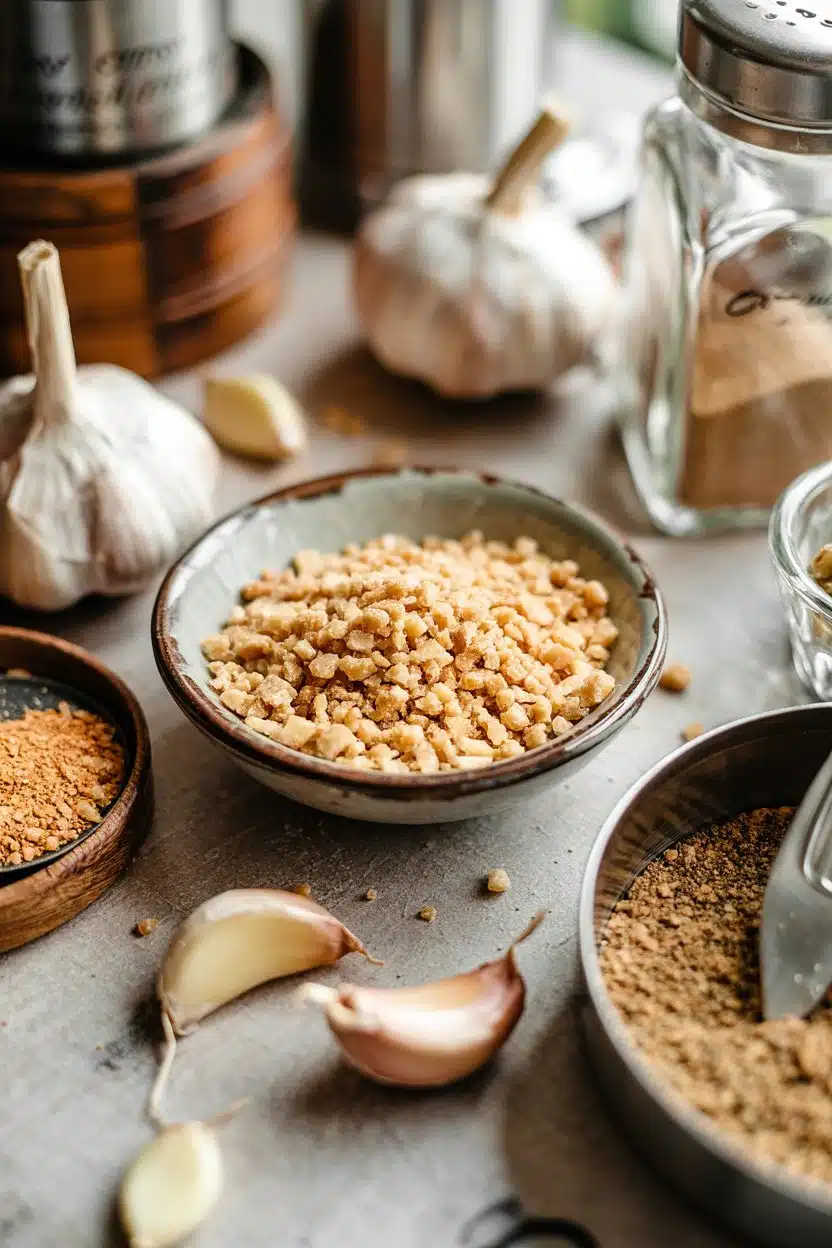
That controlled, consistent behavior is why it shows up in commercial seasoning packets and weeknight home cooking alike.

QUICK SUMMARY

Granulated garlic is dehydrated garlic ground into coarse sandy granules. It delivers a mellow, savory garlic flavor - closer to lightly cooked than raw - and works best in dry rubs, doughs, sauces, and spice blends where even distribution and long shelf life matter.

👅Flavor: Savory, mildly pungent, slightly sweet with no raw sharpness
🍳Best Uses: Dry rubs, bread dough, spice blends, roasted vegetables, sauces
🧄Also Known As: Garlic granules, granulated dehydrated garlic, granulated garlic powder
📦Shelf Life: Unopened up to 36 months; opened 6-12 months at peak aroma
⚠️Skip It When: A recipe needs raw garlic's sharp green bite, such as fresh salsa

What Is Granulated Garlic?

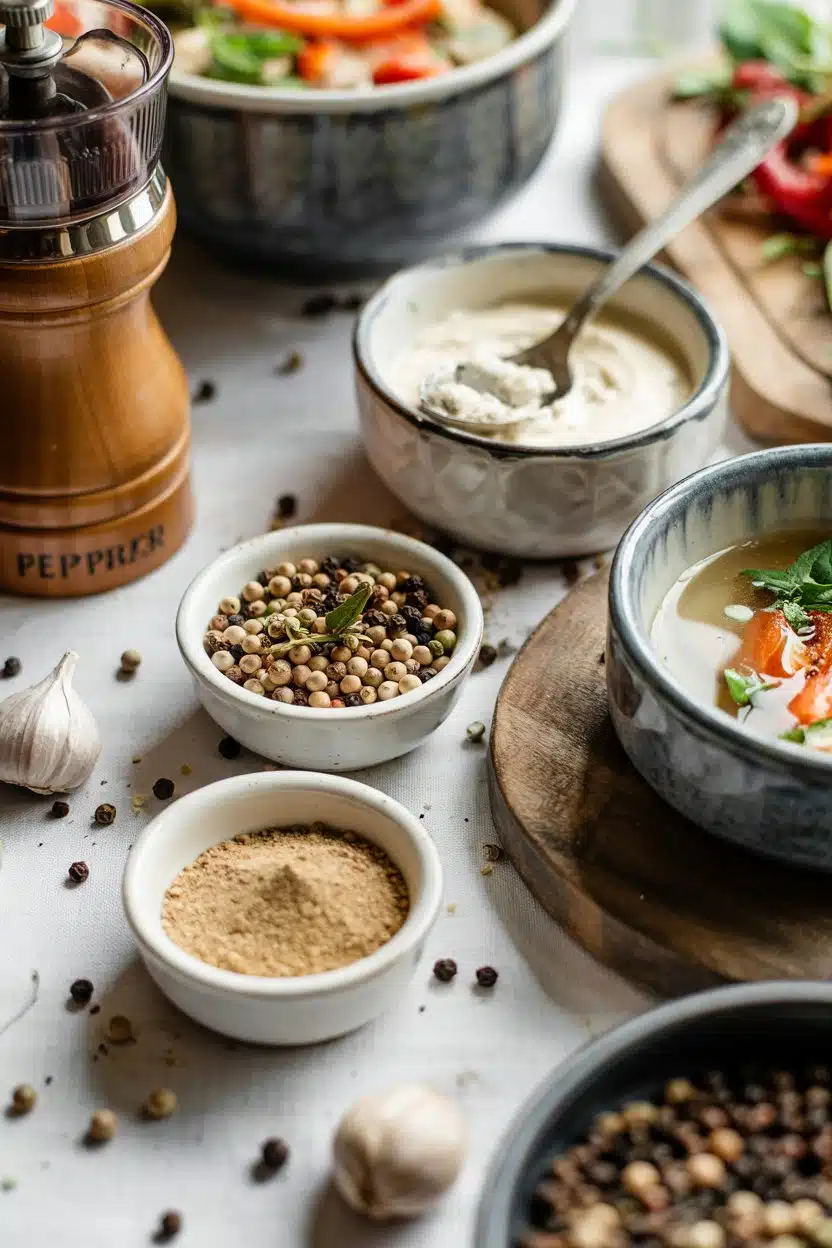
Granulated garlic is fresh garlic that has been fully dehydrated and then coarsely ground into sand-like granules measuring roughly 0.2-1 mm. That size puts it between garlic flakes (larger, visible pieces) and garlic powder (a fine, floury dust).

You'll also see it labeled garlic granules or granulated dehydrated garlic - all the same product.

Most commercial supply comes from China and Spain, where common garlic varieties are harvested, sliced, dried at low heat, and milled to a consistent granule size.

The dehydration process concentrates the savory sulfur compounds while removing the volatile elements responsible for raw garlic's sharp edge.

👅
Flavor
savory
mildly pungent
slightly sweet
✋
Texture
dry sandy granules
rehydrates to soft bits
👃
Aroma
toasty garlic
milder than raw
Flavor Intensity
Moderate
 

What Does Granulated Garlic Taste Like?

Think of lightly cooked garlic - the flavor you get after two minutes in a warm pan, before it browns. That's the closest comparison.

The harsh, almost medicinal bite of a raw clove is gone, and so is the fresh green sulfur note that makes raw garlic pop in a salsa or bruschetta topping.
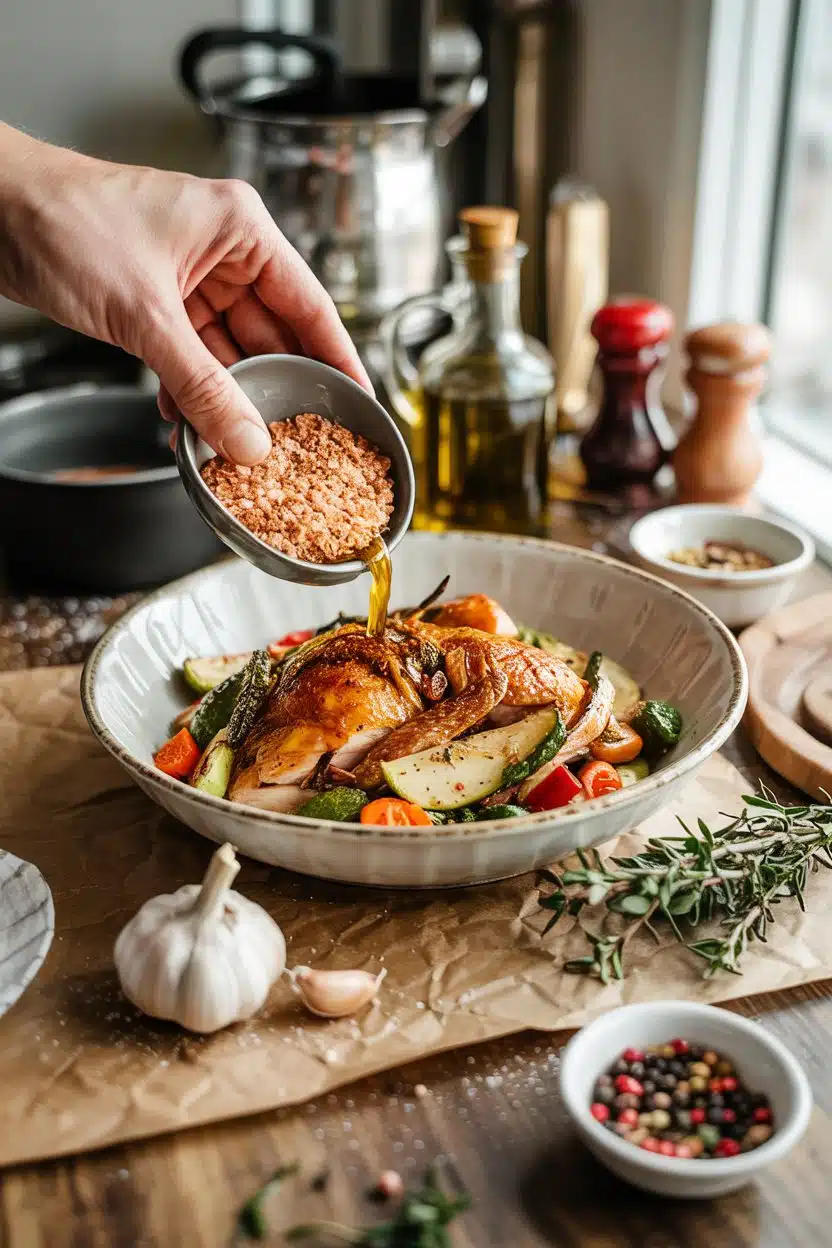
What remains is rounded, savory, and faintly sweet.

Heat amplifies it.

Bloomed in warm butter or oil, granulated garlic opens up noticeably, releasing a toasty, nutty aroma that leans closer to roasted garlic than to raw.

In a dry rub, that flavor develops slowly during cooking, which is exactly why it works so well on a long-smoked brisket or a roasted chicken thigh.

Moisture changes the texture too. Stirred into a sauce or soup, the dry granules absorb liquid and soften into small, almost imperceptible bits within minutes.

How to Use Granulated Garlic

Granulated garlic earns its place across a wide range of cooking situations. It's the practical choice when fresh cloves would add unwanted moisture or uneven distribution.

If you ever need alternatives to granulated garlic, garlic powder is the closest swap (use about half the amount).

How Granulated Garlic Is Used
Method Best For Tip
🧂 Dry Rub Pork ribs, chicken thighs, brisket Mix with paprika, salt, and onion powder; press firmly into meat
🍞 Baked In Bread dough, compound butter, biscuits Add with dry ingredients; fresh garlic would steam and create gaps
🍲 Rehydrated Soups, sauces, braising liquids Add early; give it 5-10 minutes to bloom and release aroma
🥗 Dry Sprinkle Roasted vegetables, popcorn, fries Toss before oiling for even coating; after oiling it clumps
🫙 Spice Blends Seasoning packets, dry mixes, marinades Extends shelf life better than fresh; combines cleanly with other powders
🇺🇸 American BBQ
🫒 Mediterranean
🌿 Middle Eastern
🏠 Pan-Global Home Cooking
Pairs well with
🫒 olive oil
🧈 butter
🧅 onion powder
🌶️ paprika
🌿 rosemary
🍋 lemon zest
🫙 soy sauce
🌱 parsley
Quick Tip
When making salad dressing, add granulated garlic to the liquid component first and let it sit for two minutes before whisking in oil. The brief soak blooms the flavor and prevents dry pockets in the finished dressing.

How to Buy and Store Granulated Garlic

At the store, check the label carefully. "Granulated" means visible coarse grains; if the label just says "garlic powder," you're getting a fine dust with different absorption behavior. Look for pale ivory to light tan color.

Dark specks or visible clumping indicate age or moisture exposure - skip those.

For storage, a cool, dark pantry shelf in an airtight container is all you need.

If you buy in bulk bags, transfer a working portion into a small jar to limit how often the main supply is exposed to air.

Knowing the granulated garlic spoilage signs helps you catch a faded batch before it ruins a recipe - the aroma simply flattens, and the color dulls toward gray-beige.

Unopened, it holds well for 24-36 months. Once opened, plan to use it within 6-12 months for reliable aroma.

Start Here If You're Reaching for It

Granulated garlic is the right call when you need consistent garlic flavor without moisture, timing flexibility, or a long-lasting pantry staple. Reach for it in dry rubs, baked goods, and blended seasonings.

Stick with fresh cloves when a dish relies on garlic's sharp, raw character - the two aren't always interchangeable, but each has its lane.

Frequently Asked Questions

Is granulated garlic the same as garlic powder?

No - both are dehydrated garlic, however granulated garlic is coarser (0.2-1 mm sandy grains) while garlic powder is milled to a fine, floury dust. Garlic powder dissolves faster and works better in smooth sauces and gravies, while granulated garlic holds up in dry rubs and doughs without clumping. Use about half the amount of garlic powder when substituting for granulated. You can also browse [alternatives to garlic powder](https://forkliftkitchen.com/garlic-powder-substitutes/) if you're out of both.

How much granulated garlic equals one clove?

A standard conversion is ¼ teaspoon of granulated garlic per one medium fresh clove. Because dehydration concentrates flavor, that small amount carries meaningful garlic depth. Adjust up slightly for large cloves or bold dishes, and taste as you go since batch strength can vary by brand.

Can you use granulated garlic in sauces?

Yes, and it works well when added early. The granules need liquid and heat to fully release their aroma, so stirring them in during the first few minutes of cooking gives them time to bloom. Added at the end of cooking, they may leave a slightly gritty texture and underdeveloped flavor.

Does granulated garlic burn?

It can burn at high direct heat, similar to other dried spices. When blooming in oil, keep the heat low to medium and stir constantly - 30 to 60 seconds is usually enough. In dry rubs on grilled or roasted meat, the surrounding moisture from the protein generally prevents scorching under normal cooking temperatures.

Does granulated garlic contain allicin?

Only in trace amounts. Allicin - the compound behind raw garlic's sharp bite and many of its studied health properties - forms when fresh garlic cells are crushed and then dissipates quickly. The dehydration process used to make granulated garlic significantly reduces allicin content compared to a freshly cut clove. It's best treated as a culinary seasoning rather than a functional garlic supplement.

Heavy Whipping Cream: Uses, Texture, and When It Makes a Difference

May 10, 2026

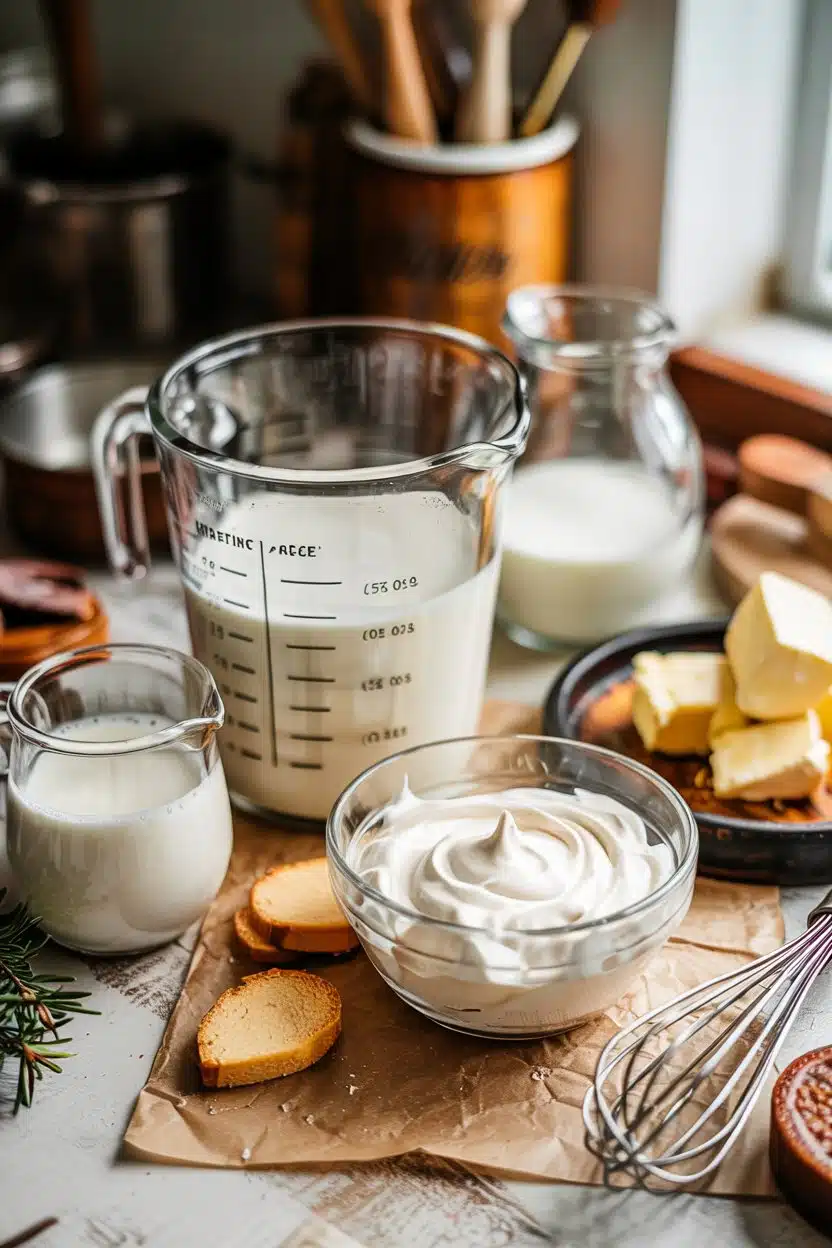
Heavy whipping cream does one thing no other dairy product can replicate at scale: it holds structure.

Pour it cold and it coats a spoon like silk.

Whip it and it climbs to firm, stable peaks.

Stir it into a hot pan sauce and it tightens into a glossy, spoonable reduction without breaking.

That range - from liquid enricher to airy topper - is why it shows up in everything from beef stroganoff to chocolate ganache.

QUICK SUMMARY

Heavy whipping cream is a high-fat liquid dairy with at least 36% milk fat. It has a mild, buttery sweetness and whips into stable peaks. Use it to enrich sauces, build custards, top desserts, or finish ganache. Opened, it lasts 5-7 days refrigerated.

🥛Category: High-fat liquid dairy, at least 36% milk fat
👅Flavor: Rich, mildly sweet, buttery, lightly milky
🍳Best Uses: Whipping, sauce reduction, custards, ganache
❄️Shelf Life: Unopened 2-3 weeks; opened 5-7 days refrigerated
⚠️Watch: Avoid adding straight lemon juice over high heat - cream will curdle

What Is Heavy Whipping Cream?

Heavy whipping cream is the fat-rich layer that rises to the top of whole cow's milk before homogenization separates the two.

In the US, it must contain at least 36% milk fat by law - enough fat to whip and hold stable peaks without additives.

You'll also see it labeled simply as heavy cream; both terms describe the same product.

Double cream, the British equivalent, runs slightly higher at around 48% fat, making it even richer and harder to overwhip.

It belongs to a broader category of liquid dairy that includes light cream, half-and-half, and whipping cream - though none of those match heavy cream's fat content or structural stability.

When ganache recipes call for heavy cream and you're out, the options for alternatives to heavy cream in ganache are narrower than most people expect.

Similarly, layered desserts that lean on swapping out mascarpone often still require heavy cream as the base.

👅
Flavor
rich
mildly sweet
buttery
milky
✋
Texture
silky (poured)
thick when whipped
luxuriously creamy
👃
Aroma
clean dairy
lightly sweet
fresh cream
Flavor Intensity
Moderate
 

What Does Heavy Whipping Cream Taste Like?

Think of whole milk, then dial up the richness until the sweetness becomes rounder and the finish lingers.

That's roughly where heavy whipping cream lands - not sweet in the way sugar is sweet, but with a natural dairy sweetness that reads as indulgent rather than sharp.

Raw, it tastes closest to clotted cream in mouthfeel, though less thick. Heat changes it.

Reduced in a pan sauce, the sweetness fades and a deeper, almost savory dairy note takes over. Folded cold into a mousse, it stays light and neutral, letting other flavors - chocolate, citrus, vanilla - carry the front of the palate.

Its flavor is deliberately supportive. It doesn't compete.

That's what makes it so widely used as a base rather than a star.

How to Use Heavy Whipping Cream

Heavy whipping cream works across a wide range of techniques. The fat content is the reason: it withstands heat without instantly splitting, aerates when cold, and emulsifies fats when stirred into sauces. Temperature matters. Cold cream whips; warm cream reduces.

How Heavy Whipping Cream Is Used
Method Best For Tip
🥗 Cold/Whipped Toppings, mousses, stabilized layered desserts Chill bowl and beaters before whipping for faster, firmer peaks
🍳 Simmered/Reduced Pan sauces, gravies, stroganoff, cream-based pastas Reduce over medium heat - vigorous boiling can cause separation
🧁 Baked Quiche custard, tarts, savory clafoutis Temper with eggs slowly to avoid scrambling at oven temperature
🍫 Ganache Chocolate ganache, truffles, tart glazes Heat cream to just below a simmer; pour over chopped chocolate, don't stir immediately
☕ Stirred In Coffee, mashed potatoes, ice cream base Add off the heat for potatoes to prevent graininess
🇫🇷 French
🇮🇹 Italian
🇬🇧 British
🇺🇸 American
Pairs well with
🥚 egg yolks
🧈 butter
🍫 dark chocolate
🍋 citrus zest
🧀 aged cheeses
🍄 mushrooms
🥩 roasted meats

How to Buy and Store Heavy Whipping Cream

At the store, look for cartons labeled 36% milk fat or higher and check the sell-by date - fresher is always better for whipping stability.

A carton with any bloating or a sour smell at opening should go straight in the bin.

For cream spoilage signs that aren't always obvious, a slightly off smell is the most reliable indicator even before visible changes.

Quick Tip
Store heavy whipping cream in the coldest part of your fridge - usually the back of a middle shelf - not the door, where temperature fluctuates with every opening.

Keep it sealed and below 40°F. Unopened cartons last about 2-3 weeks from pack date.

Once opened, use within 5-7 days for reliable whipping. For everything you need to know about storing heavy whipping cream correctly, that window tightens if the carton has been left out even briefly.

When to Reach for It

Heavy whipping cream earns its place when you need fat to do structural work.

Start here if a sauce needs body without a roux.

Reach for it when a dessert calls for aerated lightness that holds overnight.

If your recipe is leaning on using butter for creaminess but needs a pourable consistency too, cream closes that gap.

It's the ingredient that sits between liquid and solid - and that's exactly the point.

Frequently Asked Questions

What is the difference between heavy cream and whipping cream?

Heavy cream contains at least 36% milk fat; whipping cream sits lower, typically between 30-35%. That gap matters in practice - heavy cream whips to firmer, more stable peaks and holds longer without deflating. For cooked sauces the difference is minor, but for desserts that need to hold shape for hours, heavy cream is the more reliable choice.

Can you whip heavy cream by hand?

Yes - a balloon whisk and a cold bowl work fine, though it takes 4-6 minutes of steady whisking compared to under 2 minutes with an electric mixer. Chill both the bowl and the cream beforehand to speed the process. Stop when you see defined trails in the cream; it's easy to over-whip by hand because you're monitoring constantly anyway.

Is heavy cream the same as double cream?

They're close but not identical. Double cream is the British equivalent and runs around 48% milk fat versus heavy cream's 36% minimum. Double cream whips faster, holds stiffer peaks, and is harder to overwhip into butter - but it's richer than most American recipes expect. In most baking and sauce applications they're interchangeable; in delicate custards, the higher fat content of double cream can noticeably change the set. If you need [double cream swaps that work](https://forkliftkitchen.com/double-cream-substitutes/), the options depend on the recipe type.

Can you freeze heavy whipping cream?

You can freeze it, but expect a textural trade-off. Freezing separates some of the fat, so thawed cream may not whip to stable peaks as reliably. It works fine for cooked applications - sauces, soups, custards - where the emulsion re-forms with heat and stirring. Freeze in small portions and thaw overnight in the fridge for best results.

Why did my heavy cream curdle in a sauce?

Curdling usually happens from one of three causes: adding cold cream directly to a very hot pan, boiling the sauce aggressively for too long, or introducing a high-acid ingredient like lemon juice without tempering. To prevent it, warm the cream slightly before adding, keep the heat at a steady simmer rather than a rolling boil, and add acidic ingredients off the heat or after the cream has fully reduced and stabilized.

What Is Pickling Spice? Flavor, Ingredients, and Best Uses

May 10, 2026

Most people assume pickling spice is just a dusty jar of generic "pickle flavor" - something pre-made and interchangeable.

It isn't. Pickling spice is a deliberately constructed blend of whole aromatic seeds, bark, and dried peel, and the balance between its warm, sharp, and citrusy components is what gives brined cucumbers, beets, and corned beef their signature depth.

Understanding what's inside the blend - and how to use it - changes how you approach anything you preserve.

QUICK SUMMARY

Pickling spice is a coarse whole-spice blend of mustard seed, allspice, coriander, bay leaf, cinnamon, cloves, and citrus peel. It's steeped or simmered in brine - never eaten directly - and delivers warm, mustardy, and citrusy notes to pickles, brines, and preserved meats.

👅Flavor: Warm-spicy, mustardy, with sweet-woody and citrusy-bitter edges
🫙Best Uses: Cucumber pickles, corned beef brine, pickled beets, infused vinegars
📅Shelf Life: 12-24 months for peak aroma; replace after 2 years

What Is Pickling Spice?

Pickling spice originated in Central and Eastern European preservation traditions, where long winters made shelf-stable vegetables essential.

It's a loose spice blend - not a single ingredient - sold either in bulk jars or pre-measured sachets.

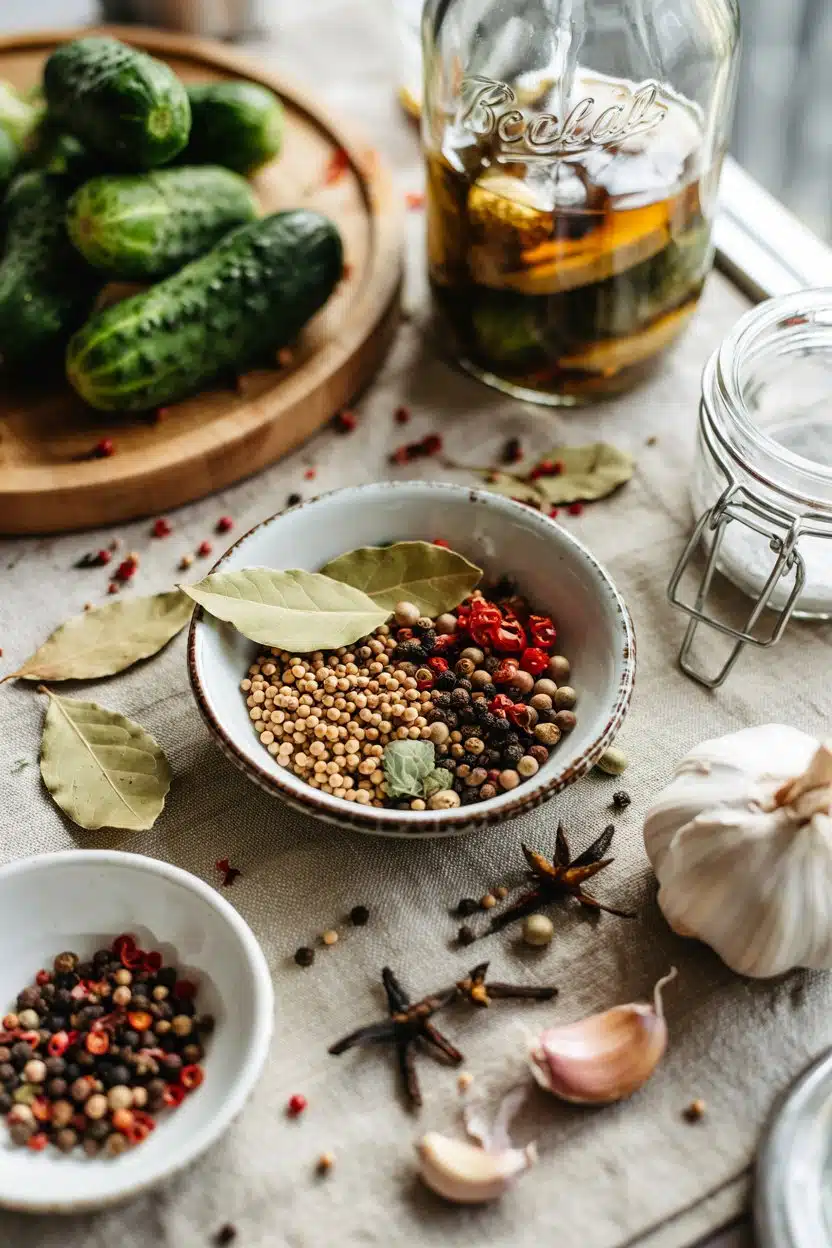
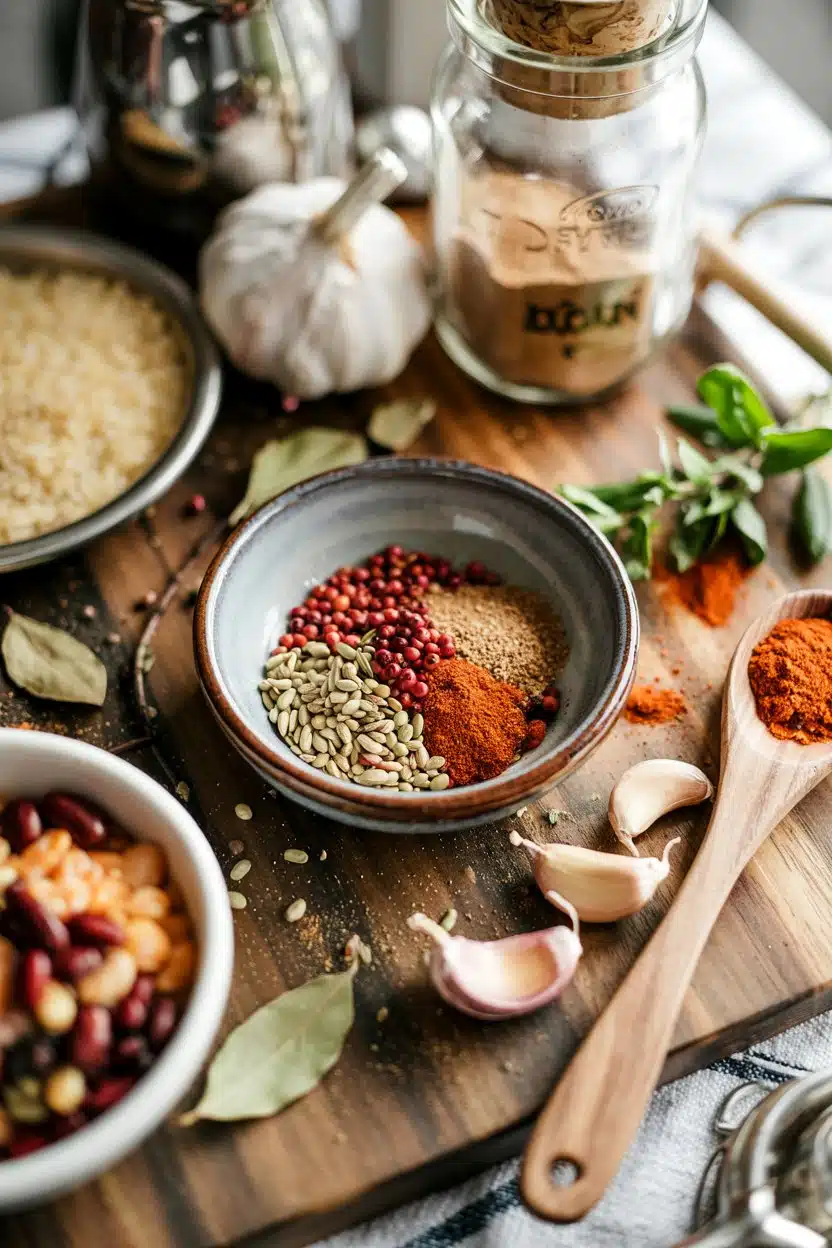
The blend varies by brand and region, however the core components stay consistent: mustard seed, coriander seed, black peppercorns, allspice, bay leaf, cinnamon stick pieces, cloves, and dried orange or lemon peel.

You'll see it sold under names like pickling mix, pickler's spice, or pickle spice blend.

Unlike curry powder or five-spice, pickling spice is always left in whole or coarsely broken form - never ground - because it's designed to steep and be removed, not eaten.

👅
Flavor
warm-spicy
mustardy-sharp
citrusy-bitter
sweet-woody
✋
Texture
coarse
hard and crunchy
whole-seed dry
👃
Aroma
piney
citrusy
toasty-resinous
Flavor Intensity
Strong
 

What Does Pickling Spice Taste Like?

Think of it as a concentrated, savory chai crossed with a citrusy herbed tea - but sharper. The black peppercorns and mustard seed drive an upfront heat, while allspice and cinnamon add a warm, woody sweetness underneath.

Dried citrus peel cuts through with a bitter edge that keeps the whole blend from reading as sweet.

Steeping changes everything. A short simmer of 5-10 minutes pulls the brighter, more volatile notes - citrus, mustard - into the brine first.

Longer steeping draws out the deeper resinous tones from clove and allspice, making the result more complex and rounded.

The blend never tastes one-dimensional. Bite a whole peppercorn or a piece of cinnamon from the jar, though, and it's harsh and unpleasant - proof that this spice is built for infusion, not direct consumption.

How to Use Pickling Spice

Pickling spice belongs in liquid.

The standard method is to simmer it directly in a hot vinegar brine for 5-20 minutes, then strain before adding your vegetables.

For delicate ingredients like pickled eggs or herring, a cold steep in the finished brine over 12-48 hours extracts flavor more gently.

When canning, tie the blend in a cheesecloth sachet so it's easy to remove and doesn't leave grit in your jars.

Beyond pickling, it works in the boiling liquid for corned beef or brisket - a full simmer over several hours lets the spices fully release into the meat.

Infusing it into apple cider or white vinegar for 1-2 weeks produces a spiced vinegar that works well in dressings and marinades.

If you need replacements for pickling spice in a recipe, building a rough approximation from individual components is possible, though the balance takes trial.

How Pickling Spice Is Used
Method Best For Tip
🔥 Hot Simmer Cucumber pickles, beets, pickled onions Simmer 5-20 min, then strain before adding veg
❄️ Cold Steep Pickled eggs, herring, quick-pickled vegetables Steep 12-48 hours in finished brine; remove sachet
🧆 Sachet Boil Corned beef, braised brisket, sauerkraut brine Tie in cheesecloth; discard after cooking
🫙 Vinegar Infusion Spiced vinegars for dressings and marinades Infuse 1-2 weeks; shake jar every few days
🇩🇪 German
🇵🇱 Eastern European
🇸🇪 Scandinavian
🇺🇸 American (Southern & New England)
Pairs well with
🥒 cucumbers and dill
🫚 apple cider vinegar
🐟 herring and salmon
🥩 corned beef and brisket
🫐 beets and red onion
🥬 cabbage and sauerkraut
🌭 mustard and horseradish

How to Buy and Store Pickling Spice

Look for jars where you can see distinct whole components - mustard seed, coriander seed, bark fragments, peel pieces. Avoid any blend that looks dusty or powdery; that's a sign the volatile oils have already degraded or the spices were partially ground, which makes straining messier and flavor delivery uneven.

The ingredient list should include at minimum mustard seed, allspice, bay leaf, cinnamon, and citrus peel.

Quick Tip
Decant bulk pickling spice into a sealed glass jar immediately. Cardboard or loosely sealed bags let moisture in, which accelerates flavor loss.

Storing pickling spice correctly - cool, dark pantry, airtight glass - keeps it at peak aroma for up to two years. After that, the clove and citrus peel lose their punch first.

If the blend smells flat when you open the jar, replace it.

Start Here If You're New to Pickling Spice

Use a sachet. That single step removes every frustration beginners have with this blend - no grit in your jars, no fishing out bark pieces, no cloudy brine.

Add 2 tablespoons to a small square of cheesecloth, tie it off, drop it into your hot brine, and pull it when you're done.

Once you're comfortable, try allspice swaps that work if a component of your blend runs out mid-batch. The blend is forgiving that way - most jars already vary in their ratios, and small adjustments rarely derail a brine.

Frequently Asked Questions

Can I eat pickling spice?

Technically yes, but it's not meant to be eaten directly. Whole cloves, peppercorns, and cinnamon bark are unpleasant and potentially harsh to bite into. The blend is designed to steep in liquid and be removed before serving.

How long should pickling spice steep in brine?

For a hot brine, 5-20 minutes of simmering is the standard range - shorter for a lighter flavor, longer for something more pronounced. Cold steeping in finished brine takes 12-48 hours, depending on how strong you want the result.

Can I use ground spices instead of whole pickling spice?

You can, however the result won't be the same. Ground spices dissolve into the brine and can't be strained out, leaving a murky liquid and a gritty texture in your pickles. If you go this route, use roughly half the quantity and plan to strain the brine through a fine-mesh sieve or cheesecloth before using it.

Is pickling spice the same as mixed spice?

No - they serve completely different purposes. Mixed spice is a British baking blend that includes sweet spices like nutmeg, mace, and ginger in ground form, designed for cakes and puddings. Pickling spice is a whole-seed, savory-forward blend meant for brines, not baked goods.

Does pickling spice work for fermented vegetables, not just vinegar pickles?

Yes, and it's well suited to fermentation. Add a sachet to the fermentation jar with your sauerkraut or kimchi-style brine at the start; the spices infuse slowly over the fermentation period. Always use a sachet so you can remove it cleanly - loose spices are harder to manage in a long ferment.

Arrowroot Powder: The Clear, Glossy Thickener Explained

May 10, 2026

You spot arrowroot powder on the shelf - neat little bag, snow-white, priced not far from cornstarch - and you wonder whether it's worth the swap.

It shows up in gluten-free recipes, restaurant-quality fruit glazes, and crystal-clear gravies where cornstarch would leave things slightly cloudy.

Arrowroot powder is a neutral starch that solves a specific set of problems, and understanding those problems tells you exactly when to reach for it.

QUICK SUMMARY

Arrowroot powder is a fine, neutral starch extracted from tropical rhizomes. It thickens sauces and fillings with a clear, glossy result and a silky mouthfeel - without the faint floury taste cornstarch can leave behind. Works in gluten-free baking and light fry dredges too.

👅Flavor: Neutral and clean with almost no detectable taste
🍶Best Use: Thickening clear sauces, fruit fillings, and glossy glazes
⏳Shelf Life: Up to 3 years sealed; 12-18 months once opened

What Is Arrowroot Powder?

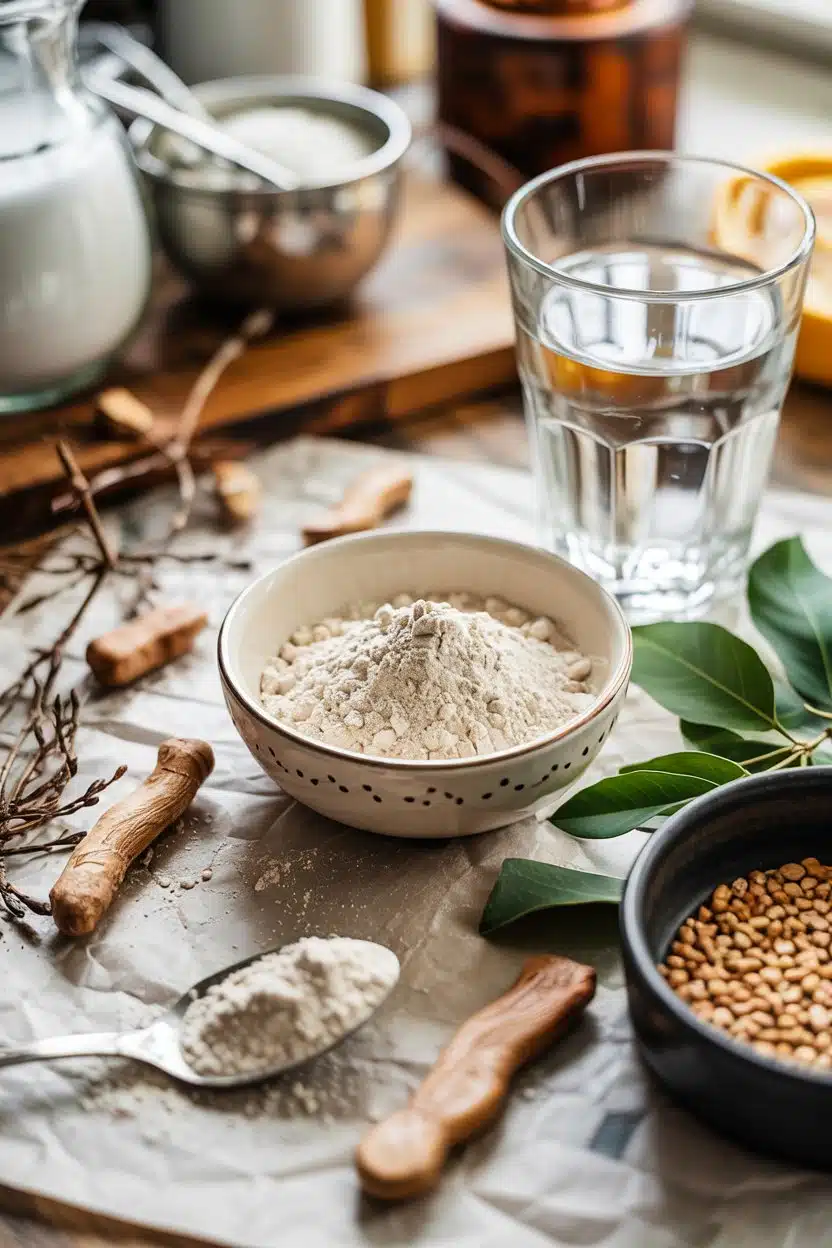
Arrowroot powder - also sold as arrowroot starch or Maranta powder - is extracted from the tuberous rhizomes of *Maranta arundinacea*, a plant native to the tropical Americas and historically cultivated throughout the Caribbean and South America.

Processors wash, peel, and pulp the roots, then dry and mill the extracted starch into an ultra-fine white powder.

The result is grain-free and naturally gluten-free.

It belongs to the starch and powdered thickener category alongside cornstarch and tapioca starch.

Unlike tapioca, which comes from cassava root and produces a slightly chewier gel, arrowroot sets to a softer, more fluid consistency at lower temperatures.

That distinction matters depending on what you're making - if you're weighing your arrowroot powder stand-ins, the texture difference is where most swaps fall short.

👅
Flavor
neutral
clean
faintly starchy
✋
Texture
powdery raw
silky-smooth gelled
👃
Aroma
almost odorless
faint earthy starch
Flavor Intensity
Mild
 

What Does Arrowroot Powder Taste Like?

Arrowroot powder is about as close to tasteless as a starch gets. Raw, it has a faint dry earthiness - noticeable if you pinch it between your fingers and bring it close - but it largely disappears once hydrated.

That makes it fundamentally different from wheat flour, which carries a raw, wheaty taste that requires cooking out.

Compared to cornstarch in cooking, arrowroot reads cleaner on the palate.

Cornstarch can leave a slightly floury or pasty impression when undercooked; arrowroot doesn't. The absence of flavor is the feature. In a delicate fruit glaze or a refined pan sauce, arrowroot lets the actual ingredients carry the dish.

One caveat: prolonged heat thins it. If you simmer arrowroot too long, the gel structure breaks and the sauce turns watery - at which point you're tasting the ingredients again, but with less body than intended.

How to Use Arrowroot Powder

Always start with a cold slurry.

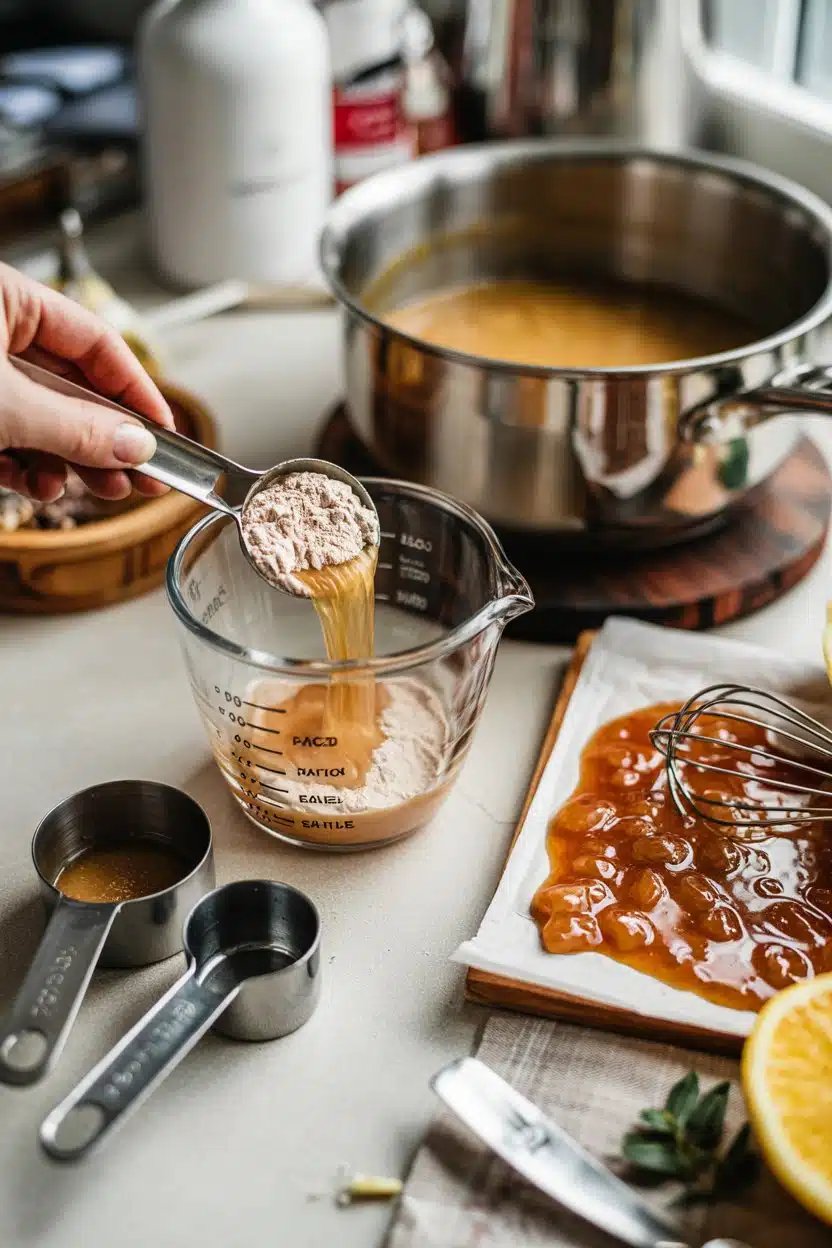
Mix arrowroot with an equal volume of cold water (or cold liquid from the recipe) before adding it to anything hot - dry powder dropped directly into a hot pan will clump instantly.

Once your slurry is smooth, whisk it into simmering liquid and stir briefly, just long enough for the sauce to clarify and thicken.

Quick Tip
Use 1-2 teaspoons of arrowroot per cup of liquid for a light sauce. For a firmer set - pie fillings, fruit compotes - move toward 2 teaspoons and let it cool fully before judging the final texture.
How Arrowroot Powder Is Used
Method Best For Tip
🥗 Slurry Clear sauces, pan juices, consommés Dissolve in cold liquid first; add at the end of cooking
🍳 Simmered briefly Fruit pie fillings, glazes, compotes Stir in near the end off heat; overcooking breaks the gel
🥐 Dry blend Gluten-free baking mixes Replace up to 1:1 of other starches in small percentages for tender crumb
🍤 Dredge Light fried coatings (fritters, cutlets) Combine with rice flour for crispness; arrowroot alone can turn gummy
🌴 Caribbean
🌎 Latin American
🌏 Southeast Asian
🌾 Gluten-Free Western
Pairs well with
🍓 berries
🍋 citrus
🧈 butter
🥚 egg yolks
🍶 soy sauce
🫙 rice flour
🍗 broth & consommé

How to Buy and Store Arrowroot Powder

Look for a fine, bright-white powder with clean labeling that reads "100% arrowroot" or "arrowroot starch." Grayish color or visible clumps signal moisture damage or age - skip those bags. Check the gluten-free or baking aisle; it's occasionally shelved near specialty flours.

Sealed glass jars are preferable to open paper bags for anything you'll use infrequently.

Once home, transfer the powder to an airtight container and keep it in a cool, dry pantry away from the stove or sink.

Moisture is the main enemy - even a humid kitchen will shorten its working life.

Unopened, arrowroot stays usable for 2-3 years.

Opened and properly sealed, expect 12-18 months.

There's no benefit to refrigerating or freezing arrowroot powder - temperature swings cause condensation inside the container, which clumps the starch.

Watch Out
Arrowroot clumps in humidity well before it loses thickening power. If your powder has visible lumps, sift it before use - it likely still works, but test with a small batch first.

When to Reach for Arrowroot Powder

Arrowroot earns its place in three specific situations: you need a clear, glossy result (not a cloudy one), you're cooking for someone avoiding corn or gluten, or your sauce can't handle extended heat.

If those conditions don't apply, replacements for cornstarch may already be in your pantry and will work just fine.

Start with fruit glazes or a simple pan sauce - two applications where arrowroot's clean finish is immediately obvious.

Frequently Asked Questions

Is arrowroot the same as tapioca starch?

No - they come from different plants and behave differently in cooking. Tapioca starch (from cassava) produces a slightly chewier, stickier gel and holds up better at higher temperatures; arrowroot gels at lower heat and produces a softer, more fluid set. In most sauce applications they're interchangeable in a pinch, but the texture of the finished dish will differ noticeably in custards and pie fillings.

Can you substitute arrowroot for cornstarch?

Yes, at roughly a 1:1 ratio in most sauce and filling recipes. Arrowroot thickens at a lower temperature and produces a clearer result, so sauces will look glossier and set slightly softer than they would with cornstarch. Avoid using arrowroot in recipes that require long simmering or dairy-heavy sauces - it can turn slimy when cooked with milk or cream for extended periods.

How much arrowroot do you use per cup of liquid?

Start with 1 teaspoon per cup for a lightly thickened sauce or broth, and use 2 teaspoons per cup for a firmer set in pie fillings or compotes. Always dissolve it in an equal amount of cold liquid first to prevent lumping. Because arrowroot is more potent by weight than flour, these amounts are considerably smaller than flour-based thickening ratios.

Does arrowroot thicken when cold?

Arrowroot begins thickening at a lower temperature than cornstarch - around 140-160°F (60-71°C) - so it can gel in warm rather than fully boiling liquids. However, it doesn't thicken in completely cold, unheated liquid the way some gelling agents do. The slurry must still reach enough heat to activate the starch granules before cooling to its final set.

Why does arrowroot turn slimy or stringy in some recipes?

Two things cause this: overcooking or combining it with dairy in a long-cooked sauce. Arrowroot's gel structure breaks down past a certain temperature threshold, and the starch molecules lose their ability to hold liquid, producing a gluey or stringy texture. Keep heat brief and moderate, and add arrowroot near the end of cooking rather than at the start.

Agave Nectar: What It Is, How It Tastes, and Best Ways to Use It

May 10, 2026

You spot a bottle of agave nectar at the grocery store-maybe next to the honey, maybe in the natural foods aisle-and you wonder whether it's worth reaching for.

It pours differently than honey, costs a little more, and carries claims you're not sure how to parse.

This article breaks down exactly what it is, how it tastes, and where it actually earns its place in the kitchen.

QUICK SUMMARY

Agave nectar is a plant-based liquid sweetener made from blue agave sap. It has a clean, mildly caramel-like sweetness-thinner than honey and dissolves readily in cold liquids. Best used in beverages, dressings, and glazes. Vegan and gluten-free, but high in fructose.

👅Flavor: Clean sweet with a light caramel edge and faint vegetal note
🍹Best Uses: Cold drinks, salad dressings, glazes, no-bake bars
🛒Buy: Look for "100% agave nectar" in a clear bottle, no sediment
📦Shelf Life: Up to 24 months unopened; 12 months once opened
⚠️Note: High fructose content - not a low-calorie or low-glycemic free pass

What Is Agave Nectar?

Agave nectar-also sold as agave syrup, aguamiel, or nectar de agave-comes from the sap of agave plants, most commonly blue agave grown in Mexico's Jalisco region.

Producers extract the sap from the plant's core, then filter and heat-reduce it into a smooth, pourable syrup.

It falls into two main grades: light agave, which is mildly filtered and pale gold, and amber agave, which undergoes less filtration and carries a slightly deeper flavor.

Both are runny at room temperature-noticeably thinner than honey-with a neutral amber color that won't darken light-colored dishes.

👅
Flavor
clean sweet
mild caramel
low acidic tang
✋
Texture
smooth
runny
👃
Aroma
light vegetal
barely floral
Flavor Intensity
Moderate
 

What Does Agave Nectar Taste Like?

Think light honey with some of the floral complexity removed. Agave nectar is sweet up front, followed by a faint caramel warmth and a barely detectable vegetal undercurrent-something vaguely green and clean, not grassy or sharp.

Compared to honey, it's less assertive. It won't compete with delicate flavors the way a bold wildflower honey can.

Corn syrup is a fair reference point for texture, however agave's sweetness reads as cleaner and slightly more complex.

Heat amplifies the caramel edge. Brush it on salmon or roasted carrots and you'll notice a mild, glossy caramelization that granulated sugar alone doesn't replicate as smoothly.

In cold applications like iced tea or a margarita, the sweetness stays neutral and dissolves without any residual graininess.

How to Use Agave Nectar

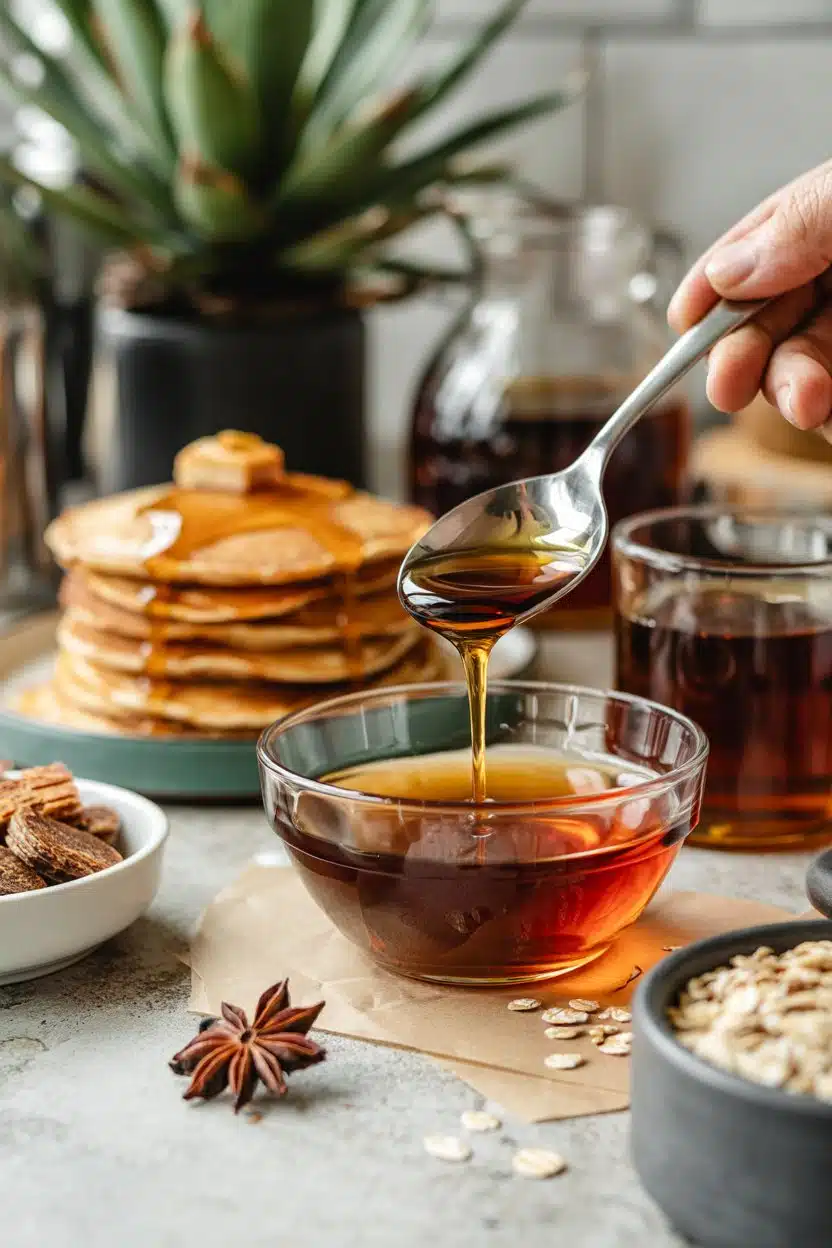
Agave nectar's low viscosity is its biggest practical advantage. It stirs into cold liquids instantly, which granulated sugar and even some honey won't do.

That makes it a reliable choice anywhere texture or dissolve time matters.

How Agave Nectar Is Used
Method Best For Tip
🥗 Stir In Iced tea, smoothies, lemonade, cocktails No heat needed - dissolves at room temperature
🍳 Glaze Roasted vegetables, salmon, broiled fruit Brush on in the last 5 minutes to prevent burning
🧁 Bake Quick breads, muffins, granola bars Reduce other liquids in the recipe by about 25%
🥣 Mix Salad dressings, yogurt, oatmeal, energy bites Combine with nut butter to bind no-bake bars

It works especially well in cocktails. Agave nectar dissolves in cold liquids where simple syrup requires advance prep, and its faint vegetal note pairs naturally with tequila and mezcal.

Try it when making paloma tequila grapefruit at home - it ties the sweet and tart notes cleanly.

🇲🇽 Mexican-American
🇺🇸 American
🌍 Global Fusion
Pairs well with
🍋 lime and citrus
🥃 tequila and mezcal
🫚 ginger and soy
🫐 yogurt and berries
🌾 oats and nuts
🌶️ chipotle and chili flakes
🍂 cinnamon and warm spices

Avoid using agave nectar in recipes that depend on sugar's crystalline structure-meringues and certain hard candies won't set correctly. High-heat deep frying is also a problem; it thins out fast and scorches before food is done.

For those recipes, look at alternatives to agave nectar that behave differently under heat.

How to Buy and Store agave nectar

Always buy in a clear bottle. You want to see the color and check that there's no cloudiness or sediment floating at the bottom-both signal poor filtration or early spoilage.

Labels should read "100% agave nectar"; avoid blended products that pad the syrup with added sugars.

Quick Tip
Light agave is best for delicate applications like cocktails and yogurt. Amber agave has a slightly deeper flavor and holds up better in baked goods and glazes.

Store the bottle upright in a cool pantry, away from heat sources.

Keep the cap fully sealed between uses to prevent moisture from getting in, which can trigger fermentation. Agave nectar's shelf life runs 12-24 months unopened and about 12 months once you've cracked the seal.

Start Here if You're New to It

Agave nectar earns its place in two clear situations: you need a sweetener that dissolves in cold liquids, or you want a honey-like glaze with a milder flavor profile.

If neither of those applies, granulated sugar or alternatives to maple syrup may serve you just as well at a lower cost.

Pick up light agave first. It's the most neutral starting point and works across beverages, dressings, and quick bakes without announcing itself.

Frequently Asked Questions

Can you substitute agave for honey 1:1?

You can in most cases, however agave is sweeter by volume than many honeys, so start with about 75% of the amount called for and adjust to taste. The texture is also thinner, which matters in baked goods-reduce other liquids slightly to compensate. In cold beverages and dressings, a straight swap works fine.

Is agave nectar healthier than sugar?

Not in a meaningful way for most people. Agave nectar is very high in fructose-often 55-90% depending on processing-which the liver metabolizes differently than glucose and can contribute to metabolic issues in large amounts. It has a lower glycemic index than table sugar, however that doesn't make it a low-calorie or medically superior option.

Does agave nectar raise blood sugar?

It raises blood sugar less sharply than sucrose because its high fructose content has a lower glycemic index. However, fructose still affects blood glucose and insulin over time, and the effect varies by individual and serving size. People managing diabetes should treat agave nectar with the same caution as any concentrated sweetener.

How do you use agave nectar in baking?

Use agave as a partial substitute for sugar in quick breads and muffins, replacing up to half the sugar. Because it adds liquid to the batter, reduce other liquid ingredients by about 25% per cup of agave used. It doesn't provide the same structure as crystalline sugar, so it works better in moist, dense bakes than in cakes that need lift.

What is the difference between light and amber agave nectar?

Light agave is more heavily filtered and has a milder, cleaner sweetness suited to cocktails, light dressings, and anything where you don't want the sweetener to show. Amber agave has less filtration, retaining more of the plant's natural compounds, which produces a slightly richer, more caramel-forward flavor. Both come from the same blue agave sap-the difference is processing depth, not source.

White Pepper: What It Tastes Like and Why Cooks Use It

May 10, 2026

You've spotted white pepper on the spice rack beside its darker twin and probably reached for the black jar instead.

That's the common move. White pepper is the same berry - *Piper nigrum* - with its outer skin soaked and stripped away before drying, which changes its color, aroma, and the character of its heat in ways that matter in the kitchen.

QUICK SUMMARY

White pepper is the skinned, dried seed of the Piper nigrum berry. It delivers a sharper, earthier heat than black pepper with no piney top notes - and keeps pale sauces and purées free of dark specks.

🌿Origin: Southeast Asia, particularly the Indonesian archipelago
🔥Flavor: Sharp heat, earthy mustiness, faint fermented tang
🍽️Best Uses: White sauces, cream soups, mashed potatoes, hot-and-sour soup
📦Shelf Life: Whole peppercorns 3-4 years; ground 6-12 months
✅Dietary: Gluten-free, vegan, keto-friendly, contains piperine

What Is White Pepper?

White pepper starts as the same ripe berry that produces black pepper. The difference is processing: ripe red berries are soaked in water for one to two weeks - a step called retting - until the outer fruit layer softens and can be removed.

What remains is the pale inner seed, which is then dried to produce the ivory-colored peppercorn.

The retting process is what sets white pepper apart from other forms of *Piper nigrum*.

It strips out the volatile oils concentrated in the outer husk, which is where black pepper gets its pine-forward, citrusy top notes.

White pepper retains the piperine - the compound responsible for heat - but sheds the aromatic complexity that makes black pepper smell sharp and bright.

Most commercial white pepper originates in Muntok, Indonesia, and Sarawak, Malaysia. These regions produce the benchmark product: clean, pale, and reliably consistent in heat level.

You'll see it sold whole as white peppercorns or pre-ground as white pepper powder, sometimes labeled ground white pepper. Whole is always the better purchase.

👅
Flavor
sharp heat
earthy
fermented tang
✋
Texture
fine powder
slightly gritty when coarse
👃
Aroma
mildly fermented
starchy-earthy
Flavor Intensity
Moderate
 

What Does White Pepper Taste Like?

The heat lands differently than black pepper.

It's drier and more direct - less like biting into a fresh berry, more like the slow warmth of an aged chili.

There are no piney or citrusy high notes because those compounds left with the outer skin.

What you're tasting is mostly piperine doing its work, backed by an earthy mustiness that comes from the retting process.

That fermented quality is mild, not funky. It reads as depth rather than off-flavor in a finished dish.

Add white pepper early in cooking and the heat integrates into the background. Add it at the end and it stays bright and noticeable - useful when you want pepper presence without a visual signature.

Compared to green peppercorn's flavor and uses, white pepper is less floral and more austere. It won't announce itself the way black pepper does, which is precisely the point in recipes where the seasoning should support rather than lead.

How to Use White Pepper

White pepper earns its place in recipes where appearance matters as much as seasoning. A béchamel, a vichyssoise, a plate of mashed potatoes - these all benefit from pepper heat without dark flecks breaking the surface.

That's the primary practical reason white pepper exists in French and Scandinavian kitchens.

In Chinese cooking, it serves a different function.

Hot-and-sour soup relies on white pepper's direct heat rather than its visual neutrality - the sharp warmth is a structural part of the dish's identity.

If you want to try a hot-and-sour soup recipe that gets this balance right, white pepper is non-negotiable.

Cantonese-style steamed fish and Sichuan broth dishes use it the same way.

How White Pepper Is Used
Method Best For Tip
🍳 Stirred In White sauces, cream soups, purées Add near the end to keep heat bright
🥗 Finishing Steamed fish, shellfish, plated dishes Grind fresh directly over the plate
🔥 Dry Rub Poultry, pork, roasted vegetables Blend with salt before applying
♨️ Toasted Sharpening aroma before grinding 30 seconds in a dry pan - no longer
🇨🇳 Chinese
🇫🇷 French
🇸🇪 Scandinavian
🇮🇩 Southeast Asian
Pairs well with
🧈 cream and butter
🐟 fish and shellfish
🥔 potatoes and root vegetables
🍄 mushrooms and leeks
🐓 poultry and pork
🍶 soy sauce and vinegar

If a recipe calls for white pepper and you don't have it, replacements for white pepper exist - though none replicate the exact combination of pale color and dry heat.

How to Buy and Store White Pepper

Whole white peppercorns are the right purchase. Look for pale ivory spheres with a consistent color - no dark patches, no shriveling.

Pre-ground white pepper loses aroma faster than any other form of pepper, and a stale bag smells flat and musty in the wrong way, not the pleasant earthy way of fresh product.

Quick Tip
Store whole white peppercorns in an airtight, opaque container away from heat and light. Grind only what you need immediately before use - the aroma fades within minutes once broken.

Whole peppercorns keep well for 3-4 years under proper conditions. Ground white pepper starts losing its character after 6-12 months.

For a full breakdown of how long white pepper keeps under different storage conditions, the shelf life data is worth reviewing before you commit to a large purchase.

Start Here If You're New to White Pepper

Reach for white pepper when you're making any pale or cream-based dish and want pepper heat without dark specks.

That's the fastest way to understand its purpose.

Once that clicks, try it in a Chinese-style broth - the heat profile is noticeably different from black pepper and earns its place on its own terms.

Skip it in dishes where black pepper's aromatic top notes are part of the character you're after.

Frequently Asked Questions

Is white pepper hotter than black pepper?

White pepper is not significantly hotter, but its heat feels more direct and forward. Both contain piperine as the primary heat compound, however black pepper's aromatic oils create complexity that softens the perception of heat. Without those oils, white pepper's warmth lands more immediately on the palate.

How is white pepper made?

Ripe red Piper nigrum berries are soaked in water for one to two weeks - a process called retting - until the outer fruit layer breaks down and can be rubbed away. The exposed inner seed is then dried, producing the pale ivory peppercorn. This is distinct from black pepper, which is dried with the outer husk intact.

When should I use white pepper instead of black?

Use white pepper in cream sauces, pale soups, mashed potatoes, and light-colored dishes where black specks would affect presentation. Also choose it for Chinese hot-and-sour soup and Cantonese steamed fish, where the dry, direct heat is part of the traditional flavor profile rather than a substitute.

Does white pepper go bad?

It won't become unsafe, but it loses its aroma and heat over time. Ground white pepper becomes noticeably flat after 6-12 months; whole peppercorns hold their character for 3-4 years if stored in an airtight container away from heat and light. The clearest sign it's past its prime is a dull, cardboard-like smell.

Can you use white and black pepper interchangeably?

In terms of heat level, yes - substitute at a 1:1 ratio. However, the flavor profile differs: black pepper adds piney, citrusy top notes that white pepper lacks, and white pepper's earthy mustiness has no equivalent in black. In pale dishes, the visual difference matters too, since black pepper will leave visible specks.

Sazón Seasoning: The Spice Blend Behind Golden Rice and Big Flavor

May 10, 2026

Many cooks assume sazon seasoning is just a salty shortcut - a packaged cheat used to stretch a recipe.

That's not quite right. Sazón is a calibrated blend, built around the earthy fat-soluble pigment in annatto (achiote), that does two jobs at once: it seasons and it stains, giving rice, stews, and braises that signature rusty-orange glow without any chili heat.

QUICK SUMMARY

Sazón is a dry Latin spice blend built on annatto, garlic, cumin, and coriander. It adds a warm, savory, mildly earthy flavor and a characteristic orange-red color to rice, beans, stews, and meats. Moderate intensity; store away from heat.

🌿Category: Dry seasoning blend, Caribbean and Latin American origin
👅Flavor: Warm, garlicky, mildly earthy with a slight bitter edge at high doses
🍚Best For: Rice, beans, braises, wet rubs for chicken and pork
📦Shelf Life: Sealed packet: 12-18 months; opened jar: 6-12 months
⚠️Watch: Sodium is high in commercial blends; some contain MSG or gluten-based anti-caking agents

What Is Sazon Seasoning?

Sazon (also spelled *sazón*) is a pre-blended dry spice mix originating from Puerto Rico, the Dominican Republic, Cuba, and broader Caribbean and Central American home cooking.

It sits in the same category as adobo - a dry foundational blend - however, it's distinguished by its lead ingredient: achiote seeds, which release annatto, a fat-soluble red-orange pigment that colors food on contact.

Most commercial formulas list annatto or achiote, garlic powder, cumin, coriander, and salt as their base. Some brands add culantro (*sazon con culantro*) or MSG for depth.

Packets are the most common retail format, with each packet typically measuring about one teaspoon.

👅
Flavor
warm-earthy
garlicky-savory
mildly bitter
✋
Texture
fine powder
disperses quickly
👃
Aroma
toasty annatto
nutty
garlic-onion
Flavor Intensity
Moderate
 

What Does Sazon Seasoning Taste Like?

Think of a milder, more aromatic version of a taco seasoning base - but with less chili and more color-forward earthiness. The annatto brings a faintly peppery, almost nutty warmth that registers as depth rather than spice.

Coriander pushes a slight citrus-green note underneath it.

Garlic powder and cumin form the savory backbone, making the blend taste more complete than any single spice would. Straight off the spoon, the salt reads first. Cooked into fat or liquid, the annatto opens up and the cumin-coriander duo rounds out.

At higher concentrations - say, two packets in a small pot - a mild bitterness from achiote can surface. That's the same quality you'd find in annatto-heavy achiote paste stand-ins when they're used in excess.

Keep the ratio in check and the blend stays firmly savory, never sharp.

How to Use Sazon Seasoning

Sazon works across a wide range of techniques. Its powder form means it dissolves into liquids, adheres to oiled proteins, and disperses through dry rubs without clumping - useful at nearly every stage of cooking.

How Sazon Seasoning Is Used
Method Best For Tip
🍚 Stir into liquid Rice, soups, bean pots 1 teaspoon per cup of rice or 2 cups of broth
🧴 Wet rub Chicken, pork shoulder, chops Mix with oil; rub and rest 30-90 minutes before cooking
🫕 Bloom in oil Sofrito-based braises, stews Add to hot oil for 30-60 seconds before adding aromatics
🍌 Dust after frying Plantains, yuca, tostones Apply immediately after frying while still hot
🥩 Marinade base Quick citrus marinades Combine with lime or sour orange, oil, and vinegar

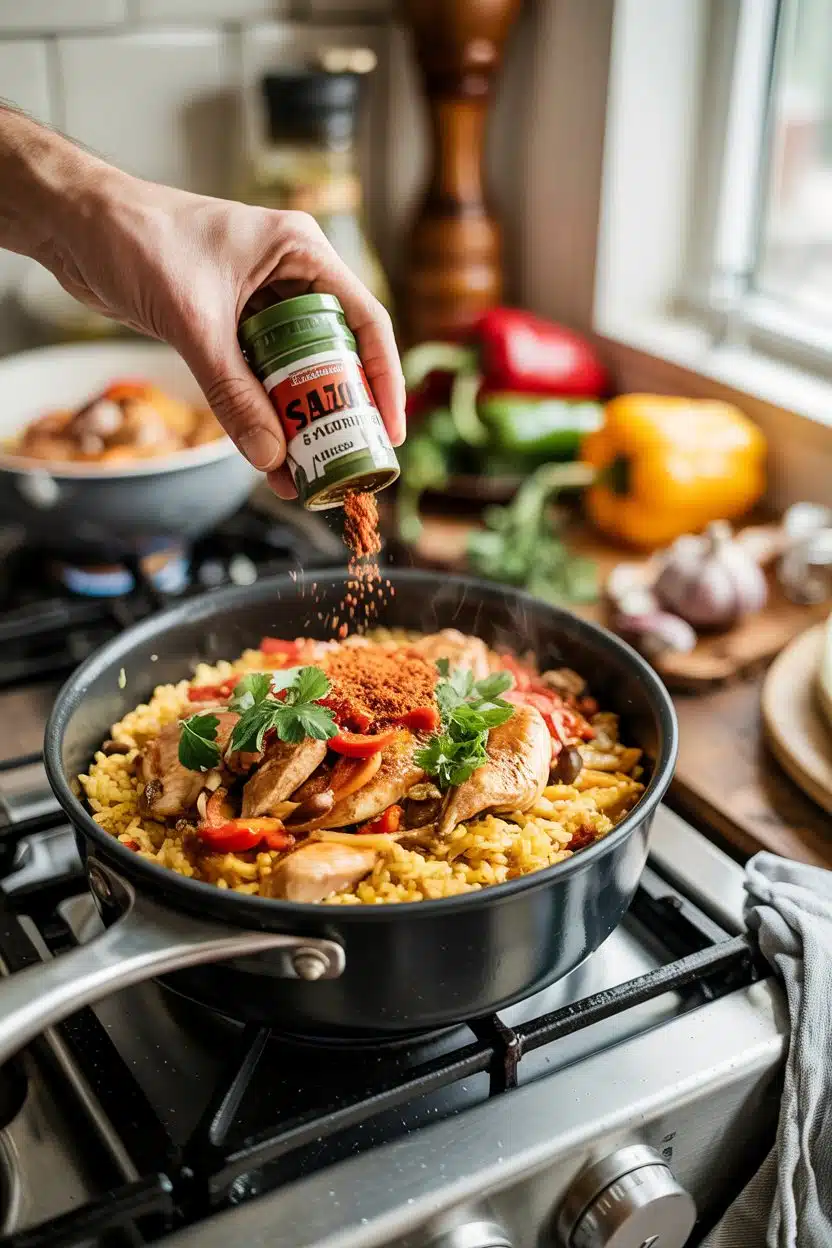
Blooming sazon briefly in oil before adding sofrito is standard practice in Puerto Rican and Dominican kitchens - it pulls the annatto's color into the fat, which then carries it evenly through the whole dish.

If you're swapping out sazon seasoning, replicating that color step with loose annatto or paprika matters more than people expect.

🇵🇷 Puerto Rican
🇩🇴 Dominican
🇨🇺 Cuban
🇨🇴 Colombian
🌎 Central American
Pairs well with
🍚 rice and beans
🍋 lime or sour orange
🧄 garlic and onion
🫒 olive oil
🌿 cilantro and parsley
🍌 plantains and yuca
🍗 chicken and pork

How to Buy and Store Sazon Seasoning

Look for packages labeled *sazón* or *sazón con achiote*. On the ingredient list, annatto or achiote should appear early - if salt is listed first and achiote is near the bottom, the color and earthy depth will be thin.

Avoid packages with visible clumping or a dull, faded orange color; both signal old stock.

Watch Out
Commercial sazon blends are high in sodium, and many include MSG or gluten-containing anti-caking agents. Check the label before using if you're managing sodium intake or have dietary restrictions.

Opened jars should be transferred to a glass spice jar with a tight lid and kept away from the stove and direct light.

For full details on storing sazon seasoning correctly and spotting when a batch has gone stale, check our dedicated guide.

Sealed commercial packets stay potent for 12-18 months; an opened jar is best used within six to twelve months.

When to Reach for Sazon

Sazon earns its place in two situations: when a dish needs a savory base built fast, and when orange-red color is part of the expected result - think arroz con pollo or red beans.

It's not a finishing seasoning and it won't replace fresh aromatics.

If a recipe already uses sofrito or recaito as its flavor foundation, sazon layers in color and spice body without competing. Start with one teaspoon or one packet, taste, and build from there.

Frequently Asked Questions

Is sazon the same as adobo?

No - they're related but distinct blends. Dry adobo typically combines salt, garlic, oregano, and black pepper, with no annatto, so it seasons without adding color. Sazon's annatto base is what sets it apart; it simultaneously colors the dish orange-red while seasoning it, which dry adobo won't do.

Does sazon contain MSG?

Some commercial brands do, some don't - it depends on the manufacturer. Goya's standard sazon packets, for example, have historically included MSG, while specialty or store-brand versions may omit it. Always read the ingredient list if MSG is a concern, and note that homemade sazon blends contain none by default.

How do you make sazon at home?

Combine 1 tablespoon ground annatto (achiote), 1 teaspoon each of garlic powder, ground cumin, and ground coriander, and ½ teaspoon salt - that's a basic one-packet equivalent per teaspoon of the mix. Adjust salt to your preference, and add dried culantro or oregano if your recipe calls for the con culantro variety.

What does sazon taste like in rice?

In rice, sazon reads mostly as a savory, lightly garlicky warmth with a subtle earthy undertone - the individual spices meld during cooking and don't stand out separately. The more noticeable effect in rice is visual: the grains turn an even orange-gold, which is the annatto doing its job.

Can you use sazon on fish?

Sazon works on firm fish like mahi-mahi or cod used in braises, but it's a poor match for delicate fillets - the annatto stains aggressively and the garlic-cumin weight overpowers mild flesh. For most fish dishes, a lighter hand with individual spices gives you more control over both flavor and color.

Lemongrass in Cooking: What It Tastes Like and How to Use It

May 10, 2026

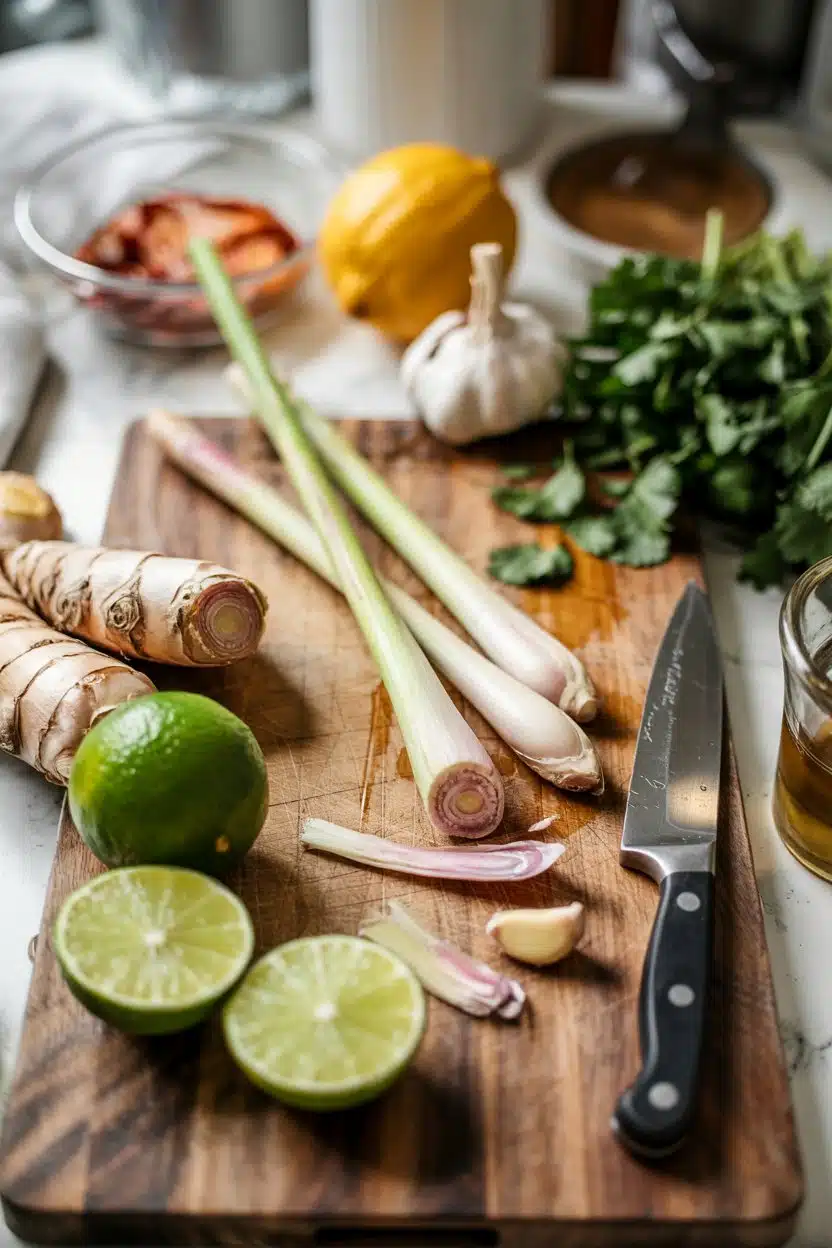
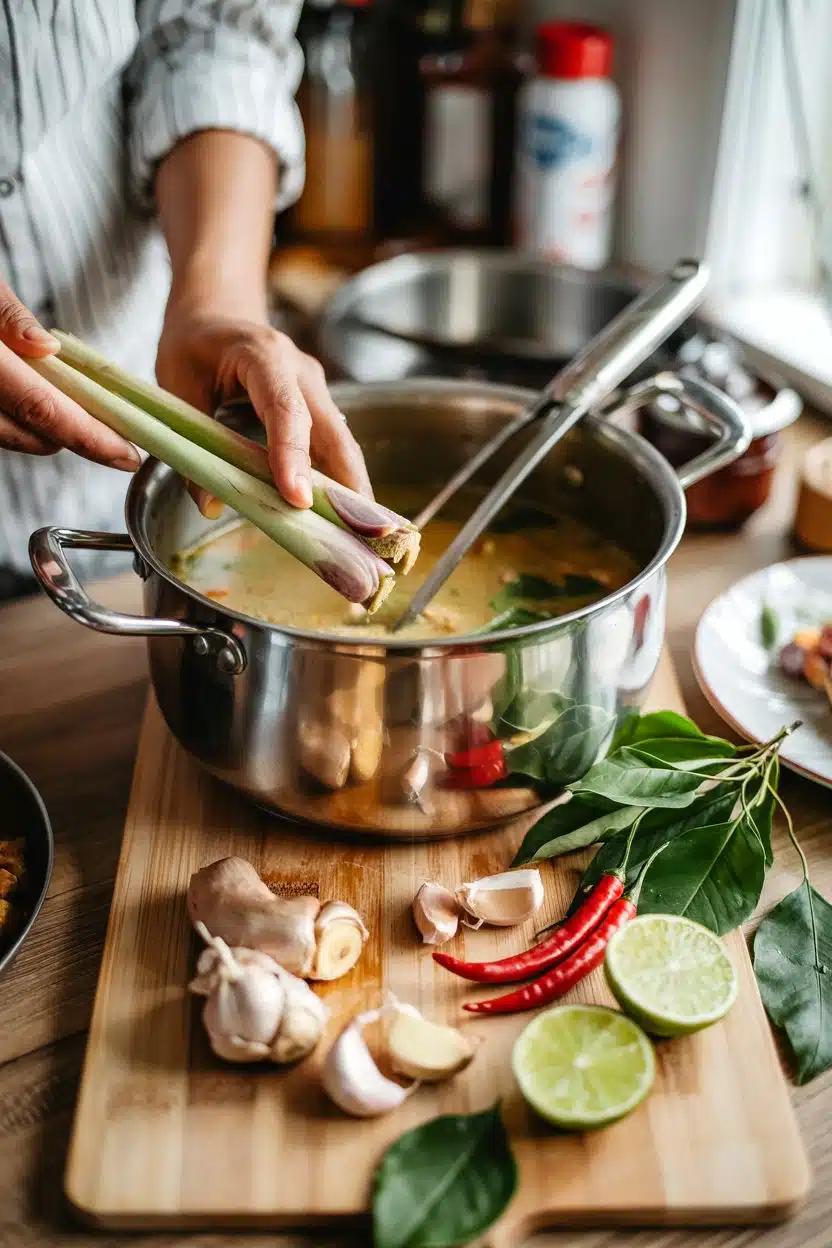
Lemongrass shows up in the broth of a tom yum soup recipe as a long, pale stalk you'd never eat whole - and that's exactly the point.

Most cooks encounter it as an infusing agent, something bruised and simmered and then fished out before serving.

What's less obvious is how differently it behaves when you actually mince the inner core and eat it raw, or pound it into a paste that anchors an entire curry. Lemongrass is one ingredient with two very different personalities, and knowing which to call on makes a significant difference in the result.

QUICK SUMMARY

Lemongrass is a fibrous aromatic grass native to Southeast Asia with a sharp citrus-lemon aroma and a mild ginger-herbal edge. Use it whole to infuse broths, or mince the pale inner core for raw applications. Fresh stalks keep 1-2 weeks refrigerated; frozen minced lemongrass lasts months.

👅Flavor: Bright citrus-lemon with a mild herbal and ginger-like edge
🌿Category: Aromatic grass; used primarily as a fragrant infusing ingredient
🍲Best Uses: Broths, curries, marinades, pastes, and steeped teas
❄️Shelf Life: 1-2 weeks fresh; up to 6 months frozen in minced form
🛒Buy It: Look for firm, pale-green stalks with a plump yellow-white bulb base

What Is lemongrass?

Lemongrass - also called Cymbopogon, sereh, or Thai lemon grass - is a tall, tropical grass native to Southeast Asia.

It grows in dense clumps, reaching up to three feet, and its value lies almost entirely in the aromatic compounds concentrated in its lower stalk and bulb.

The species most commonly used in cooking is *Cymbopogon citratus*, though a related variety, *Cymbopogon flexuosus*, is more common in Indian preparations.

The stalk has a hard, layered outer sheath and a pale, softer inner core. That inner core is the edible part - everything else serves mainly as an aromatic vehicle.

For pairing ideas for curry and other Southeast Asian dishes, lemongrass almost always appears alongside galangal and kaffir lime leaves as part of a foundational aromatic trio.

👅
Flavor
bright citrus
lemon-herbal
mild ginger spice
✋
Texture
firm and fibrous raw
tender when minced
👃
Aroma
sharp citrus top note
lemon-oil floral
clean
Flavor Intensity
Strong
 

What Does lemongrass Taste Like?

The flavor is closer to lemon oil or lemon peel than to lemon juice - there's no acidity, no sourness. Instead, you get a clean, almost perfumed citrus note layered over a faint grassy bitterness and a whisper of ginger warmth.

The compound responsible is citral, the same volatile aldehyde that defines lemon myrtle and lemon verbena.

Heat changes things noticeably.

Raw, minced lemongrass hits with direct, sharp brightness - you feel it on the front of the palate.

Simmered whole in a broth, it mellows into a softer, more floral background note, never harsh.

That dual behavior is what makes it genuinely distinct from simply adding lemon zest - the two aren't interchangeable, and alternatives to lemongrass tend to approximate only one mode at a time.

How to Use lemongrass

Fresh whole stalks need a little preparation before they do anything useful. Trim the dry top third, remove the tough outer layers, and bruise the stalk with the back of a knife to rupture the cells and release the aromatic oils.

From there, your approach depends on the dish.

How Lemongrass Is Used
Method Best For Tip
🍲 Bruised & Simmered Broths, soups, coconut curries Tie in a knot to keep it contained; remove before serving
🥗 Finely Minced Thai larb, fresh salads, marinades Use only the pale inner core; outer layers are too fibrous to chew
🫙 Pounded into Paste Thai curry paste, spice rubs Combine with galangal and kaffir lime for a complete base
🔥 Skewered & Grilled Fish, shrimp, chicken Wrap protein around the stalk; aromatic smoke infuses as it cooks
🍵 Steeped Lemongrass tea, simple syrups, cocktails Bruise first; steep in near-boiling water for 10 minutes
🇹🇭 Thai
🇻🇳 Vietnamese
🇲🇾 Malaysian
🇮🇩 Indonesian
🇵🇭 Filipino
🇮🇳 South Indian

Note that lemongrass can overwhelm delicate fruit-based sauces, and it needs acid balance (lime juice, fish sauce) to avoid tasting flat in dairy-forward preparations.

Pairs well with
🥥 coconut milk
🍋 kaffir lime leaves
🫚 galangal
🌶️ chili peppers
🐟 fish sauce
🍤 shrimp
🌿 cilantro & mint
🍗 chicken

How to Buy and Store lemongrass

At the market, look for firm, pale-green stalks with a swollen, yellow-white bulb at the base.

The lower portion should feel dense, not spongy.

Pass on anything dry, split, or dark-spotted - those are signs the volatile oils have already degraded.

Pre-minced lemongrass in jars or tubes is convenient, however it loses sharpness quickly; check for preservatives if you want a clean flavor profile.

Quick Tip
Freeze minced lemongrass in tablespoon portions on a parchment-lined tray, then transfer to a bag. You'll have ready-to-use amounts without thawing the whole batch.

Store whole unwashed stalks wrapped in a slightly damp paper towel inside a sealed bag in the refrigerator.

Watch for lemongrass spoilage signs like soft spots, sliminess, or a musty rather than citrusy smell.

Whole stalks hold about 1-2 weeks refrigerated; frozen minced lemongrass keeps 3-6 months.

Understanding coconut milk's shelf life matters here too, since both ingredients frequently share the same curries and soups and have different storage windows.

Start Here If You're New to Lemongrass

Buy two or three fresh stalks.

Bruise one, drop it into a pot of broth with a knob of ginger, and let it simmer - that's the fastest way to understand what it does.

Mince the inner core of another stalk raw and stir it into a salad dressing to experience the sharper side.

If a recipe also calls for galangal and you don't have it, understanding the role galangal plays in the same dishes will help you decide whether to sub or skip.

Frequently Asked Questions

Can you eat lemongrass raw?

Yes, but only the pale inner core - the outer stalks are too fibrous and woody to chew comfortably. Finely mince or grate the inner core and it works well in Thai larb, fresh herb salads, and marinades where you want direct citrus sharpness without any cooking.

Is lemongrass the same as citronella?

They're related but not identical. Both belong to the Cymbopogon genus and share citral and citronellal compounds, which is why both have a lemony scent. However, citronella grass (*Cymbopogon nardus*) is a different species grown mainly for insect-repellent oil production, not for cooking - its flavor is harsher and not suitable as a food ingredient.

Can you substitute lemon zest for lemongrass?

Lemon zest approximates the citrus note but misses the herbal, ginger-adjacent warmth that citral in lemongrass provides. It works as a last-resort fix in simmered dishes, however it tends to turn bitter over long cooking in a way lemongrass doesn't. For a closer match, see [alternatives to lemongrass](https://forkliftkitchen.com/lemongrass-substitutes/) that combine zest with other aromatics.

Does lemongrass have health benefits?

Lemongrass contains small amounts of vitamin C, vitamin A, iron, and potassium, though quantities per serving are minor since it's used primarily as an aromatic rather than a bulk food. The compound citral has been studied for antimicrobial and anti-inflammatory properties in lab settings, but the amounts consumed in cooking are far below levels used in those studies. It's naturally gluten-free, vegan, and very low in calories.

Can you use dried lemongrass instead of fresh?

Dried lemongrass works in long-simmered applications like broths and soups where there's time for rehydration, but it loses the volatile citral compounds that give fresh lemongrass its sharpness. It won't work at all in raw preparations like salads or fresh pastes. Rehydrate dried pieces in warm water for 20 minutes before adding them to a dish.

Almond Milk 101: Taste, Uses, and When It Works Best in Cooking

May 10, 2026

Almond milk does one thing in a kitchen that few other plant-based liquids manage as cleanly: it adds body and a faint nuttiness without overpowering whatever surrounds it.

That restraint is both its strength and its limitation.

Understanding where it works - and where it falls flat - makes all the difference between a smoothie that sings and a custard that never sets.

If you're already familiar with milk in cooking as a baseline, almond milk behaves by different rules, and knowing those rules saves frustration.

QUICK SUMMARY

Almond milk is a plant-based milk substitute made from blended, strained almonds and water. It's mild, slightly nutty, and low in calories - a solid dairy-free option for drinking, baking, and blending, though it lacks the protein and body of cow's milk.

👅Flavor: Mild nutty, lightly sweet in commercial varieties, subtle bitterness
🥛Best Uses: Smoothies, coffee drinks, baked goods, cereal, oatmeal
⏱️Shelf Life: 7-10 days refrigerated after opening; 3-5 days for homemade
🛒Buy: Refrigerated for fuller mouthfeel; unsweetened for cooking flexibility
⚠️Skip It When: Recipe needs cream-like emulsion, milk proteins, or a rich reduction

What Is Almond Milk?

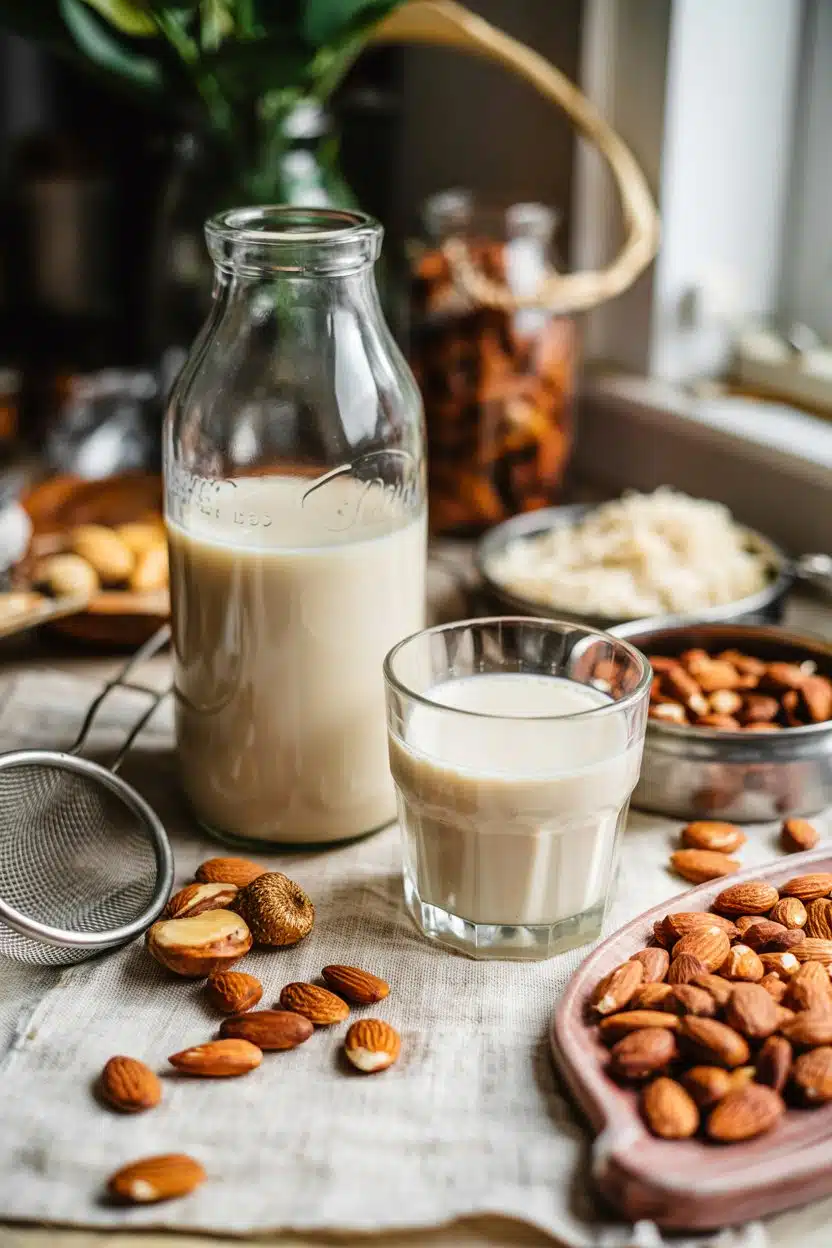
Almond milk is a plant-based milk substitute produced by soaking raw almonds, blending them with water, then straining the solids through a nut-milk bag or fine mesh. The result is a pale, slightly off-white liquid with a thin-to-medium consistency.

Commercial versions often include emulsifiers like sunflower lecithin or gellan gum to stabilize the mixture and improve texture.

It originated in medieval Mediterranean kitchens - almond-based drinks appear in Arabic and European manuscripts as far back as the 13th century.

Modern commercial production is global, and the product now comes in dozens of formulations.

Key varieties include unsweetened, lightly sweetened, vanilla-flavored, and barista almond milk, which contains added emulsifiers specifically to help it froth under steam pressure.

If you're comparing it to soy milk swaps that work, the protein and emulsification profiles are quite different.

👅
Flavor
mild nutty
lightly sweet
subtle bitter almond
✋
Texture
thin to medium-bodied
silky
👃
Aroma
light toasted almond
faintly grassy
Flavor Intensity
Mild
 

What Does Almond Milk Taste Like?

The flavor is quieter than most people expect. Unsweetened almond milk tastes like diluted almonds - faintly toasty, slightly earthy at the finish, with a thin quality that sets it apart from oat milk or cow's milk.

Commercial sweetened versions add enough sugar (or sometimes vanilla extract) to tip it toward something closer to a light dessert drink.

That subtle bitterness from almond skins is more noticeable in homemade versions, where less filtration leaves more particulate.

Heat mellows it further.

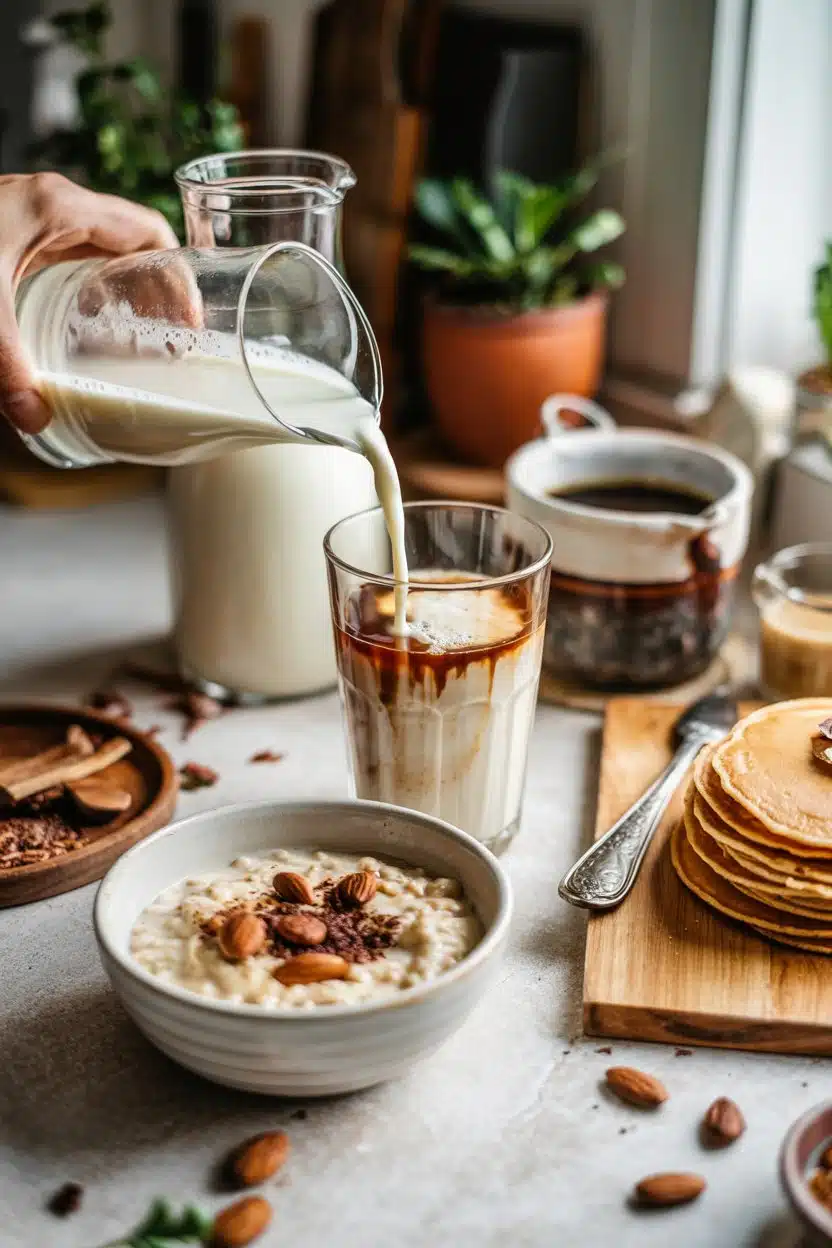
Warmed gently in oatmeal or pancake batter, the nutty note softens to near-neutral, which is why it works well as a background liquid rather than a featured flavor.

It won't compete with cinnamon, cocoa, or fruit - it just carries them.

How to Use Almond Milk

Almond milk earns its place in cold and warm applications where a light, neutral liquid is all you need. It struggles anywhere a recipe depends on fat content or milk proteins for structure - think panna cotta, stovetop custard, or thick cream sauces.

For almond milk swaps that work in those trickier applications, you'll likely need something richer.

How Almond Milk Is Used
Method Best For Tip
🥗 Cold/Blended Smoothies, shakes, cold cereal, iced lattes Use unsweetened to control sugar in fruit-heavy blends
🍳 Gently Heated Oatmeal, pancake batter, muffin batter, light soups Keep heat low - high heat causes separation
☕ Frothed Lattes, cappuccino-style drinks Use barista formulations only; standard versions won't hold foam
🧁 Baked Quick breads, muffins, waffles Expect a slightly lighter, less rich crumb than cow's milk
🇺🇸 American Breakfast
🌱 Plant-Based / Vegan
☕ Cafe-Style Beverages
🫙 Mediterranean-Origin Desserts
Pairs well with
☕ coffee & espresso
🍌 banana
🍓 berries
🌾 oats & chia
🍫 cacao & chocolate
🥜 nut butters
🍁 maple syrup
🍦 vanilla & cinnamon

How to Buy and Store Almond Milk

Best Pick
Refrigerated, unsweetened almond milk - fuller mouthfeel than shelf-stable, and no added sugar to work around in savory recipes.

Check the ingredient list before buying. A shorter list with whole almond content listed near the top generally means a better-quality product. Barista-style cartons list emulsifiers like sunflower lecithin explicitly - that's what enables frothing.

Shelf-stable cartons are fine for pantry stocking, but skip any with bulging seals.

Once opened, store in the refrigerator between 34-40°F with the cap sealed.

Shake before each use - sediment settles naturally, especially in lower-additive formulations.

Opened commercial cartons stay fresh for 7-10 days.

Homemade almond milk moves faster: use it within 3-5 days.

For more detail on milk spoilage signs and what off almond milk actually looks and smells like, that guide covers the key indicators.

When to Reach for Almond Milk

Start here if you're cutting lactose, reducing calories, or cooking for a vegan diet and need a liquid that won't compete with other flavors.

Cold applications - smoothies, cereal, iced coffee - are where it performs most reliably.

In baking, it works as a straight swap for milk in most quick-bread recipes, though the result will be slightly lighter.

Skip it anywhere the recipe needs fat or protein to build structure, and consider alternatives to milk with higher fat content for those situations.

Frequently Asked Questions

Does almond milk taste like almonds?

Only faintly. The almond flavor is diluted through blending and straining, leaving a mild nuttiness rather than the concentrated flavor of a whole almond. Commercial sweetened versions push it further toward vanilla sweetness, which can mask even that subtle note.

Can you cook with almond milk?

Yes, with limits. It works in batters, oatmeal, light soups, and cold sauces where a thin consistency is acceptable. Avoid using it in recipes that require high-heat reductions or rely on milk proteins for structure - it will separate or fail to thicken correctly.

Does almond milk froth for coffee?

Standard almond milk froths poorly under a steam wand - it produces thin, unstable bubbles that collapse quickly. Barista-formulated almond milk contains added emulsifiers (typically sunflower lecithin) that allow it to hold foam long enough for latte art and layered coffee drinks.

How long does almond milk last after opening?

Commercial refrigerated and shelf-stable cartons last 7-10 days after opening when kept sealed and cold. Homemade almond milk has no preservatives or stabilizers, so it degrades faster - plan to use it within 3-5 days and check for sourness or sliminess before drinking.

Is almond milk healthy?

It's low in calories and naturally lactose-free, and most commercial versions are fortified with calcium and vitamin D to compensate for what almonds don't provide in liquid form. However, it's significantly lower in protein than cow's milk or soy milk - roughly 1 gram per cup versus 8 grams - so it's not a direct nutritional equivalent.

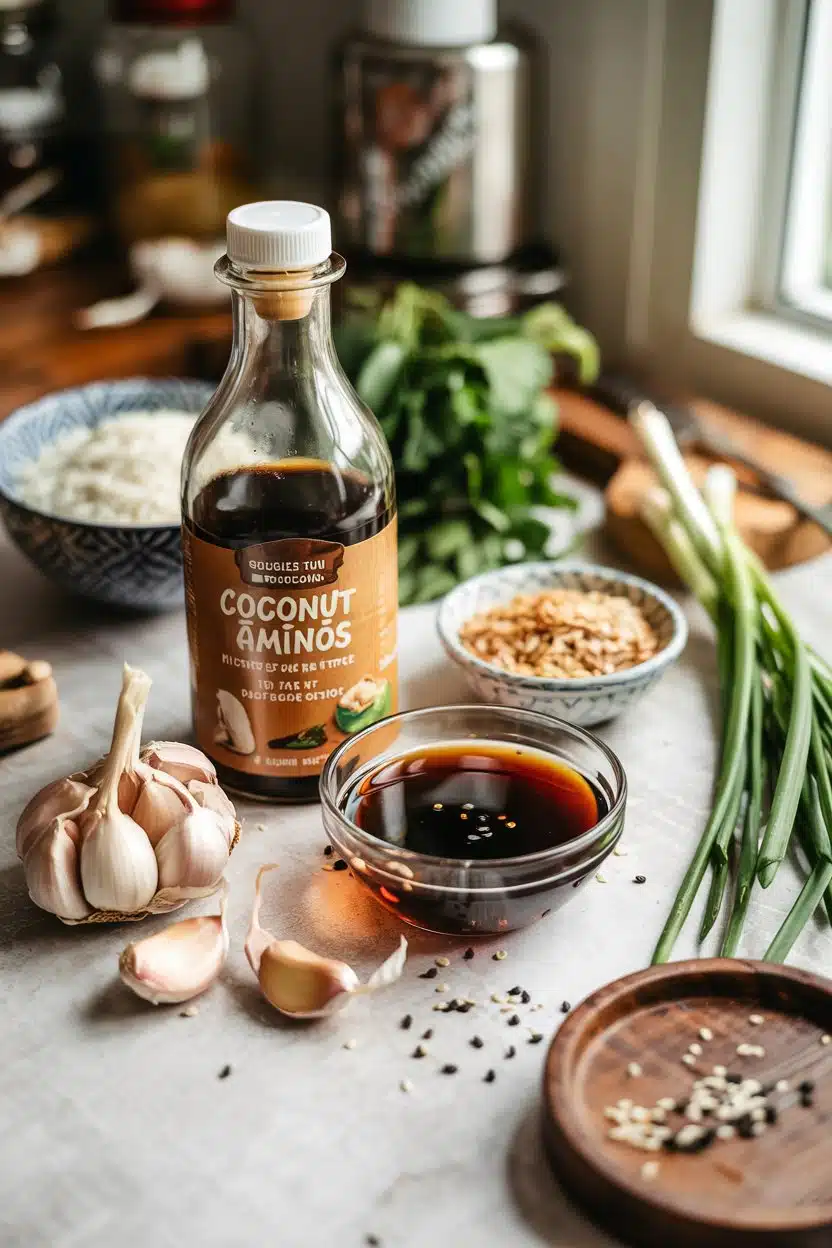
What Is Coconut Aminos? [Taste, Uses & More]

May 10, 2026

Most people reach for coconut aminos expecting a basic soy sauce swap and end up confused by the bottle - it's sweeter than expected, less sharp, and somehow works in dishes where soy sauce would overpower.

That's not a flaw.

It's actually how this condiment is supposed to behave.

Understanding what coconut aminos does on its own terms makes it far more useful in your kitchen than treating it like a weaker version of something else.

QUICK SUMMARY

Coconut aminos is a fermented coconut sap condiment with a salty-sweet, umami-forward flavor. It's a go-to for people avoiding gluten or soy who still need depth in marinades, stir-fries, and dressings. Milder than soy sauce, with a subtle caramel edge.

👅Flavor: Salty-sweet, mild umami, faint caramel undertone
🍳Best Uses: Marinades, stir-fries, dressings, glazes, dipping sauces
🧴Shelf Life: Up to 2 years unopened; 6-12 months refrigerated after opening
🌿Dietary: Gluten-free, soy-free; suits paleo and Whole30 diets
🔄Swaps: Works 1:1 for soy sauce in most recipes; flavor will be sweeter and milder

What Is Coconut Aminos?

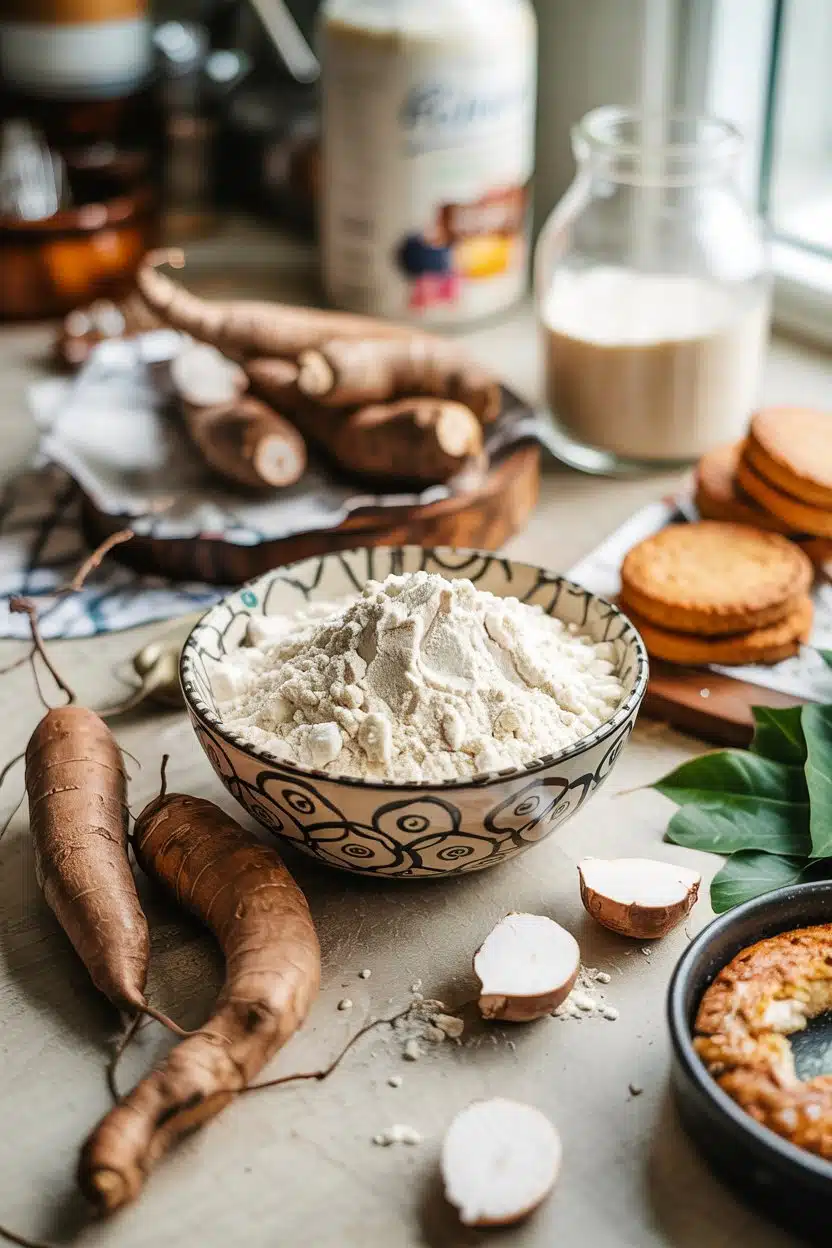
Coconut aminos is a fermented liquid condiment made from the sap of coconut palm blossoms, combined with salt and left to ferment.

It originated in Southeast Asia - particularly influenced by Filipino and Indonesian food traditions - where coconut sap has been harvested and fermented for centuries.

The name "aminos" refers to the amino acids that develop during fermentation, though the product is not a protein supplement.
It falls into the category of seasoned fermented condiments, sitting alongside soy sauce, tamari, and fish sauce in terms of function. You may also see it labeled coconut amino sauce or coconut sap seasoning.

There are no major subtypes, though sodium levels vary noticeably between brands - some add extra salt, others keep it minimal.

👅
Flavor
salty
mildly sweet
umami
caramel
✋
Texture
thin
slightly syrupy
slick
👃
Aroma
lightly caramelized
faintly fermented
mild
Flavor Intensity
Moderate
 

What Does Coconut Aminos Taste Like?

The closest comparison is a lighter, less aggressive soy sauce - but that framing undersells it. Coconut aminos carries a distinct brown-sugar sweetness that soy sauce doesn't have, and its fermented bite is noticeably softer.

Someone tasting it blind for the first time often registers it as savory-sweet rather than purely salty.

On the palate, the umami is real but restrained. It won't hit you the way a splash of fish sauce or tamari would, but it lingers.

The caramel edge becomes more pronounced when the liquid reduces during roasting or pan deglazing - heat concentrates the residual sugars from the coconut sap and deepens the flavor considerably.

Raw, it's gentle enough to use in dressings without dominating. Cooked at high heat, it darkens and sweetens further - which is useful in glazes but a liability in deep-frying, where it can scorch.

How to Use Coconut Aminos

Coconut aminos works in most situations where soy sauce is called for, with one caveat: the flavor is sweeter and milder, so you may need to adjust salt or acid to compensate.

Pairing it with rice vinegar or lime juice usually restores the balance that soy sauce achieves on its own.

How Coconut Aminos Is Used
Method Best For Tip
🥗 Raw Salad vinaigrettes, dipping sauces, cold noodle dressings Whisk with rice vinegar and sesame oil for balance
🍳 Stir-frying Weekday stir-fries, quick vegetable sautés Add toward the end - early addition reduces flavor
🔥 Glazing Roasted vegetables, basted chicken thighs, ribs Toss with oil and roast at 425°F; caramelizes well
🥩 Marinating Chicken, beef, tofu - 30-60 minutes is enough Add garlic, ginger, and lime to round out the sweetness
🥘 Deglazing Ground meat sauces, braising liquids, pan sauces Use small amounts - the sugar content can over-sweeten
🇵🇭 Filipino
🇮🇩 Indonesian
🌏 Pan-Asian Fusion
🥑 Paleo / Whole30
🌾 Gluten-Free Adaptations

Classic pairings with ginger and garlic hold up especially well - both cut through the sweetness and reinforce the savory character of the aminos.

For dipping sauces, swapping out chili garlic sauce in favor of chili oil keeps the heat without adding sweetness on top of sweetness.

Pairs well with
🧄 garlic
🫚 sesame oil
🍋 lime
🌶️ chili flakes
🫚 ginger
🧅 scallions
🍶 rice vinegar
🥥 coconut milk

If you run out mid-recipe, swapping out coconut aminos with tamari or a low-sodium soy sauce gets you close, though the sweetness will be missing.

The reverse also works - coconut aminos can stand in among soy sauce stand-ins when gluten or soy is the concern.

How to Buy and Store Coconut Aminos

A good bottle has a short ingredient list: coconut sap, water, salt. That's it.

Some brands add yeast extract or cane sugar - worth checking if you're following a strict Whole30 or paleo protocol. Avoid any bottle that looks cloudy or has visible separation at the bottom, both signs of spoilage or poor production.

Quick Tip
Choose dark glass bottles over clear plastic when available. They slow light-induced oxidation and help the flavor stay stable longer after opening.

Store an unopened bottle in a cool pantry away from direct sunlight - it'll hold for 12 to 24 months. Once opened, move it to the refrigerator.

Cold storage slows the gradual color darkening and flavor drift that happens at room temperature. If you're unsure about long-term storage, the details on freezing coconut aminos are worth a look.

Start Here for the Best Results

New to coconut aminos?

Use it raw first - a simple vinaigrette with rice vinegar, sesame oil, and a clove of fresh ginger shows you exactly what it tastes like before heat changes it.

From there, try a quick weeknight marinade for chicken thighs: coconut aminos, garlic, lime, and a pinch of chili.

That combination covers everything the condiment does well in one simple recipe.

Frequently Asked Questions

Is coconut aminos healthier than soy sauce?

Coconut aminos typically contains 90-130mg of sodium per teaspoon versus 280-400mg in regular soy sauce, making it a meaningful reduction for people managing sodium intake. It's also gluten-free and soy-free, which matters for those with intolerances. However, it contains trace sugars from coconut sap, so it's not a straight nutritional upgrade for everyone.

Can you substitute coconut aminos for soy sauce 1:1?

Yes, the swap works at a 1:1 ratio in most recipes. The result will be noticeably milder and slightly sweeter, so in savory dishes that depend on a salty punch - like a heavily seasoned ramen broth - you may want to add a small pinch of salt alongside it.

Does coconut aminos contain coconut allergens?

Coconut is classified as a tree nut by the FDA, so people with tree nut allergies should approach it with caution. That said, coconut allergies are relatively uncommon, and many people with tree nut allergies tolerate coconut without issue - but confirmation from an allergist is the right call before trying it.

Can coconut aminos be used raw in dressings?

Coconut aminos works well raw and is actually one of its stronger applications - the sweetness balances acid-forward dressings without the sharp fermented edge that raw soy sauce can bring. It blends cleanly into vinaigrettes, tahini-based dressings, and cold noodle sauces without needing to be cooked off first.

Does coconut aminos taste like coconut?

No - the coconut flavor doesn't survive fermentation. What remains is a faintly caramelized sweetness from the sap's natural sugars, but nothing that reads as tropical or coconut-forward. Most tasters identify it as savory-sweet before they'd ever guess the source ingredient.

What Is Cacao Nibs? Taste, Texture, Uses & More

May 10, 2026

Scatter a handful of cacao nibs over a bowl of yogurt and you might stare at them, wondering if you've just topped breakfast with gravel.

They look like broken shards of something - dark, jagged, oddly beautiful - and then you take a bite and understand exactly what unsweetened chocolate actually is, stripped of everything that makes it approachable.

Most chocolate lovers have never encountered cacao nibs in this unguarded form. That first bitter crunch tends to reframe everything you thought you knew about where chocolate flavor comes from.

QUICK SUMMARY

Cacao nibs are small fragments of roasted cacao beans with zero added sugar. They deliver an intense bitter-chocolate crunch and work across sweet and savory recipes wherever you want deep chocolate character without sweetness.

👅Flavor: Bitter dark chocolate, roasted, faintly fruity, tannic finish
✋Texture: Very crunchy raw, slightly softer once baked or toasted
🍫Best Uses: Granola, brownie batter, smoothies, meat rubs, ice cream topping
📦Shelf Life: 6-12 months pantry; up to 18 months refrigerated if sealed
🌱Dietary: Naturally vegan and gluten-free; notable caffeine and theobromine content

What Is cacao nibs?

Cacao nibs are the edible inner fragment of the cacao bean - what remains after the bean has been fermented, dried, roasted, and cracked, with the papery husk winnowed away.

The process is part of how fermentation shapes the final character of the nib; for more context on that chemistry, see what happens to gluten during fermentation.

You'll also see them sold as cocoa nibs, cacao bits, cacao crunch, or cacao kernels - all the same product.

They come from cacao-growing regions in West Africa, Central America, and South America. Single-origin nibs, sourced from a specific farm or region, carry distinct regional flavor signatures that mass-blended nibs won't.

👅
Flavor
bitter-dark chocolate
roasted
faintly fruity-acidic
nutty
tannic
✋
Texture
very crunchy
gritty
slightly astringent
👃
Aroma
deep roasted cacao
earthy
subtle fruity esters
Flavor Intensity
Strong
 

What Does Cacao Nibs Taste Like?

Think unsweetened dark chocolate crossed with very bitter espresso grounds - then add a nutty, almost brown-ale-like roasted quality underneath. That's the core experience.

There's also a faint fruity acidity that comes through on the mid-palate, a remnant of fermentation, before the tannins close everything down with a dry, lingering finish.

Nothing here is sweet. Nothing is mellow.

Raw nibs hit hard, and that astringency coats the tongue in a way that milk chocolate never does.

Cooking shifts the character somewhat. Folded into brownie batter, they hold their crunch but the baking heat rounds the sharpest bitter edges slightly.

Toasted in a dry pan, the roasted notes deepen and a subtle nuttiness emerges that wasn't there before. They never become sweet, however - heat amplifies intensity, not gentleness.

How to Use Cacao Nibs

Cacao nibs work wherever you want genuine chocolate depth without added sugar doing the heavy lifting. Their crunch makes them as useful as a topping as they are as a mix-in.

If you need a different flavor profile in a recipe, check the replacements for cacao nibs - though most swaps sacrifice either the crunch or the raw bitterness.

How Cacao Nibs Are Used
Method Best For Tip
🥗 Raw Yogurt, granola, smoothies, ice cream topping Pair with something sweet or fatty to balance bitterness
🍪 Baked In Cookies, brownies, energy bars Fold in at the end; overbaking makes them harder
🔥 Toasted Salad croutons, roasted vegetable topping, meat rubs Dry pan, medium heat, 2-3 minutes; watch closely
🫙 Infused Compound butter, flavored cream, chocolate sauces Steep in warm liquid 15-20 minutes, then strain nibs out
⚙️ Ground Mole sauce, spice rubs for red meat, homemade chocolate paste Grind with spices in short pulses; overprocessing creates paste

Ground nibs are central to mole-style preparations - the kind of bitter-chocolate base that defines traditional Latin American sauces. If you've made mole and stored it, knowing how long mole sauce keeps matters as much as the nib quality itself.

🌎 Latin American
🇺🇸 Modern American
☕ Specialty Dessert
🍫 Artisan Chocolate
Pairs well with
🧂 sea salt
🍊 orange zest
🍒 dried cherry
🌰 hazelnuts
🥛 coconut milk
☕ espresso
🌶️ chili
🍁 maple syrup

How to Buy and Store cacao nibs

Look for nibs that are uniformly dark brown to near-black with a dry, slightly glossy surface. Avoid bags showing white bloom, visible oil pooling, or excessive fine dust at the bottom - these signal age or poor storage conditions.

Single-origin labels are worth seeking if regional flavor complexity matters to you; generic blended nibs prioritize consistency over character.

Store in an airtight, opaque container in a cool, dark pantry for everyday use. The refrigerator extends life significantly - sealed well, nibs won't absorb surrounding odors and stay fresh longer.

For a full breakdown of cacao nibs's shelf life under different conditions, that guide covers the specifics in detail.

Pantry life runs 6-12 months. Refrigerated and properly sealed, expect up to 18 months.

Worth Adding to Your Pantry?

Cacao nibs earn their place if you bake regularly or want chocolate flavor without loading a dish with sugar.

Start with a granola bowl or a batch of brownies - both show what nibs do that chips and powder can't.

If you're stimulant-sensitive, note the theobromine and caffeine content (see our theobromine in acai guide for comparison context) and keep portions measured.

For everyone else, a bag lasts months and covers more ground than its single-purpose appearance suggests.

Frequently Asked Questions

Are cacao nibs the same as cocoa nibs?

Yes - the terms are interchangeable in commercial use. Technically, "cacao" refers to the unprocessed or minimally processed bean and its derivatives, while "cocoa" traditionally signals further processing (like alkalization). However, most brands use both names for the same roasted, cracked bean fragment with no meaningful difference in the product itself.

Can you eat cacao nibs raw?

Yes, and most packaged nibs are already roasted, so "raw" in this context means straight from the bag without further cooking. They're safe to eat directly and are commonly used as a no-prep topping. The flavor is intensely bitter unaccompanied, so pairing with something sweet or creamy makes them far more approachable.

Do cacao nibs have caffeine?

They do, but theobromine - a milder stimulant in the same chemical family - is present in higher concentrations than caffeine. A one-ounce serving contains roughly 10-15 mg of caffeine alongside significantly more theobromine. People sensitive to either compound should treat nibs the way they'd treat strong dark chocolate: use them, but track how much.

How does toasting change the flavor of cacao nibs?

A short toast in a dry pan - two to three minutes over medium heat - deepens the roasted, nutty notes and reduces some of the sharper astringency. The nibs don't sweeten, however; they become more complex rather than more mellow. This makes toasted nibs particularly well-suited for savory applications like spice rubs or salad toppings where you want aroma alongside crunch.

Do cacao nibs melt when baked into cookies or brownies?

No - unlike chocolate chips, nibs don't contain added cocoa butter and sugar that allow them to melt into a smooth pool. They soften very slightly in the oven but retain their crunch and stay as distinct fragments in the finished bake. This is the point: they add textural contrast and bursts of bitter chocolate flavor rather than melting into the batter uniformly.

What Is Ramekin? [Taste, Uses & More]

May 10, 2026

You spot a small ceramic dish at a kitchen shop - smooth, straight-sided, barely wider than your palm - and wonder whether it's actually worth the cabinet space.

Ramekins are single-portion ovenproof vessels, typically ceramic or porcelain, built to go from freezer to hot oven and straight to the table. They're not flashy.

They don't need to be.

QUICK SUMMARY

A ramekin is a small, straight-sided ceramic or porcelain dish designed for single-serve baking and serving. It contributes no flavor of its own, transfers heat evenly, and handles everything from crème brûlée to individual gratins. Ovenproof, stackable, and indefinitely reusable when intact.

🍽️Category: Single-serve ovenproof bakeware, ceramic or porcelain
👅Flavor: Completely neutral - adds nothing to food when fully glazed
🔥Best Uses: Crème brûlée, soufflés, custards, individual pot pies, dips
📐Sizes: Most common are 4 oz and 6 oz; 8 oz for larger portions
🌡️Heat: Oven-safe, water-bath compatible, broil-safe if walls are thick
♾️Shelf Life: Indefinite if glaze stays intact; replace on chips or crazing

What Is a Ramekin?

The word comes from French culinary tradition, though the exact etymology is debated - some trace it to a regional dialect term for a small baked cheese dish.

Today, a ramekin refers specifically to a straight-sided, single-portion vessel used for baking, setting, and serving.

Most are ceramic or porcelain, though borosilicate glass versions exist for visibility into the set custard beneath.

Standard ramekins come in three practical sizes: 4 oz for bite-sized portions like individual chocolate lava cakes, 6 oz for crème brûlée and most custards, and 8 oz for larger servings such as personal pot pies or bread puddings.

The straight sides aren't decorative - they support a soufflé's vertical rise and make unmolding cleaner.

If you need a different vessel entirely, check out ramekin substitutes before improvising with a mug.

👅
Flavor
neutral
non-reactive
✋
Texture
smooth glaze
rigid walls
👃
Aroma
odorless
residual if porous
Flavor Intensity
Mild
 

It doesn't react with food, doesn't release minerals into custard, and won't alter the flavor of a delicate crème brûlée the way a reactive metal pan might.

The material does, however, affect the result you taste. Ceramic's even heat distribution means custard sets at a uniform rate, preventing rubbery edges and a liquid center. That consistency is a real sensory outcome - just an indirect one.

One caveat: unglazed or poorly fired ceramic can be porous. Those surfaces absorb fats and acids over time, and a ramekin used repeatedly for strong-flavored dishes can carry faint residual aromas.

A clean, well-glazed dish - including lead-free ceramic when comparing aluminum vs ceramic cookware options - stays completely neutral.

How to Use a Ramekin

Ramekins do their best work in the oven, but they're genuinely multi-role.

The bain-marie (water bath) is the technique most closely tied to them: nestle ramekins in a deep baking dish, pour in hot water halfway up the sides, and bake.

This indirect heat is what gives custards and flans their silky, trembling texture rather than a curdled one.

For tips on keeping crème brûlée fresh after the fact, that starts with proper ramekin-based chilling.

Beyond custard, ramekins handle individual gratins, personal pot pies, and small soufflés. At room temperature, they're useful for mise en place - holding pre-measured spices, minced garlic, or a tablespoon of butter before cooking begins.

How Ramekins Are Used
Method Best For Tip
🔥 Water Bath Custards, crème brûlée, flans, bread puddings Use hot water and cover loosely with foil to prevent skin
🍽️ Direct Bake Individual pot pies, soufflés, personal gratins Preheat the ramekin for faster bottom browning
🔆 Broil/Torch Brûlée sugar topping, browning breadcrumbs Use thick-walled ramekins rated for high-temp broiling
❄️ Chill/Set Panna cotta, mousse, individual gelées Lightly oil the interior for cleaner unmolding
🥄 Mise en Place Pre-measured ingredients, condiments, dips 4 oz size is ideal for small prep portions
🇫🇷 French
🇺🇸 American
🇬🇧 British
🍽️ Fine Dining
Pairs well with
🔥 Kitchen torch
🫙 Deep baking dish (bain-marie)
🍳 Sheet pan
🧈 Butter and breadcrumbs
🥛 Heavy cream
🧤 Silicone oven mitts

How to Buy and Store a Ramekin

Look for ramekins with a fully glazed interior - no exposed clay, no hairline crazing on the surface.

Check the base for a manufacturer stamp confirming oven-safe temperature.

Most quality ceramic ramekins are rated to at least 500°F; porcelain versions often go higher.

If you plan to broil or torch directly, choose thick-walled versions with an explicit high-heat rating.

Avoid older or uncertified imported ceramics for acidic foods, as some contain lead-based glazes.

Best Pick
For all-around use - baking, broiling, and water baths - choose a 6 oz porcelain ramekin with fully glazed walls, a flat stable base, and a verified oven-safe rating of at least 500°F.

Storage is straightforward. Stack ramekins with a thin cloth or paper towel between each dish to prevent chips.

Keep them on a low shelf - they're heavier than they look when stacked, and a fall chips the glaze cleanly.

Intact ceramic lasts indefinitely.

Replace any ramekin that shows cracking, crazing, or spalling, since damaged glaze can harbor bacteria and compromises thermal stability.

Which Ramekin Should You Start With

Four-ounce and six-ounce ramekins cover nearly every recipe that calls for one. Start with the 6 oz if you're making custards or crème brûlée.

Add 4 oz versions once you're using them regularly for mise en place or small desserts. The pairing ideas for soufflé will tell you whether a larger 8 oz version makes sense for your table.

Skip unglazed stoneware unless you know its food-contact rating. One good set of certified porcelain ramekins will outlast most other items in your kitchen.

Frequently Asked Questions

What size ramekin is best for crème brûlée?

A 6 oz ramekin is the standard for crème brûlée - it gives you enough depth for a properly set custard while keeping the surface area wide enough for even sugar torching. Shallower ramekins (4 oz, wider diameter) also work and actually produce a higher ratio of caramelized crust to custard. Avoid anything deeper than 2 inches, as the custard at the center may not set evenly in a water bath.

Can you broil in a ramekin?

Yes, but only with thick-walled ceramic or porcelain ramekins that have a confirmed high-temperature rating. Thin-walled or decorative ramekins can crack under the intense direct heat of a broiler element. Keep broiling time short - under three minutes - and never place a cold ramekin directly under a hot broiler, as the thermal shock can crack even quality ceramic.
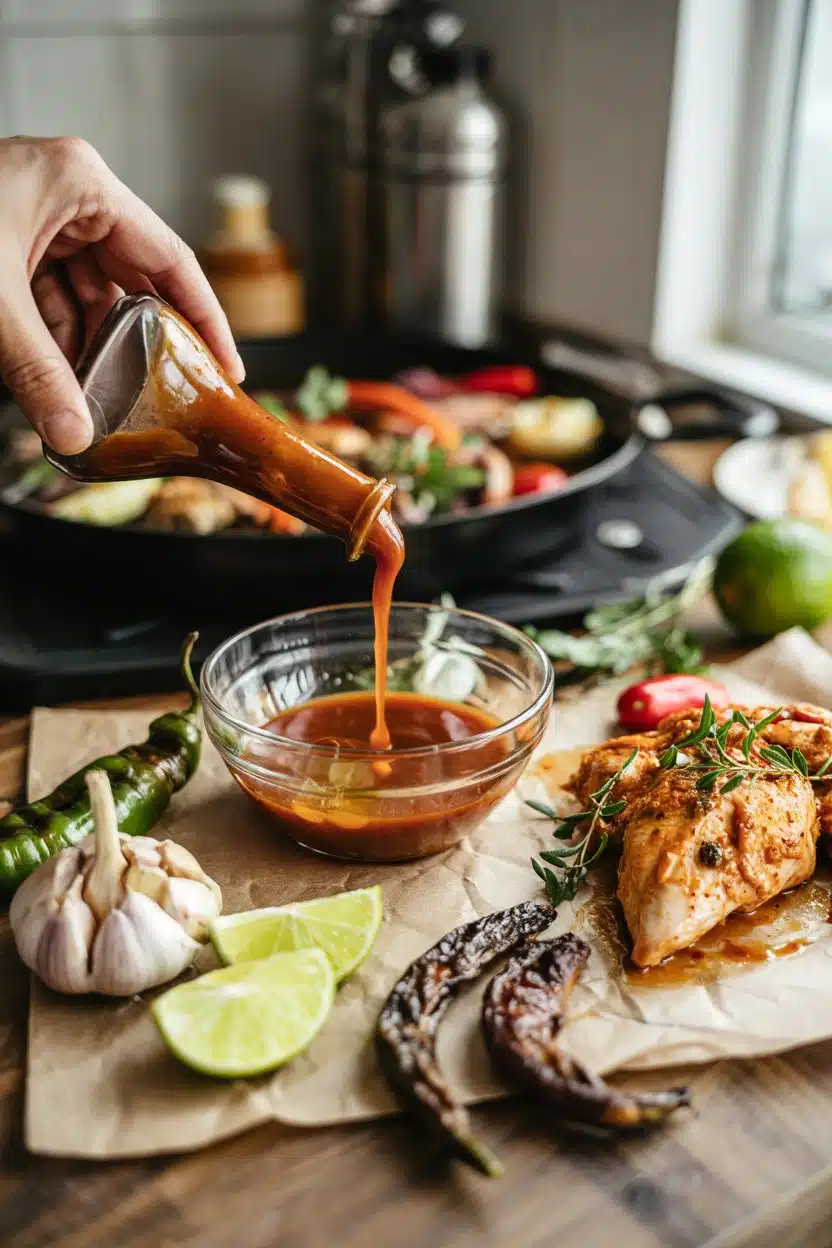
Are all ramekins oven safe?

Not all ramekins are oven safe - some sold as serving dishes or decorative vessels aren't rated for oven temperatures. Always check the base of the dish for an oven-safe stamp or manufacturer rating before baking. Borosilicate glass ramekins are a reliable alternative if ceramic labeling is unclear, as borosilicate is inherently thermal-shock resistant.

How do you use ramekins in a water bath?

Place filled ramekins into a deep roasting pan or baking dish, then pour hot (not boiling) water into the outer pan until it reaches halfway up the sides of the ramekins. The water moderates the oven temperature around the ramekins, preventing the edges of custard from overcooking before the center sets. Pull the ramekins out with tongs or a wide spatula - the water makes the pan heavy and unsteady.

Do ramekins retain heat after coming out of the oven?

Yes - ceramic and porcelain hold heat longer than glass or metal, which means food inside continues cooking slightly after you remove the ramekin from the oven. This carryover effect matters most for custards and soufflés: pull them when the center has a slight jiggle, not when fully firm. For serving at the table, that retained heat also keeps individual gratins and pot pies warm longer than a standard baking dish would.

What Is Pepperoni? Taste, Texture, Uses & More

May 10, 2026

You spot it on nearly every pizza menu, but pepperoni has a specific profile worth understanding before you start layering it.

Dry-cured and smoked, it's built from pork and beef seasoned with paprika, chili, and garlic - a combination that delivers heat, smoke, and a mild tang that no other deli meat quite replicates.

It's not simply a pizza topping; it's a role meat plays in transforming a dish through fat, salt, and spice.

Understanding what it actually is - and how it behaves under heat - changes how you use it.

QUICK SUMMARY

Pepperoni is a dry-cured, smoked American salami made from pork and beef, seasoned with paprika and chili. It's smoky, spicy-savory, and slightly tangy, used most often as a pizza topping but equally at home in sandwiches, pasta, and charcuterie boards.

👅Flavor: Smoky, paprika-forward, spicy-savory with mild curing tang
✋Texture: Firm and chewy raw; crisps and cups at edges when baked
🍕Best Uses: Pizza topping, deli sandwiches, stromboli, pasta, charcuterie
❄️Shelf Life: Opened slices last 5-7 days; unopened vacuum pack up to 3 months
⚠️Note: High sodium and saturated fat; check labels for nitrates and pork-free options

What Is Pepperoni?

Pepperoni is an Italian-American invention - not Italian. It emerged in the United States in the early 20th century, developed by Italian immigrant butchers adapting salami traditions to American tastes and available spices.

The name likely derives from the Italian word *peperone* (meaning bell pepper or chili), though the sausage itself has no direct Italian equivalent.

It's classified as a dry-cured salami: ground pork and beef are mixed with paprika, red pepper flakes, garlic powder, and curing salts, then stuffed into casings and smoked before air-drying.

This process is what gives pepperoni its firm bite and concentrated flavor.

The heat from swapping out red pepper flakes in homemade versions changes its character noticeably - the flakes are central, not optional.

It's sold as whole sticks (unsliced) or pre-sliced rounds, with turkey pepperoni available as a leaner alternative.

👅
Flavor
smoky
spicy-savory
paprika-forward
mild tang
✋
Texture
firm
slightly chewy
crisps when baked
👃
Aroma
warm spice
cured-meat smoke
Flavor Intensity
Strong
 

What Does Pepperoni Taste Like?

Think of pepperoni as a spicier, smokier salami - or a cured chorizo without the vinegar sharpness. The paprika dominates upfront, bringing warmth rather than outright fire.

Red pepper flakes add a slow-building heat that lingers, while the curing process contributes a subtle tang that keeps the flavor from reading as purely greasy.

Raw, the tang is more pronounced. Baked on pizza, the fat renders into the sauce beneath while the edges brown and curl into what many call pepperoni cups - concentrated pockets of crisp, salty spice. That edge crisping intensifies both the smokiness and the heat, making baked pepperoni noticeably bolder than the same slice eaten cold.

It reads richer than most deli meats. A little goes a long way, which is why thin slicing is standard - thick cuts can tip a dish into salt overload.

How to Use Pepperoni

Pepperoni's fat content drives how it performs in cooking.

On pizza, the fat renders and pools into the sauce, flavoring the entire pie, not just the slice it sits on.

In pasta, chopped pepperoni stirred into arrabbiata adds rendered fat and spice without needing extra oil.

Pan-frying a handful of rounds until the edges crisp takes about two minutes and produces a snackable, crackly result.

How Pepperoni Is Used
Method Best For Tip
🥗 Raw/Sliced Charcuterie boards, deli sandwiches, cold wraps Pair with provolone or aged cheddar to balance saltiness
🍕 Baked Pizza, stromboli, calzones Use thin slices so edges curl and crisp before cheese burns
🍳 Pan-Fried Breakfast skillets, omelets, pasta add-in No added oil needed - the sausage renders its own fat quickly
🔥 Grilled/Skewered Appetizer pepperoni pops, party skewers Alternate with mozzarella or roasted red pepper on the skewer
🇺🇸 Italian-American
🍔 American Casual
🍝 Fusion Comfort Food

Avoid pairing pepperoni with delicate white fish - the smoke and salt will overpower it entirely. Very bitter greens can also clash with the rendered fat, turning the dish unpleasant rather than bold.

If you need pepperoni swaps that work for dietary reasons or availability, a few options replicate its heat and fat profile closely.

Pairs well with
🧀 mozzarella
🍅 tomato sauce
🫒 black olives
🌶️ roasted red peppers
🧀 aged cheddar
🍞 crusty bread

How to Buy and Store Pepperoni

At the deli counter or grocery shelf, look for deep red coloring with visible white fat flecks - that marbling signals a balanced fat-to-spice ratio. Whole sticks should feel firm and dry on the outside.

Pre-sliced packs shouldn't have liquid pooling inside; moisture in the package suggests poor sealing or age.

Quick Tip
Keep opened slices in an airtight container or wrapped tightly in plastic. Loose exposure to fridge air dries the edges and accelerates spoilage.

Unopened vacuum-sealed packs last 2-3 months refrigerated.

Once opened, use slices within 5-7 days.

A whole stick keeps 3-4 weeks in the fridge.

Frozen pepperoni holds up to 2 months without significant texture loss - freeze in portions so you're not defrosting the whole stick each time.

For a full breakdown of keeping pepperoni fresh, shelf life varies by form and packaging.

When Pepperoni Makes Sense

Start here if you want bold, ready-to-use flavor with no prep beyond slicing. Pepperoni suits you if heat, smoke, and salt are the notes you're after - and if you're cooking for people who expect those flavors clearly.

It doesn't suit delicate dishes or anyone avoiding pork, high sodium, or nitrates.

Go with turkey pepperoni if you want lower fat. Go with salami swaps that work if you want something milder.

Stick with standard pepperoni if the dish depends on that edge-crunch and paprika heat.

Frequently Asked Questions

Is pepperoni spicy?

Pepperoni has mild to moderate heat - enough to notice, not enough to be considered hot by most standards. The spice comes from red pepper flakes and paprika, both of which build slowly rather than delivering immediate fire. If you're heat-sensitive, baking concentrates that warmth noticeably.

Is pepperoni pork or beef?

Most commercially made pepperoni is a blend of pork and beef. Pork typically makes up the larger portion, contributing fat and texture, while beef adds a firmer bite and deeper flavor. Turkey-only versions exist and must say so on the label - check the ingredients list if pork is a concern.

Why does pepperoni cup on pizza?

Cupping happens because the casing shrinks faster than the meat inside as it heats, forcing the slice to curl at the edges. The fat then pools in that cup and fries the underside, creating the crisp, slightly charred edges. Thinner slices and natural casings (rather than collagen) produce more dramatic cupping.

Is pepperoni the same as salami?

Pepperoni is a type of salami, but not interchangeable with most Italian salami varieties. Standard salami is milder and uses different spice blends - often fennel, wine, and black pepper rather than paprika and chili. Pepperoni is spicier, smokier, and more aggressively seasoned than its Italian salami cousins.

Can you eat pepperoni without cooking it?

Yes - pepperoni is fully cured and safe to eat straight from the package. Cooking changes its texture and intensifies its flavor, but it's equally valid on a cold sandwich or charcuterie board without any heat applied. The main difference you'll notice is that the fat stays soft rather than rendering crisp.

What Is Parchment Paper? [Taste, Uses & More]

May 10, 2026

Unroll a sheet of parchment paper and hold it to the light - it's translucent, slightly waxy to the touch, faintly crisp.

You're not eating it, and you know that.

But if you've ever wondered whether it quietly adds something to your food, or whether that faint toasty smell when it browns at the oven's edge is something to worry about, you're asking the right questions.

Parchment paper has a specific sensory profile worth understanding, especially if you're making decisions about heat limits, food safety, and why your baked goods release so cleanly.

QUICK SUMMARY

Parchment paper is a silicone-coated, heat-resistant baking liner - not a food. Under normal oven use it is odorless and flavor-neutral. It's rated for 420-450°F, handles baking, roasting, and en papillote cooking, and stores indefinitely when kept dry.

🍪Best Uses: Lining sheet pans, en papillote packets, layer separation, piping cones
🌡️Heat Limit: 420-450°F depending on brand; avoid broiler and direct flame
📦Shelf Life: Indefinite if stored dry; humidity causes wrinkling and self-adhesion

What Is Parchment Paper?

Parchment paper is a silicone-coated kraft paper engineered for heat resistance and non-stick performance. It emerged from industrial European baking supply development in the 19th and 20th centuries, moving from professional bakeries into home kitchens over time.

Today it's a standard liner in both home and restaurant prep.

The silicone coating is what separates it from plain paper - and from wax paper, which uses a paraffin coating and cannot go in the oven. You'll also see it labeled as baking parchment or silicone parchment paper on packaging.

Unbleached versions are brown; bleached versions are white. Both perform identically in the oven.

👅
Flavor
neutral
paper-like if scorched
✋
Texture
dry fibrous sheet
softens when wet
👃
Aroma
neutral in-range
toasty when overheated
Flavor Intensity
Mild
 

What Does Parchment Paper Taste Like?

Under normal use, parchment paper contributes nothing to the taste of food. It's inert at standard baking temperatures - the silicone coating doesn't break down, and the paper itself stays locked in place beneath your cookies or fish fillet.

Push it past its rated temperature and the character shifts. Scorched parchment produces a faint burnt-cardboard note, similar to what you'd get from charred untreated paper - dry, slightly acrid, with no sweetness or complexity.

That smell signals the coating is degrading, not just the paper browning.

If parchment somehow ends up in your mouth - from a mis-cut piece folded under pastry, for instance - the raw texture is thin and fibrous, like chewing a page from a paperback. No flavor transfer happens to your food in normal use.

That's the point.

How to Use Parchment Paper

Parchment paper earns its place across a wide range of cooking tasks.

It's not a single-job tool.

Line a sheet pan for cookies and the silicone coating prevents sticking while promoting even browning underneath.

Wrap white fish fillets with citrus slices and fresh herbs in a sealed packet - the classic en papillote technique - and the parchment traps steam, cooking the fish gently from all sides without any added fat contact.

For bakers, it does double duty: line a cake pan with a trimmed circle, and the overhang gives you a handle to lift the cake without tearing it. Roll sticky dough between two sheets instead of adding excess flour.

For chocolate or icing work, roll a cut sheet into a cone for a disposable piping bag.

If you're ever considering swapping out parchment paper for another liner, the choice depends on the task - silicone mats work for flat baking but won't fold into packets.

How Parchment Paper Is Used
Method Best For Tip
🍪 Sheet Pan Lining Cookies, biscuits, roasted vegetables No greasing needed; replace if heavily browned
🐟 En Papillote White fish, vegetables, citrus steam packets Seal edges tightly to hold steam inside the packet
🎂 Pan Lining Cake layers, brownie pans, tart bases Trim overhang to act as a lift handle
🍫 Cold Assembly Rolling dough, piping chocolate, macarons Two sheets sandwich dough - no added flour needed
📦 Layer Separation Stacked cookies, macarons, sliced cheese Cut to fit the container; squares store better than circles
🇫🇷 French
🇺🇸 American Baking
🇪🇺 European Pastry
🍽️ Restaurant Prep
Pairs well with
🐟 white fish fillets
🥕 root vegetables
🍋 citrus
🍪 butter-based doughs
🍫 chocolate
🧀 sliced cheese

How to Buy and Store Parchment Paper

Always check the maximum temperature printed on the box before buying - most rolls are rated for 420-450°F, but cheaper products vary. Look for "silicone-coated" or "oven-safe" on the label, and choose FDA or food-contact certified products if you want confidence in the coating quality.

Heavy-duty rolls resist tearing better during pan lining and packet assembly.

Quick Tip
Unbleached brown parchment and bleached white parchment perform identically - choose based on aesthetics, not function.

Storage is straightforward.

Keep the roll in its original box in a cool, dry cabinet away from heat sources.

The box protects the cut edge and keeps the roll from collecting dust. Parchment paper's shelf life is effectively indefinite - humidity is the only real threat, causing sheets to wrinkle or stick together before you've had a chance to use them.

Start Here Based on Your Task

New to parchment paper? Start with sheet pan cookies.

It's the lowest-stakes application and shows you exactly how the non-stick surface performs without any folding or sealing technique required.

  • 🍪 Baking cookies or biscuits: Line ungreased - the silicone does the work
  • 🐟 Cooking fish without a pan: En papillote is your technique
  • 🎂 Unmolding a cake cleanly: Cut a circle, press to the base, leave overhang
  • 🔥 High-heat roasting above 450°F or broiling: Skip parchment entirely - use foil

Frequently Asked Questions

Is parchment paper the same as wax paper?

No. Wax paper uses a paraffin coating that melts and smokes in the oven - it's strictly for cold tasks like wrapping sandwiches or lining counters. Parchment uses a silicone coating rated for oven temperatures up to 420-450°F. Swapping one for the other in a hot oven is a fire risk, not just a quality issue.

Can parchment paper go under the broiler?

No - broilers regularly exceed 500-550°F and produce direct radiant heat that can ignite parchment. Even if the food doesn't burn, the paper will darken, degrade, and can catch fire at the edges. Use heavy-duty aluminum foil under the broiler instead.

Does parchment paper affect cookie browning?

Parchment creates a slight insulating layer between the pan and the dough, which can reduce browning on the bottom of cookies compared to a bare greased pan. The effect is minor on standard aluminum sheet pans but more noticeable on dark or heavy pans, where parchment actually evens out the heat and prevents over-browning.

Is parchment paper safe in the microwave?

Yes, for short bursts. Parchment is microwave-safe when used to cover food loosely or wrap a steam packet - it doesn't spark or melt. Avoid sealing it completely airtight in the microwave, since trapped steam builds pressure rapidly. It won't withstand prolonged high-power microwave use the same way oven-safe glass does.

Can you reuse parchment paper?

Yes, within limits. A sheet used to bake plain cookies can be reused two or three times if it hasn't browned heavily or collected residue from sticky ingredients. Once parchment darkens significantly, feels brittle, or has grease soaked through to the underside, replace it - the non-stick coating degrades with repeated heat exposure and the paper becomes a fire risk.

What Is Spelt Flour? [Taste, Uses & More]

May 10, 2026

Many bakers treat spelt flour as a simple one-to-one swap for whole wheat, then wonder why their loaf collapsed or their cookies spread too thin.

Spelt's gluten network is genuinely different - more extensible, less elastic - and that changes how you mix, hydrate, and proof every recipe that uses it.

Once you understand what the flour actually does, the nutty, mildly sweet results are worth the small adjustments.

QUICK SUMMARY

Spelt flour is an ancient grain flour milled from Triticum spelta. It has a mild, nutty, slightly sweet flavor that's softer than whole wheat. Use it for rustic breads, pancakes, pasta, and baked goods - but always blend it with a stronger flour for high-rise loaves.

🌾Category: Ancient grain flour, milled from hulled wheat species
👅Flavor: Mildly nutty, sweet-bready, faint toasted grain note
🍞Best Uses: Rustic loaves, pancakes, pasta, muffins, shortbread
⚠️Gluten: Contains gluten - not safe for celiac disease
📅Shelf Life: White spelt: 6-12 months pantry; whole-grain: 3-6 months pantry or up to 12 months refrigerated

What is spelt flour?

Spelt flour is milled from spelt (*Triticum spelta*), a hulled ancient grain domesticated in the Near East and widely grown across Central and Northern Europe for centuries.

In Germany it's called dinkel; in some Italian regions it goes by spelz or gets loosely grouped with farro, though true farro and spelt are distinct species.

It arrived in modern kitchens through the whole-grain revival of the 1970s and has stayed because it delivers wheat flavor with a character all its own.

Two main forms exist in retail. Whole-grain spelt flour keeps the bran and germ intact, giving a deeper tan color and stronger flavor.

White spelt (refined spelt) is sifted to remove the bran, producing a lighter, finer flour that behaves closer to all-purpose - useful context if you're already familiar with alternatives to all-purpose flour.

👅
Flavor
mildly nutty
sweet-bready
toasted grain
✋
Texture
lightly gritty (whole-grain)
soft crumb
tender bite
👃
Aroma
warm
bread-like
toasted cereal
Flavor Intensity
Moderate
 

What does spelt flour taste like?

Spelt flour tastes like a gentler, slightly sweeter version of whole-wheat flour. Where hard red whole wheat can carry a bitter, almost tannic edge, spelt stays in mild territory - the toasted grain note is present but never assertive.

Heat intensifies that toasted quality noticeably. A spelt pancake or a lightly browned spelt shortbread develops a warm, almost hazelnut-like undertone that raw batter doesn't hint at.

In yeasted bread, a longer fermentation draws out more sweetness from the grain's natural sugars.

White spelt reads even softer on the palate. The refined version still has a faint wheat sweetness, but the nuttiness recedes enough that it won't overpower delicate applications like crepes or a light muffin crumb.

How to use spelt flour

Spelt works best when you understand where its fragile gluten is an asset and where it needs support.

In quick breads, pancakes, and cookies, that tender gluten is exactly what creates a soft, short crumb.

In yeasted breads, blending it with a higher-protein bread flour prevents over-proofing and structural collapse - a common issue when bakers swap in spelt 1:1 without reducing hydration.

Quick Tip
Reduce liquid by about 10-15% when substituting whole-grain spelt for bread flour. Its gluten absorbs water quickly and the dough will feel wetter than expected.

If you need a different grain character in a recipe, there are reliable spelt flour stand-ins worth knowing before you commit to a full bag.

How Spelt Flour Is Used
Method Best For Tip
🍞 Yeasted Bread Rustic loaves, spelt sourdough, focaccia Blend with bread flour (50-70% spelt max); reduce hydration
🥞 Pan-Fried Pancakes, crepes, flatbreads Don't over-mix batter; rest for 5 minutes before cooking
🍝 Pasta Fresh egg noodles, rolled pasta Use white spelt for easier rolling; whole-grain tears more easily
🧁 Quick Bakes Muffins, scones, cookies, shortbread Mix minimally - overworking develops tough texture
🥧 Pastry Pie crusts, tart shells Chill the dough; short gluten makes for a flaky, crumbly shell
🇩🇪 German
🇮🇹 Italian
🇨🇭 Swiss
🇺🇸 Modern American
🌍 Northern European
Pairs well with
🧈 butter or ghee
🍯 honey or maple
🧀 Gruyère or feta
🥜 walnuts or hazelnuts
🍎 apples and pears
🫙 yogurt or cultured dairy
🫒 olive oil

How to buy and store spelt flour

At the store, choose between whole-grain spelt for full flavor and fiber or white spelt for a lighter result.

Stone-milled whole-grain spelt has a more pronounced nutty character than roller-milled versions.

Check the best-by date and, if buying from a bulk bin, smell before you scoop - stale whole-grain flour smells musty or faintly rancid from oxidized oils in the germ.

Store an unopened bag in a cool, dark pantry.

Once opened, transfer whole-grain spelt to an airtight container and refrigerate it.

Refined white spelt is more shelf-stable and keeps in the pantry for 6-12 months; whole-grain lasts 3-6 months at room temperature or up to 12 months refrigerated.

For a broader look at keeping spelt flour fresh, storage times vary by milling method and packaging.

Watch Out
Whole-grain spelt flour goes rancid faster than refined flour because the germ's oils oxidize. If it smells like old cooking oil, discard it - the flavor will ruin your bake.

Start with spelt if this sounds familiar

Reach for spelt flour when you want something with more character than all-purpose but without the heavy, bitter edge of hard whole wheat.

It rewards bakers who work with lower-protein flours - those who already enjoy swapping out farro or experimenting with ancient grains will find it intuitive.

Start with pancakes or shortbread to get a feel for the dough's behavior before moving to yeasted loaves.

Frequently Asked Questions

Does spelt flour contain gluten?

Yes, spelt contains gluten and is not safe for anyone with celiac disease. Some people with mild wheat sensitivity report tolerating spelt better, likely due to its different gluten composition, but this is not a clinically confirmed safe alternative to a gluten-free diet.

Can you substitute spelt for all-purpose flour?

White spelt substitutes reasonably well at a 1:1 ratio in quick breads, muffins, and cookies, though you may need to reduce liquid slightly and avoid over-mixing. Whole-grain spelt is a coarser swap and works better at 50-75% of the flour weight, with the remainder made up by all-purpose. High-gluten applications like baguettes won't hold their structure on spelt alone.

Is spelt flour healthier than whole wheat flour?

The nutrient profiles are similar - both supply fiber, B vitamins, and manganese. Spelt does have a slightly different protein structure that some researchers link to better digestibility, but the evidence is not strong enough to call it categorically healthier. For most people, choosing between them comes down to flavor preference and how the flour behaves in a given recipe.

What is the difference between spelt and farro?

Spelt (*Triticum spelta*) and farro (*Triticum dicoccum*, emmer wheat) are related but distinct species - they're sometimes confused in Italian markets where farro piccolo is occasionally sold as spelt. As whole grains they look similar, but spelt berries are larger and their flours behave differently; you can read more about [cooking spelt berries vs wheat berries](https://forkliftkitchen.com/spelt-berries-vs-wheat-berries/) to understand the textural differences before milling or cooking either grain whole.

Why does spelt bread collapse or not rise well?

Spelt's gluten is more extensible and less elastic than modern bread wheat, so it over-proofs quickly and loses gas retention. The fix is to use a shorter proof time, reduce hydration by 10-15%, and blend spelt with a higher-protein bread flour rather than using it alone. Shaping gently and not pushing fermentation to the edge also helps the loaf hold structure in the oven.

What Is Cassava Flour? [Taste, Uses & More]

May 10, 2026

You spot it at the store between the almond flour and the arrowroot, labeled sometimes as manioc flour or farinha de mandioca, and it's easy to assume it's just another starch swap.

It isn't. Cassava flour is made from the whole dried root - fiber, proteins, and all - which makes it behave closer to a conventional flour than any single-starch powder can.

That distinction matters the moment you start mixing dough.

QUICK SUMMARY

Cassava flour is a pale, fine, gluten-free powder ground from the whole yuca root. It has a mild, slightly nutty flavor and works in flatbreads, baked goods, and frying batters. Shelf life runs 6-18 months depending on storage.

👅Flavor: Mild, lightly nutty, neutral starch base with faint sweetness
🍽️Best Uses: Flatbreads, gluten-free baked goods, frying batters, stew thickeners
🌍Origin: Amazon basin and West Africa, now grown throughout the tropics
📦Shelf Life: Up to 18 months unopened; 6-9 months once opened in pantry
⚠️Not For: Layered pastries or airy sponge cakes that depend on gluten structure

What Is Cassava Flour?

Cassava flour comes from the yuca root - a starchy tuber native to the Amazon basin and cultivated widely across West Africa and the Caribbean for centuries.

Whole roots are peeled, dried, and ground into a fine, pale powder. Nothing is removed in the process, which means it retains the root's fiber and trace proteins, unlike tapioca starch (also called polvilho), which is a purified starch extracted by washing and settling.

It goes by several names depending on where you are. In Brazil it's farinha de mandioca; in the Caribbean it's cassava meal; in parts of West Africa it's simply manioc flour.

All refer to the same whole-root product.

👅
Flavor
mildly nutty
starchy
faintly sweet
✋
Texture
very fine
powdery dry
slightly gummy when wet
👃
Aroma
earthy
clean
low-odour
Flavor Intensity
Mild
 

What Does Cassava Flour Taste Like?

Raw from the bag, cassava flour tastes like a quieter, rounder version of all-purpose flour - starch-forward with a faint earthiness and almost no bitterness. It's less neutral than pure tapioca starch, which has virtually no flavor at all.

Heat changes it noticeably. Toasted dry in a pan or baked until golden, it picks up a lightly nutty quality that's somewhere between toasted white flour and popped corn. In hydrated doughs - flatbreads, arepas, gnocchi - the flavor recedes further, letting whatever fat, salt, or seasoning you add take the lead.

The slight sweetness is most apparent in simple preparations. Mix it with water and griddle it plain, and you'll catch that faint natural sweetness from the yuca root itself.

Add cheese or garlic and it disappears into the background, which is exactly what a good neutral flour should do.

How to Use Cassava Flour

Cassava flour handles a wide range of cooking methods.

It gelatinizes when mixed with hot water, which is what makes it ideal for flatbreads and formed doughs without any egg or fat - just heat activates the starch.

In baking, it needs slightly more moisture than wheat flour and benefits from fat and egg to bind, since there's no gluten network holding things together.

For swapping out cassava flour in a recipe, the ratio and liquid levels almost always need adjusting.

How Cassava Flour Is Used
Method Best For Tip
🥗 Mixed with Hot Water Flatbreads, arepas, Caribbean bammy Use just-boiled water to fully gelatinize the starch
🍞 Baked Cookies, quick breads, pão de queijo Add extra fat and egg; bake at 325-375°F for even browning
🍳 Pan-Fried / Griddled Formed dough cakes, thin flatbreads Medium heat; no oil needed if dough has fat
🍲 Simmered as Slurry Stew and sauce thickening Whisk into cold liquid first; simmer until translucent
🍗 Frying Batter Crispy coatings on chicken, fish, vegetables Mix with cold water for maximum crunch; fry at 350°F+
🇧🇷 Brazilian
🌍 West African
🇯🇲 Caribbean
🌾 Gluten-Free Baking
Pairs well with
🥥 coconut milk
🍋 lime
🧄 garlic
🧀 queso fresco
🫘 beans
🥩 pork

How to Buy and Store Cassava Flour

At the store, look for a pale, uniform powder in a sealed bag with no dark specks and no musty smell - both signal old or damp root material.

Read the label carefully: "cassava flour" or "farinha de mandioca" means whole-root product. "Tapioca flour" or "tapioca starch" is a different thing entirely, and the two don't swap evenly in recipes.

Quick Tip
In humid climates, move opened cassava flour to the refrigerator in an airtight container. Moisture is the main enemy - even brief exposure can cause clumping and early spoilage.

At home, store it in an airtight, opaque container away from heat and light. Cassava flour's shelf life runs 12-18 months unopened and 6-9 months once open in the pantry - similar to the general rules for storing flour correctly in any form.

Start Here With Cassava Flour

If you're new to this flour, mix it with warm salted water, form flat rounds, and griddle them.

That single test tells you how it hydrates, how it browns, and what its base flavor actually is.

From there, baked goods and frying batters are straightforward next steps.

It won't replace wheat flour one-for-one, but in the right recipes - Brazilian cheese bread, West African flatbreads, crispy fried coatings - nothing else comes close to the result it gives you.

Frequently Asked Questions

Is cassava flour the same as tapioca starch?

No - they come from the same root but are processed very differently. Cassava flour is made from the whole dried root, so it keeps its fiber and a small amount of protein. Tapioca starch is a purified starch extracted by washing, leaving behind essentially everything except carbohydrate. They behave differently in recipes: tapioca starch thickens more aggressively and produces a clearer, chewier gel, while cassava flour acts more like a whole-grain flour.

Can I substitute cassava flour for wheat flour 1:1?

In many simple recipes - flatbreads, cookies, quick breads - a 1:1 swap works reasonably well, though you'll typically need slightly more liquid and added fat or egg to compensate for the missing gluten. For anything that depends on gluten structure, like bread with a chewy crumb or layered pastry, it won't replicate the result. Start by replacing no more than 50-75% in untested recipes and adjust from there.

Does cassava flour contain cyanide?

Raw cassava root contains naturally occurring cyanogenic glycosides, which can release hydrogen cyanide. Commercial cassava flour is processed - dried, sometimes fermented, and milled - in ways that reduce these compounds to safe levels. Reputable packaged cassava flour sold in the US, UK, and EU is tested and considered safe for regular consumption.

How much water do you use for cassava flatbread dough?

A common starting ratio is about ¾ cup of just-boiled water per 1 cup of cassava flour, plus a pinch of salt. The dough should be soft and pliable without sticking to your hands - if it cracks when pressed, add water a tablespoon at a time. Humidity and the specific brand of flour both affect absorption, so the first batch is always a calibration run.

Is cassava flour suitable for a paleo or grain-free diet?

Yes - cassava flour is naturally grain-free and gluten-free, which is why it became popular in paleo baking circles. However, it's high in carbohydrates and low in protein, so it doesn't fit low-carb or ketogenic eating patterns. It's a starchy root flour, not a low-calorie or high-fiber alternative.

What Is Coriander Seed? [Taste, Uses & More]

May 10, 2026

Crack a coriander seed between your fingers and hold it close.

What hits you first isn't spice - it's something closer to lemon zest and warm wood, bright and dry at the same time.

That dual identity is exactly what makes coriander seed one of the most useful spices in a serious pantry, capable of lifting a curry, rounding a pickle brine, or adding a subtle citrus backbone to a spice rub without ever announcing itself loudly.

QUICK SUMMARY

Coriander seed is the dried fruit of the cilantro plant, used whole or ground to add a warm, citrusy, mildly nutty note to spice blends, braises, pickles, and rubs. It's moderate in intensity - assertive enough to define a dish, subtle enough to layer with other spices.

👅Flavor: Warm citrus, mild nuttiness, lightly floral with gentle spice
🍳Best Uses: Spice blends, pickling brine, rubs, curries, and baking spice mixes
🛒Buying Tip: Choose whole seeds; grind fresh for noticeably better aroma
📦Shelf Life: Whole seeds up to 3 years; ground best within 3-6 months
🌍Cuisines: Indian, Middle Eastern, North African, Mexican, Southeast Asian

What Is coriander seed?

Coriander seed is the dried, round fruit of *Coriandrum sativum* - the same plant that gives us cilantro leaves and coriander root.

It originates from the Eastern Mediterranean and has been cultivated across South Asia for thousands of years, making it one of the oldest recorded spice crops.

You'll find it sold under several names: dhania in Hindi-speaking kitchens, cilantro seed, and occasionally Chinese parsley seed.

Two regional types exist on the market. Indian coriander seed tends to be smaller, more aromatic, and higher in essential oil content.

Moroccan or European types are larger, paler, and milder. For most home cooking, Indian seed is the better pick.

👅
Flavor
warm citrus
mild nutty
lightly floral
✋
Texture
hard and brittle whole
powdery when ground
👃
Aroma
bright citrusy
toasted
slightly woody
Flavor Intensity
Moderate
 

What Does coriander seed Taste Like?

The closest single-ingredient comparison is lemon peel crossed with warm nutmeg - citrus-forward but never sharp, with a dry nuttiness underneath that rounds out the brightness.

Ground coriander doesn't carry the soapy quality some people detect in fresh cilantro leaves; the volatile compounds responsible for that shift during drying.

Toasting changes the profile noticeably. Raw seeds are bright and a little grassy at the edges. Dry-toasting in a pan deepens the nutty note and pulls out a subtle woodiness, making the overall flavor richer and more complex without adding heat. Ground coriander bloomed in hot oil early in cooking - a step central to tadka technique - loses the citrus sharpness but develops a rounded, almost savory depth that works differently from the freshly ground version.

How to Use coriander seed

Coriander seed works at almost every stage of cooking. You can build with it at the start of a dish, layer it mid-cook, or use cracked seeds whole in long braises and pickle jars.

If you're after coriander seed swaps that work for a specific recipe, the replacement depends heavily on which role it's playing.

How Coriander Seed Is Used
Method Best For Tip
🔥 Dry Toast Spice blends, rubs, garam masala Toast until fragrant, about 2 min; grind immediately after cooling
🫕 Whole in Braise Stews, braised meats, stocks Crack seeds slightly so oil releases; remove before serving if texture bothers you
🥒 Pickling Brine Quick pickles, fermented vegetables Use whole; seeds bloom in the acidic liquid over 24 hours
🛢️ Oil Bloom (Tadka) Dal, curry bases, lentil dishes Add ground coriander to hot oil before other aromatics for maximum depth
🍞 Baked Gingerbread, spice cookies, flatbreads Use freshly ground for baking; pre-ground loses citrus note fast

Ground coriander pairs especially well in Indian cooking, where it forms the backbone of most curry pastes alongside cumin. Try it bloomed in oil at the start of a dal tadka yellow lentils recipe to see how much the bloom step changes the final flavor.

🇮🇳 Indian
🌍 Middle Eastern
🇲🇦 North African
🇲🇽 Mexican
🌏 Southeast Asian
Pairs well with
🌿 cumin
🍋 lemon & lime
🧄 garlic
🌶️ chili
🥩 lamb & pork
🍶 yogurt
🍊 orange

How to Buy and Store coriander seed

Buy whole seeds whenever possible.

Good seeds are tan to light brown, uniform in size, and firm when you press one between your fingers.

Avoid bags that look dusty inside or smell flat when you open them - that's a sign the volatile oils have already faded.

For ground coriander, check for a roast or pack date and choose a small container from a reputable brand rather than a large bag you'll use slowly.

Quick Tip
Store whole seeds in an airtight container in a cool, dark pantry. If you use ground coriander rarely, keep it in the fridge - the cold slows the aroma loss significantly.

Whole seeds hold their best flavor for one to three years. Ground coriander is best within three to six months, after which the citrus note fades and you're left with something closer to sawdust.

For more on storing coriander seed correctly, including how to test freshness before you use it, that guide covers the specifics.

Where to Start with Coriander Seed

Start with whole seeds and a small dry pan.

Toast a tablespoon, grind it immediately, and smell the difference against whatever pre-ground version is already in your spice drawer.

If you cook Indian food regularly, treat it as a pantry staple alongside cumin.

If you're newer to it, crack a few seeds into your next pickling brine - that's the lowest-effort entry point and it's hard to overdo.

Frequently Asked Questions

Is coriander seed the same as cilantro?

They come from the same plant - *Coriandrum sativum* - but they're very different in flavor. The dried seed has a warm, citrusy, nutty character, while fresh cilantro leaves carry a bright, herbaceous flavor that some people find soapy. You can't substitute one for the other; they serve completely different roles in cooking.

Does coriander seed taste like cilantro?

Not really. The drying process breaks down the aldehydes that give fresh cilantro its distinctive - and sometimes polarizing - flavor. Coriander seed tastes closer to a combination of lemon peel and mild nutmeg, with none of the soapy or green notes associated with the fresh herb.

Can I substitute ground coriander for whole seeds?

Yes, with adjustments. Use roughly three-quarters of a teaspoon of ground coriander for every teaspoon of whole seeds called for. The swap works well in curries, rubs, and baked goods, however it doesn't work in pickling or long braises where the whole seed releases flavor slowly over time.

How long does ground coriander last?

Ground coriander is at its best within three to six months of grinding or opening. After that point, the citrus note fades first, leaving a duller, woodier flavor that won't contribute much to a dish. The quick test: rub a pinch between your fingers - if it smells faint or dusty, replace it.

How do you use whole coriander seeds without grinding them?

Crack them lightly with the flat of a knife or the bottom of a heavy pan to open the seed coat, then add them directly to pickle brine, braising liquid, or hot oil. The cracking step is important - an intact seed releases very little flavor. In pickling, whole cracked seeds continue to infuse the brine over several days and are usually left in the jar.

What Is Adobo Sauce? [Taste, Uses & More]

May 10, 2026

Adobo sauce does something few other condiments can: it layers smoke, acid, and dried-chile earthiness into a single base that works at every stage of cooking - from marinade to finishing glaze to sandwich spread.

It's the reason a braised pork shoulder tastes different from the inside out than one simply seasoned at the table. Rehydrated dried chiles blended with vinegar, garlic, and oregano give it a depth that builds on itself.

Whether you're stirring a spoonful into black beans or brushing it onto chicken in the last minutes of grilling, adobo sauce pulls the whole dish together in a way that's hard to replicate - though if you need to, there are adobo sauce swaps that work.

QUICK SUMMARY

Adobo sauce is a thick, reddish-brown Mexican chile sauce made from rehydrated ancho and guajillo chiles, vinegar, and garlic. It's moderately spicy, smoky, and tangy - used as a marinade, braise base, and spread. Opened jars keep 4-6 weeks refrigerated.

🌶️Flavor: Smoky, tangy, earthy dried-chile flavor with mild heat
🍳Best Uses: Marinating chicken and pork, finishing glazes, smoky spreads
🧊Shelf Life: Unopened up to 1 year; opened and refrigerated 4-6 weeks

What is adobo sauce?

Adobo sauce is a chile-based sauce and marinade rooted in Mexican cooking, made by rehydrating dried chiles - most commonly ancho and guajillo - then blending them with vinegar, garlic, dried oregano, and spices like cumin.

The result is a thick, reddish-brown sauce with a slightly oily surface and a deep, complex flavor.

Some recipes add tomato paste or a small amount of piloncillo to round out the acidity.

In Mexican kitchens, it functions both as a wet rub before roasting and as a cooking liquid for braises.

It shares category space with a Mexican salsa roja recipe but is richer, more concentrated, and built around vinegar rather than fresh tomato.

You'll also encounter chipotle in adobo - canned chipotle chiles packed in this sauce - which is one of the most common ways home cooks encounter it.

Filipino adobo is a different preparation entirely. It's a vinegar-and-soy braising liquid used on chicken or pork, with no dried chiles involved.

The shared name reflects a parallel colonial history with Spanish cooking traditions, not a shared recipe.

👅
Flavor
smoky
tangy
earthy
mildly spicy
slightly sweet
✋
Texture
smooth
slightly oily
coating
👃
Aroma
smoky
garlicky
Flavor Intensity
Moderate
 

What does adobo sauce taste like?

Think of a smoky barbecue sauce - then replace the sweetness with dried-chile earthiness and push the vinegar forward. That's the closest shortcut to understanding what adobo sauce delivers.

The ancho chile brings raisin-like undertones, while guajillo adds a mild berry-tinged heat that stays in the background rather than punching through.

Raw from the jar, the vinegar bite is noticeable. It softens considerably once the sauce hits heat, especially in a braise where it melds into the fat and liquid.

Reduced down on a grill, it turns slightly sticky and the smokiness concentrates.

The garlic and oregano stay present throughout cooking without becoming aggressive. This balance is what makes adobo sauce work across such a wide range of applications - it doesn't compete with the main protein, it anchors it.

How to use adobo sauce

Adobo sauce earns its place at every stage of cooking.

It starts as a marinade, survives the heat of a braise, and finishes strong as a glaze or spread.

Two tablespoons stirred into cooked black beans or rice adds a smoky background that no single spice can replicate.

For something more involved, try it as a base component when making puebla mole poblano chicken at home.

How Adobo Sauce Is Used
Method Best For Tip
🥗 Spread/Blend Sandwich spreads, mayo or crema mix-ins, dressings Start with 1 teaspoon per ½ cup base; taste before adding more
🍳 Marinate Bone-in chicken, pork shoulder, beef flap Marinate 2-24 hours; longer = deeper penetration
🔥 Grill/Roast Glaze Last 5-10 minutes on grilled pork or chicken Apply thin layers - it scorches if applied too early
🍲 Braise/Simmer Pork braises, mollejas, enchilada sauce base Deglaze with stock first, then stir in adobo to prevent scorching
🍅 Blend into Sauces Tomato-based pasta sauces, taco sauces, pizza toppings Add to tomatoes while sautéing for an integrated smoky base
🇲🇽 Mexican
🇺🇸 Tex-Mex
🇵🇭 Filipino (distinct preparation)
Pairs well with
🍗 chicken
🥩 pork shoulder
🫘 black beans
🍅 tomatoes
🍋 lime
🌽 corn tortillas
🍚 rice
🥛 crema or sour cream

How to buy and store adobo sauce

Look for jars that list dried chiles - ancho, guajillo, or chipotle - and vinegar near the top of the ingredient list. A deep reddish-brown color and a smooth, slightly oily surface are good signs.

For canned chipotle in adobo, check the seams; bulging or rusted cans are a hard pass.

Quick Tip
If the original container is metal, transfer opened adobo sauce to a glass jar and press plastic wrap directly onto the surface before sealing. Metal reacts with the vinegar and can affect the flavor within days.

Once opened, refrigerate the sauce and plan to use it within 4-6 weeks. For detailed guidance on how long adobo sauce keeps under different conditions, including freezing, that's the full breakdown.

Homemade versions - made with fresh-ground chiles and no preservatives - last only 1-2 weeks refrigerated.

Unopened commercial jars hold well for up to a year in a cool, dark pantry. High sodium content acts as a natural preservative, which also means checking the label if you're watching salt intake.

Start with adobo sauce here

New to it?

Open a can of chipotles in adobo and use just the sauce - scrape it out, leaving the whole chiles behind.

Stir two teaspoons into mayo, spread it on a torta roll, and taste how quickly it changes the entire profile of a sandwich.

That's the clearest demonstration of what this sauce does without committing to a full braise.

Build from there.

Frequently Asked Questions

Is adobo sauce spicy?

Adobo sauce is mildly to moderately spicy, depending on the chiles used. Ancho-based versions stay quite mild - closer to a warm hum than real heat - while chipotle in adobo adds a more pronounced smokiness and a slightly sharper kick. If your sauce comes out hotter than expected, stirring in a spoonful of crema or tomato paste brings it back into balance.

What is chipotle in adobo?

Chipotle in adobo is smoke-dried jalapeño chiles (chipotles) packed in adobo sauce and sold in small cans. The chiles absorb the sauce during packing, so both the solids and the liquid are usable. Most recipes call for just one or two of the chiles, so freeze the rest individually on a baking sheet, then transfer to a bag - they keep for months.

Is adobo sauce the same as Filipino adobo?

No - they share a name but are completely different preparations. Filipino adobo is a braising method using vinegar, soy sauce, bay leaves, and garlic; there are no dried chiles, and it produces a saltier, darker braising liquid. Mexican adobo sauce is chile-based and used as both a marinade and cooking sauce, often without any soy component at all.

Can you substitute adobo sauce for chipotle powder?

Yes, with adjustments. Adobo sauce is wet and acidic, while chipotle powder is dry and concentrated. Use about one teaspoon of adobo sauce per ¼ teaspoon of chipotle powder called for, and reduce another liquid in the recipe slightly to compensate for the added moisture. The swap works well in braises, marinades, and sauces, but not in dry rubs.

Can you freeze adobo sauce?

Yes, adobo sauce freezes well. Spoon it into an ice cube tray, freeze until solid, then transfer the cubes to a freezer bag - each cube is roughly one to two tablespoons, which makes portioning straightforward. Frozen adobo sauce keeps for up to three months without noticeable flavor loss.

What Is Wild Rice? [Taste, Uses & More]

May 10, 2026

That first bite of cooked wild rice surprises most people. The outer bran snaps cleanly under the tooth before giving way to a chewy, slightly yielding interior - a texture nothing else in the grain aisle quite replicates.

And the flavor follows suit: toasted, faintly smoky, with an earthy depth that makes plain white rice taste almost hollow by comparison.

QUICK SUMMARY

Wild rice is a North American aquatic grass seed - not true rice - with long, dark grains, a firm-chewy texture, and a toasted, earthy, slightly smoky flavor. It works best in pilafs, soups, stuffings, and grain bowls. Uncooked, it keeps up to 12 months in the pantry.

👅Flavor: Toasted, nutlike, earthy, with a mild smoky edge
✋Texture: Firm bran, chewy interior, toothsome when properly cooked
🍽️Best Uses: Pilafs, soups, stuffings, grain bowls, casseroles
🛒Buy: Dark, glossy intact grains; avoid dusty or broken grain bags
📦Shelf Life: Uncooked up to 12 months pantry, 18 months refrigerated; cooked 4-6 days

What Is Wild Rice?

Wild rice is the hulled seed of *Zizania* - a genus of aquatic grasses native to the Great Lakes region and freshwater waterways across North America.

It is not botanically related to Oryza sativa, the plant that gives us white and brown rice.

You may also see it labeled as manoomin (its Ojibwe name), Indian rice, or wild-grain, and it holds deep cultural significance for Great Lakes indigenous communities.

The grains are long, slender, and very dark - nearly black when raw - with a hard outer bran layer that remains intact after cooking.

Most commercial wild rice is *Zizania palustris*, harvested from cultivated paddies in Minnesota, California, and Canada.

If you're comparing it to everyday choices like swapping out brown rice, wild rice sits in its own lane: chewier, more assertive in flavor, and slower to cook.

👅
Flavor
toasted
nutlike
earthy
mildly smoky
✋
Texture
firm bran
chewy interior
toothsome
👃
Aroma
toasty
grassy-smoky
Flavor Intensity
Moderate
 

What Does Wild Rice Taste Like?

The closest comparison is toasted brown rice or barley in grain dishes - both share that roasted, slightly nutty backbone - however wild rice brings a more pronounced smokiness that neither quite matches.

There's also a faint grassiness underneath, a reminder that you're eating a seed harvested from open water rather than a cultivated paddy crop.

Cooking method shifts the flavor noticeably. Simmering in plain water keeps things mild and grassy.

Use a good chicken or turkey stock instead, and the toasted notes deepen into something almost woodsy.

Dry-toasting the raw grains in a skillet before simmering is the move if you want maximum flavor.

The smokiness intensifies within just a few minutes over medium heat, and the finished grain tastes far more complex than the package suggests it will.

How to Use Wild Rice

Wild rice needs time - plan for 35 to 55 minutes of gentle simmering, or around 25 minutes in a pressure cooker. The grains are ready when the outer husk splits and curls open slightly, exposing the pale interior.

Under-cooked wild rice stays tough and almost unpleasantly hard; don't rush it.

For most recipes, par-cook it separately first, then fold it into soups, casseroles, or stuffings.

This prevents it from absorbing all the liquid in a dish before other ingredients have a chance to cook.

Wild rice paired with dishes alongside it like roasted squash or mushroom ragù shows what it does best: hold its texture and contribute a chewy counterpoint to softer elements.

How Wild Rice Is Used
Method Best For Tip
🍲 Simmered Soups, pilafs, grain bowls Use stock, not water, for deeper flavor
🔥 Dry-toasted first Any preparation where flavor depth matters Toast 3-4 minutes in a dry skillet before adding liquid
🥘 Baked Casseroles, stuffed squash, poultry stuffing Par-cook to 75% done before baking to avoid over-absorption
⚡ Pressure-cooked Weeknight speed; batch cooking Reduce cook time to 25 minutes; allow natural release
🇺🇸 Midwestern U.S.
🌿 Great Lakes Indigenous
🥗 Contemporary Grain Bowls
🍂 American Holiday Cooking
Pairs well with
🍄 mushrooms
🎃 roasted squash
🌰 pecans & walnuts
🍎 dried cranberries or tart apples
🌿 thyme, sage & rosemary
🍗 chicken & turkey stock

One pairing to avoid: delicate fish. Wild rice's chew and smoky aroma overwhelm anything subtle.

Very sweet dessert contexts don't work either - the savory, earthy notes clash hard.

How to Buy and Store Wild Rice

Look for bags where the grains are long, intact, and glossy dark - almost black. Dust, broken pale stems, or a lot of powder at the bottom of the bag signals old or poorly handled stock.

For traditionally harvested manoomin from Great Lakes producers, choose vacuum-sealed packs with a printed harvest date whenever possible.

Quick Tip
Uncooked wild rice stores well in an airtight container in a cool, dark pantry for up to 12 months - or up to 18 months in the refrigerator. Cooked wild rice keeps 4-6 days in a sealed container in the fridge.

Unlike rice spoilage signs you'd watch for with white rice, wild rice rarely smells obviously off when stale - it just tastes flat and loses its characteristic snap. When in doubt, smell the dry grains: fresh wild rice has a faint toasty, grassy scent.

No scent at all usually means the grain is past its prime.

Where to Start With Wild Rice

Start with a simple pilaf. Cook the grains in chicken stock, then toss with toasted pecans and dried cranberries.

That combination shows you the full range - the chew, the smokiness, the way it handles fat and acid - without burying its character in a complex recipe.

If you want to swap it into an existing recipe, the wild rice swaps that work tend to be other chewy whole grains like farro in grain dishes. However, none of them replicate the smoky depth, so adjust seasoning accordingly.

Frequently Asked Questions

Is wild rice actually rice?

No. Wild rice is the seed of aquatic grasses in the genus Zizania, which is unrelated to Oryza sativa - the plant behind white, brown, and jasmine rice. They share a cooking method (simmering in liquid) and a similar role on the plate, however wild rice is botanically and nutritionally distinct, with more protein and fiber per serving than white rice.

How long does wild rice take to cook?

Stovetop simmering takes 35 to 55 minutes depending on the age of the grain - older stock takes longer. A pressure cooker cuts that to around 25 minutes with a natural pressure release. The grains are done when the outer husk splits open and the pale interior becomes visible.

Can you mix wild rice with white rice?

Yes, and it's a common approach - however cook them separately first. Wild rice takes 40+ minutes while white rice is done in 15 to 18 minutes, so combining them raw in one pot produces perfectly cooked white rice and still-tough wild rice. Combine them after both are cooked, or use a commercial wild rice blend that's been pre-processed to shorten cook times.

What is manoomin?

Manoomin is the Ojibwe word for wild rice, specifically Zizania palustris, and it refers to traditionally hand-harvested grain from Great Lakes waterways. It differs from commercial paddy-grown wild rice in flavor - often smokier and more complex - because of traditional parching methods used during processing. Manoomin from indigenous producers is typically sold in small batches and commands a higher price.

Is wild rice gluten-free?

Wild rice is naturally gluten-free. It contains no wheat, barley, or rye, and is safe for people with celiac disease or non-celiac gluten sensitivity in its pure form. The one caveat is cross-contamination: if it's processed in a facility that also handles gluten-containing grains, check the label for a certified gluten-free designation.

Best Protein Sodas for Sweet Cravings and Post-Workout Sips

May 10, 2026

Protein soda is exactly what it sounds like: carbonated, flavored drinks with whey protein isolate mixed in. Most pack 10 to 25 grams per can. Zero sugar. Low calories. Fizzy like a regular soda.

ForkliftKitchen may earn a commission from qualifying purchases made through product links on this page.

Sounds great on paper. In practice, most of them taste terrible.

The category exploded in early 2026. New brands keep launching every month. We bought 18 cans across six different brands, cracked them all open, and found that only six were worth finishing. Here's what survived.

What We Looked For
  • 🥤 Drinkability. Can you finish the whole can without wanting to pour it out? That's the bar. Most protein sodas don't clear it.
  • 👅 Aftertaste. Stevia, monkfruit, sucralose. Every brand uses a different sweetener blend. The aftertaste is usually the dealbreaker. We tracked how long it lingered.
  • 💪 Protein per can. Ranges from 10g to 25g depending on the brand. More isn't always better if the taste falls apart.
  • 🫧 Mouthfeel. Protein + carbonation creates a weird, slightly milky texture. Some brands hide it better than others.

Best Protein Sodas, Ranked

Quick summary below. Scroll for full reviews with pros, cons, and who each one is best for.

# Product Category Protein Calories
1 Bucked Up Orange Creamsicle Best Overall 25g 100
2 Waay Grapefruit Best Tasting 10g 70
3 Don't Quit Orange Best Classic Flavor 15g 0
4 Barebells Wild Strawberry Best with Caffeine 10g 50
5 Waay Lemon Raspberry Best Citrus 10g 70
6 Koia Protein Pop Sour Squeeze Best Plant-Based 10g 70

1. Bucked Up Orange Creamsicle

Bucked Up Orange Creamsicle protein soda can
🏆 Best Overall

25g Protein · 100 Calories · 0g Sugar · Whey Isolate

Highest protein count on this list by a wide margin. 25 grams of whey isolate per can. Tastes like an orange creamsicle that got carbonated. Not identical to a real soda, but close enough that you don't wince.

The whey isolate absorbs faster than concentrate and keeps the liquid clear instead of milky. No caffeine, so it works any time of day. Bucked Up also makes banana pineapple and peach mango flavors, but the orange creamsicle is the standout.

Pros
  • 25g protein per can (highest available)
  • Zero sugar, zero carbs
  • No caffeine
  • Tolerable sweetener profile
Cons
  • Slight protein film on the tongue
  • Not cheap ($3-4 per can)
  • Only available online or at GNC
💪 Best for: post-workout recovery, GLP-1 users, anyone who wants maximum protein per can

Check Price on Amazon

2. Waay Grapefruit

Waay Grapefruit sparkling protein water
👅 Best Tasting

10g Protein · 70 Calories · 0g Sugar · Whey Isolate

If taste is your priority, this is the one. The grapefruit flavor has a natural bitterness that hides the sweetener aftertaste better than any other protein soda we tried. Slightly pithy. A little tart. Refreshing in a way that most protein sodas are not.

Waay uses monkfruit and stevia instead of sucralose. The aftertaste is still there, but the grapefruit covers it. Lower protein at 10g per can, but much easier to drink.

Pros
  • Best flavor on this list
  • Grapefruit bitterness masks sweetener
  • Light and refreshing
Cons
  • Only 10g protein
  • Stevia aftertaste still noticeable
🌞 Best for: people who care about taste first, casual protein boost, afternoon refreshment

Check Price on Amazon

3. Don't Quit Orange

Don't Quit Orange protein soda can
🥤 Best Classic Flavor

15g Protein · 0 Calories · 0g Sugar · Whey Isolate

Closest thing to a real orange soda on this list. Don't Quit nails classic soda flavors better than any other brand in this category. The orange tastes like orange Fanta with a protein undertone instead of a protein drink with orange flavoring.

15g protein sits in a nice middle ground. Zero calories. The liquid is clear, not milky. Don't Quit also makes grape and root beer. Both are decent. The orange is the winner.

Pros
  • Tastes closest to real soda
  • 15g protein, zero calories
  • Clear liquid, no milky texture
Cons
  • Sweetener aftertaste lingers
  • Limited flavor selection
🔄 Best for: regular soda replacement, people who miss orange soda

Check Price on Amazon

4. Barebells Wild Strawberry

Barebells Wild Strawberry protein soda can
⚡ Best with Caffeine

10g Protein · 50 Calories · 200mg Caffeine · Whey Isolate

Tastes like strawberry milk that someone carbonated. Weird? Yes. But it works. The strawberry is sweet, candy-like, and strong enough to overpower most of the protein funk.

The real selling point: 200mg of caffeine plus B vitamins. That's roughly two cups of coffee. Barebells is positioning this as a pre-workout replacement, and it delivers. Also makes cherry and pineapple flavors.

Pros
  • 200mg caffeine = energy boost
  • Strong flavor covers protein taste
  • Only 50 calories
Cons
  • Only 10g protein
  • Not for caffeine-sensitive people
  • Candy-sweet flavor isn't for everyone
🏋️ Best for: pre-workout, morning energy, caffeine lovers who want protein

Check Price on Amazon

5. Waay Lemon Raspberry

Waay Lemon Raspberry sparkling protein water
🍋 Best Citrus

10g Protein · 70 Calories · 0g Sugar · Whey Isolate

Bright, tangy, citrus-forward. Doesn't try to taste like a traditional soda and that works in its favor. It's its own thing. The lemon-raspberry combo is sharp enough to cut through the stevia-monkfruit sweetener blend.

Same specs as the Waay Grapefruit (10g protein, 70 cal, no sugar). Slightly more floral than the grapefruit. Easier to drink than any cola or root beer protein soda we tested.

Pros
  • Bright citrus flavor
  • Light, refreshing mouthfeel
  • No sucralose
Cons
  • Only 10g protein
  • Sweetener aftertaste still present
🌤️ Best for: sparkling water drinkers, anyone who avoids traditional soda flavors

Check Price on Amazon

6. Koia Protein Pop Sour Squeeze

Koia Protein Pop Sour Squeeze can
🌱 Best Plant-Based

10g Pea Protein · 70 Calories · 2g Sugar · Plant-Based

Only plant-based option on this list. Uses pea protein instead of whey. The Sour Squeeze (lemon-lime) flavor is tart enough to distract from the earthy pea protein undertone. Also includes 4g of prebiotic fiber, which is a nice bonus.

Koia makes four flavors. The others (Rocket Freeze, Pink Twist, Capri Splash) are aggressively sweet. Sour Squeeze is the only one we'd buy again. The sour profile saves it.

Pros
  • 100% plant-based (pea protein)
  • Prebiotic fiber included
  • Sour flavor masks protein taste
Cons
  • Only 10g protein
  • Pea protein absorbs slower than whey
  • Other Koia flavors are too sweet
🌱 Best for: vegans, dairy-free diets, gut health focus

Check Price on Amazon

What Is Protein Soda, Exactly?

Protein soda = carbonated water + whey protein isolate + sweeteners + flavoring. That's it.

The protein comes from whey isolate in most brands. Whey isolate is filtered to remove fat and lactose, which keeps the liquid clear instead of milky. The result is a fizzy drink that looks and pours like regular soda but packs 10 to 25 grams of protein per can.

Most brands sweeten with some combination of stevia, monkfruit, and sucralose. This is where the problems start. The sweetener aftertaste is the number one complaint across every brand. Citrus and sour flavors hide it best. Cola and root beer flavors hide it worst.

A few things to know before you buy:

  • It's not a meal replacement. Even 25g of protein is just one component of a meal. Pair with whole food.
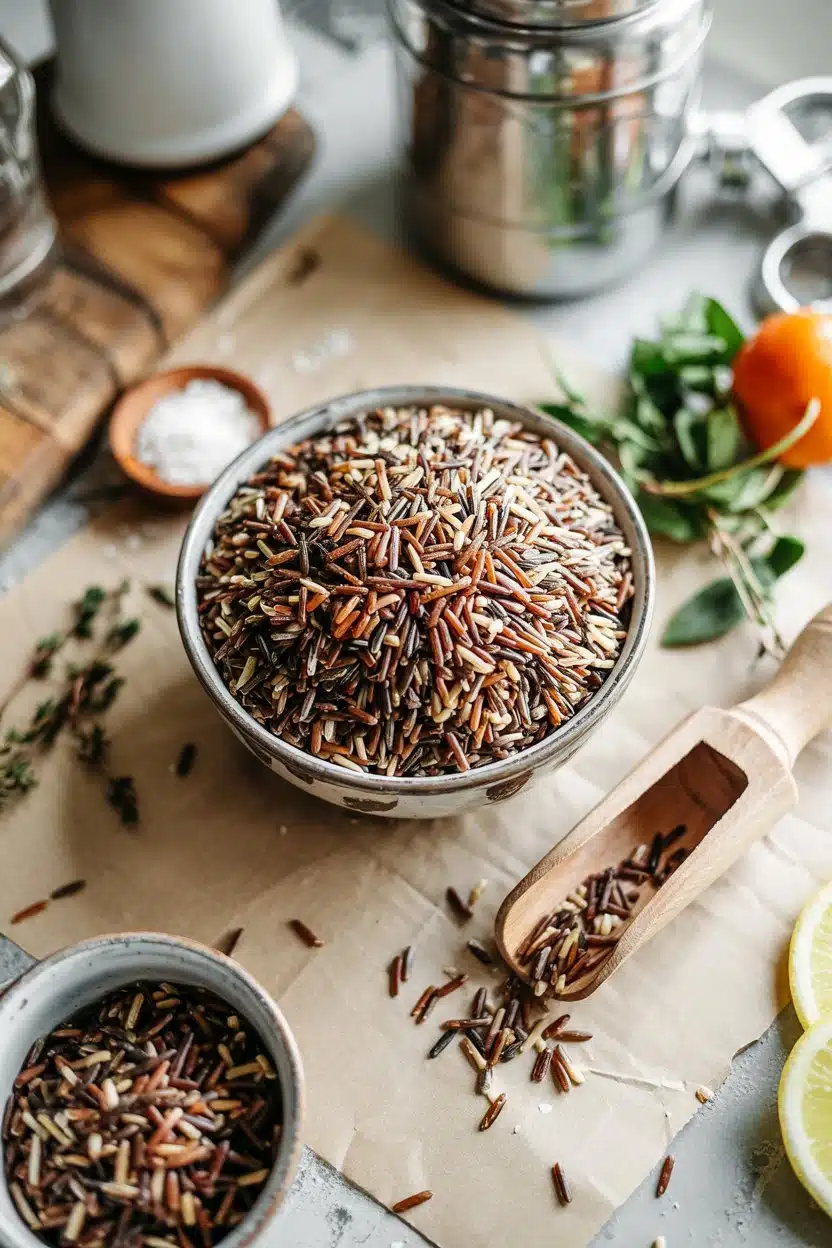
  • Mouthfeel is different. Protein + carbonation creates a slightly filmy, dry texture. Some people don't notice. Others hate it.

  • Citrus flavors win. Grapefruit, lemon, orange. The acidity and bitterness mask sweetener aftertaste. Avoid cola and root beer flavors.

  • Check for caffeine. Barebells packs 200mg per can. Others have zero. Read the label.

Protein Soda vs. Protein Shakes

Different tools for different situations.

Factor Protein Soda Protein Shake
Protein per serving 10-25g 25-42g
Calories 50-100 150-300
Texture Fizzy, light, slightly filmy Thick, creamy, milky
Best time Afternoon, post-workout Meal replacement, morning
Taste Hit or miss Generally good
Portability Ready to drink, no mixing Ready to drink or powder

Pick protein soda when: you want something light and fizzy, you're tired of heavy shakes, you need a quick protein boost without the bulk, or you're on GLP-1 medication and thick drinks feel overwhelming.

Pick a protein shake when: you want maximum protein per serving, you need a meal replacement, or you care more about taste consistency than novelty.

Bottom Line
Protein shakes taste better and deliver more protein per serving. Protein soda is lighter, more portable, and easier to drink when you don't want something heavy. They solve different problems.
Others We TriedBucked Up Peach Mango, Don't Quit Fruit Punch, Don't Quit Grape, Barebells Pineapple Sunrise, Barebells Cherry, Koia Rocket Freeze, Koia Pink Twist, Koia Capri Splash, Protein2O Mixed Berry, Clear Protein Grape, Alani Nu Fruit Punch, Quest Orange Cream. Most had aggressive sweetener aftertaste, chalky mouthfeel, or flavors that didn't work carbonated. Don't Quit Grape and Barebells Pineapple Sunrise came closest to making the list.
Frequently Asked Questions

Is protein soda healthy?

It's a convenient source of protein with low calories and zero sugar. Not a health food. Not unhealthy either. Think of it as a tool to hit your daily protein target, not a replacement for whole food.

How much protein do you need per day?

Most adults need 0.7 to 1.0 grams per pound of body weight. For a 150-pound person, that's 105 to 150 grams per day. One protein soda covers 7 to 17% of that depending on the brand.

Why does protein soda taste weird?

Two reasons. First, the sweeteners (stevia, monkfruit, sucralose) create an aftertaste that lingers. Second, whey protein mixed with carbonation produces a slightly filmy mouthfeel that regular soda doesn't have. Citrus flavors handle both issues better than cola or root beer.

Can you drink protein soda every day?

Yes. The ingredients are the same as a protein shake, just carbonated. If you tolerate whey protein and artificial sweeteners, daily consumption is fine. Check caffeine content if you're sensitive. Barebells has 200mg per can.

What is the best protein soda for weight loss?

Bucked Up. 25g protein at 100 calories with zero sugar and zero carbs gives you the strongest protein-to-calorie ratio. Carbonation also increases the feeling of fullness compared to flat drinks.

« Previous Page
Next Page »

Primary Sidebar

ForkliftKitchen recipe developer

Welcome!

Recipe Developer · 12+ Yr Kitchen Veteran

I'm the recipe developer behind this site, focused on practical, well-tested dishes and smart ingredient swaps. Every recipe is written to be clear, reliable, and easy to make at home.

650+ Recipes
12+ Yrs Exp.
3x Tested
Our Story →

As Featured In

Allrecipes

TASTE OF HOME

Food52

HUFFPOST

Yahoo! Life

Our Editorial Standards

  • ✓ Every recipe tested at least 3 times before publishing
  • ✓ Substitutes verified by real kitchen trials, not guesswork
  • ✓ Reviewed for accuracy by our editorial team
  • ✓ Updated regularly with seasonal info and reader feedback

Most Popular

  • Creamy Lemon Shrimp Linguine
    Creamy Lemon Shrimp Linguine
  • Creamy Garlic Mushroom Chicken
    Creamy Garlic Mushroom Chicken
  • Sesame Ginger Chicken Noodle Bowls
    Sesame Ginger Chicken Noodle Bowls
  • Baked Lemon Herb Fish Fillets
    Baked Lemon Herb Fish Fillets
  • Veggie Loaded Fried Rice
    Veggie Loaded Fried Rice
  • Spicy Garlic Shrimp Stir Fry
    Spicy Garlic Shrimp Stir Fry

Join 8,000+ Home Cooks

Weekly Kitchen Tips

Easy recipes, smart substitutes, and real cooking shortcuts — every Thursday.

Subscribe Free →


Side Dishes

  • What to Serve With Asian Salmon? 15 Best Side Dishes
    What to Serve With Asian Salmon? 15 Best Side Dishes
  • Side Dishes for Strawberry Spinach Salad
    15 Best Side Dishes for Strawberry Spinach Salad
  • Sides for Grilled Cauliflower Steaks to Complete the Meal
    15 Sides for Grilled Cauliflower Steaks to Complete the Meal
  • 15 Sides To Serve With Calabacitas
    15 Best Sides for Calabacitas – Mexican-Inspired Favorites


Substitutes

  • 7 Best Substitutes for Hot Sauce in Marinades & Stir-Fries
    7 Best Substitutes for Hot Sauce in Marinades & Stir-Fries
  • 9 Best Substitutes for Butter in Baking and Cooking
  • 7 Best Substitutes for Tagliatelle for Italian Pasta Dishes
    7 Best Substitutes for Tagliatelle for Italian Pasta Dishes
  • 7 Best Substitutes for Udon Noodles in Asian Stir-Fries
    7 Best Substitutes for Udon Noodles in Asian Stir-Fries


Browse by Topic

  • Side Dishes320
  • Substitutes785
  • Dinner163
  • Air Fryer77
  • Taste Profiles484
  • Food Storage123


Reader Reviews

★★★★★

"Finally a food blog that tells you exactly why a substitute works instead of just listing options."

— Sarah M., via email

★★★★★

"The side dish recommendations are so specific — saved my dinner party twice this month."

— James R., Pinterest comment

★★★★★

"I trust this site more than most because they actually test everything. You can tell."

— Priya K., blog comment

Footer

↑ Back to Top

Forklift Kitchen

We do the heavy lifting so you can enjoy the cooking. Tested recipes, smart substitutes, and perfect pairings—built for real home cooks.

Content

  • Recipes
  • Substitutes
  • What to Serve With
  • Blog

Company

  • About Us
  • Contact
  • Subscribe

Legal

  • Privacy Policy
  • Terms of Service

As an Amazon Associate I earn from qualifying purchases.

© 2026 Forklift Kitchen.