
You spot it at the market, wedged between the fresh ginger and the lemongrass - a pale, knobby rhizome that looks almost familiar but isn't quite right.
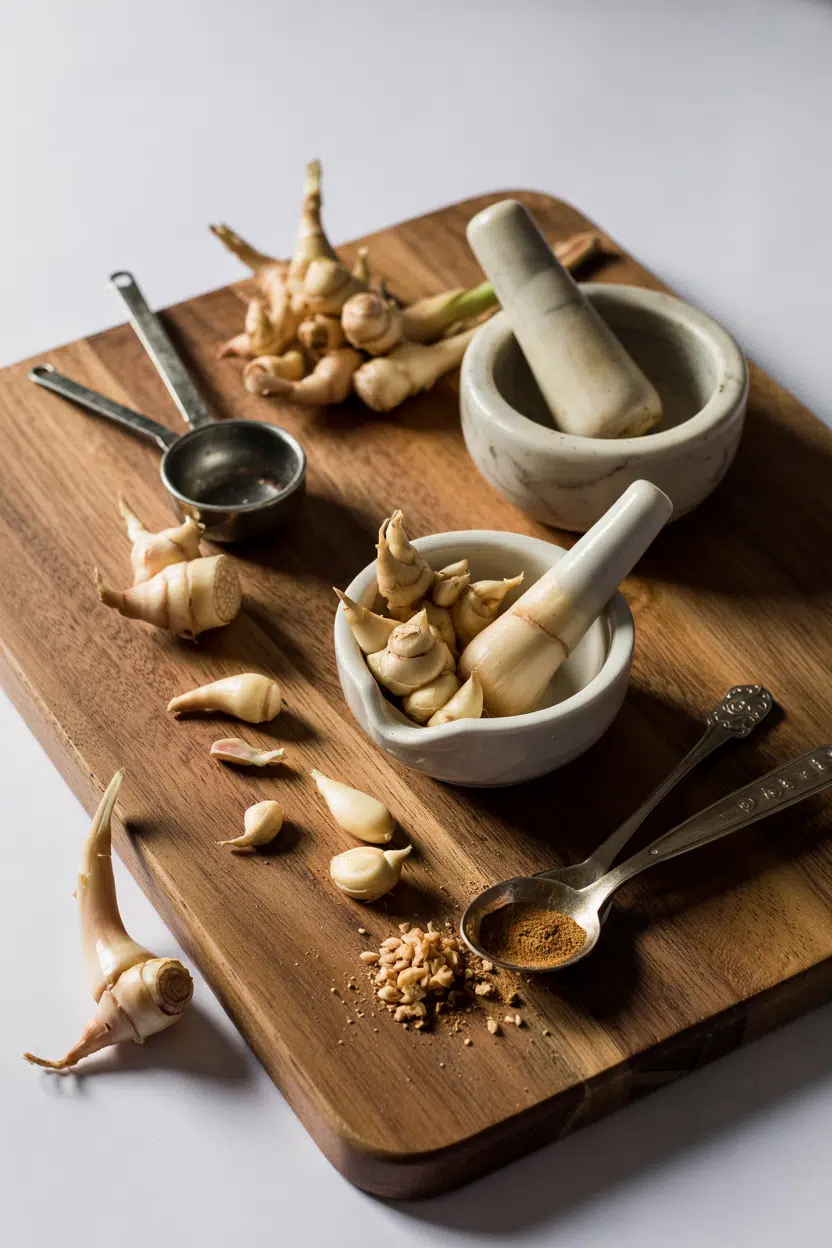
Galangal is Southeast Asia's answer to ginger, though calling it a ginger substitute undersells what it actually does in a broth or curry paste.
Cooks who rely on it for tom kha or red curry paste know it brings something ginger simply can't - a piney, almost medicinal sharpness that anchors a dish without sweetness.
If your recipe also calls for aromatics like kaffir lime leaf stand-ins or replacements for lemongrass, galangal is the third pillar in that aromatic trio.
Galangal is a firm, woody rhizome from Southeast Asia with a peppery, pine-forward flavor sharper than ginger. It steeps in broths and gets pounded into curry pastes - rarely eaten directly. Fresh whole rhizomes keep 2-3 weeks refrigerated, or up to 6 months frozen.
What Is galangal?
Galangal belongs to the Zingiberaceae family - the same family as ginger - but it's a separate species, Alpinia galanga, native to the Malay Archipelago and widely cultivated across Thailand, Indonesia, and Malaysia.
Remember it later
Planning to try this recipe soon? Save it for a quick find later!
It goes by several names: greater galangal, laos in Thai cooking, and lengkuas in Indonesian and Malay kitchens.
Lesser galangal (Alpinia officinarum) is a smaller, more pungent relative, though it's rarely what markets stock.
The rhizome itself is notably denser and harder than ginger. Raw galangal has a pale beige exterior with faint rings, and a cross-section reveals white-to-pinkish flesh with a distinctly fibrous grain.
Two sub-types appear in most markets:
- 🌱 Greater galangal (Alpinia galanga) - the standard culinary form; large, mild enough to use in volume
- 🌱 Lesser galangal (Alpinia officinarum) - smaller rhizome, sharper and more medicinal, primarily used in traditional medicine or spice blends
Fresh galangal is the preferred form for serious cooking. Dried or powdered galangal loses much of its pine-bright character.
What Does galangal Taste Like?
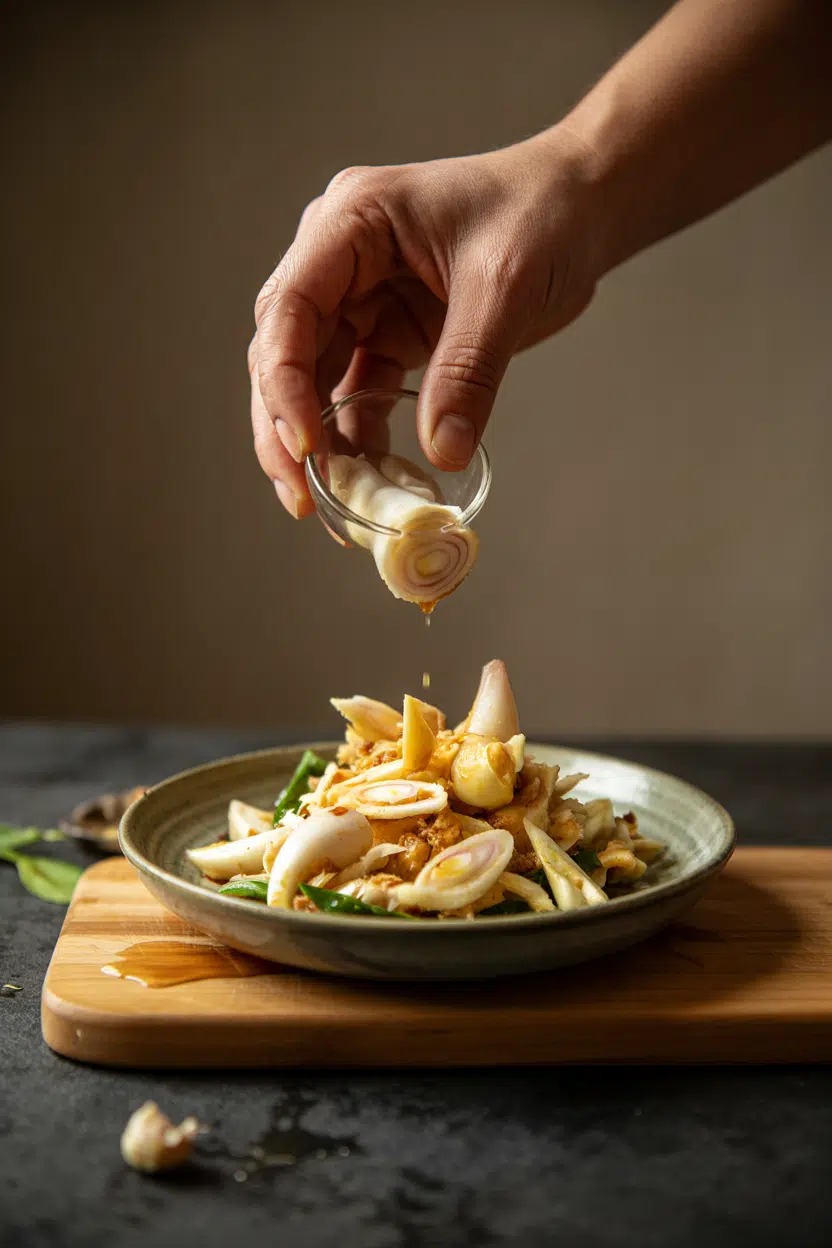
Compared to ginger, galangal hits differently from the first second. Where ginger is warm and slightly sweet, galangal leads with pine resin and pepper, followed by a mild cooling note - almost like a whisper of camphor or eucalyptus.
There's a faint citrus lift at the top, but no sugar-like warmth underneath.
Heat changes it. Simmering mellows the sharpness considerably, releasing the aromatic compounds into surrounding liquid - which is exactly why it works in tom kha. Eaten raw, galangal can feel almost aggressive; steeped long in broth, it becomes a background hum of herbal depth.
How to Use galangal
Galangal rarely gets eaten directly. Its job is to flavor the medium - the broth, the paste, the oil - and step aside.
That structural role shapes how you prep it.
| Method | Best For | Tip |
|---|---|---|
| 🍲 Sliced & Simmered | Tom kha, pho-style broths, stock bases | Cut thick slices; remove before serving - it stays fibrous |
| 🪨 Pounded into paste | Thai red and green curry pastes | Peel and chop first; mortar gives better texture than blender alone |
| 🐟 Poaching liquid | Fish and shrimp, delicate seafood | Pair with [keeping coconut milk fresh](https://forkliftkitchen.com/coconut-milk-shelf-life/) guidance for coconut-based poaches |
| 🥗 Julienned & sautéed | Stir-fries needing aromatic texture | Add at the end - brief heat preserves the bright top notes |
| 🫙 Whole in pickles/achar | Aromatic backbone for preserved vegetables | Bruise lightly before adding to brine |
In Thai cooking, galangal anchors the aromatic trio alongside lemongrass and kaffir lime leaves. Indonesian and Malaysian curries pound it into rempah paste with chili, shallots, and turmeric.
Vietnamese cooks bruise it into simmering stocks for a pine-herbal note that sits behind the star anise.
Galangal pairs cleanly with coconut milk, fish sauce, lime, and chili.
It also works well against shrimp and firm white fish - what makes fish distinct in texture is part of why delicate proteins benefit from this kind of aromatic steeping rather than direct seasoning.
How to Buy and Store galangal
At the market, look for rhizomes that feel dense and completely firm when pressed - no give whatsoever.
The skin should be smooth and pale beige, and a fresh-cut end shows white-to-pinkish flesh.
Walk away from anything with soft nodes, wrinkled skin, or a sour smell.
Much like checking ginger spoilage signs, the nose test matters: fresh galangal smells sharply herbal, not fermented.
Storage by timeline:
- 🧊 Short-term (up to 3 weeks) - wrap unwashed in a paper towel, place in a perforated bag, store in the crisper
- ❄️ Long-term (3-6 months) - slice first, freeze flat, then transfer to a sealed bag; see [storing galangal correctly](https://forkliftkitchen.com/galangal-shelf-life/) for step-by-step guidance
- ⚠️ Peeled or sliced, refrigerated - use within one week; cut surfaces deteriorate quickly
Start With the Broth
If this is your first time with galangal, tom kha soup is the clearest entry point. Slice three or four thick coins, simmer them in coconut milk broth for twenty minutes, then pull them out before serving.
That single step shows you exactly what galangal contributes - and why nothing else in the pot replicates it.
Once you're comfortable with ginger and its flavor as a baseline, the differences become easier to navigate. If you can't find fresh rhizome locally, a look at alternatives to galangal will walk you through your closest options.
Frequently Asked Questions
In Thai dishes like tom kha, it reads as a background piney-herbal depth rather than a forward flavor. Most diners notice it as an almost medicinal warmth without being able to name it specifically - it's rarely eaten directly.
Galangal is noticeably harder and denser, with pale beige skin and faint ring markings. Ginger is softer, more golden-tan, and smells warm and sweet - galangal smells sharp, piney, and slightly medicinal.
In a pinch, yes - but the result shifts noticeably toward sweetness and loses the pine-camphor edge. A small amount of ginger combined with a little black pepper gets closer, though it still won't replicate galangal's specific aromatic signature.
Neither, exactly. It's peppery and sharp with a mild cooling bite - not chili-hot and not truly bitter. The camphor-like note can read as slightly medicinal, which some people misidentify as bitterness.
Tom kha gai, Thai green and red curry pastes, Indonesian rendang, and Malaysian laksa all depend on galangal's specific pine-pepper character. Swapping ginger into these produces a noticeably different - and less authentic - result.



