• Skip to primary navigation
  • Skip to main content
  • Skip to primary sidebar
  • Recipe Index
    • Air Fryer
  • Side Dishes
  • Substitutes
  • About
  • Contact
  • Subscribe

ForkLiftKitchen

menu icon
go to homepage
  • Recipe Index
    • Air Fryer
  • Side Dishes
  • Substitutes
  • About
  • Contact
  • Subscribe
subscribe
search icon
Homepage link
  • Recipe Index
    • Air Fryer
  • Side Dishes
  • Substitutes
  • About
  • Contact
  • Subscribe
×

Blog

How Long Greek Yogurt Lasts After Opening [Storage Guide]

May 11, 2026

Leftover Greek yogurt from last night's dinner - how long does it actually stay good once the tub is open?

Most people guess somewhere around a week, which is close, but the gap between a properly sealed container and a loose lid left in the fridge door can cost you several days.

Greek yogurt keeps for 5-7 days after opening when stored correctly, and an unopened tub can last 2-3 weeks past purchase, often longer if it's toward the back of the fridge.

Like keeping cottage cheese fresh, the details matter more than most people realize.

QUICK SUMMARY

Opened Greek yogurt lasts 5-7 days in the fridge. Unopened, it holds for 2-3 weeks. Freezing extends life to 2 months but causes a grainy texture - plan to use frozen yogurt in cooked dishes or smoothies only.

🧊Fridge (opened): 5-7 days in an airtight container away from the door
❄️Freezer: 1-2 months; expect grainy texture after thawing
⚠️Key rule: Press plastic wrap directly onto the yogurt surface before resealing to reduce whey separation

How Long Does Greek Yogurt Last?

Both full-fat Greek yogurt and nonfat versions behave similarly in the fridge - the strain level matters more than fat content when it comes to shelf life. The main variable is whether the tub has been opened.

Unopened containers hold well because the sealed environment limits oxygen exposure and microbial growth. Once you break that seal, the clock accelerates.

For a broader look at storing yogurt correctly across different styles, the rules share a lot of overlap.

Greek Yogurt Shelf Life
Method State Duration Notes
🧊 Fridge Unopened 2-3 weeks Use-by date applies; store at back of fridge, not the door
🧊 Fridge Opened 5-7 days Transfer to airtight container; surface wrap reduces whey separation
❄️ Freezer Opened 1-2 months Texture becomes grainy; best for smoothies and cooked applications
❄️ Freezer Unopened 2 months Freeze in original tub; expect separation and graininess after thawing

How to Store Greek Yogurt

Refrigerator placement is the single biggest variable most people overlook. The fridge door sees constant temperature swings every time it opens - that accelerates whey separation and shortens usable life.

Keep Greek yogurt toward the back of the middle or lower shelf where temperature stays steadiest.
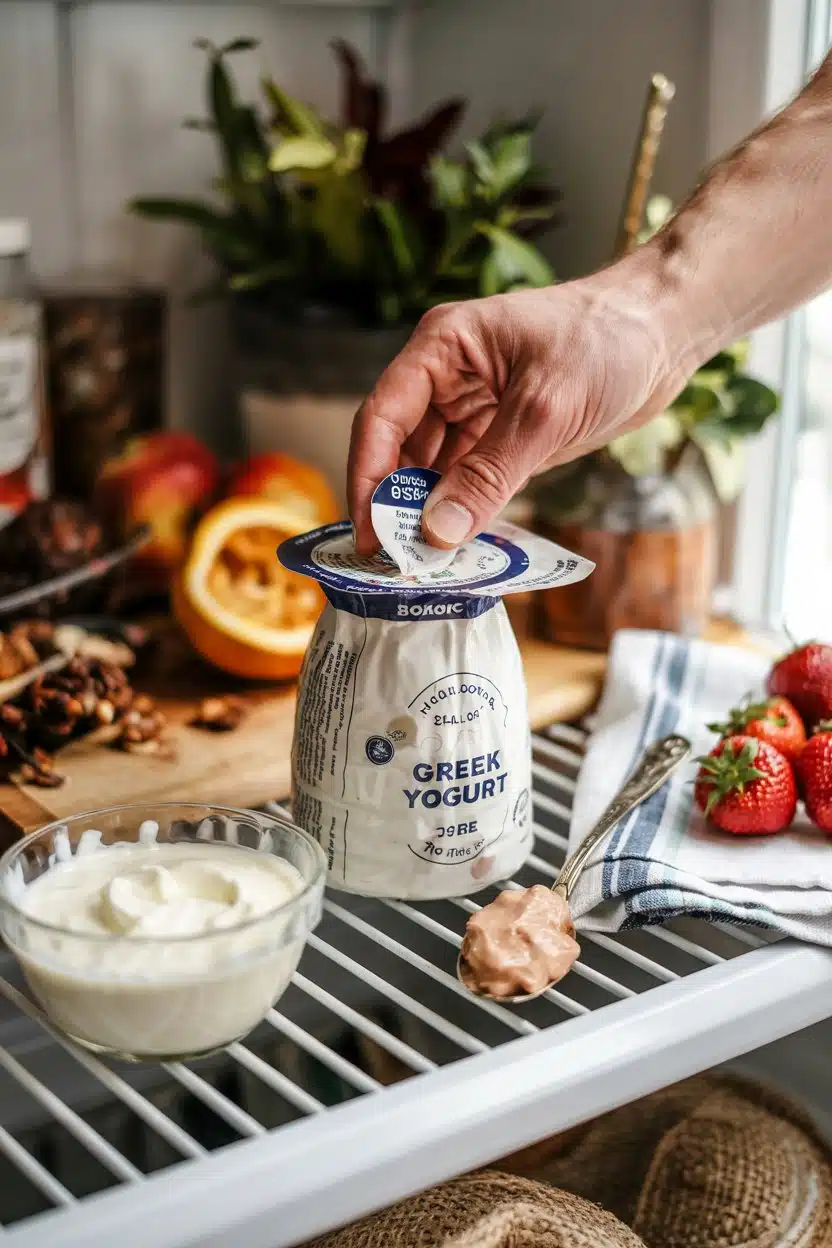
After opening, press a sheet of plastic wrap directly onto the yogurt surface before putting the lid back on. This limits air contact and slows the thin layer of separated whey that forms on top.

Labeling the tub with the date you opened it is also worth the 10 seconds it takes.

🧊
Fridge - Unopened

2-3 weeks

Store in the original sealed tub at the back of the fridge. Don't place on the door. Use-by date is the reliable cutoff.

🧊
Fridge - Opened

5-7 days

Transfer to a glass or BPA-free airtight container, or press plastic wrap onto the yogurt surface and reseal the original tub. Label with the opened date.

Always use a clean spoon when scooping - double-dipping introduces bacteria that cut shelf life noticeably. The same discipline applies whether you're using Greek yogurt as a topping, base, or in dairy recipes where fresh texture matters.

Can You Freeze Greek Yogurt?

Yes, but go in with realistic expectations. Freezing works well for extending life, however the probiotic cultures and protein structure don't survive the freeze-thaw cycle intact, leaving you with a grainy, separated product.

It's still fully usable - just not as a straight swap for fresh yogurt in dips or bowls.

Quick Tip
Freeze Greek yogurt in an ice cube tray first, then transfer the cubes to a freezer bag. Each cube is roughly two tablespoons - easy to grab for smoothies without thawing a full batch. The same method works well for herbs in ice cube trays.
  1. Portion it - Spoon yogurt into shallow, airtight, freezer-safe containers in 1-cup portions, or fill an ice cube tray for smaller amounts. Leave ½-inch headspace for expansion.
  2. Label clearly - Mark the container with the date and whether it's plain or sweetened. Flavors matter when you're pulling from the freezer weeks later.
  3. Freeze immediately - Place containers flat in the freezer. Use within 2 months for best quality; texture degrades further after that.
  4. Thaw in the fridge - Move to the refrigerator 12-24 hours before you need it. Don't rush the thaw at room temperature.
  5. Stir before using - Whisk or stir vigorously to recombine the separated whey. Use within 24 hours once fully thawed.

If the post-freeze texture doesn't work for your recipe, alternatives to Greek yogurt can fill in for fresh applications.

Signs Greek Yogurt Has Gone Bad

A thin film of watery whey on top is completely normal - don't discard it. Whey is a natural byproduct of strained yogurt sitting in the fridge, and it contains protein and lactose worth stirring back in.

What you're looking for are signs that go beyond normal separation.

👀
Visual Signs
  • Green or blue mold colonies on the surface or container sides
  • Darkened or brown streaks through the yogurt
  • Extensive watery separation well beyond a thin whey layer
👃
Smell Signs
  • Sharp, pungent sour smell distinct from yogurt's normal tang
  • Rotten or yeasty odor on opening the container
✋
Texture Signs
  • Slimy film on the surface that doesn't stir away
  • Stringy or unusually stretchy consistency after mixing

Do not scrape mold off Greek yogurt and eat the rest. Discard the entire container.

Getting the Most from Every Tub

A few consistent habits prevent waste and keep every tub usable to the last spoonful. These also apply to similar cultured dairy like storing sour cream correctly.

  • 🏷️ Write "opened on" and today's date on the tub - it removes all guesswork about the 5-7 day window.
  • 🥄 Use a dedicated clean spoon every time. No double-dipping, no wet spoons from the sink.
  • 💧 Don't pour off the whey - stir it back in or save it for smoothies and baking. It's usable liquid.
  • 📦 If you plan to freeze a full container, split it into 1-cup portions first for faster, more flexible thawing.

Frequently Asked Questions

Can you freeze plain Greek yogurt and use it later?

Yes, plain Greek yogurt freezes well for up to 2 months. The texture becomes grainy and the whey separates after thawing, so it's best used in smoothies, soups, or baked goods rather than eaten straight. Stirring or whisking after thawing helps recombine it, but the original creaminess won't fully return.

How long is opened Greek yogurt good for in the fridge?

Opened Greek yogurt stays good for 5-7 days when stored in an airtight container at the back of the fridge. Storing it in the door or using a loosely sealed tub can shorten that window by a day or two due to temperature fluctuations and increased air exposure.

What does bad Greek yogurt smell like?

Spoiled Greek yogurt has a sharp, pungent sourness that goes beyond its normal tangy smell - often with a rotten or yeasty edge. Normal Greek yogurt has a clean, mild tartness. If the smell hits you before you even take a sniff, discard it.

Can you eat the separated liquid (whey) on top of Greek yogurt?

Absolutely - that liquid is whey, and it contains protein and lactose. Stir it back into the yogurt rather than draining it off, or add it to smoothies and baked goods. It only signals a problem when accompanied by off-odors or an unusually large, watery separation alongside other spoilage signs.

Does freezing Greek yogurt kill the probiotic cultures?

Freezing doesn't kill probiotics outright - it puts them into a dormant state. However, the freeze-thaw cycle does reduce their viability, and post-thaw Greek yogurt won't have the same active culture count as fresh. If you're eating Greek yogurt specifically for probiotic benefits, fresh refrigerated yogurt is the better option.
How Long Spinach Lasts and How to Keep It Crisp

May 11, 2026

Spinach is one of those greens that looks fine one day and turns into a slimy mess the next.

You've just brought home a fresh bunch or cracked open a new bag, and how you handle it from this point forward determines whether it lasts five days or five minutes.

Proper storage makes the difference between spinach you actually use and spinach you throw away, and the gap between those two outcomes is mostly technique.

QUICK SUMMARY

Raw spinach lasts 5-7 days in the fridge when stored dry. Opened bagged baby spinach goes faster - use it within 3-5 days. Cooked spinach keeps 3-4 days. Freeze blanched leaves for up to 12 months. Moisture is the main enemy at every stage.

🧊Fridge (raw): 5-7 days loose; 3-5 days once a bag is opened
❄️Freezer: Up to 12 months blanched; 6-8 months raw-frozen
📌Key Rule: Store unwashed, keep dry with paper towels, and never use the fridge door

How Long Does Spinach Last?

Shelf life depends on form, moisture level, and how carefully the cold chain was maintained before you got home. Loose leaves handled gently and kept dry hit the upper end of the range.

Opened commercial bags are more variable - they often trap condensation, so checking daily keeps you ahead of any decline.

If you plan to use spinach in cooking within a week, the fridge is all you need. Anything beyond that, the freezer is the practical answer.

Spinach Shelf Life
Method State Duration Notes
🧊 Fridge Raw, loose leaves 5-7 days Store unwashed or fully dried; breathable container extends life
🧊 Fridge Bagged baby spinach (opened) 3-5 days Commercial bags retain moisture - check daily, use sooner
🧊 Fridge Cooked 3-4 days Cool quickly; shallow airtight containers prevent sogginess
❄️ Freezer Blanched then frozen 8-12 months Best quality; blanching locks color and preserves nutrients
❄️ Freezer Raw-frozen (flash-frozen style) 6-8 months Convenient but more texture loss on thaw than blanched

How to Store Spinach

The single biggest mistake people make is storing washed, wet spinach in a sealed container. Moisture accelerates sliminess faster than almost anything else. Dry leaves last significantly longer than damp ones.

Remove any damaged or yellowing leaves before storing - decay spreads quickly from one leaf to its neighbors. For loose bunches, a quick sort at the start saves the whole bag later.

🧊
Fridge Storage

5-7 days (raw)

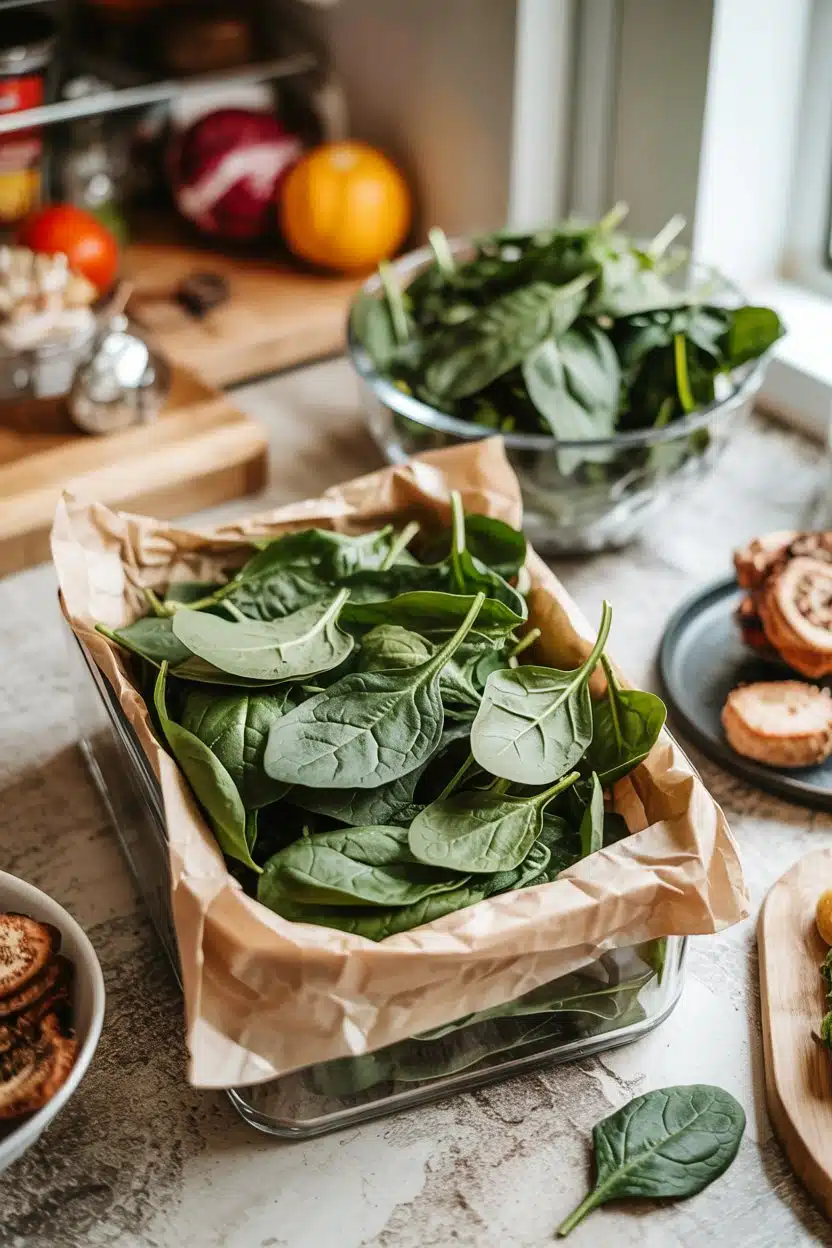
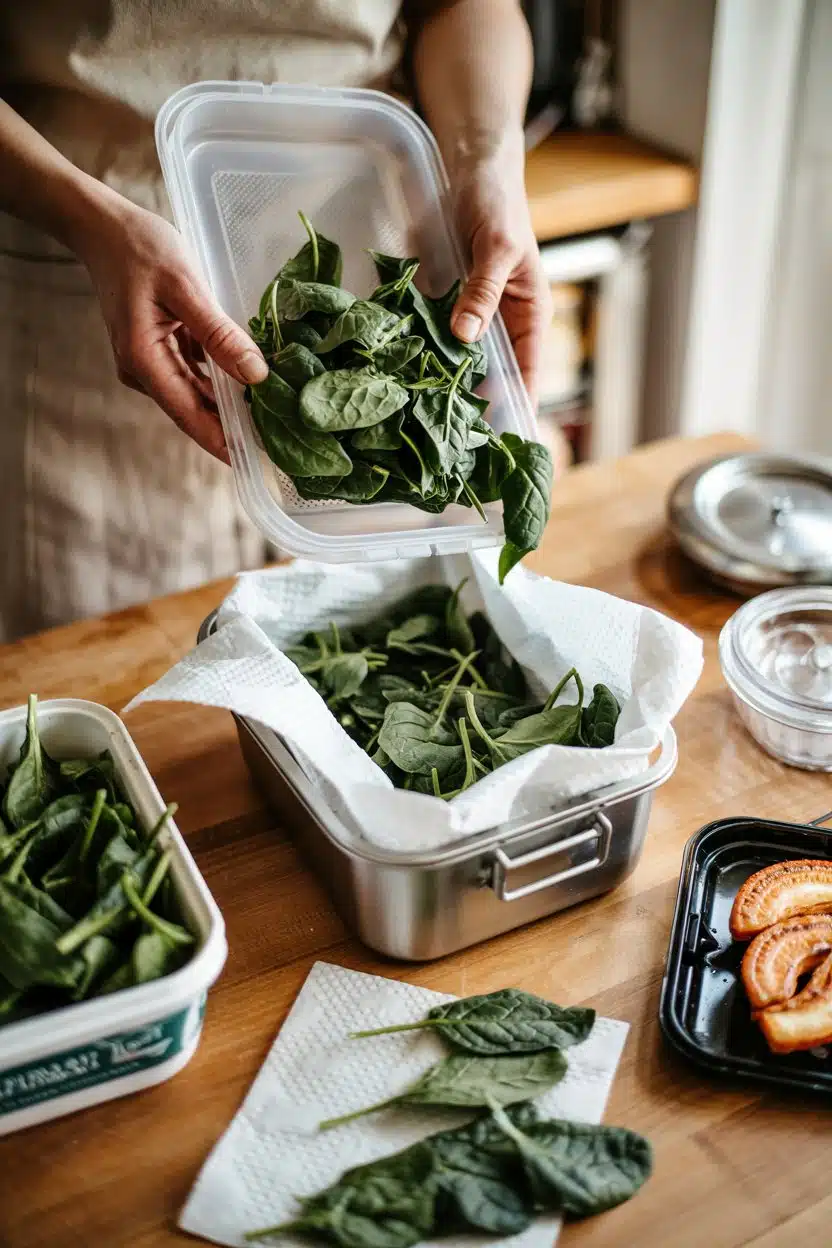
Line a perforated produce bag or plastic container with dry paper towels. Place unwashed spinach loosely inside - don't pack it tightly. Add another paper towel on top to absorb any condensation. Store in the crisper drawer, not the fridge door, where temperature fluctuates.

🥗
Opened Bagged Baby Spinach

3-5 days

Fold the bag tightly and secure with a clip, or transfer to a container lined with paper towels. Check daily and remove any leaves that are starting to turn. If the bag feels damp inside, swap in a fresh paper towel before resealing.

Quick Tip
If you wash spinach before storing, use a salad spinner to remove as much surface water as possible. Even a small amount of residual moisture will cut days off the fridge life.

The crisper drawer maintains higher humidity than the rest of the fridge, which helps spinach stay crisp rather than dry out.

That said, too much humidity without airflow turns the drawer into a condensation trap - the paper towels counteract that.

Can You Freeze Spinach?

Yes, and it's worth doing when you have more than you'll use in a week. Frozen spinach works well in soups, stews, pasta, smoothies, and egg dishes.

Leaves become limp and watery after thawing, so raw salads are off the table - but cooked applications are a clean fit.

Blanching before freezing makes a real difference for anything stored longer than two months. It halts enzyme activity that would otherwise dull the color and degrade nutrients over time. Raw freezing works fine for smoothies where texture barely matters, but blanched is the better call for everything else. For comparison, freezing kale without blanching follows similar trade-offs.

  1. Trim and rinse Remove stems and rinse leaves quickly under cold water.
  2. Blanch Drop into boiling water - 2 minutes for baby spinach, 3 minutes for mature leaves.
  3. Ice bath Transfer immediately to a 1:1 ice bath for the same duration to stop cooking and lock color.
  4. Drain and dry Squeeze out excess water with a clean towel or salad spinner until leaves are as dry as possible.
  5. Flash-freeze Spread in 1- or 2-cup portions on a tray and freeze for 30-60 minutes until firm.
  6. Bag and label Transfer to airtight freezer bags, press out the air, and mark the date.

To thaw, move bags to the fridge overnight. For soups or sautés, add frozen spinach directly - no thawing needed.

Always squeeze out excess water before using thawed spinach in dishes sensitive to moisture, like frittatas or stuffed pasta.

Signs Spinach Has Gone Bad

Spinach gives clear signals before it becomes a food safety issue. Unlike harder vegetables, it doesn't hide spoilage well - you'll see or smell it before you'd ever taste it.

Sliminess is the most common indicator, and it usually shows up first at the center of densely packed leaves.

Spoilage patterns in spinach differ slightly from kale spoilage signs - spinach deteriorates faster and sliminess appears earlier, while kale tends to dry out or yellow more gradually.

👀
Visual Signs
  • Glossy or wet-looking film developing on leaf surfaces
  • Large dark brown or black patches across the blade
  • Widespread yellowing beyond a single leaf or two
  • Collapsed, wilted leaves that don't spring back when pinched
👃
Smell Signs
  • Sharp, sour or fermented odor instead of a mild green scent
  • Off-odors resembling rotten vegetables or ammonia in advanced cases
✋
Texture Signs
  • Sliminess between leaves when rubbed together
  • Mushy stems or leaves that tear instead of snapping
Watch Out
Don't taste-test spinach that smells sour, feels slimy, or shows large dark patches. Discard it. The risk isn't worth a mouthful of confirmation.

Making Spinach Last Longer

A few habits at purchase and prep time will reliably extend shelf life across all storage methods.

  • 🛒 Buy firm, dry bunches or intact sealed bags - avoid bags with visible condensation or soft spots at the store.
  • 🗑️ Pull out damaged leaves immediately after opening; one rotting leaf accelerates the rest.
  • 💧 Use a salad spinner after washing - surface moisture is the fastest route to sliminess.
  • 📦 Freeze in 1-2 cup portions so you pull only what a recipe needs without thawing and refreezing.
  • 🚫 Keep spinach in the crisper drawer, not the door - temperature swings at the door shorten life noticeably.

If you run low on spinach before your next shop, check out alternatives to spinach that work in most of the same dishes alongside spinach.

Frequently Asked Questions

Can you freeze raw spinach for smoothies?

Raw spinach freezes well for smoothies without blanching. Since smoothies blend everything together, the texture loss from skipping the blanching step doesn't matter. Spread clean, dry leaves on a tray, flash-freeze for 30-60 minutes, then transfer to a freezer bag - this prevents clumping so you can grab small amounts at a time.

How long does bagged spinach last after opening?

Opened bagged baby spinach typically lasts 3-5 days in the fridge. Commercial bags are designed to be sealed, so once opened, the modified atmosphere that slows degradation is gone. Transferring the remaining leaves to a container lined with paper towels and checking daily will get you to the upper end of that window.

Can frozen spinach be used in salads?

No - thawed spinach becomes limp and waterlogged, which makes it unsuitable for raw salads. Freezing breaks down the cellular structure of the leaves, and no amount of drying reverses that. Stick to cooked applications: soups, pasta, egg dishes, dips, and grain bowls all handle thawed spinach without issue.

Does blanching spinach before freezing actually matter?

It matters for long-term storage. Blanching deactivates enzymes that break down color, flavor, and nutrients during freezing - without it, spinach stored beyond two months tends to turn dull and develop off-flavors. For short-term freezing under six weeks, raw-frozen spinach performs adequately, especially in smoothies where color isn't a priority.

Why is my spinach slimy in the fridge even though it's not expired?

Sliminess develops from trapped moisture, not just age. Storing washed leaves without drying them first, using an airtight container with no airflow, or keeping spinach near the back of a fridge that cycles humidity are the most common causes. Switching to a paper-towel-lined perforated container and storing in the crisper drawer usually solves the problem.

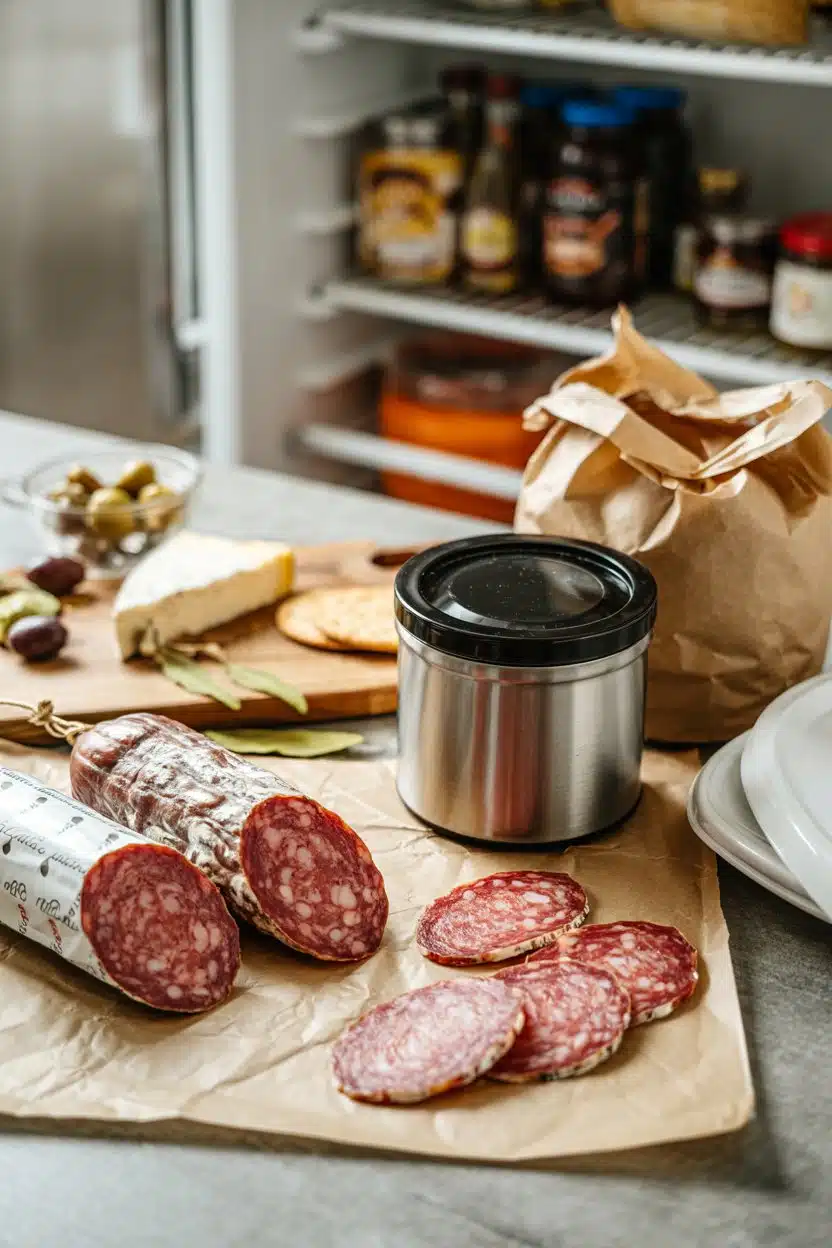
How Long Salami Lasts and How to Store It Safely

May 11, 2026

Buying a stick of salami feels like a smart move until you're staring at half a log three weeks later wondering if it's still good.

The answer depends heavily on whether you've opened it, what type it is, and how you've been storing it - the role salami plays in cured-meat cooking ranges so widely that shelf life does too.

Understanding meat spoilage signs specific to cured meats will save you from tossing something safe or, worse, eating something that isn't.

QUICK SUMMARY

Whole, dry-cured salami keeps 1-3 months in a cool pantry. Once opened, wrap it tightly and refrigerate - it holds 2-3 weeks. Vacuum-sealed packages last up to 6 weeks in the fridge unopened. Freeze sliced salami for 1-2 months, but expect texture changes after thawing.

🥩Pantry (whole): 1-3 months if shelf-stable and casing is intact
🧊Fridge (opened): 2-3 weeks tightly wrapped; fresh salami only 7-10 days
❄️Freezer (sliced): 1-2 months; best used in cooked dishes after thawing
📅Key rule: Label opened packages with the date so you can track the fridge window reliably

How Long Does Salami Last?

Shelf life for salami swings dramatically depending on curing method, casing type, and whether the package has been opened.

A whole, dry-cured salami with its natural casing intact can sit in a cool pantry for up to three months - the salt, nitrates, and low water activity do the preserving work.

Slice into it or break the vacuum seal, and that window shrinks fast.

Deli-style and fresh salami are a separate category entirely. They haven't undergone the same extended drying process, so they behave more like cooked deli meat and need refrigeration from the start.

Salami Shelf Life
Method State Duration Notes
🏠 Pantry Whole (shelf-stable) 1-3 months Keep casing intact; cool, dry, well-ventilated spot away from light
🧊 Fridge Unopened, vacuum-sealed 3-6 weeks Check best-by date; do not open until ready to use
🧊 Fridge Opened or sliced 2-3 weeks Fresh/deli-style salami only lasts 7-10 days
❄️ Freezer Sliced 1-2 months Texture softens; use in cooked applications after thawing
❄️ Freezer Whole 2-3 months Fat may separate on thawing; casing may split

The critical variable is surface exposure. Every slice you cut adds more area for air and bacteria to work on, so leaving salami whole for as long as possible always extends its life.

How to Store Salami

Storage method matters as much as the type of salami you bought. Shelf-stable whole salami should stay at room temperature in a cool, well-ventilated pantry - refrigerating it prematurely can introduce unwanted moisture and affect texture.

Fresh or deli-style salami goes straight into the fridge, no exceptions.

Golden Rule
Slice only what you'll eat within a few days. Keep the remainder tightly wrapped in its original casing to limit surface exposure and slow moisture loss.

For opened or sliced salami, method matters:

  • 🧊 Fridge storage - Wrap cut ends tightly in butcher paper or plastic wrap before placing in an airtight container or vacuum bag.
  • 📦 Sliced portions - Layer in an airtight container or resealable vacuum bag; avoid loose wrapping that lets air circulate.
  • 🏷️ Date labeling - Mark opened packages immediately so you know exactly when the 2-3 week fridge clock started.
  • 🌬️ Odor transfer - Salami's cured fat absorbs fridge smells quickly; a sealed container is not optional for sliced product.

Similar principles apply when storing pepperoni correctly or keeping prosciutto fresh - airtight storage and cold temperatures protect all cured meats after the package is opened.

Can You Freeze Salami?

Yes, salami freezes - though not without trade-offs. Fat marbling in cured salami doesn't survive freezing well; it can turn grainy and separate, and the casing may split on thawing. For eating straight off the board, fresh is always better.

For cooked uses - pizza, pasta sauces, soups, or casseroles - frozen-thawed salami works fine.

Shortcut
Freeze only what you plan to cook with. If you'd eat it on a charcuterie board, don't freeze it - the texture change is too noticeable for snacking.
  1. Wrap whole salami tightly in plastic wrap first, then add a layer of aluminum foil or vacuum-seal to block freezer burn.
  2. Layer sliced portions between sheets of parchment paper before sealing in a freezer bag; this prevents them fusing together.
  3. Label with the date and aim to use sliced salami within 1-2 months, whole within 2-3 months.
  4. Thaw in the fridge overnight inside a sealed container to catch condensation; use within 3 days of thawing.

The same logic applies when keeping vacuum sealed salmon fresh - a proper seal before freezing makes a measurable difference in quality after thaw.

Signs Salami Has Gone Bad

Most spoilage in dry-cured salami is detectable before you take a bite. The tricky part is distinguishing normal surface mold from the kind that signals real deterioration.

White, powdery coating on the outside is penicillium bloom - a benign natural mold common on dry-cured varieties. Wipe it off with a dry cloth or a small amount of white vinegar before slicing.

It's safe and expected. Colored mold is the opposite story.

Signs It's Gone Bad
👀
VisualGreen, blue, or black fuzzy mold through casing · Sticky or slimy sheen on sliced surfaces · Gray-brown meat with darkened fat streaks
👃
SmellSharp sour or putrid odor beyond normal cured tang · Ammonia-like smell indicating protein breakdown
✋
TextureSlimy or tacky surface on slices · Crumbly, flaking meat that falls apart (advanced staleness)
Watch Out
Colored mold, sour or ammonia smell, and sliminess are all discard signals - no exceptions. Unlike hard cheeses, you can't safely cut around mold on cured meat.

Storing Salami the Right Way

Good habits at the start prevent most problems. These four practices cover the widest range of salami types.

  • 🌡️ Know your salami type - Keep shelf-stable whole salami at room temperature; refrigerate deli-style or fresh varieties immediately after purchase.
  • ✂️ Cut as needed - Slicing only what you'll eat in a few days keeps the remainder protected by its casing for longer storage.
  • 🧂 Don't panic over white bloom - Powdery white coating on dry-cured salami is natural; wipe it off and proceed.
  • 🍕 Reserve the freezer for cooked use - Frozen salami works well in sauces, soups, and on pizza; if fresh texture is what you need, consider [replacements for salami](https://forkliftkitchen.com/salami-substitutes/) that hold up better in your specific application.

Frequently Asked Questions

Is white powder on salami safe to eat?

Yes. White, powdery bloom on dry-cured salami is penicillium mold - the same genus used in some aged cheeses. Wipe it off with a dry cloth or a little white vinegar before slicing. Colored mold (green, blue, black) is a different issue entirely and means discard.

How long does salami last in the fridge after opening?

Opened dry-cured salami lasts 2-3 weeks refrigerated when wrapped tightly. Deli-style or fresh salami is shorter - expect 7-10 days. Labeling the package when you open it removes all guesswork.

Can you freeze salami and will it change texture?

Freezing is safe but does affect texture. Fat marbling can turn grainy and the casing may split after thawing. Thawed salami is best used in cooked dishes rather than eaten cold on its own.

How long does vacuum-sealed salami last?

An unopened vacuum-sealed package keeps 3-6 weeks in the refrigerator; always check the best-by date on the label. Once the seal is broken, the 2-3 week opened fridge window applies.

How do you store whole salami at room temperature?

Only shelf-stable, dry-cured whole salami is suitable for room-temperature storage. Keep it in a cool, well-ventilated spot away from direct light, with the natural casing intact to regulate moisture. Fresh or deli-style salami always needs refrigeration.

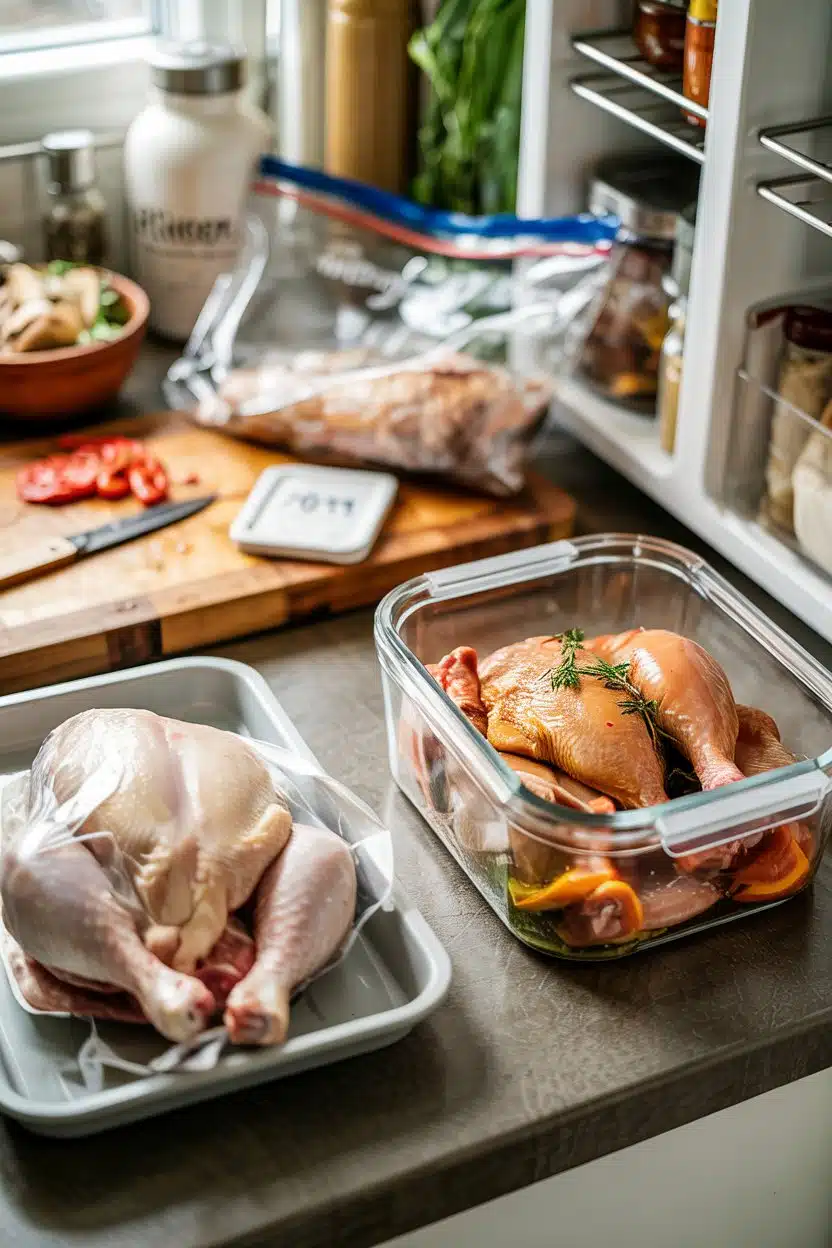
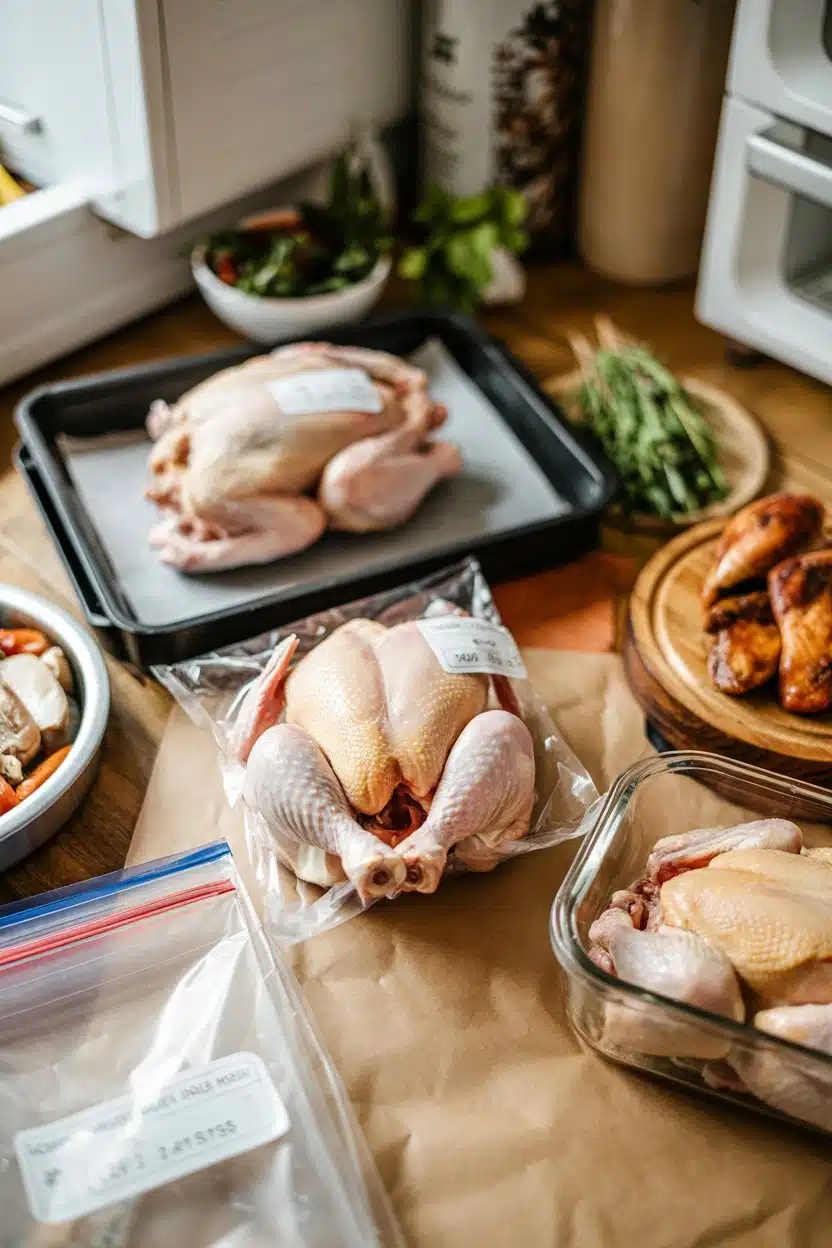
How Long Chicken Lasts Raw, Cooked, and Frozen

May 11, 2026

Fresh from the store, raw chicken has one of the shortest fridge windows of any protein - just 1-2 days before you need to cook it or freeze it. That's not a lot of margin.

Knowing exactly how long both raw and cooked chicken last, and how to store each correctly, keeps your meals safe and your grocery budget intact.

QUICK SUMMARY

Raw chicken lasts 1-2 days in the fridge and up to 12 months in the freezer. Cooked chicken holds for 3-4 days refrigerated or 2-6 months frozen. Never store either at room temperature - bacteria multiply fast above 40°F (4°C).

🧊Fridge (Raw): 1-2 days max at 40°F or below; cook or freeze immediately
🍗Fridge (Cooked): 3-4 days in a shallow airtight container
❄️Freezer: Raw whole up to 12 months; pieces 6-9 months; cooked 2-6 months

How Long Does Chicken (Raw and Cooked) Last?

Chicken's short fridge life comes down to moisture and bacterial load. Raw poultry carries pathogens like Salmonella that multiply quickly even at refrigerator temperatures, which is why the FDA caps raw storage at just two days.

Cooked chicken buys you more time because heat kills surface bacteria, but it's still a four-day limit.

Chicken Shelf Life
Method State Duration Notes
🚫 Pantry Raw or Cooked Not safe Never store chicken at room temperature; bacteria grow above 40°F (4°C)
🧊 Fridge Raw 1-2 days Whole chickens or pieces at 40°F or below; use within 48 hours
🧊 Fridge Cooked 3-4 days Shallow airtight container at 40°F or below
❄️ Freezer Raw (whole) 9-12 months Best quality up to 12 months; wrap tightly to prevent freezer burn
❄️ Freezer Raw (pieces) 6-9 months Pieces lose quality faster than whole birds due to more exposed surface area
❄️ Freezer Cooked 2-6 months Quality best at 2-4 months; proper wrapping is critical

How to Store Chicken (Raw and Cooked)

Raw chicken needs containment above all else. Cross-contamination is the real risk here - juices dripping onto produce or other proteins in your fridge can spread Salmonella silently.

Keep raw chicken on a plate or rimmed tray in its original sealed packaging, on the lowest shelf, away from ready-to-eat foods.

Cooked chicken is more forgiving but still needs proper containers. Shallow airtight containers cool leftovers faster and keep odors contained.

Resealable leakproof bags work equally well for shredded chicken or sauced portions.

🧊
Fridge - Raw Chicken

1-2 days

Leave in original sealed packaging. Place on a plate to catch drips. Store on the lowest refrigerator shelf, away from produce and cooked food. Fridge must be at or below 40°F (4°C).

🍗
Fridge - Cooked Chicken

3-4 days

Transfer to a shallow airtight container within 2 hours of cooking. Don't stack large pieces - spreading them out speeds cooling. Use a leakproof bag for shredded or sauced portions.

Watch Out
Original grocery store packaging is thin and not designed for extended storage. If you're refrigerating raw chicken for even two days, confirm the seal is intact and place a tray underneath - always.

Can You Freeze Chicken (Raw and Cooked)?

Yes, and for most households it's the smartest move when you can't cook raw chicken within 48 hours.

Freezing halts bacterial growth entirely. Raw chicken freezes exceptionally well when wrapped correctly; cooked chicken is a bit more finicky because freezing can make the meat drier and slightly fibrous after thawing.

The grocery packaging that raw chicken comes in is not freezer-proof on its own. It's too thin, and air pockets cause freezer burn within weeks.

Always add a secondary wrap. Just like vacuum sealed salmon's shelf life extends dramatically with proper sealing, removing air from chicken packaging makes a measurable difference in quality.

  1. Pat dry Remove excess moisture from raw chicken with paper towels - less surface water means fewer ice crystals.
  2. Portion Divide into meal-sized amounts before freezing. Flat portions in resealable bags thaw faster and more evenly.
  3. Wrap tightly Cover in plastic wrap or butcher paper first, then place inside a heavy-duty freezer bag or vacuum seal. Remove all excess air.
  4. Label clearly Write the date and type - "raw whole," "raw parts," or "cooked" - on every package. Rotate oldest stock first.
  5. Thaw safely Move frozen chicken to the fridge 24 hours before cooking (12-24 hours for pieces, 24-48 hours for a whole bird). For faster thawing, submerge the sealed bag in cold water, changing it every 30 minutes. Never thaw on the counter.

Signs Chicken Has Gone Bad

Trust your senses here - chicken gives clear signals when it's no longer safe. Don't taste-test it to decide. Any one of these signs is enough to discard the whole piece.

👀
Visual Signs
  • Raw chicken has turned gray-green or shows dark spots on flesh or skin
  • Visible surface sliminess that doesn't wipe away
  • Mold or fuzzy growth on cooked chicken
👃
Smell Signs
  • Sour, ammonia-like, or distinctly rotten odor - raw or cooked
  • Strong sulfuric or putrid notes that persist even after rinsing
✋
Texture Signs
  • Sticky or tacky film on raw chicken that remains after rinsing
  • Cooked chicken that is unusually mushy or breaks into mealy, stringy fibers

Fresh raw chicken is pale pink and slightly moist - not wet, not sticky. A mild smell is normal.

Anything sharper than that means it's time to discard.

Make Your Chicken Last

Proper storage is mostly about a few consistent habits. These are the ones that matter most:

  • 🧊 Freeze raw chicken the day you buy it if you won't cook it within 24 hours - don't wait until day two.
  • 📦 Double-wrap everything going into the freezer: plastic wrap first, then a labeled freezer bag. The original grocery packaging alone causes rapid freezer burn, much like [salmon freezer burn explained](https://forkliftkitchen.com/salmon-freezer-burn/) applies to other proteins too.
  • 🌡️ Always cook chicken to an internal temperature of **165°F (74°C)** - freezing doesn't kill pathogens, heat does.
  • 🗓️ Use a FIFO system: when you add new chicken to the freezer, move the older packages forward so you cook them first.

Frequently Asked Questions

Can you refreeze chicken after thawing?

Yes, but only if the chicken thawed in the refrigerator - not in cold water or the microwave. Fridge-thawed chicken can be refrozen within 1-2 days (raw) or 3-4 days (cooked), though each freeze-thaw cycle degrades texture and increases moisture loss. If you thawed it via the cold-water method or microwave, cook it first before refreezing.

How long can cooked chicken sit out at room temperature?

No more than 2 hours - or 1 hour if the ambient temperature is above 90°F (32°C). Beyond that window, the chicken has spent too long in the bacterial danger zone (40-140°F) to be considered safe. Discard it rather than refrigerate it and reheat later.

Does freezing kill bacteria on chicken?

No. Freezing halts bacterial growth but does not kill pathogens like Salmonella or Campylobacter - they survive in a dormant state and become active again once the meat thaws. Cooking chicken to an internal temperature of 165°F (74°C) is what actually destroys harmful bacteria.

How do you tell if frozen chicken has gone bad?

Check for heavy freezer burn - large white or grayish patches and significant ice crystals inside the bag - which signals moisture loss and quality degradation. After thawing, apply the same spoilage tests: off smell, gray or green discoloration, and tacky texture all indicate the chicken should be discarded. Chicken stored beyond its quality window (e.g., raw pieces past 9 months) may still be technically safe but will have noticeably compromised texture.

Is it safe to marinate chicken in the fridge for 2 days?

Yes, marinating in the fridge for up to 2 days falls within the safe raw chicken window. However, highly acidic marinades - those with a lot of citrus juice or vinegar - begin to break down the muscle proteins after around 24 hours, resulting in a mushy texture on the surface. For best results, keep marinating time to 2-12 hours for pieces and no more than 24 hours for larger cuts.

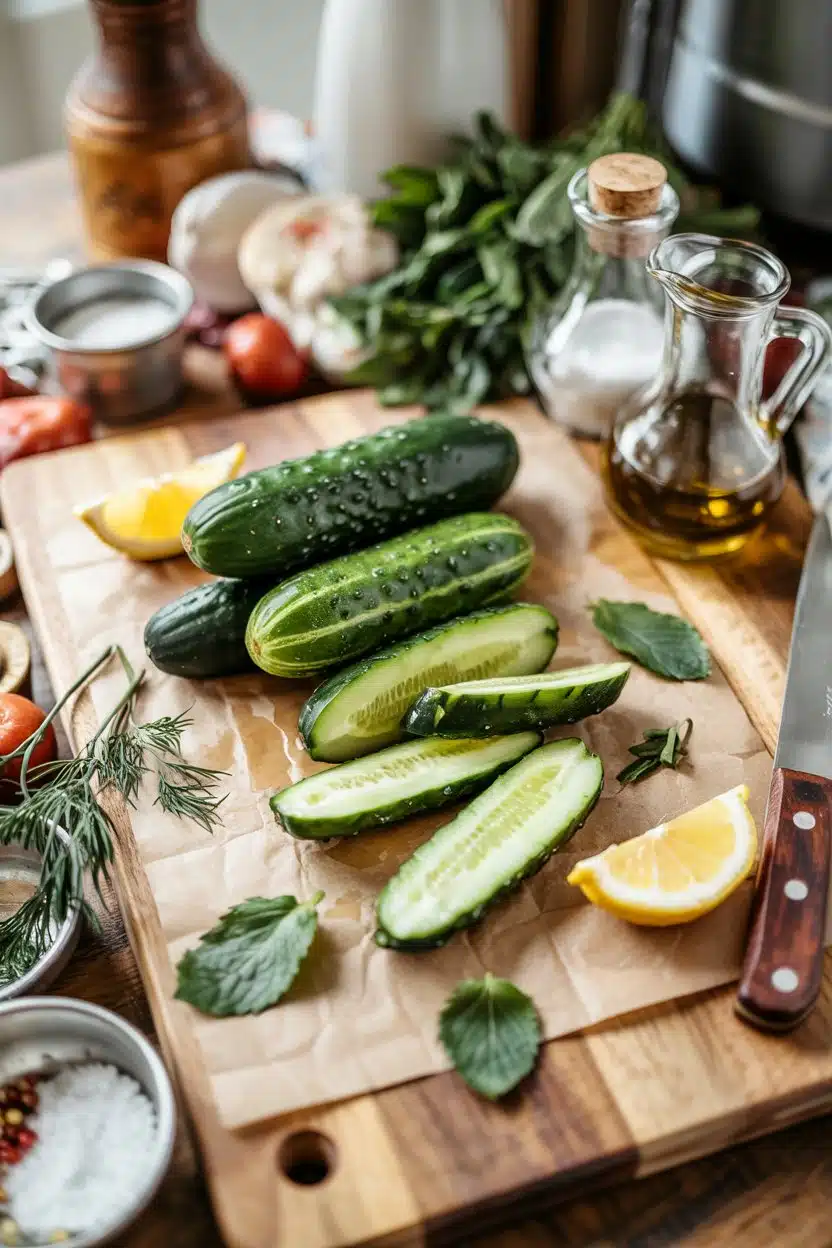
What Is Persian Cucumber? Taste, Texture & Uses

May 10, 2026

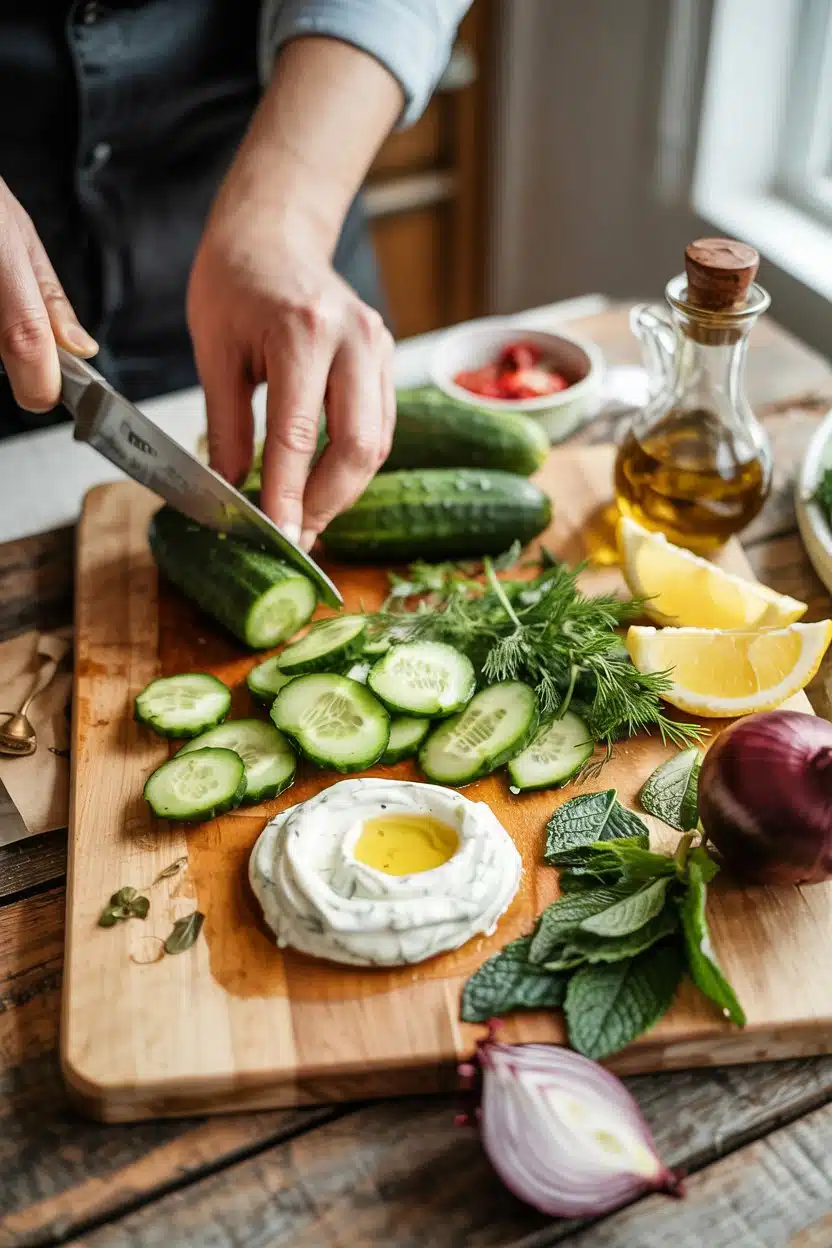
You spot them at the farmers market or grocery store - small, smooth-skinned, almost toy-like next to the standard slicing cucumbers - and wonder if they're just a marketing gimmick.

They're not. Persian cucumbers are a distinct variety with a tighter seed cavity, thinner skin, and noticeably cleaner flavor than the cucumbers most of us grew up eating.

If you've been swapping out cucumber varieties interchangeably without much thought, this one is worth a closer look.

QUICK SUMMARY

Persian cucumbers are a small, thin-skinned variety with crisp flesh, very few seeds, and a mild, clean flavor. They're best eaten raw in salads and dips, quick-pickled, or used as a crunchy addition to mezze spreads. Refrigerated whole, they keep up to two weeks.

🥒What it is: Small cucumber variety, 4-6 inches, thin-skinned with minimal seeds
👅Flavor: Mild, clean, slightly sweet with faint mineral finish
🍽️Best uses: Raw salads, yogurt dips, refrigerator pickles, mezze platters
📦Shelf life: 1-2 weeks whole; sliced lasts 3-4 days refrigerated
🌍Origin: Iran and the Eastern Mediterranean; also called mini cucumber or Iranian cucumber

What Is Persian Cucumber?

Persian cucumbers originate from Iran and the broader Eastern Mediterranean, where they've been cultivated for fresh eating rather than long-term preservation.

They belong to the same summer squash family as all cucumbers, but their specific traits set them apart: a thin, edible skin that doesn't need peeling, a compact 4-6 inch length, and a seed cavity so small it barely registers.

You'll find them sold under several names - mini cucumber, Iranian cucumber, kari olivetti, or sometimes Persian pickling cucumber. That last name is a bit misleading, since their real strength is fresh eating.

They do pickle well in short refrigerator runs, however, rather than the long-brined style suited to Kirby cucumbers.

👅
Flavor
mild
clean
slightly sweet
faint minerality
✋
Texture
crisp
snappy
fine-grained
👃
Aroma
fresh green
subtle blossom
Flavor Intensity
Mild
 

What Does Persian Cucumber Taste Like?

The flavor is clean and restrained - mild cucumbery sweetness up front, followed by a faint mineral note and just a whisper of bitterness near the skin.

That bitterness is far gentler than what you'd find in a garden-variety slicing cucumber, and it disappears almost entirely when you slice thin.

Compared to an English cucumber, the Persian variety reads as slightly sweeter and less watery. The reduced moisture isn't just a textural detail; it means the flavor concentrates slightly without tipping into sharpness.

Raw slices hold their crunch longer in salads and won't dilute dressings.

Heat softens everything. A brief sauté or inclusion in a warm grain salad mutes the sweetness and turns the flesh tender.

For that reason, most preparations here keep them raw or barely touched by heat.

How to Cook with Persian Cucumber

Their thin skin and tight seed cavity mean you can slice, ribbon, or dice without peeling or de-seeding.

That's a real practical advantage over thicker-skinned varieties.

They work across a wide range of preparations, from the Persian yogurt dip mast o khiar (where they're diced fine with dill, garlic, and dried rose petals) to quick Mediterranean salads with feta and olives.

If you need replacements for labneh cheese in a mezze spread, the cucumbers still anchor the platter well alongside other dips.

How Persian Cucumber Is Used
Method Best For Tip
🥗 Raw (sliced) Green salads, mezze platters, crudité Keep skin on for crunch and color
🥗 Raw (diced) Mast o khiar, tomato-feta salads Salt lightly and drain if mixing into yogurt
🥒 Quick Pickled Refrigerator pickles, sandwich stacks Ready in 24-48 hours; no canning needed
🍳 Lightly Sautéed Warm grain salads, stir-fry finishes Add at the very end to avoid mushiness
🌿 Ribboned Wraps, flatbreads, rice paper rolls Use a vegetable peeler for even, long strips
🇮🇷 Persian
🫒 Middle Eastern
🇬🇷 Mediterranean
🌏 Southeast Asian
Pairs well with
🧀 labneh or feta
🌿 dill and mint
🍋 lemon and lime
🧄 garlic and olive oil
🫙 sumac and za'atar
🥢 sesame oil and soy sauce
Quick Tip
Avoid heavy cream-based sauces and long cooking times. Both mask the clean flavor and destroy the texture this variety is known for.

How to Buy and Store Persian Cucumber

Firmness is the main signal. Pick cucumbers that feel solid end to end, with smooth, bright green skin and no soft spots, yellowing tips, or stems pulling away from the flesh. Smaller specimens within the 4-6 inch range tend to have the tightest seed cavities.

Store them unwashed in a perforated plastic bag in the refrigerator crisper.

Washing before storage introduces moisture that speeds up softening, so rinse only right before you use them.

Whole cucumbers keep for 1-2 weeks this way.

Once sliced, plan to use them within 3-4 days.

Refrigerator pickles, once made, hold well for 1-2 weeks - you can read more about freezing Persian cucumber if you need to extend that further.

Start Here With Persian Cucumber

New to this variety?

Begin raw.

Slice one thin, fan it over labneh with a drizzle of olive oil and a pinch of za'atar, or toss it into a quick salad with tomatoes and feta.

That single step shows you exactly what the variety does - clean crunch, mild sweetness, no bitterness getting in the way.

Once you have the baseline, the jump to mast o khiar or quick refrigerator pickles is straightforward.

These cucumbers are also a natural fit when you're looking for replacements for Persian cucumber in a recipe and need to understand what you're actually matching.

Frequently Asked Questions

Are Persian cucumbers seedless?

Not entirely, but they're close. Persian cucumbers have very small, immature seeds distributed in a tight central cavity - so small that most people don't notice them. You don't need to scoop them out for any standard preparation, which is one reason this variety works so well sliced directly into salads or dips.

Can you substitute Persian cucumbers for English cucumbers?

Yes, and it's usually a direct swap by weight or count. Persian cucumbers are slightly sweeter and less watery than English cucumbers, so the result will be a touch crisper and the flavor marginally more concentrated. For full guidance on [swapping out cucumber](https://forkliftkitchen.com/cucumber-substitutes/) varieties in different recipes, the differences in water content are worth accounting for in dressings and yogurt-based dishes.

How long do Persian cucumbers last in the fridge?

Whole, unwashed Persian cucumbers last 1-2 weeks stored in a perforated bag in the crisper drawer. Once cut, they decline faster - use sliced cucumber within 3-4 days. The biggest mistake is washing them before storage, which traps surface moisture and accelerates softening.

Are Persian cucumbers sweeter than regular cucumbers?

Yes, noticeably so compared to standard garden slicing cucumbers, which carry a more pronounced grassy bitterness. The difference is subtler against English cucumbers - Persian varieties come out slightly sweeter but not dramatically so. That mild sweetness is why they pair well with sharp or acidic ingredients like sumac, lemon, and feta without needing any added sugar.

Do you need to peel Persian cucumbers before eating?

No. The skin is thin, tender, and free of the waxy coating applied to many conventional cucumbers for shelf life. Keeping the skin on adds color, a slight textural snap, and a small nutritional boost from vitamin K. Peeling is only worth considering if a recipe specifically calls for it, such as a very smooth chilled soup.

What Is Immersion Blender? [Taste, Uses & More]

May 10, 2026

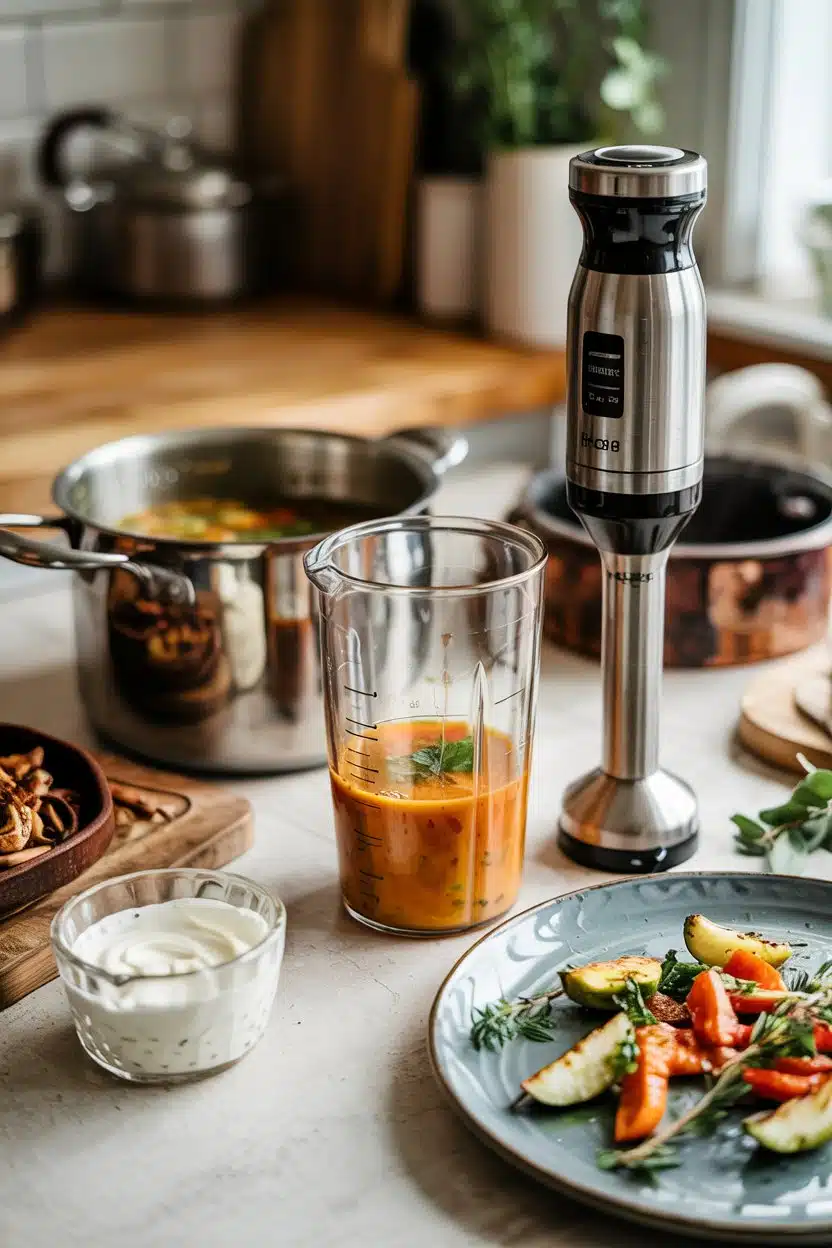
An immersion blender does something no other handheld tool can replicate cleanly: it brings the blade to the food rather than the food to the blade.

That distinction matters most with hot liquids - a pot of squash soup doesn't need to be ladled into a countertop blender in batches, cooled, then reheated.

The stick blender drops in, the motor runs, and the soup is done.

QUICK SUMMARY

An immersion blender is a handheld electric tool that blends, purées, emulsifies, and froths directly in the cooking vessel. It has no flavor of its own but produces smoother, creamier textures and intensifies the aromas already present in food. Built for speed and less cleanup.

🔌Category: Handheld electric kitchen tool, also called a stick blender or hand blender
🍲Best For: Hot soups, emulsified dressings, frothy milk, quick bean purées
⚡Power Range: 200-600 watts covers most home tasks reliably
📅Lifespan: 3-10 years depending on motor quality and frequency of use
✅Skip it when: Crushing whole ice or processing hard nuts - blade guard can jam or crack

What Is an Immersion Blender?

The immersion blender was developed in Europe in the mid-20th century as a commercial kitchen solution for pureéing large volumes of hot food without transferring them between vessels.

It reached home kitchens decades later and is now sold under several names: stick blender, hand blender, wand blender, and immersion mixer.

The core design is consistent - a motor housing held in the hand, a long detachable shaft, and a bell-shaped blade guard at the tip that houses the cutting blades and reduces splatter.

Unlike countertop models, the immersion blender is not built for dry grinding or high-volume crushing. It processes foods in situ: soups in the pot, vinaigrettes in a jar, sauces in the pan.

That single design constraint defines everything it does well.

👅
Flavor
Neutral
Flavor-integrating
✋
Texture
Smooth
Creamy
Aerated
👃
Aroma
Releases herb oils
Intensifies spice
Flavor Intensity
Mild
 

What Does an Immersion Blender Taste Like?

The blender itself contributes nothing to flavor - it's inert. What changes is how existing flavors behave after processing.

Breaking cell walls in cooked vegetables releases more of their water-soluble compounds into the liquid, which can make a tomato bisque taste more intensely of tomato than the same soup left chunky.

Herbs respond noticeably. Running a stick blender through a basil-oil mixture ruptures cell walls and drives aromatic oils into the fat.

The result is a more integrated, greener-tasting sauce than hand-chopping produces.

There is one edge case worth knowing. An overheated or worn blade guard can leave a faint metallic note in delicate foods like whipped ricotta or cold smoothies.

That's a sign the blades need replacing, not that the technique is wrong. Fresh, sharp blades on a properly maintained unit produce no off-flavors whatsoever.

How to Use an Immersion Blender

The most common application is hot soup - submerging the blade guard fully before running the motor prevents splatter.

Keep the blender near the bottom of the pot and move it slowly upward as the soup smooths.

For emulsification, a tall, narrow jar works better than a wide bowl; the vertical column of liquid keeps the blade guard submerged and builds a stable mayonnaise or vinaigrette faster than a whisk can.

Quick Tip
Always submerge the blade guard completely before switching the motor on. Starting with the blade at the surface pulls air into the food and creates foam where you don't want it.

Pulse chopping - short bursts rather than continuous run - gives you coarse texture control. It's the right technique for hummus made from canned beans or rough-chopped vegetables for baby food.

How an Immersion Blender Is Used
Method Best For Tip
🍲 In-pot blending Hot soups, bisques, potato-leek, squash Keep blade guard submerged; move slowly upward
🫙 Jar emulsifying Mayonnaise, vinaigrettes, hollandaise base Use a tall narrow jar; start at the bottom
🫧 Frothing Milk foam for lattes, cappuccinos Angle the shaft at the surface to draw in air intentionally
💥 Pulse chopping Bean dips, baby food, rough vegetable purée Short bursts give coarse texture; continuous run smooths fully
🍳 Pan sauce finishing Gravies, deglazing liquids, herb sauces Blend off heat if the sauce is cream-based to avoid breaking
🇫🇷 French
🇮🇹 Italian
🫙 Middle Eastern
🏠 Everyday home cooking
Pairs well with
🍅 Tomato soup
🥚 Egg and oil for mayo
🫘 Cooked beans
🌿 Fresh herbs
🥛 Milk for frothing
🍌 Soft fruits

If you're weighing whether a stick blender covers your needs or you need something else entirely, it helps to check alternatives to immersion blender before committing to a method.

How to Buy and Store an Immersion Blender

Look for a stainless-steel detachable shaft - it tolerates heat from hot soups without warping and cleans more thoroughly than plastic. Motor power between 200 and 600 watts handles everyday tasks from smoothies to thick bean purées.

Variable speed control matters more than raw wattage; being able to run slow prevents air incorporation and splatter in shallow vessels.

Best Pick
A model with an easy-disconnect shaft, dishwasher-safe blade guard, and variable speed control covers the full range of home tasks without overpaying for commercial-grade power.

Store the unit with the shaft detached or assembled upright in a drawer, keeping the blade guard protected from contact with other utensils. A wall hook or utensil crock works well for frequent-use kitchens.

Stored this way, a well-maintained immersion blender runs reliably for 3-10 years.

Start Here If You're New to Stick Blenders

Buy for the tasks you already do, not the ones you imagine doing.

Hot soups, quick dressings, and frothed milk for coffee are the daily workhorses - a 300-watt model with a detachable stainless shaft handles all three cleanly.

If your cooking leans toward thick bean dips or fibrous vegetable purées, step up to 500 watts and confirm the blade guard is replaceable.

That's the whole decision.

Frequently Asked Questions

Does an immersion blender change the taste of food?

The blender itself adds no flavor, however it changes how existing flavors are perceived. Breaking cell walls releases more aromatic compounds into the liquid, which concentrates flavor and makes sauces taste more integrated. A worn or overheated blade can occasionally leave a faint metallic note - that signals the blade guard needs replacing.

Is an immersion blender the same as a hand blender?

Yes - immersion blender, hand blender, stick blender, and wand blender are all names for the same tool. The terminology varies by region and brand, with "stick blender" more common in the UK and Australia and "immersion blender" more common in North America. The design and function are identical.

Can you froth milk with an immersion blender?

Yes, and it works well for light foam. Warm the milk first, then angle the blade guard at the surface of the liquid so the blender draws in air deliberately. The foam won't be as dense as a steam wand produces, but it's adequate for home lattes and cappuccinos.

Can immersion blenders purée hot liquids safely?

That's the task they're specifically designed for. Keep the blade guard fully submerged before switching the motor on and move the blender slowly through the pot to avoid splatter. Unlike countertop blenders, there's no sealed container where steam pressure can build, so the risk is much lower.

What wattage do I need for blending soups?

200-300 watts handles thin to medium-bodied soups like tomato bisque or potato-leek without issue. For thicker purées - dense squash, cooked beans, or root vegetables with little added liquid - 400-600 watts produces a smoother result and puts less strain on the motor over repeated use.

What Is Food Processor? [Taste, Uses & More]

May 10, 2026

Most home cooks assume a food processor is just a faster knife - a machine that chops and nothing more.

That's the part they get wrong.

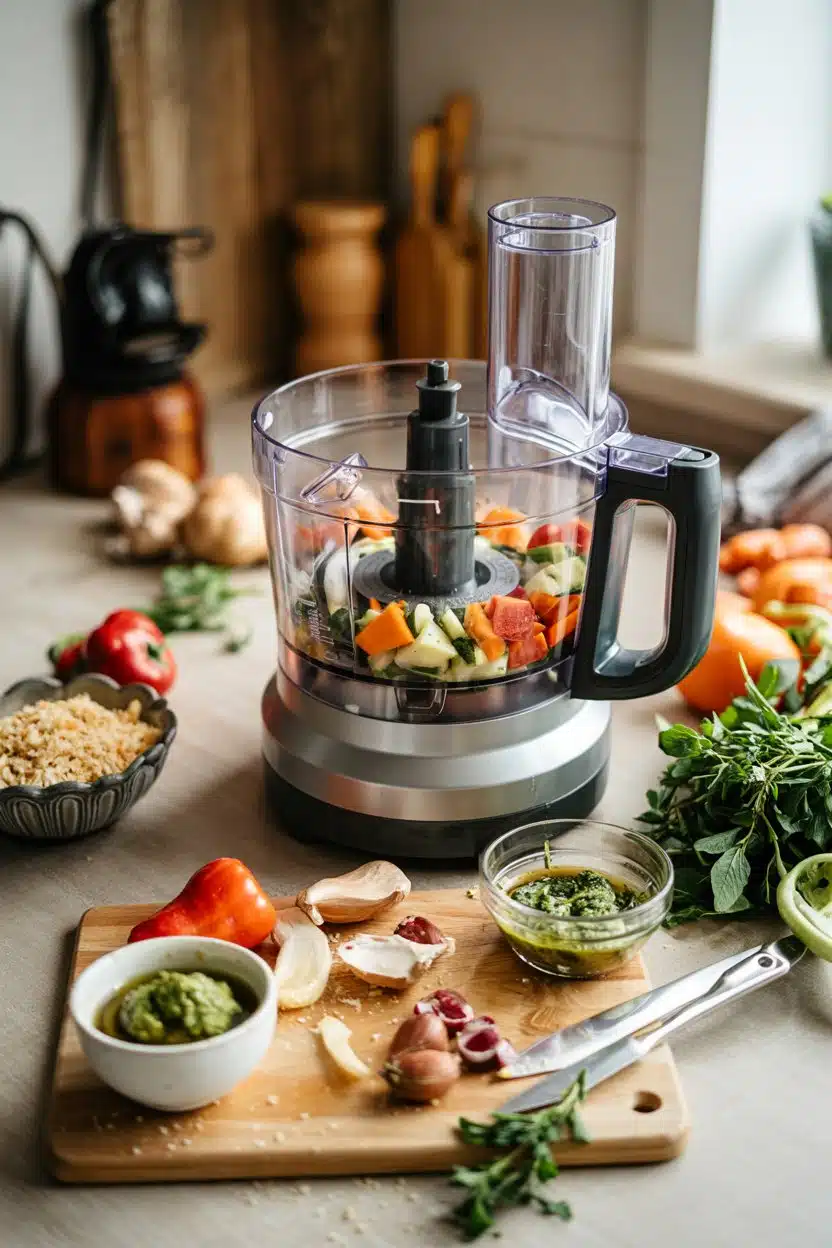
A food processor is a motorized prep platform that chops, shreds, purées, emulsifies, and kneads with interchangeable blades, all from the same wide-mouthed bowl.

Understanding what it actually does - and what it doesn't - changes how you stock your counter.

QUICK SUMMARY

A food processor is a countertop appliance, not an ingredient - it contributes no flavor of its own. Its value is mechanical: it standardizes texture, speeds prep, and handles tasks like emulsifying vinaigrettes or making nut butter that most knives and bowls can't replicate efficiently.

🔧Category: Motorized countertop appliance for food prep and processing
👅Flavor Impact: Neutral - no flavor added; metallic notes possible from worn blades
🍽️Best Uses: Hummus, pesto, nut butter, pastry dough, slaw, purées
⏱️Shelf Life: Motor unit lasts 5-15 years; plastic bowl parts 1-3 years
🛒Buy For: High-volume prep, emulsions, doughs, or anyone who chops daily
⚠️Avoid: Large volumes of hot liquid, whole frozen blocks, or uncut bones

What Is a Food Processor?

Developed in France in the early twentieth century, the food processor arrived in home kitchens as a way to mechanize the prep work that takes up the bulk of cooking time.

It's classified as food prep equipment, not a cooking appliance - it doesn't apply heat.

The machine centers on a wide-mouthed bowl, a lockable lid with a feed tube, and a rotating drive shaft that accepts different attachments.

The core attachment is the S-shaped blade (also called the chopping blade), which handles most pulsing and puréeing tasks.

Swap in a shredding disc and the machine shreds cabbage or hard cheese in seconds.

Add a dough blade and it kneads small batches of pastry or bread dough in one to two minutes.

You may also see it called a processor, food chopper, or mini chopper, though the mini versions lack the bowl capacity for larger tasks.

👅
Flavor
Neutral
Possibly metallic (worn blade)
✋
Texture Output
Uniform chop
Smooth purée
Emulsified
👃
Aroma
Neutral when clean
Faint plastic (new unit)
Flavor Intensity
Mild
 

What Does a Food Processor Taste Like?

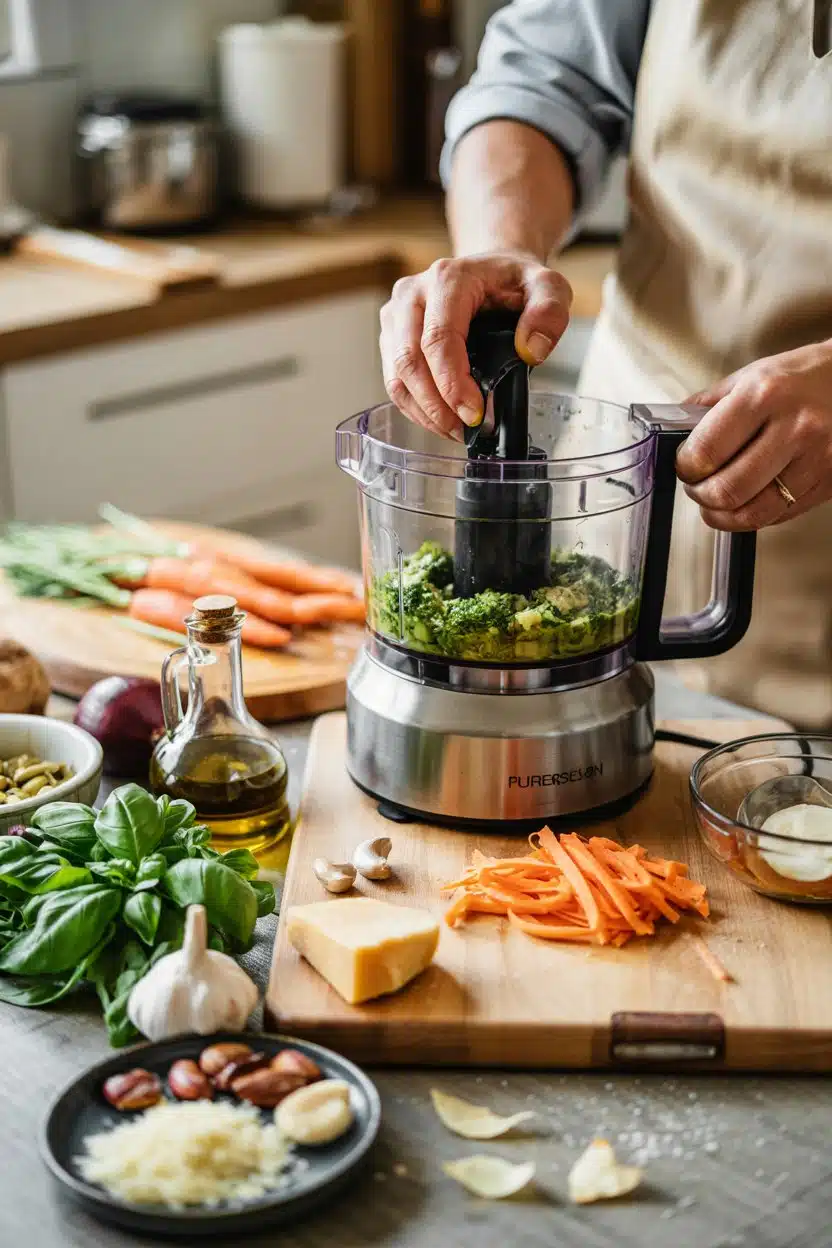
A food processor has no flavor. What you taste when using one is entirely the ingredient being processed - roasted almonds become nut butter, basil and olive oil become pesto - with the machine itself contributing nothing.

That's the baseline.

Two exceptions exist. A corroded or worn S-blade can leave faint metallic traces in acidic preparations like vinaigrettes or citrus-heavy purées.

New units sometimes carry a faint plastic or chemical edge in the first few uses, which dissipates after washing and a few runs with neutral ingredients.

Processing also changes how you perceive flavor indirectly.

Puréeing roasted squash into a completely smooth soup releases more surface area, which concentrates sweetness on the palate compared to eating it cubed.

Fine-grinding nuts into butter builds intensity that coarsely chopped nuts don't deliver.

The machine shapes texture, and texture shapes taste perception - but the appliance itself stays out of the way.

How to Use a Food Processor

The pulse function is the most underused feature. Short, controlled bursts - typically 8 to 12 one-second pulses - produce a coarse, even chop for onions, carrots, and celery without turning them to mush.

Continuous run is reserved for smooth outcomes: 30 to 60 seconds for soup purées, 2 to 6 minutes for nut butter once the oils release.

For comparing immersion blender vs food processor options, the distinction often comes down to volume and texture precision - the food processor wins on batch size and uniformity.

When you need replacements for food processor tasks, the method matters as much as the tool.

How a Food Processor Is Used
Method Best For Tip
🔪 Pulse Mirepoix, pastry crumbs, breadcrumbs, slaw Use 1-second bursts; check after every 3-4 pulses
🌀 Continuous Run Hummus, nut butter, smooth soup purées, pesto Scrape sides halfway through for even texture
🧀 Shredding Disc Cabbage for slaw, hard cheese, carrots Apply steady, even pressure through the feed tube
🍞 Dough Blade Pastry dough, small bread batches, cookie dough Keep run time under 2 minutes to avoid overworking gluten
💧 Feed Tube Drizzle Vinaigrettes, mayonnaise, emulsified dressings Drizzle oil slowly while machine runs for stable emulsion
🇫🇷 French
🇮🇹 Italian
🌍 Middle Eastern
🇺🇸 American
Pairs well with
🧅 Onions & garlic
🥜 Nuts & seeds
🫘 Cooked beans
🧀 Hard cheeses
🫒 Olive oil
🥦 Roasted vegetables
🧈 Cold butter & flour

How to Buy and Store a Food Processor

Prioritize a stainless steel blade and a BPA-free bowl.

Check for a sealed motor housing - open vents collect food debris and amplify odors over time.

If you can test in store, listen for motor stability under load; a unit that labors on soft vegetables won't last through dough.

Dishwasher-safe removable parts matter more than most buyers expect, since residual odors concentrate in plastic that isn't fully rinsed.

Best Pick
Models with a wide, low-profile bowl rather than a narrow tall bowl give the S-blade more even contact with ingredients - especially important for hummus and pastry dough.

For storage, invert the lid inside the bowl and wrap the blade in a protective sleeve before setting it in a drawer.

Every part must be fully dry before nesting - trapped moisture between the bowl and base is the fastest route to mold and persistent odor.

Watch for food processor spoilage signs like cracked bowl seams or blade wobble, both of which signal it's time to replace parts.

The motor unit itself typically runs 5 to 15 years; plastic bowls and lids show wear or staining within 1 to 3 years under regular use.

Is a Food Processor Worth Adding to Your Counter?

Start here if you prep aromatics daily, make dips from scratch, or bake pastry dough more than once a month.

Those three use cases alone justify the counter space.

If your cooking is mostly stovetop and you rarely work with large batches, an immersion blender in cooking handles soups and sauces with less cleanup and no bowl to store.

The food processor earns its place through volume and mechanical range - it's the right tool when your prep list is long.

Frequently Asked Questions

Does a food processor change the taste of food?

A clean, well-maintained food processor does not alter flavor. However, a corroded or dull blade can leave faint metallic traces in acidic foods like citrus dressings or tomato-based purées. Running new plastic parts through a few cycles with water and a squeeze of lemon before first use helps clear any initial off-odor.

Can you purée hot soup in a food processor?

Small amounts of warm soup are manageable, however large volumes of hot liquid create steam pressure that can force the lid off and cause burns. Let the soup cool to below 60°C (140°F) before processing, work in batches no more than half-full, and hold the lid firmly with a folded towel.

Food processor vs blender - which is better for smoothies?

A blender is the better choice for smoothies. Blenders are engineered for liquid-heavy, high-speed blending and produce a smoother, more consistent result with ice and frozen fruit. A food processor can manage soft smoothie ingredients in a pinch, however the S-blade and bowl shape aren't optimized for liquid vortex processing the way a blender jar is.

How do you remove a plastic smell from a new food processor?

Wash all removable parts with warm soapy water first, then run the bowl with a mixture of white vinegar and water for 30 seconds. Leaving the parts to air-dry in sunlight for a few hours accelerates off-gassing. Most plastic odor disappears entirely after three to five normal uses.

Can a food processor knead bread dough?

Yes, but only for small batches - typically recipes using 2 to 3 cups of flour. The dough blade processes in 60 to 90 seconds, which is faster than hand kneading, however the friction generates heat that can affect yeast activity if you over-run the machine. For larger loaves or enriched doughs, [comparing bread machine vs stand mixer options](https://forkliftkitchen.com/bread-machine-vs-stand-mixer/) gives you better capacity and temperature control.

What Is Herbs de Provence? [Taste, Uses & More]

May 10, 2026

Herbes de Provence does one thing that no single herb can replicate: it brings the whole landscape of southern France into a single pinch.

The blend leans on thyme and rosemary as its backbone, adds the peppery warmth of savory, and - in many versions - threads a faint floral note through everything with dried lavender buds.

Rub it on lamb, stir it into a braised vegetable stew, or steep it in olive oil, and you get a recognizable Provençal character that builds depth without overpowering.

QUICK SUMMARY

Herbes de Provence is a dried French herb blend built on thyme, rosemary, and savory, often with lavender. It delivers a woody, mildly floral, and herbaceous flavor at moderate intensity. Best used as a rub, finishing seasoning, or infusion for roasted meats, vegetables, and Mediterranean-style dishes.

🌿Category: Dried herb blend, Provençal / Southern French origin
👅Flavor: Herbaceous, woodsy, mildly floral with a peppery edge
🍖Best Uses: Dry rub for lamb, roasted vegetables, vinaigrettes, infused oils
📦Shelf Life: Peak aroma within 6-12 months; usable up to 24 months
✅Dietary: Naturally vegan, gluten-free, and keto-friendly when no salt is added

What Is Herbes de Provence?

This blend originated in the Provence region of southeastern France, where thyme, rosemary, and savory grow wild across rocky hillsides.

It's sold as a dried blend - not a single herb - and the exact formula varies by producer, region, and tradition.

Common components include thyme, rosemary, summer savory, and marjoram; some producers add fennel seed, bay leaf, or lavender buds.

The lavender question trips people up. Lavender wasn't traditionally included in older Provençal cooking - it became common in blends produced for export after the mid-20th century.

Today, most commercial versions sold outside France do contain it.

👅
Flavor
herbaceous
woodsy
mildly floral
peppery
✋
Texture
dry and flaky
coarse whole-leaf
👃
Aroma
piney
resinous
floral lift
Flavor Intensity
Moderate
 

What Does Herbes de Provence Taste Like?

The closest comparison is a thyme-rosemary seasoning with something extra underneath it. Thyme leads with an earthy, slightly lemony herbaceousness.

Rosemary brings the resinous, pine-like weight. Savory adds a peppery heat that keeps the blend grounded rather than simply floral.

When lavender is present, it reads less like perfume and more like a faint chamomile warmth - noticeable but not dominant at normal quantities.

Heat draws out the rosemary's resinous character most aggressively, so roasted dishes taste woodsier than dishes where the blend is added cold to a vinaigrette.

Use too much and the floral edge sharpens into something soapy; the sweet spot for most applications is around one teaspoon per pound of protein or per cup of sauce.

How to Use Herbes de Provence

The blend functions best as a rub, infusion, or late-stage seasoning rather than a long-cooked base.

Adding it early in a braise can mute the lavender's delicacy, so stir it into stews in the final 10-15 minutes.

For roasting, press it directly into meat or coat vegetables before they hit the oven - fat carries the volatile oils and fixes them to the surface.

One reliable starting point: mix the blend with replacements for olive oil or olive oil itself, a crushed garlic clove, and salt, then brush it over chicken thighs before roasting.

The same mixture works for sheet-pan potatoes, eggplant, or sliced zucchini.

If you're building ratatouille, adding herbes de Provence toward the end preserves the floral notes - and storing ratatouille correctly keeps those flavors intact for days.

How Herbes de Provence Is Used
Method Best For Tip
🔥 Roasting Lamb racks, chicken thighs, root vegetables Mix with oil first so the blend adheres evenly
🥗 Infusing Olive oil for bread dipping, vinaigrettes Steep at room temperature for at least 30 minutes
🍲 Braising/Stews Ratatouille, tomato-based vegetable stews Add in the final 10-15 minutes to preserve floral notes
🧈 Compound butter Finishing grilled meats, basted fish Bloom the blend briefly in warm butter before chilling
🍞 Baking Savory tarts, focaccia, bread doughs Use sparingly - baking concentrates the resinous notes
🇫🇷 Provençal / Southern French
🫒 Mediterranean
Pairs well with
🫒 olive oil
🧄 garlic
🍅 tomatoes
🥩 lamb
🍗 chicken
🍆 eggplant
🧀 goat cheese
🥔 potatoes

How to Buy and Store Herbes de Provence

A good jar should look alive. Reach for blends showing visible whole-leaf structure - thyme sprigs, rosemary needles, and if present, tiny purple lavender buds.

A uniform gray-brown powder means the blend is old and the volatile oils have gone flat. Smell it through the lid if you can; a muted or musty jar isn't worth buying.

Quick Tip
Transfer the blend to a small opaque airtight jar if it came in a clear glass bottle. Light degrades the aromatic oils faster than heat does.

Store in a cool, dark cabinet - not above the stove.

The blend stays at peak fragrance for 6-12 months, though it remains usable up to 24 months with diminishing returns.

Check for herbs de Provence spoilage signs if the jar has been open for over a year.

If you need to swap out a component, reliable herbs de Provence stand-ins can cover most applications.

When to Reach for This Blend

Start here if you're roasting lamb, chicken, or a sheet pan of Mediterranean vegetables and want one seasoning to do the structural work.

It's also the right call for olive oil infusions or compound butters where you want herbal complexity without building a blend from scratch.

Skip it for dishes with strong anise flavors - the floral notes compete rather than complement.

Frequently Asked Questions

What is in herbes de Provence?

The core components are thyme, rosemary, and summer savory, with marjoram frequently included. Depending on the producer, you may also find fennel seed, bay leaf, or dried lavender buds. There's no legally standardized formula, so the ratio and extras vary widely between brands.

Does herbes de Provence always contain lavender?

No - lavender is common in export blends but wasn't part of the traditional Provençal kitchen repertoire. Blends made in France for domestic use often omit it. Check the ingredient list if you're cooking for someone sensitive to floral flavors.

Can I substitute herbes de Provence for Italian seasoning?

Yes, in most cooked applications - both blends share thyme, rosemary, and marjoram. The key difference is the floral note from lavender, which Italian seasoning lacks, and the absence of oregano's sharp bitterness in herbes de Provence. The swap works well for roasted meats, tomato sauces, and vegetables; it reads differently in Italian-specific dishes like pizza or pasta.

How do you use herbes de Provence with chicken?

The most direct method is a dry rub: press one to two teaspoons per pound into skin-on chicken pieces along with salt, then roast at high heat. For a wetter application, mix it into an olive oil and garlic marinade and let the chicken sit for at least 30 minutes before cooking. Bone-in cuts handle the blend's intensity better than thin boneless breasts, which can over-absorb the resinous notes.

Does herbes de Provence contain salt?

Pure blends don't, but some commercial versions - particularly those marketed as "seasoning blends" rather than straight herb mixes - add salt or anticaking agents. Always check the label if you're managing sodium or following a strict diet. A blend with salt listed as the first or second ingredient will over-season dishes that call for the herb blend alone.

What Is Aleppo Pepper? Taste, Uses & How to Cook

May 10, 2026

You spot a jar of deep ruby-red flakes at a spice shop or Middle Eastern grocery and wonder what sets them apart from the crushed red pepper already sitting in your pantry.

Aleppo pepper - also sold as pul biber or Halebi pepper - looks similar at a glance but delivers something genuinely different: moderate heat softened by a raisin-like sweetness and a faint vinous tang.

It's the kind of spice that changes how you finish a dish, not just how hot it gets.

QUICK SUMMARY

Aleppo pepper is a coarsely crushed dried chili from the Levant with moderate heat, raisin-like sweetness, and a mild fruity tang. Use it as a finishing spice, in marinades, or bloomed in olive oil. Best within 6-12 months of purchase.

🌶️Flavor: Fruity, moderately spicy, with raisin sweetness and a tangy undertone
🍳Best Uses: Finishing spice, dry rubs, kofta, shakshuka, roasted vegetables
📦Shelf Life: Peak aroma within 6-12 months; usable heat up to 24 months

What Is Aleppo Pepper?

Aleppo pepper originates from the area around Aleppo in northern Syria and southeastern Turkey, where the climate produces a specific variety of red chili with notably low water content and natural oiliness.

Growers dry and crush the peppers into coarse flakes - sometimes called Aleppo flakes or pul biber in Turkish - after removing most of the seeds, which tempers the heat significantly.

The result is a dark, oily, coarse-ground spice that clumps slightly and feels almost meaty compared to standard crushed red pepper.

It belongs to the dried chili flake category alongside more familiar pantry staples, but its origin and processing give it a profile that those staples don't share.

You may also see it labeled as Aleppo chile or Halebi pepper at specialty retailers.

👅
Flavor
fruity
raisin-sweet
tangy
earthy
✋
Texture
coarse flakes
oily
slightly chewy
👃
Aroma
sun-dried pepper
warm
fermented berry
Flavor Intensity
Moderate
 

What Does Aleppo Pepper Taste Like?

Think of Aleppo pepper as landing somewhere between smoked paprika and crushed red pepper flakes - but with a character neither one fully captures.

The heat arrives slowly and sits at the back of the palate rather than hitting immediately, which is what makes it usable as a finishing spice without overwhelming a dish.

What separates it from generic chili flakes is that underlying sweetness.

There's a dried-fruit quality - somewhere between raisin and sun-dried tomato - followed by a faint acidity, almost like a vinous fermentation note.

Raw, that tang is subtle.

Bloomed briefly in hot oil, the sweetness comes forward and the earthy cumin-like background deepens.

It doesn't get sharper with heat the way cayenne does; it gets rounder.

How to Use Aleppo Pepper

Aleppo pepper works at every stage of cooking, but it earns its reputation as a finishing spice.

A pinch over hummus or labneh cheese with a drizzle of olive oil is the simplest demonstration of what it does: it adds warmth, color, and complexity without heat that overpowers.

For cooked applications, fold it into ground lamb or beef for kofta before grilling, or stir it into shakshuka toward the end so the fruitiness doesn't cook off.

Blooming the flakes briefly in good olive oil - 30 seconds over medium heat - releases the fat-soluble pigments and amplifies its sweetness noticeably.

How Aleppo Pepper Is Used
Method Best For Tip
🥗 Finishing Sprinkle Hummus, labneh, fried eggs, avocado toast Add after plating - heat fades quickly if it sits
🍳 Bloomed in Oil Drizzles, vinaigrettes, roasted vegetables 30 seconds max over medium heat; it scorches fast
🧂 Dry Rub / Marinade Lamb, chicken, eggplant Combine with lemon zest and garlic for a Levantine-style rub
🍲 Stirred into Sauces Shakshuka, tomato braise, yogurt sauce Add late in cooking to preserve fruity tang
🇸🇾 Syrian
🇹🇷 Turkish
🫒 Levantine
🌊 Eastern Mediterranean

If you need alternatives to aleppo pepper in a recipe, a mix of smoked paprika and a small amount of cayenne gets close, though you'll lose the tangy note.

Aleppo pepper also pairs naturally alongside sumac's flavor and uses in spice blends for grilled meats and salads.

Pairs well with
🫒 olive oil
🥛 yogurt / labneh
🍋 lemon
🧄 garlic
🍆 eggplant
🍅 tomato
🥩 lamb
🌿 sumac

How to Buy and Store Aleppo Pepper

Quality is obvious once you know what to look for. Good Aleppo flakes are deep ruby-red, visibly oily, and slightly clumped - not powdery, faded, or bone-dry. Dusty gray bits throughout the jar signal age or poor processing.

When packaging lists the origin country (Turkey or Syria) and a grind date, that's a reliable sign of a reputable supplier.

Quick Tip
Store Aleppo pepper in an airtight glass jar in a cool, dark cabinet. Avoid keeping it near the stove - heat and humidity accelerate flavor loss faster than age alone.

Aroma peaks within the first 6-12 months. The heat stays usable for up to 24 months, however the complex fruitiness fades well before that.

For details on extending shelf life, see our guide on freezing aleppo pepper.

When to Reach for It

Aleppo pepper suits you if you want chili heat that doesn't flatten everything else in the dish.

It's the right call when a recipe needs warmth, color, and depth all at once - and when you're finishing something that would be dulled by straight cayenne.

Start with hummus and a drizzle of olive oil. That single combination shows you exactly what this spice does.

From there, the kofta and shakshuka applications follow naturally.

Frequently Asked Questions

Is Aleppo pepper spicy?

Aleppo pepper is moderately spicy - roughly 10,000 Scoville heat units, which puts it well below cayenne and closer to a mild jalapeño. The heat builds slowly and doesn't linger aggressively, which is why it works as a finishing spice on dishes where sharp heat would be intrusive.

Can I substitute paprika for Aleppo pepper?

Paprika alone isn't a direct swap - it lacks the heat and tangy fermented note. A working substitute is two parts smoked paprika to one part cayenne, which approximates the warmth, though you'll still miss the raisin-like sweetness. For a closer match, see the full guide on alternatives to aleppo pepper.

Where can I buy Aleppo pepper?

Middle Eastern grocery stores and well-stocked spice shops are the most reliable sources for fresh, oily flakes at a fair price. Online spice retailers (Burlap & Barrel, Kalustyan's, Penzeys) ship directly and often provide grind dates, which supermarket jars rarely include.

What dishes use Aleppo pepper most commonly?

In Syrian and Turkish cooking, it appears most often in kofta, shakshuka, and as a table condiment sprinkled over mezze spreads like hummus and labneh. Outside the Levant, it has become common in restaurant kitchens as a finishing spice on flatbreads, roasted carrots, and grain bowls.

Does Aleppo pepper contain oil, and does that affect storage?

Yes - the flakes retain natural oils from the pepper, which is what gives them their characteristic clumped, moist texture and contributes to the complex aroma. Those oils also make Aleppo pepper more susceptible to rancidity than drier spices, so airtight storage away from heat matters more here than it does for something like dried oregano.

Marsala Wine in Cooking: Taste, Types, and Best Dishes to Use It In

May 10, 2026

Chicken Marsala shows up on nearly every Italian-American restaurant menu, yet most home cooks reaching for a bottle at the grocery store pause in front of the shelf, uncertain whether the "cooking wine" label is a red flag or a green light. Marsala is far more than a shortcut ingredient.

It's a DOC-protected fortified wine from western Sicily, barrel-aged and bottled in distinct styles that behave very differently in a pan - and understanding those differences changes what you get in the finished dish.

For a quick reference on swapping out sherry or similar fortified wines, that comparison highlights how Marsala holds its own category.

QUICK SUMMARY

Marsala is a Sicilian fortified wine aged in barrels and bottled as secco (dry) or dolce (sweet). It brings nutty, caramelized depth to pan sauces, braises, and desserts. Opened bottles last 2-4 weeks (secco) or up to 3 months (dolce) refrigerated.

🍷Category: Fortified wine, DOC-protected, from western Sicily
👅Flavor: Nutty, caramelized, dried fruit - stronger in aged dolce styles
🍳Best For: Deglazing sauces, braising meat, and finishing zabaglione
❄️Shelf Life: Unopened: years; opened secco 2-4 weeks, dolce 2-3 months
🏷️Buy Right: Look for DOC or DOP on the label; secco for savory, dolce for desserts

What is marsala wine?

Marsala originates from the port city of Marsala in western Sicily, where local white grape varieties - primarily Grillo, Catarratto, and Inzolia - are fermented, then fortified with neutral grape spirit to raise the alcohol content to roughly 15-20% ABV.

An English merchant named John Woodhouse is credited with popularizing it commercially in the late 18th century, partly because the added spirit helped the wine survive long sea voyages.

Producers classify it by sweetness and age.

Secco (dry) carries under 40 grams of residual sugar per liter; semisecco lands in the middle; dolce (sweet) reaches 100 grams or more.

Aging categories include Fine (minimum one year), Superiore (two years), and Invecchiato (five or more years in barrel), with longer aging producing deeper oxidative character similar to Madeira or oloroso sherry.

👅
Flavor
toasted almond
caramel
dried fig
vanilla
✋
Texture
medium-bodied
viscous in dolce
👃
Aroma
baked fruit
oxidative nuttiness
caramel
Flavor Intensity
Moderate
 

What does marsala wine taste like?

Secco Marsala reads closest to a light oloroso sherry - dry, with a walnut-like nuttiness and a faint bitterness at the finish that keeps sauces from turning cloying.

Dolce Marsala shifts toward brown-sugar sweetness layered with raisin and fig, closer in profile to the taste of madeira wine but with a distinctly Sicilian oxidative edge.

Heat concentrates the flavor fast. Reducing Marsala in a hot pan drives off alcohol within a couple of minutes, leaving a glossy, more intensely caramelized result than the wine tastes straight from the bottle.

Aged Invecchiato styles hold more complexity through that process - wood spice (clove, vanilla from the barrel) survives reduction better than the lighter Fine-grade versions.

How to use marsala wine

The most practical rule: match style to application. Secco belongs in savory cooking, dolce in desserts.

Using sweet Marsala in chicken sauce creates a cloying result most people find off-balance.

How Marsala Wine Is Used
Method Best For Tip
🥘 Deglaze Chicken Marsala, veal scallopini, mushroom pan sauces Add over medium-high heat; scrape up fond before reducing
🍖 Braise Slow-cooked beef, braised pork shoulder, lamb shanks Use secco; combine with stock so the wine doesn't dominate
🔥 Flambé Zabaglione, sautéed bananas, dessert sauces Use dolce; remove pan from burner before adding wine
🫕 Reduce Glazing roasted root vegetables, finishing cream sauces Simmer gently; high heat scorches sugar in dolce styles
🇮🇹 Sicilian Italian
🍝 Italian-American
🌊 Mediterranean

Marsala doesn't work in every context. Avoid it in salads or citrus-forward dishes - the oxidative nuttiness clashes with bright acidity.

If you're out of a bottle mid-recipe, check these marsala wine swaps that work before reaching for a random pantry substitute.

Pairs well with
🍄 cremini & porcini mushrooms
🐔 chicken & veal
🧈 butter & heavy cream
🌿 rosemary & thyme
🧀 Parmigiano-Reggiano
🍇 dried apricot & raisin

How to buy and store marsala wine

Look for DOC or DOP on the label - that designation confirms the wine comes from the actual Marsala production zone in Sicily, not a bulk imitation.

For savory cooking, buy Fine or Superiore secco; for zabaglione or dessert glazes, a Superiore dolce works well without overspending on Invecchiato.

Avoid bottles labeled "cooking wine" if they list added salt - that's a different product and will oversalt your sauce.

Quick Tip
Once opened, store Marsala upright in the refrigerator with the cap on tightly. Secco loses its top notes within 2-4 weeks; dolce holds up 2-3 months due to higher residual sugar acting as a mild preservative.

Unopened bottles keep for years in a cool, dark spot. For questions about freezing marsala wine or extending shelf life further, that guide covers the specifics.

Sediment in older Invecchiato bottles is normal and harmless - just decant before use.

Start here if you're new to marsala

Buy a Superiore secco first.

It covers the widest range of savory applications - chicken, veal, mushroom sauces, braises - without the sweetness that complicates things.

Once you've worked through a bottle and understand how it reduces, picking up a dolce for dessert applications makes sense as a second purchase.

One bottle, used correctly, will shift your pan sauce results noticeably.

Frequently Asked Questions

Is marsala wine sweet or dry?

Marsala comes in both styles - secco (dry), semisecco (off-dry), and dolce (sweet) - so neither label applies to the category as a whole. Most bottles sold in North American grocery stores lean sweet because dolce is more shelf-stable and widely stocked, however secco is the correct choice for savory cooking.

Can I substitute marsala with sherry?

Dry sherry is the closest functional substitute in savory dishes - it shares the oxidative, nutty character of secco Marsala, though it's lighter-bodied and less sweet. For sweet applications, a medium or cream sherry gets closer to dolce Marsala; you can also review [madeira wine stand-ins](https://forkliftkitchen.com/madeira-wine-substitutes/) if sherry isn't available either. The swap works reasonably well in a 1:1 ratio.

Does marsala wine need to be cooked?

No - Marsala is a fully finished wine you can drink straight, especially aged Superiore and Invecchiato styles. However, its primary home in most kitchens is the stovetop, where heat concentrates its caramel and nut notes into pan sauces. Dolce Marsala also works well chilled as a dessert wine alongside hard cheeses or dried fruit.

What grapes are used in marsala wine?

DOC rules permit several Sicilian white varieties: Grillo, Catarratto, and Inzolia are the most common, used alone or blended. Some producers also use Damaschino. The grape variety has less impact on the final flavor than the fortification level and barrel-aging time, which drive the oxidative, nutty character Marsala is known for.

How long does opened marsala last?

Opened secco Marsala stays usable for 2-4 weeks refrigerated before oxidation dulls the flavor noticeably. Dolce styles last 2-3 months refrigerated because higher residual sugar slows further oxidation. Both should be recapped tightly and stored upright - not on their side - to minimize the surface area exposed to air.

Goji Berries Guide: Taste, Texture, and Easy Ways to Use Them

May 10, 2026

You spot them in the bulk bin or health-food aisle - those small, reddish-orange dried berries with a slightly waxy look - and wonder what they actually taste like and whether they're worth buying.

Goji berries have been a staple in Chinese herbal cooking for centuries, yet most shoppers outside that tradition encounter them as a vague "superfood" with no clear idea of how to use them.

This guide covers what they taste like, how to cook with them, and what to look for when buying.

QUICK SUMMARY

Goji berries are small dried red berries with a sweet-tart flavor and mild herbal edge. Sold primarily dried, they're steeped in teas, simmered in soups, or added to oats and baked goods. Shelf life reaches up to 12 months at room temperature.

👅Flavor: Sweet-tart with a faint bitter edge and mild floral note
✋Texture: Chewy when dry, plump and soft once rehydrated
🌍Origin: Tibetan plateau and northwestern China
🍽️Best Uses: Herbal soups, teas, oatmeal, granola, muffins
📦Shelf Life: Up to 12 months pantry; 18 months refrigerated when sealed

What Are Goji Berries?

Goji berries - also called wolfberries, *Lycium barbarum*, or *gou qi zi* in Mandarin - are the dried fruit of a shrub native to the Tibetan plateau and northwestern China.

The fresh berry resembles a small, bright-red grape, but it's almost always processed into a dried form for export and long-term use.

In that dried state, it shrivels to roughly the size of a raisin with a thin, papery skin and a cluster of tiny seeds inside.

Two main varieties exist: *Lycium barbarum*, the more widely traded type from the Ningxia region of China, and *Lycium chinense*, a related species used more in local Chinese cooking. Ningxia goji berries are generally regarded as the higher-quality commercial product.

Fresh goji berries do appear in markets in China and Tibet, though outside those regions they're extremely rare.

👅
Flavor
sweet-tart
mildly floral
lightly bitter
✋
Texture
chewy
plump when soaked
👃
Aroma
mildly fruity
subtle honeyed
Flavor Intensity
Moderate
 

What Do Goji Berries Taste Like?

The closest comparison is a cross between dried cranberries and dried cherries, with a faint herbal backnote that neither of those fruits carry.

The sweetness hits first, followed quickly by a cranberry-like tartness, then a very subtle bitter finish from the seeds and skin.

Cooking changes the profile noticeably.

Steep them in hot tea or broth and that bitter edge softens, leaving a mild, honeyed sweetness in the liquid. Simmer them in soup for 20-plus minutes and they become quite sweet, almost raisin-like, while the liquid takes on a lightly medicinal quality that's characteristic of Chinese herbal broths.

Eaten straight from the bag, the chew is significant - almost leathery if the batch is older.

Rehydrate them in warm water for 10 minutes and the texture shifts to something closer to a plump grape, much easier to work with in baking or salads.

The floral note is subtle enough that most people won't identify it without prompting, but it keeps the berry from tasting flat.

How to Use Goji Berries

Most applications fall into two camps: wet preparations where the berries steep and soften, and dry additions where the chew is part of the point. Knowing which suits the dish saves a lot of guesswork.

If a recipe doesn't specify, rehydrating first is usually the safer default - it prevents the berries from drawing moisture out of batters or doughs.

How Goji Berries Are Used
Method Best For Tip
🍵 Steeping Tea infusions, herbal broths, congee Add in the last 10-15 minutes to keep color bright
🥣 Dry Add-In Oatmeal, granola, trail mix, grain bowls Use as-is for chew; toss on just before serving
💧 Soaking Smoothies, salads, baking prep Soak 10 minutes in warm water; reserve soaking liquid
🧁 Baking Muffins, scones, energy bars Rehydrate first; pair with orange zest or ginger
🍲 Simmering Cantonese soups, Sichuan herbal braises Add whole; they plump fully and sweeten the broth
🇨🇳 Cantonese
🇨🇳 Sichuan
🏔️ Tibetan
🥗 Modern Health-Food

If you need replacements for goji berries in a pinch, dried cranberries or barberries cover the tart-sweet profile reasonably well in most applications.

Pairs well with
🍵 jasmine tea
🫚 ginger
🍊 orange zest
🌾 oats
🥜 almonds
🍯 honey
🧄 cinnamon

How to Buy and Store Goji Berries

Look for bags with plump, evenly red berries and a slight glossy sheen. Avoid anything with powdery white residue, sticky clumps, or an acrid smell - all signs of age or poor handling.

Ningxia-labeled goji berries from Chinese grocery stores or reputable online suppliers are a reliable starting point.

Quick Tip
Transfer goji berries to an airtight glass jar the moment you open the bag. Exposure to humidity makes them clump and speeds up deterioration significantly.

Once opened, store in an airtight container away from heat and light. A cool pantry works for everyday use; the fridge extends life considerably.

For a full breakdown of timelines and signs of spoilage, see our guide on goji berries' shelf life.

  • 🗓️ Pantry (sealed): 6-12 months
  • ❄️ Refrigerated: 12-18 months
  • 🍓 Fresh berries: Use within 3-5 days

Start Here Based on What You Have

Already have a bag and want a low-effort entry point? Steep a tablespoon in hot green tea for five minutes.

That single step shows you the flavor without committing to a recipe. From there, oatmeal and granola are the easiest regular uses - no rehydrating needed.

If you're cooking Chinese soups or congee regularly, goji berries become genuinely useful rather than optional. Build from the tea test, and the rest follows naturally.

Frequently Asked Questions

Can you eat goji berries raw straight from the bag?

Yes, dried goji berries are ready to eat without any preparation. The texture will be quite chewy - closer to leathery in older or lower-quality batches - which is why many people prefer to soak them first. Eating a small handful straight is a quick way to assess flavor and quality before committing them to a recipe.

Do goji berries taste different when cooked versus dried?

Significantly so. The tartness softens during cooking and the berries become noticeably sweeter, closer to a plump raisin than the tangy dried berry. Long simmering in soups also draws flavor compounds into the liquid, giving broths a lightly sweet, mildly medicinal quality that the berries don't deliver when eaten dry.

Are goji berries the same as wolfberries?

They refer to the same fruit. "Wolfberry" is the older English name for Lycium barbarum, while "goji" became the dominant marketing term in Western health-food markets in the early 2000s. In Chinese, the fruit is called gou qi zi regardless of which name appears on packaging.

Can people on blood thinners eat goji berries regularly?

Goji berries have a documented interaction with warfarin (Coumadin) - even small daily amounts can increase the drug's anticoagulant effect. Anyone taking blood thinners should consult their doctor before adding goji berries as a regular dietary item. Occasional, small quantities in a recipe are generally considered low-risk, but consistent daily use is a different matter.

Why do some dried goji berries taste more bitter than others?

Bitterness varies with harvest maturity, drying method, and age. Berries harvested slightly underripe carry more bitter compounds in the skin and seeds, and machine-dried batches at high heat can concentrate those compounds further. Older stock that has been stored improperly also tends to taste more acrid than fresh-season berries - another reason to check for powdery residue or off-smells when buying.

What Is Barramundi? [Taste, Uses & More]

May 10, 2026

Barramundi doesn't announce itself with a sharp smell or aggressive flavor - it arrives clean, almost neutral, with a faint sweetness that broadens on the palate.

That restraint is exactly what makes it so capable in the kitchen. Fish plays a central role in some of the world's most dynamic cuisines, and barramundi earns its spot through consistency and texture rather than bravado.

If you've cooked sea bass or cod, this will feel familiar - but with a creamier, more buttery finish that sets it apart from both.

QUICK SUMMARY

Barramundi is a mild, firm white-fleshed fish from the Indo-Pacific. It has a clean, lightly sweet flavor with buttery texture and almost no fishiness. It suits grilling, steaming, pan-searing, and poaching. Fresh fillets keep for 1-2 days refrigerated, or up to 3 months frozen.

🐟Also Known As: Asian sea bass, sultan fish, Lates calcarifer
👅Flavor: Mildly sweet, clean, buttery - very low fishiness
🍳Best Methods: Pan-sear, grill, steam, poach, bake
🛒Buy It: Look for translucent, moist flesh and no ammonia smell
❄️Shelf Life: 1-2 days fresh in the fridge; up to 3 months frozen

What Is barramundi?

Barramundi (*Lates calcarifer*) is a large saltwater fish native to the Indo-Pacific, ranging from northern Australia through Southeast Asia to the coasts of South Asia.

In Australia it's a prized sport and food fish; across Thailand and Vietnam it's a market staple sold whole or as fillets.

The name comes from the Aboriginal Rockhampton language, meaning "large-scaled river fish" - a reference to the species' distinctive broad, silver scales.

It belongs to the Latidae family and is closely related to the Nile perch.

You'll see it sold under several names: Asian sea bass, sultan fish, or simply "barra" in Australian shorthand.

Farmed barramundi is now widely available internationally, raised in both saltwater and freshwater systems, which affects the flavor slightly - saltwater-raised fish tend to have a cleaner, more distinctly oceanic character.

👅
Flavor
mildly sweet
clean oceanic
buttery umami
✋
Texture
firm flakes
buttery when cooked
👃
Aroma
mild sea-salty
fresh, not fishy
Flavor Intensity
Mild
 

What Does barramundi Taste Like?

Barramundi tastes closest to sea bass - clean, faintly oceanic, with a sweetness that lingers just past the first bite.

It lacks the earthiness that cod sometimes carries, and it's noticeably less rich than salmon.

The mouthfeel is where barramundi distinguishes itself: the flesh holds more natural fat than most white fish, which gives it a creamy, almost buttery quality even without added fat in cooking.

Raw barramundi (sashimi-grade) reads as delicate and barely salty. Heat amplifies the sweetness.

High-heat methods like grilling or pan-searing add a slight caramelized note at the edges, while steaming keeps the flavor cleaner and closer to the raw profile.

Freshwater-farmed barramundi can taste slightly earthier than wild-caught or saltwater-farmed fish. It's not unpleasant - just worth knowing if you're chasing that pure oceanic character. If you've been cooking with sea bass stand-ins and want to try the real thing, barramundi is a logical next step.

How to Cook Barramundi

Barramundi's firm flesh holds together well under heat, which makes it forgiving across multiple methods. It won't fall apart in a grill basket, holds a sear without steaming, and stays intact through poaching.

The skin crisps beautifully when pan-seared - press the fillet skin-side down for the first 70% of cooking time.

How Barramundi Is Used
Method Best For Tip
🍳 Pan-Sear Crispy-skin fillets, weeknight dinners Pat the skin very dry; press flat in the first 30 seconds
🔥 Grill Whole fish or thick fillets, charcoal flavor Oil the grate well; whole fish holds up better than thin fillets
♨️ Steam Asian-style prep with ginger and scallions Steam just until the flesh turns opaque - 8-10 minutes for a medium fillet
🍲 Poach Tomato-coconut broths, light curries Keep the liquid at a gentle simmer, not a boil
🫙 Bake Miso-glazed fillets, oven sheet meals High heat (200°C/400°F) gives better color than low-and-slow
🍋 Cure/Ceviche Sashimi-grade raw preparations Use only the freshest, sashimi-certified fish; citrus cure for 10-15 minutes
🇦🇺 Australian
🇹🇭 Thai
🇻🇳 Vietnamese
🌏 Southeast Asian
🍽️ Modern Western

When comparing broiling vs grilling options for barramundi, both work - but direct charcoal grilling adds a smoky depth that broiling can't fully replicate.

For a quick reference on high-heat fish technique, a pan-seared salmon with dill sauce recipe uses the same pressing and timing principles.

Pairs well with
🍋 lemon or lime
🫚 butter
🌿 cilantro
🧄 ginger
🥥 coconut milk
🌶️ chili
🍶 soy sauce
🥦 roasted vegetables

Avoid pairing barramundi with heavy, gamy sauces or assertive blue cheeses - the mild flavor simply disappears. Barramundi swaps that work include snapper, striped bass, or sea bream when you can't source it.

How to Buy and Store barramundi

Fresh fillets should look translucent and slightly pink-white, with a moist but not slimy surface.

Yellowing flesh or any ammonia smell means skip it.

For whole fish, check the eyes - they should be bright and clear, not cloudy - and press the flesh: it should spring back immediately.

Both wild-caught and farmed barramundi are widely available; the role sea bass plays as a comparison point is useful here, since high-quality barramundi fillets share the same visual markers.

Quick Tip
Pat fillets dry before storing in the fridge. Moisture on the surface speeds spoilage and undermines a good sear later.

Store fillets in a sealed container at the coldest part of your fridge, ideally on a bed of ice. Use them within 1-2 days.

For details on keeping barramundi fresh beyond that window, freezing works well - wrap tightly in plastic, then foil, and use within 3 months.

Start Here With barramundi

New to this fish?

Pan-sear a fillet skin-side down in a hot, oiled pan with nothing but salt and a squeeze of lemon.

That's the clearest way to understand what barramundi actually tastes like before building sauces around it.

From there, the miso-glazed bake and ginger-scallion steam are natural next steps.

Both formats showcase the fish's buttery texture without masking it.

Frequently Asked Questions

Is barramundi a healthy fish?

Yes. Barramundi is high in protein and provides omega-3 fatty acids (EPA and DHA), vitamin D, and selenium, while being low in saturated fat. Mercury levels are moderate - lower than tuna or swordfish - but pregnant or nursing people should follow their local health guidelines on serving frequency.

Can you eat barramundi raw?

Only if it's certified sashimi-grade and purchased from a supplier who handles it for raw consumption. Standard supermarket fillets labeled "fresh" are not necessarily safe to eat raw without a citrus cure. For ceviche, use the freshest possible fish and cure it in citrus juice for at least 10-15 minutes.

What does barramundi taste like compared to salmon?

Barramundi is noticeably milder and less fatty than salmon. Salmon has a rich, oily flavor with a distinctive pink flesh; barramundi is white-fleshed, subtly sweet, and much cleaner-tasting. People who find salmon too strong often prefer barramundi for everyday cooking.

Is barramundi sustainable?

Farmed barramundi - particularly from recirculating aquaculture systems (RAS) - has a relatively low environmental footprint compared to many other farmed fish, as it requires less wild fish meal in its feed. Wild-caught barramundi sustainability varies by region and fishery; checking your local seafood watch guide gives the most accurate current rating.

Does barramundi have a lot of bones?

Pin bones are present but not numerous - most fishmongers remove them during filleting. Run a finger along the center of the fillet before cooking to check; a pair of needle-nose pliers or fish tweezers pulls them out cleanly. Whole fish have the usual spine and rib structure, which separates easily once cooked.

Oatmeal Guide: Types, Texture, and Best Ways to Cook It

May 10, 2026

Most people assume oatmeal is a single thing - a beige, bland bowl of breakfast cereal.

That's not quite right. Oatmeal covers a family of processed oats that behave very differently depending on how they're cut, rolled, or steamed, and each form has a distinct texture and use in the kitchen. Understanding those differences changes how you cook with it.

QUICK SUMMARY

Oatmeal is a whole grain cereal made from processed oats - groats, rolled flakes, or steel-cut pieces. It has a mild, nutty, cereal-like flavor, cooks into creamy or chewy textures depending on the cut, and works across porridge, baking, and binding applications.

👅Flavor: Mild, nutty, sweet-grainy with a light toasty note when baked
🍳Best Uses: Stovetop porridge, overnight oats, granola, baked goods, burger binding
📦Shelf Life: Opened rolled oats last 6-12 months in a cool, airtight pantry container

What Is Oatmeal?

Oatmeal refers to oats that have been processed from their raw grain form - oat groats - into something cookable. The groat is the hulled whole grain; every other form is derived from it.

Steel-cut oats are groats chopped into small pieces, rolled oats are steamed and pressed flat, and instant oats are rolled thinner still for fast hydration.

Origin matters here.

Oats were domesticated in temperate Eurasia during the Bronze Age and became a staple grain across Britain, Scotland, and the Nordic countries long before widespread wheat cultivation in those climates.

Scottish and British porridge traditions are among the oldest continuous uses of the grain in cooking - something like making coconut milk rice porridge at home, but centuries older and built around a hardier crop.

👅
Flavor
nutty
cereal-like
sweet-grainy
lightly toasty
✋
Texture
chewy (steel-cut)
creamy (rolled)
soft (instant)
👃
Aroma
warm grain
toasty
lightly earthy
Flavor Intensity
Mild
 

What Does Oatmeal Taste Like?

Raw oats have a dry, straw-like quality that gives little away. Cooking changes everything.

Simmered in water, rolled oats develop a soft, cereal-forward flavor - think whole wheat porridge but with a nuttier, heartier grain note that lingers longer on the palate. Steel-cut oats push that nuttiness further, with a chewier bite that holds up even after extended cooking.

Toasting is where the flavor shifts most noticeably. Dry-toasting oat flakes in a skillet or oven brings out a deeper, almost caramel-grain aroma that reads closer to granola than porridge. The natural sweetness - from the grain's starches - becomes more pronounced against heat.

Oatmeal doesn't assert itself the way spices or alliums do. Its role is more structural: it absorbs flavors from milk, butter, cinnamon, or fruit without disappearing.

That makes it a reliable backdrop rather than a focal ingredient.

How to Use Oatmeal

Oatmeal's most common form is stovetop porridge: rolled oats simmered in water or milk until thickened, then finished with salt and whatever toppings work for the meal.

Overnight oats skip the heat entirely - oats soak in milk or yogurt for several hours, softening through hydration rather than cooking.

Quick Tip
For creamier stovetop oats, use a 1:2 oat-to-liquid ratio and stir frequently over medium-low heat. Adding a pinch of salt early sharpens the grain flavor.

Beyond breakfast, oat flour works as a partial substitute in quick breads and pancakes, and whole rolled oats bind meatballs or veggie patties the way breadcrumbs do.

If you're thinking about swapping out oatmeal in a recipe, the right alternative depends heavily on whether you need the texture or the binding function.

How Oatmeal Is Used
Method Best For Tip
🍲 Simmering Stovetop porridge, oat-thickened soups Low heat and frequent stirring prevent sticking
🥣 Soaking Overnight oats, cold-prep muesli Add acid (yogurt or kefir) for better texture
🔥 Baking Granola, fruit crisps, baked oatmeal casserole Toast at 325°F for even browning without burning
🍔 Binding Meatballs, veggie burgers, oat-based patties Use rolled oats uncooked; they hydrate during cooking
🏴󠁧󠁢󠁳󠁣󠁴󠁿 Scottish
🇬🇧 British
🇺🇸 American
🇸🇪 Nordic
Pairs well with
🥛 milk or plant milk
🍁 maple syrup
🍎 apple
🫐 berries
🥜 almond or walnut
🧈 butter
🍂 cinnamon
🥄 nut butter

How to Buy and Store Oatmeal

Buy by cut, not by brand. Steel-cut oats feel dense and granular in the bag; rolled oats are flat, pale, intact flakes.

Avoid any package where the oats look yellowed or carry a faint oily smell - that's rancidity from the grain's natural fats breaking down.

Instant oats are pre-cooked and rolled even thinner; they're convenient but give up texture in return.

Storage is straightforward for most cuts. Dry rolled oats keep well in an airtight container in a cool, dark pantry, similar to storing flour correctly - cool, dark, and sealed.

In warm or humid climates, refrigerate or freeze opened quick or instant oats to slow oil degradation. For a full breakdown of timing by cut, see how long oatmeal keeps.

Watch Out
Oat groats and steel-cut oats have more intact oils than rolled oats and can go rancid faster once the bag is opened. Smell before cooking - stale oats have a faint crayon-like odor.

Where to Start with Oatmeal

Start with rolled oats if you're new to cooking with oatmeal - they're the most forgiving cut, ready in about five minutes, and work equally well in sweet and savory applications.

Move to steel-cut oats once you want more texture and chew.

Use instant oats only when time is genuinely short; the softness is a trade-off, not an upgrade.

Oatmeal rewards the extra few minutes.

Frequently Asked Questions

What is the difference between rolled and steel-cut oats?

Steel-cut oats are whole groats chopped into small pieces; rolled oats are steamed and pressed flat. Steel-cut oats take 20-30 minutes to cook and stay chewy throughout, while rolled oats are ready in 5 minutes and produce a creamier, softer porridge. Both come from the same grain - the difference is entirely in processing.

Are oats gluten-free?

Oats are naturally gluten-free, however most commercial oats are processed in facilities that also handle wheat, barley, or rye, making cross-contamination common. People with celiac disease need certified gluten-free oats, which are grown and processed under controlled conditions to prevent contact with gluten grains.

Can you freeze cooked oatmeal?

Yes - cooked oatmeal freezes well for up to three months. Portion it into silicone muffin cups or freezer-safe containers before freezing, then reheat from frozen with a splash of water or milk to restore consistency. Avoid freezing oatmeal that already contains fresh fruit, as the fruit releases water and turns watery on thawing.

Is oatmeal healthy?

Oatmeal is a good source of beta-glucan, a soluble fiber shown to reduce LDL cholesterol when consumed regularly - a benefit specific to oats rather than grains generally. It also provides manganese, magnesium, and plant protein. The main variable is what you add: heavy sugar, flavored syrups, or instant packets with added salt can offset those benefits quickly.

How do you make oatmeal less mushy?

Switch from instant oats to rolled oats - they hold structure better during cooking because the flakes are thicker and less pre-processed. Cook over medium-low heat and pull the pot off early; residual heat continues softening the oats for another minute or two. Stirring less frequently also helps the oats keep some body rather than breaking down into paste.

Octopus in Cooking: Taste, Texture, and How to Make It Tender

May 10, 2026

Octopus does something in cooking that the role squid plays can't quite replicate - it holds its structure through long, slow heat, emerging from a simmer with a dense, almost meaty character that absorbs bold seasonings without losing its identity.

It's the ingredient that rewards patience above almost anything else.

Get the tenderizing right, and you have something genuinely remarkable on the plate.

QUICK SUMMARY

Octopus is a briny, umami-forward seafood with a firm yet tender texture when properly cooked. It requires tenderizing - by simmering, pressure-cooking, or freezing first - before finishing on a grill or in a braise. Most common in Spanish, Greek, and Japanese cooking. Fresh: use within 1-2 days.

🌊Flavor: Briny, mildly sweet, with subtle sea mineral and umami notes
✋Texture: Firm and satin-tender when properly slow-simmered; tough when rushed
🍳Best Uses: Grilled arms, pulpo a la gallega, braises, pasta, ceviche-style plates
🧊Shelf Life: Fresh: 1-2 days refrigerated; frozen: 3-6 months
⚠️Key Tip: Always tenderize before dry-heat cooking - raw-to-grill produces a rubbery result

What Is Octopus?

Octopus is a cephalopod mollusk - not a fish, not a crustacean - with eight muscular arms lined with suction cups and a bulbous mantle that cooks use alongside the arms.

It's harvested across Mediterranean, Atlantic, and Pacific coastal waters.

The most common market species are the common octopus (*Octopus vulgaris*) and the giant Pacific octopus, though smaller baby octopus are also sold whole and used differently.

You'll also see it labeled as *pulpo* in Spanish and Portuguese markets.

Frozen whole octopus is often preferable to fresh - the freeze-thaw cycle breaks down muscle fibers and jumpstarts tenderizing. Knowing what variety and form you're buying matters before you cook.

👅
Flavor
briny
mildly sweet
umami
sea mineral
✋
Texture
satin-firm
tender when slow-cooked
chewy when rushed
👃
Aroma
clean oceanic
faint iodine (raw)
Flavor Intensity
Moderate
 

What Does Octopus Taste Like?

The closest reference point is the taste of calamari - firm, briny, slightly sweet - but octopus sits a register deeper. There's more mineral weight to it, a quiet umami that lingers rather than announces itself.

Think somewhere between tender calamari and the denser flesh of a cooked scallop, with a faint salinity that reads as clean rather than sharp.

Cooking method shifts the flavor noticeably.

A long, slow simmer pulls out sweetness and mellows the iodine edge that raw octopus carries on the nose.

Grilling or searing after that simmer adds char and smoke, which contrasts well against the oceanic base.

Overcooked octopus - rushed without prior tenderizing - tightens into a rubbery chew that masks any nuance entirely.

The mineral quality is real but never aggressive; it makes octopus a strong carrier for bold seasonings like smoked paprika, sherry vinegar, or gochujang.

How to Cook Octopus

Start with a tenderizing step almost every time.

Simmering whole arms for 45-90 minutes (or 15-20 minutes in a pressure cooker) transforms the texture from tight and rubbery to satin-firm.

From there, the arms are ready for grilling, slicing, or braising.

Baby octopus, sold whole, works differently - flash-fried at high heat for crispness, no long simmer needed.

If you want a deeper look at the classic preparation, our pulpo a la gallega guide covers that specific method in detail.

How Octopus Is Used
Method Best For Tip
🍲 Simmer/Poach Tenderizing whole arms before finishing Add a cork to the pot - traditional trick said to aid tenderizing
🔥 Grill/Sear Charred arms, Spanish or Greek style Always simmer first; pat arms dry before grilling for better char
🥘 Braise Stews, tomato-based sauces, risotto add-in Low heat, covered; don't let the liquid boil hard
🥗 Ceviche-Style Acid-marinated slices, bright preparations Use pre-cooked octopus - the acid marinates, it doesn't cook raw meat safely
🍟 Flash-Fry Whole baby octopus, tapas-style High oil temp (375°F); dry thoroughly to avoid splatter

Smoked paprika (pimentón) is the dominant seasoning partner - if you ever need to swap it, check swapping out paprika for workable alternatives.

For a different kind of seafood spread, pairing octopus alongside dishes alongside mussels makes a strong coastal-style table.

🇪🇸 Spanish
🇵🇹 Portuguese
🇬🇷 Greek
🇯🇵 Japanese
🇰🇷 Korean
🇮🇹 Italian
Pairs well with
🌶️ smoked paprika
🫒 extra-virgin olive oil
🍋 lemon / sherry vinegar
🧄 garlic
🌿 fresh parsley
🥔 potatoes
🌶️ gochujang

How to Buy and Store Octopus

Fresh octopus should have glossy, intact skin, firm elastic arms, and a clean ocean smell. Any ammonia or sour note means pass on it.

Frozen whole octopus is a practical alternative - and often better for tenderizing - but check the ice glaze. Heavy glazing signals extended storage, which dilutes quality once thawed.

Quick Tip
Buying frozen octopus from a reputable fishmonger or vacuum-sealed from a known brand usually outperforms "fresh" octopus that has been sitting on ice for several days in a retail case.

Store raw octopus sealed airtight at the back of the fridge - the coldest spot - and use it within 1-2 days. Thawed frozen octopus has a tighter window: cook it within 24 hours.

For longer storage, keep it frozen and thaw in the fridge overnight before use. Frozen octopus holds quality for 3-6 months.

Start Here If You're New to Octopus

If you've avoided octopus because of texture, the issue was almost certainly undercooked or un-tenderized arms. Freeze it first if you have time, then simmer low and slow.

From there, grill for char or slice and dress simply with olive oil and paprika.

Baby octopus is the lower-commitment entry point - whole, quick-fried, and done in minutes.

The baby octopus food name explained page clarifies what you're actually buying when you see different labels at the fishmonger.

Start simple, nail the tenderizing, then build from there.

Frequently Asked Questions

Is octopus chewy?

Octopus is chewy when undercooked or cooked too fast without prior tenderizing. Properly slow-simmered octopus becomes satin-firm and yielding - not rubbery. The chew problem is a cooking issue, not an inherent trait of the ingredient.

Does octopus taste fishy?

No - octopus tastes briny and mineral but not fishy in the way oily fish like mackerel or sardines do. The iodine edge you smell on raw octopus largely disappears with cooking, leaving a clean, umami-forward flavor.

How do you make octopus tender?

The most reliable methods are freezing the octopus before cooking (the ice crystals disrupt muscle fibers), then simmering gently for 45-90 minutes depending on size. A pressure cooker cuts that down to 15-20 minutes. Sous-vide at 170°F (77°C) for 4-5 hours also produces consistent results for larger arms.

Can you eat octopus raw?

Raw octopus is consumed in some Japanese preparations - notably *ikizukuri* - but it requires sushi-grade product handled under strict conditions. For home cooking, this is not safe without commercial-grade sourcing and handling. Ceviche-style octopus dishes always use pre-cooked meat; the acid marinade flavors it, it doesn't make raw octopus safe to eat.

Is octopus high in cholesterol?

Yes - octopus contains notable cholesterol relative to its low fat content, which is unusual among lean proteins. It's still high in quality protein, vitamin B12, and iron, making it nutritionally dense overall. Those managing cholesterol intake should account for it, though the low saturated fat content means the overall cardiovascular picture is more nuanced than the cholesterol number alone suggests.

Natto Explained: Taste, Texture, Smell, and How People Eat It

May 10, 2026

Most people assume natto is an acquired taste that takes years to appreciate. That framing undersells it - natto isn't waiting to become palatable.

It's already doing something that very few ingredients can: delivering anchovy-depth umami alongside a fermented funk that aged cheese only approximates. The barrier is familiarity, not flavor.

QUICK SUMMARY

Natto is a Japanese fermented soybean food with a pungent aroma, sticky strands, and a strong savory-bitter flavor. It's eaten raw over hot rice, stirred into noodles, or used in small amounts to add fermented depth to sauces and fillings.

👅Flavor: Strong umami, slightly bitter, mildly tangy, faintly nutty
👃Aroma: Powerfully pungent, earthy, with an ammonia-like top note
🍱Best Uses: Over short-grain rice, in noodle bowls, as a rice topper
❄️Shelf Life: 1-3 weeks refrigerated; 24-48 hrs once opened; 3 months frozen
⚠️Watch Out: High in vitamin K2 - important if you take anticoagulant medications

What Is Natto?

Natto is whole soybeans fermented with Bacillus subtilis var. natto, a bacterial culture that breaks down proteins and produces the ingredient's signature sticky, web-like strands.

It originated in the Kantō region of Japan and has been a traditional breakfast food for centuries, typically sold in small plastic tubs or vacuum packs with single-serving condiment sachets inside.

The soybeans themselves are small, pale brown, and soft. Their surface is coated in viscous strands that stretch dramatically when stirred - a texture that surprises first-time eaters.

Two main styles exist: itohiki natto (the common stringy type) and hikiwari natto, made from hulled, crushed soybeans, which has a finer texture and slightly milder character.

👅
Flavor
strong umami
savory-bitter
slightly nutty
mildly tangy
✋
Texture
stringy
sticky
soft
slightly grainy
👃
Aroma
pungent
earthy
ammonia-like
Flavor Intensity
Pungent
 

What Does Natto Taste Like?

The closest comparison most people reach for is aged cheese - a funky, almost ammoniated sharpness sitting over a deep savory base.

That's accurate, however natto also carries a bitter edge that cheese doesn't, plus the clean protein sweetness of cooked soybeans underneath everything.

Stirring activates the flavor. More air contact during mixing intensifies both the tang and the aroma, which is why Japanese cooks often stir natto vigorously before serving. Heat mellows the sharpest notes - folded into hot rice or noodles, the ammonia-like top note softens while the umami core remains. Raw egg yolk rounds out the bitterness without masking the fermented character.

Karashi mustard - the sharp yellow variety included in most packaged natto - cuts through the heaviness and brings the flavor into better focus. Without it, the profile can feel one-dimensional.

How to Eat Natto

Natto is served raw or at most gently warmed by contact with hot food. Long cooking destroys the probiotic bacteria and dulls the fermented character.

The standard approach is simple: open the tub, add the included soy sauce and karashi mustard packets, stir vigorously, and spoon over hot white rice.

How Natto Is Used
Method Best For Tip
🥗 Raw over rice Traditional breakfast, quick meals Stir 30-40 times before serving to develop the strands
🍜 Folded into noodles Soba, udon - added just before eating Add at the table, not during cooking
🥚 Mixed with egg and scallion Rice topper, onigiri filling Raw egg yolk softens the bitter edge
🥞 Blended into savory pancakes Okonomiyaki-style batters Use sparingly - 2-3 tablespoon per batter batch
🥄 Stirred into dressings Miso-based sauces, natto-mayo Blend smooth if texture is unwanted
🇯🇵 Japanese
🌏 Modern Fusion

Shiso leaf is a natural pairing - its herbal brightness cuts through natto's funk without competing with the umami. If shiso isn't available, look up alternatives to shiso that carry a similar anise-forward quality. Tamari works better than standard soy sauce for adding depth without excess salt; if you're out, there are solid alternatives to tamari worth knowing. A small amount of kimchi alongside natto rice creates a layered fermented pairing that's worth trying.

Pairs well with
🍚 short-grain white rice
🟡 karashi mustard
🧅 scallions
🥚 raw egg yolk
🌿 shiso leaf
🌶️ kimchi
🫙 tamari

How to Buy and Store Natto

Look for tubs or vacuum packs with firm, intact seals and no bulging - a swollen package signals over-fermentation or bacterial overgrowth.

The soybeans inside should be small, uniform, and pale brown.

Avoid packs with excessive liquid pooling at the bottom or any visible white fuzzy mold (distinct from the normal sticky protein film coating each bean).

Check the manufacture date; fresher is noticeably better in aroma and texture.

Quick Tip
Freeze unopened tubs as soon as you get home if you won't use them within a week. Thaw overnight in the fridge - texture holds well and flavor changes minimally.

Opened natto keeps for just 24-48 hours in the coldest part of the fridge. Seal it tightly; the aroma transfers to surrounding foods quickly.

Frozen, unopened tubs last up to 3 months. If you're pairing natto with rice regularly, it's worth knowing how long rice keeps so both components stay fresh together.

Start Here If You're New to Natto

Try the simplest entry point first: one tub over hot short-grain rice with the included condiments. Don't skip the mustard. If the texture is the obstacle, hikiwari natto's finer, less stringy consistency is an easier starting point.

Use natto in small amounts inside okonomiyaki batter or mixed into a miso-based dressing before committing to it as a standalone dish - knowing okonomiyaki's shelf life helps you plan ahead if you're batch-cooking.

The flavor rewards patience and repetition.

Frequently Asked Questions

Why is natto sticky?

The stickiness comes from poly-glutamic acid, a compound produced by Bacillus subtilis var. natto during fermentation. This polymer forms the web-like strands that stretch between the beans. Stirring natto more vigorously before eating produces longer, more developed strands and intensifies this effect.

Can you freeze natto?

Yes - freeze natto in its original unopened tub for up to 3 months. Thaw it overnight in the refrigerator rather than at room temperature. Texture holds reasonably well after freezing, though some slight softening of the beans is normal.

Does natto taste like cheese?

Partially - the fermented funk and ammonia-like notes overlap with aged, washed-rind cheeses. However, natto also has a distinct savory-bitter edge and a legume sweetness that cheese doesn't share. The umami depth is comparable, however the overall profile is its own category.

How do you reduce natto's smell?

Serving natto over very hot rice is the most effective method - the steam carries off the sharpest ammonia-like volatiles quickly. Adding karashi mustard and a small amount of soy sauce also masks the most aggressive aroma notes. Keeping opened natto sealed in an airtight container limits aroma transfer to other fridge contents.

Is natto healthy?

Natto is high in complete plant protein, fiber, and vitamin K2 at levels rarely found in other foods - a single 100g serving can contain several times the daily adequate intake of K2. That K2 content is significant for anyone taking warfarin or other anticoagulants, as it can interfere with medication. The probiotic Bacillus subtilis bacteria are only beneficial if natto is eaten raw or minimally heated.

Lobster Guide: What It Tastes Like and How to Cook It Well

May 10, 2026

Crack open a lobster claw and the smell hits you first - that clean, briny rush of cold ocean followed by something faintly sweet, almost nutty.

Then the meat itself: firm, dense, and far sweeter than you'd expect from anything that lives on the seafood shelf.

Lobster has a flavor that doesn't need much help, which explains why drawn butter and lemon are still the default pairing after centuries of use.

QUICK SUMMARY

Lobster is a North Atlantic marine crustacean with sweet, briny, firm white meat. The tail is meaty and dense; the claws are more delicate. Best cooked simply - steamed, boiled, or broiled - and served with butter or folded into rolls, pasta, or bisque. Cooked meat keeps for just 48 hours in the fridge.

👅Flavor: Sweet, briny shellfish with a buttery, lightly mineral finish
✋Texture: Firm and meaty in the tail, more delicate and fibrous in the claws
🍽️Best Uses: Served with drawn butter, lobster rolls, bisque, pasta, broiled tails
🛒Buying: Look for live movement or bright white cooked meat with no sour smell
🗓️Shelf Life: Live: 24-48 hours; cooked meat: 48 hours; frozen: up to 3 months

What Is Lobster?

Lobster is a large marine crustacean in the family *Nephropidae*.

The species you'll find in most North American restaurants and fish markets is *Homarus americanus* - the Maine lobster, harvested along the New England and Atlantic Canada coastlines.

It has a hard exoskeleton, two heavy front claws used for crushing and cutting prey, and a muscular tail that holds most of the edible meat.

Spiny lobster, common in warmer waters, is a different genus with no large front claws. It's often sold just as tails and has a slightly different flavor profile, though both fall under the broad "lobster" umbrella at retail.

You'll find lobster sold live, whole-cooked, as picked claw and tail meat, or vacuum-packed. True Maine lobster is the benchmark for flavor in North American markets.

👅
Flavor
sweet
briny
umami
slightly mineral
✋
Texture
firm
meaty
slightly fibrous
👃
Aroma
clean ocean
lightly sweet
savory when cooked
Flavor Intensity
Moderate
 

What Does Lobster Taste Like?

Lobster tastes closer to crab or sweet shrimp than to fish, but the meat is firmer and the sweetness more pronounced than either.

There's a clean brininess underneath - the ocean without the fishiness - and a faint mineral note that reads almost buttery on its own.

The tail meat is the denser, more assertive bite. It holds up to grilling and broiling and carries seasoning well.

Claw meat is softer and sweeter, with a more delicate texture that falls apart gently rather than needing to be chewed through.

Heat matters here. Perfectly cooked lobster - just opaque through - is sweet and yielding.

Overcooked lobster turns rubbery and loses most of its natural sweetness, leaving behind only the briny shell flavor. Butter and cream amplify the richness, while lemon and tarragon cut through it.

How to Use and Cook Lobster

Lobster is expensive enough that most cooks want to get the method right.

Steaming is gentler than boiling and preserves more of the natural sweetness; if you want to understand the differences between sous vide vs boiling, both methods have real trade-offs for shellfish specifically.

How Lobster Is Used
Method Best For Tip
♨️ Steaming Whole live lobster, preserving sweetness Steam 8-10 min per pound; tail should curl fully
🔥 Broiling Split tails, garlic-herb applications Brush with butter before and halfway through cooking
🫕 Poaching Butter-poached tail for fine dining presentations Keep butter below 180°F to avoid toughening the meat
🥗 Cold/Dressed Lobster rolls, seafood platters, chilled salads Chop claw and tail meat; toss with mayo or warm butter
🍲 Simmered Bisque, chowder, cream-based pasta sauces Add shells to stock first for maximum depth; meat goes in last
🇺🇸 New England American
🇫🇷 French Classic
🇬🇧 British Isles Coastal
🍽️ Modern American

If you're thinking about what pairs with lobster bisque, the soup's richness calls for acidic or starchy counterparts - not more shellfish on the same plate.

Pairs well with
🧈 unsalted butter
🍋 lemon
🌿 tarragon
🧅 shallot
🥛 cream
🥃 cognac or brandy
🌽 sweet corn
🫙 old bay or smoked paprika

How to Buy and Store Lobster

Live lobster should move actively when handled - limp claws and a loose, uncurled tail are bad signs. Claws will be rubber-banded; that's standard. For pre-cooked lobster, the meat should be bright white with a firm texture and no sour or ammonia odor. With vacuum-packed meat, check that the liquid inside is clear, not cloudy.

Watch Out
Never store live lobsters submerged in fresh water - it kills them quickly. Keep them in the coldest part of the fridge, covered loosely with damp newspaper or seaweed, and cook within 24-48 hours.

Cooked meat should go into the fridge immediately and be used within 48 hours. For a full breakdown, lobster tails' shelf life follows similar rules whether bought raw or pre-cooked.

Frozen cooked meat holds for up to 3 months - seal it tightly and thaw overnight in the fridge.

Start Here If You're New to Lobster

If this is your first time cooking lobster, steam a whole live lobster rather than attempting bisque or thermidor.

It requires no sauce-making, nothing can go wrong with the flavor, and you'll understand the meat's natural character before you start adding cream and cognac to it.

Those who want the lobster roll experience first should know that lobster rolls' shelf life is short - eat them the day they're made, not the next morning.

Once you've tasted the meat plain, everything else is just deciding how much richness to add.

Frequently Asked Questions

Is lobster sweet or fishy?

Lobster is sweet, not fishy. The flavor comes from natural glycine (an amino acid) in the muscle tissue, which registers as sweetness on the palate. Any fishiness usually signals the lobster wasn't fresh or was overcooked.

Does lobster taste like shrimp?

There's a family resemblance - both are sweet crustaceans with a briny edge - however lobster meat is considerably firmer and the sweetness is more concentrated. Shrimp also has a slightly more pronounced oceanic snap where lobster reads richer and more neutral.

How do you tell if lobster is fresh?

Live lobster should be visibly active with a tail that curls when the body is lifted. For cooked or picked meat, the clearest sign is smell - fresh lobster has a clean, mildly sweet ocean scent. Any ammonia or sour note means it's past its window.

Can you eat raw lobster?

Raw lobster is eaten in some Japanese preparations (lobster sashimi), but it carries a risk of Vibrio bacteria, which causes serious foodborne illness. Unless the lobster is sourced specifically for raw consumption and handled under strict cold-chain conditions, cooking it through is the safer call.

Why is lobster so expensive?

Several factors converge: lobsters must be kept alive until cooking, which adds significant logistics costs; they grow slowly and molt their shells multiple times before reaching market size; and wild harvest from regulated fisheries limits total supply. The result is a product that costs more to catch, transport, and sell than almost any other common shellfish.

Kangaroo Meat Explained: Taste, Texture, and Best Ways to Cook It

May 10, 2026

You've just sliced into a kangaroo loin at a Sydney restaurant, and the cut is a shade of red so deep it's almost burgundy.

Most people outside Australia have never encountered it, but kangaroo has long held a place in the role meat plays across indigenous and modern Australian cooking.

Understanding what this meat is, how it tastes, and how to cook it correctly will save you from the most common mistake - overcooking it into something dry and tough.

QUICK SUMMARY

Kangaroo is an extremely lean red game meat from Australia with a mineral-forward, earthy flavor similar to venison. Best cooked rare to medium-rare over high heat, it suits grilling, searing, and slow braising for tougher cuts.

🦘Category: Lean red game meat from Australian marsupials
👅Flavor: Earthy, mineral-forward, lean beef-like with mild gamey notes
🍳Best Uses: Pan-seared steaks, grilled skewers, slow-braised neck or shank
❄️Shelf Life: Fresh 2-3 days; vacuum-packed up to 7 days; frozen 6-12 months
⚠️Key Rule: Never cook loin past medium-rare - very low fat means it dries out fast

What Is Kangaroo?

Kangaroo meat comes from several wild-harvested marsupial species across Australia, primarily the red kangaroo and eastern grey kangaroo. It's classified as a lean red game meat, sold under names like "roo," kangaroo steak, or kangaroo loin.

Wallaby, a smaller related species, is sometimes sold alongside it with a nearly identical culinary profile.

What sets it apart visually is its exceptionally high myoglobin content - the protein that gives red muscle its color. The cuts run deep cherry to mahogany red, with a fine grain and almost no visible marbling.

Fat is so minimal it barely registers.

👅
Flavor
earthy
mineral
lean-beef-like
mildly gamey
✋
Texture
dense
fine-grained
tender when brief-cooked
👃
Aroma
mildly gamey
ironaceous
clean
Flavor Intensity
Moderate
 

What Does Kangaroo Taste Like?

Kangaroo sits between very lean beef and venison on the flavor spectrum. It carries a clean iron tang - more pronounced than beef, slightly less funky than older venison - with an earthy, mildly gamey backbone.

Very fresh cuts have a faint sweetness underneath, but that note fades quickly.

Fat carries flavor, and kangaroo has almost none. That means the mineral character is upfront and unmasked from the first bite. Cook it past medium-rare and the gamey edge sharpens while the texture tightens into something closer to jerky.

The comparison to what makes beef distinct is useful: beef's richness comes largely from intramuscular fat, which kangaroo simply doesn't have. The difference you're tasting is structural, not just a matter of species.

How to Cook and Use Kangaroo

High heat and speed suit most kangaroo cuts.

Loin and rump need only a few minutes per side in a screaming-hot pan, then a full rest of at least five minutes before slicing.

Thin-sliced kangaroo works well in quick stir-fries where the brief cooking time actually protects the meat's texture.

Tougher cuts - neck and shank - are the exception. These need long, slow braising with liquid to break down connective tissue and become genuinely tender.

How Kangaroo Is Used
Method Best For Tip
🔥 High-Heat Sear Loin, rump steak 2-3 min per side; rest before slicing
🍢 Grilling Skewers, kebabs Use bold marinades with acid to balance mineral notes
🥘 Slow Braise Neck, shank Long and low with stock; don't rush it
🥩 Raw/Tartare Carpaccio, tartare Reputable supplier and verified fresh only
🍔 Ground Burgers, meatballs Add fat (lardons, olive oil) to prevent dryness
🇦🇺 Australian Modern
🔥 Grill-Forward
🥢 Asian-Australian Fusion

Acidic ingredients are essential partners - pomegranate molasses, lemon juice, and red wine vinegar cut through the mineral intensity. Fatty accompaniments like butter sauces or bacon lardons compensate for the meat's own leanness.

Pairs well with
🍷 Shiraz
🌿 Rosemary
🫙 Pomegranate molasses
🫒 Olive oil
🧄 Juniper berry
🫚 Native pepperberry
🥕 Roasted beetroot
🍄 Mushrooms

How to Buy and Store Kangaroo

Look for cuts with a deep cherry-to-mahogany color, a fine grain, and no sour smell. Vacuum-sealed packaging from a reputable Australian or specialty importer is the standard for fresh quality outside Australia.

For steaks, loin or rump are the right call; for slow cooking, look for neck or shank explicitly labeled for braising.

Quick Tip
Check the vacuum seal before buying. Any puffy packaging or liquid pooling inside is a sign the cold chain was broken - skip it.

Store fresh cuts at 32-36°F (0-2°C) in the coldest part of the fridge and use within 2-3 days.

Vacuum-packed cuts can stretch to 7 days.

The spoilage pattern is similar to vacuum sealed salmon spoilage signs - an off-sour smell and dull discoloration are the clearest indicators.

Freeze in single portions if you can't use it within the fresh window; properly packaged cuts hold well for 6-12 months.

Start Here With Kangaroo

First time cooking kangaroo? Go with a loin steak, a hot cast-iron pan, and keep it to rare or medium-rare.

That single constraint - don't overcook it - determines whether you enjoy the meat or write it off entirely. Once you've nailed the sear, the braised neck cuts and ground applications are natural next steps.

Frequently Asked Questions

Does kangaroo taste like beef?

Kangaroo shares the iron-forward character of lean beef but is noticeably more mineral and slightly more gamey. The key difference is fat: beef's intramuscular fat rounds out its flavor in a way kangaroo's near-zero fat content doesn't replicate. Think lean venison as the closer comparison.

Can you eat kangaroo rare?

Yes - rare to medium-rare is the recommended doneness for kangaroo loin and steak cuts. Because the meat has almost no fat, cooking past medium-rare dries it out rapidly and sharpens the gamey edge. Tartare and carpaccio are also consumed raw, though only from verified fresh, reputable sources.

Is kangaroo meat healthy?

Kangaroo is very high in protein and extremely low in total and saturated fat, making it one of the leanest red meats available. It also provides heme iron and zinc in meaningful amounts. Its low-fat profile suits high-protein and paleo diets, though that same leanness means it needs careful cooking to stay tender.

How do you tenderize kangaroo meat?

Acid-based marinades using lemon juice, red wine, or pomegranate molasses help break down surface muscle fibers before cooking. For tougher cuts like neck or shank, slow braising in liquid is the most effective method. Sous-vide at a controlled low temperature followed by a quick sear also produces consistently tender results for loins.

Where can you buy kangaroo meat outside Australia?

Specialty butchers, game meat importers, and online meat retailers are the main sources in the US, UK, and Europe. Some larger grocery chains in the UK and Europe carry it vacuum-packed in the frozen or chilled meat section. In the US, it typically requires ordering from an online specialty supplier that imports Australian-certified product.

How to Make Sour Milk [Quick & Safe]

May 10, 2026

Perfectly soured, ready in 10 minutes, and a direct swap for buttermilk in almost any recipe.

That's the promise of homemade sour milk - and it holds up.

Whether you need it fast (acidified, with vinegar or lemon juice) or you want a thicker, tangier result overnight (cultured, with a live starter), both methods start with ingredients already in your kitchen.

If you're unsure about storing milk correctly or which milk swaps that work best in baking, those details matter here too.

QUICK SUMMARY

Sour milk is made two ways: acidified (acid + milk, ready in 10 minutes) or cultured (live starter + milk, 8-24 hours). Both substitute 1:1 for buttermilk. Use acidified for speed; use cultured when you want more body and tang.

⏱️Time: 10 minutes active; up to 24 hours for cultured method
🎯Difficulty: Easy - no special skills or equipment required
🥛Key Ratio: 1 tablespoon acid per 1 cup milk for acidified version
🧪Key Tool: Clean jar or bowl with lid; thermometer for cultured method
🔄Use: Swap 1 cup sour milk for 1 cup buttermilk in pancakes, cakes, and dressings

What You'll Need

Gather everything before you start - the acidified method moves fast. For using milk for creaminess, whole milk gives the best body, though low-fat works fine.

Check that your starter (buttermilk or yogurt) isn't past its prime; if you're unsure, review yogurt spoilage signs before using it as a culture.

Equipment:

  • Liquid measuring cup
  • Measuring spoon (tablespoon)
  • Clean jar or bowl with a lid
  • Thermometer (optional but strongly recommended for cultured method)
  • Stirring spoon

Ingredients:

  • 1 cup whole or low-fat milk (pasteurized)
  • For acidified: 1 tablespoon white vinegar or lemon juice
  • For cultured: 2 tablespoons cultured buttermilk or 1-2 teaspoons plain yogurt with live cultures

How to Make Sour Milk Step by Step

Step 1: Choose Your Method

Two paths, two results. Acidified sour milk is ready in under 15 minutes and replicates the acidity of buttermilk precisely - use it anywhere a recipe calls for buttermilk to activate baking soda.

Cultured sour milk takes 8-24 hours but produces a thicker, creamier liquid with genuine lactic acid tang from live bacteria.

Pick acidified when you're mid-recipe and need it now. Pick cultured when texture and depth matter - think dressings, marinades, or baking projects you plan a day ahead.

Watch Out
Don't confuse intentionally soured milk with spoiled milk. Soured milk smells tangy and slightly sharp. Spoiled milk smells putrid, sour in an unpleasant way, and often has streaky or separated curds. Discard anything that smells rotten.

Step 2: Make Acidified Sour Milk (Quick Method)

Measure 1 cup of room-temperature milk into your jar or bowl. Add 1 tablespoon of white vinegar or lemon juice, stir briefly, and let it sit for 5-10 minutes undisturbed.

You'll see the milk thicken slightly and form soft curds. That's acidulation doing its job - the acid denatures milk proteins just enough to mimic buttermilk's texture.

If you only have lemon juice on hand, it works identically; see replacements for white vinegar if you're out of both.

Quick Tip
Use room-temperature milk. Cold milk slows the acid reaction - you may see no thickening at all within the 5-10 minute window, which can lead you to add more acid than needed.

Step 3: Make Cultured Sour Milk (Overnight Method)

Warm 1 cup of milk to 100-110°F - this is the range where lactic acid bacteria thrive. Stir in 2 tablespoons of cultured buttermilk or 1-2 teaspoons of plain yogurt with live cultures as your starter.

Cover the jar and keep it at 70-75°F for 8-24 hours. A turned-off oven with just the light on holds this temperature reliably.

The milk is ready when it smells tangy and has thickened noticeably - it won't be as thick as yogurt, but it won't pour like fresh milk either.

Step 4: Finish and Store

Refrigerate immediately once your sour milk reaches the tang and texture you want. Acidified milk can go into a recipe right after its 10-minute rest. Cultured milk benefits from 1-2 hours in the fridge to firm up slightly before use.

Label the jar with the date and method. Know that how long buttermilk keeps applies similarly here - plan to use homemade sour milk within 3-5 days.

Step 5: Use It in Recipes

Sour milk swaps 1:1 for buttermilk in pancakes, quick breads, and cakes. For dressings, thin cultured sour milk with a splash of cream to loosen it without sacrificing body.

If you're experimenting with using lemon juice for creaminess in acidified versions, note that lemon adds a faint citrus note that vinegar doesn't - factor that into delicate recipes.

Taste before adding to any raw batter. An overly sour batch can leave bitter notes in a finished cake.

Common Mistakes

Milk won't thicken after adding acid. The milk was too cold when you added the acid, or the acid quantity was short. Fix it by warming the milk to room temperature first, then re-stirring with the correct ratio: exactly 1 tablespoon of acid per 1 cup of milk. Don't eyeball it.

Cultured milk smells rotten, not tangy. This signals contamination - either from a bad starter or an unclean jar. Spoiled yogurt or expired buttermilk introduces the wrong bacteria.

Discard the batch, sterilize the jar, and start fresh with commercial pasteurized milk and a new starter.

Sour milk is too sharp for the recipe. Extended room-temperature time over-ferments the culture. You can dilute the batch by stirring in up to 25% fresh milk, which softens the acid level without wrecking the texture. Next time, refrigerate as soon as the tang is where you want it.

You're Ready to Go

Now you have two reliable methods - one for right now, one for when you plan ahead.

The acidified approach handles most baking needs without hesitation.

The cultured route rewards patience with a noticeably richer result.

Either way, 1 tablespoon of acid per cup of milk and a clean jar are all that stand between you and a buttermilk substitute that costs almost nothing to make.

Frequently Asked Questions

Is sour milk safe to use in baking?

Yes, intentionally soured milk made by acidifying or culturing pasteurized milk is safe. The acid or lactic acid bacteria create an environment that inhibits harmful bacterial growth. Spoiled milk - which smells putrid rather than tangy - is a different matter and should always be discarded.

How long does homemade sour milk last in the fridge?

Homemade sour milk keeps for 3-5 days refrigerated in a sealed jar. Cultured sour milk continues to acidify slowly even in the fridge, so it may taste sharper on day 4 than day 1. Use acidified sour milk sooner - within 2-3 days - since it doesn't develop more complexity over time.

Can I use vinegar instead of buttermilk in a cake recipe?

Not directly - vinegar alone won't replicate buttermilk's liquid volume or fat content. However, adding 1 tablespoon of white vinegar to 1 cup of milk and letting it rest 10 minutes produces an effective buttermilk substitute that activates baking soda and adds the necessary acidity. The result works well in most cakes, muffins, and pancakes.

Does the type of milk affect the result?

Whole milk produces the thickest, richest sour milk because of its higher fat content. Low-fat milk works for both methods but gives a thinner texture and slightly less body in baking. Non-dairy milks such as oat or soy can be acidified but won't culture the same way - they lack the proteins lactic acid bacteria need to thrive.

How do I thicken sour milk for use in salad dressings?

Use the cultured method and refrigerate for at least 2 hours after culturing - cold temperatures firm it up noticeably. If it's still thinner than you'd like for a dressing, whisk in a tablespoon of sour cream or stir in a small pour of heavy cream and let it rest 10 minutes; both add body without muting the tang.

How to Clean Leeks [Step-by-Step Method]

May 10, 2026

Leek cleaning is a two-stage process - trimming and washing - and understanding why each stage matters is what separates grit-free results from sandy bites.

Leeks grow with their bases buried in soil, and that growing method pushes fine sand deep between the tightly packed inner layers where a quick rinse under the tap won't reach it.

Getting every layer clean requires you to open the leek up, soak it, and lift it free of the water correctly.

This guide walks through each step with the details that actually make a difference.

QUICK SUMMARY

Cleaning leeks means trimming roots and dark tops, cutting lengthwise to expose inner layers, soaking in cold water, and lifting free of sediment before drying. Done right, the process takes 10-15 minutes and leaves you with grit-free leeks ready to slice for any recipe.

⏱️Time: 10-15 minutes from whole leek to ready-to-cook
🔪Key Tool: Chef's knife for the lengthwise cut that opens inner layers
💧Critical Step: Lift leeks from the water surface - never scoop from the bottom
📊Difficulty: Easy - no special skills required, just the right sequence
🥬Best For: Soups, braises, sautés - any recipe where hidden grit would ruin the dish

What You'll Need

A few basic kitchen tools cover the whole process. Nothing specialized required.

Equipment:

  • Chef's knife
  • Cutting board
  • Large bowl or clean sink basin
  • Colander or fine-mesh strainer (see comparing colander vs strainer vs sieve options if you're unsure which you own)
  • Clean kitchen towel or salad spinner

Ingredients / Items:

  • Whole leeks (any quantity)
  • Cold water
  • Damp paper towel and zip-seal bag (for storage)

How to Clean Leeks Step by Step

Step 1: Trim the Root End and Dark Greens

Place the leek flat on your cutting board. Slice about ¼ to ½ inch off the fibrous root end, then cut away the tough dark green tops, leaving the white stalk and light green stalk intact.

Don't trim too aggressively into the light green section. Those parts carry real leek flavor and are fully edible - only the fibrous, dark tips are worth discarding.

Step 2: Cut Lengthwise

Stand the leek upright and slice it lengthwise from just above the root base through the full length of the white and light green stalk.

This single cut is what makes proper cleaning possible - it exposes the tightly packed inner layers where grit hides.

Skip this step only if your recipe specifically calls for intact leek rounds, such as braised whole leeks. For soups, sautés, or any chopped preparation, the lengthwise cut is non-negotiable.

Quick Tip
For recipes using separated ribbons - like a potato-leek soup - slice into a few lengthwise sections rather than just halving. More cuts mean more exposed layers and a faster, more thorough rinse.

Step 3: Fan the Layers and Rinse

Hold the halved leek under cold running water and fan the layers open with your fingers. Rub between each layer, paying extra attention near the root base where the tightest packing traps the most sand.

Tilt the leek so water runs from root toward tip. This pushes grit outward rather than driving it deeper into the layers.

Step 4: Soak for Stubborn Grit

Fill a large bowl or sink basin with cold water and submerge the leek pieces. Swish them vigorously, then let everything sit for one to two minutes while the sand settles to the bottom.

Lift the leeks straight up from the surface - don't scoop upward from the bottom of the bowl. Scooping from the bottom stirs the settled grit right back onto your leeks.

If the water still looks sandy, drain, refill, and repeat.

Watch Out
Soaking too long makes cut leeks waterlogged. One to two minutes per soak is enough - the goal is sediment settlement, not a long bath.

Step 5: Drain and Dry

Transfer leeks to a colander and shake off excess water. Pat them dry with a clean kitchen towel or run them through a salad spinner.

Dry leeks brown. Wet leeks steam. If you're sautéing, this step determines whether you get caramelized edges or a soggy, pale result.

Step 6: Slice and Store

Cut leeks into whatever size your recipe calls for. If you're not cooking them right away, wrap in a damp paper towel, seal in a plastic bag, and refrigerate for up to five days.

Store them upright when possible. Reserve the dark green tops in a separate bag for homemade stock - they add depth to broths even when too fibrous to eat.

Common Mistakes

Sandy texture in the finished dish is the most common leek problem, and the cause is almost always skipping the lengthwise cut.

Rinsing the exterior of a whole or barely-opened leek leaves grit trapped between inner layers.

Fix it by cutting fully lengthwise and doing at least one full soak-and-lift cycle, changing the water until it runs clear.

Mushy, pale leeks when sautéing come from cooking wet leeks over insufficient heat. Dry them thoroughly after washing and make sure your pan is hot enough that a drop of water sizzles on contact before you add the leeks.

Medium-high heat with dry leeks gives you the browning that makes sautéed leeks worth eating - the same principle applies when you're doing sautéed kale taste good properly and want actual caramelization rather than steaming.

Loss of sweet leek flavor usually traces back to over-trimming. Cutting into the light green stalk discards some of the mildest, sweetest parts of the leek.

Keep as much light green as looks tender, and stop cooking while there's still a slight bite - overcooking turns that natural sweetness flat.

You're Ready to Cook

Cleaning leeks is straightforward once you know that a surface rinse never gets the job done alone. Trim, cut lengthwise, soak, and lift - in that order, every time.

Keep the light green stalks, dry before sautéing, and lift leeks from the top of the soak water. Those three habits cover most of what goes wrong.

Frequently Asked Questions

Should leeks be soaked or rinsed?

Both - in sequence. Rinsing under running water while fanning the layers dislodges loose grit, but soaking in a bowl of cold water lets fine sand settle to the bottom so you can lift the leeks free of it. Rinsing alone won't reach grit packed deep in the inner layers.

How do you remove dirt from leeks?

Cut the leek lengthwise first - this is the step most people skip, and it's the one that makes dirt removal possible. Once the inner layers are exposed, a fan-and-rinse under cold water followed by a one-to-two minute cold soak gets everything out.

Can you eat leek greens?

The light green stalks are completely edible and worth keeping - they're milder than the white base but still carry good leek flavor. The dark green tops are too fibrous to eat comfortably but work well in stocks and broths, so save them rather than throwing them out.

How long do cleaned leeks last in the fridge?

Cleaned, cut leeks wrapped in a damp paper towel and stored in a sealed bag last up to five days in the refrigerator. Whole uncleaned leeks stored the same way can last a week or slightly longer, since the outer layers provide a bit of natural protection.

Do you cook leeks before cleaning them?

No - always clean leeks before cooking. Cooking them first causes the layers to soften and stick together, making it nearly impossible to rinse out trapped sand. Raw leeks are firm enough to fan open and soak without falling apart.

Wheat Germ: The Nutty Add-In for Baking, Oatmeal, and Smoothies

May 10, 2026

Most people assume wheat germ is just another name for wheat bran - it isn't. Wheat germ is the embryo of the wheat kernel, the tiny reproductive core that gets stripped away during modern milling.

What's left behind when it's removed is white flour; what you get when you keep it is one of the most nutrient-concentrated fragments in a grain.

It carries more vitamin E, folate, and plant protein per gram than virtually any other part of the wheat plant - along with a distinctly toasty, nutty flavor that actually does something in a recipe.

QUICK SUMMARY

Wheat germ is the embryo of the wheat kernel, removed during milling and sold as a pale-golden, crumbly pantry ingredient. It has a moderate, toasty-nutty flavor, works as a mix-in or topping, and spoils faster than most pantry staples once opened.

🌾What It Is: Grain embryo removed during milling; dense with oils and nutrients
👅Flavor: Toasty, nutty, mildly sweet with a slight bitter edge when stale
🍳Best Uses: Stirred into batters, sprinkled on yogurt, used as a breadcrumb substitute
📦Shelf Life: Opened: 3-6 months refrigerated; up to 12 months frozen

What Is wheat germ?

Wheat germ sits at the base of the wheat kernel - the part that would sprout into a new plant if left to germinate. Standard milling removes it because its high oil content shortens flour's shelf life.

Once separated and sold on its own, it comes as a loose, pale-golden, slightly grainy powder with a texture close to coarse cornmeal.

You'll also see it labeled as wheatgerm (one word) in British packaging, or as *germen de trigo* in Spanish.

It's not the same as wheat bran, which is the outer fibrous hull.

If you've used alternatives to oat bran or looked into granola mix-ins, wheat germ occupies a different role - it's oilier, denser in micronutrients, and adds flavor as much as texture.

👅
Flavor
nutty
toasty
mildly sweet
slight bitter edge
✋
Texture
dry and crumbly
creamy when hydrated
👃
Aroma
warm
toasty
slightly grassy
Flavor Intensity
Moderate
 

What Does wheat germ Taste Like?

The closest comparison is ground toasted sunflower seeds - warm, slightly oily, with a cereal-grain sweetness underneath.

It's less sweet than oat flour and less sharp than whole wheat flour, sitting somewhere between the two in terms of overall weight on the palate.

Raw wheat germ straight from the bag tastes mild and faintly grassy. Brief toasting in a dry pan is where things shift: the natural oils in the germ caramelize quickly, pushing the flavor toward something closer to toasted sesame or lightly browned bread.

That's also where you need to pay attention.

Over-toasting drives it bitter, and stale wheat germ already leans that way before any heat is applied.

When blended into smoothies or stirred into wet batters, the crumbly texture disappears and the flavor softens further.

It contributes a background nuttiness rather than a dominant note - which is exactly why it works in so many applications without overwhelming them.

How to Use wheat germ

Wheat germ doesn't need cooking to be useful. Raw, it adds crunch and a faint nuttiness to yogurt, oatmeal, or sliced fruit.

Toasted briefly, it deepens in flavor and becomes a more assertive ingredient - good for finishing roasted vegetables or crusting fish before baking.

In baking, wheat germ folded into muffin or quick-bread batter adds weight, a toasty note, and a slight density that whole wheat flour also provides, though with a different character.

It works as a breadcrumb substitute on baked chicken or fish when you want a finer, more uniform crust.

If you're considering swapping out wheat germ in a recipe, the replacement depends heavily on whether you need the texture, the flavor, or both.

How Wheat Germ Is Used
Method Best For Tip
🥗 Raw Yogurt, oatmeal, smoothies, salad topping Start with 1-2 tablespoons; it blends in without announcing itself
🍳 Toasted Granola, vegetable finishing, salad crunch Dry pan, medium heat, 2-3 minutes max - stir constantly
🔥 Baked Muffins, quick breads, meatloaf binder, crusts Replace up to 25% of flour; any more and texture gets dense
🥤 Blended Smoothies, protein shakes, dressings Blends smooth; adds creaminess without visible texture
🇺🇸 American Breakfast
🌾 Whole-Grain Baking
🥗 Health-Focused Kitchens
Pairs well with
🥣 oats
🍯 honey
🍌 banana
🫐 berries
🥛 yogurt
🌰 walnut
🫒 olive oil
🌿 rosemary

How to Buy and Store wheat germ

Look for a package labeled clearly as "wheat germ" - not wheat bran, not wheat germ oil (a pressed liquid used differently).

The color should be pale golden; dark specks or a grayish tint suggest age.

Before buying, check the best-by date.

Once you open the bag, smell it.

Fresh wheat germ smells warm and faintly toasty.

A sharp, almost paint-like smell means the oils have gone rancid.

Don't use it.

Watch Out
Wheat germ's high oil content makes it one of the fastest pantry items to go rancid. Once opened, it must be refrigerated in an airtight container - leaving it in the original bag on the shelf will ruin it within weeks.

Opened wheat germ keeps for 3-6 months refrigerated. For longer storage, freeze it - it holds well for up to 12 months and doesn't need thawing before use.

Understanding how long wheat germ keeps will save you from adding stale, bitter-tasting germ to a recipe and wondering why the flavor is off.

Start Here for wheat germ

Wheat germ works best as a background ingredient - something that adds nutty depth and nutrition without becoming the centerpiece.

It contains gluten, so it's not an option for gluten-free baking; consider swapping out wheat bran or similar grain components instead.

If you're new to it, stir a tablespoon into morning oatmeal first.

That single use will tell you everything about how the flavor behaves and whether you want it in your baking rotation.

Frequently Asked Questions

Is wheat germ the same as wheat bran?

No - they're two different parts of the kernel. Wheat bran is the tough outer hull, high in insoluble fiber and used mainly for adding roughage to baked goods. Wheat germ is the inner embryo, oilier and denser in micronutrients like vitamin E and folate. They're not interchangeable in recipes.

Can you eat raw wheat germ?

Yes, commercially sold wheat germ is heat-stabilized during processing, which makes it safe to eat without additional cooking. Raw wheat germ from a freshly milled source is a different product and carries a higher risk of contamination - stick with packaged, stabilized versions for direct consumption.

Does wheat germ go bad quickly?

Faster than most pantry grains, yes. The high concentration of unsaturated fats means it oxidizes relatively quickly once exposed to air. An unopened, shelf-stable package can last several months, but once opened it should move to the refrigerator immediately to avoid rancidity within a few weeks.

How much wheat germ per day is safe?

Most sources suggest 1-3 tablespoons per day as a reasonable amount for most adults. It's calorie-dense and high in certain nutrients like vitamin E, where excessive intake from supplements can become a concern - though reaching problematic levels from food alone is unlikely. Anyone with wheat or gluten sensitivity should avoid it entirely.

Does toasting wheat germ change its nutritional value?

Brief toasting has minimal effect on most nutrients, though some heat-sensitive B vitamins like folate and thiamine can degrade at higher temperatures over longer periods. The vitamin E content - wheat germ's most notable nutrient - is relatively heat-stable at the low temperatures used in a dry pan or oven. Don't over-toast for flavor reasons anyway, and the nutrition largely takes care of itself.

« Previous Page
Next Page »

Primary Sidebar

ForkliftKitchen recipe developer

Welcome!

Recipe Developer · 12+ Yr Kitchen Veteran

I'm the recipe developer behind this site, focused on practical, well-tested dishes and smart ingredient swaps. Every recipe is written to be clear, reliable, and easy to make at home.

650+ Recipes
12+ Yrs Exp.
3x Tested
Our Story →

As Featured In

Allrecipes

TASTE OF HOME

Food52

HUFFPOST

Yahoo! Life

Our Editorial Standards

  • ✓ Every recipe tested at least 3 times before publishing
  • ✓ Substitutes verified by real kitchen trials, not guesswork
  • ✓ Reviewed for accuracy by our editorial team
  • ✓ Updated regularly with seasonal info and reader feedback

Most Popular

  • Creamy Lemon Shrimp Linguine
    Creamy Lemon Shrimp Linguine
  • Creamy Garlic Mushroom Chicken
    Creamy Garlic Mushroom Chicken
  • Sesame Ginger Chicken Noodle Bowls
    Sesame Ginger Chicken Noodle Bowls
  • Baked Lemon Herb Fish Fillets
    Baked Lemon Herb Fish Fillets
  • Veggie Loaded Fried Rice
    Veggie Loaded Fried Rice
  • Spicy Garlic Shrimp Stir Fry
    Spicy Garlic Shrimp Stir Fry

Join 8,000+ Home Cooks

Weekly Kitchen Tips

Easy recipes, smart substitutes, and real cooking shortcuts — every Thursday.

Subscribe Free →


Side Dishes

  • What to Serve With Asian Salmon? 15 Best Side Dishes
    What to Serve With Asian Salmon? 15 Best Side Dishes
  • Side Dishes for Strawberry Spinach Salad
    15 Best Side Dishes for Strawberry Spinach Salad
  • Sides for Grilled Cauliflower Steaks to Complete the Meal
    15 Sides for Grilled Cauliflower Steaks to Complete the Meal
  • 15 Sides To Serve With Calabacitas
    15 Best Sides for Calabacitas – Mexican-Inspired Favorites


Substitutes

  • 7 Best Substitutes for Hot Sauce in Marinades & Stir-Fries
    7 Best Substitutes for Hot Sauce in Marinades & Stir-Fries
  • 9 Best Substitutes for Butter in Baking and Cooking
  • 7 Best Substitutes for Tagliatelle for Italian Pasta Dishes
    7 Best Substitutes for Tagliatelle for Italian Pasta Dishes
  • 7 Best Substitutes for Udon Noodles in Asian Stir-Fries
    7 Best Substitutes for Udon Noodles in Asian Stir-Fries


Browse by Topic

  • Side Dishes320
  • Substitutes785
  • Dinner163
  • Air Fryer77
  • Taste Profiles484
  • Food Storage123


Reader Reviews

★★★★★

"Finally a food blog that tells you exactly why a substitute works instead of just listing options."

— Sarah M., via email

★★★★★

"The side dish recommendations are so specific — saved my dinner party twice this month."

— James R., Pinterest comment

★★★★★

"I trust this site more than most because they actually test everything. You can tell."

— Priya K., blog comment

Footer

↑ Back to Top

Forklift Kitchen

We do the heavy lifting so you can enjoy the cooking. Tested recipes, smart substitutes, and perfect pairings—built for real home cooks.

Content

  • Recipes
  • Substitutes
  • What to Serve With
  • Blog

Company

  • About Us
  • Contact
  • Subscribe

Legal

  • Privacy Policy
  • Terms of Service

As an Amazon Associate I earn from qualifying purchases.

© 2026 Forklift Kitchen.