
Most people reaching for sumac have already tasted it - they just didn't know the name. That tart, citrus-forward hit on a fattoush salad or over a plate of grilled kebabs often gets credited to lemon, when the real source is this deep-red ground spice.

Sumac does what lemon does, but without the liquid, which makes it far more useful as a finishing spice than most Western cooks realize. If you've been defaulting to labneh or roasted eggplant with tahini without knowing what gives them that bright, fruity backbone, sumac is likely the answer.
Sumac is a coarsely ground dried berry from the Middle East with a tangy, citrus-like tartness and mild astringency. It works as a finishing spice, a lemon substitute, and a key ingredient in za'atar blends - no heat required.
What Is Sumac?
Sumac - sold under the botanical name Rhus coriaria, and also spelled sumaq or sommack - is a ground dried berry harvested from wild shrubs native to the Eastern Mediterranean and Middle East.
Remember it later
Planning to try this recipe soon? Save it for a quick find later!
The berries are dried and coarsely milled into a reddish-purple powder that ranges from brick red to deep burgundy depending on freshness.
Unlike most spices derived from seeds or bark, sumac comes from the fruit itself. That origin is why the powder carries a distinct fruity note underneath its sharpness - it isn't purely acidic the way citric acid is.
There are no major commercial varieties to choose between, but quality varies considerably. Whole sumac berries can be found in some Middle Eastern grocers for those who prefer to grind their own, though ground powder is the format most home cooks will use.
Sumac sits at the heart of Levantine, Turkish, Iranian, and North African cooking. It's not a background spice - it's typically applied at the end of cooking or at the table, where its tartness lands bright and clean.
What Does Sumac Taste Like?
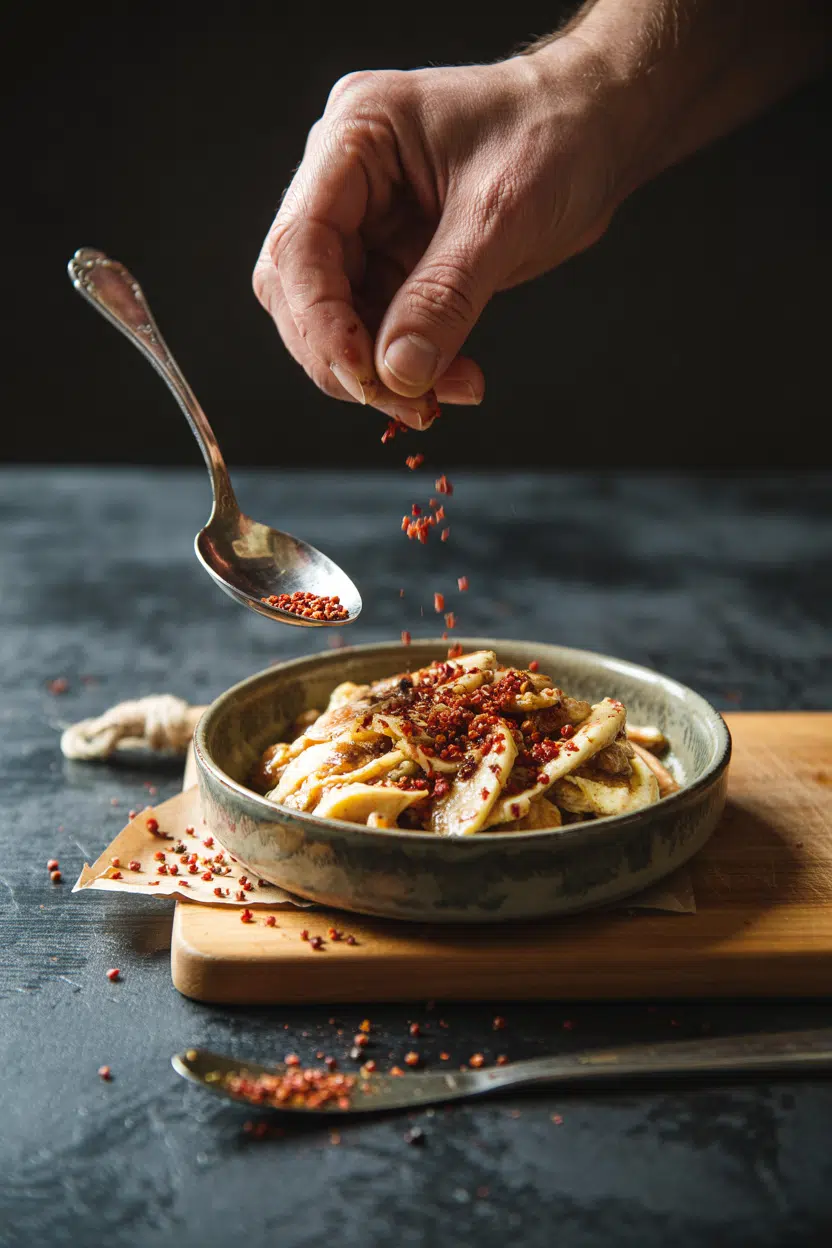
The closest comparison is lemon zest combined with a mild cranberry tartness - bright and fruity, but with a dry, slightly astringent finish that zest alone doesn't deliver. It doesn't taste vinegary, and it doesn't read as "sour" in the way pickles do.
Heat dulls sumac's brightness noticeably. Cooked into a sauce from the start, it loses much of that citrus lift and becomes more of a background note.
That's why most cooks add it after the heat is off - on top of finished dishes, stirred into cold dressings, or sprinkled at the table.
The astringency is mild enough that it doesn't feel mouth-drying. Think of the slight dryness of a fresh cranberry, not strong black tea.
How to Use Sumac
Sumac works almost exclusively as a finishing or blending spice, not a base for building flavor from the start. Its acidity functions the way lemon juice does in a dressing - cutting richness and adding brightness - but without adding any moisture.
| Method | Best For | Tip |
|---|---|---|
| 🥗 Raw / Finishing | Fattoush, grilled meats, roasted vegetables, labneh dips | Add after cooking or at the table to keep acidity bright |
| 🥣 Stirred Into Dressings | Salad dressings, marinades, yogurt sauces | Whisk with olive oil and a pinch of salt - no extra acid needed |
| 🧂 Dry Blends | Za'atar spice mix, dry rubs for lamb or chicken | Combine with thyme, sesame, and salt at a 2:1:1:0.5 ratio |
| 🍗 Cooked Into Dishes | Rice pilaf, bulgur, braises where mild background tartness is enough | Expect reduced brightness - add more at serving if needed |
Sumac pairs especially well with olive oil, yogurt, lamb, chickpeas, parsley, and tomato. Those pairings aren't accidental - the spice's fruit-derived acidity cuts animal fat and lifts legumes the way a squeeze of citrus would.
It also stands in well where citric acid is called for as a tartening agent, though it adds color and a more complex flavor profile. Avoid pairing it with strong aged cheeses - the competing sharpness makes both flavors muddy.
How to Buy and Store Sumac
Color is the first test. Fresh sumac powder should be deep burgundy - not brown, not dull pink. Open the jar and smell it: there should be an immediate citrusy, slightly fruity tang. A flat or purely dusty smell means the volatile compounds are gone and the spice won't perform.
- 🔴 Color check - Deep burgundy red signals freshness; brownish or faded powder is past its prime
- 👃 Smell test - Citrusy and slightly fruity on opening; flat or stale smell means skip it
- 🧂 Ingredient list - Buy single-ingredient ground sumac, not pre-blended mixes if you want control over tartness
- 🫙 Storage - Airtight jar, cool dark pantry; avoid humidity, which causes clumping
Ground sumac holds peak aroma for 6-18 months, though it stays usable up to two years if kept dry and sealed. For a full breakdown, the sumac storage guide guide covers what to watch for as it ages.
Start With One Dish
The fastest way to understand sumac is to make sumac onions - thinly sliced red onion, a generous pinch of sumac, a little olive oil, and salt. Let them sit for ten minutes.
That's the spice's character in its simplest form: tart, fruity, and clean. From there, it becomes easy to see where else it fits.
If you need a swap, there are reliable sumac swaps worth knowing - lemon zest plus a touch of vinegar gets reasonably close. However, nothing quite replicates the dry tartness sumac delivers without adding liquid.
Frequently Asked Questions
It's similar but not identical. Sumac shares lemon's citrus acidity, however it also carries a mild cranberry-like fruitiness and a dry, astringent finish that lemon lacks. The key difference is that sumac adds no liquid.
Yes. Culinary sumac (Rhus coriaria) is safe and widely consumed across the Middle East. It's unrelated to poison sumac (Toxicodendron vernix), which is a different genus entirely. Anyone with known plant allergies in the Anacardiaceae family should consult a doctor.
Lemon zest mixed with a small amount of red wine vinegar is the closest dry-to-wet substitute. Amchur (dried mango powder) also works for tartness but brings a different fruit note. Neither fully replicates sumac's astringency.
Peak flavor holds for 6-18 months in a sealed, airtight jar stored away from heat and light. After two years, the citrus compounds fade significantly and the powder loses most of its tartness.
Rarely, but it works in specific contexts - a small pinch over yogurt with honey, or in a berry-based sauce where extra tartness and color are both welcome. It's not a baking spice and doesn't suit most desserts.



