
Most home cooks assume a food processor is just a faster knife - a machine that chops and nothing more.
That's the part they get wrong.
A food processor is a motorized prep platform that chops, shreds, purées, emulsifies, and kneads with interchangeable blades, all from the same wide-mouthed bowl.
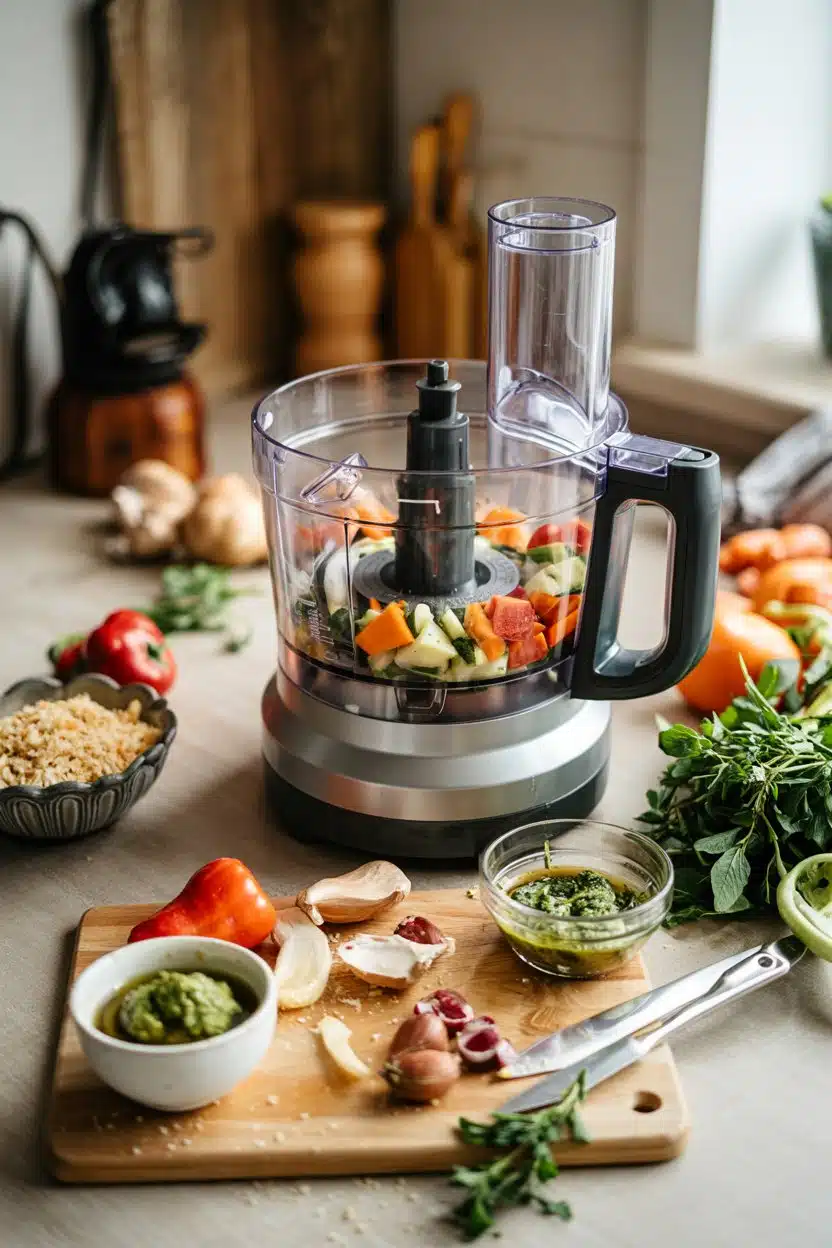
Understanding what it actually does - and what it doesn't - changes how you stock your counter.
A food processor is a countertop appliance, not an ingredient - it contributes no flavor of its own. Its value is mechanical: it standardizes texture, speeds prep, and handles tasks like emulsifying vinaigrettes or making nut butter that most knives and bowls can't replicate efficiently.
What Is a Food Processor?
Developed in France in the early twentieth century, the food processor arrived in home kitchens as a way to mechanize the prep work that takes up the bulk of cooking time.
Remember it later
Planning to try this recipe soon? Save it for a quick find later!
It's classified as food prep equipment, not a cooking appliance - it doesn't apply heat.
The machine centers on a wide-mouthed bowl, a lockable lid with a feed tube, and a rotating drive shaft that accepts different attachments.
The core attachment is the S-shaped blade (also called the chopping blade), which handles most pulsing and puréeing tasks.
Swap in a shredding disc and the machine shreds cabbage or hard cheese in seconds.
Add a dough blade and it kneads small batches of pastry or bread dough in one to two minutes.
You may also see it called a processor, food chopper, or mini chopper, though the mini versions lack the bowl capacity for larger tasks.
Flavor
Texture Output
Aroma
Mild
What Does a Food Processor Taste Like?
A food processor has no flavor. What you taste when using one is entirely the ingredient being processed - roasted almonds become nut butter, basil and olive oil become pesto - with the machine itself contributing nothing.
That's the baseline.
Two exceptions exist. A corroded or worn S-blade can leave faint metallic traces in acidic preparations like vinaigrettes or citrus-heavy purées.
New units sometimes carry a faint plastic or chemical edge in the first few uses, which dissipates after washing and a few runs with neutral ingredients.
Processing also changes how you perceive flavor indirectly.
Puréeing roasted squash into a completely smooth soup releases more surface area, which concentrates sweetness on the palate compared to eating it cubed.
Fine-grinding nuts into butter builds intensity that coarsely chopped nuts don't deliver.
The machine shapes texture, and texture shapes taste perception - but the appliance itself stays out of the way.
How to Use a Food Processor
The pulse function is the most underused feature. Short, controlled bursts - typically 8 to 12 one-second pulses - produce a coarse, even chop for onions, carrots, and celery without turning them to mush.
Continuous run is reserved for smooth outcomes: 30 to 60 seconds for soup purées, 2 to 6 minutes for nut butter once the oils release.
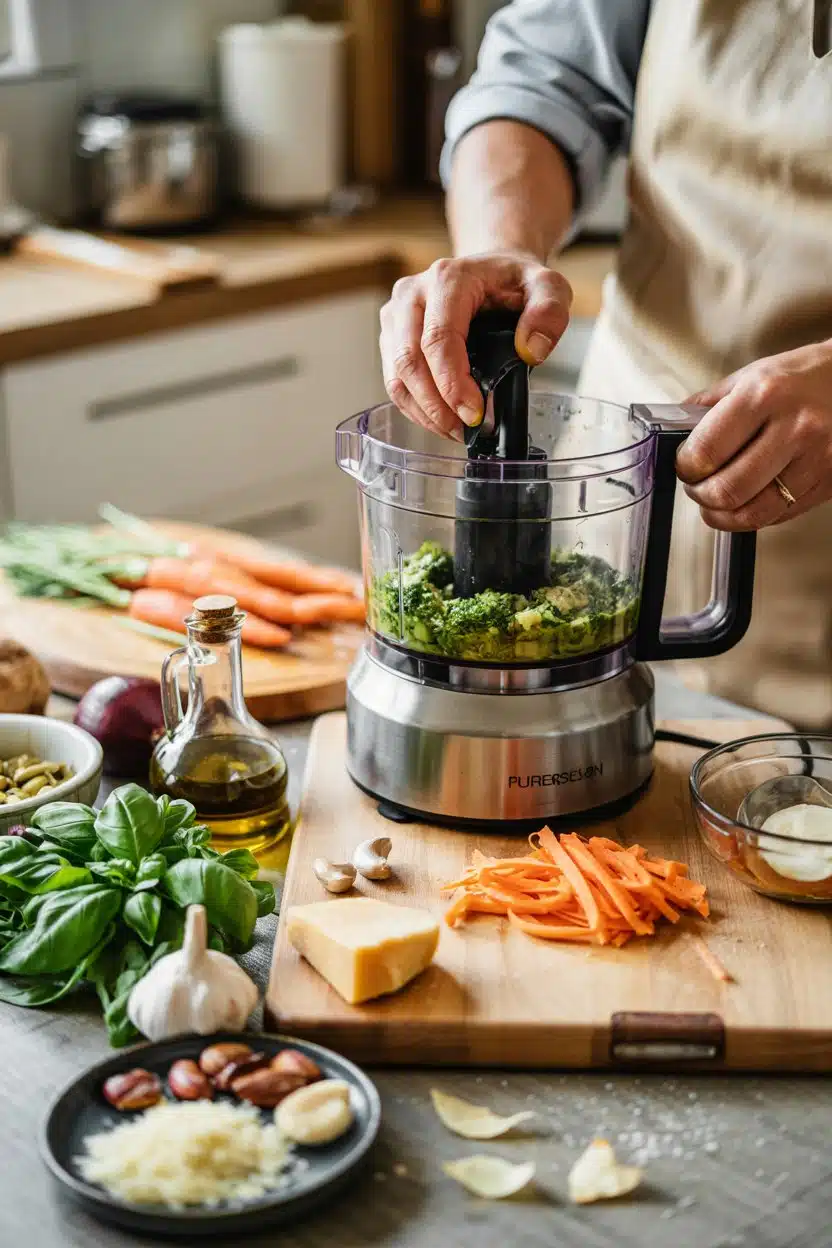
For comparing immersion blender vs food processor options, the distinction often comes down to volume and texture precision - the food processor wins on batch size and uniformity.
When you need replacements for food processor tasks, the method matters as much as the tool.
| Method | Best For | Tip |
|---|---|---|
| 🔪 Pulse | Mirepoix, pastry crumbs, breadcrumbs, slaw | Use 1-second bursts; check after every 3-4 pulses |
| 🌀 Continuous Run | Hummus, nut butter, smooth soup purées, pesto | Scrape sides halfway through for even texture |
| 🧀 Shredding Disc | Cabbage for slaw, hard cheese, carrots | Apply steady, even pressure through the feed tube |
| 🍞 Dough Blade | Pastry dough, small bread batches, cookie dough | Keep run time under 2 minutes to avoid overworking gluten |
| 💧 Feed Tube Drizzle | Vinaigrettes, mayonnaise, emulsified dressings | Drizzle oil slowly while machine runs for stable emulsion |
🇮🇹 Italian
🌍 Middle Eastern
🇺🇸 American
Nuts & seeds
Cooked beans
Hard cheeses
Olive oil
Roasted vegetables
Cold butter & flour
How to Buy and Store a Food Processor
Prioritize a stainless steel blade and a BPA-free bowl.
Check for a sealed motor housing - open vents collect food debris and amplify odors over time.
If you can test in store, listen for motor stability under load; a unit that labors on soft vegetables won't last through dough.
Dishwasher-safe removable parts matter more than most buyers expect, since residual odors concentrate in plastic that isn't fully rinsed.
For storage, invert the lid inside the bowl and wrap the blade in a protective sleeve before setting it in a drawer.
Every part must be fully dry before nesting - trapped moisture between the bowl and base is the fastest route to mold and persistent odor.
Watch for food processor spoilage signs like cracked bowl seams or blade wobble, both of which signal it's time to replace parts.
The motor unit itself typically runs 5 to 15 years; plastic bowls and lids show wear or staining within 1 to 3 years under regular use.
Is a Food Processor Worth Adding to Your Counter?
Start here if you prep aromatics daily, make dips from scratch, or bake pastry dough more than once a month.
Those three use cases alone justify the counter space.
If your cooking is mostly stovetop and you rarely work with large batches, an immersion blender in cooking handles soups and sauces with less cleanup and no bowl to store.
The food processor earns its place through volume and mechanical range - it's the right tool when your prep list is long.
Frequently Asked Questions
A clean, well-maintained food processor does not alter flavor. However, a corroded or dull blade can leave faint metallic traces in acidic foods like citrus dressings or tomato-based purées. Running new plastic parts through a few cycles with water and a squeeze of lemon before first use helps clear any initial off-odor.
Small amounts of warm soup are manageable, however large volumes of hot liquid create steam pressure that can force the lid off and cause burns. Let the soup cool to below 60°C (140°F) before processing, work in batches no more than half-full, and hold the lid firmly with a folded towel.
A blender is the better choice for smoothies. Blenders are engineered for liquid-heavy, high-speed blending and produce a smoother, more consistent result with ice and frozen fruit. A food processor can manage soft smoothie ingredients in a pinch, however the S-blade and bowl shape aren't optimized for liquid vortex processing the way a blender jar is.
Wash all removable parts with warm soapy water first, then run the bowl with a mixture of white vinegar and water for 30 seconds. Leaving the parts to air-dry in sunlight for a few hours accelerates off-gassing. Most plastic odor disappears entirely after three to five normal uses.
Yes, but only for small batches - typically recipes using 2 to 3 cups of flour. The dough blade processes in 60 to 90 seconds, which is faster than hand kneading, however the friction generates heat that can affect yeast activity if you over-run the machine. For larger loaves or enriched doughs, [comparing bread machine vs stand mixer options](https://forkliftkitchen.com/bread-machine-vs-stand-mixer/) gives you better capacity and temperature control.



