An immersion blender does something no other handheld tool can replicate cleanly: it brings the blade to the food rather than the food to the blade.
That distinction matters most with hot liquids - a pot of squash soup doesn't need to be ladled into a countertop blender in batches, cooled, then reheated.
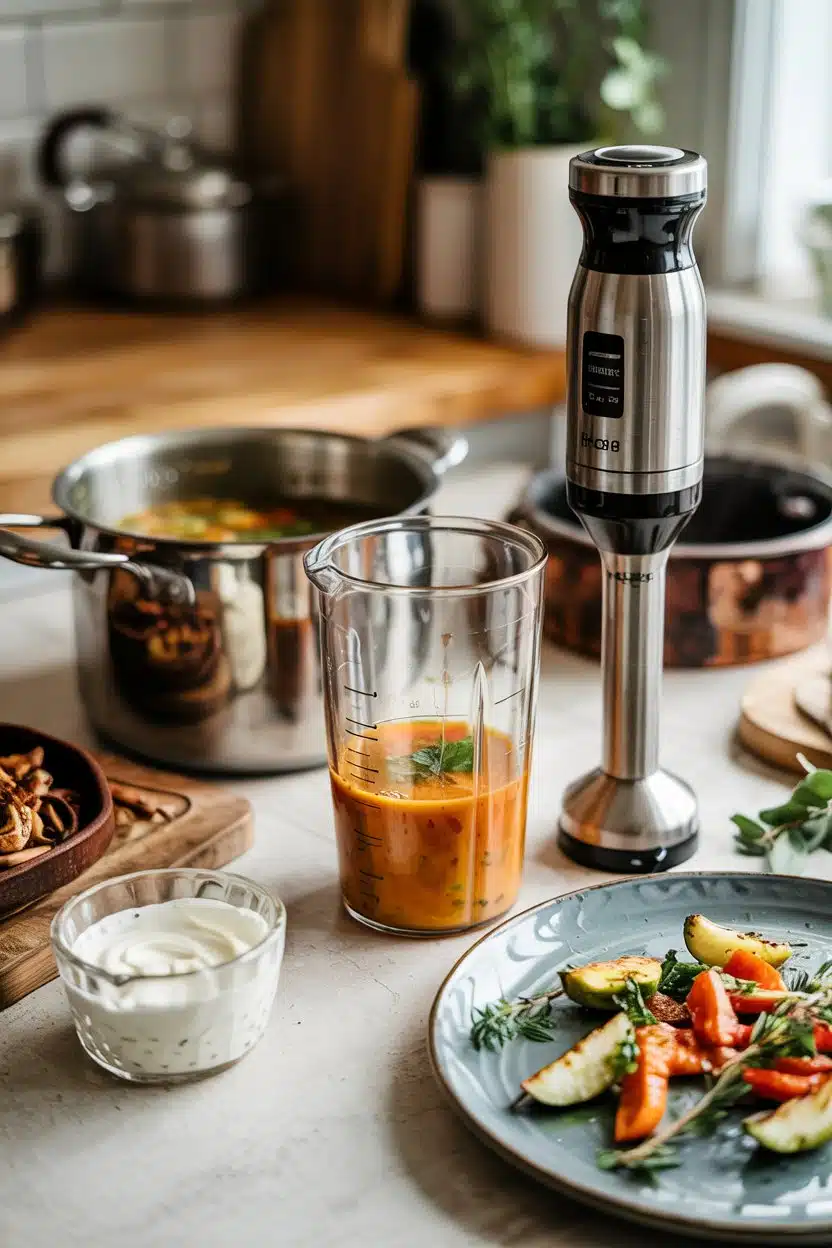
The stick blender drops in, the motor runs, and the soup is done.
An immersion blender is a handheld electric tool that blends, purées, emulsifies, and froths directly in the cooking vessel. It has no flavor of its own but produces smoother, creamier textures and intensifies the aromas already present in food. Built for speed and less cleanup.
What Is an Immersion Blender?
The immersion blender was developed in Europe in the mid-20th century as a commercial kitchen solution for pureéing large volumes of hot food without transferring them between vessels.
Remember it later
Planning to try this recipe soon? Save it for a quick find later!
It reached home kitchens decades later and is now sold under several names: stick blender, hand blender, wand blender, and immersion mixer.
The core design is consistent - a motor housing held in the hand, a long detachable shaft, and a bell-shaped blade guard at the tip that houses the cutting blades and reduces splatter.
Unlike countertop models, the immersion blender is not built for dry grinding or high-volume crushing. It processes foods in situ: soups in the pot, vinaigrettes in a jar, sauces in the pan.
That single design constraint defines everything it does well.
Flavor
Texture
Aroma
Mild
What Does an Immersion Blender Taste Like?
The blender itself contributes nothing to flavor - it's inert. What changes is how existing flavors behave after processing.
Breaking cell walls in cooked vegetables releases more of their water-soluble compounds into the liquid, which can make a tomato bisque taste more intensely of tomato than the same soup left chunky.
Herbs respond noticeably. Running a stick blender through a basil-oil mixture ruptures cell walls and drives aromatic oils into the fat.
The result is a more integrated, greener-tasting sauce than hand-chopping produces.
There is one edge case worth knowing. An overheated or worn blade guard can leave a faint metallic note in delicate foods like whipped ricotta or cold smoothies.
That's a sign the blades need replacing, not that the technique is wrong. Fresh, sharp blades on a properly maintained unit produce no off-flavors whatsoever.
How to Use an Immersion Blender
The most common application is hot soup - submerging the blade guard fully before running the motor prevents splatter.
Keep the blender near the bottom of the pot and move it slowly upward as the soup smooths.

For emulsification, a tall, narrow jar works better than a wide bowl; the vertical column of liquid keeps the blade guard submerged and builds a stable mayonnaise or vinaigrette faster than a whisk can.
Pulse chopping - short bursts rather than continuous run - gives you coarse texture control. It's the right technique for hummus made from canned beans or rough-chopped vegetables for baby food.
| Method | Best For | Tip |
|---|---|---|
| 🍲 In-pot blending | Hot soups, bisques, potato-leek, squash | Keep blade guard submerged; move slowly upward |
| 🫙 Jar emulsifying | Mayonnaise, vinaigrettes, hollandaise base | Use a tall narrow jar; start at the bottom |
| 🫧 Frothing | Milk foam for lattes, cappuccinos | Angle the shaft at the surface to draw in air intentionally |
| 💥 Pulse chopping | Bean dips, baby food, rough vegetable purée | Short bursts give coarse texture; continuous run smooths fully |
| 🍳 Pan sauce finishing | Gravies, deglazing liquids, herb sauces | Blend off heat if the sauce is cream-based to avoid breaking |
🇮🇹 Italian
🫙 Middle Eastern
🏠 Everyday home cooking
Egg and oil for mayo
Cooked beans
Fresh herbs
Milk for frothing
Soft fruits
If you're weighing whether a stick blender covers your needs or you need something else entirely, it helps to check alternatives to immersion blender before committing to a method.
How to Buy and Store an Immersion Blender
Look for a stainless-steel detachable shaft - it tolerates heat from hot soups without warping and cleans more thoroughly than plastic. Motor power between 200 and 600 watts handles everyday tasks from smoothies to thick bean purées.
Variable speed control matters more than raw wattage; being able to run slow prevents air incorporation and splatter in shallow vessels.
Store the unit with the shaft detached or assembled upright in a drawer, keeping the blade guard protected from contact with other utensils. A wall hook or utensil crock works well for frequent-use kitchens.
Stored this way, a well-maintained immersion blender runs reliably for 3-10 years.
Start Here If You're New to Stick Blenders
Buy for the tasks you already do, not the ones you imagine doing.
Hot soups, quick dressings, and frothed milk for coffee are the daily workhorses - a 300-watt model with a detachable stainless shaft handles all three cleanly.
If your cooking leans toward thick bean dips or fibrous vegetable purées, step up to 500 watts and confirm the blade guard is replaceable.
That's the whole decision.
Frequently Asked Questions
The blender itself adds no flavor, however it changes how existing flavors are perceived. Breaking cell walls releases more aromatic compounds into the liquid, which concentrates flavor and makes sauces taste more integrated. A worn or overheated blade can occasionally leave a faint metallic note - that signals the blade guard needs replacing.
Yes - immersion blender, hand blender, stick blender, and wand blender are all names for the same tool. The terminology varies by region and brand, with "stick blender" more common in the UK and Australia and "immersion blender" more common in North America. The design and function are identical.
Yes, and it works well for light foam. Warm the milk first, then angle the blade guard at the surface of the liquid so the blender draws in air deliberately. The foam won't be as dense as a steam wand produces, but it's adequate for home lattes and cappuccinos.
That's the task they're specifically designed for. Keep the blade guard fully submerged before switching the motor on and move the blender slowly through the pot to avoid splatter. Unlike countertop blenders, there's no sealed container where steam pressure can build, so the risk is much lower.
200-300 watts handles thin to medium-bodied soups like tomato bisque or potato-leek without issue. For thicker purées - dense squash, cooked beans, or root vegetables with little added liquid - 400-600 watts produces a smoother result and puts less strain on the motor over repeated use.