You spot a jar of deep ruby-red flakes at a spice shop or Middle Eastern grocery and wonder what sets them apart from the crushed red pepper already sitting in your pantry.

Aleppo pepper - also sold as pul biber or Halebi pepper - looks similar at a glance but delivers something genuinely different: moderate heat softened by a raisin-like sweetness and a faint vinous tang.
It's the kind of spice that changes how you finish a dish, not just how hot it gets.
Aleppo pepper is a coarsely crushed dried chili from the Levant with moderate heat, raisin-like sweetness, and a mild fruity tang. Use it as a finishing spice, in marinades, or bloomed in olive oil. Best within 6-12 months of purchase.
What Is Aleppo Pepper?
Aleppo pepper originates from the area around Aleppo in northern Syria and southeastern Turkey, where the climate produces a specific variety of red chili with notably low water content and natural oiliness.
Remember it later
Planning to try this recipe soon? Save it for a quick find later!
Growers dry and crush the peppers into coarse flakes - sometimes called Aleppo flakes or pul biber in Turkish - after removing most of the seeds, which tempers the heat significantly.
The result is a dark, oily, coarse-ground spice that clumps slightly and feels almost meaty compared to standard crushed red pepper.
It belongs to the dried chili flake category alongside more familiar pantry staples, but its origin and processing give it a profile that those staples don't share.
You may also see it labeled as Aleppo chile or Halebi pepper at specialty retailers.
Flavor
Texture
Aroma
Moderate
What Does Aleppo Pepper Taste Like?
Think of Aleppo pepper as landing somewhere between smoked paprika and crushed red pepper flakes - but with a character neither one fully captures.
The heat arrives slowly and sits at the back of the palate rather than hitting immediately, which is what makes it usable as a finishing spice without overwhelming a dish.
What separates it from generic chili flakes is that underlying sweetness.
There's a dried-fruit quality - somewhere between raisin and sun-dried tomato - followed by a faint acidity, almost like a vinous fermentation note.
Raw, that tang is subtle.
Bloomed briefly in hot oil, the sweetness comes forward and the earthy cumin-like background deepens.
It doesn't get sharper with heat the way cayenne does; it gets rounder.
How to Use Aleppo Pepper
Aleppo pepper works at every stage of cooking, but it earns its reputation as a finishing spice.
A pinch over hummus or labneh cheese with a drizzle of olive oil is the simplest demonstration of what it does: it adds warmth, color, and complexity without heat that overpowers.
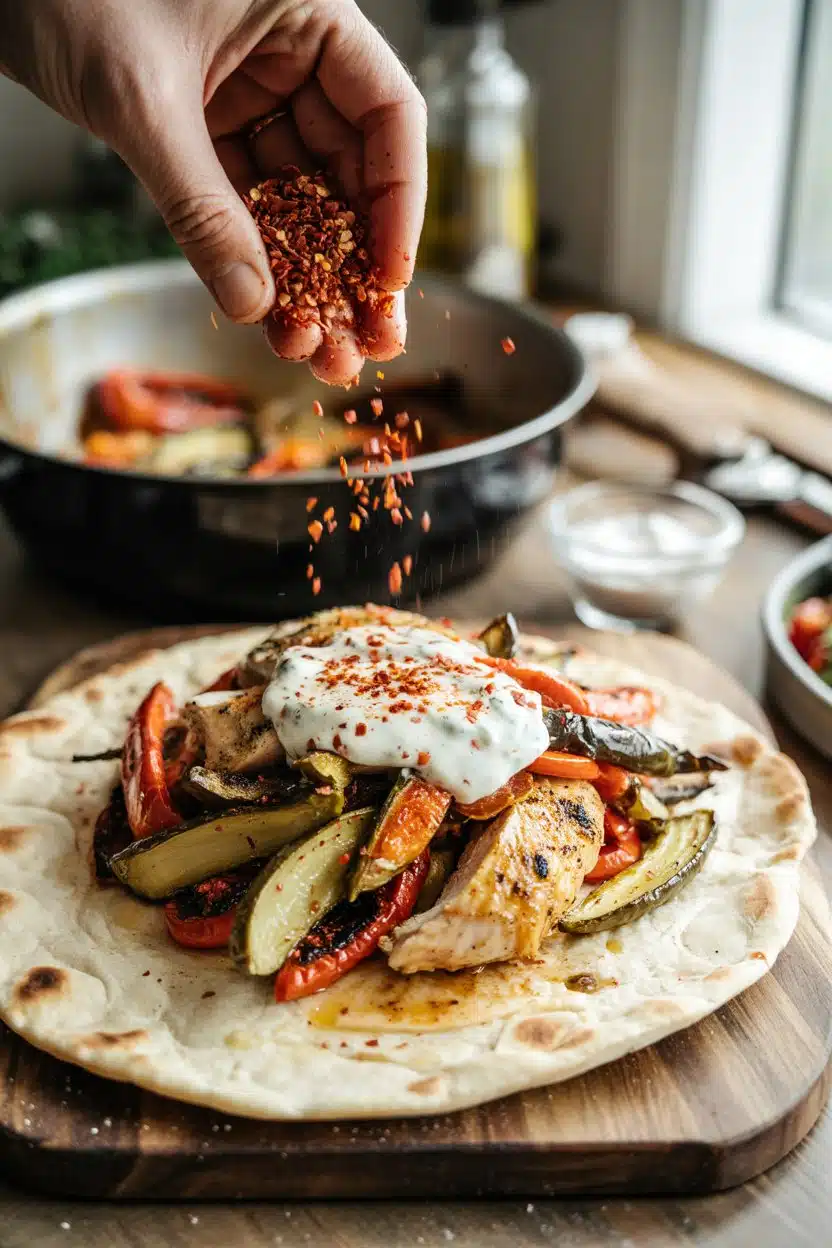
For cooked applications, fold it into ground lamb or beef for kofta before grilling, or stir it into shakshuka toward the end so the fruitiness doesn't cook off.
Blooming the flakes briefly in good olive oil - 30 seconds over medium heat - releases the fat-soluble pigments and amplifies its sweetness noticeably.
| Method | Best For | Tip |
|---|---|---|
| 🥗 Finishing Sprinkle | Hummus, labneh, fried eggs, avocado toast | Add after plating - heat fades quickly if it sits |
| 🍳 Bloomed in Oil | Drizzles, vinaigrettes, roasted vegetables | 30 seconds max over medium heat; it scorches fast |
| 🧂 Dry Rub / Marinade | Lamb, chicken, eggplant | Combine with lemon zest and garlic for a Levantine-style rub |
| 🍲 Stirred into Sauces | Shakshuka, tomato braise, yogurt sauce | Add late in cooking to preserve fruity tang |
🇹🇷 Turkish
🫒 Levantine
🌊 Eastern Mediterranean
If you need alternatives to aleppo pepper in a recipe, a mix of smoked paprika and a small amount of cayenne gets close, though you'll lose the tangy note.
Aleppo pepper also pairs naturally alongside sumac's flavor and uses in spice blends for grilled meats and salads.
yogurt / labneh
lemon
garlic
eggplant
tomato
lamb
sumac
How to Buy and Store Aleppo Pepper
Quality is obvious once you know what to look for. Good Aleppo flakes are deep ruby-red, visibly oily, and slightly clumped - not powdery, faded, or bone-dry. Dusty gray bits throughout the jar signal age or poor processing.
When packaging lists the origin country (Turkey or Syria) and a grind date, that's a reliable sign of a reputable supplier.
Aroma peaks within the first 6-12 months. The heat stays usable for up to 24 months, however the complex fruitiness fades well before that.
For details on extending shelf life, see our guide on freezing aleppo pepper.
When to Reach for It
Aleppo pepper suits you if you want chili heat that doesn't flatten everything else in the dish.
It's the right call when a recipe needs warmth, color, and depth all at once - and when you're finishing something that would be dulled by straight cayenne.
Start with hummus and a drizzle of olive oil. That single combination shows you exactly what this spice does.
From there, the kofta and shakshuka applications follow naturally.
Frequently Asked Questions
Aleppo pepper is moderately spicy - roughly 10,000 Scoville heat units, which puts it well below cayenne and closer to a mild jalapeño. The heat builds slowly and doesn't linger aggressively, which is why it works as a finishing spice on dishes where sharp heat would be intrusive.
Paprika alone isn't a direct swap - it lacks the heat and tangy fermented note. A working substitute is two parts smoked paprika to one part cayenne, which approximates the warmth, though you'll still miss the raisin-like sweetness. For a closer match, see the full guide on alternatives to aleppo pepper.
Middle Eastern grocery stores and well-stocked spice shops are the most reliable sources for fresh, oily flakes at a fair price. Online spice retailers (Burlap & Barrel, Kalustyan's, Penzeys) ship directly and often provide grind dates, which supermarket jars rarely include.
In Syrian and Turkish cooking, it appears most often in kofta, shakshuka, and as a table condiment sprinkled over mezze spreads like hummus and labneh. Outside the Levant, it has become common in restaurant kitchens as a finishing spice on flatbreads, roasted carrots, and grain bowls.
Yes - the flakes retain natural oils from the pepper, which is what gives them their characteristic clumped, moist texture and contributes to the complex aroma. Those oils also make Aleppo pepper more susceptible to rancidity than drier spices, so airtight storage away from heat matters more here than it does for something like dried oregano.