You spot them at the farmers market or grocery store - small, smooth-skinned, almost toy-like next to the standard slicing cucumbers - and wonder if they're just a marketing gimmick.
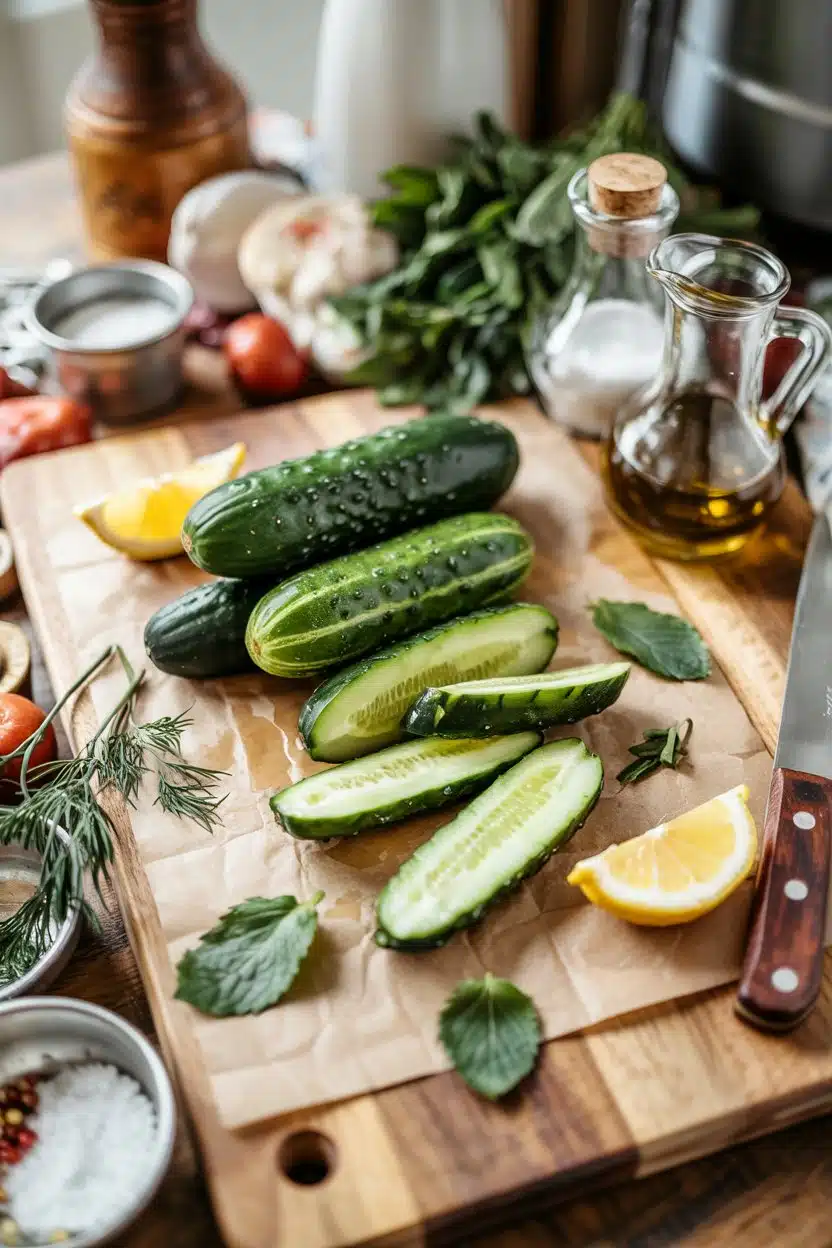
They're not. Persian cucumbers are a distinct variety with a tighter seed cavity, thinner skin, and noticeably cleaner flavor than the cucumbers most of us grew up eating.
If you've been swapping out cucumber varieties interchangeably without much thought, this one is worth a closer look.
Persian cucumbers are a small, thin-skinned variety with crisp flesh, very few seeds, and a mild, clean flavor. They're best eaten raw in salads and dips, quick-pickled, or used as a crunchy addition to mezze spreads. Refrigerated whole, they keep up to two weeks.
What Is Persian Cucumber?
Persian cucumbers originate from Iran and the broader Eastern Mediterranean, where they've been cultivated for fresh eating rather than long-term preservation.
Remember it later
Planning to try this recipe soon? Save it for a quick find later!
They belong to the same summer squash family as all cucumbers, but their specific traits set them apart: a thin, edible skin that doesn't need peeling, a compact 4-6 inch length, and a seed cavity so small it barely registers.
You'll find them sold under several names - mini cucumber, Iranian cucumber, kari olivetti, or sometimes Persian pickling cucumber. That last name is a bit misleading, since their real strength is fresh eating.
They do pickle well in short refrigerator runs, however, rather than the long-brined style suited to Kirby cucumbers.
Flavor
Texture
Aroma
Mild
What Does Persian Cucumber Taste Like?
The flavor is clean and restrained - mild cucumbery sweetness up front, followed by a faint mineral note and just a whisper of bitterness near the skin.
That bitterness is far gentler than what you'd find in a garden-variety slicing cucumber, and it disappears almost entirely when you slice thin.
Compared to an English cucumber, the Persian variety reads as slightly sweeter and less watery. The reduced moisture isn't just a textural detail; it means the flavor concentrates slightly without tipping into sharpness.
Raw slices hold their crunch longer in salads and won't dilute dressings.
Heat softens everything. A brief sauté or inclusion in a warm grain salad mutes the sweetness and turns the flesh tender.
For that reason, most preparations here keep them raw or barely touched by heat.
How to Cook with Persian Cucumber
Their thin skin and tight seed cavity mean you can slice, ribbon, or dice without peeling or de-seeding.
That's a real practical advantage over thicker-skinned varieties.
They work across a wide range of preparations, from the Persian yogurt dip mast o khiar (where they're diced fine with dill, garlic, and dried rose petals) to quick Mediterranean salads with feta and olives.
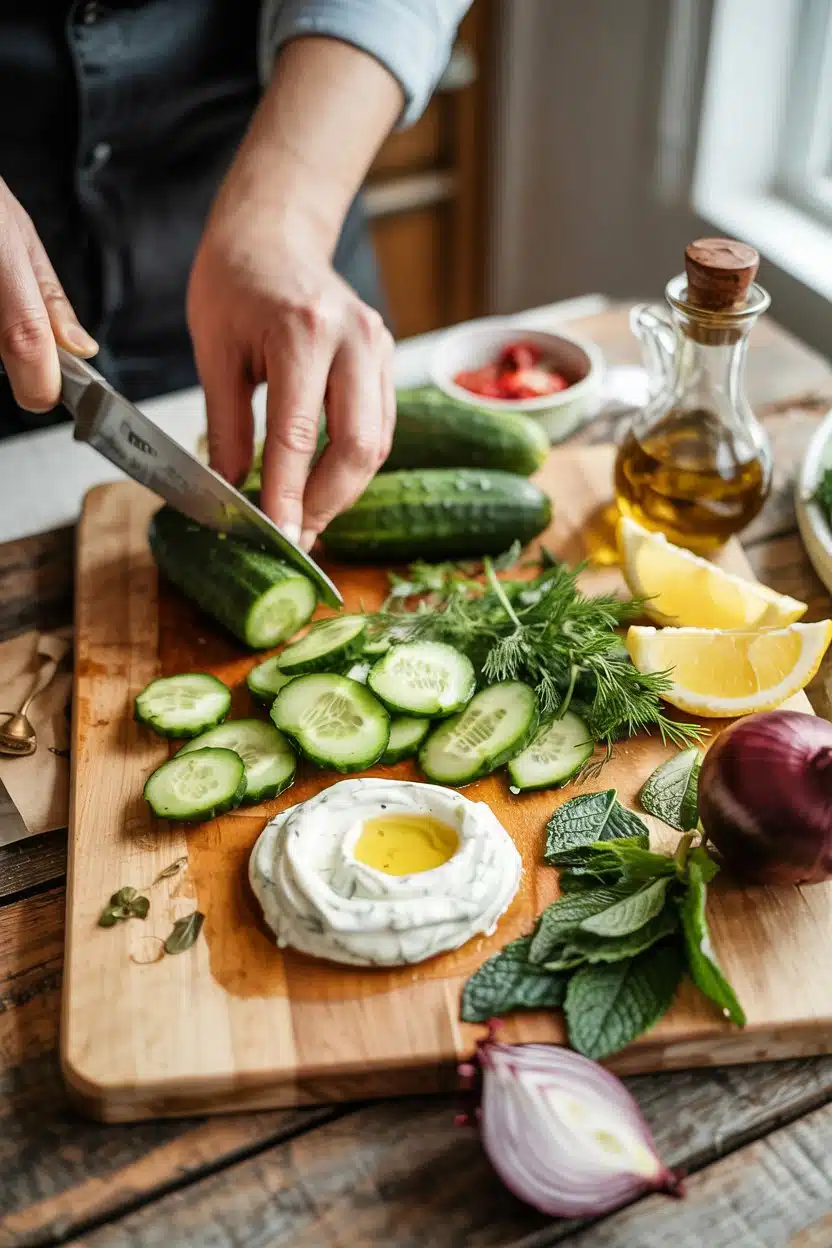
If you need replacements for labneh cheese in a mezze spread, the cucumbers still anchor the platter well alongside other dips.
| Method | Best For | Tip |
|---|---|---|
| 🥗 Raw (sliced) | Green salads, mezze platters, crudité | Keep skin on for crunch and color |
| 🥗 Raw (diced) | Mast o khiar, tomato-feta salads | Salt lightly and drain if mixing into yogurt |
| 🥒 Quick Pickled | Refrigerator pickles, sandwich stacks | Ready in 24-48 hours; no canning needed |
| 🍳 Lightly Sautéed | Warm grain salads, stir-fry finishes | Add at the very end to avoid mushiness |
| 🌿 Ribboned | Wraps, flatbreads, rice paper rolls | Use a vegetable peeler for even, long strips |
🫒 Middle Eastern
🇬🇷 Mediterranean
🌏 Southeast Asian
dill and mint
lemon and lime
garlic and olive oil
sumac and za'atar
sesame oil and soy sauce
How to Buy and Store Persian Cucumber
Firmness is the main signal. Pick cucumbers that feel solid end to end, with smooth, bright green skin and no soft spots, yellowing tips, or stems pulling away from the flesh. Smaller specimens within the 4-6 inch range tend to have the tightest seed cavities.
Store them unwashed in a perforated plastic bag in the refrigerator crisper.
Washing before storage introduces moisture that speeds up softening, so rinse only right before you use them.
Whole cucumbers keep for 1-2 weeks this way.
Once sliced, plan to use them within 3-4 days.
Refrigerator pickles, once made, hold well for 1-2 weeks - you can read more about freezing Persian cucumber if you need to extend that further.
Start Here With Persian Cucumber
New to this variety?
Begin raw.
Slice one thin, fan it over labneh with a drizzle of olive oil and a pinch of za'atar, or toss it into a quick salad with tomatoes and feta.
That single step shows you exactly what the variety does - clean crunch, mild sweetness, no bitterness getting in the way.
Once you have the baseline, the jump to mast o khiar or quick refrigerator pickles is straightforward.
These cucumbers are also a natural fit when you're looking for replacements for Persian cucumber in a recipe and need to understand what you're actually matching.
Frequently Asked Questions
Not entirely, but they're close. Persian cucumbers have very small, immature seeds distributed in a tight central cavity - so small that most people don't notice them. You don't need to scoop them out for any standard preparation, which is one reason this variety works so well sliced directly into salads or dips.
Yes, and it's usually a direct swap by weight or count. Persian cucumbers are slightly sweeter and less watery than English cucumbers, so the result will be a touch crisper and the flavor marginally more concentrated. For full guidance on [swapping out cucumber](https://forkliftkitchen.com/cucumber-substitutes/) varieties in different recipes, the differences in water content are worth accounting for in dressings and yogurt-based dishes.
Whole, unwashed Persian cucumbers last 1-2 weeks stored in a perforated bag in the crisper drawer. Once cut, they decline faster - use sliced cucumber within 3-4 days. The biggest mistake is washing them before storage, which traps surface moisture and accelerates softening.
Yes, noticeably so compared to standard garden slicing cucumbers, which carry a more pronounced grassy bitterness. The difference is subtler against English cucumbers - Persian varieties come out slightly sweeter but not dramatically so. That mild sweetness is why they pair well with sharp or acidic ingredients like sumac, lemon, and feta without needing any added sugar.
No. The skin is thin, tender, and free of the waxy coating applied to many conventional cucumbers for shelf life. Keeping the skin on adds color, a slight textural snap, and a small nutritional boost from vitamin K. Peeling is only worth considering if a recipe specifically calls for it, such as a very smooth chilled soup.