Chicken Marsala shows up on nearly every Italian-American restaurant menu, yet most home cooks reaching for a bottle at the grocery store pause in front of the shelf, uncertain whether the "cooking wine" label is a red flag or a green light. Marsala is far more than a shortcut ingredient.
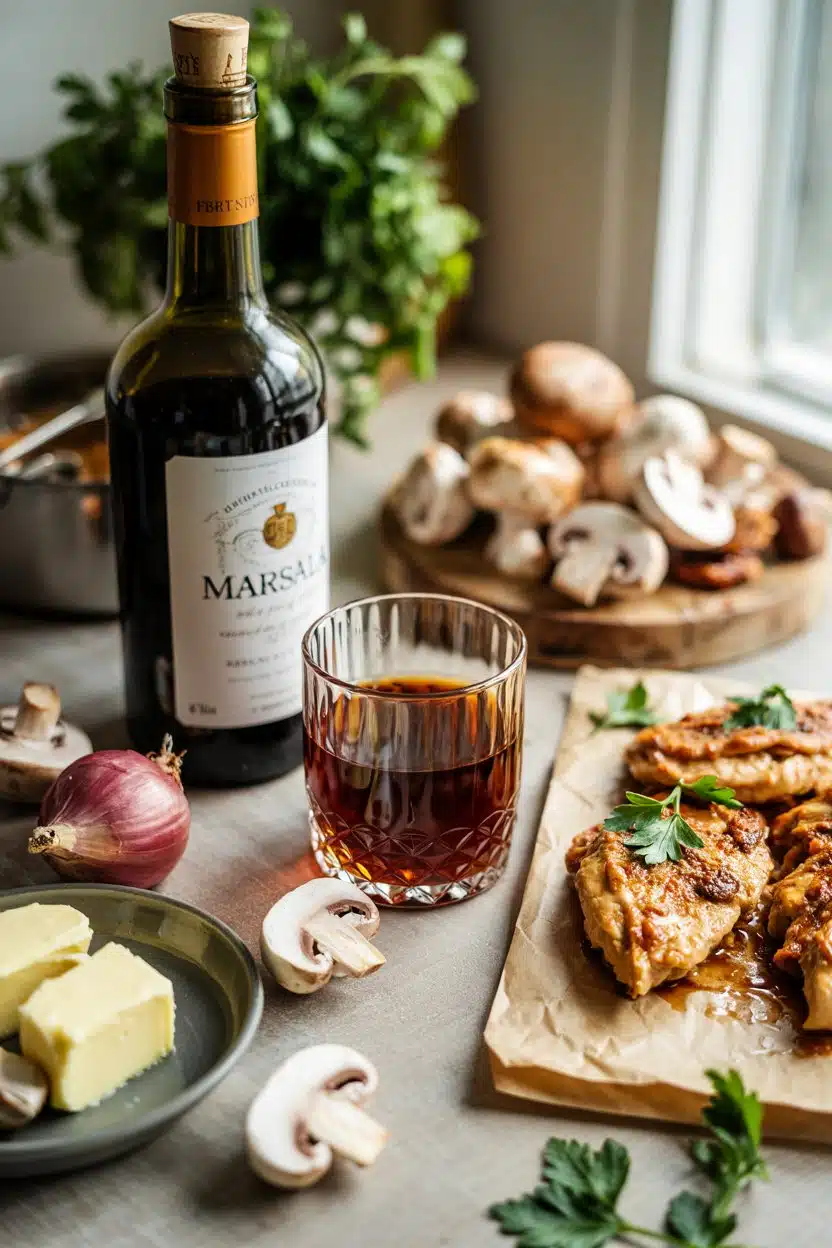
It's a DOC-protected fortified wine from western Sicily, barrel-aged and bottled in distinct styles that behave very differently in a pan - and understanding those differences changes what you get in the finished dish.
For a quick reference on swapping out sherry or similar fortified wines, that comparison highlights how Marsala holds its own category.
Marsala is a Sicilian fortified wine aged in barrels and bottled as secco (dry) or dolce (sweet). It brings nutty, caramelized depth to pan sauces, braises, and desserts. Opened bottles last 2-4 weeks (secco) or up to 3 months (dolce) refrigerated.
What is marsala wine?
Marsala originates from the port city of Marsala in western Sicily, where local white grape varieties - primarily Grillo, Catarratto, and Inzolia - are fermented, then fortified with neutral grape spirit to raise the alcohol content to roughly 15-20% ABV.
Remember it later
Planning to try this recipe soon? Save it for a quick find later!
An English merchant named John Woodhouse is credited with popularizing it commercially in the late 18th century, partly because the added spirit helped the wine survive long sea voyages.
Producers classify it by sweetness and age.
Secco (dry) carries under 40 grams of residual sugar per liter; semisecco lands in the middle; dolce (sweet) reaches 100 grams or more.
Aging categories include Fine (minimum one year), Superiore (two years), and Invecchiato (five or more years in barrel), with longer aging producing deeper oxidative character similar to Madeira or oloroso sherry.
Flavor
Texture
Aroma
Moderate
What does marsala wine taste like?
Secco Marsala reads closest to a light oloroso sherry - dry, with a walnut-like nuttiness and a faint bitterness at the finish that keeps sauces from turning cloying.
Dolce Marsala shifts toward brown-sugar sweetness layered with raisin and fig, closer in profile to the taste of madeira wine but with a distinctly Sicilian oxidative edge.
Heat concentrates the flavor fast. Reducing Marsala in a hot pan drives off alcohol within a couple of minutes, leaving a glossy, more intensely caramelized result than the wine tastes straight from the bottle.
Aged Invecchiato styles hold more complexity through that process - wood spice (clove, vanilla from the barrel) survives reduction better than the lighter Fine-grade versions.
How to use marsala wine
The most practical rule: match style to application. Secco belongs in savory cooking, dolce in desserts.
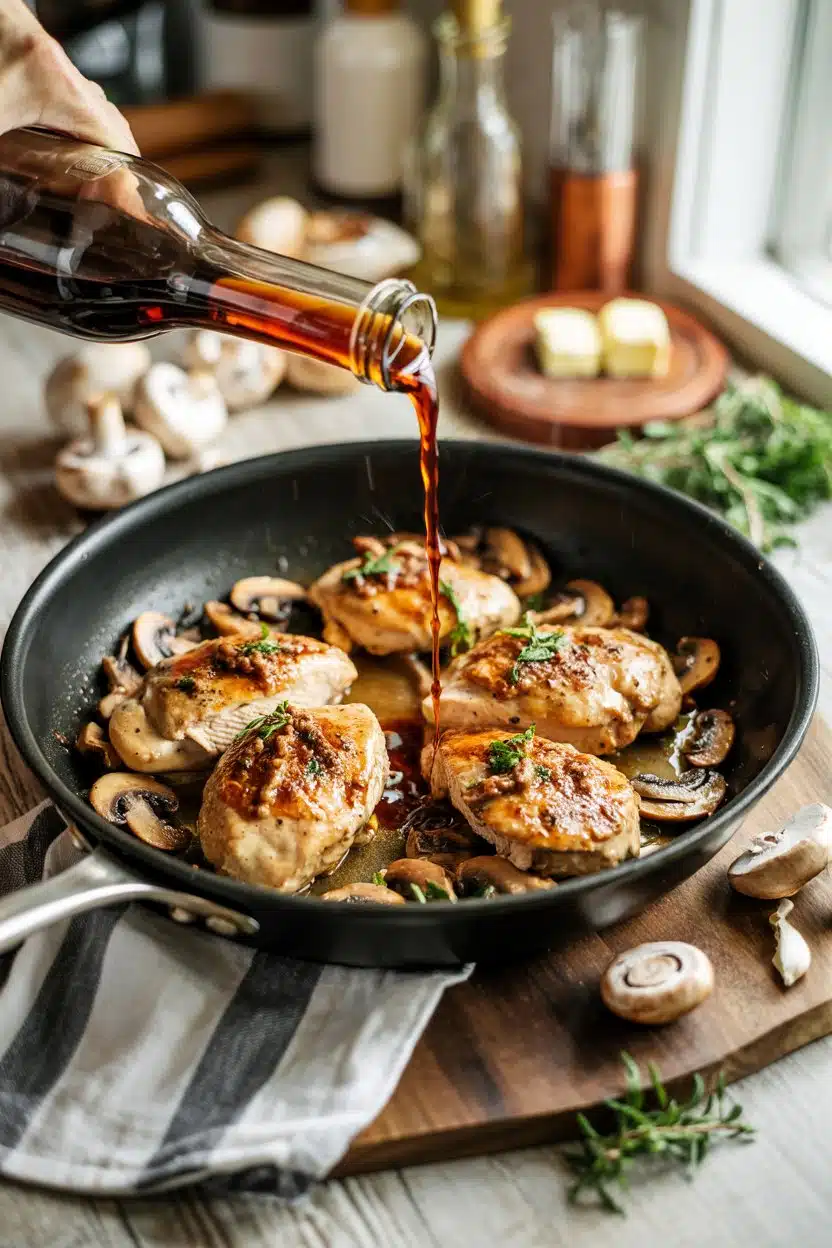
Using sweet Marsala in chicken sauce creates a cloying result most people find off-balance.
| Method | Best For | Tip |
|---|---|---|
| 🥘 Deglaze | Chicken Marsala, veal scallopini, mushroom pan sauces | Add over medium-high heat; scrape up fond before reducing |
| 🍖 Braise | Slow-cooked beef, braised pork shoulder, lamb shanks | Use secco; combine with stock so the wine doesn't dominate |
| 🔥 Flambé | Zabaglione, sautéed bananas, dessert sauces | Use dolce; remove pan from burner before adding wine |
| 🫕 Reduce | Glazing roasted root vegetables, finishing cream sauces | Simmer gently; high heat scorches sugar in dolce styles |
🍝 Italian-American
🌊 Mediterranean
Marsala doesn't work in every context. Avoid it in salads or citrus-forward dishes - the oxidative nuttiness clashes with bright acidity.
If you're out of a bottle mid-recipe, check these marsala wine swaps that work before reaching for a random pantry substitute.
chicken & veal
butter & heavy cream
rosemary & thyme
Parmigiano-Reggiano
dried apricot & raisin
How to buy and store marsala wine
Look for DOC or DOP on the label - that designation confirms the wine comes from the actual Marsala production zone in Sicily, not a bulk imitation.
For savory cooking, buy Fine or Superiore secco; for zabaglione or dessert glazes, a Superiore dolce works well without overspending on Invecchiato.
Avoid bottles labeled "cooking wine" if they list added salt - that's a different product and will oversalt your sauce.
Unopened bottles keep for years in a cool, dark spot. For questions about freezing marsala wine or extending shelf life further, that guide covers the specifics.
Sediment in older Invecchiato bottles is normal and harmless - just decant before use.
Start here if you're new to marsala
Buy a Superiore secco first.
It covers the widest range of savory applications - chicken, veal, mushroom sauces, braises - without the sweetness that complicates things.
Once you've worked through a bottle and understand how it reduces, picking up a dolce for dessert applications makes sense as a second purchase.
One bottle, used correctly, will shift your pan sauce results noticeably.
Frequently Asked Questions
Marsala comes in both styles - secco (dry), semisecco (off-dry), and dolce (sweet) - so neither label applies to the category as a whole. Most bottles sold in North American grocery stores lean sweet because dolce is more shelf-stable and widely stocked, however secco is the correct choice for savory cooking.
Dry sherry is the closest functional substitute in savory dishes - it shares the oxidative, nutty character of secco Marsala, though it's lighter-bodied and less sweet. For sweet applications, a medium or cream sherry gets closer to dolce Marsala; you can also review [madeira wine stand-ins](https://forkliftkitchen.com/madeira-wine-substitutes/) if sherry isn't available either. The swap works reasonably well in a 1:1 ratio.
No - Marsala is a fully finished wine you can drink straight, especially aged Superiore and Invecchiato styles. However, its primary home in most kitchens is the stovetop, where heat concentrates its caramel and nut notes into pan sauces. Dolce Marsala also works well chilled as a dessert wine alongside hard cheeses or dried fruit.
DOC rules permit several Sicilian white varieties: Grillo, Catarratto, and Inzolia are the most common, used alone or blended. Some producers also use Damaschino. The grape variety has less impact on the final flavor than the fortification level and barrel-aging time, which drive the oxidative, nutty character Marsala is known for.
Opened secco Marsala stays usable for 2-4 weeks refrigerated before oxidation dulls the flavor noticeably. Dolce styles last 2-3 months refrigerated because higher residual sugar slows further oxidation. Both should be recapped tightly and stored upright - not on their side - to minimize the surface area exposed to air.