
You spot a fillet labeled "sea bass" at the fish counter and pause - because the tag next to it says "branzino," and another case over reads "Chilean sea bass." These are not the same fish, and knowing which one you're buying changes how you'll cook it.

Sea bass is a broad market name covering several species, from the lean European branzino to the richer Patagonian toothfish, and each brings its own character to the plate.
Cooks who reach for cod swaps that work or replacements for halibut often land here - sea bass sits in that same mild, white-fish lane but with a slightly meatier bite.
Sea bass is a mild, clean-tasting white fish with firm, moist flakes and a subtle briny sweetness. The name covers multiple species - most notably branzino and Chilean sea bass. It suits pan-searing, roasting whole, and steaming equally well. Use within 1-2 days of purchase.
What Is Sea Bass?
Sea bass is a market term, not a single species - and that distinction matters at the fish counter.
Remember it later
Planning to try this recipe soon? Save it for a quick find later!
True sea bass typically refers to European seabass (Dicentrarchus labrax), sold widely under its Italian name branzino, a slender, silver-skinned fish from Atlantic and Mediterranean coastal waters.
Chilean sea bass is a different story entirely. It's actually Patagonian toothfish, a deep-water fish from the Southern Ocean with considerably more fat than its namesake.
The two share a name for commercial reasons, not biological ones.
Other varieties show up depending on the region and season. Striped bass is commonly confused with sea bass, though it belongs to a separate family.
All fall under the category of marine white-fleshed fish - firm, mild, and suited to a wide range of preparations.
- 🌊 European seabass / branzino - lean, fine-flaked, mild; the "classic" sea bass of Mediterranean cooking
- 🧊 Chilean sea bass (Patagonian toothfish) - much fattier and richer; a distinctly different eating experience
- 🎣 Striped bass - often mislabeled or confused; firmer texture, slightly stronger flavor
What Does Sea Bass Taste Like?
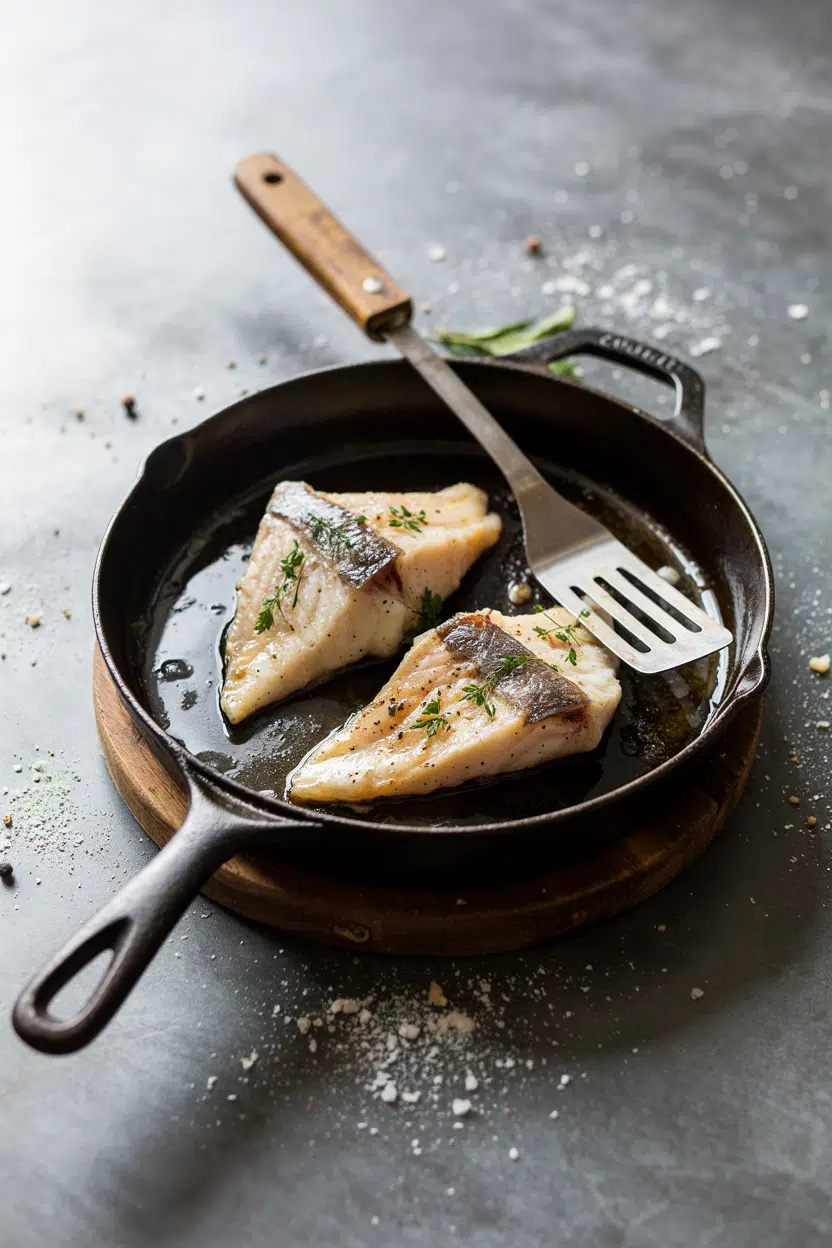
Sea bass has a clean, mildly briny flavor with a subtle sweetness and a low-level umami note that sits in the background rather than announcing itself.
It's closer to cod or halibut than it is to salmon or mackerel - no assertiveness, no oiliness on the palate.
Heat changes the texture more than the flavor. A pan-seared fillet develops a golden crust while keeping the interior moist and gently flaking.
Steamed or poached, it stays tender but loses that slight richness you get from fat contact with a hot pan.
Chilean sea bass is the outlier. Its higher fat content gives it a buttery, almost luxurious mouthfeel - significantly richer than branzino and closer to sablefish territory.
Don't expect the same result from both in the same recipe.
How to Use Sea Bass
Sea bass rewards simple preparation. Its mild flavor is an asset - it takes on the character of whatever surrounds it without disappearing.
Heavy cream sauces work against it; Mediterranean and East Asian flavor profiles work with it.
For full pairing ideas for sea bass, the range is wider than most cooks expect, from roasted vegetables to clean grain sides. If the fish isn't available, knowing your options for swapping out sea bass keeps dinner plans intact.
| Method | Best For | Tip |
|---|---|---|
| 🍳 Pan-searing | Skin-on fillets; weeknight cooking | Dry the skin thoroughly before it hits the pan - moisture prevents crisping |
| 🔥 Roasting whole | Branzino; Mediterranean presentations | Stuff the cavity with lemon slices, garlic, and fresh herbs before roasting |
| ♨️ Steaming | Asian-style preparations; delicate texture | Steam over aromatics - ginger, scallions, rice wine - for clean, direct flavor |
| 🌿 En papillote | Baked fillets with citrus and fennel | Seal tightly; the steam inside the packet keeps the fish from drying out |
| 🍋 Ceviche | Thinly sliced, very fresh specimens only | Use the freshest fish you can source - acidity does not kill spoilage bacteria |
How to Buy and Store Sea Bass
Fresh sea bass announces itself clearly - or rather, it doesn't announce itself at all. No fishy smell is the first test. A strong odor at the counter means it's past its window.
For whole fish, look for clear, bright eyes and shiny skin. For fillets, the flesh should appear moist and translucent, not dull or browning at the edges.
Always ask the fishmonger to confirm the species. The same spoilage signs that flag bad salmon - sliminess, ammonia notes, discoloration - apply here; checking salmon spoilage signs gives you a useful reference framework for white fish too.
Understanding sea bass's shelf life in more detail helps if you're buying in larger quantities or planning ahead.
- Refrigerator - wrap fillets tightly and store in the coldest part; use within 1-2 days
- Freezer - freeze in an airtight bag with air pressed out; quality holds up to 3 months
- Olive oil note - marinating in olive oil before freezing helps preserve moisture, though knowing your [swapping out olive oil](https://forkliftkitchen.com/olive-oil-substitutes/) options keeps you covered if needed
Start With the Right Species
If you're new to sea bass, branzino is the entry point. It's widely available, easy to whole-roast or pan-sear, and forgiving enough for a first attempt.
Its mild flavor responds well to lemon, olive oil, and fresh herbs - a short ingredient list that lets the fish carry the dish.
Chilean sea bass suits cooks who want something richer and don't mind a higher price. It's closer to swapping out tilapia in the opposite direction - more fat, more presence, more tolerance for bold sauces.
Pick the species first. Then cook accordingly.
Frequently Asked Questions
Not exactly. Branzino is European seabass (*Dicentrarchus labrax*) - a specific species. "Sea bass" is a broader commercial label that can also cover Patagonian toothfish (sold as Chilean sea bass) and other species entirely.
Yes, for most people. It's a lean protein with omega-3 fatty acids, vitamin B12, and selenium. Pregnant people and young children should limit frequency due to potential trace mercury, particularly with Chilean sea bass.
Fresh sea bass has no strong odor - just a clean, faint oceanic scent. Fillets should look moist and translucent; whole fish should have clear eyes and firm, shiny skin. Avoid any fillet with browning edges or a slimy surface.
It has been historically. Patagonian toothfish stocks were severely depleted in the 1990s and early 2000s. Today, MSC-certified sources exist, so checking for sustainability certification at the point of purchase is worth the extra second.
Yes - and it's worth keeping on during pan-searing. Scored or pressed flat against a hot dry pan, sea bass skin crisps up well and adds texture. Remove it only if the fish was not descaled properly.



