
You spot a small ceramic dish at a kitchen shop - smooth, straight-sided, barely wider than your palm - and wonder whether it's actually worth the cabinet space.
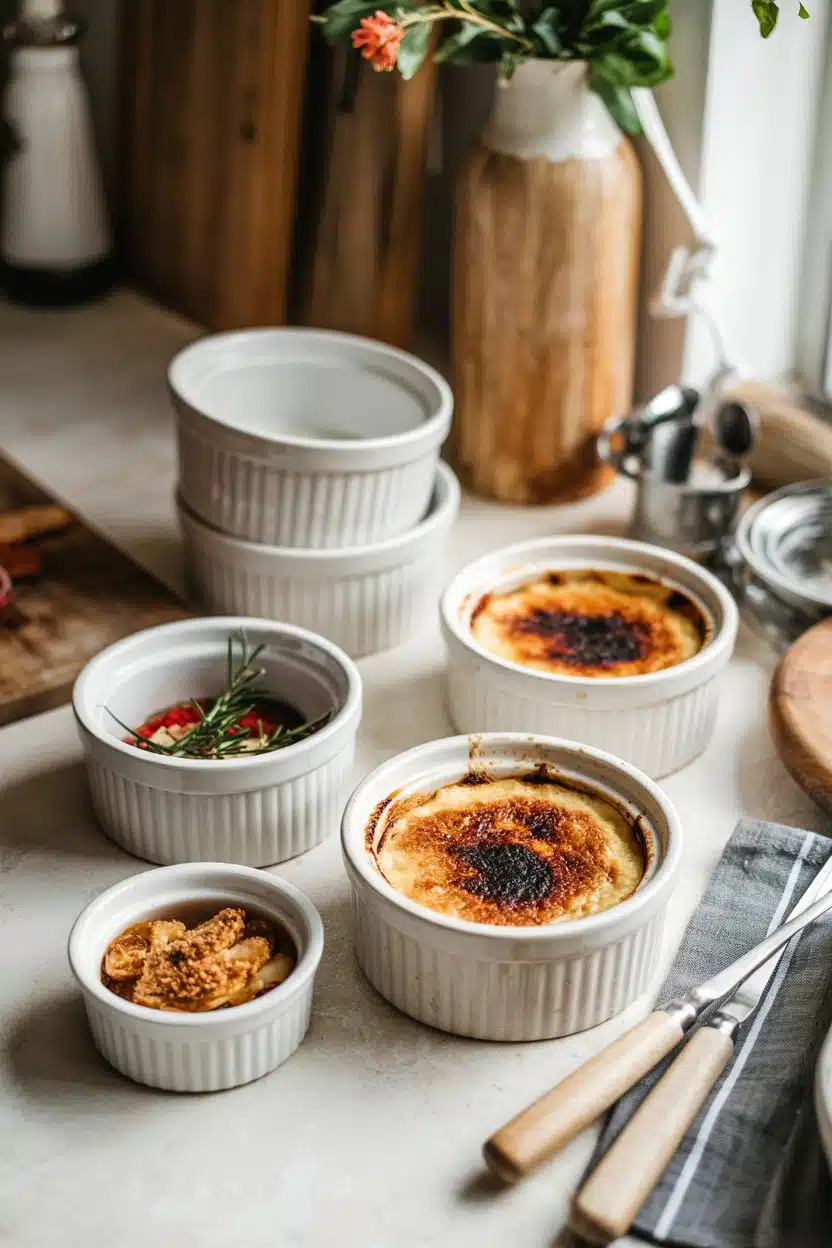
Ramekins are single-portion ovenproof vessels, typically ceramic or porcelain, built to go from freezer to hot oven and straight to the table. They're not flashy.
They don't need to be.
A ramekin is a small, straight-sided ceramic or porcelain dish designed for single-serve baking and serving. It contributes no flavor of its own, transfers heat evenly, and handles everything from crème brûlée to individual gratins. Ovenproof, stackable, and indefinitely reusable when intact.
What Is a Ramekin?
The word comes from French culinary tradition, though the exact etymology is debated - some trace it to a regional dialect term for a small baked cheese dish.
Remember it later
Planning to try this recipe soon? Save it for a quick find later!
Today, a ramekin refers specifically to a straight-sided, single-portion vessel used for baking, setting, and serving.
Most are ceramic or porcelain, though borosilicate glass versions exist for visibility into the set custard beneath.
Standard ramekins come in three practical sizes: 4 oz for bite-sized portions like individual chocolate lava cakes, 6 oz for crème brûlée and most custards, and 8 oz for larger servings such as personal pot pies or bread puddings.
The straight sides aren't decorative - they support a soufflé's vertical rise and make unmolding cleaner.
If you need a different vessel entirely, check out ramekin substitutes before improvising with a mug.
Flavor
Texture
Aroma
Mild
It doesn't react with food, doesn't release minerals into custard, and won't alter the flavor of a delicate crème brûlée the way a reactive metal pan might.
The material does, however, affect the result you taste. Ceramic's even heat distribution means custard sets at a uniform rate, preventing rubbery edges and a liquid center. That consistency is a real sensory outcome - just an indirect one.
One caveat: unglazed or poorly fired ceramic can be porous. Those surfaces absorb fats and acids over time, and a ramekin used repeatedly for strong-flavored dishes can carry faint residual aromas.
A clean, well-glazed dish - including lead-free ceramic when comparing aluminum vs ceramic cookware options - stays completely neutral.
How to Use a Ramekin
Ramekins do their best work in the oven, but they're genuinely multi-role.
The bain-marie (water bath) is the technique most closely tied to them: nestle ramekins in a deep baking dish, pour in hot water halfway up the sides, and bake.
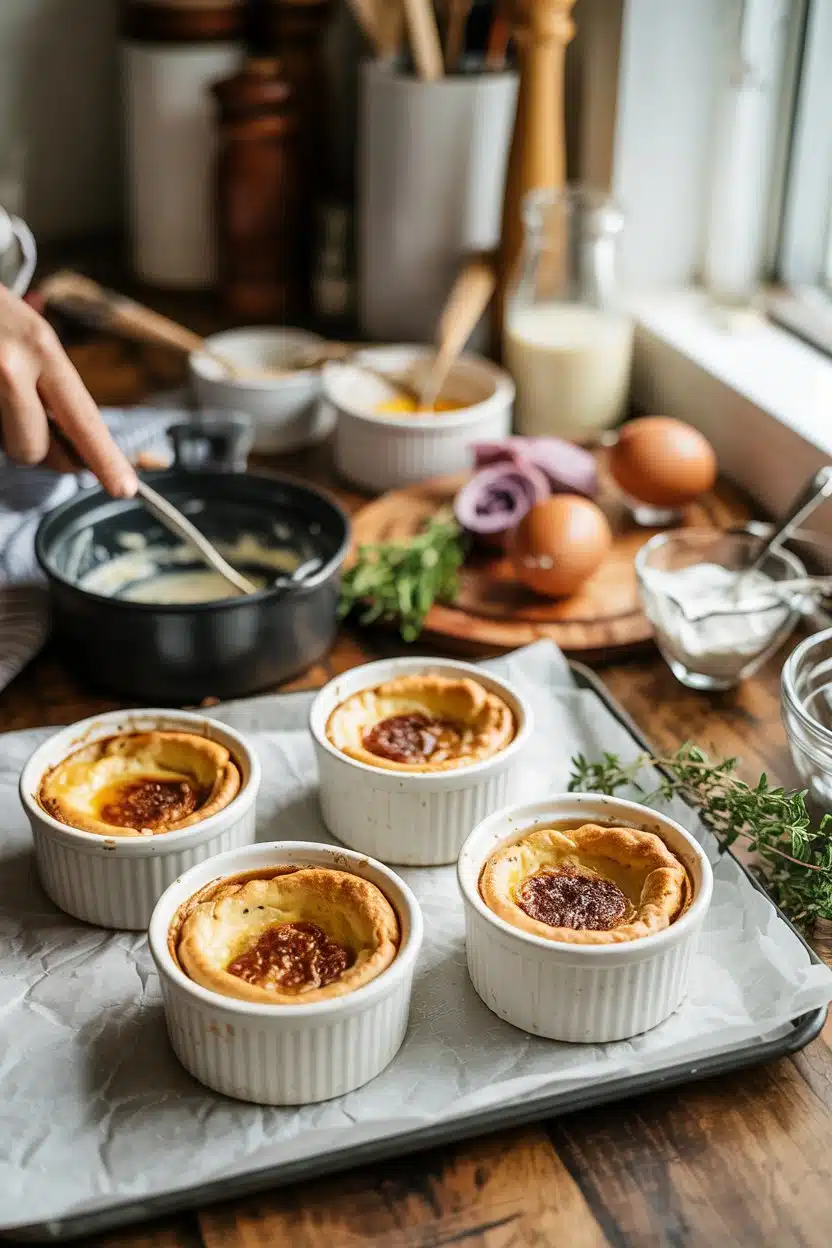
This indirect heat is what gives custards and flans their silky, trembling texture rather than a curdled one.
For tips on keeping crème brûlée fresh after the fact, that starts with proper ramekin-based chilling.
Beyond custard, ramekins handle individual gratins, personal pot pies, and small soufflés. At room temperature, they're useful for mise en place - holding pre-measured spices, minced garlic, or a tablespoon of butter before cooking begins.
| Method | Best For | Tip |
|---|---|---|
| 🔥 Water Bath | Custards, crème brûlée, flans, bread puddings | Use hot water and cover loosely with foil to prevent skin |
| 🍽️ Direct Bake | Individual pot pies, soufflés, personal gratins | Preheat the ramekin for faster bottom browning |
| 🔆 Broil/Torch | Brûlée sugar topping, browning breadcrumbs | Use thick-walled ramekins rated for high-temp broiling |
| ❄️ Chill/Set | Panna cotta, mousse, individual gelées | Lightly oil the interior for cleaner unmolding |
| 🥄 Mise en Place | Pre-measured ingredients, condiments, dips | 4 oz size is ideal for small prep portions |
🇺🇸 American
🇬🇧 British
🍽️ Fine Dining
Deep baking dish (bain-marie)
Sheet pan
Butter and breadcrumbs
Heavy cream
Silicone oven mitts
How to Buy and Store a Ramekin
Look for ramekins with a fully glazed interior - no exposed clay, no hairline crazing on the surface.
Check the base for a manufacturer stamp confirming oven-safe temperature.
Most quality ceramic ramekins are rated to at least 500°F; porcelain versions often go higher.
If you plan to broil or torch directly, choose thick-walled versions with an explicit high-heat rating.
Avoid older or uncertified imported ceramics for acidic foods, as some contain lead-based glazes.
Storage is straightforward. Stack ramekins with a thin cloth or paper towel between each dish to prevent chips.
Keep them on a low shelf - they're heavier than they look when stacked, and a fall chips the glaze cleanly.
Intact ceramic lasts indefinitely.
Replace any ramekin that shows cracking, crazing, or spalling, since damaged glaze can harbor bacteria and compromises thermal stability.
Which Ramekin Should You Start With
Four-ounce and six-ounce ramekins cover nearly every recipe that calls for one. Start with the 6 oz if you're making custards or crème brûlée.
Add 4 oz versions once you're using them regularly for mise en place or small desserts. The pairing ideas for soufflé will tell you whether a larger 8 oz version makes sense for your table.
Skip unglazed stoneware unless you know its food-contact rating. One good set of certified porcelain ramekins will outlast most other items in your kitchen.
Frequently Asked Questions
A 6 oz ramekin is the standard for crème brûlée - it gives you enough depth for a properly set custard while keeping the surface area wide enough for even sugar torching. Shallower ramekins (4 oz, wider diameter) also work and actually produce a higher ratio of caramelized crust to custard. Avoid anything deeper than 2 inches, as the custard at the center may not set evenly in a water bath.
Yes, but only with thick-walled ceramic or porcelain ramekins that have a confirmed high-temperature rating. Thin-walled or decorative ramekins can crack under the intense direct heat of a broiler element. Keep broiling time short - under three minutes - and never place a cold ramekin directly under a hot broiler, as the thermal shock can crack even quality ceramic.
Not all ramekins are oven safe - some sold as serving dishes or decorative vessels aren't rated for oven temperatures. Always check the base of the dish for an oven-safe stamp or manufacturer rating before baking. Borosilicate glass ramekins are a reliable alternative if ceramic labeling is unclear, as borosilicate is inherently thermal-shock resistant.
Place filled ramekins into a deep roasting pan or baking dish, then pour hot (not boiling) water into the outer pan until it reaches halfway up the sides of the ramekins. The water moderates the oven temperature around the ramekins, preventing the edges of custard from overcooking before the center sets. Pull the ramekins out with tongs or a wide spatula - the water makes the pan heavy and unsteady.
Yes - ceramic and porcelain hold heat longer than glass or metal, which means food inside continues cooking slightly after you remove the ramekin from the oven. This carryover effect matters most for custards and soufflés: pull them when the center has a slight jiggle, not when fully firm. For serving at the table, that retained heat also keeps individual gratins and pot pies warm longer than a standard baking dish would.



