
Lemongrass shows up in the broth of a tom yum soup recipe as a long, pale stalk you'd never eat whole - and that's exactly the point.
Most cooks encounter it as an infusing agent, something bruised and simmered and then fished out before serving.
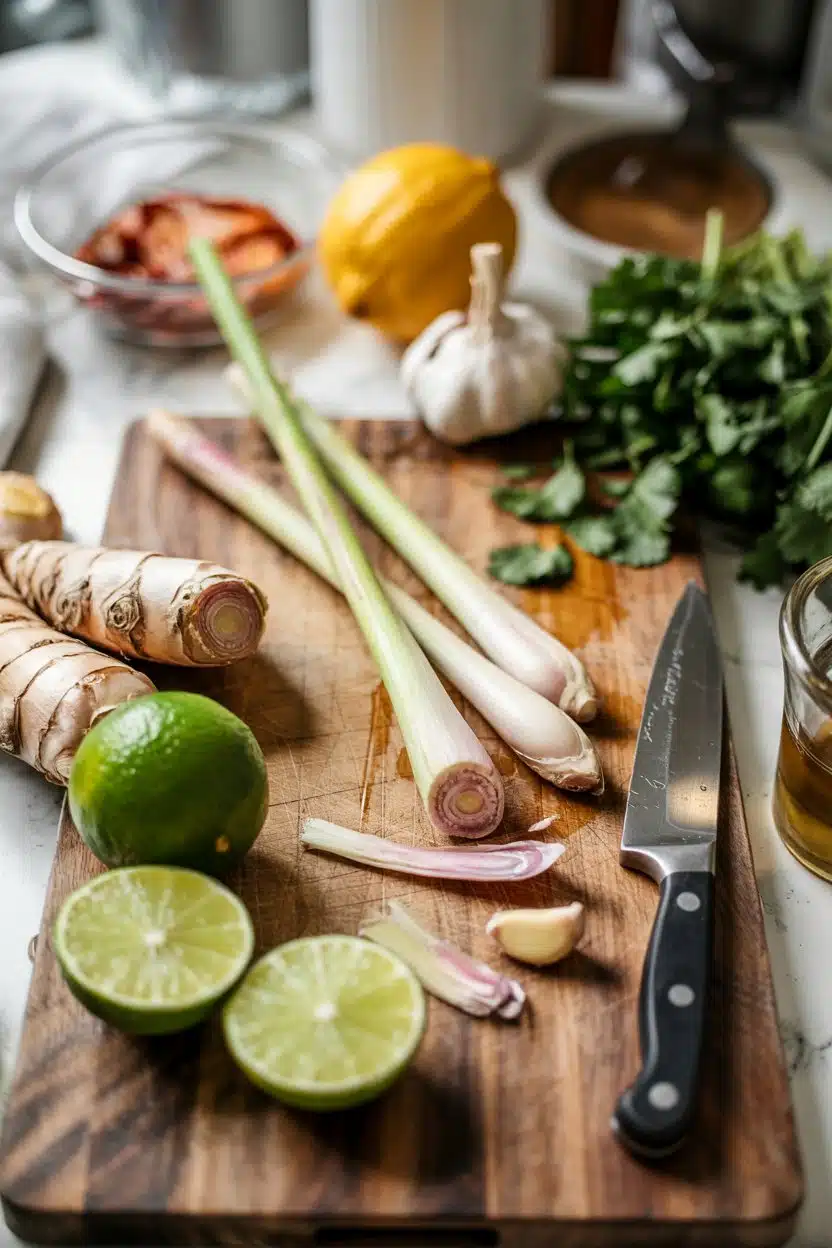
What's less obvious is how differently it behaves when you actually mince the inner core and eat it raw, or pound it into a paste that anchors an entire curry. Lemongrass is one ingredient with two very different personalities, and knowing which to call on makes a significant difference in the result.
Lemongrass is a fibrous aromatic grass native to Southeast Asia with a sharp citrus-lemon aroma and a mild ginger-herbal edge. Use it whole to infuse broths, or mince the pale inner core for raw applications. Fresh stalks keep 1-2 weeks refrigerated; frozen minced lemongrass lasts months.
What Is lemongrass?
Lemongrass - also called Cymbopogon, sereh, or Thai lemon grass - is a tall, tropical grass native to Southeast Asia.
Remember it later
Planning to try this recipe soon? Save it for a quick find later!
It grows in dense clumps, reaching up to three feet, and its value lies almost entirely in the aromatic compounds concentrated in its lower stalk and bulb.
The species most commonly used in cooking is *Cymbopogon citratus*, though a related variety, *Cymbopogon flexuosus*, is more common in Indian preparations.
The stalk has a hard, layered outer sheath and a pale, softer inner core. That inner core is the edible part - everything else serves mainly as an aromatic vehicle.
For pairing ideas for curry and other Southeast Asian dishes, lemongrass almost always appears alongside galangal and kaffir lime leaves as part of a foundational aromatic trio.
Flavor
Texture
Aroma
Strong
What Does lemongrass Taste Like?
The flavor is closer to lemon oil or lemon peel than to lemon juice - there's no acidity, no sourness. Instead, you get a clean, almost perfumed citrus note layered over a faint grassy bitterness and a whisper of ginger warmth.
The compound responsible is citral, the same volatile aldehyde that defines lemon myrtle and lemon verbena.
Heat changes things noticeably.
Raw, minced lemongrass hits with direct, sharp brightness - you feel it on the front of the palate.
Simmered whole in a broth, it mellows into a softer, more floral background note, never harsh.
That dual behavior is what makes it genuinely distinct from simply adding lemon zest - the two aren't interchangeable, and alternatives to lemongrass tend to approximate only one mode at a time.
How to Use lemongrass
Fresh whole stalks need a little preparation before they do anything useful. Trim the dry top third, remove the tough outer layers, and bruise the stalk with the back of a knife to rupture the cells and release the aromatic oils.
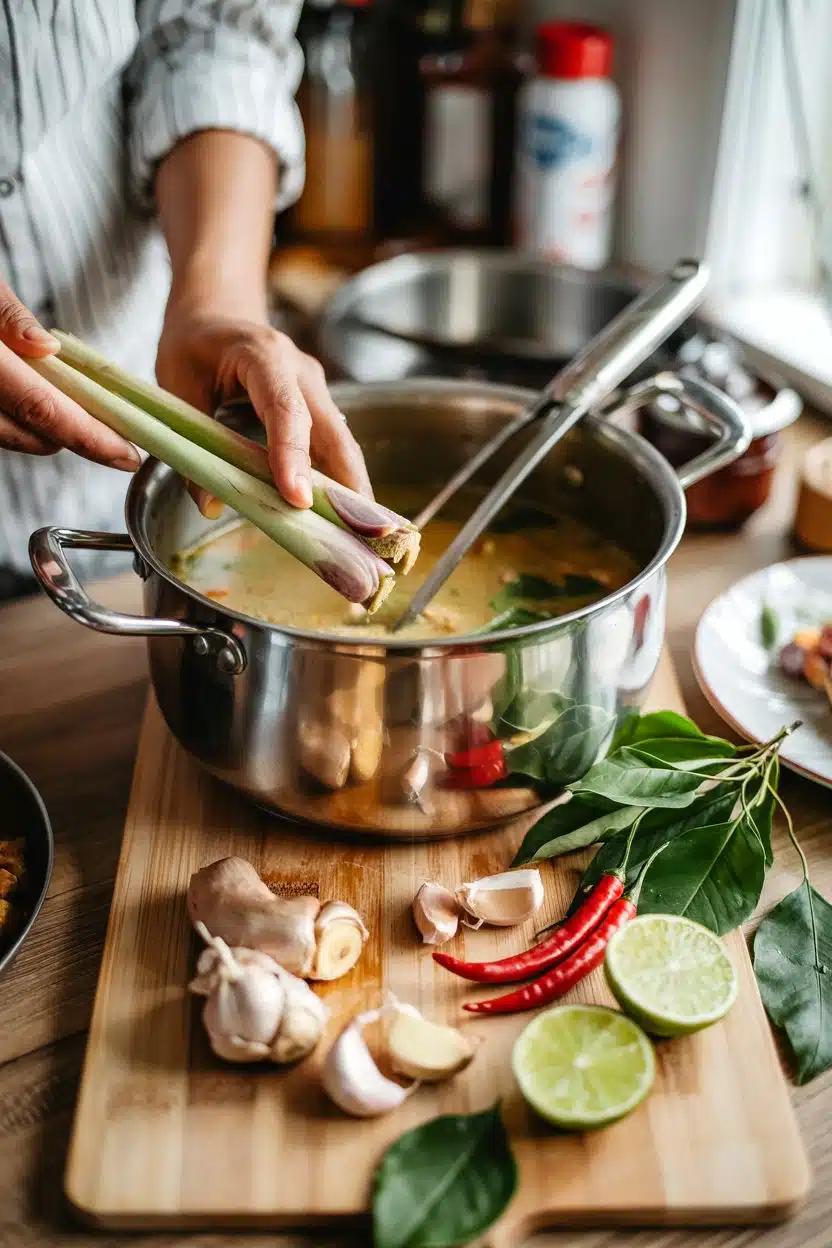
From there, your approach depends on the dish.
| Method | Best For | Tip |
|---|---|---|
| 🍲 Bruised & Simmered | Broths, soups, coconut curries | Tie in a knot to keep it contained; remove before serving |
| 🥗 Finely Minced | Thai larb, fresh salads, marinades | Use only the pale inner core; outer layers are too fibrous to chew |
| 🫙 Pounded into Paste | Thai curry paste, spice rubs | Combine with galangal and kaffir lime for a complete base |
| 🔥 Skewered & Grilled | Fish, shrimp, chicken | Wrap protein around the stalk; aromatic smoke infuses as it cooks |
| 🍵 Steeped | Lemongrass tea, simple syrups, cocktails | Bruise first; steep in near-boiling water for 10 minutes |
🇻🇳 Vietnamese
🇲🇾 Malaysian
🇮🇩 Indonesian
🇵🇭 Filipino
🇮🇳 South Indian
Note that lemongrass can overwhelm delicate fruit-based sauces, and it needs acid balance (lime juice, fish sauce) to avoid tasting flat in dairy-forward preparations.
kaffir lime leaves
galangal
chili peppers
fish sauce
shrimp
cilantro & mint
chicken
How to Buy and Store lemongrass
At the market, look for firm, pale-green stalks with a swollen, yellow-white bulb at the base.
The lower portion should feel dense, not spongy.
Pass on anything dry, split, or dark-spotted - those are signs the volatile oils have already degraded.
Pre-minced lemongrass in jars or tubes is convenient, however it loses sharpness quickly; check for preservatives if you want a clean flavor profile.
Store whole unwashed stalks wrapped in a slightly damp paper towel inside a sealed bag in the refrigerator.
Watch for lemongrass spoilage signs like soft spots, sliminess, or a musty rather than citrusy smell.
Whole stalks hold about 1-2 weeks refrigerated; frozen minced lemongrass keeps 3-6 months.
Understanding coconut milk's shelf life matters here too, since both ingredients frequently share the same curries and soups and have different storage windows.
Start Here If You're New to Lemongrass
Buy two or three fresh stalks.
Bruise one, drop it into a pot of broth with a knob of ginger, and let it simmer - that's the fastest way to understand what it does.
Mince the inner core of another stalk raw and stir it into a salad dressing to experience the sharper side.
If a recipe also calls for galangal and you don't have it, understanding the role galangal plays in the same dishes will help you decide whether to sub or skip.
Frequently Asked Questions
Yes, but only the pale inner core - the outer stalks are too fibrous and woody to chew comfortably. Finely mince or grate the inner core and it works well in Thai larb, fresh herb salads, and marinades where you want direct citrus sharpness without any cooking.
They're related but not identical. Both belong to the Cymbopogon genus and share citral and citronellal compounds, which is why both have a lemony scent. However, citronella grass (*Cymbopogon nardus*) is a different species grown mainly for insect-repellent oil production, not for cooking - its flavor is harsher and not suitable as a food ingredient.
Lemon zest approximates the citrus note but misses the herbal, ginger-adjacent warmth that citral in lemongrass provides. It works as a last-resort fix in simmered dishes, however it tends to turn bitter over long cooking in a way lemongrass doesn't. For a closer match, see [alternatives to lemongrass](https://forkliftkitchen.com/lemongrass-substitutes/) that combine zest with other aromatics.
Lemongrass contains small amounts of vitamin C, vitamin A, iron, and potassium, though quantities per serving are minor since it's used primarily as an aromatic rather than a bulk food. The compound citral has been studied for antimicrobial and anti-inflammatory properties in lab settings, but the amounts consumed in cooking are far below levels used in those studies. It's naturally gluten-free, vegan, and very low in calories.
Dried lemongrass works in long-simmered applications like broths and soups where there's time for rehydration, but it loses the volatile citral compounds that give fresh lemongrass its sharpness. It won't work at all in raw preparations like salads or fresh pastes. Rehydrate dried pieces in warm water for 20 minutes before adding them to a dish.



