
Many bakers treat spelt flour as a simple one-to-one swap for whole wheat, then wonder why their loaf collapsed or their cookies spread too thin.
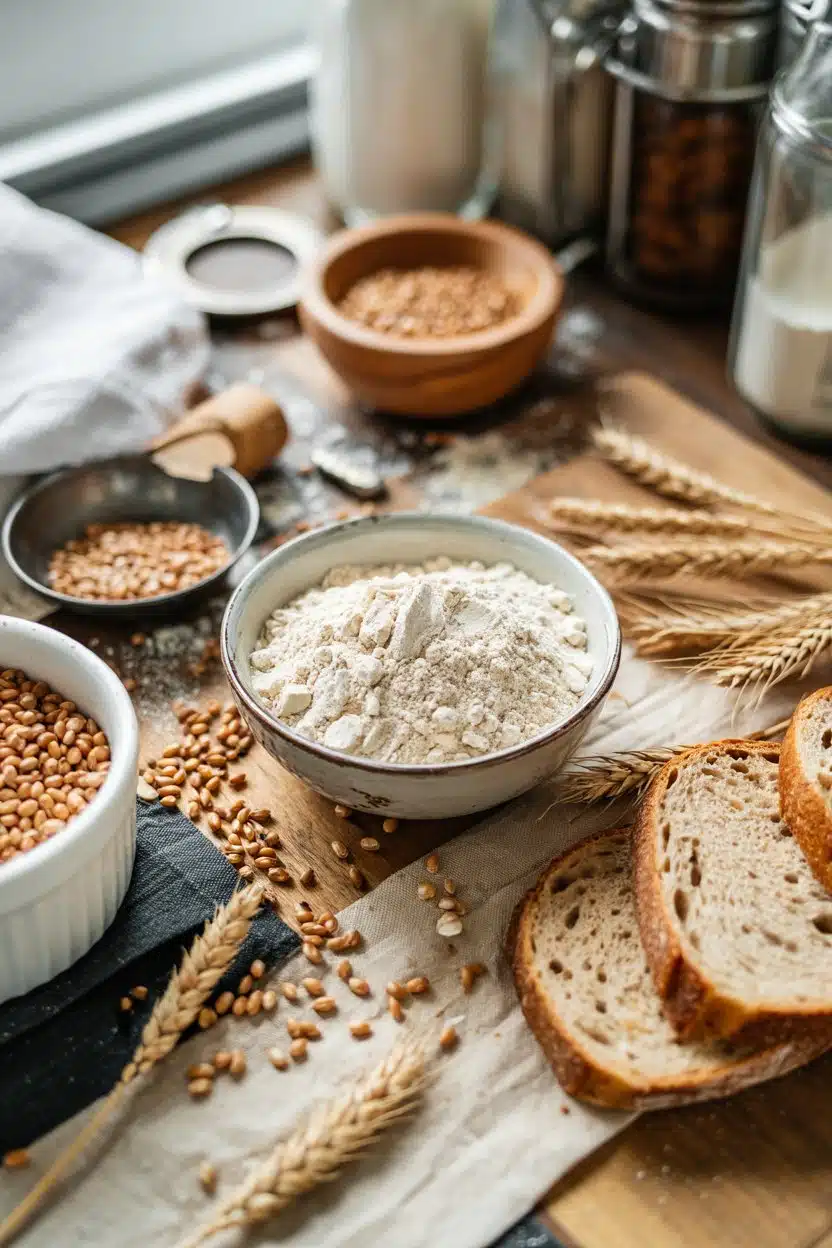
Spelt's gluten network is genuinely different - more extensible, less elastic - and that changes how you mix, hydrate, and proof every recipe that uses it.
Once you understand what the flour actually does, the nutty, mildly sweet results are worth the small adjustments.
Spelt flour is an ancient grain flour milled from Triticum spelta. It has a mild, nutty, slightly sweet flavor that's softer than whole wheat. Use it for rustic breads, pancakes, pasta, and baked goods - but always blend it with a stronger flour for high-rise loaves.
What is spelt flour?
Spelt flour is milled from spelt (*Triticum spelta*), a hulled ancient grain domesticated in the Near East and widely grown across Central and Northern Europe for centuries.
Remember it later
Planning to try this recipe soon? Save it for a quick find later!
In Germany it's called dinkel; in some Italian regions it goes by spelz or gets loosely grouped with farro, though true farro and spelt are distinct species.
It arrived in modern kitchens through the whole-grain revival of the 1970s and has stayed because it delivers wheat flavor with a character all its own.
Two main forms exist in retail. Whole-grain spelt flour keeps the bran and germ intact, giving a deeper tan color and stronger flavor.
White spelt (refined spelt) is sifted to remove the bran, producing a lighter, finer flour that behaves closer to all-purpose - useful context if you're already familiar with alternatives to all-purpose flour.
Flavor
Texture
Aroma
Moderate
What does spelt flour taste like?
Spelt flour tastes like a gentler, slightly sweeter version of whole-wheat flour. Where hard red whole wheat can carry a bitter, almost tannic edge, spelt stays in mild territory - the toasted grain note is present but never assertive.
Heat intensifies that toasted quality noticeably. A spelt pancake or a lightly browned spelt shortbread develops a warm, almost hazelnut-like undertone that raw batter doesn't hint at.
In yeasted bread, a longer fermentation draws out more sweetness from the grain's natural sugars.
White spelt reads even softer on the palate. The refined version still has a faint wheat sweetness, but the nuttiness recedes enough that it won't overpower delicate applications like crepes or a light muffin crumb.
How to use spelt flour
Spelt works best when you understand where its fragile gluten is an asset and where it needs support.
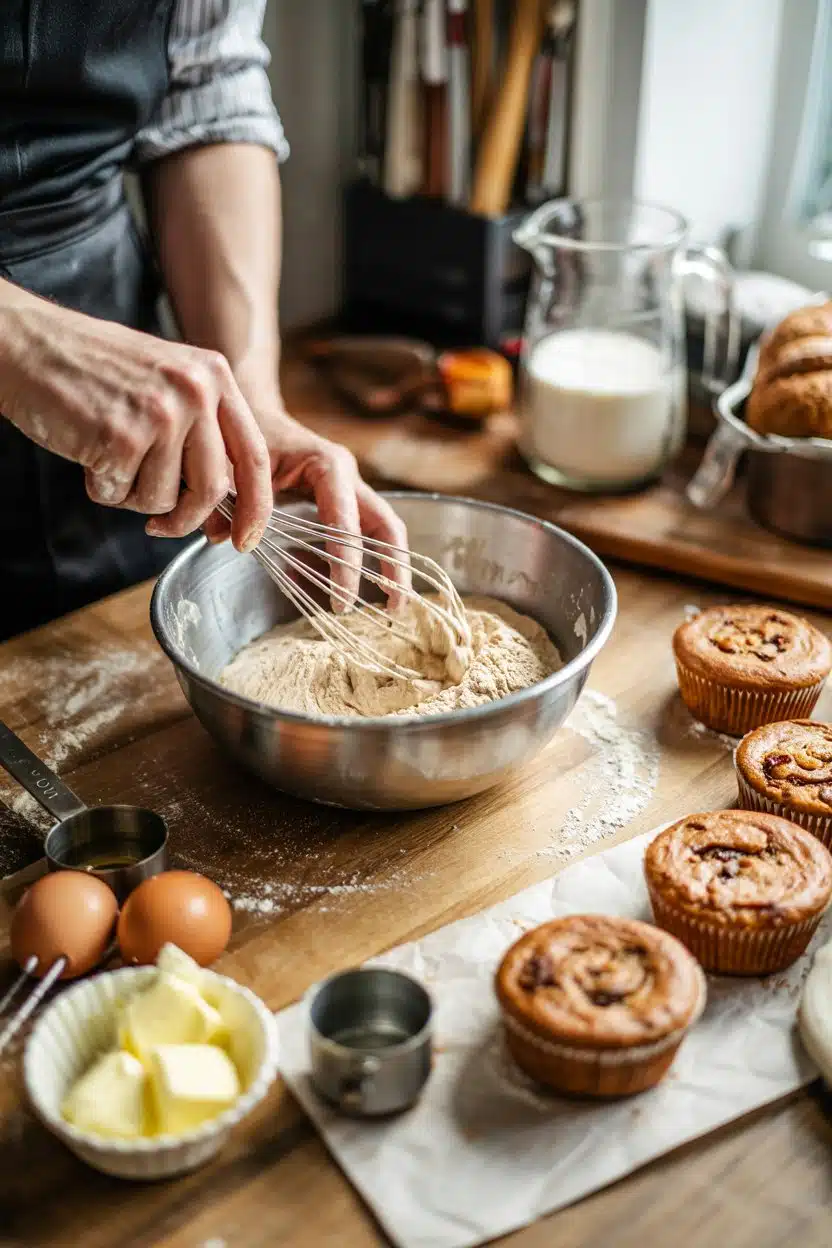
In quick breads, pancakes, and cookies, that tender gluten is exactly what creates a soft, short crumb.
In yeasted breads, blending it with a higher-protein bread flour prevents over-proofing and structural collapse - a common issue when bakers swap in spelt 1:1 without reducing hydration.
If you need a different grain character in a recipe, there are reliable spelt flour stand-ins worth knowing before you commit to a full bag.
| Method | Best For | Tip |
|---|---|---|
| 🍞 Yeasted Bread | Rustic loaves, spelt sourdough, focaccia | Blend with bread flour (50-70% spelt max); reduce hydration |
| 🥞 Pan-Fried | Pancakes, crepes, flatbreads | Don't over-mix batter; rest for 5 minutes before cooking |
| 🍝 Pasta | Fresh egg noodles, rolled pasta | Use white spelt for easier rolling; whole-grain tears more easily |
| 🧁 Quick Bakes | Muffins, scones, cookies, shortbread | Mix minimally - overworking develops tough texture |
| 🥧 Pastry | Pie crusts, tart shells | Chill the dough; short gluten makes for a flaky, crumbly shell |
🇮🇹 Italian
🇨🇭 Swiss
🇺🇸 Modern American
🌍 Northern European
honey or maple
Gruyère or feta
walnuts or hazelnuts
apples and pears
yogurt or cultured dairy
olive oil
How to buy and store spelt flour
At the store, choose between whole-grain spelt for full flavor and fiber or white spelt for a lighter result.
Stone-milled whole-grain spelt has a more pronounced nutty character than roller-milled versions.
Check the best-by date and, if buying from a bulk bin, smell before you scoop - stale whole-grain flour smells musty or faintly rancid from oxidized oils in the germ.
Store an unopened bag in a cool, dark pantry.
Once opened, transfer whole-grain spelt to an airtight container and refrigerate it.
Refined white spelt is more shelf-stable and keeps in the pantry for 6-12 months; whole-grain lasts 3-6 months at room temperature or up to 12 months refrigerated.
For a broader look at keeping spelt flour fresh, storage times vary by milling method and packaging.
Start with spelt if this sounds familiar
Reach for spelt flour when you want something with more character than all-purpose but without the heavy, bitter edge of hard whole wheat.
It rewards bakers who work with lower-protein flours - those who already enjoy swapping out farro or experimenting with ancient grains will find it intuitive.
Start with pancakes or shortbread to get a feel for the dough's behavior before moving to yeasted loaves.
Frequently Asked Questions
Yes, spelt contains gluten and is not safe for anyone with celiac disease. Some people with mild wheat sensitivity report tolerating spelt better, likely due to its different gluten composition, but this is not a clinically confirmed safe alternative to a gluten-free diet.
White spelt substitutes reasonably well at a 1:1 ratio in quick breads, muffins, and cookies, though you may need to reduce liquid slightly and avoid over-mixing. Whole-grain spelt is a coarser swap and works better at 50-75% of the flour weight, with the remainder made up by all-purpose. High-gluten applications like baguettes won't hold their structure on spelt alone.
The nutrient profiles are similar - both supply fiber, B vitamins, and manganese. Spelt does have a slightly different protein structure that some researchers link to better digestibility, but the evidence is not strong enough to call it categorically healthier. For most people, choosing between them comes down to flavor preference and how the flour behaves in a given recipe.
Spelt (*Triticum spelta*) and farro (*Triticum dicoccum*, emmer wheat) are related but distinct species - they're sometimes confused in Italian markets where farro piccolo is occasionally sold as spelt. As whole grains they look similar, but spelt berries are larger and their flours behave differently; you can read more about [cooking spelt berries vs wheat berries](https://forkliftkitchen.com/spelt-berries-vs-wheat-berries/) to understand the textural differences before milling or cooking either grain whole.
Spelt's gluten is more extensible and less elastic than modern bread wheat, so it over-proofs quickly and loses gas retention. The fix is to use a shorter proof time, reduce hydration by 10-15%, and blend spelt with a higher-protein bread flour rather than using it alone. Shaping gently and not pushing fermentation to the edge also helps the loaf hold structure in the oven.



