
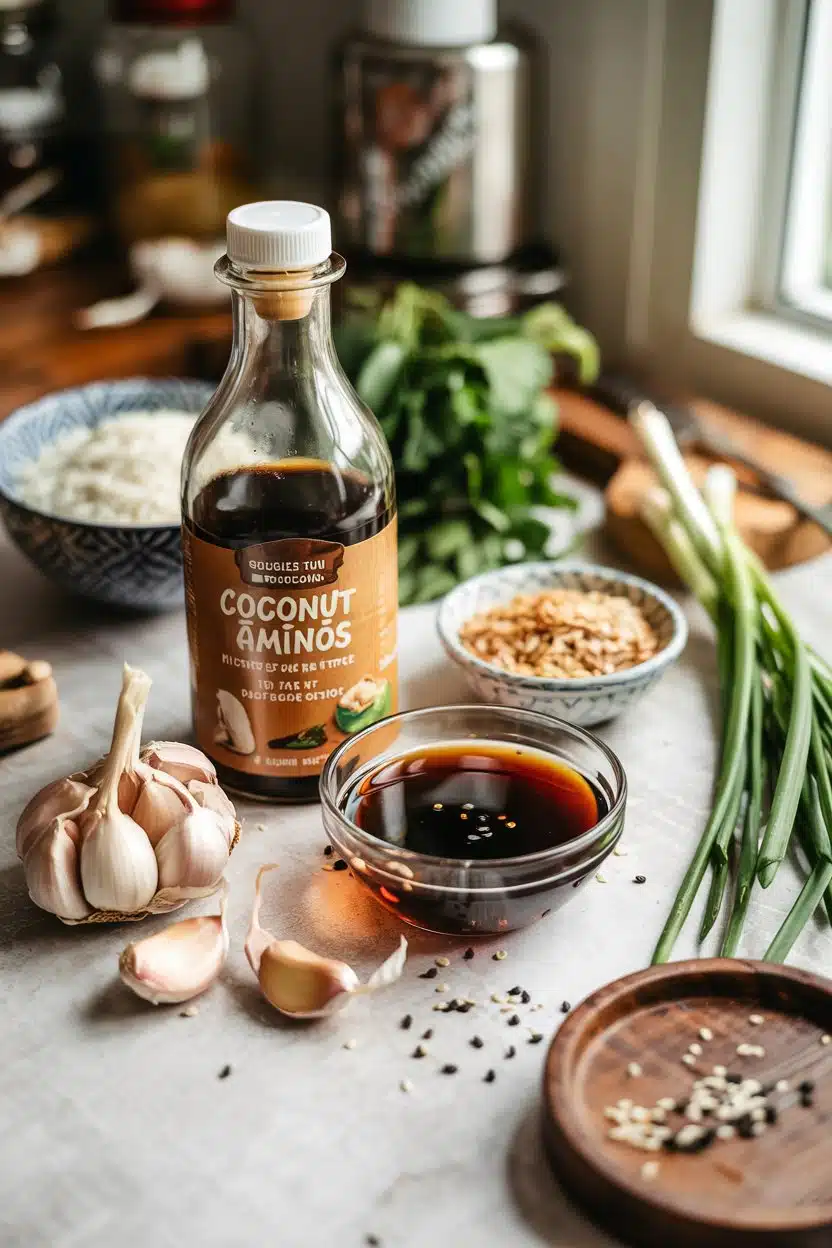
Most people reach for coconut aminos expecting a basic soy sauce swap and end up confused by the bottle - it's sweeter than expected, less sharp, and somehow works in dishes where soy sauce would overpower.
That's not a flaw.
It's actually how this condiment is supposed to behave.
Understanding what coconut aminos does on its own terms makes it far more useful in your kitchen than treating it like a weaker version of something else.
Coconut aminos is a fermented coconut sap condiment with a salty-sweet, umami-forward flavor. It's a go-to for people avoiding gluten or soy who still need depth in marinades, stir-fries, and dressings. Milder than soy sauce, with a subtle caramel edge.
What Is Coconut Aminos?
Coconut aminos is a fermented liquid condiment made from the sap of coconut palm blossoms, combined with salt and left to ferment.
Remember it later
Planning to try this recipe soon? Save it for a quick find later!
It originated in Southeast Asia - particularly influenced by Filipino and Indonesian food traditions - where coconut sap has been harvested and fermented for centuries.
The name "aminos" refers to the amino acids that develop during fermentation, though the product is not a protein supplement.
It falls into the category of seasoned fermented condiments, sitting alongside soy sauce, tamari, and fish sauce in terms of function. You may also see it labeled coconut amino sauce or coconut sap seasoning.
There are no major subtypes, though sodium levels vary noticeably between brands - some add extra salt, others keep it minimal.
Flavor
Texture
Aroma
Moderate
What Does Coconut Aminos Taste Like?
The closest comparison is a lighter, less aggressive soy sauce - but that framing undersells it. Coconut aminos carries a distinct brown-sugar sweetness that soy sauce doesn't have, and its fermented bite is noticeably softer.

Someone tasting it blind for the first time often registers it as savory-sweet rather than purely salty.
On the palate, the umami is real but restrained. It won't hit you the way a splash of fish sauce or tamari would, but it lingers.
The caramel edge becomes more pronounced when the liquid reduces during roasting or pan deglazing - heat concentrates the residual sugars from the coconut sap and deepens the flavor considerably.
Raw, it's gentle enough to use in dressings without dominating. Cooked at high heat, it darkens and sweetens further - which is useful in glazes but a liability in deep-frying, where it can scorch.
How to Use Coconut Aminos
Coconut aminos works in most situations where soy sauce is called for, with one caveat: the flavor is sweeter and milder, so you may need to adjust salt or acid to compensate.
Pairing it with rice vinegar or lime juice usually restores the balance that soy sauce achieves on its own.
| Method | Best For | Tip |
|---|---|---|
| 🥗 Raw | Salad vinaigrettes, dipping sauces, cold noodle dressings | Whisk with rice vinegar and sesame oil for balance |
| 🍳 Stir-frying | Weekday stir-fries, quick vegetable sautés | Add toward the end - early addition reduces flavor |
| 🔥 Glazing | Roasted vegetables, basted chicken thighs, ribs | Toss with oil and roast at 425°F; caramelizes well |
| 🥩 Marinating | Chicken, beef, tofu - 30-60 minutes is enough | Add garlic, ginger, and lime to round out the sweetness |
| 🥘 Deglazing | Ground meat sauces, braising liquids, pan sauces | Use small amounts - the sugar content can over-sweeten |
🇮🇩 Indonesian
🌏 Pan-Asian Fusion
🥑 Paleo / Whole30
🌾 Gluten-Free Adaptations
Classic pairings with ginger and garlic hold up especially well - both cut through the sweetness and reinforce the savory character of the aminos.
For dipping sauces, swapping out chili garlic sauce in favor of chili oil keeps the heat without adding sweetness on top of sweetness.
sesame oil
lime
chili flakes
ginger
scallions
rice vinegar
coconut milk
If you run out mid-recipe, swapping out coconut aminos with tamari or a low-sodium soy sauce gets you close, though the sweetness will be missing.
The reverse also works - coconut aminos can stand in among soy sauce stand-ins when gluten or soy is the concern.
How to Buy and Store Coconut Aminos
A good bottle has a short ingredient list: coconut sap, water, salt. That's it.
Some brands add yeast extract or cane sugar - worth checking if you're following a strict Whole30 or paleo protocol. Avoid any bottle that looks cloudy or has visible separation at the bottom, both signs of spoilage or poor production.
Store an unopened bottle in a cool pantry away from direct sunlight - it'll hold for 12 to 24 months. Once opened, move it to the refrigerator.
Cold storage slows the gradual color darkening and flavor drift that happens at room temperature. If you're unsure about long-term storage, the details on freezing coconut aminos are worth a look.
Start Here for the Best Results
New to coconut aminos?
Use it raw first - a simple vinaigrette with rice vinegar, sesame oil, and a clove of fresh ginger shows you exactly what it tastes like before heat changes it.
From there, try a quick weeknight marinade for chicken thighs: coconut aminos, garlic, lime, and a pinch of chili.
That combination covers everything the condiment does well in one simple recipe.
Frequently Asked Questions
Coconut aminos typically contains 90-130mg of sodium per teaspoon versus 280-400mg in regular soy sauce, making it a meaningful reduction for people managing sodium intake. It's also gluten-free and soy-free, which matters for those with intolerances. However, it contains trace sugars from coconut sap, so it's not a straight nutritional upgrade for everyone.
Yes, the swap works at a 1:1 ratio in most recipes. The result will be noticeably milder and slightly sweeter, so in savory dishes that depend on a salty punch - like a heavily seasoned ramen broth - you may want to add a small pinch of salt alongside it.
Coconut is classified as a tree nut by the FDA, so people with tree nut allergies should approach it with caution. That said, coconut allergies are relatively uncommon, and many people with tree nut allergies tolerate coconut without issue - but confirmation from an allergist is the right call before trying it.
Coconut aminos works well raw and is actually one of its stronger applications - the sweetness balances acid-forward dressings without the sharp fermented edge that raw soy sauce can bring. It blends cleanly into vinaigrettes, tahini-based dressings, and cold noodle sauces without needing to be cooked off first.
No - the coconut flavor doesn't survive fermentation. What remains is a faintly caramelized sweetness from the sap's natural sugars, but nothing that reads as tropical or coconut-forward. Most tasters identify it as savory-sweet before they'd ever guess the source ingredient.



