
Crack a coriander seed between your fingers and hold it close.
What hits you first isn't spice - it's something closer to lemon zest and warm wood, bright and dry at the same time.
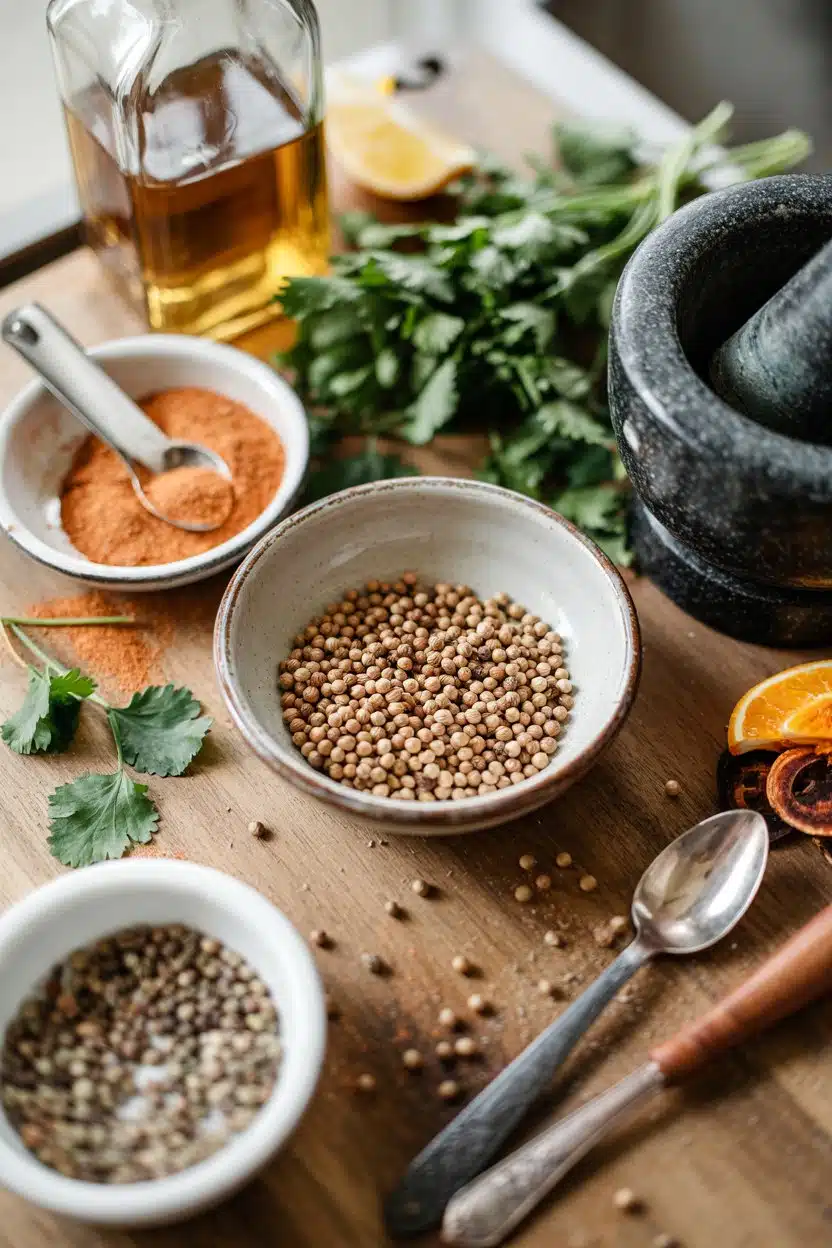
That dual identity is exactly what makes coriander seed one of the most useful spices in a serious pantry, capable of lifting a curry, rounding a pickle brine, or adding a subtle citrus backbone to a spice rub without ever announcing itself loudly.
Coriander seed is the dried fruit of the cilantro plant, used whole or ground to add a warm, citrusy, mildly nutty note to spice blends, braises, pickles, and rubs. It's moderate in intensity - assertive enough to define a dish, subtle enough to layer with other spices.
What Is coriander seed?
Coriander seed is the dried, round fruit of *Coriandrum sativum* - the same plant that gives us cilantro leaves and coriander root.
Remember it later
Planning to try this recipe soon? Save it for a quick find later!
It originates from the Eastern Mediterranean and has been cultivated across South Asia for thousands of years, making it one of the oldest recorded spice crops.
You'll find it sold under several names: dhania in Hindi-speaking kitchens, cilantro seed, and occasionally Chinese parsley seed.
Two regional types exist on the market. Indian coriander seed tends to be smaller, more aromatic, and higher in essential oil content.
Moroccan or European types are larger, paler, and milder. For most home cooking, Indian seed is the better pick.
Flavor
Texture
Aroma
Moderate
What Does coriander seed Taste Like?
The closest single-ingredient comparison is lemon peel crossed with warm nutmeg - citrus-forward but never sharp, with a dry nuttiness underneath that rounds out the brightness.
Ground coriander doesn't carry the soapy quality some people detect in fresh cilantro leaves; the volatile compounds responsible for that shift during drying.
Toasting changes the profile noticeably. Raw seeds are bright and a little grassy at the edges. Dry-toasting in a pan deepens the nutty note and pulls out a subtle woodiness, making the overall flavor richer and more complex without adding heat. Ground coriander bloomed in hot oil early in cooking - a step central to tadka technique - loses the citrus sharpness but develops a rounded, almost savory depth that works differently from the freshly ground version.
How to Use coriander seed
Coriander seed works at almost every stage of cooking. You can build with it at the start of a dish, layer it mid-cook, or use cracked seeds whole in long braises and pickle jars.
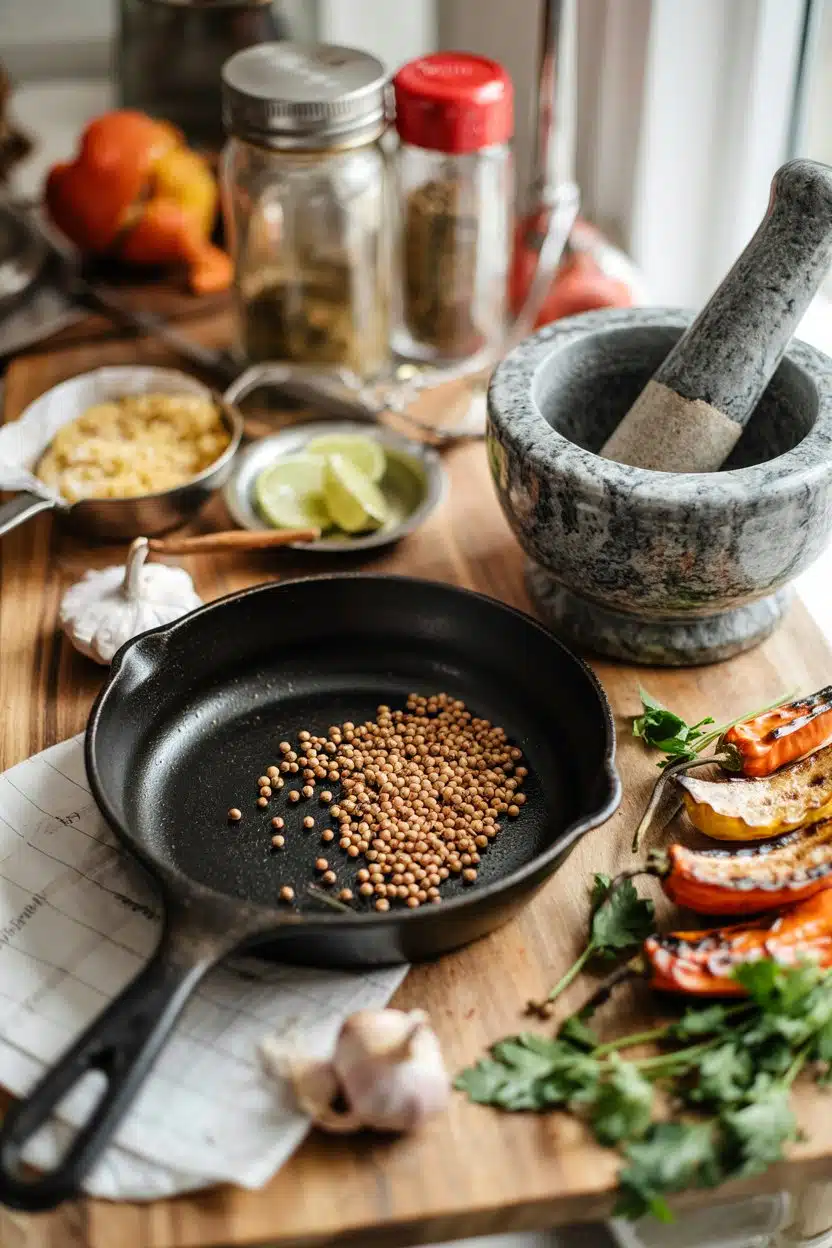
If you're after coriander seed swaps that work for a specific recipe, the replacement depends heavily on which role it's playing.
| Method | Best For | Tip |
|---|---|---|
| 🔥 Dry Toast | Spice blends, rubs, garam masala | Toast until fragrant, about 2 min; grind immediately after cooling |
| 🫕 Whole in Braise | Stews, braised meats, stocks | Crack seeds slightly so oil releases; remove before serving if texture bothers you |
| 🥒 Pickling Brine | Quick pickles, fermented vegetables | Use whole; seeds bloom in the acidic liquid over 24 hours |
| 🛢️ Oil Bloom (Tadka) | Dal, curry bases, lentil dishes | Add ground coriander to hot oil before other aromatics for maximum depth |
| 🍞 Baked | Gingerbread, spice cookies, flatbreads | Use freshly ground for baking; pre-ground loses citrus note fast |
Ground coriander pairs especially well in Indian cooking, where it forms the backbone of most curry pastes alongside cumin. Try it bloomed in oil at the start of a dal tadka yellow lentils recipe to see how much the bloom step changes the final flavor.
🌍 Middle Eastern
🇲🇦 North African
🇲🇽 Mexican
🌏 Southeast Asian
lemon & lime
garlic
chili
lamb & pork
yogurt
orange
How to Buy and Store coriander seed
Buy whole seeds whenever possible.
Good seeds are tan to light brown, uniform in size, and firm when you press one between your fingers.
Avoid bags that look dusty inside or smell flat when you open them - that's a sign the volatile oils have already faded.
For ground coriander, check for a roast or pack date and choose a small container from a reputable brand rather than a large bag you'll use slowly.
Whole seeds hold their best flavor for one to three years. Ground coriander is best within three to six months, after which the citrus note fades and you're left with something closer to sawdust.
For more on storing coriander seed correctly, including how to test freshness before you use it, that guide covers the specifics.
Where to Start with Coriander Seed
Start with whole seeds and a small dry pan.
Toast a tablespoon, grind it immediately, and smell the difference against whatever pre-ground version is already in your spice drawer.
If you cook Indian food regularly, treat it as a pantry staple alongside cumin.
If you're newer to it, crack a few seeds into your next pickling brine - that's the lowest-effort entry point and it's hard to overdo.
Frequently Asked Questions
They come from the same plant - *Coriandrum sativum* - but they're very different in flavor. The dried seed has a warm, citrusy, nutty character, while fresh cilantro leaves carry a bright, herbaceous flavor that some people find soapy. You can't substitute one for the other; they serve completely different roles in cooking.
Not really. The drying process breaks down the aldehydes that give fresh cilantro its distinctive - and sometimes polarizing - flavor. Coriander seed tastes closer to a combination of lemon peel and mild nutmeg, with none of the soapy or green notes associated with the fresh herb.
Yes, with adjustments. Use roughly three-quarters of a teaspoon of ground coriander for every teaspoon of whole seeds called for. The swap works well in curries, rubs, and baked goods, however it doesn't work in pickling or long braises where the whole seed releases flavor slowly over time.
Ground coriander is at its best within three to six months of grinding or opening. After that point, the citrus note fades first, leaving a duller, woodier flavor that won't contribute much to a dish. The quick test: rub a pinch between your fingers - if it smells faint or dusty, replace it.
Crack them lightly with the flat of a knife or the bottom of a heavy pan to open the seed coat, then add them directly to pickle brine, braising liquid, or hot oil. The cracking step is important - an intact seed releases very little flavor. In pickling, whole cracked seeds continue to infuse the brine over several days and are usually left in the jar.



