
That first bite of cooked wild rice surprises most people. The outer bran snaps cleanly under the tooth before giving way to a chewy, slightly yielding interior - a texture nothing else in the grain aisle quite replicates.
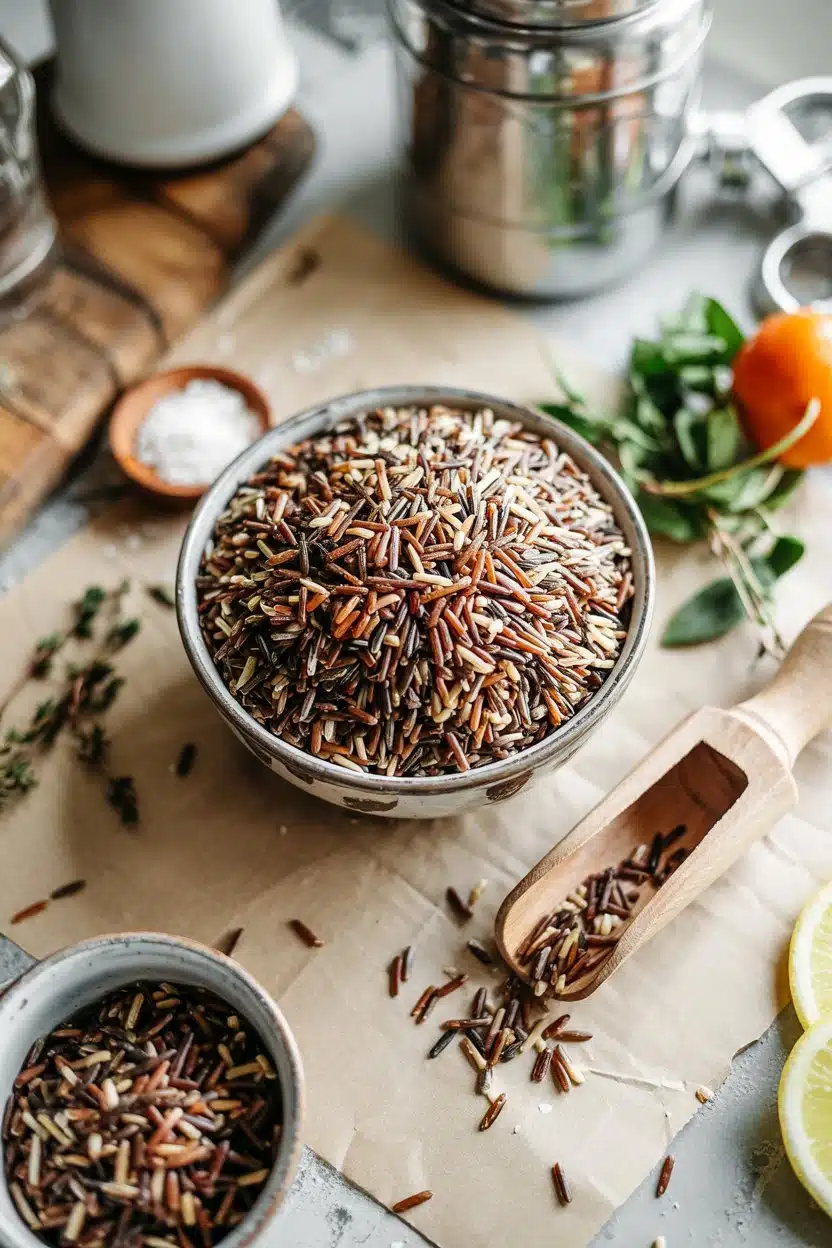
And the flavor follows suit: toasted, faintly smoky, with an earthy depth that makes plain white rice taste almost hollow by comparison.
Wild rice is a North American aquatic grass seed - not true rice - with long, dark grains, a firm-chewy texture, and a toasted, earthy, slightly smoky flavor. It works best in pilafs, soups, stuffings, and grain bowls. Uncooked, it keeps up to 12 months in the pantry.
What Is Wild Rice?
Wild rice is the hulled seed of *Zizania* - a genus of aquatic grasses native to the Great Lakes region and freshwater waterways across North America.
Remember it later
Planning to try this recipe soon? Save it for a quick find later!
It is not botanically related to Oryza sativa, the plant that gives us white and brown rice.
You may also see it labeled as manoomin (its Ojibwe name), Indian rice, or wild-grain, and it holds deep cultural significance for Great Lakes indigenous communities.
The grains are long, slender, and very dark - nearly black when raw - with a hard outer bran layer that remains intact after cooking.
Most commercial wild rice is *Zizania palustris*, harvested from cultivated paddies in Minnesota, California, and Canada.
If you're comparing it to everyday choices like swapping out brown rice, wild rice sits in its own lane: chewier, more assertive in flavor, and slower to cook.
Flavor
Texture
Aroma
Moderate
What Does Wild Rice Taste Like?
The closest comparison is toasted brown rice or barley in grain dishes - both share that roasted, slightly nutty backbone - however wild rice brings a more pronounced smokiness that neither quite matches.
There's also a faint grassiness underneath, a reminder that you're eating a seed harvested from open water rather than a cultivated paddy crop.
Cooking method shifts the flavor noticeably. Simmering in plain water keeps things mild and grassy.
Use a good chicken or turkey stock instead, and the toasted notes deepen into something almost woodsy.
Dry-toasting the raw grains in a skillet before simmering is the move if you want maximum flavor.
The smokiness intensifies within just a few minutes over medium heat, and the finished grain tastes far more complex than the package suggests it will.
How to Use Wild Rice
Wild rice needs time - plan for 35 to 55 minutes of gentle simmering, or around 25 minutes in a pressure cooker. The grains are ready when the outer husk splits and curls open slightly, exposing the pale interior.
Under-cooked wild rice stays tough and almost unpleasantly hard; don't rush it.
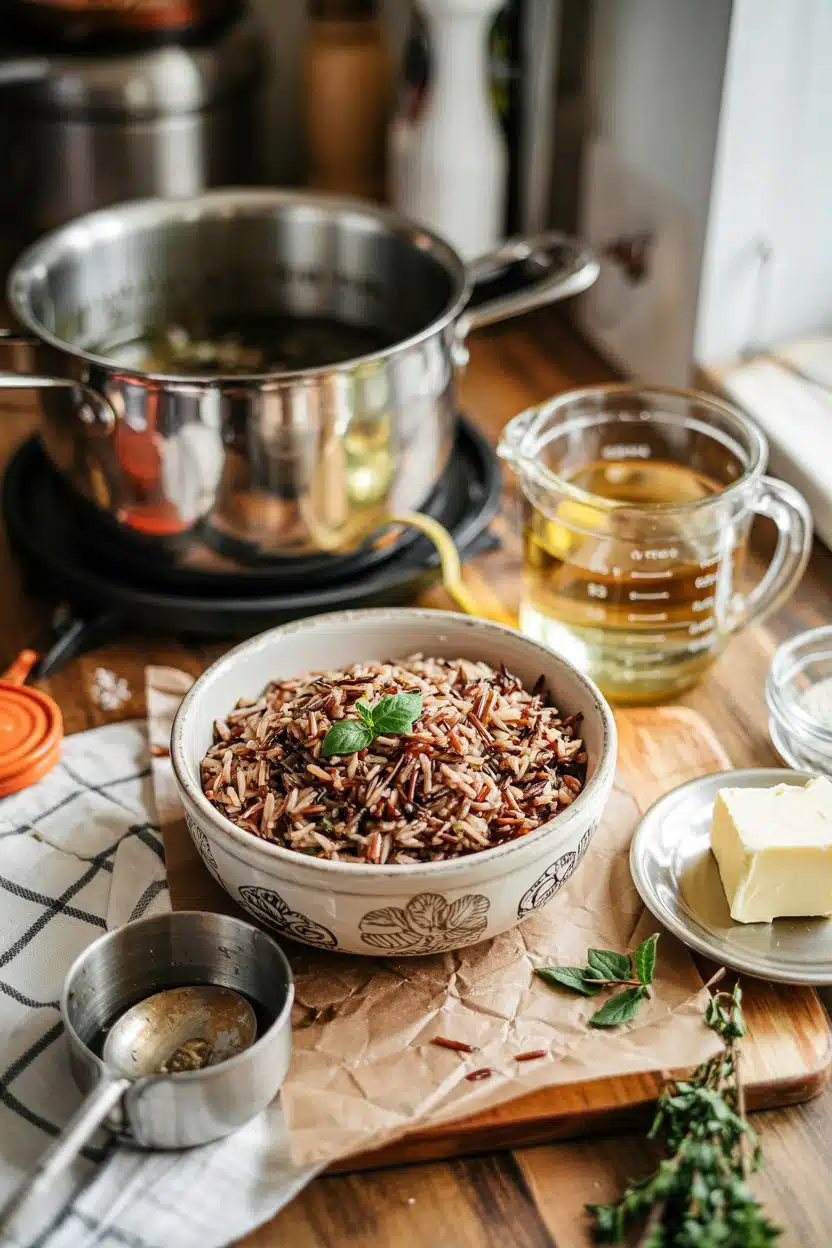
For most recipes, par-cook it separately first, then fold it into soups, casseroles, or stuffings.
This prevents it from absorbing all the liquid in a dish before other ingredients have a chance to cook.
Wild rice paired with dishes alongside it like roasted squash or mushroom ragù shows what it does best: hold its texture and contribute a chewy counterpoint to softer elements.
| Method | Best For | Tip |
|---|---|---|
| 🍲 Simmered | Soups, pilafs, grain bowls | Use stock, not water, for deeper flavor |
| 🔥 Dry-toasted first | Any preparation where flavor depth matters | Toast 3-4 minutes in a dry skillet before adding liquid |
| 🥘 Baked | Casseroles, stuffed squash, poultry stuffing | Par-cook to 75% done before baking to avoid over-absorption |
| ⚡ Pressure-cooked | Weeknight speed; batch cooking | Reduce cook time to 25 minutes; allow natural release |
🌿 Great Lakes Indigenous
🥗 Contemporary Grain Bowls
🍂 American Holiday Cooking
roasted squash
pecans & walnuts
dried cranberries or tart apples
thyme, sage & rosemary
chicken & turkey stock
One pairing to avoid: delicate fish. Wild rice's chew and smoky aroma overwhelm anything subtle.
Very sweet dessert contexts don't work either - the savory, earthy notes clash hard.
How to Buy and Store Wild Rice
Look for bags where the grains are long, intact, and glossy dark - almost black. Dust, broken pale stems, or a lot of powder at the bottom of the bag signals old or poorly handled stock.
For traditionally harvested manoomin from Great Lakes producers, choose vacuum-sealed packs with a printed harvest date whenever possible.
Unlike rice spoilage signs you'd watch for with white rice, wild rice rarely smells obviously off when stale - it just tastes flat and loses its characteristic snap. When in doubt, smell the dry grains: fresh wild rice has a faint toasty, grassy scent.
No scent at all usually means the grain is past its prime.
Where to Start With Wild Rice
Start with a simple pilaf. Cook the grains in chicken stock, then toss with toasted pecans and dried cranberries.
That combination shows you the full range - the chew, the smokiness, the way it handles fat and acid - without burying its character in a complex recipe.
If you want to swap it into an existing recipe, the wild rice swaps that work tend to be other chewy whole grains like farro in grain dishes. However, none of them replicate the smoky depth, so adjust seasoning accordingly.
Frequently Asked Questions
No. Wild rice is the seed of aquatic grasses in the genus Zizania, which is unrelated to Oryza sativa - the plant behind white, brown, and jasmine rice. They share a cooking method (simmering in liquid) and a similar role on the plate, however wild rice is botanically and nutritionally distinct, with more protein and fiber per serving than white rice.
Stovetop simmering takes 35 to 55 minutes depending on the age of the grain - older stock takes longer. A pressure cooker cuts that to around 25 minutes with a natural pressure release. The grains are done when the outer husk splits open and the pale interior becomes visible.
Yes, and it's a common approach - however cook them separately first. Wild rice takes 40+ minutes while white rice is done in 15 to 18 minutes, so combining them raw in one pot produces perfectly cooked white rice and still-tough wild rice. Combine them after both are cooked, or use a commercial wild rice blend that's been pre-processed to shorten cook times.
Manoomin is the Ojibwe word for wild rice, specifically Zizania palustris, and it refers to traditionally hand-harvested grain from Great Lakes waterways. It differs from commercial paddy-grown wild rice in flavor - often smokier and more complex - because of traditional parching methods used during processing. Manoomin from indigenous producers is typically sold in small batches and commands a higher price.
Wild rice is naturally gluten-free. It contains no wheat, barley, or rye, and is safe for people with celiac disease or non-celiac gluten sensitivity in its pure form. The one caveat is cross-contamination: if it's processed in a facility that also handles gluten-containing grains, check the label for a certified gluten-free designation.



