
Adobo sauce does something few other condiments can: it layers smoke, acid, and dried-chile earthiness into a single base that works at every stage of cooking - from marinade to finishing glaze to sandwich spread.
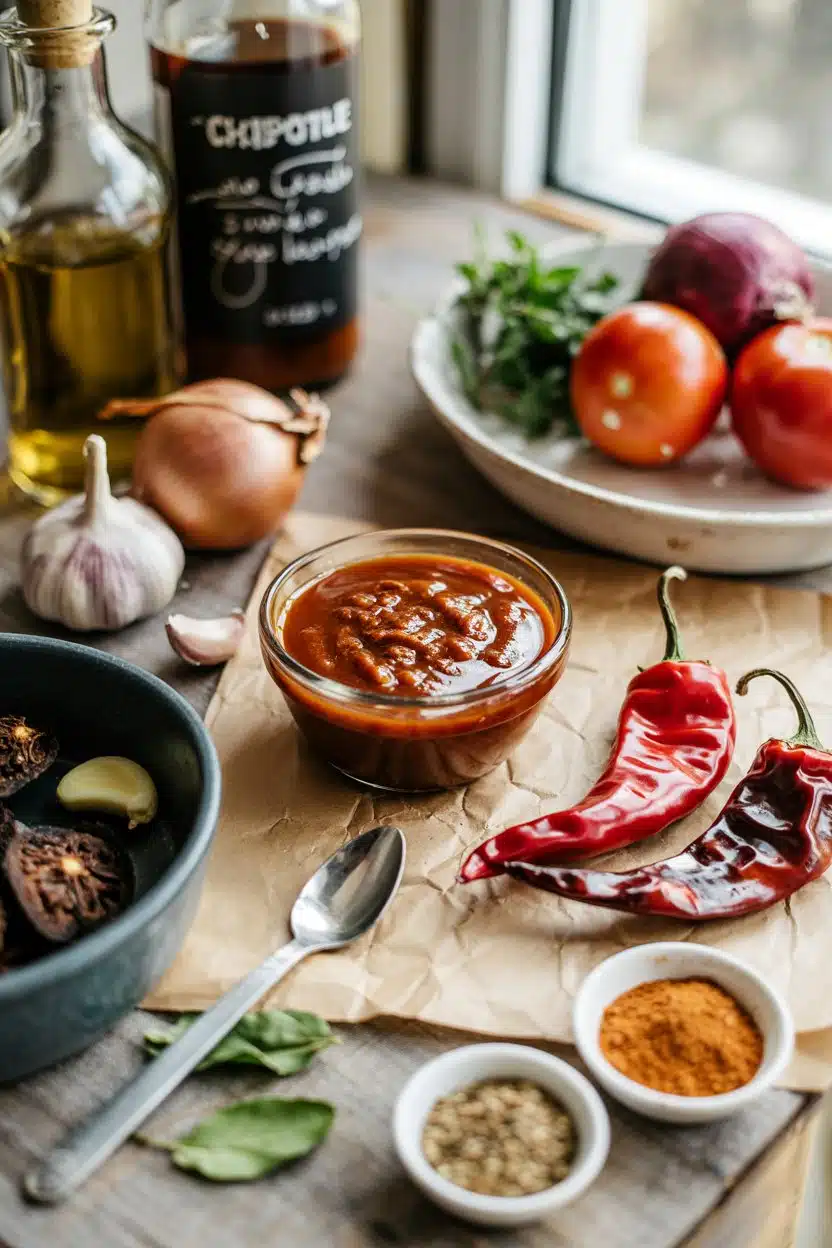
It's the reason a braised pork shoulder tastes different from the inside out than one simply seasoned at the table. Rehydrated dried chiles blended with vinegar, garlic, and oregano give it a depth that builds on itself.
Whether you're stirring a spoonful into black beans or brushing it onto chicken in the last minutes of grilling, adobo sauce pulls the whole dish together in a way that's hard to replicate - though if you need to, there are adobo sauce swaps that work.
Adobo sauce is a thick, reddish-brown Mexican chile sauce made from rehydrated ancho and guajillo chiles, vinegar, and garlic. It's moderately spicy, smoky, and tangy - used as a marinade, braise base, and spread. Opened jars keep 4-6 weeks refrigerated.
What is adobo sauce?
Adobo sauce is a chile-based sauce and marinade rooted in Mexican cooking, made by rehydrating dried chiles - most commonly ancho and guajillo - then blending them with vinegar, garlic, dried oregano, and spices like cumin.
Remember it later
Planning to try this recipe soon? Save it for a quick find later!
The result is a thick, reddish-brown sauce with a slightly oily surface and a deep, complex flavor.
Some recipes add tomato paste or a small amount of piloncillo to round out the acidity.
In Mexican kitchens, it functions both as a wet rub before roasting and as a cooking liquid for braises.
It shares category space with a Mexican salsa roja recipe but is richer, more concentrated, and built around vinegar rather than fresh tomato.
You'll also encounter chipotle in adobo - canned chipotle chiles packed in this sauce - which is one of the most common ways home cooks encounter it.
Filipino adobo is a different preparation entirely. It's a vinegar-and-soy braising liquid used on chicken or pork, with no dried chiles involved.
The shared name reflects a parallel colonial history with Spanish cooking traditions, not a shared recipe.
Flavor
Texture
Aroma
Moderate
What does adobo sauce taste like?
Think of a smoky barbecue sauce - then replace the sweetness with dried-chile earthiness and push the vinegar forward. That's the closest shortcut to understanding what adobo sauce delivers.
The ancho chile brings raisin-like undertones, while guajillo adds a mild berry-tinged heat that stays in the background rather than punching through.
Raw from the jar, the vinegar bite is noticeable. It softens considerably once the sauce hits heat, especially in a braise where it melds into the fat and liquid.
Reduced down on a grill, it turns slightly sticky and the smokiness concentrates.
The garlic and oregano stay present throughout cooking without becoming aggressive. This balance is what makes adobo sauce work across such a wide range of applications - it doesn't compete with the main protein, it anchors it.
How to use adobo sauce
Adobo sauce earns its place at every stage of cooking.
It starts as a marinade, survives the heat of a braise, and finishes strong as a glaze or spread.
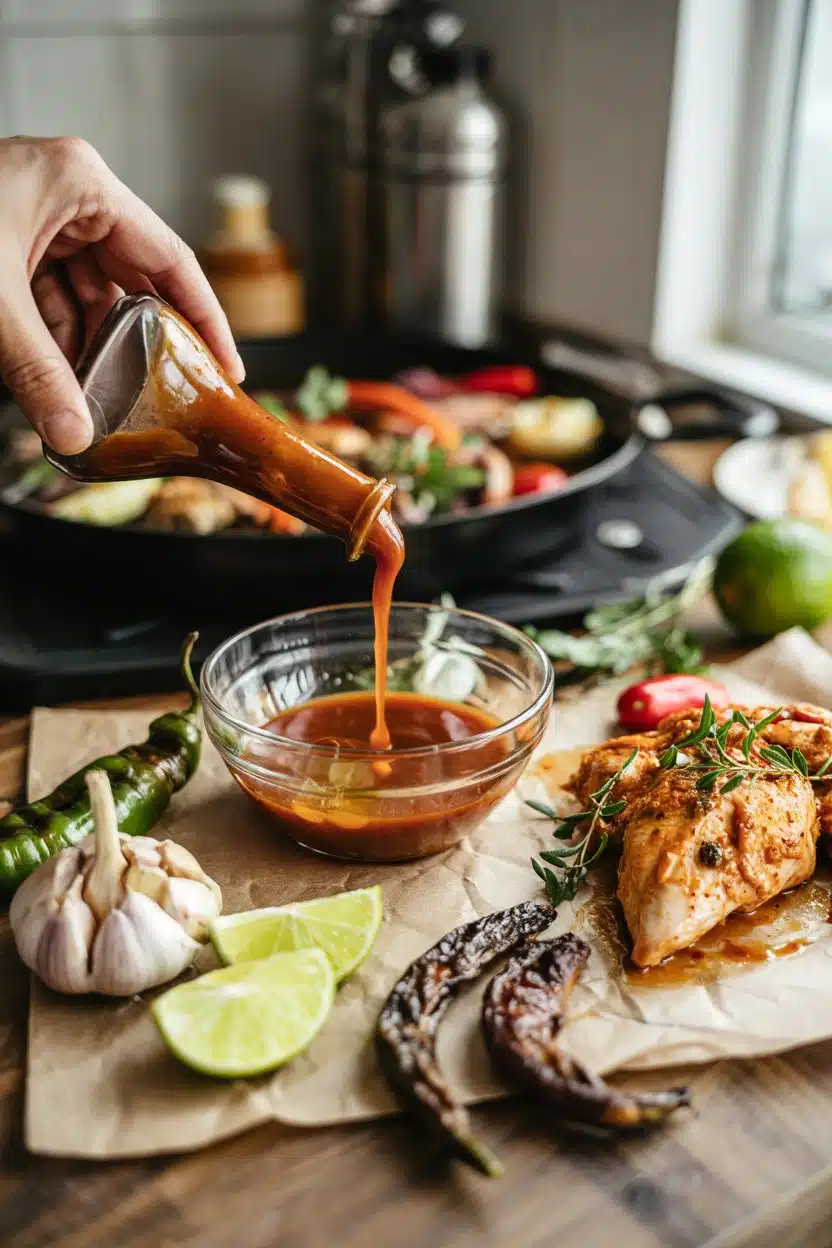
Two tablespoons stirred into cooked black beans or rice adds a smoky background that no single spice can replicate.
For something more involved, try it as a base component when making puebla mole poblano chicken at home.
| Method | Best For | Tip |
|---|---|---|
| 🥗 Spread/Blend | Sandwich spreads, mayo or crema mix-ins, dressings | Start with 1 teaspoon per ½ cup base; taste before adding more |
| 🍳 Marinate | Bone-in chicken, pork shoulder, beef flap | Marinate 2-24 hours; longer = deeper penetration |
| 🔥 Grill/Roast Glaze | Last 5-10 minutes on grilled pork or chicken | Apply thin layers - it scorches if applied too early |
| 🍲 Braise/Simmer | Pork braises, mollejas, enchilada sauce base | Deglaze with stock first, then stir in adobo to prevent scorching |
| 🍅 Blend into Sauces | Tomato-based pasta sauces, taco sauces, pizza toppings | Add to tomatoes while sautéing for an integrated smoky base |
🇺🇸 Tex-Mex
🇵🇭 Filipino (distinct preparation)
pork shoulder
black beans
tomatoes
lime
corn tortillas
rice
crema or sour cream
How to buy and store adobo sauce
Look for jars that list dried chiles - ancho, guajillo, or chipotle - and vinegar near the top of the ingredient list. A deep reddish-brown color and a smooth, slightly oily surface are good signs.
For canned chipotle in adobo, check the seams; bulging or rusted cans are a hard pass.
Once opened, refrigerate the sauce and plan to use it within 4-6 weeks. For detailed guidance on how long adobo sauce keeps under different conditions, including freezing, that's the full breakdown.
Homemade versions - made with fresh-ground chiles and no preservatives - last only 1-2 weeks refrigerated.
Unopened commercial jars hold well for up to a year in a cool, dark pantry. High sodium content acts as a natural preservative, which also means checking the label if you're watching salt intake.
Start with adobo sauce here
New to it?
Open a can of chipotles in adobo and use just the sauce - scrape it out, leaving the whole chiles behind.
Stir two teaspoons into mayo, spread it on a torta roll, and taste how quickly it changes the entire profile of a sandwich.
That's the clearest demonstration of what this sauce does without committing to a full braise.
Build from there.
Frequently Asked Questions
Adobo sauce is mildly to moderately spicy, depending on the chiles used. Ancho-based versions stay quite mild - closer to a warm hum than real heat - while chipotle in adobo adds a more pronounced smokiness and a slightly sharper kick. If your sauce comes out hotter than expected, stirring in a spoonful of crema or tomato paste brings it back into balance.
Chipotle in adobo is smoke-dried jalapeño chiles (chipotles) packed in adobo sauce and sold in small cans. The chiles absorb the sauce during packing, so both the solids and the liquid are usable. Most recipes call for just one or two of the chiles, so freeze the rest individually on a baking sheet, then transfer to a bag - they keep for months.
No - they share a name but are completely different preparations. Filipino adobo is a braising method using vinegar, soy sauce, bay leaves, and garlic; there are no dried chiles, and it produces a saltier, darker braising liquid. Mexican adobo sauce is chile-based and used as both a marinade and cooking sauce, often without any soy component at all.
Yes, with adjustments. Adobo sauce is wet and acidic, while chipotle powder is dry and concentrated. Use about one teaspoon of adobo sauce per ¼ teaspoon of chipotle powder called for, and reduce another liquid in the recipe slightly to compensate for the added moisture. The swap works well in braises, marinades, and sauces, but not in dry rubs.
Yes, adobo sauce freezes well. Spoon it into an ice cube tray, freeze until solid, then transfer the cubes to a freezer bag - each cube is roughly one to two tablespoons, which makes portioning straightforward. Frozen adobo sauce keeps for up to three months without noticeable flavor loss.



