
Fennel seed is the spice that quietly holds Italian sausage together, keeps Indian masalas grounded, and turns a brine into something worth tasting.
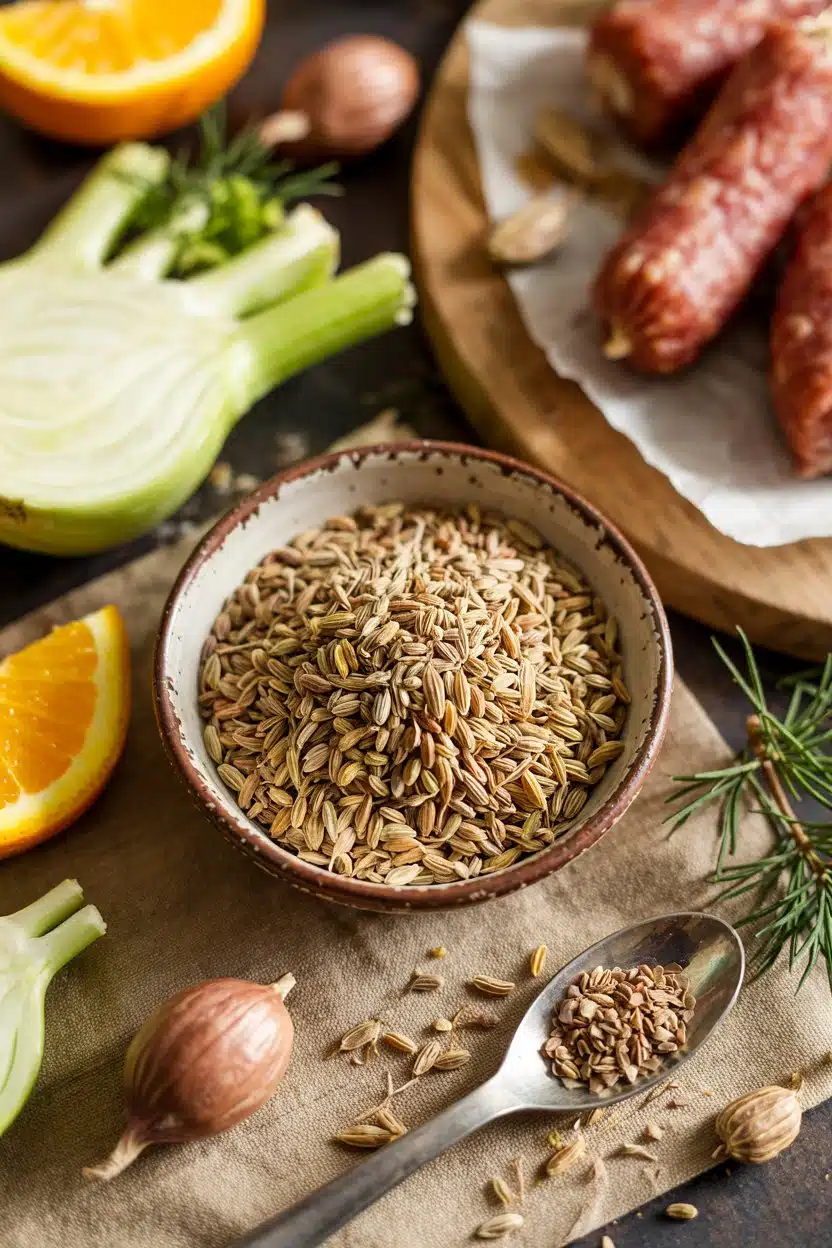
It's one of the oldest cultivated spices in the Mediterranean world, and yet most home cooks use it by instinct rather than understanding.
Foeniculum vulgare seeds bring a sweet-anise warmth that reads as both herbaceous and slightly peppery - a combination that, unlike anise swaps that work or star anise, stays mild enough to use generously without overpowering a dish.
Fennel seed is a dried spice from the Foeniculum vulgare plant, used whole or ground. It delivers a mild licorice-anise flavor with warm, slightly citrusy undertones. Found across Italian, Indian, and Mediterranean cooking, it suits savory rubs, brines, breads, and teas. Whole seeds stay fresh up to three years; ground loses potency within a year.
What Is Fennel Seed?
Fennel seed is the dried fruit of *Foeniculum vulgare*, a flowering herb native to the Mediterranean that spread early into South Asia and became essential there too.
Remember it later
Planning to try this recipe soon? Save it for a quick find later!
The seeds are small, oval, and ridged, typically green-brown when fresh and turning more grey as they age.
In India, the spice is called saunf and chewed after meals as a digestive aid.
In Italy, it's the backbone of fennel pollen and many regional sausage spice blends.
Botanically, what we call a "seed" is technically the whole dried fruit - each ridge marks a section of the plant's original structure.
The active aromatic compound driving its character is anethole, an essential oil shared with anise seed and star anise, though in fennel it appears at lower concentrations.
That's why fennel sits at moderate intensity rather than the sharper register of its botanical cousins.
If you work regularly with cumin or coriander in spice blends, knowing cumin swaps that work or coriander seed swaps that work can also help when building balanced masalas.
Flavor
Texture
Aroma
Moderate
What Does Fennel Seed Taste Like?
The first thing most people notice is the licorice - sweet, round, and faintly resinous.
It's the same anethole family as star anise, but where star anise hits sharp and medicinal, fennel seed stays warm and softer.
Think of the role anise seed plays in baking, then dial back the intensity by a third and add a faint peppery edge.
That's roughly fennel's register.
What makes fennel seed interesting is how it shifts with heat. Raw or whole, there's a clean crunch with a mild anise release.
Dry-toasted in a pan, the oils bloom and the flavor deepens - earthier, more aromatic, slightly nutty. Ground into a rub or dough, it disperses evenly and delivers warmth without distinct pockets of flavor.
There's also a subtle citrus quality underneath, most noticeable when the seed is freshly cracked.
It keeps the sweetness from feeling heavy, which is part of why fennel works in both savory sausage blends and sweet baked goods without tasting out of place in either.
How to Use Fennel Seed
Toasting whole seeds before adding them to anything is the single most effective step. Thirty seconds in a dry skillet over medium heat releases the anethole oils and shifts the flavor from bright-anise to deep and rounded.
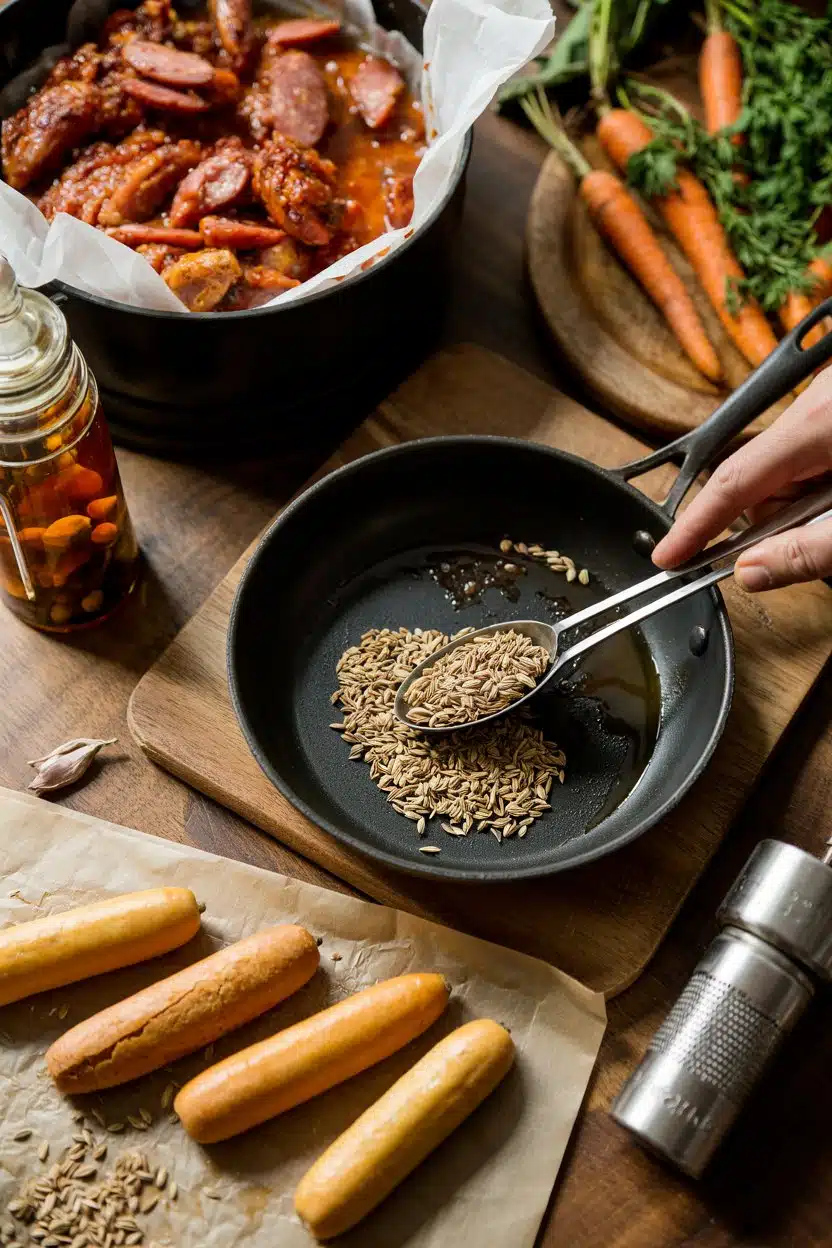
From there, use them whole or crush them with a mortar and pestle depending on the application.
| Method | Best For | Tip |
|---|---|---|
| 🥗 Raw/Whole | Pickling brines, digestive teas, chewing after meals | Add to cold brine and let steep at least 24 hours |
| 🔥 Toasted | Sausage blends, roasted vegetables, spice rubs | Toast dry before grinding - prevents bitterness |
| 🍞 Ground | Bread doughs, cookie batters, curry powders, masalas | Grind fresh from whole seeds for strongest aroma |
| 🫙 Infused | Syrups, custards, infused sugars for baking | Steep in warm liquid 15-20 minutes, then strain |
🇮🇳 Indian
🫙 Mediterranean
🌙 Middle Eastern
🌍 North African
One pairing worth knowing: fennel seed alongside citrus - particularly orange - sharpens both ingredients.
It's a natural fit for roasted fish dishes, slow-cooked pork, or a rye bread where you want complexity without sharpness.
For dishes where you need that anise note but don't have fennel on hand, see alternatives to fennel seed and replacements for anise seed depending on the recipe.
white fish
carrots
orange & lemon
cumin & coriander
honey
black pepper
vinegar
How to Buy and Store Fennel Seed
Good whole fennel seeds are uniformly green-brown, intact, and immediately aromatic when you open the bag. Dusty, dark, or already-crumbling seeds have lost most of their essential oils.
For ground fennel, the powder should look lightly golden and smell sharp - a jar that barely registers when sniffed is already past its useful life.
Store whole seeds in an airtight, opaque container in a cool, dark pantry - light and heat degrade anethole faster than age does. Ground fennel should go in a smaller jar to minimize air exposure.
For a full breakdown of timelines and signs of decline, see fennel seed's shelf life.
Where Fennel Seed Fits in Your Kitchen
Start with sausage or a dry rub if you're new to this spice.
That context - fat, heat, salt - is where fennel seed's sweet-anise character is most legible.
Move to Indian spice blends next, where it sits alongside cumin and coriander and takes on a warmer, rounder role.
Once you know how it behaves toasted versus ground, you'll find the right moment to use it in bread, brine, or an infused syrup without second-guessing the amount.
Frequently Asked Questions
No - they come from different plants entirely. Both contain anethole, which creates a similar licorice-like flavor, but anise seed (from Pimpinella anisum) is slightly stronger and more one-dimensional, while fennel seed carries a warmer, more complex note with mild pepper and citrus. You can often substitute one for the other in a pinch, though the result won't be identical. To understand [the differences between anise vs star anise](https://forkliftkitchen.com/anise-vs-star-anise/) and how all three relate, that comparison lays it out clearly.
Yes, and many people do - chewing a small pinch of raw fennel seeds after meals is common practice in South Asian households as a digestive aid. Raw seeds have a bright, sharp anise flavor that's slightly more aggressive than toasted. They're safe to eat directly from the jar, though the raw flavor won't suit every context the way toasted or ground seeds do.
Whole fennel seeds hold peak flavor for 1-3 years when stored in an airtight container away from heat and light. Ground fennel loses potency faster - typically within 6-12 months - because the increased surface area accelerates oil evaporation. Seeds don't spoil in a food-safety sense but become progressively weaker, so the test is always aroma: if sniffing them barely registers, replace them.
It shares the same anethole compound that gives black licorice its character, but the resemblance is partial. Fennel seed is warmer, less sharp, and carries sweetness alongside a faint peppery note - not the intense, sometimes polarizing punch of licorice candy. Most people who dislike strong licorice flavors can tolerate fennel seed in cooked dishes, especially when it's ground into a blend rather than used whole.
Yes - both come from Foeniculum vulgare, the same plant. The fennel bulb is the swollen base you cook as a vegetable; the seeds come from the plant's flowers once they dry. However, commercial fennel seed is typically harvested from varieties grown specifically for seed production, so the flavor profile can be more concentrated than seeds you might collect from a garden fennel plant at home.



