
That first warm bowl hits differently than plain pasta. There's a softness to egg noodles - a give, a slight chew, and a quiet richness that builds as you eat.

It doesn't shout. It settles in, carrying broth or sauce without disappearing into it.
Egg noodles are wheat-based noodles enriched with eggs or egg yolks, sold fresh, dried, or refrigerated. They cook faster than plain pasta and deliver a mildly eggy, wheaty flavor with a tender bite - suited for soups, stir-fries, and baked dishes.
What Is Egg Noodle?
Egg noodles are a category of enriched wheat noodle made by combining wheat flour - typically all-purpose - with whole eggs or egg yolks.
Remember it later
Planning to try this recipe soon? Save it for a quick find later!
The egg content is what sets them apart from plain semolina pasta: it raises the fat and protein levels, deepens the color to a warm yellow, and shortens cooking time.
They originated in Central and East Asia and were adapted separately in Eastern Europe, which is why you find them in both Chinese stir-fries and German *Eiernudeln*.
They come in a wide range of shapes - thin strands, medium ribbons, and wide flat cuts. Fresh egg noodles are sold refrigerated or loose at Asian markets; dried versions appear in standard grocery aisles.
In some contexts, you'll also hear them called egg pasta or, in certain Chinese applications, *chūka soba*.
Flavor
Texture
Aroma
Moderate
What Does Egg Noodle Taste Like?
The flavor lands somewhere between fresh pasta and tagliatelle - familiar and mild, but with more egg richness than plain semolina noodles deliver.
You notice the egg most in the finish: a faint, almost buttery depth that lingers after the wheat notes fade.
Fresh egg noodles carry that eggy warmth more openly. Dried versions pull it back, leaning harder on the wheat, with a slightly grainy bite before they fully hydrate.
Both versions absorb surrounding flavors - soy, sesame, cream, or broth - without losing their own character.
Heat sharpens the aroma noticeably. Drop them into hot chicken broth and the baked-wheat scent opens up immediately.
Pan-fry them after parboiling and the edges brown, adding a toasty layer that's absent when you simply boil and drain.
How to Use Egg Noodle
Egg noodles move easily across cooking methods and cuisines.
Boiling is the baseline: cook until just tender, drain, then finish in whatever sauce or broth you're working with.
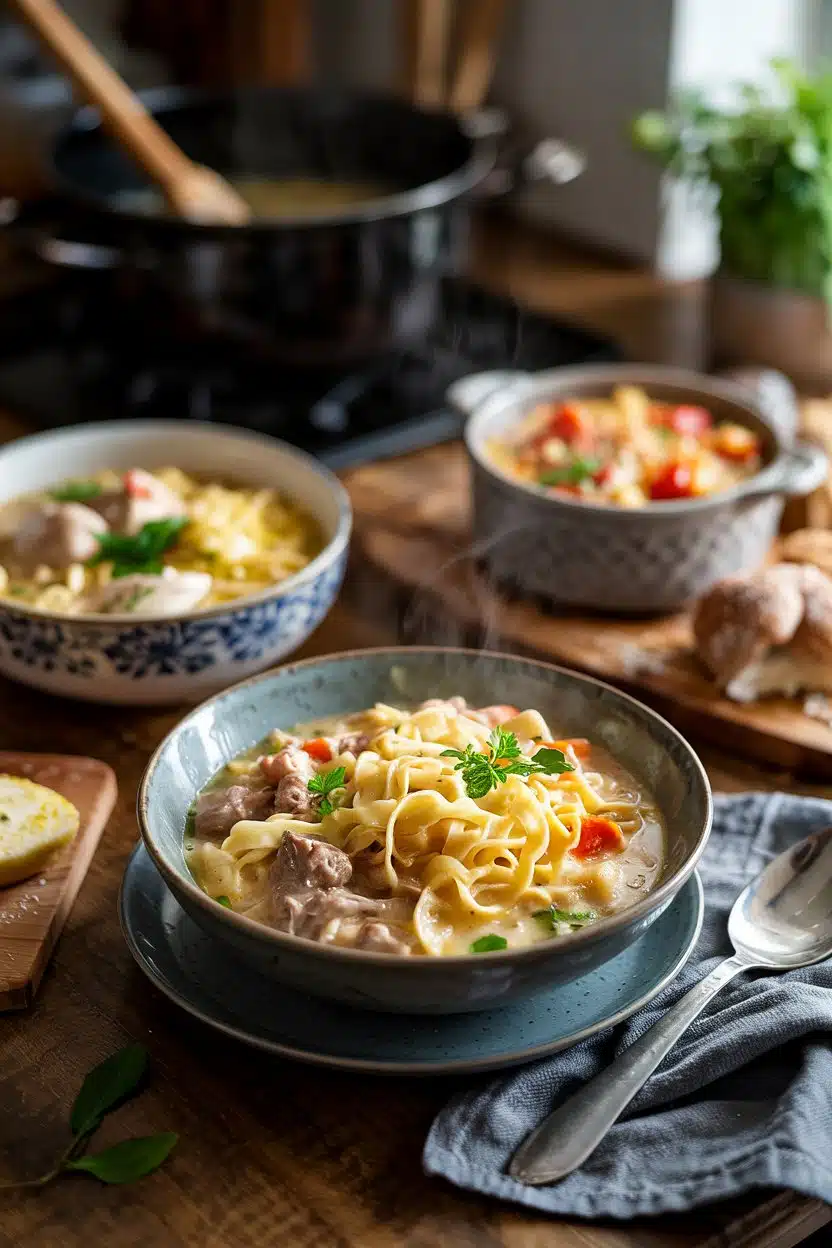
For stir-fries, parboil first - about one to two minutes less than package time - then toss directly into a hot wok with soy and sesame oil for a lo mein-style dish.
There are solid pairing ideas for egg noodles worth exploring if you want to build a full plate around them.
Baking is where dried egg noodles earn their place. Stroganoff and noodle kugel rely on their ability to absorb liquid and hold shape through oven heat.
For crispy edges, pan-fry cooked noodles in a little neutral oil - they brown well and add textural contrast to otherwise soft dishes.
| Method | Best For | Tip |
|---|---|---|
| 🍲 Boiled | Soups, buttered sides, cold noodle salads | Salt the water well; drain before adding to broth |
| 🥢 Stir-fried | Lo mein, scallion noodles, quick weeknight dishes | Parboil first; finish in a dry, very hot wok |
| 🫕 Baked | Stroganoff, kugel, creamy casseroles | Use dried noodles; they hold shape better under prolonged heat |
| 🍳 Pan-fried | Crispy noodle cakes, textured sides | Press into an oiled pan; don't move until the bottom sets |
🇩🇪 German
🇵🇱 Eastern European
🇺🇸 American
beef broth
sesame oil
butter
mushrooms
ginger and garlic
scallions
One thing to avoid: strongly acidic raw sauces or delicate fish proteins. The eggy richness can overwhelm mild fish, and raw acidic dressings tend to clash rather than complement.
How to Buy and Store Egg Noodle
For fresh egg noodles, look for bright yellow strands that are pliable and dry to the touch - avoid anything slimy or dull.
With dried versions, check the ingredient list for real eggs rather than egg powder, and skip packages with visible clumping or any off smell. Refrigerated packs should spring back when gently pressed.
Store dried noodles in a cool, dark pantry in their sealed original packaging.
Fresh or refrigerated noodles belong in the coldest part of the fridge inside an airtight container - use them within a few days.
For full guidance on keeping egg noodle fresh, including freezing tips, check our dedicated storage guide.
Frozen egg noodles last up to three months; freeze in a single layer before bagging to prevent clumping.
Start Here Based on What You're Cooking
Choose fresh egg noodles for chicken noodle soup, quick stir-fries, or any dish where you want clean, immediate flavor.
Fresh delivers more of that egg richness and cooks in under three minutes.
Reach for dried egg noodles when you're building a casserole, planning ahead, or need pantry reliability.
Either way, the base character - mild, wheaty, quietly rich - stays consistent, which makes egg noodles easier to cook with than most noodle types.
Frequently Asked Questions
Not exactly. Both use wheat flour, however egg noodles always contain eggs as a core ingredient, while many dried pastas - especially Italian semolina types - use only flour and water. The egg content in egg noodles raises the fat and protein, shortens cook time, and produces a distinctly richer, softer result.
Fresh egg noodles have a higher moisture content, cook in one to three minutes, and carry a more pronounced eggy flavor. Dried egg noodles take longer to hydrate, have a firmer initial bite, and hold up better in baked dishes like stroganoff or kugel where prolonged heat would turn fresh noodles mushy.
Rinsing is only useful if you're making a cold noodle salad - it stops cooking and removes surface starch, keeping them from clumping as they cool. For soups, stir-fries, or sauced dishes, skip rinsing entirely. The starch on the surface helps sauces and broth cling to the noodle.
Yes. Spread them in a single layer on a baking sheet and freeze until solid before transferring to a freezer bag - this prevents the strands from fusing into a block. Cook directly from frozen; don't thaw first or they'll become sticky and difficult to separate.
A standard ratio is one large egg per cup of all-purpose flour, with a pinch of salt and sometimes a small splash of water to bring the dough together. Using only yolks instead of whole eggs - roughly two yolks per cup - produces a richer color and more tender texture, similar to Italian fresh pasta.



