Most people refrigerate their sourdough starter without feeding it first, then wonder why it takes days to recover.
That single mistake - storing a depleted, highly acidic starter - is the fastest way to weaken your culture over time.
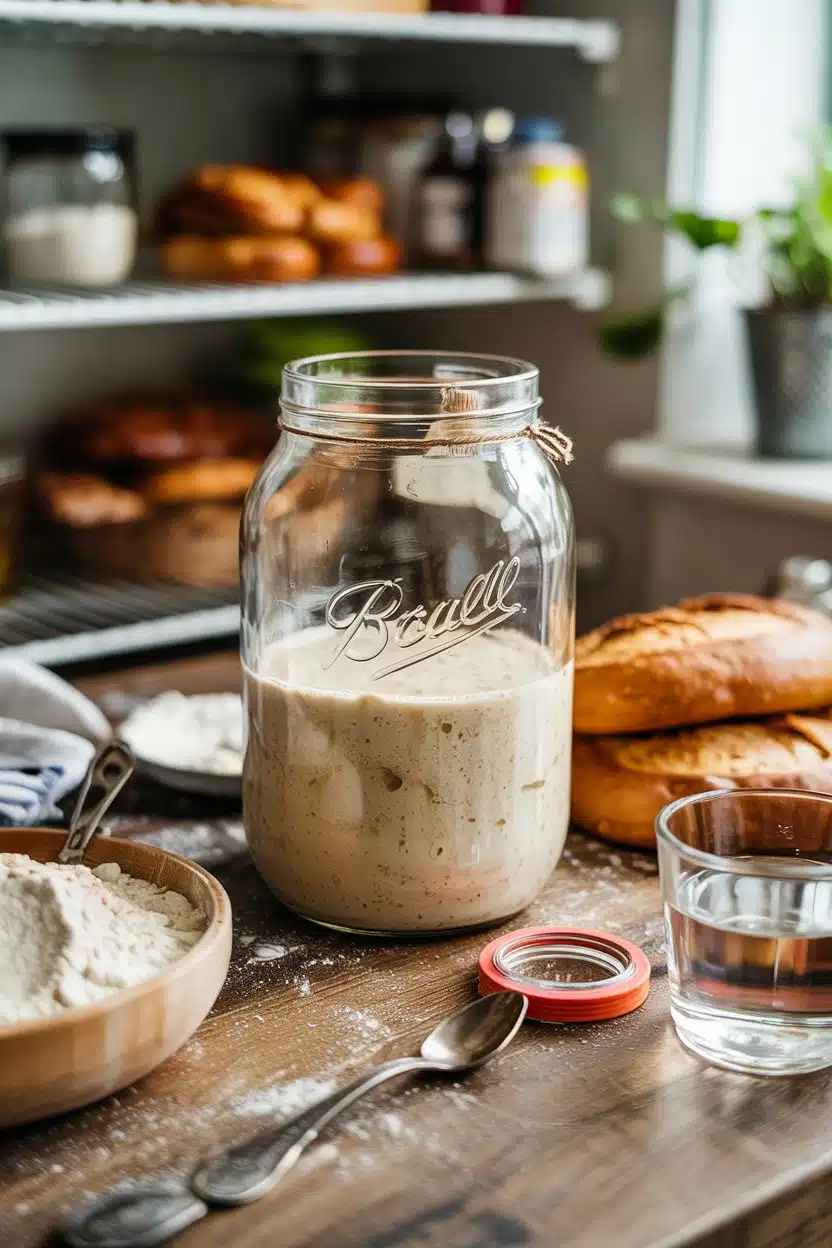
Feed before you store, every time.
A fed, active sourdough starter lasts 2-4 weeks in the fridge with regular maintenance, up to 6 months with weekly feeding, and 6-12 months frozen. Always feed before storing. A dehydrated backup can last 12-24 months if fully dry and airtight.
How Long Does Sourdough Starter Last?
Shelf life depends almost entirely on storage method and feeding frequency.
Remember it later
Planning to try this recipe soon? Save it for a quick find later!
A ripe starter held at room temperature will peak within 4-8 hours and begin collapsing - at that point, you have a short window before acidity climbs and wild yeast activity drops.
In the fridge, cold temperature slows fermentation dramatically, buying you weeks rather than hours.
| Method | State | Duration | Notes |
|---|---|---|---|
| 🪴 Counter | Active / Fed | 12-48 hrs | Use or refrigerate before it collapses post-peak |
| 🧊 Fridge | Regularly fed (1-2x/week) | 2-4 weeks | Feed before storing; discard and refresh each week |
| 🧊 Fridge | Dormant (weekly feed) | 4-6 months | Acidity builds over time; more frequent feeds preserve flavor |
| ❄️ Freezer | Active (frozen) | 6-12 months | Microbes survive if starter was at peak when frozen |
| ❄️ Freezer | Dehydrated flakes | 12-24 months | Most shelf-stable form; requires full rehydration before use |
Rye-based starters tend to tolerate longer dormancy slightly better than all-purpose wheat starters, largely because rye flour provides more nutrients for lactic acid bacteria to sustain themselves between feeds.
How to Store Sourdough Starter
Container choice matters more than most bakers realize.
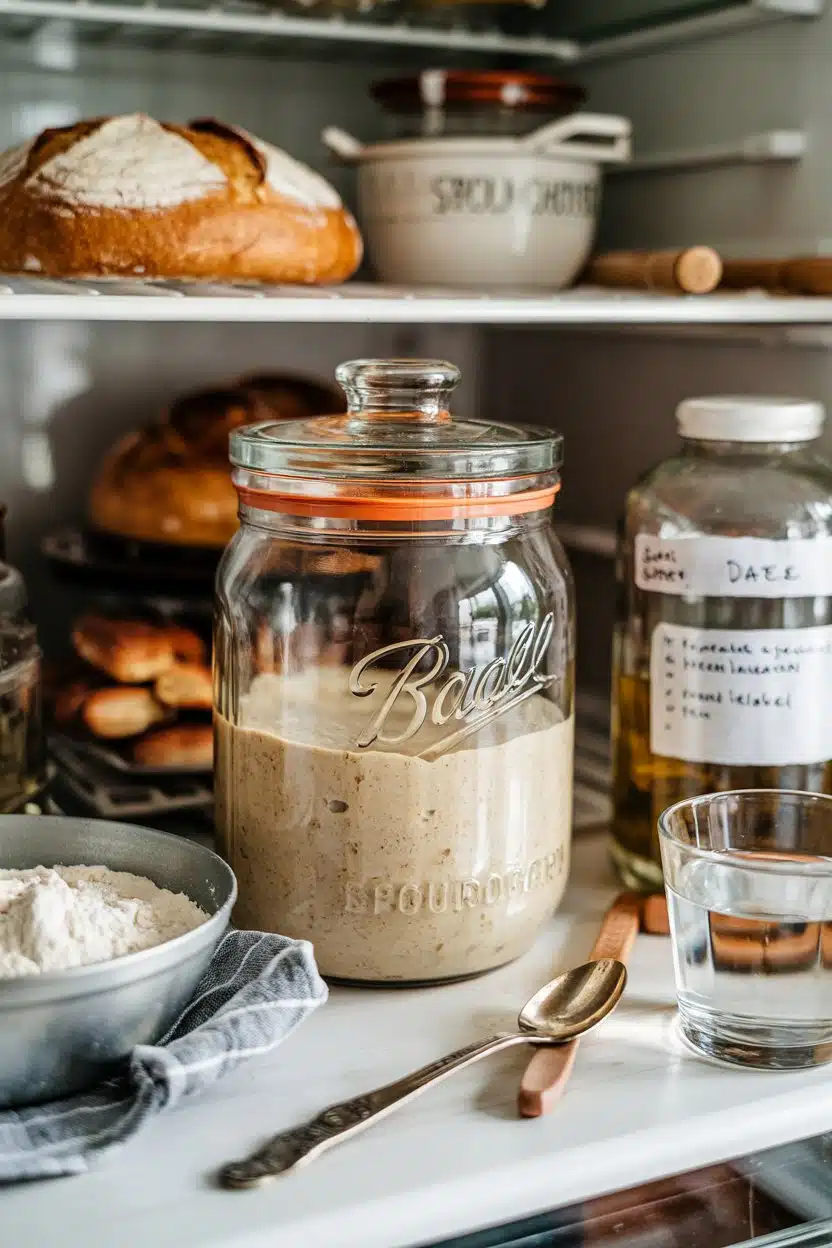
A glass jar with a screw lid or a plastic container with a small vent is ideal - mark the level with a rubber band after each feed so you can track rise without guessing.
12-48 hours
Keep a small active portion at room temp only when baking daily. Feed at a 1:1:1 ratio (starter:flour:water by weight) to maintain activity. In warm kitchens above 75°F, expect faster peaks and quicker collapse.
2 weeks - 6 months
Feed starter until it doubles or triples, let it rise 2-4 hours at room temp, then loosely seal and refrigerate. For weekly maintenance, discard down to 50-100 g, feed at a 1:2:2 ratio (starter:water:flour by weight), and return to the fridge after 2-4 hours.
Understanding how to store sourdough discard separately is worth the extra step - it keeps your main culture clean and gives you material for pancakes, crackers, or other uses between bake days.
Can You Freeze Sourdough Starter?
Yes, and it works well - provided you freeze a well-fed, active starter rather than a tired, over-acidic one. Cell viability is highest when the culture is at or near peak rise.
Freezing an unfed, thin starter means fewer surviving microbes and a longer, harder recovery.
- Feed to peak - Use a stiff, well-fed starter at a 1:1:1 ratio and let it reach full rise before freezing.
- Portion it out - Divide into 50-200 g portions in airtight, freezer-safe containers or heavy-duty bags with air removed. Leave headspace - an airtight sealed jar can crack as the starter expands.
- Consider dehydrating instead - Spread starter thin on parchment, dry at 95-105°F until brittle, then seal in an opaque airtight bag. Dehydrated flakes last up to 24 months.
- Label clearly - Note the flour type and refresh date. Rye-based starters recover slightly faster after freezing than all-purpose wheat starters.
- Thaw overnight in the fridge - Then bring to room temp, discard to 50-100 g, and feed at 1:1:1 every 8-12 hours. Expect 2-5 feedings before the starter regains its typical rise height and aroma.
Frozen starter often shows slower gas production for the first few feedings. Don't mistake sluggish early activity for failure - wild yeast populations rebuild with patience and consistent feeding.
Signs Sourdough Starter Has Gone Bad
Healthy starter smells sour, yeasty, and sometimes faintly fruity. Certain smells and sights signal something worse than hunger.
Visual Signs
- Pink, orange, or green streaks on the surface
- Fuzzy mold colonies - white, grey, green, or black
- Discolored dry crust that isn't simply dried-out dough
Smell Signs
- Putrid or cheesy odor that persists after feeding
- Solvent-like or nail-polish (acetone) smell that won't resolve
Texture Signs
- Slimy or viscous separation layer with colored patches
- Stringy or ropy consistency not caused by high-hydration flour
Do not skim colored mold and continue. Once pink or fuzzy growth appears, discard the entire batch and start fresh.
An absence of bubbles alone - especially after freezing or extended refrigeration - is not spoilage; it simply means the culture needs feeding.
Keeping Your Starter in Good Shape
A little routine prevents most starter problems. These habits make the difference between a culture that lasts years and one that needs constant rescue.
- 🧊 Freeze a fed, active portion as a backup - peak-risen starter has the highest cell count and survives freezing far better than depleted culture.
- 📦 Keep a dehydrated backup spread thin, dried completely, and sealed in an opaque airtight bag - the most reliable long-term insurance for your culture.
- 🏷️ Label with flour type and refresh date so you always know what's inside and when it was last fed.
- 🔄 Feed on a schedule, even in the fridge - weekly maintenance prevents excessive acid buildup that degrades gluten structure and slows recovery. If you regularly bake with [alternatives to all-purpose flour](https://forkliftkitchen.com/all-purpose-flour-substitutes/), note which flour your starter prefers and label accordingly.
Frequently Asked Questions
Yes - sourdough starter survives freezing well when frozen at peak activity. The wild yeast and lactic acid bacteria enter a dormant state rather than dying off. Survival rates drop significantly if the starter is over-acidic or under-fed before freezing.
A well-fed starter can go 2-4 weeks in the fridge without a feed, though weekly feeding maintains stronger activity and better flavor. Beyond 4-6 weeks without any attention, acid accumulation weakens the culture and recovery takes longer. Starters stored for months need several feedings before they're bake-ready.
Thaw frozen starter overnight in the fridge, then bring it to room temperature and feed at a 1:1:1 ratio every 8-12 hours. For dehydrated flakes, rehydrate with equal weight of water, rest 30 minutes, then begin the same feed cycle. Both methods typically require 2-5 feedings before the starter reaches normal rise height and develops its characteristic aroma.
Bread baked from a fully revived frozen starter tastes the same as bread from a fresh one - flavor differences only show up if you bake before the culture fully recovers. A starter that's still sluggish after thawing will produce less acid and a blander loaf. Give it the full 2-5 feedings first.
Dark brown or grey hooch is a normal byproduct of alcohol fermentation and means your starter is hungry, not ruined. Pour it off and feed as usual. Reddish, pink, or foul-smelling liquid is a different issue - that indicates contamination and the starter should be discarded entirely.