
Gruyère is the best raclette cheese substitute. Swap it 1:1 by weight and you get a similar smooth, nutty melt.
Fontina, Emmental, Comté and young Gouda also melt well. The swap only fails with dry, aged cheeses such as aged cheddar or Parmesan, which turn greasy or clump.
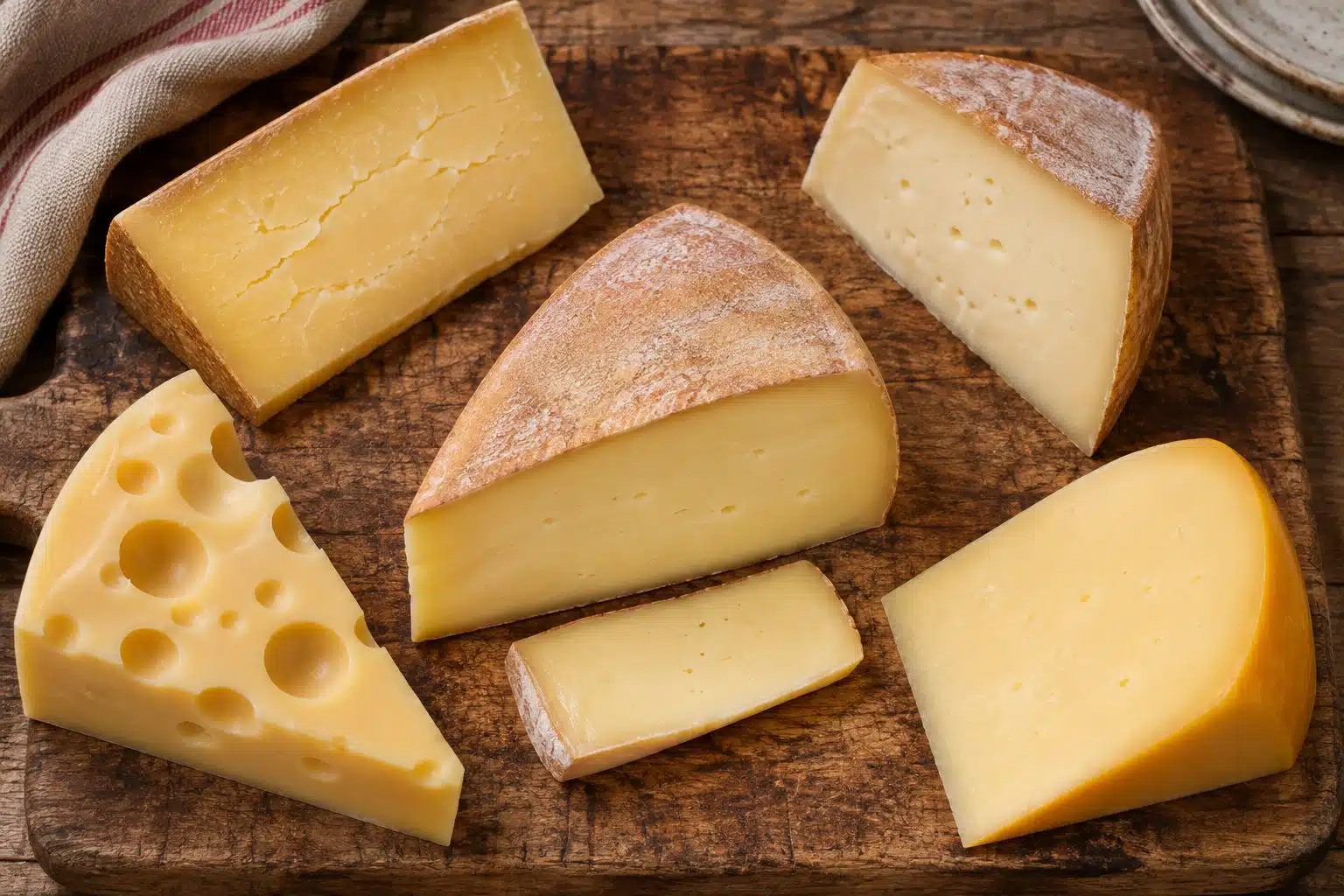
Raclette cheese is a semi-hard cow's milk cheese made to melt, with a mild tang. A good stand-in needs a young, supple texture and a flavor that suits your dish, and the seven cheeses below cover both.
Gruyère gives the smooth, nutty melt of raclette. Use it 1:1 by weight, in thin slices or shredded.
Pick a younger Gruyère, about 6 months old, because a reserve aged 10 months or more gets firmer and more assertive.
Fontina, Emmental, Comté and young Gouda also melt well at 1:1. Dry, aged cheeses such as aged cheddar or Parmesan turn greasy or clump.
What Does Raclette Cheese Do in a Recipe?
Raclette is sold to be melted, so its first job is flow.
Remember it later
Planning to try this recipe soon? Save it for a quick find later!
Swiss brands list about 45 to 47% fat in dry matter and a maturing time of roughly 3 to 5 months. That keeps the cheese supple enough to melt into a smooth layer at low heat.
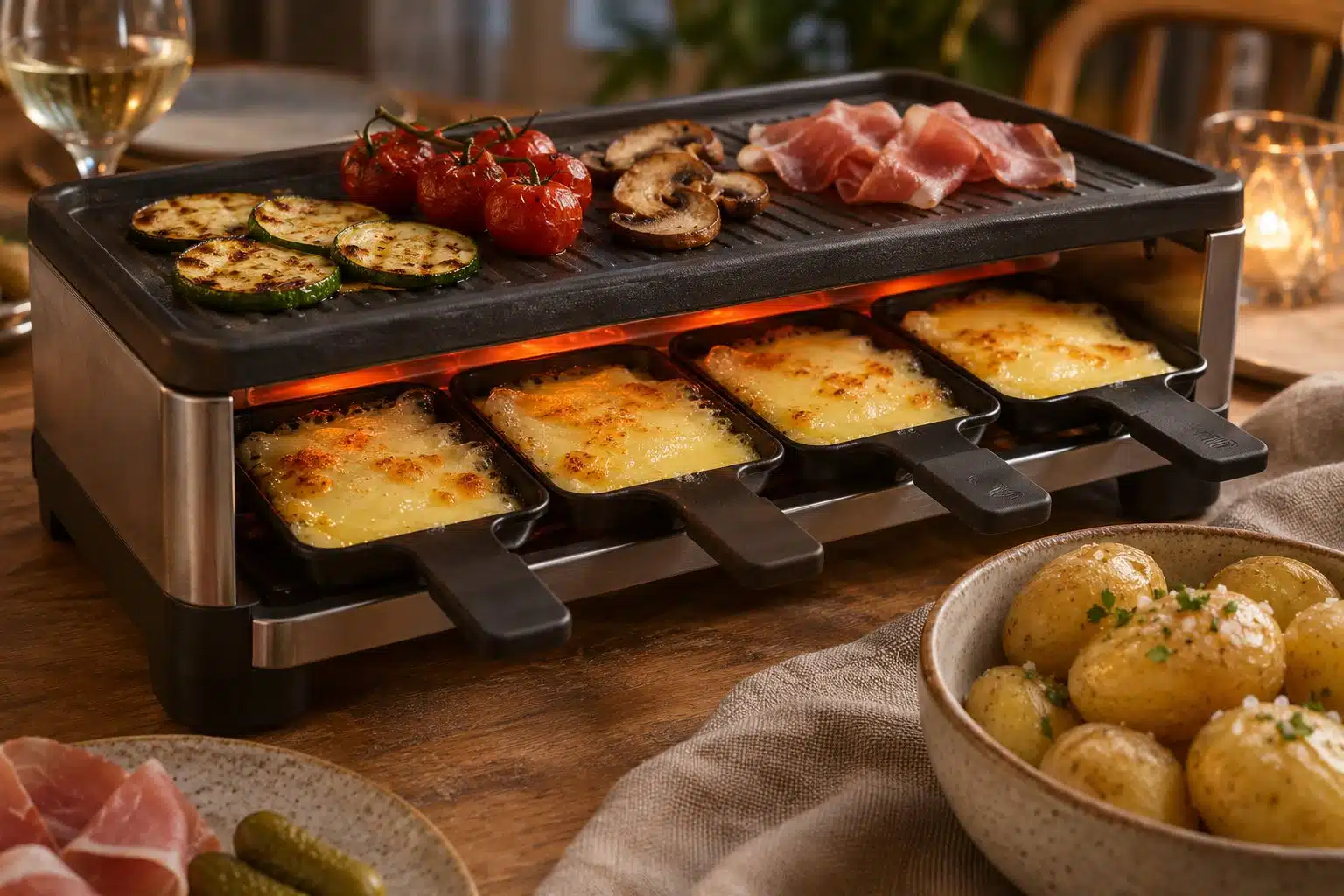
Which job matters most depends on what you are cooking:
- Raclette dinner at the table: The melt and the pour over potatoes matter most, from boiled potatoes to crisp potato rösti, so pick a cheese that turns glossy and spreads in thin slices.
- Fondue and gratins: Melt and flavor both count, and a firmer Alpine-style cheese such as Gruyère or Comté keeps the nutty, tangy character that raclette brings.
- Sandwiches, quesadillas and mac and cheese: Only the melt counts here, which is why mild cheeses like Havarti, Jarlsberg and young Gouda work without any specialty shopping.
7 Raclette Cheese Substitutes, Ranked by How Close They Melt
The list runs from the closest match to the mildest options. Every swap is 1:1 by weight, so the choice comes down to how much Alpine flavor you want.
| # | Substitute | Best For | Ratio | Key Note |
|---|---|---|---|---|
| 1 | Gruyère | ✨ Both | 1:1 | Nuttier, firmer texture |
| 2 | Fontina | 🍳 Cooking | 1:1 | Milder, creamier melt |
| 3 | Emmental | 🍳 Cooking | 1:1 | Sweeter, less pungent |
| 4 | Young Gouda | 🍳 Cooking | 1:1 | Buttery, smoother melt |
| 5 | Comté | ✨ Both | 1:1 | Refined, fruity notes |
| 6 | Havarti | 🍳 Cooking | 1:1 | Very mild, creamy |
| 7 | Jarlsberg | 🍳 Cooking | 1:1 | Sweet, nutty, accessible |
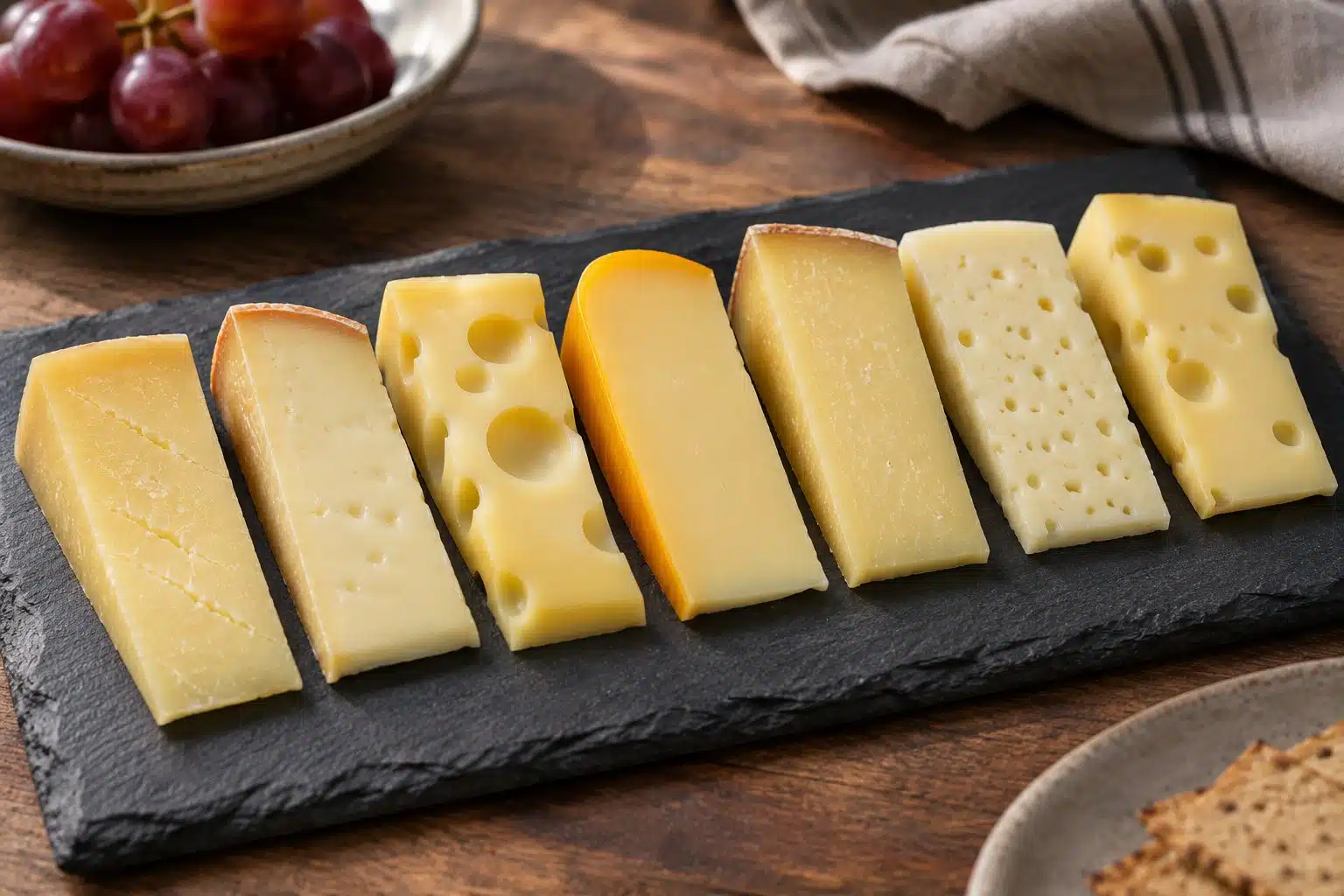
The table shows that only Gruyère and Comté work for both melting and eating as is. The others are better kept for cooking.
1 – Gruyère, the Closest Match
Swiss Gruyère is a hard cow's milk cheese that tastes creamy and nutty when young and gets earthier with age.
It melts smoothly, which is why it is the classic fondue cheese, with more nuttiness and less buttery sweetness than raclette. It is also a little firmer, so a gratin keeps some structure instead of turning into a puddle.
- Ratio: Use 1:1 by weight, in thin slices or shredded.
- Which wheel: A younger Gruyère of about 6 months melts more smoothly than a reserve aged 10 months or more, which gets firmer and more assertive.
- Best for: Raclette dinners, fondue, gratins and baked dishes.
- Adjustment: If it tightens as it heats, blend in half young Gouda for a softer, stretchier melt.
Skip if: You want a milder, less nutty cheese.
2 – Fontina, the Creamiest Melt
Italian Fontina is creamy and mild with a nutty, earthy, slightly mushroomy taste, and young Fontina is soft enough to use in fondue. It melts even smoother than raclette but misses the tang.
Danish and Swedish Fontina are milder and softer, with more holes, so a bottle labeled Fontina from outside Italy will taste blander than the Italian cheese.
- Ratio: Use 1:1 by weight.
- Best for: Panini, table-top raclette pans and casseroles, where you want the cheese to flow.
- Flavor: Milder and earthy, so it never turns sharp.
Skip if: You want a sharp, tangy finish.
3 – Emmental, the Mild Fondue Partner
Swiss Emmental is savory but mild, sweeter and less pungent than raclette. The holes do not affect melting, so it melts just as smoothly.
It is often melted next to Gruyère in fondue, and its mild smell makes it a safe pick for people who find raclette too strong.
- Ratio: Use 1:1 by weight.
- Best for: Fondue blends with Gruyère, gratins and recipes that need a clean, even melt.
- Flavor: Sweeter, fruity, less pungent.
Skip if: You need traditional Alpine cheese flavor.
4 – Young Gouda, the Comfort-Food Pick
Young Gouda, aged about 4 weeks, is smooth, creamy and very mild, with a lightly nutty, buttery taste.
It melts smooth and works well in mac and cheese and casseroles. It has no Alpine taste, so the dish reads as comfort food rather than Swiss tradition.
Buy a young wheel. Aged Gouda turns firm, crumbly and crystalline, and it does not melt like the young cheese.
- Ratio: Use 1:1 by weight.
- Best for: Mac and cheese, casseroles and comfort dishes.
Skip if: You want a rich, intense cheese flavor.
5 – Comté, the Refined Option
French Comté is made from raw cow's milk and aged at least 4 months, with a paste that is fairly hard but flexible.
It tastes mild, nutty, salty and slightly sweet, with subtle fruity notes, and it is firmer than raclette.
That makes it good for slicing onto a cheese plate or melting into a fondue. It costs more than the other swaps, which is why it suits special occasions.
- Ratio: Use 1:1 by weight.
- Best for: Upscale fondues and cheese plates.
- Flavor: Layered and nutty, so it stands out where you want the cheese to be noticed.
Skip if: You are watching your budget.
6 – Havarti, the Everyday Melter
Danish Havarti is a semi-soft, rindless cheese with a buttery aroma.
It softens quickly at room temperature and melts easily and smooth, so it is perfect for quesadillas and grilled cheese.
- Ratio: Use 1:1 by weight.
- Best for: Quesadillas, grilled cheese and easy melting.
- Flavor: Very mild, buttery, creamy.
- Texture: Soft, flows easily.
Skip if: You want that distinct raclette flavor.
7 – Jarlsberg, the Easy-to-Find Choice
Jarlsberg cheese is a Norwegian Swiss-type cheese with a creamy, supple body and a clean, slightly sweet and nutty flavor.
It is milder and more approachable than raclette. The holes do not affect cooking, so it behaves like any semi-soft cheese.
It lacks raclette's tang, which suits everyday sandwiches and melted dishes where you want a cheese that will not overpower the other ingredients.
- Ratio: Use 1:1 by weight.
- Best for: Everyday melting and sandwiches.
- Flavor: Sweet, nutty, mild.
- Texture: Smooth melt, semi-soft.
Skip if: You need authentic raclette character.
Which Substitute Works for Which Dish?
Match the cheese to the dish first.
A table-top raclette night and a grilled cheese ask for different things from the same swap.
| If You're Making | Pick | Why |
|---|---|---|
| Raclette at the table | Gruyère or Fontina | Both turn glossy in thin slices |
| Fondue | Gruyère or Comté | Best nutty flavor, add Emmental to soften |
| Gratins | Gruyère | Holds structure better |
| Panini | Fontina | Melts smoothest |
| Mac and cheese | Young Gouda | Adds creaminess |
| Quesadillas | Havarti or Jarlsberg | Mild and easy to find |
For a raclette dinner, set out boiled potatoes, cornichons and pickled onions, the classic Valais sides, and see what to eat with raclette for more ideas.
How Do You Melt a Substitute Without Splitting It?
Keep the heat low. Cheese is fully molten at about 160°F (71°C).
Push it much hotter and the proteins tighten again and squeeze out oil, which is why a substitute turns greasy or grainy.
- Slice thin or shred: Thin pieces melt before the edges overheat, so the cheese stays smooth.
- Grate it yourself: Bagged shreds are usually coated with cellulose or starch to stop clumping, and that coating can leave a melt slightly grainy.
- Choose young wedges: In one test with cheddar, a 3-month cheese melted smoothly, a 16-month cheese clumped and a 24-month cheese never melted.
- Watch the pan: In a fondue pot, stir over low heat and add a splash of dry white wine, whose acid helps keep the melt smooth. Under a broiler, take the pan out as soon as the cheese turns glossy and starts to bubble.
- Skip the special grill: Thin slices melt in a small pan under the oven broiler, so you do not need a raclette machine.
- Plan the amount: Most raclette guides allow about 200 g (7 oz) of cheese per person, less if you serve many vegetables.
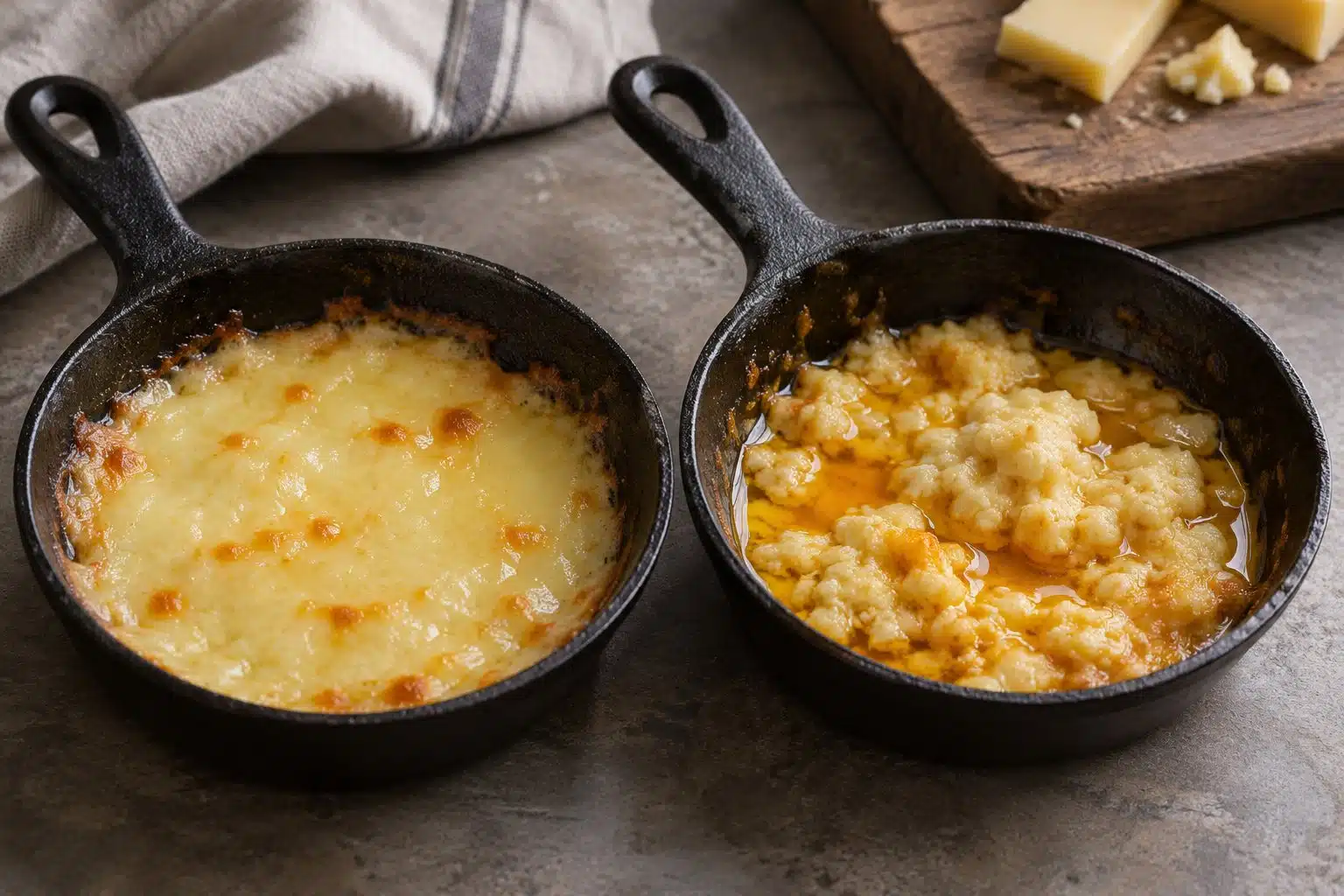
Which Cheeses Make Poor Raclette Substitutes?
Some cheeses do not melt the way raclette does, whatever the ratio. Skip these:
- Aged cheddar: It clumps and separates oil when melted, so use only a young, mild cheddar if you must.
- Parmesan: It has little moisture, so it does not melt into a smooth layer.
- Feta: It is acidic and crumbly, and it softens instead of flowing.
- Vegan cheese: It has no casein, so it softens when heated instead of melting properly.

Frequently Asked Questions
Only in a pinch. A mild or medium cheddar works in grilled cheese or mac and cheese, but it tastes sharper and melts firmer and grainier than raclette, and aged cheddar clumps.
Gruyère works best because it melts smooth and has similar nuttiness, and mixing it with Emmental gives a traditional Swiss fondue blend. Use a 1:1 ratio and keep the heat low.
Yes, but only for cooking, because freezing makes them crumblier. Wrap tightly in plastic, then foil, use within three months, and thaw in the fridge overnight.
Fontina or Havarti melt smoothest for sandwiches and panini, and they do not overpower other ingredients. Gruyère gives more flavor but melts firmer, so use medium heat.



