
A grilled cheese sandwich built with havarti doesn't pull apart in rubbery strings or pool into a greasy puddle - it melts into a smooth, creamy layer that holds the bread together from the inside. That clean, buttery melt is what makes havarti a fixture in sandwich shops, home kitchens, and cheese boards across the country.
It's mild enough to work with almost any pairing, yet distinct enough to notice. If you've been reaching for colby jack cheese alternatives when you want a gentle melt, havarti deserves a closer look.
Havarti is a Danish semi-soft cow's milk cheese with a buttery, lightly tangy flavor and a smooth melt. It works well sliced, melted, or cubed, and pairs with fruit, cured meats, and rye bread. Mild enough for everyday use, it stores for up to two weeks once opened.
What Is Havarti Cheese?
Havarti originated in Denmark in the mid-1800s, developed by cheesemaker Hanne Nielsen after she traveled through Europe studying dairy techniques.
Remember it later
Planning to try this recipe soon? Save it for a quick find later!
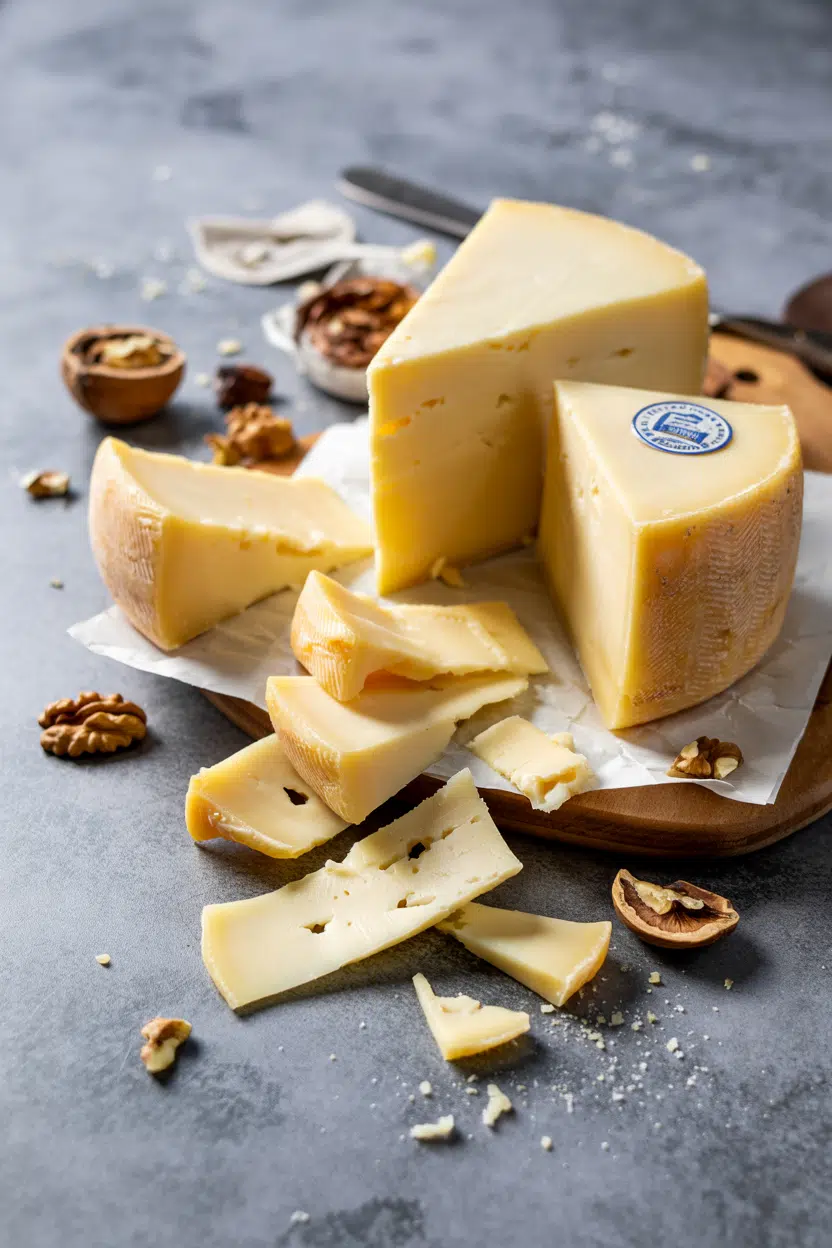
It falls under the semi-soft cheese category, made from pasteurized whole cow's milk with a pale yellow interior and a thin rind that's often waxed in commercial production.
One of its most recognizable features is its small, irregular eyes - tiny holes scattered throughout the paste. These form during fermentation and distinguish havarti from smoother, eyeless cheeses like cream havarti blends.
Several varieties exist beyond the plain block you'll find at most delis:
- Plain havarti - the base style, pale yellow with a clean milky flavor
- Havarti dill - flecked with dill weed, common in Scandinavian-style sandwiches
- Jalapeño havarti - includes pepper pieces for heat, popular in American deli prep
- Aged havarti - sharper and firmer than young versions, less common but worth seeking
Young havarti contains more lactose than longer-aged cheeses, so people with lactose sensitivity should test their individual tolerance before eating freely.
What Does Havarti Cheese Taste Like?

Havarti leads with butter. The base flavor is a mild, lactic creaminess - clean and slightly sweet - with a gentle tang that builds toward the finish.
A faint nutty note appears, though it's subtle enough that most people register it as richness rather than a distinct flavor.
Compared to young gouda, havarti is creamier and less firm, with a softer tang. Heat pushes the buttery quality forward and the tang recedes - which is exactly why it works so well in cooked applications.
Aged havarti shifts toward a sharper, more assertive flavor, closer to a mild cheddar.
How to Use Havarti Cheese
Havarti's melting behavior is its strongest asset in the kitchen. It softens evenly without breaking into grease, making it reliable across both stovetop and oven applications.
| Method | Best For | Tip |
|---|---|---|
| 🥗 Sliced Cold | Sandwiches, cheese boards, open-faced rye | Slice thin for layering; thicker for platters |
| 🍳 Stovetop Melt | Grilled cheese, burgers, omelets, frittatas | Medium-low heat keeps melt smooth and even |
| 🥘 Baked | Casseroles, panini, baked pasta | Grate for even coverage; avoid direct top heat |
| 🫕 Fondue Blend | Mixed cheese fondue, dipping sauces | Combine with gruyère to add creaminess |
On a cheese board, cube havarti alongside sliced apples or pears, smoked ham or turkey, and plain crackers or sourdough. The mild flavor gives stronger cheeses room to stand out without competing.
Dill havarti belongs on a Scandinavian open-faced sandwich - thin slices over buttered rye with mustard and pickles. Jalapeño havarti melts cleanly onto burgers.
Both flavored varieties follow the same melting rules as plain havarti.
For a richer mac and cheese, grate havarti into the sauce alongside a sharper cheese like cheddar. It adds body and a smooth consistency without sharpening the flavor.
Riesling is the standard wine pairing - its slight sweetness and acidity cut through the dairy without overwhelming it.
Need something with more bite? Havarti substitutes and gouda substitutes both cover situations where you want a similar melt profile with more flavor.
How to Buy and Store Havarti Cheese
At the counter, look for blocks or wedges with an off-white to pale yellow color and a clean, slightly springy feel when pressed. Avoid anything with a slimy or sticky surface - that signals moisture damage or age.
Flavored havarti (dill, jalapeño) should have visible inclusions throughout the paste, not just along the edges.
Wrap opened havarti in waxed paper or cheese paper, then loosely in plastic, and store in the crisper drawer at 34-40°F. Rewrap after every use.
- Unopened, vacuum-sealed - lasts 3-6 weeks refrigerated
- Opened, tightly wrapped - stays fresh for about 2 weeks
- Pre-sliced or shredded - use within 5-7 days; surface area accelerates drying
For the full breakdown of timing and signs of spoilage, the havarti cheese freshness guide guide covers edge cases in more detail.
Start Here With Havarti
New to havarti? Buy a plain block, slice it onto a grilled cheese or burger first - that's where its melt quality is most obvious. Once you know the base flavor, try dill havarti on rye with smoked turkey.
If you want a sharper edge, move toward aged havarti or blend it with a stronger cheese in cooked applications. For everyday use, plain havarti covers most situations where you'd reach for a mild, reliable melting cheese.
Frequently Asked Questions
Neither. Havarti is a semi-soft cheese - firmer than brie but much more pliable than cheddar or aged gouda. It slices cleanly cold and softens into a smooth melt under heat.
Yes - it's one of havarti's strongest uses. Place a slice on the patty during the last 60 seconds of cooking, covered, and it melts into a smooth, even layer without separating.
Young gouda is the closest comparison - both are mild, buttery, and melt well. Havarti is generally creamier and slightly less firm, with a more pronounced lactic note than young gouda's caramel-adjacent sweetness.
Dry riesling is the standard pairing - its acidity cuts through havarti's creaminess without clashing. Light pinot gris or unoaked chardonnay also work if riesling isn't available.
An unopened vacuum-sealed block keeps 3-6 weeks. Once opened and rewrapped in cheese paper, plan to use it within two weeks - pre-sliced havarti shortens to about 5-7 days.



