
Warm, faintly sweet, and unmistakably rich - gouda cheese announces itself the moment you slice into a wheel. That pale-golden interior gives off a gentle milky warmth when young, shifting toward deep caramel and roasted-nut territory as it ages into something altogether more complex.
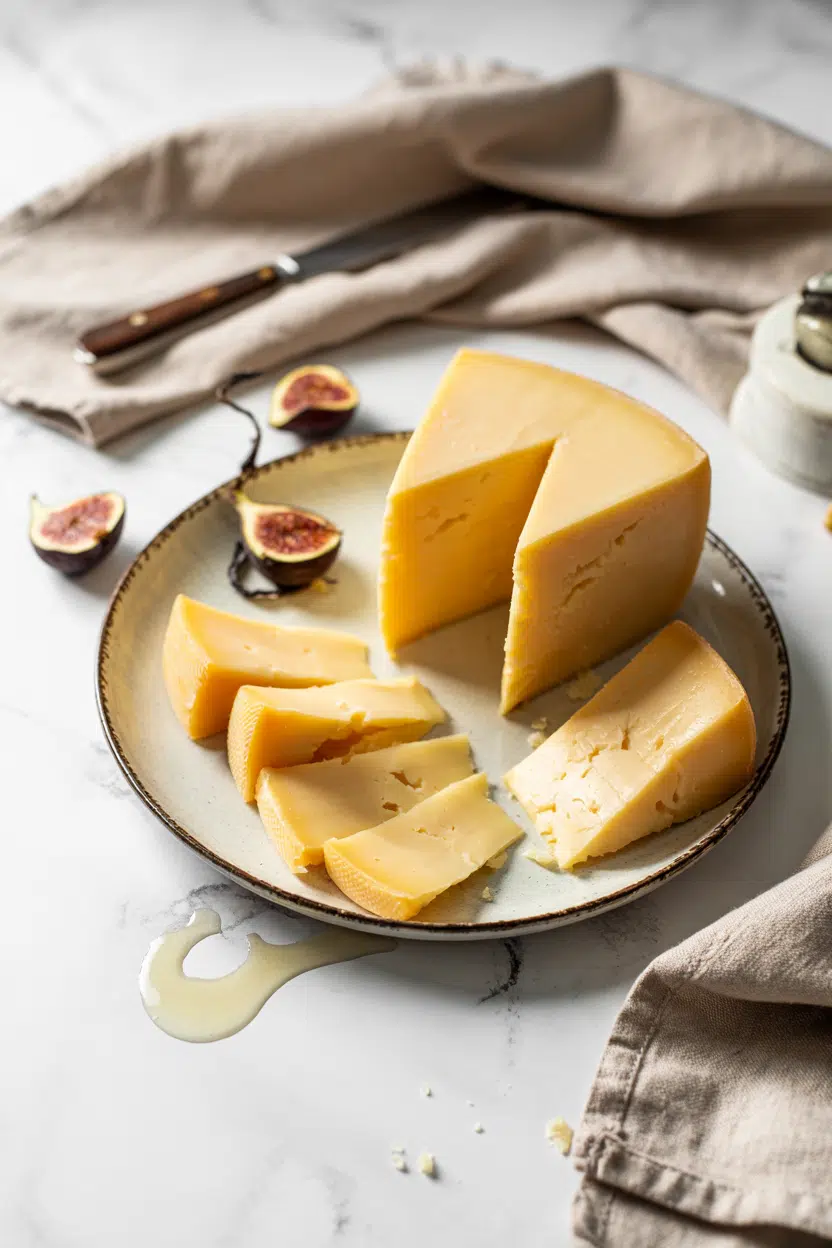
It's one of the most widely eaten cheeses in the world, and for good reason: few others span such a wide flavor range within a single category, making it equally at home on a cheese board as it is melted into a gratin.
Gouda is a Dutch cow's-milk cheese ranging from mild and creamy when young to nutty, caramel-rich, and crystalline when aged. It melts well, pairs broadly, and suits everything from sandwiches to cheese boards to cream sauces.
What Is Gouda Cheese?
Gouda - or Goudse kaas in Dutch - is a washed-curd cheese originating from the South Holland and Noord-Holland regions of the Netherlands.
Remember it later
Planning to try this recipe soon? Save it for a quick find later!
The washed-curd process sets it apart: after the milk coagulates, warm water replaces some of the whey before pressing, which rinses out lactose and gives the finished cheese its characteristic mild sweetness.
Wheels are pressed into rounds and then coated in wax or left with a natural rind before aging begins. Age determines almost everything about the final character of the cheese.
- Young Gouda (jong) - aged 4-8 weeks; pale, smooth, pliant texture; mild and creamy
- Semi-aged (jong belegen) - 2-6 months; firmer, slightly more pronounced flavor
- Aged (belegen to oud) - 6 months to 2+ years; harder, crumblier, with visible tyrosine crystals and deep caramel-butterscotch notes
- Smoked Gouda - a common variant cold-smoked over wood, adding warm smoky depth
If you're already familiar with edam cheese or emmental, gouda occupies a richer, more buttery space than either.
What Does Gouda Cheese Taste Like?
Young Gouda is mild and approachable - think soft creaminess with a faint sweet edge, not far from a young mild cheddar. There's no sharpness, no bite.
Aged Gouda is a different cheese entirely. The flavor deepens into butterscotch, roasted walnut, and a savory umami layer that builds slowly on the palate.
Extra-aged wheels develop an almost granular intensity that edges toward aged parmesan or Grana Padano.
Heat amplifies that sweetness. Melt gouda into a sauce and the caramel notes become noticeably more forward - which is one reason it works so well in cream-based dishes.
How to Use Gouda Cheese
Melting is where gouda earns its reputation. Young and semi-aged wheels soften smoothly at low-medium heat without breaking, making them ideal for grilled cheese, panini, and fondue. Aged wheels melt less cleanly but contribute more flavor - grate them over roasted vegetables or fold them into mac and cheese for a rounded, buttery depth.
On cheese boards, cubed or sliced gouda pairs naturally with crisp apples or pears, honey or quince paste, walnuts, and rye or sourdough bread. Wholegrain mustard cuts through its richness cleanly.
Cured ham or prosciutto is the classic savory partner.
For wine, amber beers and medium-bodied reds - think a Grenache or a Côtes du Rhône - hold up to aged wheels without overwhelming them. Need a swap?
Check our guide to gouda cheese alternatives for alternatives that work across these same applications.
| Method | Best For | Tip |
|---|---|---|
| 🫕 Melting | Grilled cheese, fondue, cream sauces, panini | Use young or semi-aged; keep heat low to avoid graininess |
| 🥗 Raw / Sliced | Sandwiches, cheese boards, charcuterie | Slice thin against cured meats to balance saltiness |
| 🧆 Baked | Gratins, casseroles, smoked-gouda bakes | Smoked Gouda adds warm depth to potato and egg dishes |
| 🧂 Grated | Roasted vegetables, pasta, mac and cheese | Aged wheels grate cleanly and add nutty umami |
| 🥘 Pan-seared | Salad toppers, appetizers | Slice thick and sear quickly over high heat for a golden crust |
How to Buy and Store Gouda Cheese
At the counter, inspect the paste before buying. Young Gouda should look pale golden and uniformly smooth - no sticky or slimy rind, no sour liquid at a cut edge.
For aged wheels, small white tyrosine crystals throughout the paste are a sign of proper aging, not a defect.
Wrap opened gouda in cheese paper or parchment - not plastic wrap, which traps moisture and encourages mold. Store in the cheese drawer or a perforated container.
For more detail on timelines and signs of spoilage, see our full guide to gouda cheese storage life.
- Young Gouda - 2-3 weeks opened; up to 2-3 months for unopened waxed wheels
- Aged Gouda - 3-6 weeks opened; its lower moisture content extends longevity
Start with Young, Graduate to Aged
If you haven't cooked with gouda before, young Gouda is the entry point. It melts without fuss, tastes crowd-friendly, and costs less than aged wheels.
Once you're comfortable, pick up a small wedge of aged Gouda and eat it at room temperature with a few walnuts and a smear of honey. That's when the full character of the cheese reveals itself - caramel, crystal, depth.
From there, smoked Gouda opens another direction entirely. It's a useful tool for casseroles and breakfast dishes where you want smoky warmth without reaching for bacon.
Frequently Asked Questions
No. Both are cow's-milk cheeses, however gouda uses a washed-curd process that removes lactose and produces a sweeter, less sharp flavor. Cheddar is cheddared - stacked and turned to expel whey - which creates a tangier, more acidic profile. See our notes on [cheddar cheese substitutes](https://forkliftkitchen.com/cheddar-cheese-substitutes/) for more on how the two compare.
Young gouda is mild and creamy with a soft buttermilk sweetness. Aged gouda develops butterscotch, roasted-nut, and savory umami notes, with a firmer, slightly crumbly texture and visible tyrosine crystals throughout.
Possibly, in modest amounts. The washed-curd process removes much of the lactose, and further aging reduces it more. Aged gouda in particular is often tolerated by lactose-sensitive people, though individual responses vary.
Technically yes, however freezing damages the texture - young gouda becomes crumbly and grainy after thawing. Aged gouda holds up slightly better and can be frozen if you plan to grate it rather than slice or melt it.
Medium-bodied reds like Grenache or Côtes du Rhône work well with aged wheels. Young gouda suits lighter options - an off-dry Riesling or a crisp amber ale balances its mild creaminess without overpowering it.



