
You spot a wedge of fontina at the cheese counter and pause - it looks like a dozen other pale, semi-soft cheeses in the case. What sets it apart is what happens when heat hits it: fontina melts into a silk-smooth, cohesive pool that holds its body better than mozzarella and carries more flavor than Emmental.

That combination of clean melt and genuine nuttiness is why Italian cooks have been reaching for it since at least the 13th century.
Fontina is a semi-soft cow's milk cheese from Italy's Aosta Valley with a mild, nutty flavor and a reliably smooth melt. It bridges fresh and aged cheeses, works across fonduta, gratins, and sandwiches, and keeps well for several weeks when properly wrapped.
What Is fontina cheese?
Fontina Val d'Aosta is a PDO-protected cheese produced in the Aosta Valley, a narrow Alpine region in the far northwest of Italy. It's made from the raw whole milk of Valdostana cattle, pressed into wheels, and aged for a minimum of three months under cool, humid conditions that develop its distinctive thin natural rind.
Remember it later
Planning to try this recipe soon? Save it for a quick find later!
The paste is pale yellow, semi-soft, and springy with small, irregular holes scattered throughout. Wheels typically weigh between 7 and 18 kg, though you'll almost always buy it by the wedge.
A few important distinctions:
- Fontina Val d'Aosta PDO - the original, raw-milk version from Italy; strongest flavor, firmer texture
- Danish or Swedish "fontina" - a milder, pasteurized imitation; more rubbery and far less complex
- Fontina Valtellina - a related but distinct northern Italian cheese, sometimes used as a substitute
For the most part, when a recipe calls for fontina, it means the Italian PDO version. The Scandinavian copies melt fine, however they lack the earthy depth that makes the real thing worth buying.
What Does fontina cheese Taste Like?
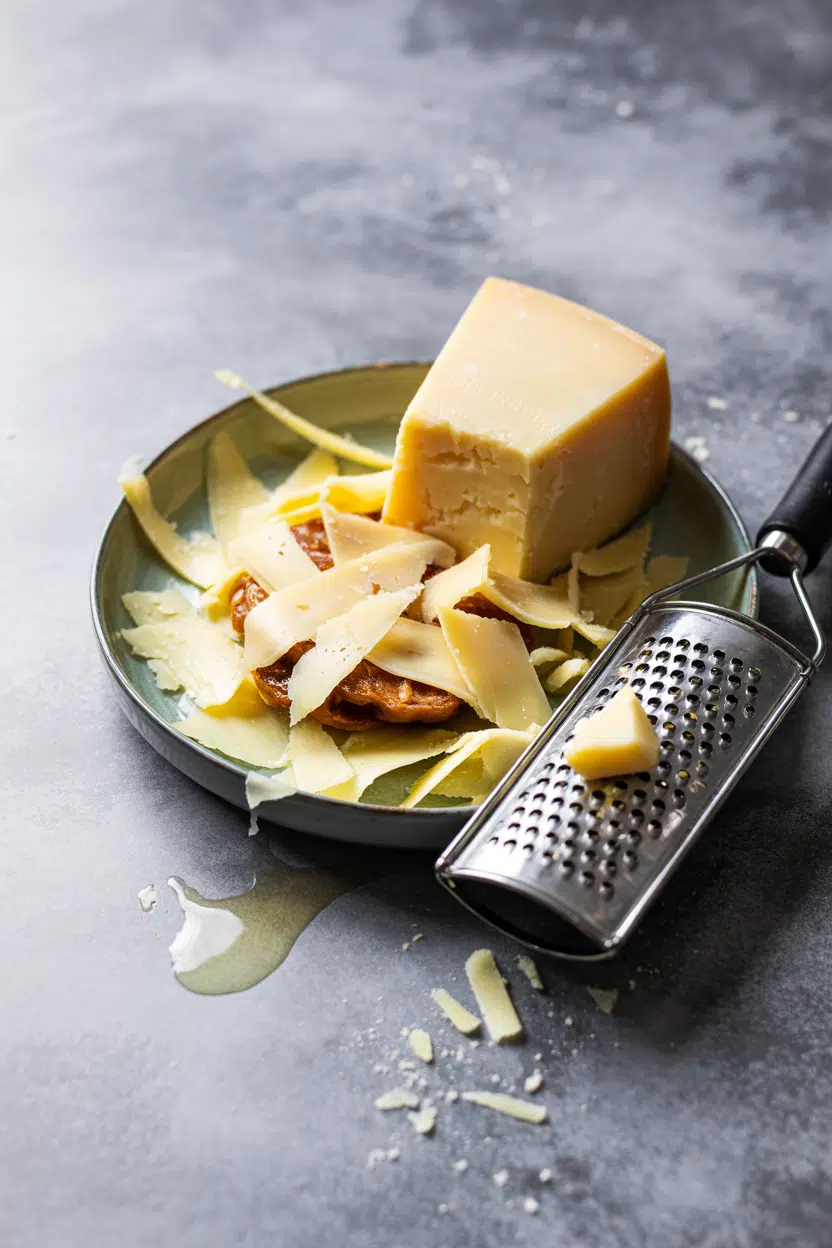
Fontina's flavor sits in a comfortable middle ground - more complex than fresh mozzarella, less assertive than aged Gruyère. The first impression is buttery and mildly sweet, followed quickly by a gentle nuttiness that lingers on the finish.
Under heat, the flavor opens up noticeably. The mushroomy, earthy undernotes become more pronounced in a hot gratin or a bowl of fonduta, where fontina stretches into a glossy, cohesive sauce rather than breaking into greasy threads.
Cold on a board, it reads creamier and more restrained - closer to a young Emmental in tone.
How to Use fontina cheese
Fontina earns its place most reliably as a melting cheese. It's the traditional base of fonduta, the Aosta Valley version of fondue, where it's whisked with egg yolks, butter, and milk into a rich dipping sauce.
The same melting behavior makes it excellent in gratins, potato bakes, and risotto - stir shredded fontina into a finished risotto off the heat and it pulls the dish together without clumping.
Sandwiches and panini also work well. Layer slices with prosciutto or country ham and press until the cheese melts into the bread.
For pizza or flatbreads, add fontina near the end of baking rather than from the start - prolonged oven heat can cause it to brown faster than harder cheeses.
On a cheese board, cube it alongside pears, apples, or walnuts. Dry white wines - Pinot Grigio and Soave especially - cut through the fat without competing with the nuttiness.
Mushroom-based dishes pair particularly well; porcini or cremini echo fontina's earthy undertone.
If you can't find it, fontina cheese swaps include Gruyère, Taleggio, or Raclette depending on the application.
| Method | Best For | Tip |
|---|---|---|
| 🫕 Melted | Fonduta, risotto, cheese sauces | Keep heat low; high heat can cause graininess |
| 🍕 Baked | Gratins, pizza, casseroles | Add in the last 10 minutes to prevent over-browning |
| 🧀 Cold/Sliced | Cheese boards, panini assembly | Serve at room temperature for full flavor |
| 🥄 Grated | Finished pasta, soups, warm dishes | Grate over hot food just before serving |
How to Buy and Store fontina cheese
At the counter, look for a smooth, pale-yellow paste with small, irregular holes and a slightly elastic give when pressed. Avoid wedges with large cracks, dry edges, or a crumbly texture - those signs point to over-aged or poorly stored cheese.
For authentic flavor, check for the PDO mark ("Fontina Val d'Aosta"); without it, you're likely buying a milder Scandinavian-style copy.
Storage is straightforward:
- Wrap correctly - use breathable cheese paper or waxed paper, then a loose layer of plastic wrap over that
- Keep it whole - buy wedges rather than pre-sliced; cut surface dries out faster
- Use the crisper - consistent cool humidity slows moisture loss better than the main fridge shelf
- Grated fontina - use within 5-7 days; shredding accelerates drying and mold
For more detail on how long it holds, see our fontina cheese storage guide guide. If you've already used part of a wedge and need a substitute for the rest of a recipe, Gruyère substitutes overlap significantly with fontina's flavor profile.
Start With the Melt
If you're new to fontina, buy a small wedge and make one dish: a simple gratin or a stovetop fonduta. That first melt tells you everything about why this cheese has a 700-year reputation.
Once you're comfortable with how it behaves under heat, expand to cold applications - boards, sandwiches, pasta finishes. The earthy, nutty flavor works across more formats than most semi-soft cheeses at this price point.
Frequently Asked Questions
Buttery and mildly nutty, with earthy undertones and a hint of sweet cream. The flavor is more complex than fresh mozzarella but less sharp than Gruyère - closer to a young Emmental with added creaminess.
Yes - it's one of the better melting cheeses available. Fontina melts into a smooth, elastic pool without breaking into grease, which is why it's the traditional base for Italian fonduta.
Fontina is aged, semi-soft, and nutty; mozzarella is fresh, milky, and very mild. Both melt well, however fontina holds more structural body and delivers a more complex flavor in cooked dishes.
Traditional Fontina Val d'Aosta uses animal rennet, making it unsuitable for most vegetarians. Some domestic or Scandinavian-style fontinas use microbial rennet - check the label if this matters to you.
An uncut wedge keeps 3-6 weeks when properly wrapped in cheese paper. Once opened, use it within 2-3 weeks; grated fontina should be used within 5-7 days.



