
Comté occupies a role in French Alpine cooking that no other cheese quite fills - it melts without breaking, ages without turning harsh, and brings a layered depth that younger cheeses simply don't have.

Much of that reputation comes from raw cow's milk sourced from Montbéliarde cattle grazing Jura highlands, then cave-aged under strict PDO rules.
If you've cooked with gruyere cheese and its flavor and want to go deeper, Comté is the natural next step - fruitier, more aromatic, and arguably more complex.
Cooks who've tried replacements for beaufort cheese often land on Comté as a reliable bridge between mild and assertive Alpine styles.
Comté is a PDO-protected French cheese aged between 4 and 24+ months. Its flavor runs from fruity and buttery at younger ages to deeply nutty, savory, and crystalline at full maturity. It melts well, boards beautifully, and pairs with Jura wines or dry cider.
What Is Comté Cheese?
Comté is a pressed-cooked cheese made from raw cow's milk in the Franche-Comté region of eastern France, near the Swiss border.
Remember it later
Planning to try this recipe soon? Save it for a quick find later!
Every wheel must pass PDO (Protected Designation of Origin) standards - from the breed of cattle to the altitude of the pastures and the minimum aging period of 4 months.
Wheels are enormous, typically 40-45 kg each, and are aged on spruce planks in mountain caves called fruitières. The affinage process - the art of cave-aging - is where most of the flavor develops.
Young wheels (4-8 months) taste mild and milky; wheels aged 12-24 months develop walnut, browned butter, and dried fruit complexity.
It's often confused with Gruyère or Emmental, and for good reason - all three are Alpine pressed-cooked cheeses made with raw milk.
Comté is generally fruitier and more aromatic than either, though if you're navigating using emmental cheese for creaminess in a recipe, you'll find Comté can step in with similar melt behavior but a bolder character.
- 🏔️ PDO-protected - legally must come from Franche-Comté, eastern France
- Montbéliarde cattle - the primary breed; their milk has high fat and protein content ideal for aged cheese
- Affinage range - 4 months minimum; premium wheels labeled at 12, 18, or 24+ months
- No two wheels are identical - seasonal pasture variation means summer milk wheels taste different from winter ones
What Does Comté Cheese Taste Like?
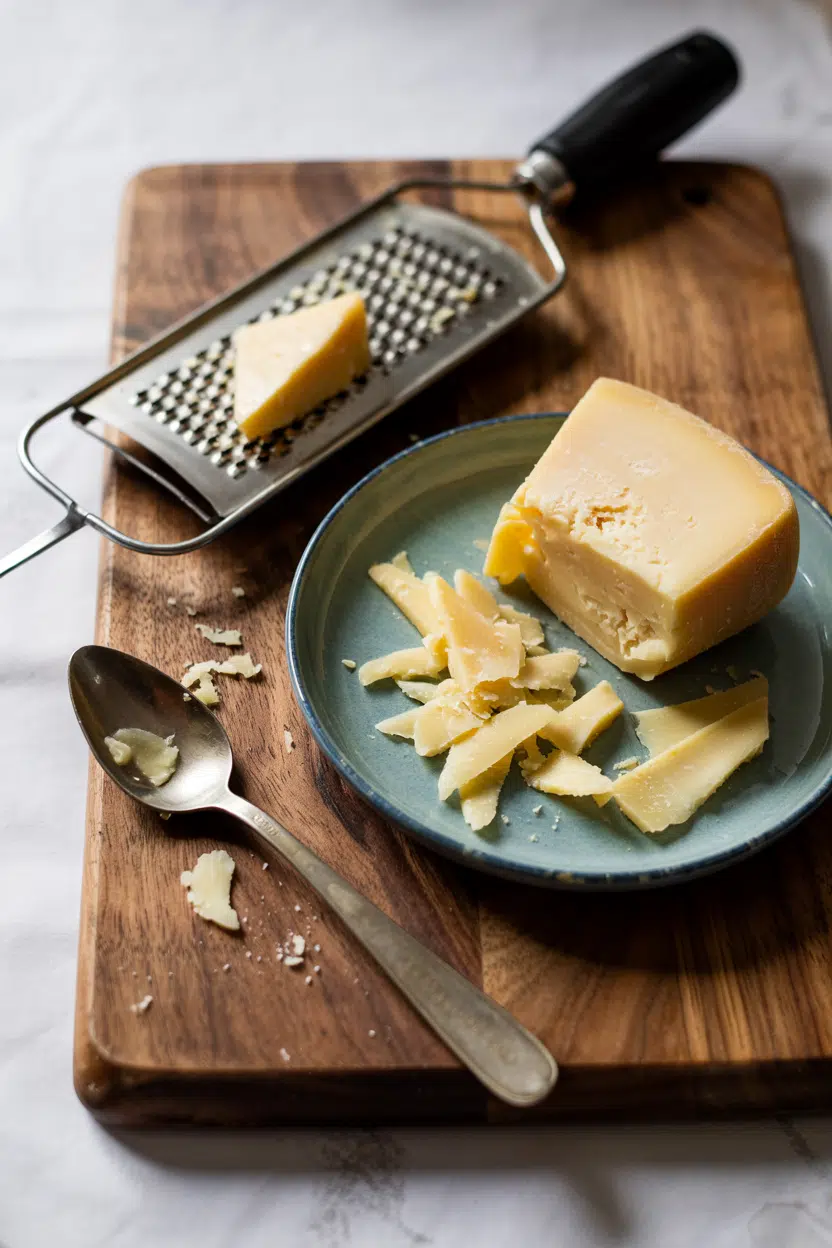
Comté's flavor is layered in a way that shifts noticeably with age. A young wheel leads with fresh dairy, light apple notes, and gentle salt. An older wheel - 18 months or more - tilts toward walnut, caramel, savory broth, and sometimes a pleasant beefy depth.
The texture changes just as dramatically as the flavor. Younger Comté slices cleanly and melts into a smooth, slightly stringy pull.
Longer-aged wheels develop small protein crystals - similar to what you'd find in a well-aged Parmigiano - that add a faint crunch and concentrate the umami hit.
Heat brings out its sweetness. Melted Comté in a fondue or gratin has a caramel-forward, nutty finish that reads richer than it does straight from the wheel.
How to Use Comté Cheese
Comté is one of the few cheeses that performs equally well raw and cooked, which makes it genuinely useful across a range of dishes. French Alpine cooking is its home territory - fondue, gratin dauphinois, and croque-monsieur are the classics for good reason.
| Method | Best For | Tip |
|---|---|---|
| 🫕 Melting | Fondue, gratin, croque-monsieur, cheese sauces | Use medium-aged (8-14 months) for best melt without graininess |
| 🥧 Baking | Savory tarts, soufflés, cheese straws | Grate finely so it incorporates evenly into batters and doughs |
| 🧀 Raw / Sliced | Cheese boards, winter salads, charcuterie pairings | Serve at room temperature for 30 minutes to open the aroma |
| 🧂 Grated Finish | Mac and cheese, soups, roasted vegetables | Choose older wheels for maximum nutty depth at finish |
On a cheese board, pair Comté with fresh apple slices, poached pear, toasted walnuts, or quince paste. Dry Jura wines - particularly vin jaune or an unoaked Chardonnay - are the regional match, though a crisp hard cider or blonde ale works just as well.
Charcuterie like jambon cru or saucisson sits alongside it naturally.
Avoid pairing Comté with strongly iodized fish preparations - the umami clash flattens both. Delicate floral desserts suffer similarly when Comté is on the same plate.
How to Buy and Store Comté Cheese
Look for a wedge cut from a wheel with the green oval PDO stamp visible on the rind - that stamp confirms authentic Franche-Comté origin. The paste should be straw-yellow, firm, and slightly moist.
Avoid wedges with chalky, dry edges or an off-white, crumbly interior not consistent with normal aging.
For aging guidance, look for wheels labeled by months of affinage - 12-month wheels are a reliable starting point, while 18-24+ month wheels suit experienced Comté eaters who want full crystalline intensity.
Understanding comte cheese's shelf life helps you plan how much to buy at once, since medium-aged wedges are best within 2-4 weeks of purchase.
Refrigerated properly, older wheels hold their flavor slightly longer before the edges dry out.
If you can't find Comté locally, the alternatives to comte cheese guide covers the closest substitutes by use case, and the guide to replacements for gruyere cheese is useful if you're working through Alpine cheese options more broadly.
Where to Start with Comté
New to Comté?
Buy a 12-month wheel and melt it into a simple gratin or croque-monsieur first. That's where it shows its best quality - the melt is clean, the flavor lands clearly, and you'll understand immediately why French home cooks reach for it over generic Swiss-style cheese.
Once you're comfortable there, step up to an 18-month wedge on a board alongside apple and walnut. Proper dairy storage matters too - the same way milk in dairy recipes needs careful handling, Comté rewards attention to wrapping and temperature.
Frequently Asked Questions
No. Both are Alpine pressed-cooked cheeses made from raw cow's milk, but Comté comes exclusively from Franche-Comté, France, while Gruyère is Swiss. Comté is typically fruitier and more aromatic; Gruyère is slightly saltier and earthier.
A minimum of 4 months by PDO law, but most wheels sold commercially are aged 8-24 months. Premium wheels labeled at 18 or 24+ months are sought for their crystalline texture and intense nutty flavor.
Not typically. Comté is made with animal rennet, which is not suitable for most vegetarians. No vegetarian-rennet version exists under PDO rules, so the traditional product always contains it.
Vin jaune from the Jura is the classic regional match - its oxidative, nutty character mirrors the cheese. Unoaked white Burgundy or Jura Chardonnay also works well without competing.
Well-aged Comté has very low residual lactose - the long fermentation and aging process breaks most of it down. Many people with mild lactose sensitivity tolerate it without issue, though tolerance varies individually.



