
You spot a wedge of emmental cheese at the deli counter - pale gold, springy, dotted with those unmistakable round holes - and it looks familiar enough to grab without much thought.

Most people reach for it on instinct, then underuse it, melting it onto a sandwich when it's capable of anchoring a proper fondue or finishing a gratin with a clean, nutty depth that sharper cheeses can't quite replicate.
If you've been treating it as a generic stand-in for replacements for comte cheese or raclette cheese stand-ins without knowing what it actually brings, this guide covers exactly that.
Emmental is a pale-gold Swiss semihard cow's-milk cheese with large round holes and a mild, nutty, buttery flavor. It melts smoothly, pairs well with cured meats and white wine, and suits fondue, gratins, and sandwiches where clean melt matters most.
What Is emmental cheese?
Emmental originates from the Emmental valley in the canton of Bern, Switzerland, where it has been produced since at least the 15th century.
Remember it later
Planning to try this recipe soon? Save it for a quick find later!
It's a pressed, semihard cow's-milk cheese made from raw or thermized milk, formed into large wheels with a mildly elastic rind.
The cheese's most recognizable feature is its round "eyes" - the holes formed by carbon dioxide released during aging by Propionibacterium freudenreichii, a specific bacterial culture that also contributes much of the cheese's mild flavor.
Without those bacteria, you'd have a very different product.
Commercially, it goes by several names: Emmentaler, Swiss cheese in North American markets, or simply emmental. The authentic Swiss version carries AOC/AOP designation, though many other countries - France, Germany, Austria - produce their own versions using the same method.
Flavor and quality vary quite a bit between AOC-certified Swiss wheels and mass-produced supermarket slices.
- 🇨🇭 Swiss Emmentaler AOP - raw milk, aged minimum 4 months, pronounced nutty flavor
- 🏭 Commercial "Swiss cheese" - thermized or pasteurized milk, milder, widely available
- 🇫🇷 French Emmental - slightly larger holes, creamier paste, close in flavor to Swiss versions
What Does emmental cheese Taste Like?
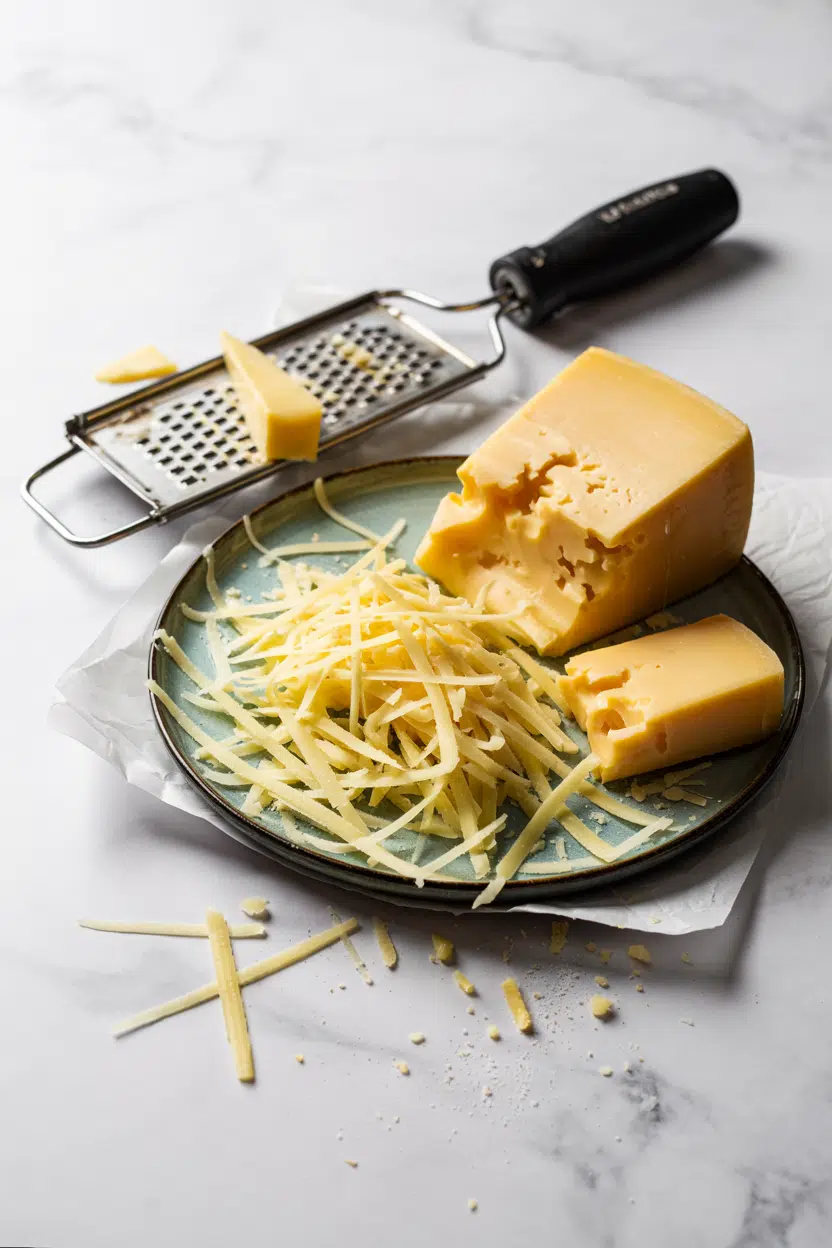
Emmental is mild and approachable - not sharp, not pungent, and nothing close to challenging. The dominant note is a clean nuttiness, closer to toasted walnut than anything sharp or acidic, backed by a gentle buttery quality that lingers briefly.
There's a light fruity sweetness in the background, almost like mild apple, and a lactic freshness that keeps the whole profile clean rather than rich.
It's often compared to Gruyère, and fairly so - think of emmental as the softer, more restrained sibling.
Heat is where emmental's texture changes most noticeably. Raw, it's firm with a slight elastic resistance under the bite.
Melted, it becomes smooth and fluid without breaking into greasy strands - a behavior that makes it reliable in cooked applications where clean melt matters.
How to Use emmental cheese
Fondue is where emmental earns its reputation. Classic Swiss fondue blends it with Gruyère in roughly equal parts - emmental contributes the smooth, fluid melt while Gruyère adds the deeper savory note. Neither cheese works quite as well alone for this purpose, which is why the combination is traditional rather than optional. If you're exploring the full range of Swiss fondue-style dishes, rich chocolate fondue in dairy recipes shows how the same melting-pot format extends well beyond cheese.
Beyond fondue, emmental handles gratins and potato dauphinoise cleanly, grating finely and melting into the layers without overwhelming the dish. A croque-monsieur depends on it - the cheese should melt onto the ham without going stringy or separating.
| Method | Best For | Tip |
|---|---|---|
| 🫕 Fondue | Classic Swiss fondue blended with Gruyère | Use dry white wine or kirsch to keep it fluid |
| 🥘 Gratin/Baking | Potato dauphinoise, quiche, gratin toppers | Grate finely for even melting across the surface |
| 🥪 Melted sandwich | Croque-monsieur, ham-and-cheese, Reuben | Medium heat only - prevents separation |
| 🧀 Cold plate | Cheese boards, deli slices, cubed for snacking | Pair with crisp apple, Dijon, or rye bread |
| 🍲 Sauces | Mornay, béchamel-based mac and cheese | Add off-heat once béchamel is ready |
On a cheese board, emmental holds its own alongside cured ham or prosciutto, crisp apples or pears, and walnuts. Pair it with a dry Sauvignon Blanc or dry Riesling rather than a heavy tannic red, which tends to flatten its mild character.
Avoid placing it next to strong blue cheeses - the contrast doesn't flatter either.
For anyone considering swapping out emmental cheese in a recipe, Gruyère is the closest match, though it brings more intensity - and our guide on replacements for gruyere cheese covers the reverse situation just as well.
How to Buy and Store emmental cheese
At the counter, look for a pale gold paste with medium-to-large round eyes distributed evenly through the wedge - uneven or absent holes can indicate poor aging conditions. The rind should be dry and intact.
Smell it: you want a faint yeasty, nutty note; any sharp ammonia or sour smell is a sign of age or poor storage.
Wrap opened wedges in cheese paper or waxed paper, not airtight plastic, and store in the vegetable drawer where temperature stays steady. Airtight plastic short-term is fine for a day or two, however prolonged sealing causes moisture buildup and off-flavors.
- 📦 Unopened vacuum wedge - several months refrigerated
- 🧀 Opened wedge in cheese paper - 2-4 weeks in the fridge
- 🫙 Grated emmental - 5-7 days, covered in the fridge
Tracking how emmental behaves across longer storage windows fits the same logic as understanding milk's shelf life - both depend on consistent cold and minimal air exposure.
For full guidance on emmental cheese in dairy recipes and how shelf life affects cooking decisions, that resource goes into more detail.
Start With the Fondue
If you've never cooked with emmental before, fondue is the right first move. It shows exactly what the cheese does - how it melts, how it behaves with wine and heat, and why pairing it with using gruyere cheese for creaminess produces something neither cheese achieves alone.
Once you have the melt behavior down, the rest follows naturally. Gratins, croque-monsieur, quiche - all reward the same clean, even melt that makes emmental reliable rather than flashy.
Frequently Asked Questions
Mild, nutty, and buttery with a faint lactic sweetness and light fruity background. It's less sharp than Gruyère and less tangy than aged cheddar, making it one of the gentler cooking cheeses available.
Not exactly. "Swiss cheese" is a North American term borrowed from emmental's appearance and mild profile, but it typically refers to a milder, pasteurized commercial version. Authentic Emmentaler AOP from Switzerland uses raw milk and has a more pronounced flavor.
Yes - it's one of the two traditional cheeses in classic Swiss fondue. It's blended with Gruyère, with emmental providing the smooth melt and Gruyère adding savory depth.
Yes. Its relatively low moisture and semihard structure let it melt smoothly without breaking into greasy pools. Medium heat gives the cleanest result - high heat can cause separation.
Most traditional and many commercial versions use animal rennet, making them not vegetarian-friendly. Check the label specifically for "vegetarian rennet" or "microbial rennet" if that matters for your diet.



