
You're planning grilled fish for dinner when you realize the halibut you ordered didn't arrive. The recipe counts on firm, flaky texture and mild seafood flavor that won't overpower a light lemon sauce.

Halibut steaks hold their shape during high-heat cooking better than most white fish. Their sweet, clean taste works across techniques: grilling, baking, pan-searing, or steaming.
Most supermarkets stock similar white fish that replicate halibut's firmness. A few plant-based options handle the texture side for vegan dishes.
Cod is the closest swap for halibut. Use it 1:1 by weight; it flakes cleanly and cooks in about the same time but tastes slightly less sweet.
Sea bass matches halibut's firmness but is richer in fat and flavor.
Haddock is sweeter but softer, so use it in baked dishes and chowders rather than on skewers.
7 Top Substitutes for Halibut 🐟
Halibut's firm structure and clean flavor define how it behaves in recipes. The swaps below match texture, taste, or both depending on your cooking method.
Remember it later
Planning to try this recipe soon? Save it for a quick find later!
| # | Substitute | Best For | Ratio | Key Note |
|---|---|---|---|---|
| 1 | Cod | ✨ Both | 1:1 | Slightly less sweet |
| 2 | Haddock | 🍳 Cooking | 1:1 | Softer when cooked |
| 3 | Sea Bass | 🍳 Cooking | 1:1 | Higher fat, richer |
| 4 | Tilapia | ✨ Both | 1:1 | Very mild taste |
| 5 | Rockfish | 🍳 Cooking | 1:1 | Stronger fish flavor |
| 6 | Firm Tofu | 🌱 Vegan | 1:1 | No seafood taste |
| 7 | Jackfruit | 🌱 Vegan | 1:1 | Softer than halibut |
1 – Cod 🐟
Cod fillets deliver the closest match for firm, flaky texture and mild flavor. They hold their shape through grilling, baking, and pan-searing just like halibut does.
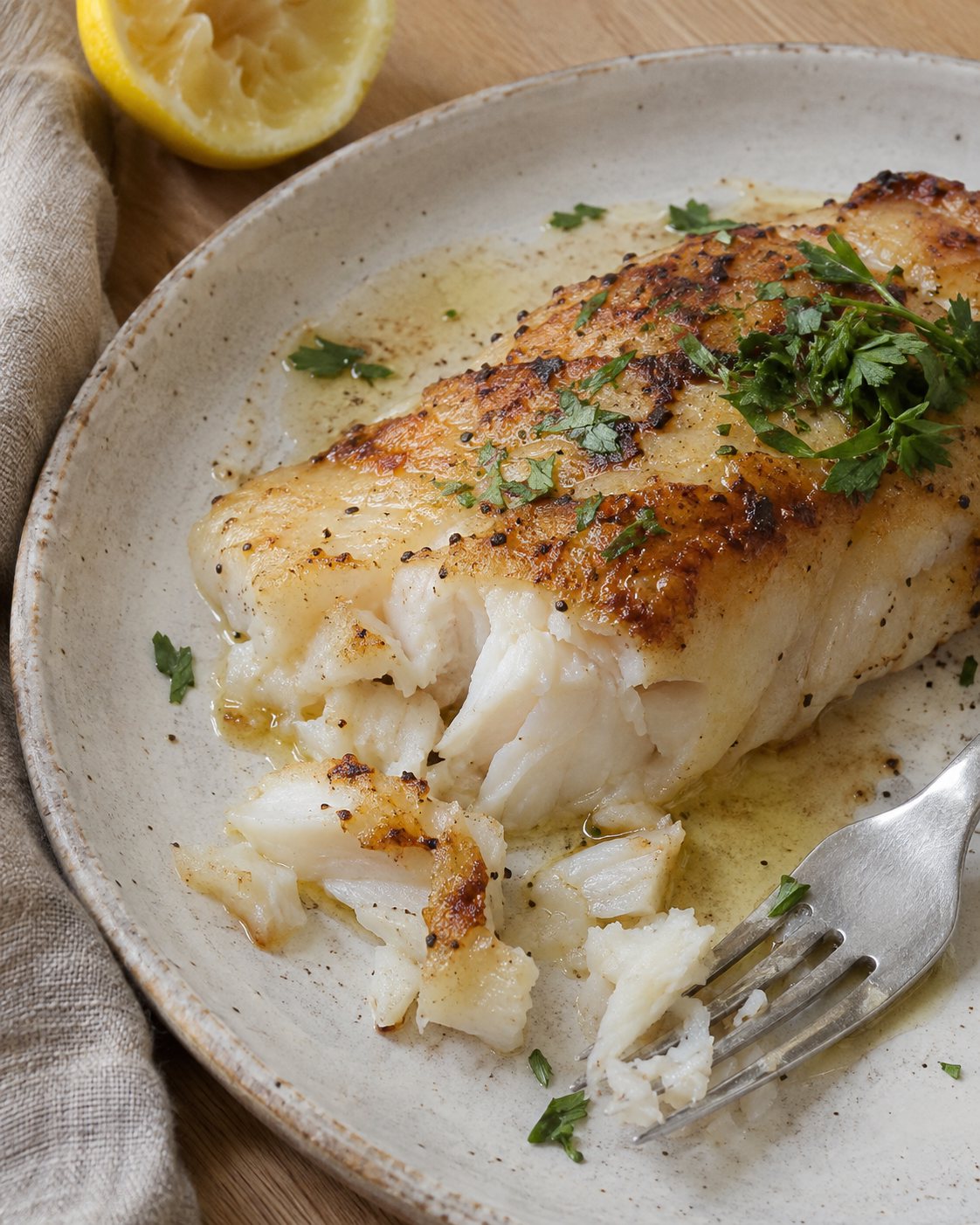
Use 1:1 by weight in any recipe calling for halibut steaks or fillets. The cooking time stays roughly the same: cod needs about 8-10 minutes per inch of thickness at 400°F.
- ✅ Flakes cleanly with a fork
- ✅ Widely available year-round
- ⚠️ Less natural sweetness than halibut
Cod works best in preparations where you're building flavor with marinades, sauces, or spice rubs. It won't taste quite as sweet raw, so save it for cooked dishes.
2 – Haddock 🐟
Haddock fillets bring mild flavor with a slightly sweeter edge than halibut. The texture stays firm but softens more during cooking than halibut or cod.
Swap 1:1 by weight in baked dishes, fish stews, and chowders. Haddock shines in recipes with liquid: it absorbs flavors while staying intact enough to scoop with a spoon.
- 🍳 In cooking: Best in braises and poaching, less ideal for high-heat grilling
- 🥗 Flavor: Sweeter than cod, slightly sharper than halibut
- ⚠️ Texture note: Flakes more easily once cooked through
- ⚠️ Skip if: You need the fish to hold together for skewers or kebabs
Haddock works well in fish tacos, fish and chips, or baked casseroles. It breaks apart faster than halibut under aggressive flipping or stirring.
3 – Sea Bass 🐟
Sea bass matches halibut's firmness but runs richer in fat and flavor. The buttery texture makes it ideal for grilling or pan-searing where you want a crisp exterior.
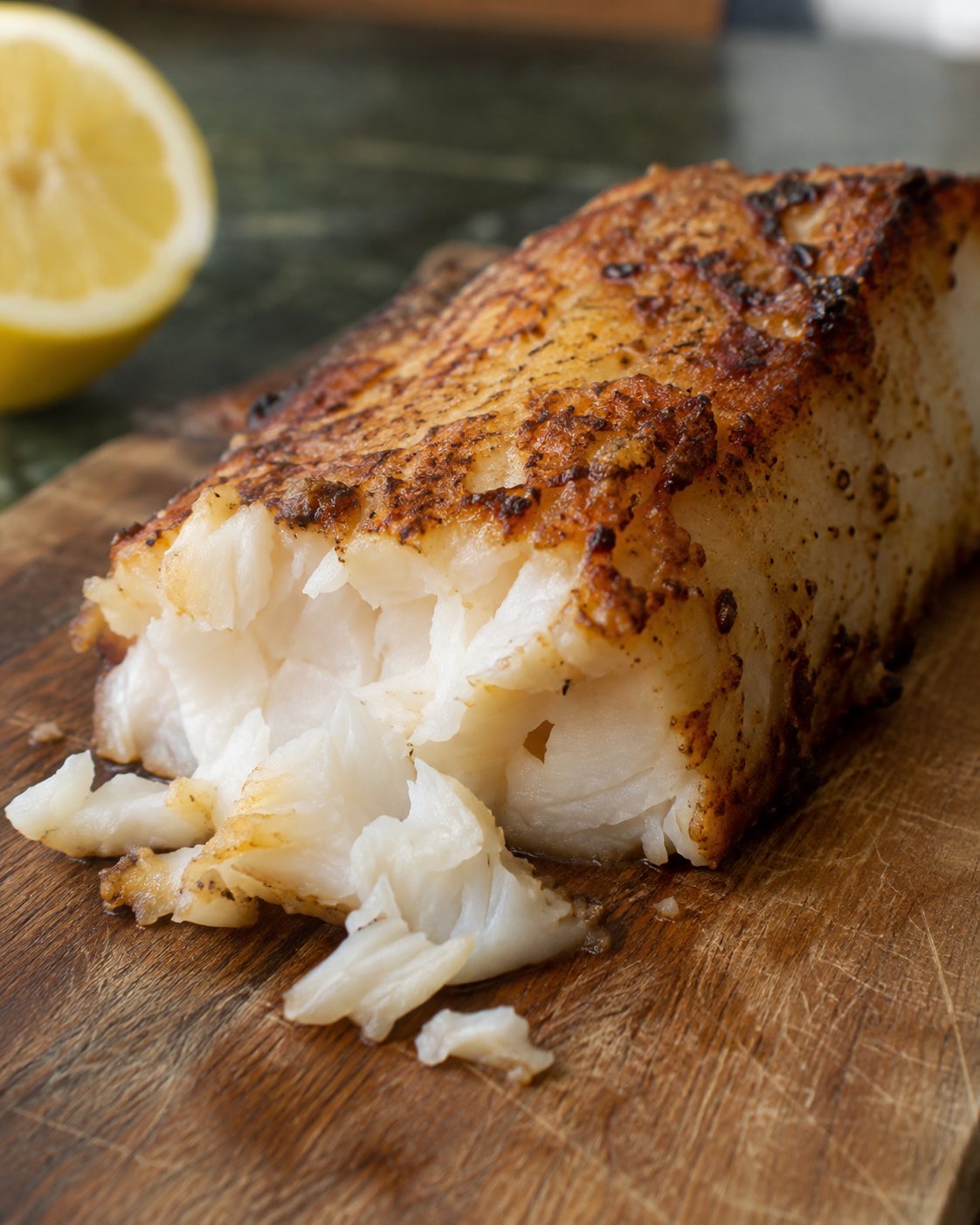
Use 1:1 by weight in high-heat preparations. Sea bass needs less added fat than halibut because its natural oils keep it moist without extra butter or oil.
Menus use "sea bass" for more than one fish. Chilean sea bass (Patagonian toothfish) is the moderately oily one that fits the buttery description here, so ask which species the counter sells.
- 🍳 Best for: Grilled fillets, crispy skin-on preparations
- ⚠️ Flavor: Richer than halibut's clean profile
- ⚠️ Skip if: Recipe needs low-fat fish or delicate flavor
- 💰 Cost: Often pricier than halibut depending on market availability
The richer fat content means sea bass browns faster. Watch the heat and adjust cook time down by 1-2 minutes per side.
4 – Tilapia 🐟
Tilapia fillets provide a budget-friendly swap with firm texture and ultra-mild flavor. They lack halibut's natural sweetness but hold their shape well enough for most cooking methods.
Swap 1:1 by weight in pan-seared, baked, or grilled recipes. Tilapia needs bold seasonings: with marinades, rubs, or sauces it lets them lead, where halibut's subtle taste still shows through.
- ✅ Affordable and widely stocked
- ✅ Firm enough for fish tacos and stir-fries
- ⚠️ Very neutral taste, so it needs strong flavor support
The neutral profile makes tilapia ideal for heavily spiced dishes like blackened fish or fish curry. It won't bring the delicate seafood note halibut adds to simple preparations with lemon and herbs.
5 – Rockfish 🐟
Rockfish offers firm, flaky texture similar to halibut but with a slightly earthier fish flavor. It performs best in cooked applications where the stronger taste blends into stews, curries, or tomato-based sauces.
Use 1:1 by weight in seafood stews, pan-fried preparations, or baked dishes. Rockfish stays intact during simmering, so it won't fall apart in cioppino or bouillabaisse the way softer fish might.
- 🍳 In cooking: Holds up to long braises and soups
- ⚠️ Flavor: Stronger fish taste than halibut, not as clean or mild
Rockfish works well in fish tacos, fish stew, or Asian-style steamed fish where bold sauces balance the flavor. Skip it when halibut's clean taste is the point, such as a simple lemon and herb plate, because rockfish tastes stronger.
6 – Firm Tofu 🌱
Firm tofu replicates halibut's dense, meaty texture in plant-based dishes. It doesn't bring seafood flavor, but it holds its shape through baking, pan-frying, and grilling when pressed properly.
Swap 1:1 by volume. Press the tofu for 20-30 minutes first to remove excess moisture, then slice it into steaks or cubes depending on how you'd cut the halibut.
- 🌱 Vegan-friendly: Absorbs marinades like teriyaki or lemon-herb blends
- ⚠️ No seafood flavor: Add nori, kelp powder, or Old Bay for ocean notes
Firm tofu works best in dishes where you're building flavor from scratch: grilled tofu steaks with chimichurri, baked tofu with miso glaze, or pan-fried tofu in stir-fries.
7 – Young Jackfruit 🌱
Young jackfruit (unripe, canned in brine) mimics halibut's flaky texture in vegan recipes. It shreds into strands that look similar to cooked fish but taste mildly sweet and neutral.
Use 1:1 by volume after draining and pressing out excess liquid. Shred it with a fork before cooking, since it absorbs marinades quickly and holds together during braising or steaming.
- 🌱 Best for: Vegan fish tacos, curries, or steamed preparations
- ⚠️ Softer texture: Won't hold shape as well as tofu under high heat
Jackfruit works well in saucy dishes where the liquid helps it stay moist, such as vegan fish curry, BBQ jackfruit "fish" sandwiches, or steamed jackfruit with ginger-soy sauce. Avoid grilling or pan-searing unless you coat it in a batter or breading first, because it dries out and crumbles without protection.
If the jackfruit runs out, hearts of palm and banana blossom are the other plant options that pull apart into flaky pieces.
Picking Your Halibut Swap
- For grilling or pan-searing: Cod or sea bass hold up best to high heat without falling apart
- For baked dishes and stews: Haddock or rockfish absorb flavors while staying firm enough to scoop
- For budget-friendly meals: Tilapia swaps 1:1 and costs less-just add stronger seasoning
- For vegan dishes: Firm tofu handles marinades and grilling; young jackfruit works in braises and curries
Frequently Asked Questions
Frozen cod, haddock, or sea bass work just as well as fresh: thaw them in the fridge overnight and pat dry before cooking. The texture stays firm if you don't refreeze after thawing, and frozen fish often costs less and keeps for months.
Cod matches halibut's mild, slightly sweet flavor and flaky texture most closely. Sea bass runs richer and fattier but still delivers clean seafood taste, and haddock tastes a bit sweeter and sharper, close but not identical.
Cod, tilapia, or rockfish all work great in fish tacos because they hold together during pan-frying or grilling and won't fall apart when folded into tortillas. Firm tofu works too if you press it well and coat it in cornmeal or panko before frying.
Firm tofu pressed for 20-30 minutes replicates halibut's dense texture best in grilled or baked dishes, while young jackfruit mimics the flaky quality in curries and stews. Add kelp powder or nori to either one for a hint of ocean flavor.
Cod and sea bass cook at the same rate as halibut, about 8-10 minutes per inch of thickness at 400°F, while haddock and tilapia cook slightly faster, so check them 1-2 minutes earlier. Tofu and jackfruit need similar times but dry out faster if overcooked.



