
Most people assume mild means boring, and that assumption leads them to overcook cod, bury it in heavy sauces, and wonder why it never tastes as good as it did at a restaurant.

The reality is that cod's restraint is the point - its clean, low-oil flavor and large moist flakes make it one of the most adaptable white fish in any kitchen.
Cod is a mild, cold-water white fish with large moist flakes and a clean, faintly sweet flavor. It suits baking, pan-searing, frying, and chowders equally well. Fresh fillets last just 1-2 days in the fridge, so buy close to when you'll cook it.
What Is Cod?
Cod belongs to the family Gadidae and comes primarily in two commercial species: Atlantic cod (Gadus morhua), fished from the North Atlantic, and Pacific cod (Gadus macrocephalus), harvested across the North Pacific.
Remember it later
Planning to try this recipe soon? Save it for a quick find later!
Both share the same general profile - white, firm flesh and a mild flavor - though Atlantic cod tends to have slightly larger flakes and a marginally sweeter taste.
You'll encounter it under several names depending on preparation. Bacalhau (Portuguese) and bacalao (Spanish) refer to the salt-dried form, which has been a staple of European cooking for centuries and requires soaking before use. Stockfish is cod dried without salt, common in Scandinavian pantries.
Fresh cod is sold as whole fish, skin-on fillets, or boneless loins. Here's what to know about each form:
- 🐟 Whole cod - Best indicator of freshness; clear eyes, bright red gills, firm flesh
- Skin-on fillets - Hold together better during pan-searing and baking; skin crisps well
- Boneless loins - The thickest center-cut section, best for even cooking and presentation
- Salt cod (bacalhau/bacalao) - Extended shelf life; needs 24-48 hours of soaking and water changes before cooking
What Does Cod Taste Like?
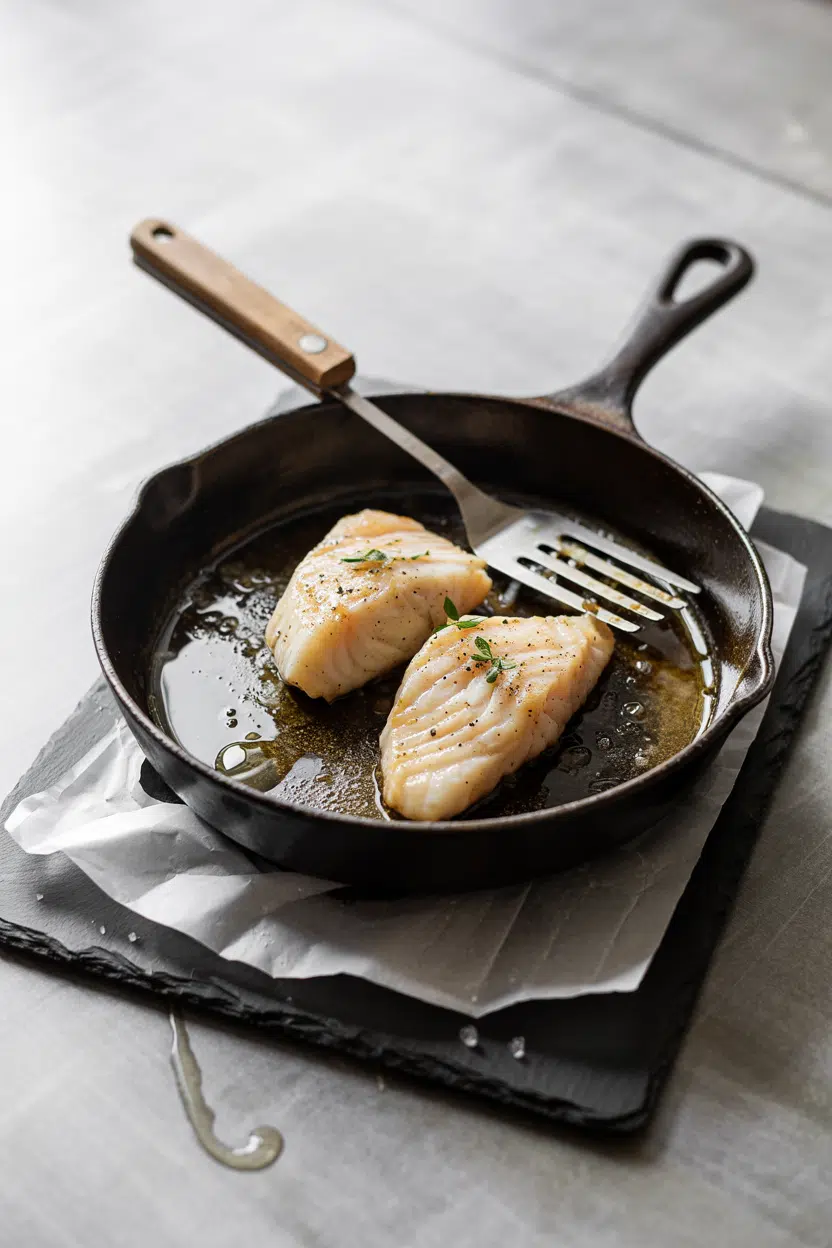
Cod's flavor is genuinely mild - not in a forgettable way, but in a way that leaves room for everything around it.
The flesh carries a faint sweetness, a clean oceanic note, and just enough natural brine to taste like the sea without tipping into fishiness.
Compared to haddock and pollock, cod is milder and less distinctly smoky. Heat transforms the texture significantly - raw cod is firm and dense, but once cooked it pulls apart into wide, glossy flakes.
Overcooked cod turns dry and loses those flakes entirely, which is the most common mistake home cooks make.
How to Use Cod
Cod's firm-yet-flaky structure handles a wider range of cooking methods than most white fish. It holds together in chowders, crisps up under a beer batter, and takes on aromatics well when baked or poached.
| Method | Best For | Tip |
|---|---|---|
| 🍺 Deep-Fried | Classic beer-battered fish and chips | Keep batter ice-cold; fry at 180°C (350°F) for a crisp shell |
| 🫙 Baked | Breadcrumb-crusted fillets, whole loins with herbs | A light coating of butter or olive oil prevents the surface from drying |
| 🍳 Pan-Seared | Crispy skin-on fillets, brown-butter preparations | Dry fillets thoroughly and press gently on the pan to avoid curling |
| 🥣 Poached | Delicate salads, court-bouillon preparations | Keep the liquid at a gentle simmer - a rolling boil breaks the flakes |
| 🍲 Stewed | Chowders, tomato-based braises, bacalhau dishes | Add cod in the final 5-8 minutes so it doesn't overcook in the liquid |
British cuisine claims cod most visibly through fish and chips, but the fish has a strong presence across Portuguese cooking as bacalhau, in Scandinavian simple bakes, and in New England chowders. Pairings that work: lemon and capers, brown butter and parsley, garlic and olive oil, dill, and mild white wines like Pinot Grigio.
Potatoes - whether chips, mash, or roasted - appear alongside cod across nearly every cuisine that uses it.
If you need a cod substitute for a recipe, haddock is the closest match; halibut works for thicker preparations where you want a firmer bite.
How to Buy and Store Cod
Fresh cod gives clear signals when it's worth buying. Translucent, glossy flesh with tight flakes that spring back when pressed is what you want.
Avoid fillets with yellowing edges, dull color, or any sharp fishy odor - at peak freshness, cod smells faintly of the ocean, nothing more.
Store fresh cod in the coldest part of your fridge, ideally on a plate covered tightly with plastic wrap or in a shallow airtight container. Use it within 1-2 days.
For longer storage, freeze it; properly wrapped frozen cod holds its quality for 3-6 months. Detailed guidance on cod storage life and fish storage more broadly is worth checking before you buy in bulk.
Start Here for Best Results
Cod rewards simplicity. If you're cooking it for the first time, go with a baked loin - season with salt, rub with butter or olive oil, and roast at 200°C (400°F) for 12-15 minutes depending on thickness.
That single method teaches you the texture cod should hit and gives you a reference point for everything else.
Once you know how the flakes behave, try pan-searing skin-on fillets or adding it to a chowder. Salt cod (bacalhau) is a separate project with a longer prep commitment, but it's worth it once you're confident with the fresh form.
Frequently Asked Questions
Yes. Cod is a lean, white-fleshed sea fish with low fat content and a mild flavor. It belongs to the same broader category as haddock, pollock, and hake - all cold-water white fish with flaky flesh.
Fresh cod has translucent, glossy flesh that bounces back when pressed. Any yellowing at the edges, dull color, or sharp fishy smell means the fish is past its best.
Yes, they're the closest swap in white fish cooking. Haddock has a slightly stronger flavor and smaller flakes, but it works in almost every cod recipe without adjusting cook time.
Cod is low in fat and calories while providing solid lean protein, vitamin B12, selenium, and moderate omega-3 fatty acids. The main exception is salt cod (bacalhau), which carries very high sodium levels before soaking.
Fresh raw cod keeps for 1-2 days stored in the coldest part of the fridge. If you're not cooking it within that window, freeze it immediately rather than letting it sit.



