
Haddock earns its place in the kitchen by doing something most proteins struggle with: it disappears into a dish without disappearing from it.
The flesh is mild enough to let butter, cream, or smoke take the lead, yet firm enough to hold structure in a chowder, a batter, or a herb crust - which explains why it anchors everything from New England seafood counters to British chip shops.
Understanding the role fish plays in a recipe helps clarify why haddock, specifically, keeps showing up as the first choice rather than the fallback.
Haddock is a mild, slightly sweet white fish from the North Atlantic. Its fine flake and clean flavor make it a reliable choice for frying, baking, smoking, and chowder. Fresh fillets keep only 1-2 days; smoked haddock lasts up to 5 days refrigerated.
What Is Haddock?
Haddock (Melanogrammus aeglefinus) is a lean, white-fleshed saltwater fish native to the Northeast Atlantic and North Sea.
Remember it later
Planning to try this recipe soon? Save it for a quick find later!
It belongs to the cod family, which explains why young haddock is sometimes sold under the name scrod - a term that overlaps with young cod depending on where you're shopping.
Fresh haddock is typically sold as skinless fillets or skin-on loins. Smoked haddock, sold as Finnan haddie, is a cured and cold-smoked version with a long history in Scottish and Northern English cooking.
Wild-caught haddock from certified sustainable fisheries dominates the market in both the UK and the U.S. The fish reaches roughly 1-3 kg at market size, yielding firm, boneless fillets that handle most cooking methods cleanly.
Understanding the role fish plays in different cuisines shows why haddock sits near the top of the white fish category - its structure and neutral profile make it widely applicable without requiring much technique to cook well.
What Does Haddock Taste Like?
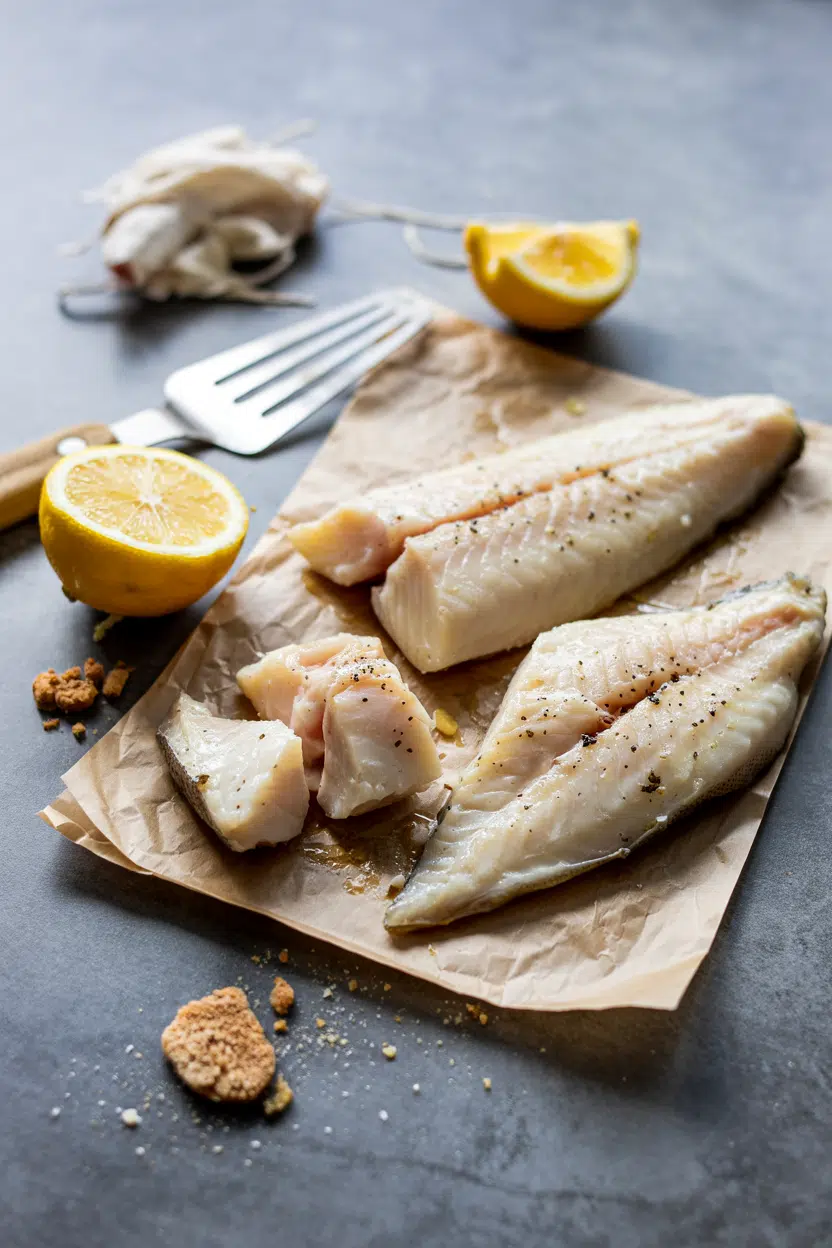
Haddock is mild, slightly sweet, and cleanly briny - closer to the sea than to a fishmonger's counter. Raw fillets smell faintly oceanic; well-sourced fish carries almost no sharp or "fishy" edge at all.
Compared to cod, haddock is noticeably sweeter and finer-flaked - cod has a slightly earthier, more robust taste. Pollock falls somewhere in between, leaning starchy and neutral.
If you're already working with similar white fish, swapping out pollock can give you a reference point for how these flavors shift.
Heat tightens haddock's flake but doesn't muddy its sweetness - if anything, a quick sear or gentle poach makes the flavor cleaner. Smoked haddock moves in a different direction entirely: smoke and salt amplify the umami, and the flesh takes on a golden color and a denser, meatier character.
How to Use Haddock
Fresh haddock fillets are adaptable across a wide range of cooking methods - from quick weeknight pans to long-simmered pots. The mild flavor responds well to fat-based sauces, acidic finishes, and smoky treatments alike.
| Method | Best For | Tip |
|---|---|---|
| 🍟 Deep-Fried | British fish and chips, beer-battered fillets | Pat fillets bone-dry before battering to prevent steam pockets |
| 🫙 Baked | Breadcrumb-herb crust, Ritz crumb topping | Bake at high heat (200°C/400°F) briefly - 12-15 min prevents drying |
| 🥘 Poached | New England chowder, kedgeree, cold platters | Use milk or light stock; water alone strips flavor |
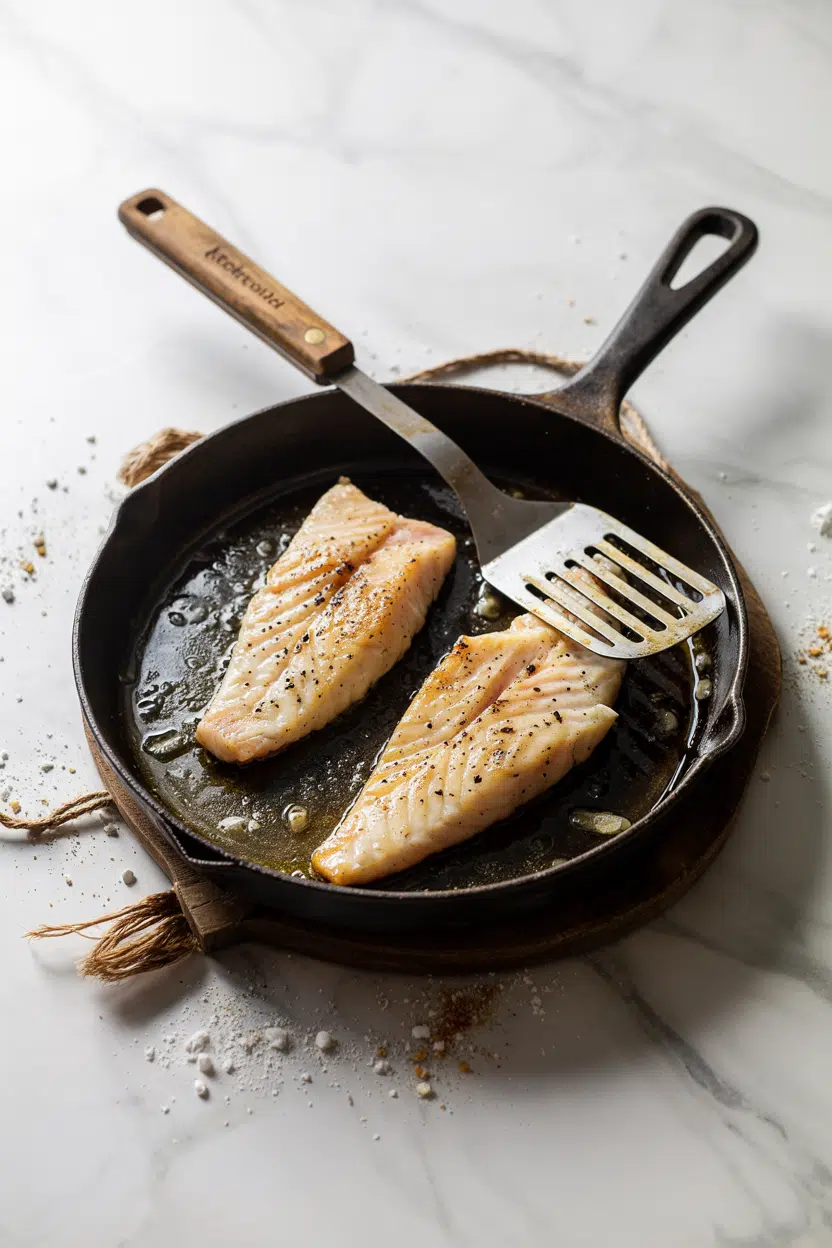
| 🍳 Pan-Seared | Lemon-butter fillets, quick weeknight meals | Skin-side down first; don't move the fillet for the first 2 minutes |
| 🫕 Stewed | Tomato-potato one-pot, Scandinavian fish stews | Add haddock last - it only needs 5-7 minutes in simmering liquid |
Haddock sits at the center of British and New England cooking more than almost any other white fish.
In the UK, it's the preferred fish for battered chips in northern England and Scotland, where knowing what pairs with fish and chips is practically a regional skill.
In New England, it replaces cod in many chowder recipes, bringing a sweeter note to a cream-based broth.
Smoked haddock (Finnan haddie) drives kedgeree - the Anglo-Indian rice dish built on curried smoked fish, boiled eggs, and cream. It also defines the filling layer in a traditional British fish pie.
For broader pairing decisions, pairing ideas for haddock covers both classic and less obvious combinations worth trying.
How to Buy and Store Haddock
Fresh fillets should look translucent and slightly shiny, not chalky or grey. A mild sea smell is correct; anything sharp or ammonia-like means the fish is past its window.
Avoid fillets that pull apart in the display case - that mushy separation is a sign of age or poor handling.
For smoked haddock loins, look for firm, evenly golden flesh with no chemical or rancid smell. Buy vacuum-packed when possible - it extends fridge life reliably.
At home, store fresh haddock in the coldest part of the refrigerator, wrapped airtight, and use it within 1-2 days. Smoked haddock keeps 3-5 days refrigerated.
For longer storage, keeping haddock fresh covers freezing in detail - whole fillets hold well for up to 6 months frozen.
Start Here With Haddock
Fresh haddock fillets are the straightforward entry point - pan-sear skin-side down with butter and lemon and you'll understand what the fish does at its baseline.
From there, smoked haddock opens a completely different register worth exploring.
If haddock isn't available, swapping out haddock outlines which alternatives hold up in which dishes, and cod swaps that work covers the nearest neighbor in the white fish family.
Frequently Asked Questions
No, though they're closely related. Haddock is sweeter and finer-flaked than cod; cod has a slightly earthier flavor and larger, thicker flake. Both can often substitute for each other, but the texture difference becomes more noticeable in delicate preparations like chowder.
Smokier, saltier, and meatier than fresh haddock, with more pronounced umami. The cold-smoking process deepens the fish's natural sweetness rather than masking it. Finnan haddie specifically has a gentler smoke than hot-smoked varieties.
One to two days, maximum, when stored airtight in the coldest part of the refrigerator. If you can't cook it within that window, freeze it immediately - don't wait until day two to decide.
No. Haddock is classified as a low-to-moderate mercury fish, well below larger predatory species like swordfish or albacore tuna. It's generally considered safe for regular weekly consumption, including for pregnant women following standard seafood guidelines.
Pull it from heat the moment the flesh turns opaque all the way through - residual heat finishes the job. For baking, high heat for a short time (400°F / 200°C for 12-15 minutes) outperforms low-and-slow, which draws out moisture without building flavor.



