
You spot it at the fish counter - a thick, bone-white slab resting on ice, uniform and almost sculptural.
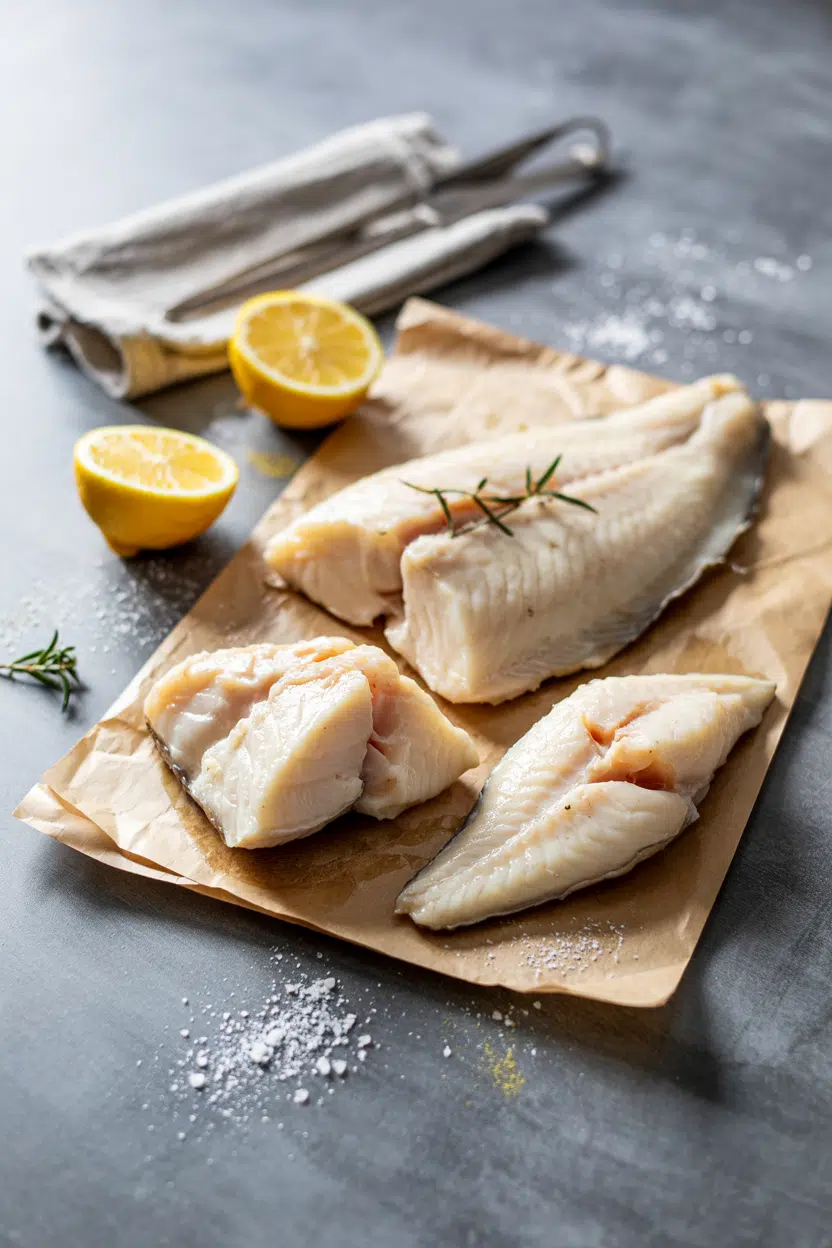
Halibut isn't a subtle fish, but it's not an aggressive one either, which is exactly why it sells.
Cooks who want the firm, steak-like payoff of something like alternatives to sea bass or alternatives to cod often land on halibut as the answer.
Halibut is a large flatfish with dense, flaky white flesh and a clean, mildly sweet flavor. It handles high heat well, holds together on the grill, and pairs with both bright citrus sauces and rich butter preparations. Fresh fillets keep for just 1-2 days in the fridge.
What Is Halibut?
Halibut is a flatfish - both eyes sit on one side of the body, and the fish lies flat along the ocean floor.
Remember it later
Planning to try this recipe soon? Save it for a quick find later!
Two commercially important species dominate the market: Pacific halibut (Hippoglossus stenolepis), harvested from Alaskan and Pacific Northwest waters, and Atlantic halibut (Hippoglossus hippoglossus), found in the North Atlantic from Norway to the northeastern United States.
Atlantic halibut grows significantly larger, sometimes exceeding 300 kg. Pacific halibut is the more common market fish in North America and tends to be more sustainably managed.
Both species are sold as bone-in steaks, boneless fillets, or occasionally whole for smaller specimens.
You'll also see the name halibut steak used specifically for cross-cut sections through the body - these are thicker and hold up especially well to grilling and roasting.
Halibut fits squarely in the white fish category alongside cod and haddock, though its flesh is noticeably firmer and denser than either.
If you're curious how replacements for salmon stack up against white fish options, halibut sits at the firm, lean end of that comparison.
What Does Halibut Taste Like?
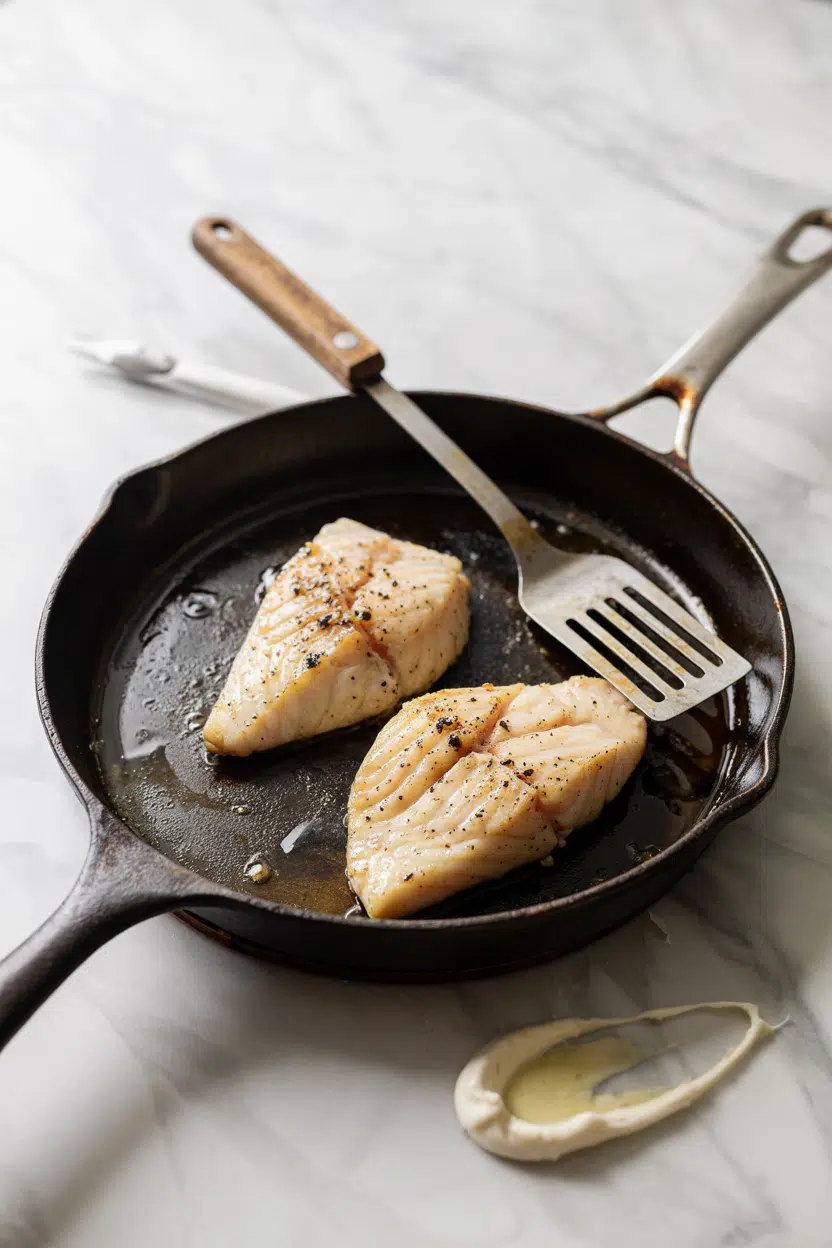
Halibut has a clean, mildly sweet flavor with a faint brine and just enough background umami to keep it interesting. It doesn't taste fishy in the way mackerel or sardines do - the aroma is sea-fresh rather than pungent.
Compared to cod, halibut tastes similar but firmer - cod breaks apart in larger, softer flakes, while halibut holds its structure under heat. Against sea bass, halibut reads leaner and cleaner, with less of the fatty richness.
Heat affects the texture significantly. Overcook halibut and those dense flakes turn dry and chalky fast.
Keep it just at the point where the flesh turns fully opaque and separates cleanly - that's the window.
How to Use Halibut
Halibut's firm flesh makes it one of the most method-flexible white fish available. It won't fall apart on a hot grill, holds together in a braise long enough to absorb flavor, and produces clean, stackable portions when pan-seared.
| Method | Best For | Tip |
|---|---|---|
| 🍳 Pan-Searing | Thick fillets, restaurant-style crust | Pat completely dry; use high heat and don't move the fish for 3-4 minutes |
| 🔥 Grilling | Halibut steaks, kebabs | Oil the fish, not the grate; use direct heat over hardwood or charcoal |
| 🫕 Roasting | Herb-crusted fillets, en papillote | Moderate oven (180-200°C); wrap with root vegetables for moisture |
| 💧 Poaching | Salads, gentle preparations | Use court-bouillon; keep liquid just below a simmer |
| 🍋 Ceviche | Thin-cut raw preparations | Use only sashimi-grade fresh fish; citrus acid firms the flesh quickly |
Pairings lean in two directions. Bright and acidic - lemon, yuzu, capers, dill - or rich and fatty - brown butter, beurre blanc, or a soy-mirin glaze. Both work because the mild flesh doesn't compete. For a wider look at what works alongside this fish, the pairing ideas for halibut page covers sides, sauces, and wine picks in depth.
Pacific Northwest preparations tend toward simple pan-searing with browned butter and lemon. Scandinavian cooks often poach or cure it.
Japanese-influenced preparations use soy, mirin, and ginger for a clean umami profile. British preparations lean toward baking or battering for fish and chips applications.
Avoid overly sweet sauces - they overwhelm the clean flavor. Long braises also work against halibut; that firm texture breaks down into mush if cooked too slowly for too long.
If the fish counter is out and you need a swap, halibut swaps that work covers the closest alternatives by cooking method. For ceviche specifically, pairing ideas for ceviche helps round out the plate.
How to Buy and Store Halibut
Fresh halibut should have firm, opaque white flesh with a glossy, slightly translucent sheen - think clean and bright, not dull or yellowing. Brown edges are a clear sign of age.
At the counter, a light sea smell is fine; anything sharper, or any hint of ammonia, means skip it.
For whole fish, check the eyes - they should be clear and slightly bulging, not cloudy or sunken. Halibut steaks should feel springy when pressed and be uniformly thick so they cook evenly.
Storage is straightforward:
- 🧊 Refrigerate on ice - lay fillets in a container over crushed ice and use within 1-2 days
- ❄️ Freeze for longer storage - wrap tightly in plastic, then foil; good up to 6 months
- 🍽️ Cooked leftovers - keep refrigerated in an airtight container for 3-4 days
The guide on keeping halibut fresh goes deeper on icing technique and freezer wrapping methods worth knowing before you stock up.
Where to Start With Halibut
New to halibut? Start with a thick pan-seared fillet - a single piece, dry-patted, into a hot cast iron pan with oil, then finished with compound butter. That single cook teaches you the texture window faster than any other method.
Already comfortable with it? Move to the grill. Halibut steaks over direct heat develop char and hold structure in a way few white fish can match.
From there, ceviche with very fresh thin-cut halibut is the third rung - minimal technique, maximum freshness required.
Frequently Asked Questions
Yes. Halibut is lean, high in protein, and provides omega-3 fatty acids (EPA and DHA), vitamin B12, and selenium. Large Atlantic halibut can accumulate moderate mercury levels, so frequent consumption in high quantities warrants checking current dietary guidance.
Fresh halibut has firm, white flesh with a slight gloss and smells of clean sea air - never ammonia. Brown edges, soft spots, or a sour smell all indicate the fish has passed its window.
No - both are flatfish, but halibut is far larger and has significantly firmer, denser flesh. Flounder fillets are thinner and more delicate, making the two fish behave quite differently in cooking.
Yes, and halibut handles skewers better than most white fish because its dense flesh doesn't fall apart over direct heat. Cut into 4-5 cm cubes, marinate in citrus and olive oil, and grill on high heat for 2-3 minutes per side.
Up to 6 months at best quality when wrapped tightly in plastic and then foil to prevent freezer burn. Beyond that window, the fish is technically safe but the texture and flavor deteriorate noticeably.



