Steamed jasmine rice, a cold cucumber salad and roasted sesame broccoli are the three sides that fit Asian salmon best. The rice soaks up the sweet-salty glaze, the vinegar in the cucumber cuts the fat of the fish, and the broccoli fills out the plate.
Pick one starch, one cool or pickled side and one cooked vegetable. The only trap is salt: the glaze already has soy sauce, so add at most one more salty side, such as kimchi or miso soup.
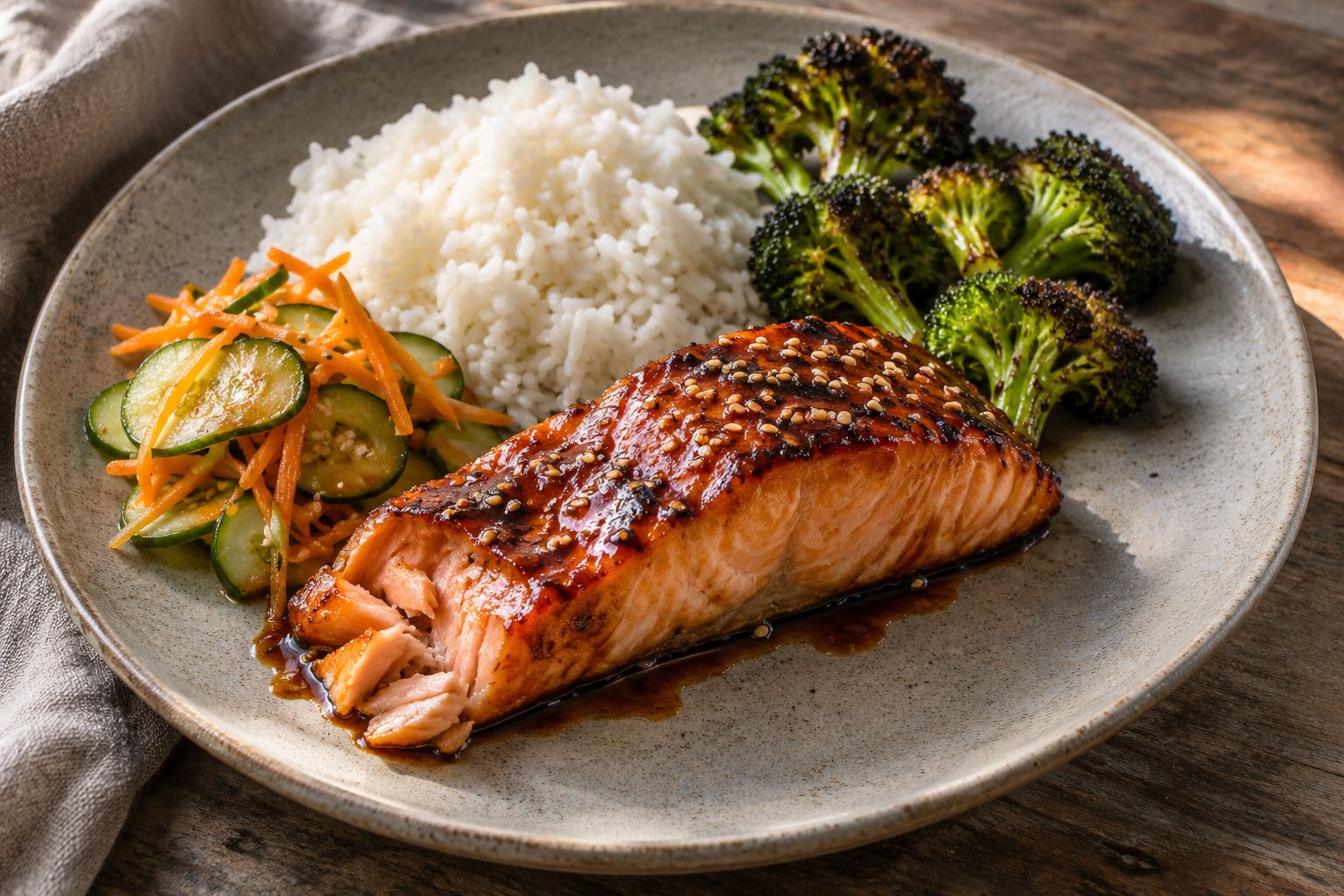
Jasmine rice is the best base because it takes up the sweet-salty glaze. Use 1 cup of rice to 1¼ cups of water.
Add something cold and sharp to cut the fat of the fish: cucumber salad, pickled daikon or kimchi.
Round it out with roasted sesame broccoli at 425°F for about 20 minutes, and go easy on any other salty side.
What Does Asian Salmon Need on the Plate?
Asian-style salmon usually means fillets glazed with soy sauce, ginger and garlic plus something sweet, such as honey, brown sugar or mirin.
Remember it later
Planning to try this recipe soon? Save it for a quick find later!
The fish is fatty and the glaze is both salty and sweet, so the plate needs three things beside it.
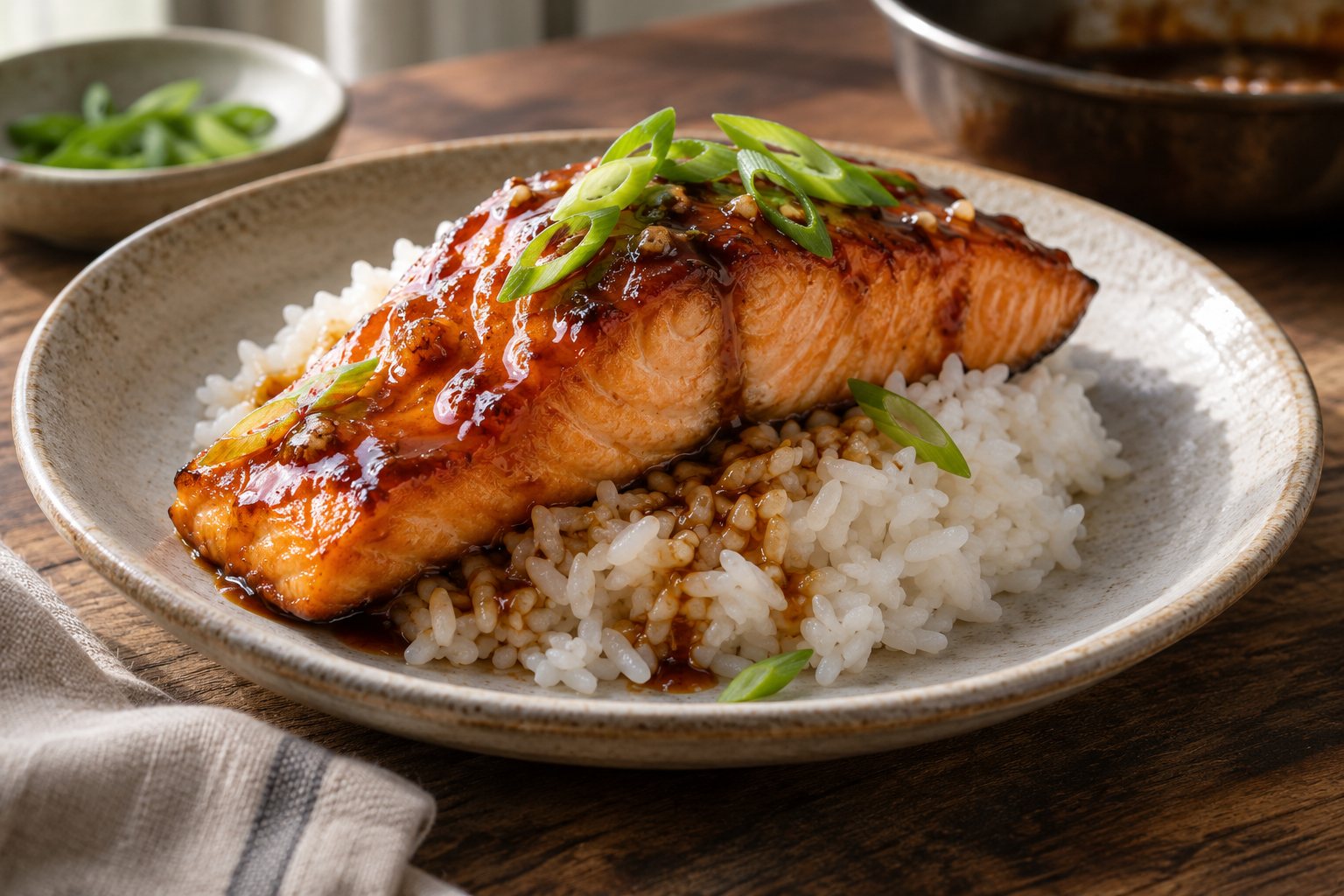
- A starch that takes up sauce: Plain rice or noodles catch the glaze that runs off the fillet, so none of it is left behind on the plate.
- Something cold, sharp and crunchy: Rice vinegar in a cucumber salad, a quick pickle or a slaw cuts the fat that coats your mouth after each bite of salmon.
- A green vegetable: Broccoli, snap peas or bok choy add fresh green flavor, so the sweet glaze does not taste heavy by the last bite.
Which Side Should You Pick for Tonight?
| Side Dish | Job on the Plate | Prep | Make Ahead? |
|---|---|---|---|
| Jasmine Rice | Takes up the glaze | ✅ Easy | Cook fresh |
| Garlic Sesame Noodles | Starch that echoes the sauce | ⚡ Medium | Yes, serve warm or cool |
| Ginger-Soy Sweet Potatoes | Hearty, sweet starch | ⚡ Medium | Cook fresh |
| Roasted Sesame Broccoli | Green vegetable | ✅ Easy | Cook fresh |
| Garlic-Ginger Snap Peas | Quick, crisp green | ✅ Easy | Cook fresh |
| Baby Bok Choy | Mild, tender green | ✅ Easy | Cook fresh |
| Edamame | Salty, chewy snack side | ✅ Easy | Yes, serve warm or chilled |
| Cucumber Salad | Acid and crunch | ✅ Easy | Short chill is fine |
| Asian Slaw | Crunch with a creamy dressing | ✅ Easy | Dress 15 minutes ahead |
| Quick Pickled Daikon | Sharp, sweet-sour bite | ✅ Easy | Yes, 2 hours to overnight |
| Kimchi | Sour, spicy contrast | ✅ Easy | Jarred, ready to serve |
| Miso Soup | Warm broth for a set meal | ✅ Easy | Cook fresh |
The table sorts the sides by the job they do.
Take one from the starch rows, one from the cold rows and one from the vegetable rows, then add edamame or miso soup only if you want a bigger meal.
Which Starches Soak Up the Glaze?
1 – Steamed Jasmine Rice
Plain jasmine rice is the default side because its soft, lightly floral flavor does not compete with soy and ginger. The grains also hold on to glaze that runs off the fillet, so spoon the pan sauce over the rice.
Use 1 cup of rice to 1¼ cups of water for separate grains, or 1½ cups for softer rice.
Bring the water to a boil, stir in the rice, cover, and simmer on low for 15 minutes. Let it stand covered for 5 minutes, then fluff with a fork.
- Rinsing is optional: Jasmine rice does not need it, and rinsed rice needs about 2 tablespoons less water.
- Leave out salt and butter: The glaze already seasons every bite, and plain rice is what lets it taste clean.
- Keep the lid on: Lifting it lets the steam out, and the top layer of rice stays hard.
2 – Garlic Sesame Noodles
Noodles suit a night when rice feels too plain. Sesame oil, soy sauce and garlic echo the flavors in the glaze, and the strands pick up extra sauce from the plate.
Cook lo mein noodles until just tender, then toss them with sesame oil, minced garlic and sliced scallions.
Go light on the soy sauce, because the salmon is already salty.
- Warm noodles: Skip the rinse, because the starch on the surface helps the sauce cling.
- Cold noodles: Rinse them in cold water, which stops the cooking and keeps the strands from clumping.
- Fresh or dried: Fresh noodles cook in a few minutes, so follow the package time and start tasting early.
| If You Want | Add | Why |
|---|---|---|
| Heat | Chili oil | Spice against the sweet glaze |
| Protein | Edamame | Extra chew and body |
| Crunch | Sliced cucumber | Fresh bite in a soft dish |
3 – Ginger-Soy Roasted Sweet Potatoes
Sweet potatoes make the plate heartier, but they add more sweetness to a dish that is already sweet. Season them savory with soy sauce, grated ginger and a little sesame oil, and leave out honey.
Cut them into 1-inch cubes, pat them dry, and roast at 425°F for about 25 to 30 minutes, stirring halfway.
They count as your one salty side, so serve plain rice or a cucumber salad with them.
- Dry the cubes: Water on the surface makes them steam instead of brown.
- Do not crowd the pan: Spread them in one layer so the edges can crisp.
- Cut evenly: Pieces of the same size finish at the same time.
Wedges or 2-inch chunks take 40 to 45 minutes, so start them before everything else.
Which Vegetables Go with Asian Salmon?
4 – Roasted Sesame Broccoli
Roasting browns the edges of broccoli and gives it a nutty, slightly charred flavor that matches the sesame in the glaze.
Preheat the oven fully to 425°F and roast the florets for about 20 minutes, turning once.
Roast with a neutral oil and salt, then finish with a drizzle of toasted sesame oil and toasted sesame seeds. Toasted sesame oil burns easily, so adding it after roasting keeps its smell.
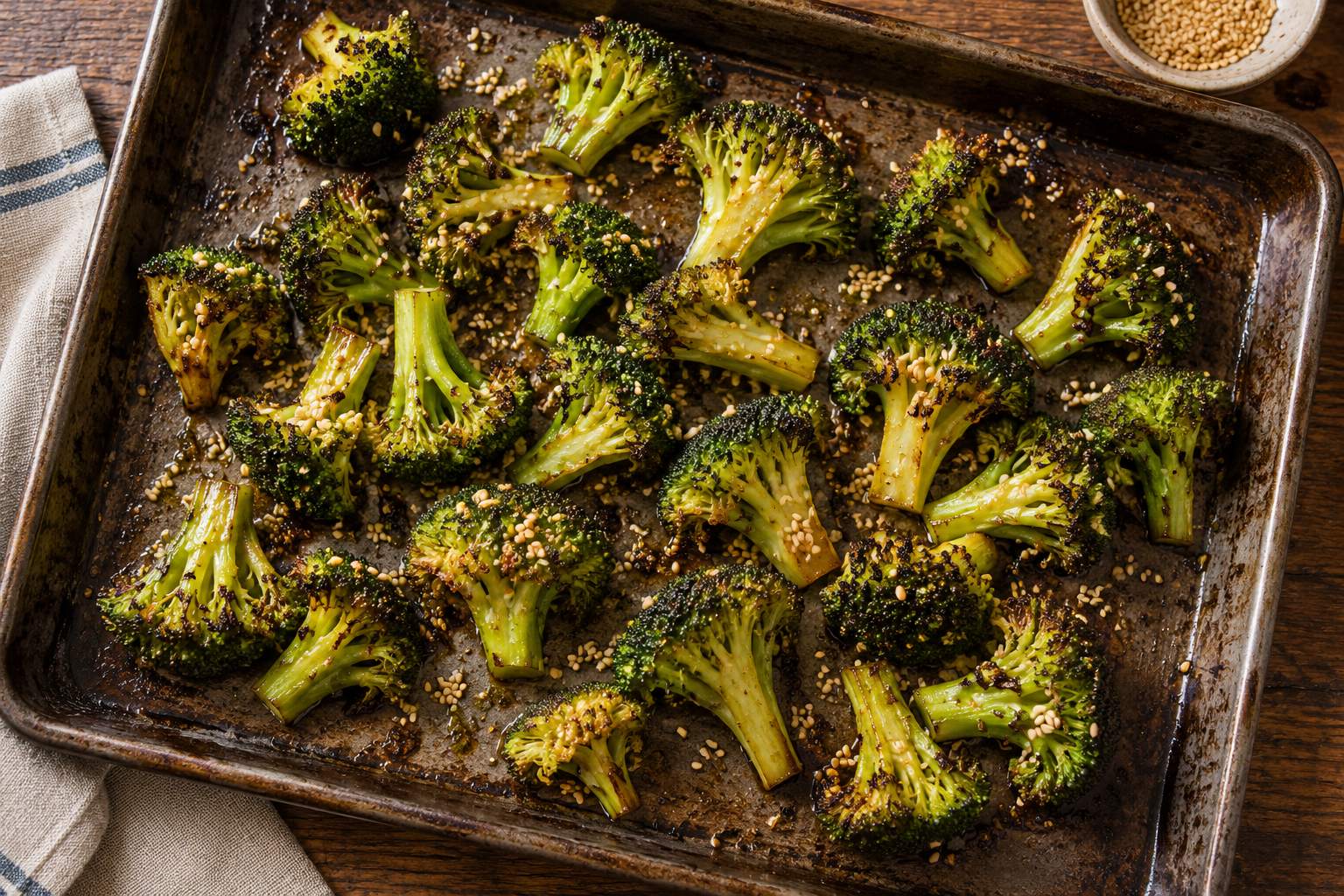
For deeper color, roast the florets 5 minutes longer, and for less char, lower the heat to 400°F. Smaller florets cook faster.
5 – Garlic-Ginger Snap Peas
Snap peas stay sweet and crisp when they cook fast, which gives you a green side in a few minutes.
Heat a skillet until very hot, add oil and the peas, and stir-fry for 2 to 3 minutes.
Add minced garlic and ginger for the last 30 seconds so they do not burn, then finish with a few drops of soy sauce and sesame oil off the heat.
- Stir-fry, 2 to 3 minutes: The crispest result, with a little browning.
- Blanch, about 2 minutes: Drop them in boiling water, then into cold water, for the brightest green.
- Steam, about 5 minutes: A softer bite and no oil in the pan.
6 – Baby Bok Choy
Baby bok choy has mild, slightly sweet stems and soft leaves, so it adds a green side without a strong flavor of its own.
Halve it lengthwise and start the stems before the leaves, because the stems take longer to turn tender.
Cook it in a hot pan with garlic and a splash of water, then season with a few drops of soy sauce. Stop while the stems still have some bite.
- Rinse between the stems: Soil collects at the base, so fan the halves under running water.
- Start cut side down: That side browns in the pan, and the leaves wilt on top of it.
7 – Edamame with Sea Salt
Edamame is the side to choose when you want nothing to chop. Boil frozen pods in well-salted water for 4 to 5 minutes, drain, and toss with coarse sea salt.
- Serve warm or chilled: Put the pods in a bowl in the middle of the table and let everyone shell their own.
- Set out a second bowl: It holds the empty shells, and the pods are salty, so go easy on the soy sauce elsewhere.
- Skip the pot: Most bags of frozen edamame print microwave directions; follow them, then salt the pods while they are hot.
Which Cold or Pickled Sides Cut the Richness?
8 – Cucumber and Carrot Salad
A Japanese cucumber salad is the closest match for salmon. It is only thin cucumber in a rice vinegar dressing, so it adds acid and crunch without adding fat.
Salt the sliced cucumbers, let them sit 5 to 10 minutes, then squeeze or pat them dry so the dressing does not get watered down.
Dress them with about 2 parts rice vinegar to 1 part sugar and a pinch of salt.
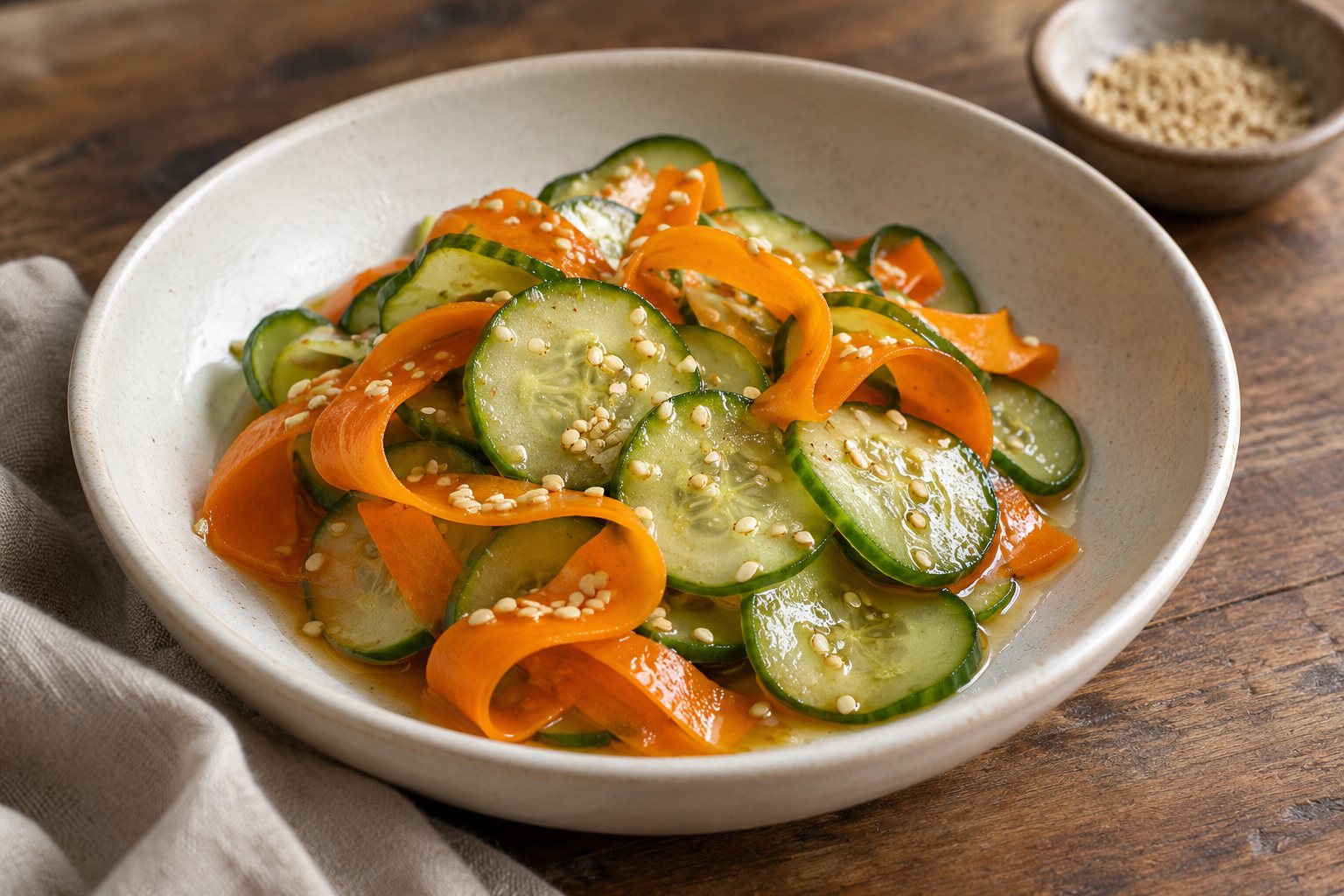
Add carrot ribbons for color and a little sweetness, and a few sliced scallions for a mild onion bite.
A mandoline or a vegetable peeler gives thin, even slices that take up the dressing. Dress the salad shortly before serving, because cucumbers keep releasing water as they sit.
9 – Asian Slaw with Peanut or Sesame Dressing
Shredded cabbage gives you crunch that stays crisp longer than cucumber. Use cabbage slaw with sesame dressing if you want something light.
For a creamy version, whisk peanut butter, rice vinegar, soy sauce and honey until smooth. A bag of pre-shredded cabbage saves the chopping.
Toss the slaw with the dressing about 15 minutes before serving so the cabbage softens slightly and the dressing clings.
Mix a double batch of the peanut dressing and keep the extra in a jar in the refrigerator for about a week, for noodles, salads or dipping.
10 – Quick Pickled Daikon
Pickled daikon radish is crunchy and sweet-sour, and its sharp bite resets your mouth between bites of glazed fish. Slice thin rounds or half-moons for the fastest pickle.
For 1 pound of daikon, use 2 tablespoons of unseasoned rice vinegar, ⅓ cup of sugar and 1 tablespoon of kosher salt (half as much if you use fine table salt).
Mix everything in a jar or bag and refrigerate.
Keep the pickle in an airtight jar in the refrigerator and eat it within 4 to 5 days.
Drain it before serving so the brine does not run into the glaze on the plate.
11 – Kimchi
Cold, sour and spicy kimchi is the boldest contrast on this list, and it cuts through fatty salmon the way a pickle does. A jar from the store works fine, so there is nothing to cook.
Serve a small spoonful per person, straight from the fridge, and cut long leaves into bite-size pieces first.
12 – Miso Soup
Miso soup turns salmon and rice into a Japanese-style set meal, with warm broth beside the fish.
Whisk miso into hot water or dashi, then add small cubes of tofu and sliced scallions.
Do not boil the soup after the miso goes in, because boiling dulls its flavor and aroma. White miso tastes milder than red, which keeps the soup from fighting the glaze.
- Add wakame: A pinch of dried seaweed softens in the hot broth within a few minutes.
- Cut the tofu small: Bite-size cubes are easier to eat between forkfuls of salmon.
- Serve it first: A cup of warm soup works as a first course while the salmon rests.
Instant dashi powder saves making stock from scratch, but most brands already contain salt, so taste the broth before you add all the miso.
What Should You Put on the Salmon at the Table?
A few fresh finishes do the work of a side without another dish to cook.
Lime Wedges and Cilantro
Lime wedges put the acid on the fillet right before the first bite, so each person decides how tart it gets.
Roll the limes on the counter before cutting, and cut them into quarters so they are easy to squeeze with one hand.
Chop cilantro or scallion roughly and scatter it over the plated salmon, because the cooked glaze lacks a fresh herb smell.
Scallion-Cilantro Yogurt Sauce
Stir about ½ cup of plain Greek yogurt with 2 tablespoons each of chopped scallions and cilantro, 1 tablespoon of lime juice and a pinch of salt.
The result is a cool, tangy sauce that cuts the richness of the salmon.
- Use Greek yogurt: It is thick enough to cling to the fillet instead of running onto the rice.
- Add garlic gradually: A little grated clove is plenty, and too much covers the herbs.
- Chill it until serving: The cold sauce against the hot fish is the point of it, and it keeps for up to 3 days in the refrigerator.
What Else Can Round Out a Dinner Party Plate?
Two more sides suit a table of guests, because they feel restaurant-style: the seaweed salad can be made before anyone arrives, and the toast takes under 5 minutes.
Wakame Seaweed Salad
Soak dried wakame in cold water for 5 to 10 minutes, then drain it and squeeze out the water.
Toss it with rice vinegar, a little soy sauce, sesame oil, a pinch of sugar and toasted sesame seeds, and add thin cucumber slices for crunch.
- Start with less than you expect: A small handful of dried wakame swells to many times its size.
- Serve it chilled: The cold, slippery strands contrast with the warm, flaky fish.
- Check store-bought tubs: Ready-made seaweed salad is already dressed and salty, so it counts as your one salty side.
Toasted Sesame Baguette Slices
Slice a baguette on the bias, brush the slices with sesame oil and sprinkle on sesame seeds.
Broil them for about 1 to 2 minutes per side, and watch the pan, because sesame seeds and thin slices burn fast.
Rub a cut garlic clove over the warm toast for flavor that does not overpower the salmon, and serve the slices warm, since cooled bread loses its crunch. Count the slices as your starch on a night you skip the rice.
How Do You Time Everything?
Work backward from the salmon, which should be the last thing to come off the heat. Cold sides can wait, and the cooked sides start earlier.
- Start the cold sides first: Slice the cucumbers, shred the cabbage or start the pickle, then put them in the refrigerator.
- Put sweet potatoes in at 425°F: They need about 25 to 30 minutes, and the broccoli can go into the same oven for its last 20.
- Start the rice about 20 minutes before dinner: It simmers 15 minutes and then stands covered for 5.
- Cook the salmon last: Fillets about 1 inch thick usually take 12 to 15 minutes at 400°F, and they are done at 145°F in the thickest part.
When the oven is already full of vegetables, air fryer teriyaki salmon cooks the fish in a separate appliance with the same sweet-salty glaze.
Cook any salmon to 145°F, which is the USDA minimum for fish, and check it with a thermometer.
The cooking method does not change which sides fit. Baked, grilled or air-fried, the glazed fillet is still rich and salty-sweet, so the same starch, cold side and green vegetable apply.
Which Plate Fits Which Night?
The same three jobs can be filled in different ways, depending on how much time you have.
Rice is the only cooked starch you need on any of these plates. Add noodles or sweet potatoes when you want a heavier meal, not as a second starch beside rice.
Which Sides Should You Skip?
- Creamy, heavy sides: Mashed potatoes or mac and cheese add a second layer of richness, and the fresh, clean taste of the glaze gets lost.
- Honey-glazed vegetables: Glazed carrots or candied nuts repeat the sweetness of the salmon, so the plate tastes sugary by the end.
- Three salty sides at once: Kimchi, miso soup and soy-glazed vegetables together turn a seasoned fish into a salty dinner.
Frequently Asked Questions
Frozen edamame boiled for 4 to 5 minutes is the fastest. A cucumber salad takes about 15 minutes, including the 5 to 10 minutes the salted cucumbers sit.
Roasted broccoli, snap peas, baby bok choy and cucumber salad all add vegetables without rice or noodles. Skip the sweet potatoes and the peanut dressing if you are counting carbs.
Pickled daikon can be made the day before, and kimchi is ready from the jar. Garlic sesame noodles can be served cool, and the slaw dressing can be mixed ahead and added about 15 minutes before dinner.
Jasmine rice, roasted sesame broccoli and a cucumber salad make a plate that looks complete. Add miso soup as a first course if you want a Japanese-style meal, and drop the other salty sides.
Roasted sesame broccoli, stir-fried snap peas, baby bok choy and edamame all add green flavor without competing with the glaze. Cook them with little soy sauce, because the fish already carries it.
Plain steamed jasmine rice, because its mild flavor soaks up the sweet-salty glaze. Garlic sesame noodles are the second choice when you want something other than rice.