
Most cooks assume jasmine rice is just a fancier version of everyday long-grain white rice - same neutral base, different bag. That assumption costs them a lot of aroma, because jasmine rice behaves differently from the moment you open the package, with a warm floral scent that no plain rice variety can replicate.
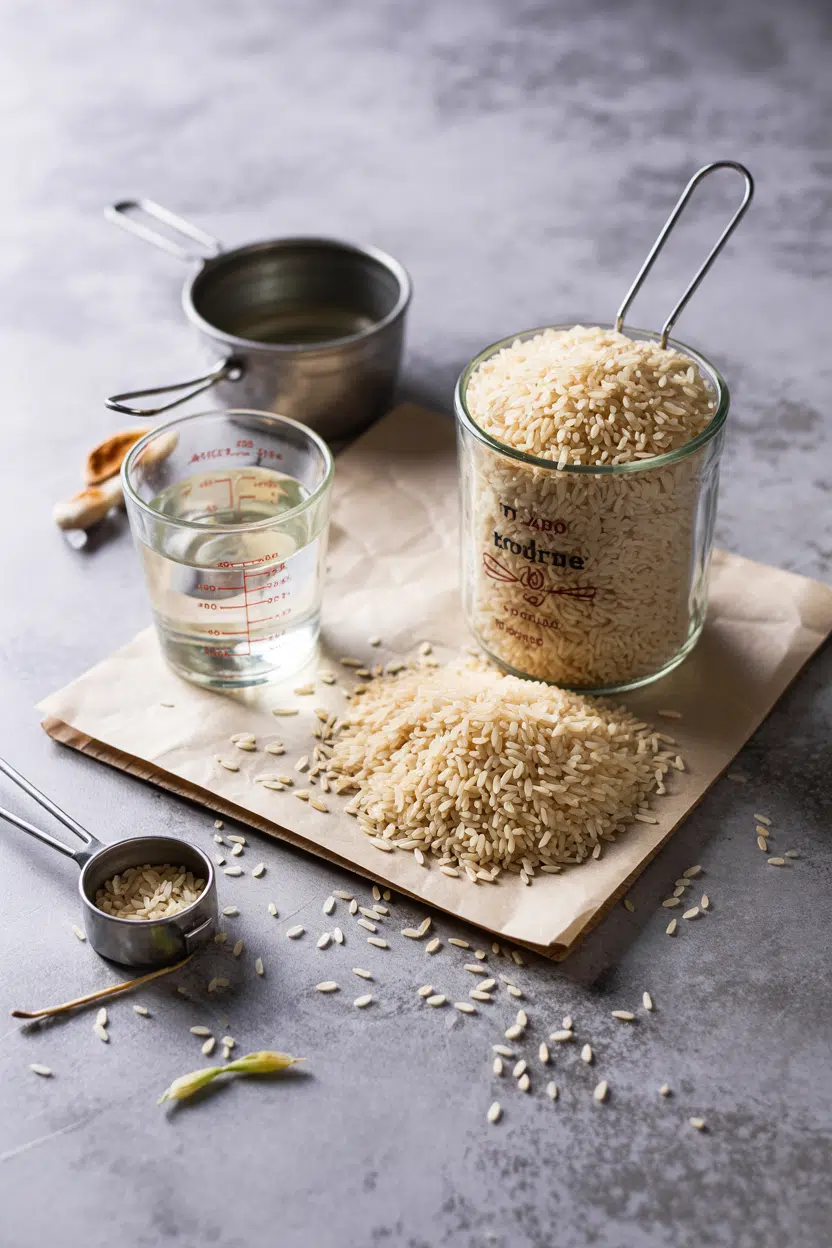
Understanding what makes it distinct helps you use it correctly - and avoid the common mistakes that flatten its character.
Jasmine rice is a fragrant long-grain rice from Thailand with a mild floral aroma, lightly sweet flavor, and soft, slightly clingy texture when cooked. It's the standard rice for Thai and Southeast Asian dishes, and it holds up well to bold, saucy mains.
What Is Jasmine Rice?
Jasmine rice is an aromatic long-grain variety originally bred in Thailand, where it carries the official designation Hom Mali - meaning "good-smelling." It belongs to the same broad category as basmati and other rice swaps but has a character distinctly its own.
Remember it later
Planning to try this recipe soon? Save it for a quick find later!
The floral quality comes from a naturally occurring compound called 2-acetyl-1-pyrroline (2-AP), the same molecule responsible for the scent of fresh pandanus leaves and popcorn. This compound is highest in freshly harvested rice and fades with age, which is why older bags smell flatter.
You'll find it sold under several names:
- Hom Mali - the Thai government's certified-origin designation for authentic Thai jasmine
- Fragrant rice - a generic label used across Southeast Asian markets
- Thai jasmine or jasmine white rice - common Western retail names
- Brown jasmine - the whole-grain version, with bran intact and a slightly nuttier edge
White jasmine is the most widely available form. Brown jasmine retains more fiber but has a shorter rice storage life due to its oilier bran layer.
What Does Jasmine Rice Taste Like?
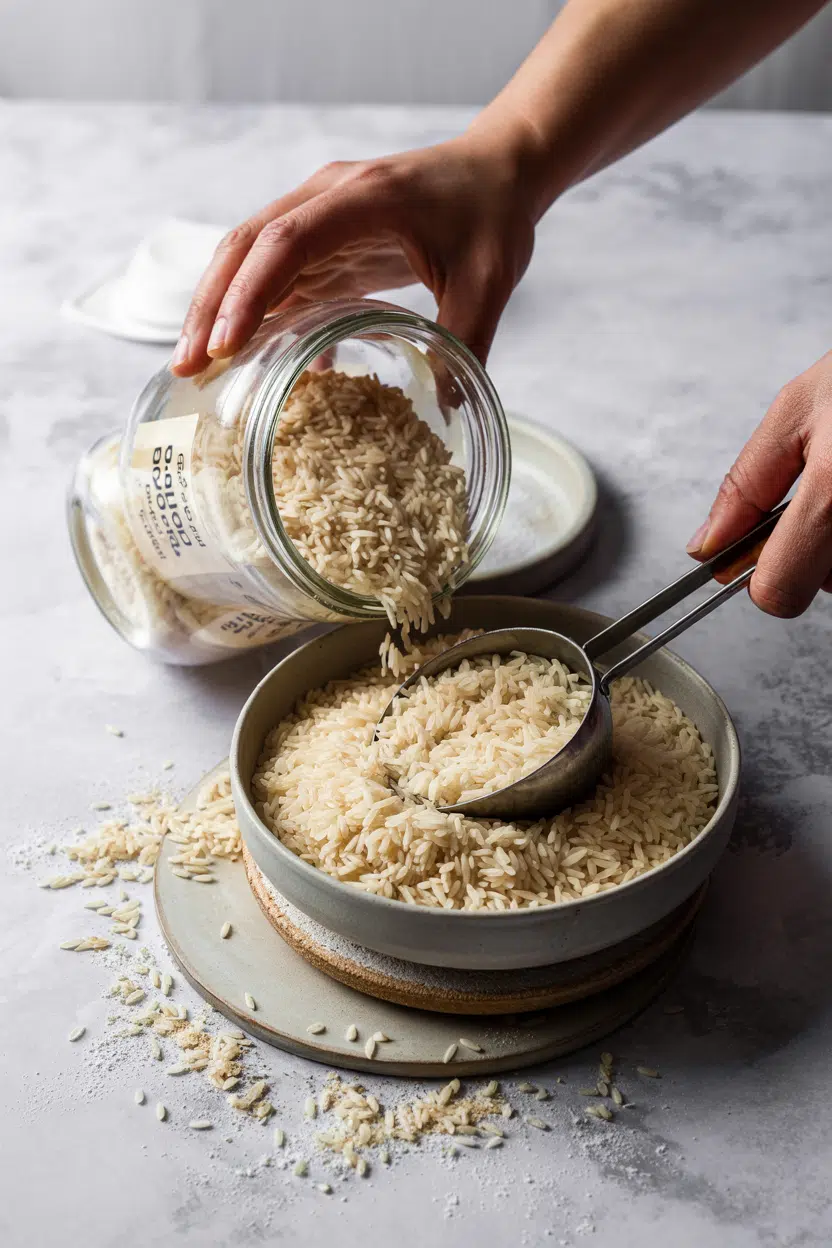
The flavor of jasmine rice is mild but unmistakably present - you're not eating a neutral backdrop the way you would with plain long-grain white rice. There's a soft sweetness and a warm, almost buttery quality that the aroma amplifies considerably.
Compared to basmati rice, jasmine reads as fruitier and more floral. Basmati tends drier and nuttier, with grains that stay more separate.
Jasmine grains soften more at the edges, giving a slightly creamy quality without turning gummy.
Heat intensifies the 2-AP aroma noticeably. The first minutes of cooking fill a kitchen with that characteristic popcorn-floral scent, which then settles into the cooked grain itself.
How to Use Jasmine Rice
Jasmine rice is built for saucy, bold-flavored cooking - the slight cling in the grains means sauce adheres rather than pooling at the bottom of the bowl. That's why it's the default rice across Thai, Vietnamese, Laotian, and Cambodian kitchens.
For dishes like side dishes for jasmine rice, the pairings are wide: coconut milk, fish sauce, lime, Thai basil, lemongrass, and chili paste all work with its floral base rather than against it.
Lean grilled proteins - chicken thighs, white fish, lemongrass-marinated pork - let the rice's aroma stay present.
| Method | Best For | Tip |
|---|---|---|
| 🍳 Stovetop absorption | Everyday rice, curries, stir-fry pairings | Use 1.5-1.75:1 water-to-rice ratio; rinse first to reduce surface starch |
| 🍚 Rice cooker | Consistent texture, hands-off cooking | Slightly less water than stovetop; jasmine absorbs fast |
| 🥥 Coconut milk simmer | Coconut rice, rice pudding, desserts | Replace half the water with full-fat coconut milk; watch for scorching |
| 🥘 Fried rice | Khao Pad, leftover-rice dishes | Use day-old rice; fresh jasmine is too moist and will clump in a wok |
| 🥣 Congee/porridge | Soft, creamy rice porridge | Use a 6:1 water-to-rice ratio; jasmine breaks down into a silkier congee than regular long-grain |
Two dishes showcase jasmine rice at its most specific. Khao Mun Gai -
Thai poached chicken served over rice cooked in the chicken stock - depends entirely on the grain's absorbency and aroma carrying the subtle cooking liquid. Green curry served over plain steamed jasmine is the more familiar example: the rice's slight sweetness buffers the heat while the floral note ties into the fresh herb base.
Don't use jasmine for sushi or traditional risotto. It lacks the neutral starch sushi rice needs, and it won't release the starch the way arborio does.
How to Buy and Store Jasmine Rice
Look for bags labeled "Hom Mali" or simply "jasmine" with whole, translucent long grains. Open the bag and smell it - genuine jasmine rice has a detectable floral note even raw.
Avoid bags with broken or chalky grains, a musty odor, or no visible packaged-on date.
Once opened, transfer the rice to an airtight container and keep it in a cool, dark pantry. White jasmine holds well for 6-12 months after opening; brown jasmine, with its oilier bran, turns rancid faster and should be used within 3-6 months.
For full guidance on how long it keeps, see our jasmine rice storage life breakdown.
Where to Start With Jasmine Rice
If you've only ever used it as a side dish, cook it in coconut milk once. That single technique shows what the grain does when paired with something that amplifies its floral quality.
From there, day-old jasmine fried rice is worth learning early - it's one of the most practical uses, and the texture difference from fresh-cooked rice is immediately obvious.
If jasmine isn't available, check the jasmine rice swaps that come closest in aroma and texture without sacrificing the dish.
Frequently Asked Questions
No. Both are aromatic long-grain varieties, but jasmine is fruitier and more floral, while basmati is drier and nuttier with grains that stay more separate. They're not interchangeable in dishes where aroma drives the flavor. Check the basmati rice alternatives guide if you need to swap one for the other.
Regular long-grain white rice is largely neutral - it carries the flavor of whatever it's cooked with. Jasmine has a distinct floral, popcorn-like aroma and a mild natural sweetness that's present even plain.
Rinse it until the water runs nearly clear before cooking - this removes surface starch that causes clumping. Use a 1.5:1 water-to-rice ratio and let it rest off heat, covered, for 5 minutes before fluffing.
It's not suitable. Sushi requires short-grain rice with enough starch to hold together when seasoned with vinegar - jasmine is too long-grain and floral to absorb the vinegar treatment correctly. The flavor profile also conflicts with the clean neutral base sushi needs.
Brown jasmine retains its bran layer, so it has more fiber and micronutrients than the white version. White jasmine has a higher glycemic index and fewer nutrients, though it's naturally gluten-free and low in fat either way.



