
Soft, springy, and quick to soak up whatever sauce you pour over them - lo mein noodles have a way of making a stir-fry feel complete in minutes.

They're mild enough to stay out of the way of bold seasonings, yet substantial enough that you notice when something cheaper or starchier replaces them.
If you've explored cooking ramen noodles perfectly or worked through cooking udon noodles perfectly, lo mein sits in a different lane - softer than udon, less brothy than ramen, and built for the toss.
Lo mein noodles are soft, slightly chewy wheat-and-egg noodles from China, best used in saucy stir-fries. They have a mild, wheaty flavor that carries soy, sesame, and oyster sauce well. Available fresh or dried, they cook fast and stay tender without falling apart.
What Is Lo Mein Noodle?
Lo mein noodles are a wheat-based egg noodle originating from northern China, now eaten widely across the country and throughout the Chinese diaspora.
Remember it later
Planning to try this recipe soon? Save it for a quick find later!
The name roughly translates to "stirred noodles" - a clue to how they're meant to be used.
In the United States, they're closely associated with American-Chinese takeout, though the Cantonese tradition of tossing cooked noodles in sauce predates the takeout era by centuries.
These noodles come in two main forms: fresh refrigerated and dried. Fresh lo mein has a pale yellow color from the egg content, a softer bite, and a slightly bready aroma straight out of the package.
Dried lo mein packs longer shelf life and a firmer initial texture that softens on boiling.
You'll find them sold under several names - la mein, Chinese egg noodle, or simply stir-fry noodle. They're round and medium-thick, though some regional varieties run thinner or slightly flat.
For cooks already comfortable with cooking lo mein perfectly, the fresh version is usually worth seeking out first.
- 🌾 Fresh lo mein - pale yellow, springy, best within 2-5 days of purchase
- 📦 Dried lo mein - shelf-stable, slightly firmer, widely available in Asian grocery stores
- 🏷️ Alternate names - la mein, Chinese egg noodle, stir-fry noodle
What Does Lo Mein Noodle Taste Like?
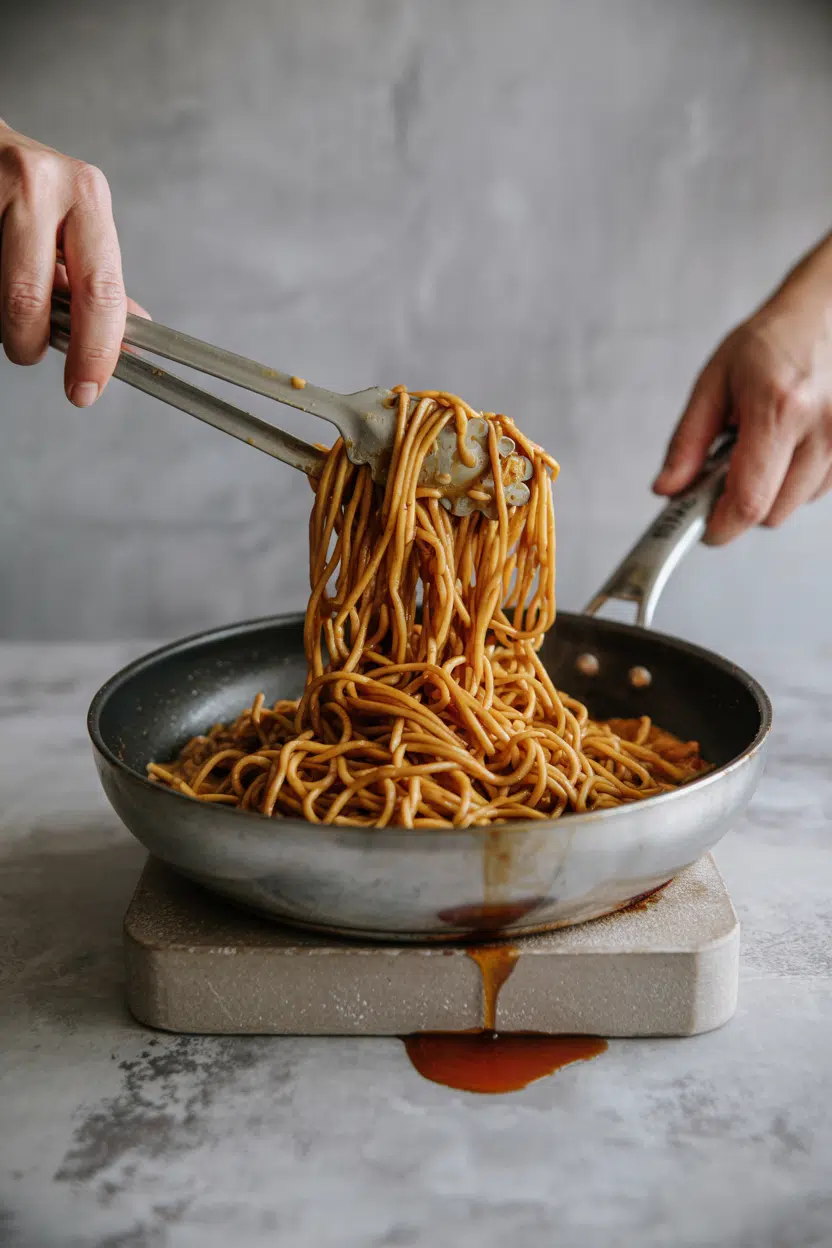
Lo mein noodles have a mild, wheaty flavor with a faint richness from the egg - closer to Italian fresh egg pasta than to ramen or soba.
On their own, they're neutral enough that the sauce does most of the talking.
Heat changes them noticeably. A quick toss in a hot wok gives the exterior a very light chew while the center stays tender - not crispy, but with more structure than they had straight from the boil.
Once sauced, they turn slick and glossy, coating the palate with whatever seasoning they're carrying.
Cold lo mein, as in a sesame noodle salad, reads differently again. The springiness tightens slightly, and the neutral wheat base lets acidic or nutty dressings come forward cleanly.
How to Use Lo Mein Noodle
Boiling first, then saucing is the standard move. Cook the noodles until just tender - usually 3 to 5 minutes for fresh, longer for dried - then drain and toss immediately into the wok. That hot-pan toss is what gives lo mein its signature coating rather than a watery, pooled sauce at the bottom of the bowl.
Soy sauce, sesame oil, and oyster sauce form the classic trio.
If you need a workaround, knowing your alternatives to oyster sauce keeps the dish on track without sacrificing depth.
Garlic, green onions, bok choy, and thin strips of beef, chicken, or shrimp are the most common add-ins - each one cooks fast enough to finish alongside the noodles in the same pan.
| Method | Best For | Tip |
|---|---|---|
| 🔥 Boil + Stir-fry | Classic takeout-style lo mein with protein and vegetables | Drain well before the wok - excess water breaks the sauce |
| 🥗 Cold Toss | Sesame noodle salads, make-ahead lunch bowls | Toss with a little sesame oil right after boiling to prevent clumping |
| 🍲 Brothy Bowl | Light soups where noodles sit briefly in broth | Add noodles last - they soften fast and absorb liquid quickly |
| 🥘 Pan-fry + Sauce | Slightly crisped noodle base under a sauced topping | Use medium-high heat and minimal oil to firm the exterior |
Lo mein fits naturally in Cantonese cooking and American-Chinese kitchens, and travels well into pan-Asian fusion dishes pairing hoisin with roasted vegetables.
For cooks exploring what to serve alongside this style of noodle dish, the dishes alongside chow mein page shows how these two classics share common companions.
When a recipe calls for lo mein and you don't have any, a round-up of lo mein noodle stand-ins covers which options hold up in the wok.
How to Buy and Store Lo Mein Noodle
Fresh lo mein should look pale yellow and feel pliable, not sticky or wet-clumped. Avoid packages with visible condensation pooling inside - that moisture accelerates spoilage. For dried noodles, look for strands labeled "lo mein" or "egg noodle" that are unbroken and even in thickness.
Keep dried lo mein in a cool, dry pantry - unopened, it stays good for up to a year.
Fresh noodles belong in the fridge in their original packaging or an airtight container and should be used within 2 to 5 days.
Cooked lo mein keeps for 3 to 4 days refrigerated; a guide to storing lo mein noodle correctly covers edge cases like freezing and reheating.
If your sauce uses soy sauce and you're out, checking your swapping out soy sauce options saves the dish before it starts.
Start with Fresh, Adjust from There
Fresh refrigerated lo mein is the clearest starting point - it needs less cooking time, delivers better springiness, and shows you exactly what the noodle should feel like before you commit to dried.
Once you know the texture you're after, dried lo mein becomes a reliable pantry backup.
- New to lo mein - buy fresh from the refrigerated section and boil for 3 minutes, then wok-toss
- Stocking a pantry - dried lo mein or egg noodles labeled for stir-fry keep for months and perform reliably
- No lo mein available - fresh linguine or spaghetti works in a pinch, though the texture is less springy
Frequently Asked Questions
Wheat flour and egg, typically. The egg adds a faint richness and contributes to the springy texture. Some dried versions use only wheat flour with egg listed as a minor ingredient, so check the label if egg content matters.
No - the noodles are similar, but the preparation differs. Lo mein noodles are boiled then tossed in sauce; chow mein noodles are typically fried until some strands crisp up. Both start from a similar wheat egg noodle base.
Yes, in a pinch. Spaghetti lacks the egg richness and springiness of lo mein, so the texture is slightly less elastic. It absorbs sauce similarly and works well enough for a weeknight stir-fry.
Boil until just tender - about 3 minutes for fresh, 5-7 for dried - then drain thoroughly. Add directly to a hot wok with your sauce; the residual heat finishes the noodles while the sauce coats every strand.
Yes. Lo mein noodles are made from wheat flour and are not suitable for gluten-free diets. Rice noodles or certified gluten-free noodles are the standard swap for anyone avoiding gluten.



