
Udon noodles do one thing better than almost any other noodle: they hold their ground.

Where the role soba noodles plays in Japanese cooking leans earthy and assertive, udon steps back and lets the bowl speak - a thick, springy wheat noodle that absorbs broths, clings to stir-fry sauces, and delivers a dense chew that lighter noodles simply can't match.
Udon are thick Japanese wheat noodles with a mild, slightly sweet flavor and a dense, springy chew. They suit hot broths, stir-fries, and cold dipping preparations equally well. Fresh udon lasts 4-7 days refrigerated; dried udon keeps for many months in the pantry.
What Is Udon Noodles?
Udon is a thick Japanese wheat noodle made from just three ingredients: wheat flour, water, and salt. The result is a pale white, smooth-surfaced strand that is noticeably denser and wider than most other noodles in the East Asian pantry.
Remember it later
Planning to try this recipe soon? Save it for a quick find later!
The noodle's roots run deep in Japanese food culture, with origins traced to the Sanuki region (now Kagawa Prefecture) on Shikoku Island - where sanuki udon remains the benchmark for firm, elastic noodles.
Regional styles vary: Sanuki udon is taut and chewy, Osaka-style leans softer, and Inaniwa udon from Akita is thinner and more delicate.
Udon comes in several market forms:
- 🧊 Fresh refrigerated udon - pale, slightly translucent strands; tenderest texture; ready in minutes
- 📦 Dried udon - shelf-stable; requires longer boiling; slightly firmer after cooking
- 🥡 Pre-cooked vacuum-packed udon - the most convenient form; just rinse and heat
- ❄️ Frozen udon - retains fresh-like texture well; recommended if fresh isn't available
Udon goes by several names: thick udon, うどん, and occasionally the misspelling "udonnoodles" in online searches. It is not the same as ramen, soba, or somen - each noodle differs in flour type, thickness, and flavor.
What Does Udon Noodles Taste Like?
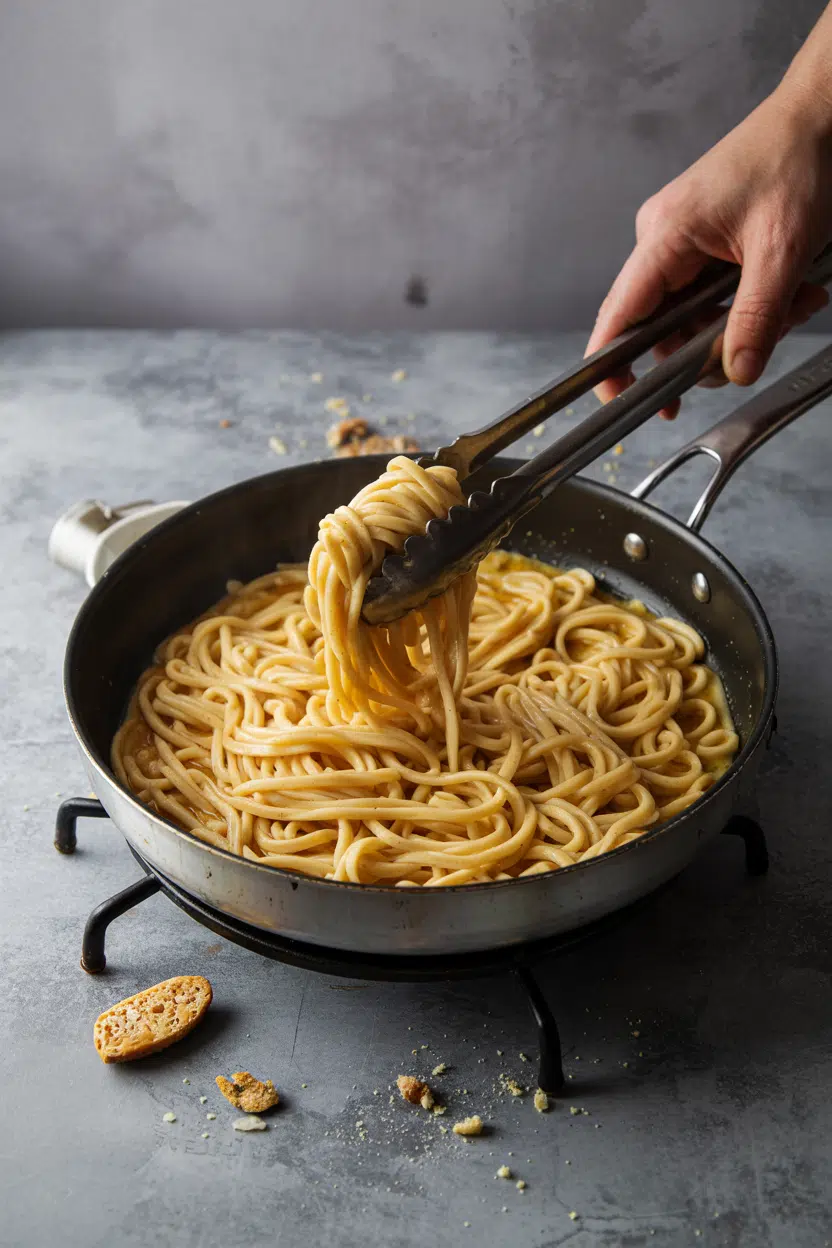
Udon's flavor is deliberately understated. The mild, wheaty base carries a faint natural sweetness and a barely-there savory note - nothing that competes with whatever sauce or broth surrounds it.
The closest Western comparison is a thick pasta like pici or perciatelli - but udon is milder and considerably chewier. That chew is the defining quality.
A well-cooked udon strand has real resistance before it gives way, a springiness that holds through long-simmered broths without going mushy.
Fresh udon has a faint yeasty note that dried and pre-cooked forms don't carry. Heat doesn't intensify the flavor much - udon stays neutral, which is exactly the point.
How to Use Udon Noodles
Udon's dense structure and neutral flavor make it functional across a wide range of cooking methods. The noodle doesn't just sit in a bowl - it actively performs differently depending on how it's prepared.
| Method | Best For | Tip |
|---|---|---|
| 🍲 Hot Soup | Kake udon, curry udon, tempura udon | Add noodles last; residual broth heat finishes them |
| 🥢 Stir-Fried | Yaki udon with soy, mirin, and vegetables | Parboil first, then stir-fry on high heat to sear |
| ❄️ Cold/Chilled | Zaru udon, summer salads with tangy dressing | Rinse under cold running water immediately after cooking |
| 🫕 Hot Pot | Nabemono - added at the end to absorb broth | Use pre-cooked vacuum-packed for easy hot pot finish |
In soup, kake udon is the baseline: noodles in a clear dashi broth seasoned with soy and mirin, topped with green onion.
Tempura udon layers in rich fried batter, while curry udon wraps the noodle in a viscous, warming sauce that clings to every strand.
For stir-fries, a yaki udon stir fried noodles recipe shows how thinly sliced pork, cabbage, and a soy-mirin glaze coat the thick noodle in a way that simply doesn't work with thinner pasta.
Those looking for a similar vegetable-forward approach might also draw inspiration from a japanese vegetable yakisoba noodles recipe, which uses comparable high-heat technique.
Udon pairs confidently with dashi broth (kombu and katsuobushi), soy sauce, mirin, shichimi togarashi, soft-boiled egg, and thinly sliced beef or pork. Avoid delicate emulsified sauces - the noodle's bulk overwhelms anything too subtle.
How to Buy and Store Udon Noodles
Fresh refrigerated udon is the first choice for texture: look for pale, slightly translucent strands with no discoloration or sour smell. For pantry stock, choose dried udon that is uniform in thickness with no visible cracks along the strand.
Storage is straightforward:
- Fresh (unopened) - refrigerate in original sealed package; use within 4-7 days
- Fresh (opened) - transfer to an airtight container and refrigerate; use within 1-2 days
- Dried (unopened) - cool, dry pantry; keeps for many months
- Cooked udon - refrigerate in an airtight container; use within 2-3 days
For a full breakdown, udon noodles's shelf life covers every format in detail, including frozen storage. Much like keeping rice fresh, the core rule is simple: sealed, cool, and away from moisture.
Where to Start With Udon
New to udon? Start with kake udon - noodles in dashi broth with green onion. It's the format that puts the noodle's chew front and center with nothing masking it.
From there, move to yaki udon if you want stir-fry, or zaru udon if you want to serve it cold.
If udon isn't available, alternatives to udon noodles maps out which noodles come closest by texture and cooking method. And if you're building a Japanese noodle bowl from scratch, the sides for ramen noodles guide translates well to udon accompaniments.
One bowl is enough to understand why this noodle has stayed central to Japanese cooking for centuries.
Frequently Asked Questions
No. Ramen noodles are thinner, made with alkaline water (giving them a yellow tint and firm bite), and carry more flavor of their own. Udon is thicker, made with just flour, water, and salt, and tastes milder.
Sanuki udon comes from Kagawa Prefecture (formerly Sanuki Province) and is known for being firmer and chewier than other regional styles. It's the most replicated style outside Japan and is often what "premium udon" labels reference.
Dried udon typically needs 8-12 minutes in boiling water; fresh udon cooks in 2-3 minutes. Pre-cooked vacuum-packed udon needs only a 30-second hot water rinse - no boiling required.
Yes. Fresh and cooked udon both freeze well for up to one month. Freeze in portion-sized bundles, and reheat directly from frozen in boiling water or hot broth for 1-2 minutes.
No. Udon is made from wheat flour and contains gluten, making it unsuitable for anyone with celiac disease or a wheat allergy. Rice noodles or certified gluten-free pasta are the closest structural alternatives.



