Caramelized edges, glossy glaze, and flaky flesh that pulls apart with a fork -
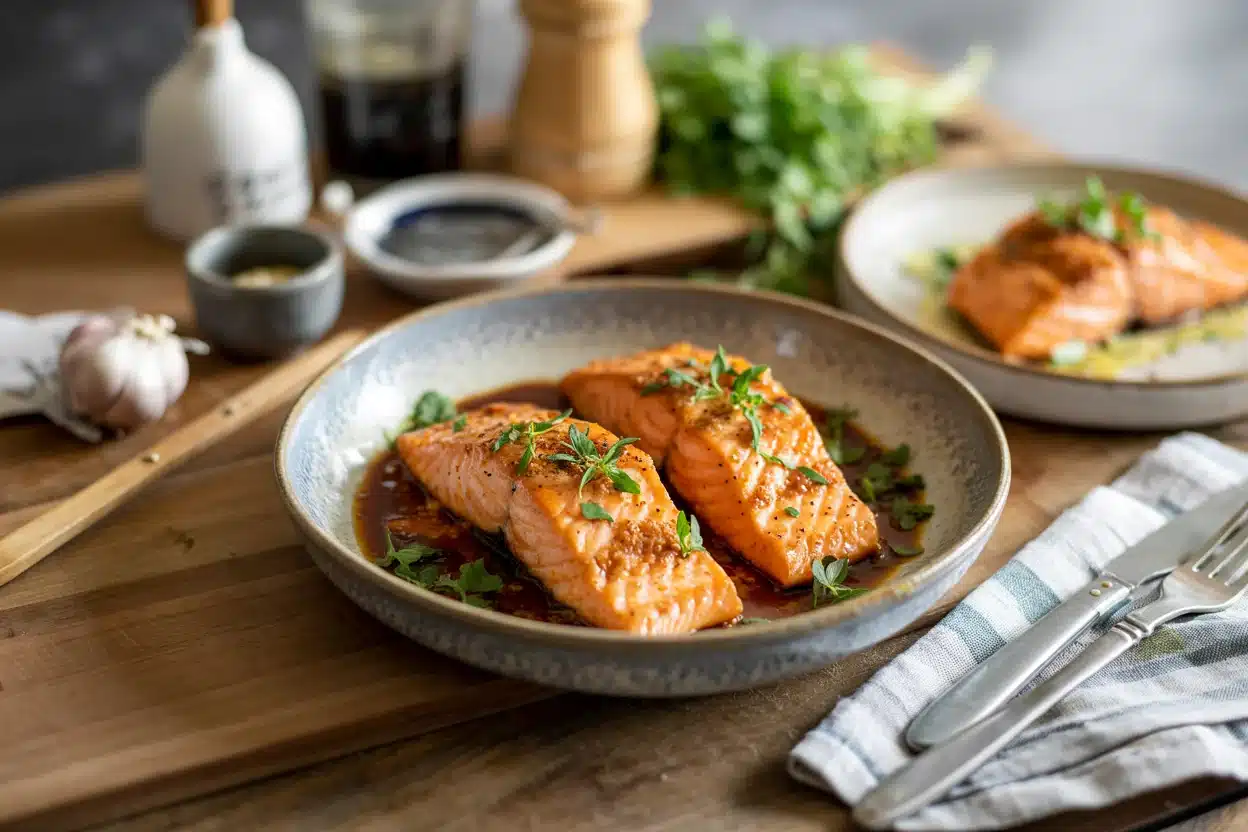
this is what a good teriyaki salmon looks like, and the air fryer gets you there in under 20 minutes. The sweet-savory glaze clings to every ridge of the fillet, finishing with that slightly sticky, golden surface you'd expect from a much longer cooking method.
Most weeknight fish recipes ask you to babysit a pan. This one doesn't.
You prep the glaze, dry the fillets, and let the air fryer do the heavy lifting while you sort out a side dish.
If you're thinking about swapping out salmon for a different fish, know that fatty, firm fillets hold up best under high heat with a sugary glaze. Lean, delicate fish can fall apart or dry out before the glaze even sets.
Air fryer teriyaki salmon delivers a glazed, flaky fillet in about 20 minutes. Pat the salmon dry, air fry skin-side down, and apply most of the glaze only in the final 60-90 seconds to avoid burning. The result is a golden, caramelized surface with a tender, fully cooked interior.
Why This Recipe Works
Salmon's high fat content means it stays moist even at 400°F, where the air fryer's circulating heat crisps the skin without drying out the flesh.
Remember it later
Planning to try this recipe soon? Save it for a quick find later!
The key move here is timing the glaze - sugar burns fast at high heat, so a light initial brush and a heavier final coat keeps the surface glossy rather than bitter.
A quick-read thermometer removes all the guesswork. Pull the fillets at 145°F internal temperature, and the center will be just opaque with a slight translucency - cooked through but not chalky.
Prep Time
10 minutes
Cook Time
8-10 minutes
Total Time
18-20 minutes
Servings
4
Difficulty
Easy
Category
Main Dish
Quick Tip
Pat salmon dry and lightly oil skin for crisp finish
Best For
Weeknight dinner
- Skin-on fillets protect the flesh from direct heat and crisp up in the circulating air
- Patting fillets completely dry before cooking prevents steam from forming under the skin
- Simmering the glaze first thickens it so it coats the salmon instead of pooling in the basket
- Starting skin-side down lets the fat render slowly before the fillet firms up
- Letting fillets rest at room temperature for 10 minutes before cooking promotes even doneness
What You'll Need
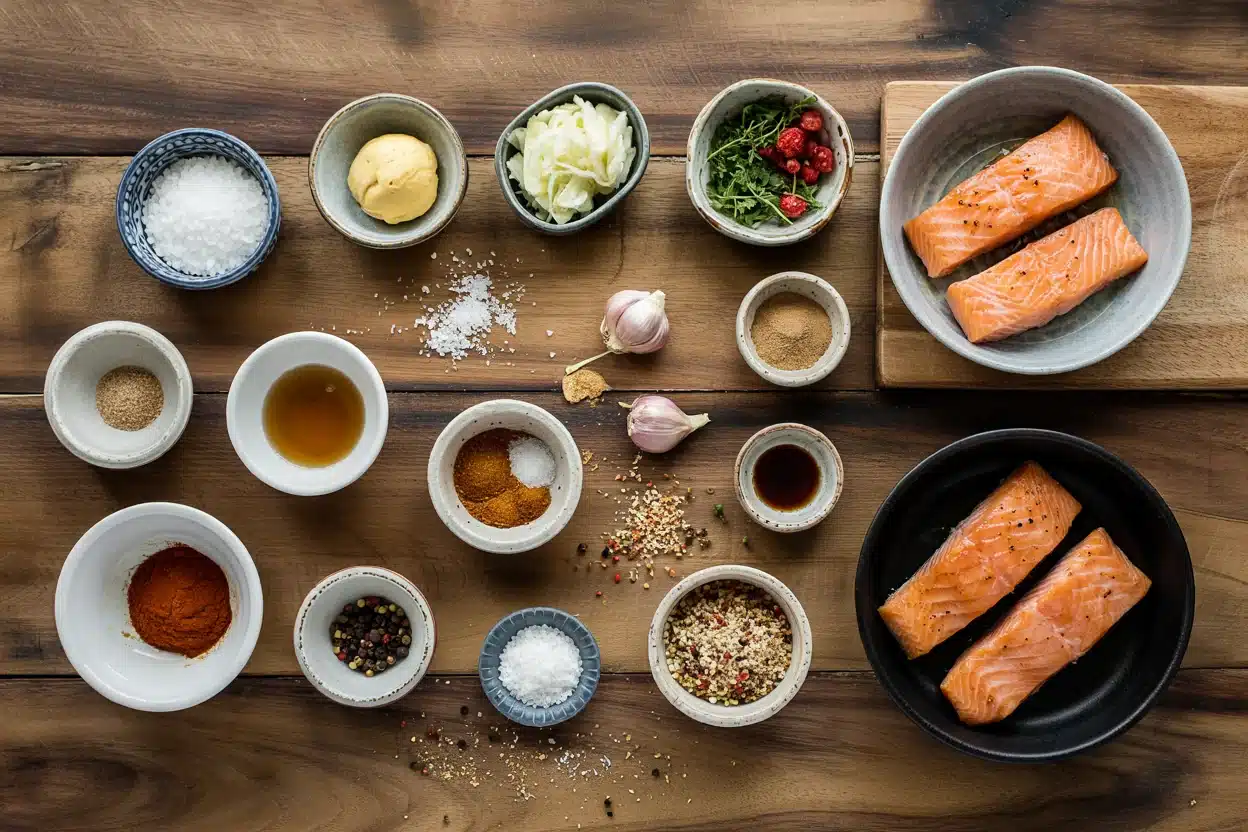
Salmon is the one ingredient worth spending on here - skin-on fillets cut to an even 1 to 1.25-inch thickness cook uniformly and hold the glaze without falling apart.
Everything else in the glaze is pantry staple territory.
If you're curious about brown sugar swaps that work in the glaze, honey and maple syrup both land well with some small adjustments.
- 4 salmon fillets (6 oz each, skin-on)
- 3 tablespoon soy sauce
- 2 tablespoon brown sugar
- 1 tablespoon mirin
- 1 teaspoon sesame oil
- 1 teaspoon fresh ginger, grated
- 2 garlic cloves, minced
- Neutral oil spray or brush
- Optional: 1 teaspoon cornstarch to thicken glaze
Ingredient Details
- Salmon Fillets
Skin-on, evenly thick pieces around 1-1.25 inches. Uneven cuts cook at different rates - ask the counter to cut uniform portions. - Soy Sauce
Regular soy sauce provides the saltiest base. Low-sodium works but you may need to reduce by one less minute or the glaze will taste flat. - Brown Sugar
Dark brown sugar adds more molasses depth; light brown is milder. Either caramelizes well at air fryer temps. - Mirin
Adds sweet acidity that balances the soy. Don't skip it without a substitute - the glaze will taste one-dimensional. - Fresh Ginger
Grate on a microplane for the brightest flavor. Powdered ginger works at half the quantity but delivers noticeably less heat. - Sesame Oil
Use toasted sesame oil, not raw. A little goes far - more than 1 teaspoon and it can overpower the glaze. - Cornstarch (optional)
Mix ½ teaspoon with cold water and whisk in during simmering for a thicker, clingy glaze.
Ingredient Swaps
Tamari is the most seamless swap for soy sauce - the alternatives to soy sauce range from nearly identical to noticeably different, so tamari is the safest call.
Mirin has a specific sweet-acidic profile that's worth preserving; check out aji mirin vs rice vinegar preparation tips if you need to build a substitute from pantry ingredients.
- Soy sauce → tamari at a 1:1 ratio; choose low-sodium tamari if the glaze tastes too salty
- Brown sugar → honey at 75% of the original quantity; expect a thinner, more floral glaze
- Mirin → dry sherry plus 1 teaspoon granulated sugar per tablespoon of mirin; less traditional but functional
- Sesame oil → neutral vegetable oil; add toasted sesame seeds to the finished dish to recover some of that nutty aroma
Honey Instead of Brown Sugar
Works for: Those who prefer a floral, lighter sweetness and don't mind a runnier glaze
Skip if: You want a thicker, more caramelized coating - honey doesn't set quite the same way
Tamari Instead of Soy Sauce
Works for: Gluten-free needs; near-identical flavor with slightly less salt
Skip if: Your pantry only has regular tamari and you've already seasoned heavily elsewhere
Instructions
Air frying salmon is straightforward, but the glaze timing and temperature sequencing are what separate a glossy result from a scorched one.
For alternatives to sesame oil in the glaze, neutral oil works at the same volume - just add a sprinkle of toasted sesame seeds at the end to compensate.
- Make the glaze. Combine soy sauce, brown sugar, mirin, sesame oil, ginger, and garlic in a small saucepan.
Simmer over medium heat for 2-3 minutes until slightly thickened.
Remove from heat and set aside. 2. Prep the salmon. Pat fillets completely dry with paper towels.
Let them sit at room temperature for 10 minutes.
Lightly brush or spray the skin side with neutral oil. 3. Preheat and place. Preheat the air fryer to 400°F for 3 minutes.
Place fillets skin-side down in a single layer - don't overlap.
Brush a thin layer of glaze over the flesh side. 4. Air fry. Cook at 400°F for 7-8 minutes until the flesh turns opaque and just begins to flake at the edges.
Check internal temperature at the thickest point - target 140-145°F. 5. Final glaze. Brush a generous coat of glaze over each fillet.
Air fry for another 60-90 seconds until the surface is glossy and edges show light caramelization.
Rest for 2 minutes before serving.
What to Serve With It
Teriyaki salmon lands in a sweet-savory zone that pairs best with neutral or lightly acidic sides - plain steamed rice, crisp cucumber, and roasted vegetables are the core trio.
If you want inspiration beyond fish-focused pairings, pairing ideas for chicken thighs covers a lot of the same Asian-adjacent side dish territory.
| Side Dish | Prep | Why It Works | How to Serve |
|---|---|---|---|
| Steamed jasmine rice | Easy | Neutral base soaks up the teriyaki glaze | Spoon extra glaze over rice alongside salmon |
| Quick cucumber salad | Easy | Bright, tangy contrast to the sweet glaze | Toss with rice vinegar, sesame oil, and salt |
| Roasted broccoli | Easy | Nutty char and firm texture balance the soft salmon | Toss with sesame seeds and a squeeze of lemon |
| Ginger-scallion soba noodles | Medium | Stays within the same flavor family; adds substance | Serve warm alongside or under the salmon |
| Pickled daikon and carrot ribbons | Medium | Cuts through richness with briny acidity | Pile on the side as a fresh garnish |
Three ways to serve it:
- 🍚 Over steamed rice with extra warm glaze in a small pitcher on the side
- 🥗 Flaked over a cold soba noodle salad with shredded cucumber and sesame dressing
- 🍱 Sliced and packed into a bento box with pickled vegetables and edamame
Store and Reheat
Cooked salmon keeps for up to 2 days in the fridge in a shallow airtight container - use a vented lid or crack it slightly to prevent sogginess from trapped steam.
Watch for salmon spoilage signs before reheating, especially if it's been stored overnight: off smell and grayish flesh are the clearest tells.
| Method | Time | Best For |
|---|---|---|
| 🍳 Air Fryer | 3-4 min at 350°F | Restoring crispness and reactivating the glaze |
| 🔥 Oven | 6-8 min at 325°F, foil-covered | Gentle reheating that keeps the flesh flaky |
| 📦 Microwave | Not recommended | Overcooks salmon and steams out the glaze |
For best results when storing:
- Cool fillets completely before sealing - trapping steam causes soggy skin
- Store glaze separately in a small jar; reheat and brush on fresh before serving
- Do not freeze - salmon texture becomes watery and the glaze separates after thawing
- If reheating in the air fryer, add a fresh brush of glaze in the final 60 seconds
- Eat cold leftovers flaked over salad rather than reheating if you're short on time
Frequently Asked Questions
Yes, but thaw them first for best results. Frozen fillets release too much water during cooking, which prevents browning and causes the glaze to slide off rather than adhere to the surface.
Apply only a thin base coat of glaze at the start of cooking, then add the main coat in the final 60-90 seconds. The sugar in the glaze caramelizes quickly at 400°F, so late application is the difference between glossy and burnt.
The FDA recommends 145°F, which gives fully opaque flesh. For a slightly silkier center, many cooks pull at 130-135°F - the carryover heat during resting brings it up a few more degrees.
Skinless fillets work but are more prone to sticking and drying out. Spray the basket well, reduce cook time by about 1 minute, and check doneness early - without skin acting as insulation, the flesh cooks faster.
Keep the glaze separate. It stores well in a sealed jar in the fridge for up to a week, and brushing it fresh onto reheated salmon produces a much better result than glaze that has soaked in and gone sticky during storage.
Air Fryer Teriyaki Salmon Fillets
Ingredients
Equipment
Method
- Preheat air fryer to 400°F for 3 minutes while you pat salmon fillets very dry and brush skin lightly with neutral oil.
- Mix soy sauce, mirin, brown sugar, rice vinegar, grated ginger, and minced garlic in a small saucepan and simmer over medium heat 2–3 minutes until sugar dissolves.
- Stir cornstarch slurry into the glaze, simmer 30–60 seconds until slightly thickened, then remove from heat and stir in sesame oil; reserve 2 tablespoon glaze for serving.
- Place fillets skin-side down in a single layer in the air fryer basket and cook at 400°F for 6–7 minutes for 1-inch-thick fillets; thicker fillets may need 8–10 minutes.
- Brush each fillet with a thin layer of glaze, then air fry 60–90 seconds more at 400°F until glaze is glossy and edges show light caramelization; remove when internal temp reaches 145°F or flesh flakes easily.
- Rest fillets 2–3 minutes, garnish with sliced scallions and toasted sesame seeds, and serve with reserved warm glaze and lemon wedges.
Notes
- Reserve most glaze and add in the final 60–90 seconds to prevent burning.
- Use skin-on, evenly thick fillets and aim for 145°F at the thickest point.