
Most people assume sourdough is just bread with a sour flavor added in.

What's actually happening is far more interesting - a live culture of wild yeast and lactobacilli slowly ferments the dough over hours or even days, building acidity, structure, and a crust unlike anything commercial yeast produces.
If you're working with a new loaf or baking your own, knowing alternatives to bread flour can help you understand why flour choice shapes the final result.
That fermentation process is also what makes sourdough behave differently from other loaves when it comes to cooking bread perfectly.
Sourdough bread is a naturally leavened loaf fermented by wild yeast and bacteria. It has a mild lactic tang, chewy open crumb, and a thick blistered crust. Best within 2-4 days, it suits toast, sandwiches, croutons, and rustic open-faced preparations.
What Is Sourdough Bread?
Sourdough is one of the oldest forms of leavened bread, with roots traced back to ancient Egypt and the Levant.
Remember it later
Planning to try this recipe soon? Save it for a quick find later!
Unlike modern yeasted breads, it relies on a sourdough starter - a live culture of wild yeast and lactic acid bacteria maintained by regular flour and water feedings.
That starter drives fermentation, which produces carbon dioxide for lift and organic acids for flavor. The result is a loaf in a category of its own: often called levain bread, natural-leavened bread, or starter bread depending on region and tradition.
San Francisco sourdough is the most recognized regional style, defined by its pronounced tang from Lactobacillus sanfranciscensis. European styles, especially French and Nordic, tend toward a milder lactic character.
Flour choice also shapes the loaf significantly. Many bakers use bread flour as the base, though swapping out whole wheat flour in partial amounts is a common approach to add earthiness without losing structure.
Varieties range from high-hydration open-crumb loaves to denser, more acidic whole-grain versions built with rye flour.
What Does Sourdough Bread Taste Like?
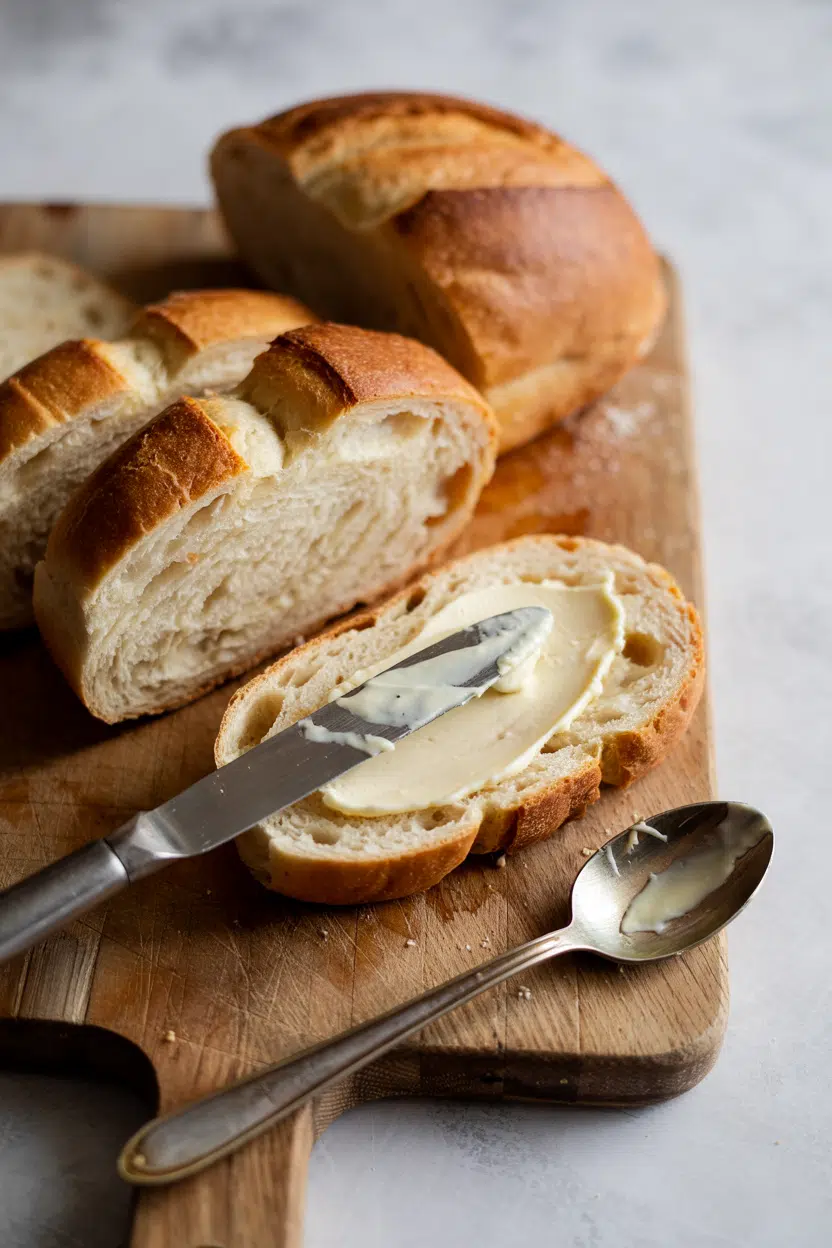
Sourdough's flavor doesn't land in one place. The crumb carries a mild lactic tang - closer to plain yogurt than vinegar - while the caramelized crust adds nutty, toasty, almost malt-like notes that balance the acidity.
Heat changes the profile noticeably. Toasting deepens crust caramelization and amplifies those malt and nutty notes while pulling some acidity back.
A cold slice straight from the fridge reads mild and slightly dense - not the same bread at all.
Fermentation length also drives sourness. Longer cold retardation during bulk fermentation increases acetic acid production, pushing the flavor toward a sharper tang.
Shorter, warmer ferments produce more lactic acid, which reads milder and creamier.
How to Use Sourdough Bread
Sourdough's open crumb and thick crust make it well-suited for preparations that need structural integrity and flavor contrast. The irregular holes absorb fat and liquid without collapsing, and the crust holds up to heat better than softer sandwich loaves.
| Method | Best For | Tip |
|---|---|---|
| 🍞 Sliced/Toasted | Butter, jam, soft cheeses, avocado | Toast until crust re-crisps for best texture |
| 🥪 Grilled/Pressed | Panini, grilled cheese, open-faced sandwiches | Brush with olive oil - crumb absorbs it evenly |
| 🍳 Pan-Fried | Rustic French toast, buttered pan slices | Sour notes cut sweetness; use day-old slices |
| 🥣 Baked/Cubed | Croutons, stuffing, strata, bread pudding | Dry cubes overnight before baking for cleaner texture |
| 🥗 Torn/Staled | Panzanella, bread bowls, breadcrumbs | Day-two or day-three loaves work better than fresh |
Pairing works best with ingredients that either echo or contrast the tang. Unsalted butter, sharp cheddar, cured salmon, and pickled vegetables all hold their own against the acidity.
Tomato, basil, and mozzarella on grilled sourdough is a straightforward Mediterranean combination that highlights the bread rather than burying it.
European and American artisan traditions both use sourdough as a platform for sourdough bread in grain dishes and hearty pairings that would overwhelm a softer loaf.
Skip very delicate floral honeys or bitter greens - both clash with the fermented tang rather than complementing it.
How to Buy and Store Sourdough Bread
A quality loaf announces itself immediately. Tap the bottom - a hollow sound means the crust has dried and set properly during baking. The surface should show a dark-golden blister pattern, not a pale, matte finish.
- ✅ Dark-golden blistered crust - indicates high oven temperature and proper fermentation
- ✅ Audible crust crack - tap the base; hollow sound confirms correct bake
- ✅ Open, irregular crumb - varied hole sizes signal good hydration and fermentation
- ❌ Pale or soggy crust - often under-baked or low-starter loaves with commercial yeast added
- ❌ Uniform small holes - typical of commercial "sourdough-flavored" bread, not true fermented loaves
Store whole loaves in a paper bag or linen bread bag at room temperature - never sealed in plastic for more than a day, which softens the crust and traps moisture.
For details on exactly how long each storage method holds up, sourdough bread's shelf life breaks it down day by day.
Slice and freeze what you won't use within 2-4 days. Frozen slices toast directly from frozen with no defrosting required.
If you're maintaining a starter at home, freezing sourdough starter is also worth understanding for long-term backup.
Where to Start With Sourdough
Start with a bakery loaf before committing to home baking. Once you know the flavor profile - that lactic tang, the resistance of the crumb, the crust's crack - you'll have a reference point for every decision after.
If a classic white sourdough reads too sharp for your preference, try a loaf made with a mix of bread flour and whole wheat.
Richer, earthier, and slightly less acidic - if you're exploring home baking, rye flour stand-ins can help you dial back intensity further.
For cooking, start with toast and grilled cheese. Both show exactly what sourdough does that no other bread can replicate.
Frequently Asked Questions
Fermentation reduces phytates, which may improve mineral absorption from the bread. Some studies show a lower glycemic response compared to standard yeasted loaves, though results vary by recipe and flour type. Sourdough still contains gluten and is not safe for celiac disease.
Lactobacilli in the starter produce lactic and acetic acids during fermentation. Lactic acid gives a mild, creamy tang; acetic acid produces sharper sourness. The balance between the two depends on fermentation temperature and duration.
Most bakers use a bulk fermentation of 4-6 hours at room temperature, followed by an overnight cold retard of 8-16 hours. The cold retard builds acetic acid and complexity without over-proofing the dough.
High oven temperatures - typically 230-260°C (450-500°F) - and steam during the first phase of baking create the blistered, crackling crust. Steam keeps the surface flexible for oven spring, then dry heat sets it hard.
Use a warmer, shorter fermentation to favor lactic acid over acetic acid production. Skipping or shortening the cold retard significantly mellows the tang. A higher-hydration dough also tends to produce a milder flavor.



