
Refried beans on a taco platter, pot beans ladled into a bowl with nothing but broth and onion - the pinto bean shows up in both without apology.
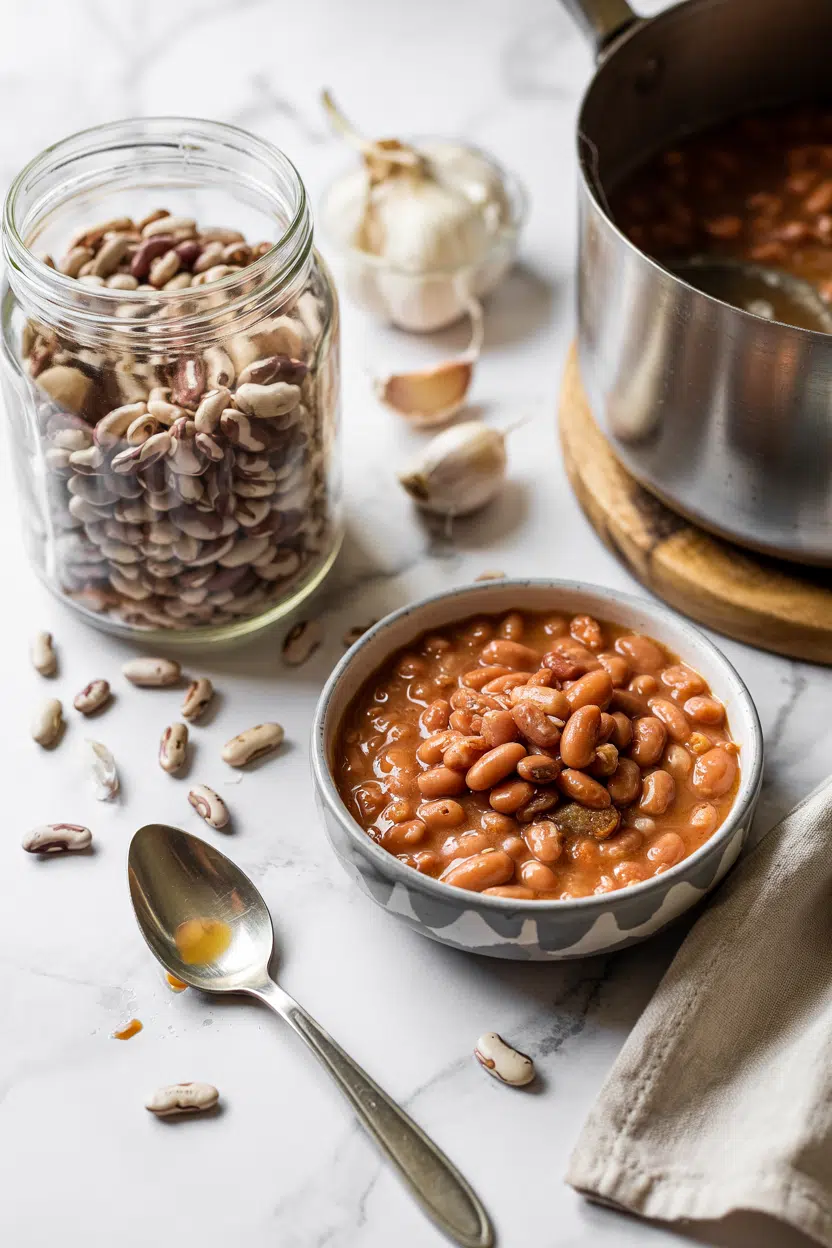
It shares the mild, starchy baseline of the navy bean and its flavor or the kidney bean and its flavor, yet it carves its own lane with a distinctly earthy, slightly buttery character that makes it the workhorse of Mexican and Southwestern kitchens.
Few legumes mash as smoothly or hold up as well in long braises.
The pinto bean is a medium-sized, speckled legume with an earthy, mildly nutty flavor and a creamy texture when cooked. It anchors refried beans, pot beans, chili, and burritos across Mexican and Southwestern cooking. Available dried or canned, it's one of the most consumed beans in North America.
What Is Pinto Bean?
Pinto beans (Phaseolus vulgaris) originated in Mesoamerica, where they've been cultivated for thousands of years. Northern Mexico and the Southwestern United States became their stronghold, and they remain among the most widely consumed dry legumes in North America today.
Remember it later
Planning to try this recipe soon? Save it for a quick find later!
The name comes from the Spanish word for "painted" - a reference to the reddish-brown speckles on the beige background of a dried pinto bean. Those markings disappear once the beans are cooked, leaving a uniform light tan color.
They fall under the dry legume and pulse category alongside lentils, though understanding what makes lentil distinct helps illustrate how differently each pulse behaves in cooking.
Pinto beans are also called frijol pinto in Mexican Spanish or simply "speckled beans" in some regions.
- 🫘 Scientific name - Phaseolus vulgaris, the same species as black, navy, and kidney beans
- Alternate names - frijol pinto, speckled bean
- Key subtypes - no major culinary subdivisions; "pinto" refers to the standard speckled variety
- Form - sold dried in bags, or canned (whole or refried)
What Does Pinto Bean Taste Like?
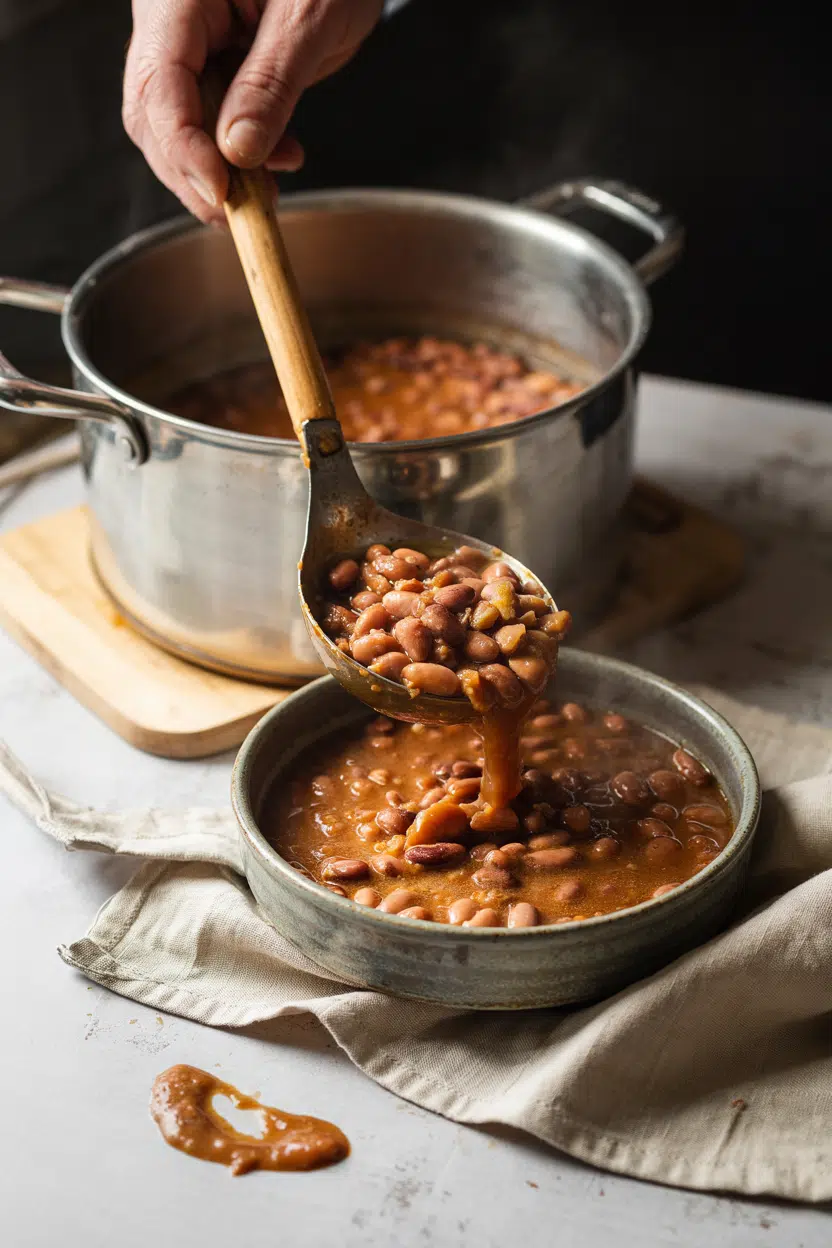
Raw dried pinto beans have no meaningful flavor - cooking is what activates them.
Simmered low and slow, they develop an earthy, nutty baseline with a mild natural sweetness and a subtle umami depth that gets richer the longer they cook in a seasoned broth.
Compared to black beans, pintos are noticeably less mineral and less dense - earthier and more buttery overall. They sit closer to cannellini in creaminess, though with more body and a warmer flavor note.
When mashed and pan-fried in lard or oil, a faint toasty, almost roasted aroma emerges that distinguishes refried pinto beans from any other preparation.
How to Use Pinto Bean
Pinto beans anchor more dishes than any other single legume in Mexican and Tex-Mex cooking. Their high starch content makes them ideal for mashing; their mild flavor makes them a blank canvas for bold seasonings like cumin and chili powder.
If cumin is unavailable, knowing replacements for cumin keeps those recipes on track.
| Method | Best For | Tip |
|---|---|---|
| 🍲 Simmered | Frijoles de la olla, soups, stews, chili | Add salt only after beans are tender - early salt toughens skins |
| 🍳 Pan-fried mashed | Refried beans for tacos, burritos, enchiladas | Use lard or bacon fat for the toasty aroma; mash while still hot |
| ⚡ Pressure-cooked | Speed cooking without overnight soak | Instant Pot cuts cook time to 25-30 minutes from dry |
| 🥗 Cooled and dressed | Bean salads, grain bowls | Rinse canned beans and dress while still slightly warm for better absorption |
| 🥓 Slow-baked | Cowboy beans with molasses and bacon | Low oven (300°F/150°C) for 2-3 hours builds a thick, smoky sauce |
Smoked pork, bacon, and chorizo are the classic meat pairings - the fat and smoke cut through the bean's earthiness without drowning it. For a deeper look at how chorizo in cooking interacts with legumes, the pairing logic applies directly here.
On the vegetable side, onion, garlic, tomato, and green chiles all complement the earthy base well.
Pinto beans also work alongside the role black bean plays in Latin cooking - the two are frequently interchangeable in chili and burritos, though pintos produce a creamier, milder result.
For more options, a rundown of pinto bean swaps that work covers the most reliable substitutes by dish type.
How to Buy and Store Pinto Bean
Dried pinto beans offer the best value and flavor control. Look for bags with uniformly speckled, intact beans - no shriveled pieces, broken skins, or visible grit. Avoid bags that look dusty or have an off smell, which suggests old stock.
For canned pinto beans, check for dents or bulges and choose low-sodium versions when you plan to season from scratch. Once opened, transfer leftover beans and their liquid into a sealed container and refrigerate immediately.
- Dried storage - airtight container in a cool, dark pantry; best quality within 1-2 years
- Canned, unopened - pantry shelf stable for 2-5 years
- Cooked or opened canned - refrigerate and use within 3-5 days
A full breakdown of pinto bean's shelf life covers edge cases like freezing cooked beans and identifying spoilage in older dried stock.
Start With Refried, Then Go From There
If you've never cooked pinto beans from scratch, refried beans are the entry point.
Simmer dried pintos with onion and garlic until fully tender, then mash them hot in a pan with a little fat - no recipe required, just ratio and timing.
Once you're comfortable there, frijoles de la olla is the next move: whole pot beans simmered simply, served in their broth, eaten as a side or a base.
These two preparations cover the majority of what pinto beans do in everyday cooking.
Frequently Asked Questions
No. Pink beans are smaller, rounder, and pinkish-tan without the speckled pattern of pinto beans. They're milder and slightly softer when cooked. The two are sometimes used interchangeably in Caribbean cooking, but they're distinct varieties.
Soaked and simmered on the stovetop, pinto beans take 1 to 1.5 hours. Unsoaked beans need up to 2 hours. In a pressure cooker or Instant Pot, soaked beans are tender in about 20-25 minutes from dry.
Yes, in most recipes. Pintos are creamier and milder, so the swap works well in chili, burritos, and soups. The color difference is visible, but the flavor profile is close enough for everyday use.
Gritty texture usually means the beans were undercooked, or they're very old dried beans with compromised starch. Adding salt or acidic ingredients too early also hardens the skins and leaves an unpleasant mealy bite.
Yes. They provide plant protein, soluble and insoluble fiber, folate, and iron in meaningful amounts. They're naturally low in fat. Soaking and rinsing dried pinto beans reduces the fermentable starches that cause digestive gas.



