
Kidney beans do something in a pot that few other legumes manage: they hold their shape through long braises, absorb spice without dissolving, and still deliver a creamy interior bite that thickens every bowl around them.

That structural reliability is why they anchor dishes as different as a slow cooker chili con carne recipe and North Indian rajma curry.
If you've cooked with the taste of pinto bean before, kidney beans will feel familiar - earthier, meatier, and with a deeper color that changes how a dish looks.
The kidney bean is a dense, meaty legume with a mildly sweet, earthy flavor and a firm-yet-creamy texture when cooked. Used dried or canned, it suits chili, curry, soups, and salads. Dried beans last 1-2 years; canned, up to 5. Always cook thoroughly - raw beans contain harmful lectins.
What Is Kidney Bean?
Kidney beans belong to Phaseolus vulgaris, the same species as black beans, pinto beans, and navy beans - making them one branch of a large and well-traveled family.
Remember it later
Planning to try this recipe soon? Save it for a quick find later!
They originated in Central and South America and spread globally after European contact in the 16th century.
The name comes from their shape: curved and elongated, resembling a human kidney.
Two main market forms exist - dark red kidney beans, with a deep burgundy skin and robust flavor, and light red kidney beans, slightly milder with a brighter color.
White kidney beans - sold as cannellini - are a distinct variety common in Italian and Mediterranean cooking.
In South Asia, the standard dark red form is called rajma, and the dish by the same name has become a staple across Punjab and North India.
- 🌱 Species - Phaseolus vulgaris, same as black and pinto beans
- 🎨 Varieties - dark red, light red, and white (cannellini)
- 🌍 Regional names - rajma (South Asia), red beans (Caribbean and Southern US)
- 📏 Size - larger than most common beans; plump and glossy when fresh stock
What Does Kidney Bean Taste Like?
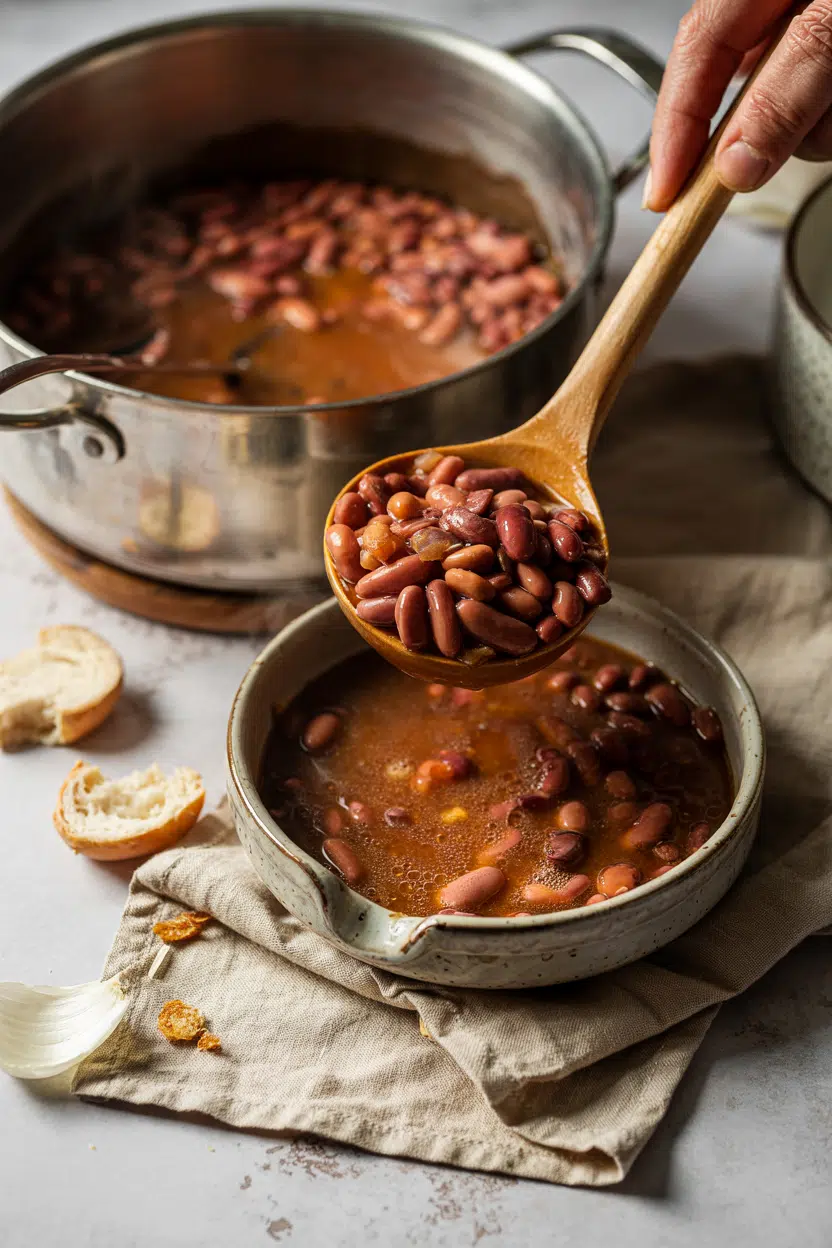
The flavor is mildly sweet and earthy with a subtle nuttiness - present but never sharp. Think of it as the quieter, creamier counterpart to black bean in cooking: similar earthiness, none of the smokiness.
Raw, dried kidney beans smell faintly beany and neutral. Heat changes that.
Sautéing cooked beans in a dry or lightly oiled pan adds Maillard notes - a toasty edge that lifts their otherwise mild character.
Compared to chickpeas, kidney beans feel creamier when mashed and carry less of a grassy note. Long braises deepen the earthiness without making the bean taste heavy.
How to Use Kidney Bean
Chili con carne is the most recognizable application - kidney beans hold their shape through an hour of simmering and soak up chile, cumin, and tomato without going mushy. Rajma curry works similarly: the beans cook in a spiced tomato-onion gravy until each one is fully tender but still intact, best served over rice. Both dishes rely on the bean's density.
Beyond stews, kidney beans work well in cold preparations. Three-bean salads use them for color and body alongside green and wax beans.
Mashed, they bind vegetarian burger patties without the wet, sticky texture that some other legumes produce.
Key pairings worth knowing:
- Tomato and onion - acidity cuts through starchy mouthfeel; forms the base of both chili and rajma
- Smoked paprika or cumin - warm spices amplify the bean's earthy undertone without overpowering it
- Lime or lemon - a squeeze at serving brightens the whole bowl
- Ground beef or pork - fat from the meat coats each bean and ties the dish together
- Bay leaf and oregano - low-background aromatics that extend through long cooking
For a tested version, a punjabi rajma kidney bean curry recipe shows how the spiced tomato base builds around the bean's natural texture.
How to Buy and Store Kidney Bean
For dried beans, look for evenly colored, unbroken skins with no powdery residue. Wrinkled skin or a dusty film signals old stock - the beans will cook unevenly and take longer to soften.
For canned, reject any dented or bulging cans; low-sodium labels give you better control over seasoning.
Storage by form:
- Dried beans - airtight container in a cool, dark pantry; best quality within 1-2 years
- Canned beans (unopened) - pantry-stable for 3-5 years; check the best-by date
- Cooked or opened canned - sealed container in the fridge, use within 3-5 days
For a full breakdown of timelines and signs of spoilage, the guide on how long kidney bean keeps covers each form in detail.
Start Here for Best Results
If you're new to kidney beans, open a can first.
Rinse it well, toss the beans into a chili or grain bowl, and get a feel for how they hold heat and absorb seasoning.
Dried beans give better texture and flavor, but they require planning - soak overnight, then simmer 60-90 minutes, or use a pressure cooker; comparing pressure cooker vs multi cooker options helps you decide which tool fits your kitchen.
If you want a swap that cooks similarly but tastes different, replacements for kidney bean lays out the closest options by texture and dish type. Start with canned, graduate to dried - that's the straightforward path.
Frequently Asked Questions
Yes, raw kidney beans contain high levels of phytohaemagglutinin, a lectin that causes rapid-onset nausea and vomiting. A full rolling boil for at least 10 minutes destroys it - slow cookers alone don't reach a high enough temperature.
Both are earthy and starchy, but kidney beans are milder and less smoky, with a creamier texture when cooked. Black beans are smaller and hold slightly less liquid, making them better suited to drier preparations.
Soak in cold water for 8-12 hours, or use the quick-soak method: boil for 2 minutes, remove from heat, and rest for 1 hour. Drain and discard the soaking water before cooking.
Yes. Unsoaked dried kidney beans pressure-cook in about 25-35 minutes at high pressure. Soaking shortens that to 15-20 minutes and produces slightly more even texture throughout.
Cannellini are white kidney beans - same species, different color and a slightly milder, nuttier flavor. They're common in Italian dishes like minestrone and white bean stews, where the red variety would be too assertive.



