You spot it at the deli counter - a deep red, smoke-dusted sausage hanging in a tight casing - and reach for it without quite knowing how it differs from the salami or pepperoni beside it.
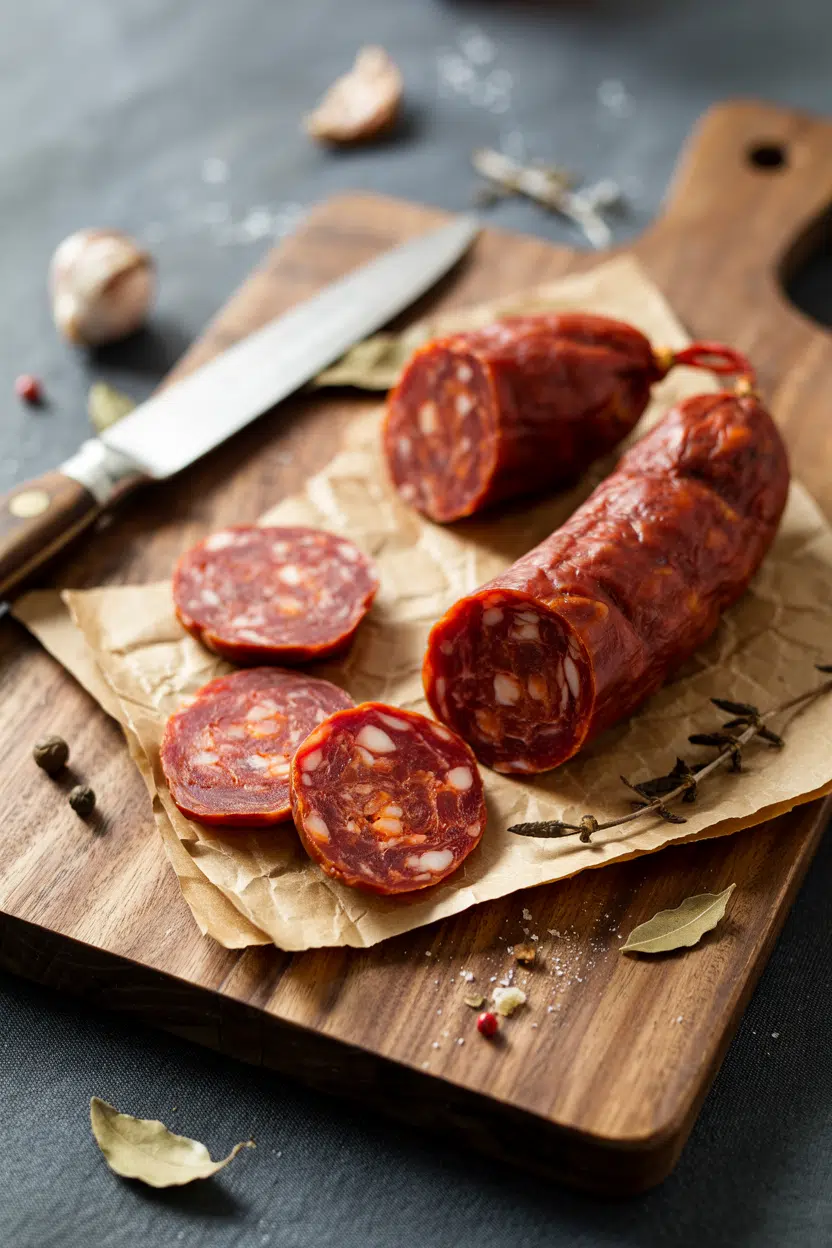
Chorizo is in its own category entirely, and which style you pick changes everything about how you cook with it.
Chorizo is a pork sausage spiced with smoked paprika and garlic. Spanish chorizo is dry-cured and sliceable; Mexican chorizo is raw and cooked by crumbling. Both deliver smoky, garlicky, umami-forward flavor but suit different cooking methods and dishes entirely.
What Is Chorizo?
Chorizo is a pork-based sausage originating from the Iberian Peninsula, now closely associated with both Spanish and Mexican cooking traditions. The defining spice is pimentón - smoked paprika - which gives chorizo its signature red color and smoky character that no other sausage quite replicates.
Remember it later
Planning to try this recipe soon? Save it for a quick find later!
Spanish chorizo is dry-cured, meaning it undergoes a curing process that removes moisture and firms the meat into a sliceable, shelf-stable sausage. You'll find it labeled chorizo seco or simply Spanish chorizo, and it comes in mild and spicy varieties depending on the paprika used.
Mexican chorizo is an entirely different product. It's a raw, loose fresh sausage seasoned with dried chiles, garlic, and vinegar - the acid giving it a sharp, bright tang that distinguishes it clearly from its Spanish counterpart.
- Spanish chorizo - firm, sliceable, dry-cured; ready to eat without cooking
- Mexican chorizo - loose, raw, removed from casing; always cooked before eating
- Chouriço - the Portuguese spelling; similar to Spanish chorizo but often smokier
- Chorizo seco - Spanish term for the fully dried, hardest-cured version
What Does Chorizo Taste Like?
Spanish chorizo tastes closest to a smoky, spiced salami - deeply savory, faintly sweet from the paprika, and rich with cured pork fat. Heat a slice in a pan and the fat renders out in orange pools, intensifying every note.
Mexican chorizo reads differently: bright red from dried chiles, tangy from vinegar, and aggressively garlicky. Cooked and crumbled, it develops crisp edges with a loose, almost granular texture.
Both styles share that core pork-fat richness and a pronounced smokiness that lingers. Neither is subtle - chorizo announces itself in any dish it enters.
How to Use Chorizo
Spanish cured chorizo needs little effort. Slice it thin for a charcuterie board alongside manchego or sharp cheddar, or sear thick rounds in a dry pan until the fat blooms and the edges brown. It's essential to an authentic paella, where it colors the rice orange and layers in that characteristic smoky pork depth.
Mexican chorizo works best when cooked from raw. Remove it from the casing, crumble it into a hot pan, and cook until the fat renders and the meat crisps slightly. Use it in huevos rancheros, fold it into breakfast burritos, or stir it through black beans for a fast, protein-rich stew.
Both styles cross into pasta, pizza, and baked casseroles without trouble. If you need a comparable sausage with its own regional character, andouille is the closest American-style alternative.
| Method | Best For | Tip |
|---|---|---|
| 🥗 Sliced raw | Tapas, charcuterie boards, sandwiches | Spanish cured only; slice thin against the grain |
| 🍳 Pan-fry & crumble | Breakfast scrambles, taco fillings, bean stews | Mexican chorizo; cook until fat fully renders |
| 🥘 Stew or braise | Paella, lentil stew, white bean soup | Add early so fat integrates into the liquid |
| 🔥 Bake or roast | Casseroles, empanada filling, pizza topping | Slice or crumble depending on type; fat bastes surrounding ingredients |
| 🌮 Grill | Whole Spanish links, party platters | Score the casing lightly to prevent bursting |
Seafood and Chorizo PaellaSpanish chorizo colors the rice and builds the smoky base→Chorizo and Potato Breakfast HashMexican chorizo crumbled and crisped with potatoes and eggs→Melted Queso Fundido with ChorizoFresh Mexican chorizo stirred into molten melted cheese→
How to Buy and Store Chorizo
Good Spanish cured chorizo should feel firm throughout, show deep red color, and have visible white fat marbling in the cross-section. Avoid any link with a sticky or slimy casing - both signal age or improper storage.
For Mexican chorizo, look for bright red color in sealed packaging with a faint, clean vinegar smell. A sour or ammonia-like odor means it has turned; don't buy it.
Opened cured chorizo keeps refrigerated for 2-3 weeks when wrapped tightly. For more detail on safe windows, see our guide to chorizo storage life.
If a recipe calls for something you don't have, check these chorizo swaps before changing the whole dish.
Start Here
New to chorizo? Buy a cured Spanish link first. Slice it cold, taste the paprika and fat, and understand the baseline flavor.
From there, try crumbling fresh Mexican chorizo into scrambled eggs - it's the fastest way to see how differently the two types cook and eat.
Neither style pairs well with delicate flavors. Skip chorizo anywhere you'd use a mild white fish or want restraint on the plate.
Lean into it where you want smoke, heat, and a pork backbone to carry the whole dish.
Frequently Asked Questions
Spanish chorizo is dry-cured and fully ready to eat without cooking. Mexican chorizo is raw, loose, and spiced with dried chiles and vinegar rather than smoked paprika alone - it must be cooked before eating.
Not always. Spanish chorizo comes in mild (dulce) and spicy (picante) versions depending on the paprika used. Mexican chorizo tends to carry more heat from dried chiles but still ranges from mild to hot by brand.
Spanish cured chorizo is safe to eat without cooking, the same way you'd eat salami. Mexican chorizo is raw pork and must be cooked to a safe internal temperature before eating.
Fresh Mexican chorizo lasts 1-2 days refrigerated once opened. Sliced cured Spanish chorizo keeps for 2-3 weeks tightly wrapped in the fridge. Freeze either type if you won't use it within those windows.
Manchego is the classic match for Spanish cured chorizo - its buttery, slightly salty character holds up to the smoke. Sharp cheddar or Oaxacan cheese work well alongside Mexican chorizo, especially in queso fundido or quesadillas.